Introducing gluten to a baby when celiac runs in the family
Short answer
The 2024 update from the European Society for Paediatric Gastroenterology, Hepatology and Nutrition (ESPGHAN) says introducing gluten at any time from completed 4 months to 12 months does not change a child’s cumulative incidence of celiac disease, though earlier introduction may lead to earlier seroconversion and celiac disease27, 29. The 2016 paper it updates was derived from families with a first-degree relative with celiac disease26; ESPGHAN calls any recommendation on the amount of gluten unjustifiable for now28, and the NIDDK says blood relatives of people with celiac disease should talk with their doctor about being tested4.
Part of Women, pregnancy and babies, 11 guides

Key points
- PreventCD gave 16- to 24-week-old babies with a first-degree relative gluten or placebo and found similar celiac disease rates at 3 years8, 9; CELIPREV compared first gluten at 6 and 12 months, and the differences seen at 2 years were no longer significant at 5 years12, 13.
- ESPGHAN’s 2024 update says breastfeeding does not reduce the risk and that earlier introduction may lead to earlier seroconversion and celiac disease27.
- How much gluten, and which gluten foods first, are open questions: ESPGHAN calls any recommendation on amount unjustifiable for now28.
- Two pooled reviews report different results: a 2016 meta-analysis found 25% higher risk with late (after 6 months) versus recommended (4 to 6 months) introduction18, while a 2023 update found age at gluten introduction was not associated with cumulative risk22.
- The NIDDK says doctors in the US do not routinely screen for celiac disease and that blood relatives should talk with their doctor about being tested4; it also says doctors do not recommend starting a gluten-free diet before diagnostic testing5.
What a family history means for a baby’s risk
Gluten is a protein found naturally in wheat, barley and rye7. The NIDDK says you are more likely to develop celiac disease if someone in your family has it1. It also says about 30 percent of people carry the gene variants DQ2 or DQ8 and only about 3 percent of them develop the disease2.
One source of numbers for children with an affected first-degree relative is PreventCD, a birth cohort of 944 genetically predisposed children with 10 years of follow-up30. Summarizing the 2022 analysis, the Celiac Disease Foundation says the risk had been considered 5-10%, and that the study found 7.5% at age three, 16.6% at age eight and 17.5% at age 1033.
In that analysis, 135 of 944 children developed celiac disease by a median follow-up of 8.3 years, more often in girls and in children with two copies of HLA-DQ2 (8-year cumulative incidence 35.4%, against at most 18.2% in the other HLA groups)31. Coeliac Australia adds that most of the risk for coeliac disease relates to the genes the child is born with42.
What the two randomized trials and the TEDDY cohort found
| Study | Who was in it | What was compared | What it found |
|---|---|---|---|
| PreventCD (N Engl J Med, 2014) | 944 children positive for HLA-DQ2 or HLA-DQ8 with at least one first-degree relative with celiac disease8 | 100 mg of immunologically active gluten daily from 16 to 24 weeks of age, or placebo8 | Celiac disease in 5.2% of children by age 3: 5.9% in the gluten group and 4.5% in the placebo group (hazard ratio 1.23; 95% CI 0.79 to 1.91)9. The authors concluded the small quantities did not reduce the risk by age 310 |
| CELIPREV (N Engl J Med, 2014) | 832 newborns with a first-degree relative with celiac disease12 | First gluten at 6 months or at 12 months12 | At 2 years the 6-month group had more celiac disease autoimmunity (16% vs 7%) and overt celiac disease (12% vs 5%); at 5 years the differences were no longer significant (autoimmunity 21% vs 20%, overt disease 16% and 16%)13 |
| TEDDY (JAMA, 2019) | Children carrying HLA genotypes linked to type 1 diabetes and celiac disease, followed in Finland, Germany, Sweden and the United States; an observational cohort15 | Gluten intake estimated from 3-day food records from 6 months to age 516 | Higher gluten intake in the first 5 years was associated with increased risk of celiac disease autoimmunity and celiac disease17 |
The trial authors’ own conclusions are narrow. CELIPREV’s: neither delayed introduction nor breast-feeding modified the risk among at-risk infants, though later introduction was associated with a delayed onset of disease, and a high-risk HLA genotype was an important predictor14. PreventCD reported that breast-feeding, exclusive or not, did not significantly influence the outcome either11.
TEDDY looked at how much gluten children ate, not when the first gluten was given. It shows an association in an observational cohort, not the result of assigning babies to amounts15. The NIDDK describes related research as suggesting that children with a genetic predisposition who eat more gluten in early childhood may have a greater risk3.
How two pooled reviews compare
| Review | What it pooled | On timing of first gluten | Limits and open points the authors state |
|---|---|---|---|
| Journal of Pediatrics, 2016 (epub 2015) | 1,982 studies identified, 15 eligible; the meta-analysis covered 2 randomized trials, 10 cohort studies and 1 case-control study18 | A 25% increase in celiac disease risk with late (after 6 months) versus recommended (4 to 6 months) introduction (risk ratio 1.25; 95% CI 1.08 to 1.45)18. The authors found no evidence that early introduction raises risk19 | More studies are needed that control for potential confounders and that evaluate environmental factors in low-risk families19 |
| Alimentary Pharmacology & Therapeutics, 2023 (2022 update) | 36 publications (30 studies)20 | Age at gluten introduction was not associated with cumulative risk; two randomized trials suggested earlier introduction was associated with earlier appearance of celiac autoimmunity, meaning positive antibody tests22, 21 | Insufficient evidence on the amount of gluten tied to higher risk; results inconsistent on whether feeding practices change the risk that different HLA genotypes carry23 |
The 2016 review pooled two trials with eleven observational studies and flagged confounding as a limit18, 19. The 2023 update concluded that, for people at genetic risk, breastfeeding and age at gluten introduction have no effect on cumulative incidence during childhood, with some evidence that the amount eaten may matter24. ESPGHAN’s 2024 position paper, published after both, takes the same line on timing27.
What ESPGHAN and two celiac charities say
| Source | What it says | What it leaves open |
|---|---|---|
| ESPGHAN position paper, 2016 | Gluten may be introduced anytime between 4 and 12 completed months; in high-risk children earlier introduction is associated with earlier celiac disease autoimmunity and celiac disease, but the cumulative incidence in later childhood is similar25. The advice applies to all infants, though derived from families with a first-degree relative with celiac disease26 | The optimal amount of gluten to introduce at weaning has not been established43 |
| ESPGHAN update, 2024 | Statements essentially similar to 2016; any time between completed 4 and 12 months does not affect cumulative incidence; breastfeeding does not reduce risk27 | Any recommendation on the gluten amount is currently unjustifiable; no specific guidance on which gluten-containing foods to introduce28 |
| Coeliac UK (charity) | Gluten can be introduced from six months old, with no benefits for delaying it; once a baby is established on solid foods, gluten should be eaten regularly36, 37 | The Introducing gluten passage of its page gives no amount44. |
| Coeliac Australia (national society) | Current evidence suggests introduction should not be delayed, even for infants at higher risk such as when one or both parents have coeliac disease; introduce as for any other child39. It adds there is no evidence that avoiding gluten altogether helps40 | It says definitive recommendations are difficult38 |
The wording differs: ESPGHAN gives a window, Coeliac UK a start at six months25, 36.
Which questions the sources treat as settled, and which stay open
| Question | Where the sources stand | Status |
|---|---|---|
| Does breastfeeding lower the risk? | ESPGHAN 2024: no, at any amount or duration27. The 2023 update agrees for children at genetic risk24; PreventCD and CELIPREV reported no significant effect11, 14 | Consistent across the sources read |
| Does the month of first gluten, within 4 to 12 months, change the cumulative incidence? | ESPGHAN 2024 says no for any time from completed 4 to 12 months27; the 2023 update found age at introduction not associated with cumulative risk22. Earlier introduction may lead to earlier seroconversion and celiac disease27 | Consistent on cumulative incidence; earlier-seroconversion point noted |
| Is late introduction (after 6 months) linked to higher risk? | The 2016 meta-analysis found a risk ratio of 1.2518; the 2023 update found no association with age at introduction22 | The two reviews report different results |
| Should gluten be avoided altogether? | Coeliac Australia: no evidence that it helps, and not recommended40 | One charity’s position |
| Does the amount of gluten matter? | Observational cohorts link a higher amount to higher risk (TEDDY17; ESPGHAN 2024’s summary of observational studies45), but the 2023 update finds insufficient evidence to determine the amount23 and ESPGHAN calls any amount recommendation currently unjustifiable28 | Open |
| Which gluten foods first? | No specific guidance28 | Open |
| Do feeding practices change the risk that HLA genotypes carry? | Results were inconsistent23 | Open |
When testing is discussed, and what the sources say about gluten before testing
The NIDDK says doctors in the United States do not routinely screen people for celiac disease, and that blood relatives of people with celiac disease should talk with their doctor about their chances to see if they should be tested4.
On when to screen, the sources are open. The authors of a PreventCD prediction analysis wrote that screening is recommended for children with affected first-degree relatives but that how often, and from what age, was unknown30; the Celiac Disease Foundation likewise says it is unclear when to screen these children and how frequently35. They concluded that these children should be screened early in life, including HLA-DQ2/8 typing, and, if genetically predisposed, get further personalized screening advice from their Prediction application32. The Celiac Disease Foundation describes that model as using age, gender, HLA-DQ genes and the number of affected first-degree relatives34. That is one research group’s conclusion, not a rule.
A gene result is not a diagnosis. The NIDDK says having DQ2 or DQ8 alone does not mean you have celiac disease, and most people with these gene variants do not develop it6. Our guides on celiac genetic testing and on the celiac blood test cover the two kinds of test.
Both the NIDDK and Coeliac UK tie testing to eating gluten. The NIDDK says doctors do not recommend starting a gluten-free diet before diagnostic testing because it can affect test results5, and Coeliac UK notes that coeliac disease can only be diagnosed once gluten is in the diet37.
On symptoms, Coeliac Australia says that if symptoms suggestive of coeliac disease develop, such as diarrhoea, testing should be discussed with the child’s doctor41. Our guide to celiac symptoms in children covers the symptoms the sources describe.
This page reports what the sources say. It does not tell you whether or when to test your baby; that is a conversation for the child’s doctor.
Questions to bring to the child’s pediatric gastroenterologist
- Which relatives in our family count as first-degree for this baby, and how was each diagnosed?
- Do you recommend HLA typing for my baby, and what would a result change?
- If you recommend blood tests, at what ages and how often?
- Do you follow ESPGHAN’s 2024 position paper, or another society’s guidance, on the timing of first gluten?
- Which symptoms should lead us to call before the next planned test?
- What should we do about gluten in the diet while testing is still planned?
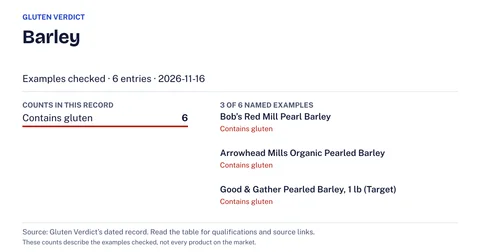
Verdicts in this guide
Questions people ask
Should a baby with celiac in the family avoid gluten?
Coeliac Australia says there is no evidence that avoiding gluten altogether is helpful, and that the approach is not recommended40.
Does breastfeeding protect against celiac disease?
ESPGHAN’s 2024 update says breastfeeding, at any amount, exclusive or of any duration, does not reduce the risk of developing celiac disease27.
Is the risk for a child with a first-degree relative with celiac disease 5 to 10 percent?
The Celiac Disease Foundation says that was the figure until recently, and that PreventCD’s 10-year data found 7.5% at age three, 16.6% at age eight and 17.5% at age 10 for children with an affected first-degree relative33.
Do doctors in the US routinely screen people for celiac disease?
The NIDDK says doctors in the United States do not routinely screen people for celiac disease; blood relatives should talk with their doctor to see if they should be tested4.
Will my baby’s genes be known before solids start?
ESPGHAN’s 2016 position paper notes that genetic risk alleles are generally not known in an infant at the time of solid food introduction, so its recommendations apply to all infants26.
More in Women, pregnancy and babies
 Gluten-free baby food: what the makers’ labels say about wheat, barley and oatsWhat baby cereal, puff, snack and pouch makers print about wheat, barley, oats and gluten, read from their own pages, with the date we read them.
 Starting solids in a home with a celiac family member: kitchen routinesKitchen routines for a baby starting solids when someone at home has celiac disease: crumbs, spreads, towels, spills and hands, from charity guidance.
 Celiac disease and pregnancy: what the research reportsWhat studies report on celiac disease and pregnancy, what charities, NIDDK and the USPSTF say about care and folic acid, and a child's own risk.
 Miscarriage and celiac disease: what studies report and how strong the evidence isWhat pooled studies report about celiac disease and miscarriage, why they cannot show cause, and what ESHRE and ACOG say about testing.
 Celiac disease and infertility: what studies report and what guidelines say about testingWhat meta-analyses report on celiac disease in women with infertility, what ESHRE, NICE and the ACG say about testing, and why a test needs gluten.
 Breastfeeding with celiac disease: what studies show about gluten in breast milkWhat studies measured about gluten in breast milk, what ESPGHAN says about breastfeeding and a child’s celiac risk, and what one survey found after birth.
Related guides
 Celiac genetic testing: what HLA-DQ2 and DQ8 results can and cannot tell youWhat HLA-DQ2 and DQ8 typing checks for, how NIDDK, ACG, ESPGHAN and WGO read a negative or positive result, and where the guidelines place the test.
 Celiac Blood Tests: What tTG-IgA, Total IgA, DGP and EMA Each CheckWhat tTG-IgA, total IgA, EMA and DGP check, why total IgA is drawn with tTG-IgA, when back-up tests are used, and why gluten stays in the diet first.
 Celiac disease symptoms in children, and who pediatric guidelines say to testTypical and less typical celiac signs in children, who pediatric guidelines say to test, and why the child keeps eating gluten until testing ends.
 Starting a gluten-free diet: testing first, then labels, oats and the kitchenWhat NIH and the celiac charities say about starting a gluten-free diet: testing first, which foods to start with, a US label check, oats and the kitchen.
Sources
- [1, 7] National Institute of Diabetes and Digestive and Kidney Diseases (NIDDK), Definition & Facts for Celiac Disease, checked Nov 17, 2026.
- [2, 3] National Institute of Diabetes and Digestive and Kidney Diseases (NIDDK), Symptoms & Causes of Celiac Disease, checked Nov 17, 2026.
- [4, 5, 6] National Institute of Diabetes and Digestive and Kidney Diseases (NIDDK), Diagnosis of Celiac Disease, checked Nov 17, 2026.
- [8, 9, 10, 11] PubMed (US National Library of Medicine): N Engl J Med 2014, Randomized feeding intervention in infants at high risk for celiac disease (PreventCD), abstract record, checked Nov 17, 2026.
- [12, 13, 14] PubMed (US National Library of Medicine): N Engl J Med 2014, Introduction of gluten, HLA status, and the risk of celiac disease in children (CELIPREV), abstract record, checked Nov 17, 2026.
- [15, 16, 17] PubMed (US National Library of Medicine): JAMA 2019, Association of gluten intake during the first 5 years of life with celiac disease autoimmunity and celiac disease among children at increased risk (TEDDY), abstract record, checked Nov 17, 2026.
- [18, 19] PubMed (US National Library of Medicine): J Pediatr 2016, Gluten introduction to infant feeding and risk of celiac disease: systematic review and meta-analysis, abstract record, checked Nov 17, 2026.
- [20, 21, 22, 23, 24] PubMed (US National Library of Medicine): Aliment Pharmacol Ther 2023, Systematic review: early feeding practices and the risk of coeliac disease, a 2022 update and revision, abstract record, checked Nov 17, 2026.
- [25, 26, 43] PubMed (US National Library of Medicine): J Pediatr Gastroenterol Nutr 2016 (ESPGHAN position paper), Gluten introduction and the risk of coeliac disease: a position paper by ESPGHAN (2016), abstract record, checked Nov 17, 2026.
- [27, 28, 29, 45] PubMed (US National Library of Medicine): J Pediatr Gastroenterol Nutr 2024 (ESPGHAN position paper), Early diet and the risk of coeliac disease, an update 2024 position paper by the ESPGHAN special interest group on coeliac disease, abstract record, checked Nov 17, 2026.
- [30, 31, 32] PubMed (US National Library of Medicine): Gastroenterology 2022, Prediction models for celiac disease development in children from high-risk families: data from the PreventCD cohort, abstract record, checked Nov 17, 2026.
- [33, 34, 35] Celiac Disease Foundation, Children who have a first-degree relative with celiac disease may be at higher risk of disease development than previously thought, checked Nov 17, 2026.
- [36, 37, 44] Coeliac UK, Feeding your baby, checked Nov 17, 2026.
Read on 2026-11-17: the Introducing gluten passage under Breast or formula milk and weaning gives no amount of gluten.
- [38, 39, 40, 41, 42] Coeliac Australia, Introducing gluten to a baby’s diet, checked Nov 17, 2026.