Starting solids in a home with a celiac family member: kitchen routines
Short answer
Gluten Intolerance Group (GIG) describes these habits for a mixed household: separate storage and prep areas, no shared serving utensils between gluten-free and gluten-containing food, and wiped surfaces1, 2. Applying them to a baby’s gluten food is our reading. Whether and when the baby eats gluten is a separate question: an ESPGHAN position paper reports no change in celiac disease incidence for gluten introduced between completed 4 and 12 months, and Coeliac UK refers parents to a health visitor or dietitian4, 5.
- Give the celiac family member’s food its own place, and store it above and sealed apart from crumb-making foods1, 6.
- Keep spoons and knives that touched the baby’s gluten food out of shared jars2, 7.
- Wipe the counters and tables after the baby eats1, 8; the tray is our reading. Before you handle the celiac person’s food, plate it first or change gloves, as GIG’s childcare guide puts it9. GIG says a kitchen towel carries minimal to no risk if others use it only on thoroughly washed dishes or hands3. Washing your hands is our reading of the glove advice.
- Keep the baby’s hands, toys and dropped snacks away from the celiac person’s plate, as GIG’s childcare guide describes for children’s food10, 11.
- Cook and drain the baby’s pasta apart from the celiac person’s: one study with a small sample size found gluten-free pasta cooked in shared water above 20 parts per million in every sample, and GIG says colanders should not be shared if possible12, 37, 13.
Part of Women, pregnancy and babies, 11 guides
Key points
- In our reading, once the baby’s doctor has agreed to gluten, the baby’s food is an ordinary gluten food in a mixed household, so GIG’s mixed-household routines apply1, 2.
- GIG’s childcare guide names the routes young children add: hands on another child’s food, objects that were in a mouth, fallen snacks, and food prepared before the gluten-free meal10, 11, 9.
- The sources disagree on toasters, sponges and whether rinsing a pot is enough, so those are household choices to talk through with the celiac family member’s dietitian14, 15, 16.
- ESPGHAN’s 2024 update gives no specific guidance on which gluten-containing food a baby should start with17.
Two questions, kept apart
What the baby eats and how the kitchen is run are different questions with different sources. This guide is about the kitchen. For the feeding question it reports what a pediatric society and a charity say, and leaves the decision to the baby’s doctor.
ESPGHAN’s special interest group on coeliac disease says in its 2024 position paper update that gluten introduced at any time from completed 4 months to 12 months of age does not affect the cumulative incidence of celiac disease, although earlier introduction may lead to earlier seroconversion and celiac disease4. It adds that there is no specific guidance on which gluten-containing foods to introduce at weaning17.
Coeliac UK, the UK charity, says gluten can be introduced from six months old and that there are no benefits to delaying it18. It also says that once a baby is established on solid foods gluten should be eaten regularly, because coeliac disease can only be diagnosed once gluten is in the diet19. Our companion guide on introducing gluten to a baby when celiac runs in the family covers that question separately and is in medical review.
None of this is advice for your baby. Coeliac UK points parents to a health visitor or dietitian for more advice5. This guide’s own suggestion is to take the question to the baby’s pediatrician.
Once the baby’s doctor has agreed to gluten, the kitchen question is the one below: how a baby’s gluten food stays out of a celiac family member’s food.
How gluten travels between a baby and a celiac plate
Gluten Intolerance Group (GIG) defines cross-contact as gluten crumbs or particles getting into gluten-free food in amounts that could cause an adverse reaction20. Its household article compares gluten to glitter: once it enters a shared space it spreads to surfaces, utensils and foods in ways that are invisible21.
| Route | What the charities say | What it means at the high chair |
|---|---|---|
| Hands and shared food | GIG’s childcare guide asks caregivers to make sure children do not “feed” other children their meals, or put their hands on a gluten-free child’s food10. | Keep the celiac family member’s plate out of the baby’s reach, and the baby’s food off it. |
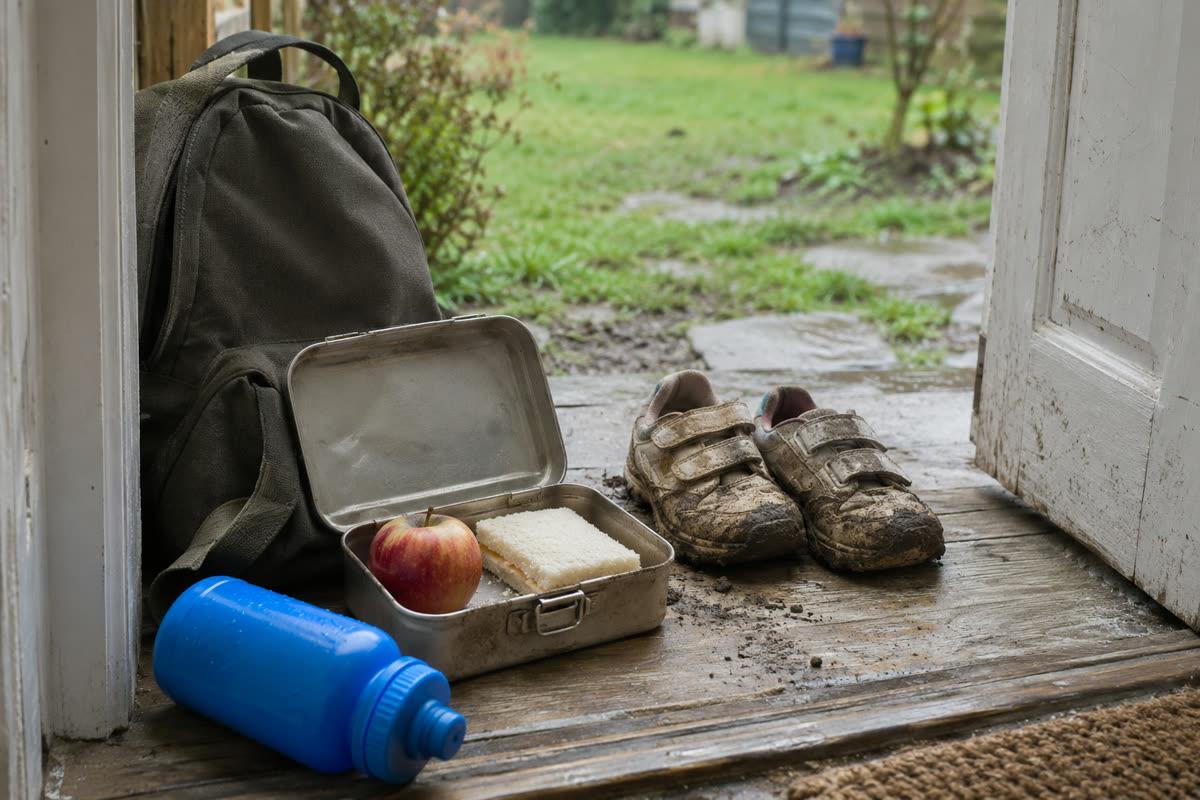
| Things that were in the baby’s mouth | The same guide warns about toys and objects that were in one child’s mouth after eating crackers and end up in the gluten-free child’s mouth, and about snacks that have fallen on the ground11. | Our reading: a cup, teether or toy that went through the baby’s crackers is a route until it is washed. |
| Order of preparation | The guide prefers that gluten-free meals are prepared before others, or that gloves are changed before touching the gluten-free child’s meal, and notes that touching one child’s sandwich first can be enough for cross-contact9. | Plate the celiac person’s food first. GIG names changing gloves; washing hands is our reading of it. |
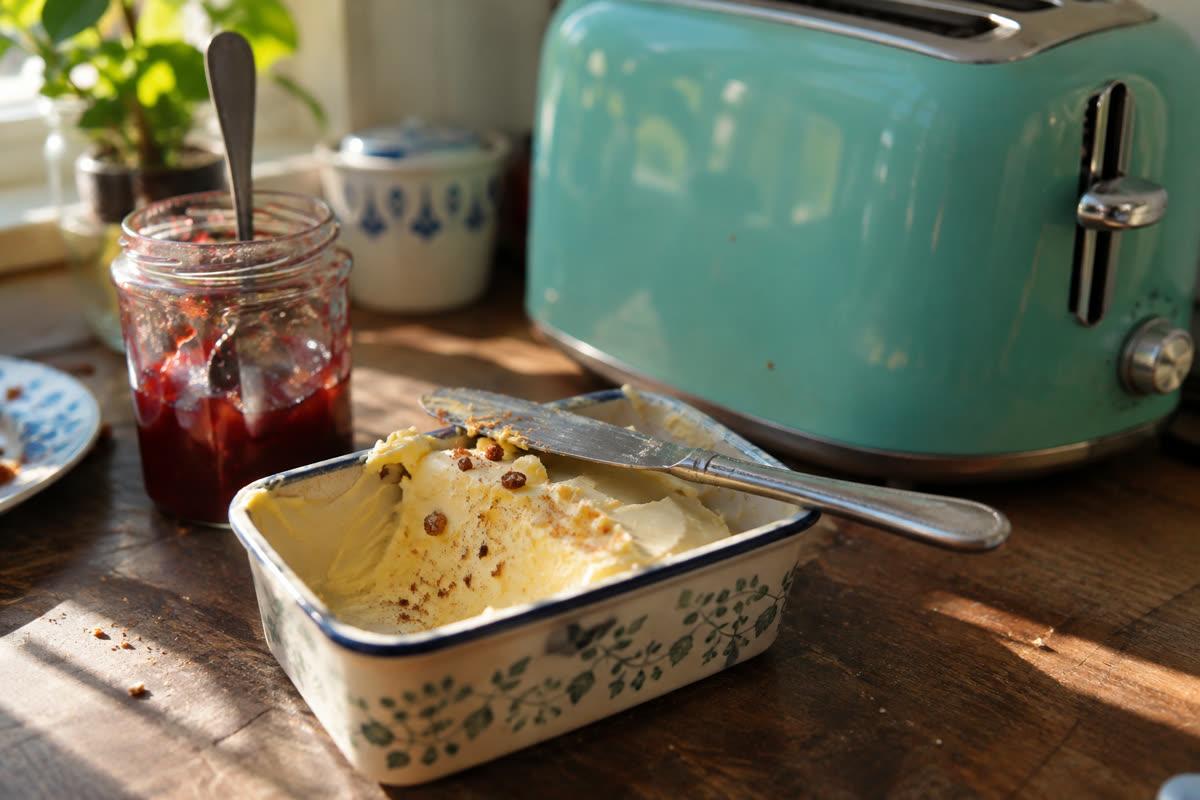
| Spreads, jars and butter | GIG calls double-dipping, or using one serving utensil in both kinds of food, one of the most common ways crumbs get into gluten-free food2. Coeliac UK suggests separate condiments, or at least clean cutlery for shared butters, jams and spreads7. | A spoon or knife that touched the baby’s toast does not go back into the shared jar. |
| Toasters | GIG lists toasters, air fryers and blenders at the top of the appliances to keep gluten-free only, and suggests a toaster bag as a temporary solution14, 22. Coeliac UK suggests toaster bags or considering a separate toaster23. | If the baby’s food includes toast, the toaster question applies from the first day. |
| Colanders and pasta water | GIG says colanders, sifters and waffle irons are harder to clean thoroughly and should not be shared if possible13. In one study with a small sample size, gluten-free pasta cooked in shared water had gluten levels greater than 20 ppm in all samples tested12, 37. | Cook and drain the baby’s pasta apart from the celiac person’s. |
A routine for the high chair and the kitchen
These steps follow the charities’ guidance for mixed households. The charities do not write for babies, so where a step is our reading of their advice, it says so.
- Give the celiac family member’s food its own place. GIG advises designated areas for gluten-free storage and prep when a home is not fully gluten-free1, with gluten-free packages above gluten-containing ones and securely packaged, because crackers and cookies could generate crumbs6.
- Mark what is whose. GIG suggests labels on food, utensils and cookware24, or one color for everything strictly gluten-free, such as cutting boards, bowls, storage containers, tongs and spatulas25. In that system the baby’s bowls and spoons are the ones without the color.
- Plate in order. GIG’s childcare guide prefers that gluten-free meals are prepared before others, or that gloves are changed before touching the gluten-free meal9. At home, washing your hands first is our reading of that.
- Wipe after the baby eats. GIG says to wipe any food prep or cooking surface often, and always after dishes with gluten-containing ingredients1, and says counters, tables and prep areas should be washed with hot soapy water before gluten-free meal preparation8. None of the GIG or Coeliac UK pages cited here names a high chair, so treating the tray and seat as one of those surfaces is our reading.
- Watch the towel. GIG says a kitchen towel carries minimal to no risk when others use it only on dishes or hands that have been thoroughly washed, and otherwise suggests separate towels or paper towels3.
- Deal with spills and dropped food before anyone picks up the toy or the snack. GIG’s childcare guide names snacks that fell on the ground as a route11.
If the celiac family member is a toddler too
GIG’s childcare guide says toddlers often cannot say that they feel ill, and may not think twice about mentioning a leftover cracker they ate off the snack table26. GIG’s household FAQ adds that younger children may not be as vigilant about avoiding cross-contact as an adult is27. This guide’s reading is that an adult does the watching.
Where the charities and one study differ
The cleaning advice is not uniform. The table puts the three sources side by side.
| Question | Gluten Intolerance Group | Coeliac UK | One small study (Weisbrod and colleagues, 2020) |
|---|---|---|---|
| Is rinsing or washing up enough? | Rinsing leaves behind proteins, residue and invisible traces of gluten, and washing with hot soapy water goes further28. The same article adds a sanitizing step29. Another GIG article calls thorough soap-and-water cleaning of cooking equipment and utensils sufficient for most items30. | Standard washing up liquid or a dishwasher will remove gluten31. | Rinsing pots with water alone was as effective as scrubbing with soap and water in preventing detectable gluten transfer, in its pasta-pot test16. |
| Separate sponges and cloths? | Shared sponges and dish rags should be replaced or laundered frequently, as they can transfer gluten32. | You do not need separate cloths or sponges15. | Not tested. |
| A separate toaster? | Toasters are at the top of the list of appliances to keep gluten-free only14. | Toaster bags, or consider a separate toaster23. | Toasting gluten-free bread in shared toasters was not associated with gluten transfer above 20 ppm; the four samples with detectable gluten had 5.1 to 8.3 ppm33. |
| Separate utensils? | One color for everything strictly gluten-free25. | Clean cutlery for shared spreads; separate bread boards, if you want them7, 34. | The authors say diet guides give conflicting recommendations on dedicated utensils35. |
Read the study with its limits. It tested three things, cooking pasta, toasting bread and slicing cupcakes36, so it did not test a high chair, baby food or a child’s hands. Its authors list a small sample size among its limitations37.
These disagreements are why our guide to shared-kitchen gluten evidence sets sources side by side. For a full walk through the kitchen, see setting up a gluten-free kitchen and cross-contact in the home.
The gluten foods in the house, and the mess each makes
Our verdict pages for these foods give each one’s gluten status with its sources and the date we read them. The route column is what the charity and study sources above name.
| Food | Route the sources name | Our verdict |
|---|---|---|
| Bread and toast | Breadcrumbs in shared spreads7; a shared bread board34; the toaster23. | Is bread gluten-free? |
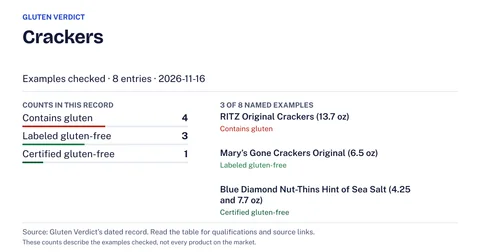
| Crackers | Crackers and cookies could generate crumbs6. | Are crackers gluten-free? |
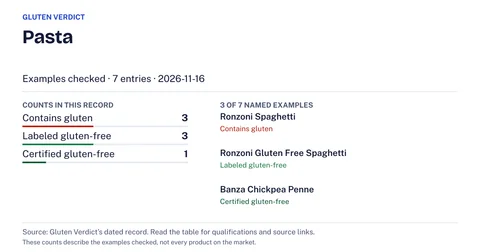
| Pasta | Shared cooking water12 and the colander13. | Is pasta gluten-free? |
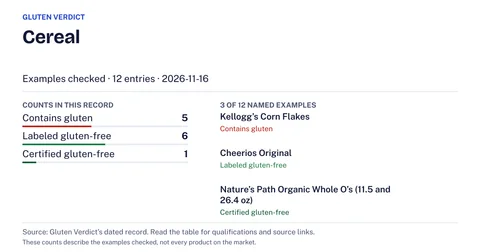
| Cereal | No source above names cereal; the general wipe-down advice for food prep surfaces applies1. | Is cereal gluten-free? |
Going gluten-free for the whole house
GIG lists going entirely gluten-free as an optional approach that suits some families, and notes it may not always be healthy for family members who do not have celiac disease or another condition that needs a gluten-free diet38. Because Coeliac UK says gluten should be eaten regularly once a baby is established on solids19, a baby’s gluten intake is a question to settle with the baby’s doctor before changing the household’s food.
GIG also suggests that housemates sit down together to work out how to share the space39; a parent, a partner and an older sibling can each take a part of the routine above.
Questions for the baby’s doctor and the celiac family member’s dietitian
- Has the baby’s doctor agreed to start gluten foods, and what will they watch for?
- Does the doctor want a particular first gluten food, given that ESPGHAN’s 2024 update gives no specific guidance on type17?
- Does the celiac family member’s dietitian have a view on a separate toaster, sponges or utensils, given that the sources above differ14, 15, 35?
- If the baby is the one who develops celiac disease, how should the household routines change?
Verdicts in this guide

Questions people ask
Do we need a second toaster?
The sources differ. GIG puts toasters at the top of its list of appliances to keep gluten-free only, with a toaster bag as a temporary solution14, 22. Coeliac UK suggests toaster bags or considering a separate toaster23. In one small study, toasting gluten-free bread in shared toasters was not associated with gluten transfer above 20 ppm33, 37.
Do we need separate sponges and cloths?
GIG says shared sponges and dish rags should be replaced or laundered frequently32. Coeliac UK says you do not need separate cloths or sponges15.
Is rinsing a pot enough?
GIG’s household article says rinsing leaves invisible traces of gluten28. Coeliac UK says washing up liquid or a dishwasher will remove gluten31. In one study with a small sample size, rinsing pots with water alone was as effective as scrubbing with soap and water in preventing detectable gluten transfer after cooking pasta16, 37.
More in Women, pregnancy and babies
 Gluten-free baby food: what the makers’ labels say about wheat, barley and oatsWhat baby cereal, puff, snack and pouch makers print about wheat, barley, oats and gluten, read from their own pages, with the date we read them.
 Introducing gluten to a baby when celiac runs in the familyWhat two randomized trials, pooled reviews and pediatric societies found on timing the first gluten, and when family testing is discussed.
 Celiac disease and pregnancy: what the research reportsWhat studies report on celiac disease and pregnancy, what charities, NIDDK and the USPSTF say about care and folic acid, and a child's own risk.
 Miscarriage and celiac disease: what studies report and how strong the evidence isWhat pooled studies report about celiac disease and miscarriage, why they cannot show cause, and what ESHRE and ACOG say about testing.
 Celiac disease and infertility: what studies report and what guidelines say about testingWhat meta-analyses report on celiac disease in women with infertility, what ESHRE, NICE and the ACG say about testing, and why a test needs gluten.
 Breastfeeding with celiac disease: what studies show about gluten in breast milkWhat studies measured about gluten in breast milk, what ESPGHAN says about breastfeeding and a child’s celiac risk, and what one survey found after birth.
Related guides
 Setting up a gluten-free kitchen: what to replace, wash or shareWalk each kitchen zone and decide, item by item, what to replace, what to wash and what a mixed household can keep sharing, with charity sources.
 Gluten cross-contact at home: where it happens and what to do about itHow gluten reaches gluten-free food at home, whether to separate, wash or ask for each route, and which rules have lab data behind them.
 Celiac disease symptoms in children, and who pediatric guidelines say to testTypical and less typical celiac signs in children, who pediatric guidelines say to test, and why the child keeps eating gluten until testing ends.
 Starting a gluten-free diet: testing first, then labels, oats and the kitchenWhat NIH and the celiac charities say about starting a gluten-free diet: testing first, which foods to start with, a US label check, oats and the kitchen.
Sources
- [1, 2, 6, 13, 20, 24, 30, 38] Gluten Intolerance Group, 25 Ways Cross-Contact Could Happen (And How to Avoid It), checked Nov 17, 2026.
- [3, 27] Gluten Intolerance Group, Should I be concerned about using the same dish/hand towels and pot holders as family members in my household who handle gluten-containing food?, checked Nov 17, 2026.
- [4, 17] PubMed (US National Library of Medicine): J Pediatr Gastroenterol Nutr 2024 (ESPGHAN position paper), Early diet and the risk of coeliac disease, an update 2024 position paper by the ESPGHAN special interest group on coeliac disease, abstract record, checked Nov 17, 2026.
- [5, 18, 19] Coeliac UK, Feeding your baby, checked Nov 17, 2026.
- [7, 15, 23, 31, 34] Coeliac UK, Avoid Gluten Free Cross Contamination at Home, checked Nov 17, 2026.
- [8, 14, 21, 22, 25, 28, 29, 32, 39] Gluten Intolerance Group, Your Kitchen, Their Kitchen, Our Kitchen: Navigating Gluten-Free Cohabitation, checked Nov 17, 2026.
Read on 2026-11-17: the section headed “Sometimes Clean Enough Is Not Always Enough” describes three steps for shared surfaces and items: rinse, wash with hot soapy water, and sanitize, and says that skipping any one leaves room for cross-contact.
- [9, 10, 11, 26] Gluten Intolerance Group, Pre-School, Childcare, and Gluten Risks, checked Nov 17, 2026.
- [12, 16, 33, 35, 36, 37] Gastroenterology (Weisbrod and colleagues, 2020), PubMed Central, Preparation of Gluten-Free Foods Alongside Gluten-Containing Food May Not Always Be as Risky for Celiac Patients as Diet Guides Suggest, checked Nov 17, 2026.