How a gluten challenge works before celiac testing
Short answer
A gluten challenge means eating gluten again, or more of it, before celiac testing6, because NIDDK says a gluten-free diet can affect test results1. Coeliac UK, reporting the British adult guideline, names at least 3 g and preferably 6 g of gluten a day for a minimum of six weeks11; a pediatric review suggests a minimum of 3–6 g a day for 12 weeks16. Both involve a clinician: Coeliac UK says to speak with the local healthcare team first32, and the pediatric review has the gastroenterologist set the challenge’s goals at baseline and calls for a provider check-in at 4–6 weeks31, 17.
Part of Celiac diagnosis, testing and gluten sensitivity, 25 guides

Key points
- NIDDK says doctors do not recommend starting a gluten-free diet before diagnostic testing, because the diet can affect test results1.
- The sources give different amounts: at least 3 g and preferably 6 g of gluten a day for six weeks or more in Coeliac UK’s adult summary11, and a minimum of 3–6 g a day for 12 weeks in the pediatric review16.
- ACG says a gluten challenge can be offered to people already on a gluten-free diet who carry a celiac-compatible HLA type19; in the text we read it names no amount or length20.
- Symptoms are expected during a challenge, and the pediatric review says the clinician guides whether to adjust the dose or move to endoscopy35, 42.
- The pediatric review says there is consensus that mild elevations in serology or symptoms are supportive but have limited diagnostic value56.
Why going gluten-free first changes what testing can show
NIDDK says doctors most often use blood tests and biopsies of the small intestine to diagnose or rule out celiac disease, and that they do not recommend starting a gluten-free diet before diagnostic testing because the diet can affect test results1.
A review by authors from the celiac special interest group of the North American pediatric gastroenterology society (NASPGHAN)2 puts the reasoning plainly: diagnosis involves symptoms, serology and duodenal histology, which normalize on a gluten-free diet, so accurate evaluation requires patients to be ingesting sufficient gluten when tested3.
Coeliac UK adds two points. Feeling better on a gluten-free diet does not, on its own, indicate coeliac disease4, and reducing the amount of gluten before testing, not only removing it, will affect results5.
What a gluten challenge is
The NASPGHAN-group review defines it as reintroducing or increasing the amount of gluten in the diet to facilitate diagnostic testing in celiac disease6. It says the challenge is most commonly used when gluten intake was reduced or eliminated before the diagnostic evaluation was completed7.
Coeliac UK uses the same term for the same situation: for someone who has already started to reduce or remove gluten, reintroducing it before testing is often called a gluten challenge, and the charity says this can be difficult and worth discussing with a GP8.
The amount and length each source names
The sources do not give one schedule. The table gives each source’s figures in its own terms rather than blending them. The grams below are grams of gluten, not grams of food: Coeliac UK’s portion table shows about 3 g of gluten in 60 g of wheat bread9.
| Source | Who it is written for | What it names |
|---|---|---|
| Coeliac UK, summarizing the British Society of Gastroenterology (BSG) adult guideline | Adults10 | At least 3 g but preferably 6 g of gluten every day for a minimum of 6 weeks, with gluten kept in the diet throughout the diagnosis process11. Higher doses improve diagnostic accuracy, but doses above 6 g a day are associated with increased symptom burden12. If the challenge is poorly tolerated, the page says people can try halving the daily dose and continuing for an additional 6 weeks13. |
| Coeliac UK, page on blood tests and biopsy | People being tested for coeliac disease | Some gluten in more than one meal every day for at least six weeks before testing, as “guidelines recommend”14. |
| NASPGHAN-group review (Singh et al., 2023) | Children15 | A minimum of 3–6 g of gluten per day for 12 weeks, with a formal check-in at 4–6 weeks16, 17. If gluten causes distressing symptoms, an abbreviated 6–12 week challenge is acceptable, though a shorter one may not be able to rule out celiac disease18. |
| American College of Gastroenterology (ACG) guideline, 2023 | People who have already started a gluten-free diet19 | A gluten challenge can be offered when a celiac-compatible HLA type is present19. In the text we read, no daily amount or number of weeks is given20. |
The pediatric review places its own suggestion between two other published statements: one suggesting a challenge of up to 12 months with serial serologies, the other suggesting that 6 weeks may be sufficient. It says these differences highlight the importance of tailoring the challenge to the individual patient and to whether the goal is to rule in or to rule out celiac disease21.
Why the amounts differ
One research trial compared two doses. It randomized 14 adults with biopsy-proven celiac disease to 3 g or 10 g of gluten a day for 14 days22. Measures including the villous height to crypt depth ratio changed significantly from baseline at 10 g only, while symptoms were significant at 3 g23. Its authors describe the work as a preliminary framework for designing gluten challenges for research24, so it is framed as research design, not as a diagnostic schedule.
What 3 grams of gluten looks like in food
Coeliac UK’s healthcare-professional page says its table gives examples of food portions that contain 3 g of gluten and can be used for a gluten challenge25.
| Food (Coeliac UK’s wording) | Portion for about 3 g of gluten |
|---|---|
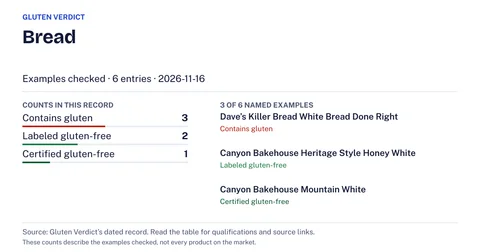
| Wheat-based bread (see our bread verdict) | 60 g: 1.5–2 slices, or a medium bread roll9 |
| Sourdough spelt bread | 60 g: 1.5–2 slices, or a medium bread roll9 |
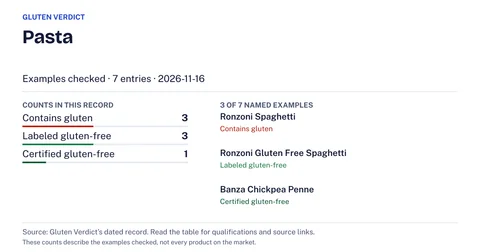
| Wheat-based cooked pasta (see our pasta verdict) | 90 g of cooked pasta, a fist-size portion9 |
| Wheat-based breakfast cereal, such as Shredded Wheat or Weetabix | 25 g: two Weetabix or two fist-sized portions of cereal9 |
| Wheat-based biscuits | 50 g: 3–5 biscuits9 |
| Wheat gluten flour or vital wheat gluten | 7.5 g: 1.5–2 teaspoons9 |
The same page says higher doses of gluten give more accurate results and that wheat is the best source of gluten26. For tolerability it suggests a graded start, such as a half dose for the first two days before the full daily dose27, and notes that sourdough spelt bread is lower in FODMAPs and so may be better tolerated than standard wheat bread28.
What the sources say a clinician arranges first
- A baseline blood test. The pediatric review says baseline serologies before a challenge may be particularly helpful for patients without previous serologic testing, patients ingesting minimal amounts of gluten, or patients who recently started a gluten-free diet29. It adds that normal celiac serologies in patients taking little or no gluten cannot be used to confidently exclude celiac disease30.
- An estimate of current gluten intake and a goal for the challenge. In the review, the baseline evaluation by the gastroenterologist includes estimating current gluten intake, screening for gastrointestinal and extraintestinal manifestations, and establishing goals of gluten consumption for the challenge31.
- A check-in partway through. The review calls a formal provider check-in at 4–6 weeks a key to adjusting dose and duration17.
On who is involved, Coeliac UK says to speak with the local healthcare team before considering reintroducing gluten32, and its page for health professionals says a gluten-free diet should not be initiated until a specialist has confirmed the diagnosis33. The pediatric review calls it of utmost importance that clinicians not remove gluten before diagnostic testing is complete and a gastroenterologist has been consulted34.
Symptoms during a challenge, and what the sources say when they are severe
The pediatric review says symptoms are expected during a gluten challenge: gastrointestinal ones such as abdominal pain, diarrhea and bloating, and extraintestinal ones such as fatigue, headaches and brain fog35. Coeliac UK describes early acute symptoms of nausea, vomiting, abdominal pain, diarrhoea, headache and lethargy as common, and says they typically reduce in severity within a few days of the challenge36.
A systematic review and meta-analysis of 48 eligible studies with 1,409 participants, 35 of which were pooled37 looked at adults with celiac disease in remission on a gluten-free diet, and it excluded studies of challenges done for clinical diagnosis38. It found abdominal pain, bloating and nausea the most frequent symptoms39, and bloating, fatigue, flatulence and nausea were significantly more reported in studies giving 6 g or more of gluten a day40.
Symptoms alone do not decide it: the pediatric review says symptoms on gluten reintroduction have limited specificity and do not equate to a diagnosis of celiac disease41.
If symptoms are severe
- The pediatric review says the patient or family should notify the clinician if symptoms develop, so the clinician can guide whether to adjust the dose and continue or to expedite lab testing and/or endoscopy42. For symptoms significantly affecting quality of life, it suggests considering a reduced gluten load and expedited endoscopy43.
- Coeliac UK’s page on the BSG guideline describes halving the daily dose and continuing for an additional 6 weeks when a challenge is poorly tolerated13.
- ACG says that for patients with highly elevated serology who had already started a gluten-free diet and report a severe symptomatic response to gluten exposure, a gluten challenge followed by biopsy may not be advisable44.
Children: what the pediatric review adds
The review was written about children, and it says there is no consensus on the timing, dosing and duration of a gluten challenge for them15. It notes that historically, when a challenge was part of the diagnostic algorithm for all patients, 10 g of gluten a day for 6–8 weeks was recommended45. Its own suggestion is a minimum of 3–6 g a day for 12 weeks16, and it lists as new that a longer duration (12 weeks or more) and higher dosing may improve diagnostic accuracy in children46.
It also says childhood development, social circumstances and long-term health concerns must be considered when identifying a candidate for a challenge47.
When a challenge is not advised, and what the sources offer instead
Genetic typing is one route the sources describe. ACG says HLA testing is central for people who started a gluten-free diet before evaluation, and that with a celiac-compatible haplotype a challenge can be offered19. It also says that if the HLA test is negative, celiac disease is ruled out48. Coeliac UK’s summary of the BSG guideline says it is recommended to check for HLA-DQ2 and HLA-DQ8 before reintroducing gluten49, and the pediatric review says HLA testing may identify who could forgo a challenge50.
Separately, ACG describes an “after-the-fact” diagnosis of likely celiac disease for symptomatic adult patients with a 10-fold or greater elevation of TTG IgA, with a second confirmatory test such as the EMA antibody also advisable51. ACG says this diagnosis of likely celiac disease may be useful in research studies, including clinical trials for nondietary therapies, and when considering candidacy for such therapies should they be approved51.
When a person has restricted gluten and cannot reintroduce it, Coeliac UK’s advice to health professionals is to refer to a gastroenterologist and explain that it may be difficult to confirm the diagnosis52.
After the challenge: what the sources say comes next
Coeliac UK says that after six weeks at 6 g a day most people will start to show some gut damage or changes in cells, but antibody levels may take longer to rise, so endoscopy and biopsy is preferred for diagnosis after gluten reintroduction53. NIDDK says doctors obtain biopsies of the small intestine during an upper GI endoscopy54.
The pediatric review says current NASPGHAN guidelines recommend endoscopy with duodenal histopathology as the most appropriate endpoint for a challenge55, and says mild elevations in serology, like symptoms, are supportive but have limited diagnostic value56. If villous atrophy is not present after a 2-week challenge, it says the challenge may not be sufficient to conclude celiac disease is absent, and that one should consider continuing it with serology monitoring57.
This page reports what named sources say about gluten challenges. It is not medical advice: the amount, the length and whether to do a challenge at all are decided with the treating clinician.
Verdicts in this guide
Questions people ask
Can celiac disease be tested for after going gluten-free without a challenge?
ACG describes HLA testing as central for people who started a gluten-free diet before evaluation, with a challenge offered if a compatible HLA type is present19, and says that if the HLA test is negative, celiac disease is ruled out48. Coeliac UK’s advice to health professionals says that if gluten cannot be reintroduced, confirming the diagnosis may be difficult52.
Do symptoms during a challenge mean celiac disease?
The pediatric review says symptoms on reintroducing gluten have limited specificity and do not equate to a diagnosis41.
More in Celiac diagnosis, testing and gluten sensitivity
 Bloated after bread or pasta? Why the celiac blood test comes before cutting glutenWhy bloating after bread or pasta cannot name its cause, why celiac blood tests come before a gluten-free diet, and what to ask a clinician.
 Wheat allergy tests vs celiac tests: which test answers which conditionWhich test answers which condition: celiac antibodies and biopsy versus wheat IgE, skin prick and food challenge, as ACG, NIAID, FARE and NIH say.
 Can non-celiac gluten sensitivity go away? What the trials show and do not showWhat the sources say about whether non-celiac gluten sensitivity fades, what challenge and FODMAP trials found, and what to ask a clinician.
 How non-celiac gluten sensitivity is diagnosed: the Salerno criteriaWhat counts as a diagnosis of non-celiac gluten sensitivity: the exclusions, the Salerno criteria steps and what a blinded gluten challenge involves.
 Follow-up testing after a celiac diagnosis: what the guidelines listWhat celiac guidelines and charities list for follow-up: antibody checks, repeat biopsy, nutrient tests, and what is checked if symptoms continue.
 Silent celiac disease: who is tested when there are no symptomsWhat silent celiac disease means, what the US Preventive Services Task Force said about screening without symptoms, and which groups guidelines test.
All 25 guides in Celiac diagnosis, testing and gluten sensitivity
Related guides
 Celiac Blood Tests: What tTG-IgA, Total IgA, DGP and EMA Each CheckWhat tTG-IgA, total IgA, EMA and DGP check, why total IgA is drawn with tTG-IgA, when back-up tests are used, and why gluten stays in the diet first.
 Endoscopy for celiac disease: what to expect on the dayWhat NIDDK, the ACG and celiac charities say about the endoscopy and small intestine biopsy used to diagnose celiac disease, before, during and after.
 How celiac disease is diagnosed, step by stepFrom blood test to biopsy or no-biopsy diagnosis: what US, European and UK guidelines say, where they differ, and what they say about eating gluten first.
 Celiac genetic testing: what HLA-DQ2 and DQ8 results can and cannot tell youWhat HLA-DQ2 and DQ8 typing checks for, how NIDDK, ACG, ESPGHAN and WGO read a negative or positive result, and where the guidelines place the test.
Sources
- [1, 54] National Institute of Diabetes and Digestive and Kidney Diseases (NIDDK), Diagnosis of Celiac Disease, checked Nov 17, 2026.
- [2, 3, 6, 7, 15, 16, 17, 18, 21, 29, 30, 31, 34, 35, 41, 42, 43, 45, 46, 47, 50, 55, 56, 57] Journal of Pediatric Gastroenterology and Nutrition, Singh et al., A Clinician’s Guide to Gluten Challenge (2023), checked Nov 17, 2026.
- [4, 9, 11, 12, 13, 26, 27, 28, 32, 36, 49, 53] Coeliac UK, BSG Guideline on the diagnosis and management of adult coeliac disease: the highlights, checked Nov 17, 2026.
Read on 2026-11-17: the table headed “Gluten containing food / Amount providing around 3 g gluten” lists sourdough spelt bread (60g, 1.5 – 2 slices bread / medium bread roll); wheat-based breakfast cereal such as shredded wheat or Weetabix (25g, two Weetabix or two fist-sized portions of cereal); wheat-based bread (60g; 1.5-2 slices bread / medium bread roll); wheat-based cooked pasta (90g cooked pasta, a fist-size portion); wheat-based biscuits (50g, 3-5 biscuits); and wheat gluten flour or vital wheat gluten (7.5g, 1.5-2 teaspoons).
- [5, 14] Coeliac UK, Blood tests and biopsy, checked Nov 17, 2026.
- [8] Coeliac UK, How is coeliac disease diagnosed?, checked Nov 17, 2026.
- [10, 25, 33, 52] Coeliac UK, How to test adults (healthcare professionals), checked Nov 17, 2026.
- [19, 20, 44, 48, 51] American College of Gastroenterology, ACG Guidelines Update: Diagnosis and Management of Celiac Disease (Rubio-Tapia et al., 2023), checked Nov 17, 2026.
Read on 2026-11-17: in the guideline’s body text as served on the publisher’s full-text page, a gluten challenge is mentioned in four passages (the scope, the history of diagnostic biopsies, HLA testing, and adults who had already started a gluten-free diet); none of them gives a daily amount of gluten or a number of weeks.
- [22, 23, 24] Gastroenterology, Leonard et al., Evaluating Responses to Gluten Challenge: A Randomized, Double-Blind, 2-Dose Gluten Challenge Trial (2021), checked Nov 17, 2026.
- [37, 38, 39, 40] American Journal of Gastroenterology, Banegas et al., Gastrointestinal and Extraintestinal Symptoms Among Subjects With Celiac Disease Undergoing a Dose-Specified Gluten Challenge: A Systematic Review and Meta-Analysis (2026), checked Nov 17, 2026.