Bloated after bread or pasta? Why the celiac blood test comes before cutting gluten
Short answer
Bloating after bread or pasta does not on its own show what is causing it: NIDDK says celiac disease is not diagnosed on symptoms alone, because some of its symptoms are like those of other digestive disorders1. The ACG guideline has celiac blood testing (TTG IgA) done while a person eats a regular, gluten-containing diet10, and NIDDK says doctors do not recommend starting a gluten-free diet before diagnostic testing2.
Part of Celiac diagnosis, testing and gluten sensitivity, 25 guides

Key points
- Bloating is on NIDDK’s list of digestive symptoms of celiac disease, but NIDDK says celiac disease is not diagnosed on symptoms alone6, 1.
- The ACG guideline has serologic testing done while a person eats a regular, gluten-containing diet10.
- The ACG guideline says celiac disease can be considered adequately ruled out after a negative TTG IgA when the pretest probability is low or moderate12; CDF describes non-celiac gluten sensitivity as symptoms that resolve without gluten in people who do not test positive19.
- One double-blind trial of people who believed they were gluten sensitive found gluten-specific effects in only 8% of participants25.
Why bloating alone does not say what is wrong
Bloating is on NIDDK’s list of digestive symptoms of celiac disease6. NIDDK also says celiac disease isn’t diagnosed based on symptoms alone, because some of its symptoms are like those of other digestive disorders, such as irritable bowel syndrome (IBS) or lactose intolerance1.
NIDDK adds that celiac symptoms vary widely and may come and go5, and that people with celiac disease who have no symptoms can still develop complications over time if they do not get treatment7. Symptoms point toward asking the question; they do not answer it.
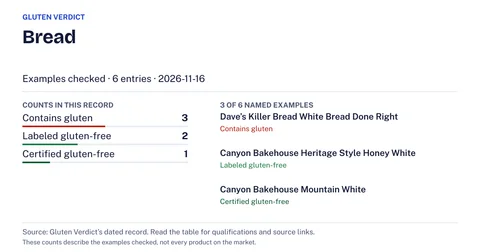
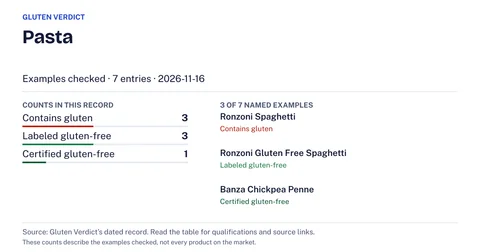
Bread and pasta made with wheat are gluten foods (see our verdicts on bread and pasta),.
Why the celiac blood test comes before a gluten-free diet
NIDDK says doctors don’t recommend starting a gluten-free diet before diagnostic testing because a gluten-free diet can affect test results2. Doctors typically diagnose celiac disease with blood tests and biopsies of the small intestine3, and the blood tests look at antibody levels that are often higher than normal in people who have untreated celiac disease4. The ACG guideline calls the detection of celiac-specific antibodies in the serum very helpful for the initial screening of patients with suspicion of the disease14.
The ACG guideline is specific about conditions: serologic testing consists of measuring TTG IgA while on a regular, gluten-containing diet, with total IgA measured at the same time if IgA deficiency has not been checked before10.
The Celiac Disease Foundation (CDF) states the consequence: diagnostic tests require a gluten-containing diet so that the test can detect gluten antibodies, and someone already on a gluten-free diet would need to reintroduce gluten for several weeks before the blood test15, 16.
People who have already stopped gluten: the ACG guideline says HLA testing is central to the approach for individuals who started a gluten-free diet before evaluation, and that with a celiac-compatible haplotype a gluten challenge can be offered13. Our guide to how a gluten challenge works covers that, and what each celiac blood test checks covers the tests.
What happens after the blood test
Under the ACG guideline, patients with an elevated TTG IgA level should proceed to an upper endoscopy (EGD) with duodenal biopsy11. CDF calls the intestinal biopsy the “gold standard” for diagnosis, saying it can show whether you have celiac disease, whether symptom relief on a gluten-free diet is due to a placebo effect, or whether a different gastrointestinal disorder or sensitivity is behind the symptoms18.
A negative result has a stated scope. The guideline says a negative TTG IgA in a person without IgA deficiency has a high negative predictive value when the chance of celiac disease before testing is low or moderate, and that celiac disease can be considered adequately ruled out in that situation. When the pretest probability is high, it says an endoscopy with biopsy should be considered even with a negative serology12.
If celiac disease is ruled out: gluten sensitivity and what one trial found
CDF describes non-celiac gluten sensitivity (NCGS), also called non-celiac wheat sensitivity, as symptoms similar to those of celiac disease that resolve when gluten is removed from the diet, in people who do not test positive for celiac disease19. The terms are generally used when removing gluten resolves symptoms after testing negative for celiac disease and a wheat allergy20.
CDF also says research has not confirmed that gluten is the culprit triggering the immune reaction, and names amylase-trypsin inhibitors (ATIs) and fructans (found in FODMAPs) as other potential culprits21.
One blinded trial, summarized
Biesiekierski and colleagues set out to test the specific effects of gluten, after reducing fermentable carbohydrates (FODMAPs), in subjects believed to have NCGS22. They ran a double-blind crossover trial of 37 subjects23 who had irritable bowel syndrome and not celiac disease27. Gastrointestinal symptoms improved during reduced FODMAP intake, but worsened to a similar degree when diets included gluten or whey protein24. Gluten-specific effects were observed in only 8% of participants25.
That is one trial of one group of people. It does not say what gluten does for any one reader, which is the reason to take the question to a clinician.
What to say at the appointment
These are our own suggested words for a plain conversation, not medical advice. Adjust them to your situation:
- “I bloat after bread and pasta, and I haven’t cut out gluten yet. Should I have a celiac blood test first?”
- “Which blood tests do you order, and do I need to keep eating gluten until they are done?”
- “If the test is negative, what do you think explains the bloating, and what is the next step?”
- “I have already cut back on gluten. What does that mean for testing?”
The answers belong to your clinician. The sources above are why the first two questions matter2, 10.
Where the other possibilities are covered
NIDDK’s IBS page says a doctor may recommend diet changes to help treat IBS symptoms, and that the changes may include eating more fiber, avoiding gluten, or following the low FODMAP diet26. We keep those explanations in their own guides rather than a checklist here:
When the sources frame testing as worth raising
The ACG guideline says testing should be considered in patients with signs or symptoms suggestive of celiac disease, including diarrhea, weight loss, abdominal pain and bloating, or laboratory abnormalities such as unexplained elevated serum aminotransferase levels9. NIDDK says doctors in the United States do not routinely screen people for celiac disease, but that blood relatives of people with celiac disease and those with type 1 diabetes should talk with their doctor about their chances of getting the disease to see if they should be tested8.
CDF adds that getting tested can help you discover what is causing your symptoms, even if it is to rule out celiac disease17.
Verdicts in this guide
Questions people ask
Should I stop eating gluten before seeing a doctor about bloating?
NIDDK says doctors don’t recommend starting a gluten-free diet before diagnostic testing, because the diet can affect test results2.
Is bloating a symptom of celiac disease?
NIDDK lists bloating among the digestive symptoms6, and also says celiac disease isn’t diagnosed based on symptoms alone1.
If I already stopped eating gluten, can I still be tested?
CDF says someone already on a gluten-free diet would need to reintroduce gluten for several weeks before the blood test16. The ACG guideline describes HLA testing and, with a compatible haplotype, a gluten challenge for people who started the diet before evaluation13. Your clinician sets the plan.
Does a negative celiac test mean gluten is not the problem?
A negative test addresses celiac disease. The ACG guideline says celiac disease can be considered adequately ruled out after a negative TTG IgA when the pretest probability is low or moderate and IgA deficiency is absent12. CDF describes non-celiac gluten sensitivity as symptoms that resolve without gluten in people who do not test positive for celiac disease19.
More in Celiac diagnosis, testing and gluten sensitivity
 How a gluten challenge works before celiac testingWhat named celiac sources say about the amount and length of a gluten challenge before testing, side by side, and why a clinician plans it.
 Wheat allergy tests vs celiac tests: which test answers which conditionWhich test answers which condition: celiac antibodies and biopsy versus wheat IgE, skin prick and food challenge, as ACG, NIAID, FARE and NIH say.
 How celiac disease is diagnosed, step by stepFrom blood test to biopsy or no-biopsy diagnosis: what US, European and UK guidelines say, where they differ, and what they say about eating gluten first.
 Celiac Blood Tests: What tTG-IgA, Total IgA, DGP and EMA Each CheckWhat tTG-IgA, total IgA, EMA and DGP check, why total IgA is drawn with tTG-IgA, when back-up tests are used, and why gluten stays in the diet first.
 Positive celiac blood test but a normal biopsy: what doctors call potential celiac diseaseWhat celiac guidelines say when antibodies are positive but the biopsy looks normal: potential celiac disease, other causes, and the follow-up described.
 Questions to bring to a gastroenterologist when celiac disease is suspectedQuestions for a celiac disease appointment: what to bring, what the sources say about diet before testing, and what to ask about the biopsy and follow-up.
All 25 guides in Celiac diagnosis, testing and gluten sensitivity
Related guides
 Celiac disease or IBS: overlapping symptoms and what guidelines say about testingWhat the ACG IBS guideline says about celiac blood tests, how the two conditions compare per NIDDK, and why celiac testing needs gluten in the diet.
 Gluten-free and low FODMAP: what to check when symptoms continueHow gluten and FODMAPs differ, what guidelines list for persistent symptoms on a gluten-free diet, and FODMAP ingredients to look for on labels.
 Celiac disease vs gluten intolerance: three conditions, three diagnosesHow celiac disease, non-celiac gluten sensitivity and wheat allergy differ in mechanism, diagnosis and diet, with a source behind every point.
 Finding a dietitian who knows celiac disease: credentials, directories and questionsWhat RD and RDN mean, which celiac-related credentials and directories exist, and what to ask a dietitian at your first visit after a celiac diagnosis.
Sources
- [1, 2, 3, 4, 8] US National Institute of Diabetes and Digestive and Kidney Diseases (NIDDK), Diagnosis of Celiac Disease, checked Nov 17, 2026.
- [5, 6, 7] US National Institute of Diabetes and Digestive and Kidney Diseases (NIDDK), Symptoms & Causes of Celiac Disease, checked Nov 17, 2026.
Read on 2026-11-17: under “What are the symptoms of celiac disease?”, the list of digestive symptoms names bloating, chronic diarrhea, constipation, gas, lactose intolerance due to damage to the small intestine, loose, greasy, bulky, and bad-smelling stools, nausea or vomiting, and pain in the abdomen.
- [9, 10, 11, 12, 13] American College of Gastroenterology, ACG Guidelines Update: Diagnosis and Management of Celiac Disease (Rubio-Tapia et al., 2023), checked Nov 17, 2026.
- [14] American Journal of Gastroenterology (via PubMed), American College of Gastroenterology Guidelines Update: Diagnosis and Management of Celiac Disease (abstract), checked Nov 17, 2026.
- [15, 16, 17] Celiac Disease Foundation, Why You Should Be Tested Before Going Gluten-Free, checked Nov 17, 2026.
- [18] Celiac Disease Foundation, Diagnosis of Celiac Disease, checked Nov 17, 2026.
- [19, 20, 21] Celiac Disease Foundation, Non-Celiac Gluten/Wheat Sensitivity, checked Nov 17, 2026.
- [22, 23, 24, 25, 27] Gastroenterology (via PubMed), No effects of gluten in patients with self-reported non-celiac gluten sensitivity after dietary reduction of fermentable, poorly absorbed, short-chain carbohydrates (Biesiekierski et al.), checked Nov 17, 2026.
- [26] US National Institute of Diabetes and Digestive and Kidney Diseases (NIDDK), Irritable Bowel Syndrome (IBS), checked Nov 17, 2026.