What fast-food chains say about shared fryers, and what a shared-fryer study measured
Short answer
Arby’s, Buffalo Wild Wings and Popeyes say in their own allergen documents that fried foods share oil or a fryer12, 15, 19; Five Guys’ FAQ page says its fries are fried in fryers that cook absolutely nothing else31. The Wendy’s, Chipotle and Tim Hortons pages we read do not mention fryers22, 26, 29. One 2026 study of 98 fry and tortilla chip samples from shared fryers found six above the 20 ppm gluten-free threshold2.
Part of Eating out and chain restaurant policies, 25 guides

Key points
- Three chains put it in writing that fried items share oil or a fryer: Arby’s says fried items are cooked in common oil, Buffalo Wild Wings says it does not use separate fryers, and Popeyes lists foods fried in a shared fryer12, 15, 19. Five Guys’ FAQ says the opposite for its fries31.
- A page that does not mention fryers has not answered the question either way: ask at the counter22, 26, 29.
- The 2026 study measured 98 samples: six exceeded 20 ppm, and 84 measured below 5 ppm2. Each establishment was sampled once8.
- In that study, every sample from an establishment reporting daily oil changes measured below 20 ppm; the oil-change answers were reported by staff and not verified5, 7.
- Documents carry different dates, from January 2025 to November 2026, so check the date before relying on a line14, 18, 20, 28.
What did the October 2026 shared-fryer study measure?
A cross-sectional study in the journal Nutrients, published 20 October 2026, with Weisbrod of the Celiac Disease Foundation as first author32, tested 98 samples: 55 of French fries and 43 of tortilla chips, collected from fast food, fast casual, casual dining and fine dining restaurants, cafés and other food service settings across multiple US states. All were naturally gluten-free before frying and were cooked in fryers shared with gluten-containing foods1.
| Group | What was measured |
|---|---|
| All 98 samples | Six (6.1%) exceeded the FDA gluten-free threshold of 20 ppm, 84 of 98 (85.7%) measured below the assay’s lower limit of quantification (under 5 ppm), and all 43 tortilla chip samples tested under 5 ppm2. |
| Fast food (12 samples) | Nine measured under 5 ppm, two measured 5–20 ppm and one exceeded 20 ppm3. |
| Fast casual (15 samples) | Thirteen measured under 5 ppm, one measured 5–20 ppm and one exceeded 20 ppm3. |
| Oil changed daily (as reported) | All samples from establishments reporting daily oil changes measured under 20 ppm; samples from establishments reporting weekly changes were higher and more variable, including values above 20 ppm5. |
The groups are types of restaurant, not brands: the study’s table of results by type lists no chain by name10. It cannot tell you what any one chain’s fryers contain.
What the authors say limits the result
- The participating establishments were not randomly selected, and oil-change frequency and other fryer practices were reported by restaurant staff and not independently verified7.
- Each sample came from a different establishment that was sampled once, so the study does not measure how one fryer varies over time or under different operating conditions8.
- Fryer design, the amount and type of gluten-containing food fried, oil volume, filtration, food turnover, temperature and cleaning procedures were not assessed9.
- Of 98 samples, 39 came from establishments reporting daily oil changes, 35 weekly and 24 unknown4.
The authors’ conclusion is worded narrowly: in this multi-site observational study, shared fryers were not uniformly associated with meaningful gluten cross-contact6. Read it as a measurement of 98 samples, not as a statement about any restaurant you are about to visit.
What does each chain’s own page say about fryers?
One row per chain, each from the chain’s own document, read on 2026-11-17. This is a record of wording, not a ranking: a chain that states its practice and a chain that says nothing are not scored against each other.
| Chain | What the document says about fryer oil | Document and date |
|---|---|---|
| Arby’s | Fried menu items are cooked in common oil, and a † mark flags items cooked in the same oil as other items that contain major allergens11, 12. | Nutrition & allergen PDF, effective October 202614 |
| Buffalo Wild Wings | Does not use separate fryers; shared fryers mean potential allergen and gluten cross-contact between fried foods15. | Allergen & Preparation Guide, valid 11/10/2026 to 02/23/202718 |
| Popeyes | Says products fried in a shared fryer “include but may not be limited to” bone-in chicken, tenders, Cajun Fries and Cajun Onion Rings19. | Allergen PDF headed November 202620 |
| Wendy’s | Says cross contact is possible because of common handling and preparation areas; the page text does not mention fryers21, 22. | Nutrition & Food Allergens page |
| Five Guys | The nutrition and allergen PDF says there is always a risk of cross-contact in its kitchens and does not use the word fryer; the PDF’s fries nutrition table is headed with a cooked-in-peanut-oil line. The separate FAQ page says its fries are fried only in refined peanut oil using fryers that cook absolutely nothing else23, 24, 31. | Nutrition & allergen PDF (footer dated 9-1-2026) and FAQ page |
| Chipotle | The page text does not mention fryers; it says corn items such as chips may have trace gluten from co-mingling in the field25, 26. | Allergens & Special Diet page |
| Tim Hortons | Lists shared equipment such as the oven, toaster and panini press; the PDF does not mention fryers27, 29. | Allergen PDF for US restaurants, information as of January 202528 |
McDonald’s, Burger King, KFC and Chick-fil-A are not in the table: their allergen pages could not be read in full when we wrote this, and we do not describe a page we did not read.
Fries, tenders and breaded chicken: what the documents show
Arby’s chart lists wheat after its † mark for Crinkle Fries and Potato Cakes; the legend defines † as “cooked in the same oil as other items that contain major allergens.” Its Curly Fries rows list wheat as a contained allergen, and its Chicken Tenders row also lists wheat11, 13. Our verdict on Arby’s curly fries goes through the maker’s ingredient list.
Popeyes marks a shared fryer (F) against Cajun Fries and against its Classic Tenders, Spicy Tenders and Blackened Tenders20. Its sentence on shared fryers says the products fried in one “include but may not be limited to” bone-in chicken, tenders, wings, the chicken sandwich filet, seafood, Cajun Fries, Cajun Onion Rings and fried pies19. Our Popeyes red beans and rice verdict reads the same PDF.
At Buffalo Wild Wings the guide says French fries, tots and potato wedges are seasoned in the same bowls as wings and Crispy Dippers16, and that no items are certified gluten-free17. So the fryer is not the only shared step in its kitchen.
Tortilla chips are the other food the study tested, and all 43 samples tested under 5 ppm2. Chipotle’s page raises a different route for corn chips: possible trace gluten from co-mingling with gluten grains in the field25. For the foods themselves, see our verdicts on French fries, chicken nuggets, hash browns, tater tots, onion rings, mozzarella sticks, chips and tortilla chips.
What if a chain’s page says nothing about fryers?
Three of the seven chains’ documents are silent on fryers. We read the Wendy’s page text, the Chipotle page text and the Tim Hortons PDF, and none uses the word fryer22, 26, 29. What they do say is general: cross contact is possible at Wendy’s21, and Tim Hortons lists shared equipment and shared cooking areas27.
Silence is an absence in the document, not a finding about the kitchen. It means the question has to go to the staff, and it is the reason this page does not sort chains into better and worse.
One chain’s documents can differ from each other: the Five Guys allergen PDF does not use the word fryer24, but its FAQ page does answer the fryer question for its fries31. Our Five Guys verdict records the same FAQ answer.
How does a document’s date change the answer?
The documents differ in age. Arby’s says its information is effective as of October 202614, the Buffalo Wild Wings guide is valid from 11/10/2026 to 02/23/202718, and the Popeyes PDF is headed November 202620. The Tim Hortons US PDF reflects its products as of January 202528.
A wording that appears in a current document can change at the next edition, and an older one may not reflect today’s kitchens. When you rely on a line, check the date on the document it came from, and ask the restaurant whether it still applies.
What can you ask at the counter?
The Gluten Intolerance Group’s article on eating out suggests asking whether the fries are cooked in a dedicated fryer or share oil with breaded items30. Three questions cover what the documents above leave open:
- Is anything with breading or batter cooked in the same oil as these fries or chips?
- Is there a fryer used only for the food I am ordering?
- How often is the oil changed? (The study recorded this answer, but it was reported by staff and not verified7.)
A staff answer is one more piece of information, not a measurement: the study sampled each establishment once and did not assess how a single fryer varies over time8. For the wider picture of kitchens and menus, see eating out with celiac disease, where gluten hides in restaurant kitchens and what a “gluten-free” menu label means.
Verdicts in this guide
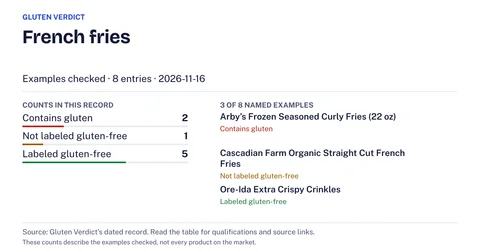 French friesDepends on the product2 of 8 products we checked contain gluten: Arby’s Frozen Seasoned Curly Fries (22 oz) and Checkers Frozen Crispy Seasoned Fries (28 oz)checked Nov 16, 2026
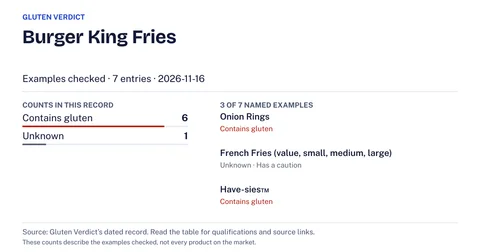 Burger King FriesUnknown6 of 7 menu items we checked contain glutenBurger King · checked Nov 16, 2026
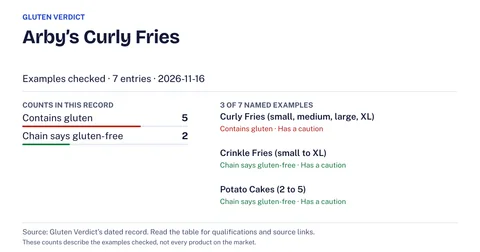 Arby’s Curly FriesContains glutenArby’s · checked Nov 16, 2026
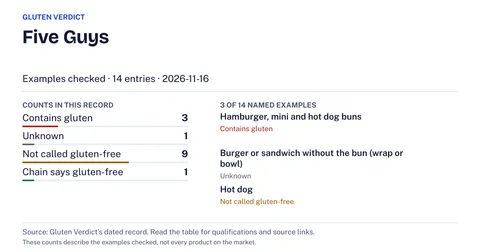 Five GuysDepends on the order3 of 14 menu items we checked contain gluten: Hamburger, mini and hot dog buns; Malt vinegar (fry condiment); and Oreo® Cookie Pieces shake mix-inFive Guys · checked Nov 16, 2026
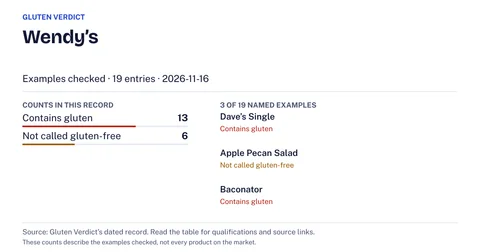 Wendy’sDepends on the order13 of 19 menu items we checked contain glutenWendy’s · checked Nov 16, 2026
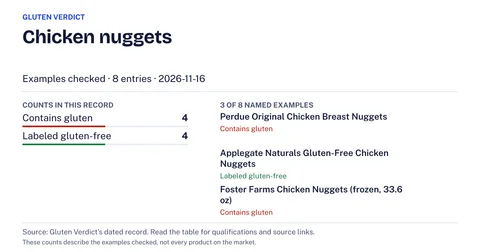 Chicken nuggetsDepends on the product4 of 8 products we checked contain glutenchecked Nov 16, 2026
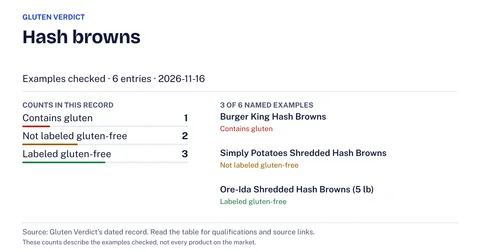 Hash brownsDepends on the product1 of 6 products we checked contains gluten: Burger King Hash Brownschecked Nov 16, 2026
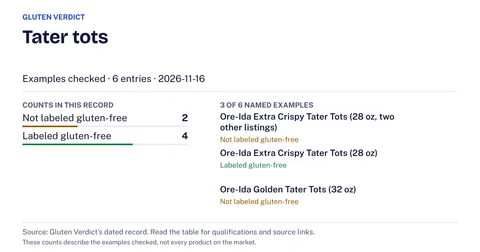 Tater totsDepends on the productchecked Nov 16, 2026
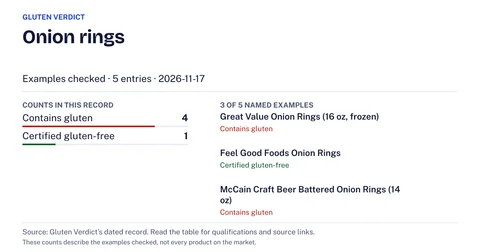 Onion ringsDepends on the product4 of 5 products we checked contain glutenchecked Nov 17, 2026
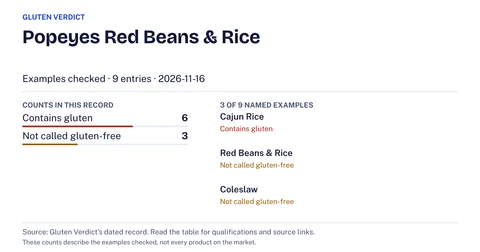 Popeyes Red Beans & RiceNot called gluten-free6 of 9 menu items we checked contain glutenPopeyes · checked Nov 16, 2026
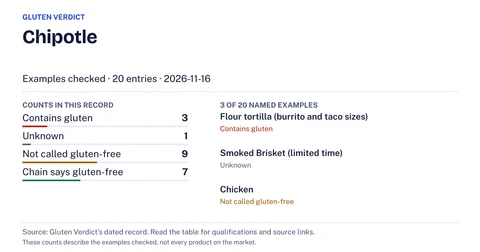 ChipotleDepends on the order3 of 20 menu items we checked contain gluten: Flour tortilla (burrito and taco sizes), Burrito, and QuesadillaChipotle Mexican Grill · checked Nov 16, 2026
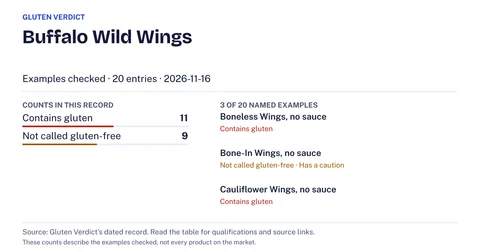 Buffalo Wild WingsDepends on the order11 of 20 menu items we checked contain glutenBuffalo Wild Wings · checked Nov 16, 2026
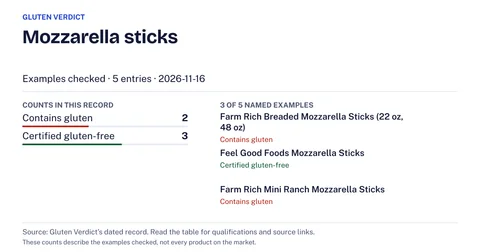 Mozzarella sticksDepends on the product2 of 5 products we checked contain gluten: Farm Rich Breaded Mozzarella Sticks (22 oz, 48 oz) and Farm Rich Mini Ranch Mozzarella Stickschecked Nov 16, 2026
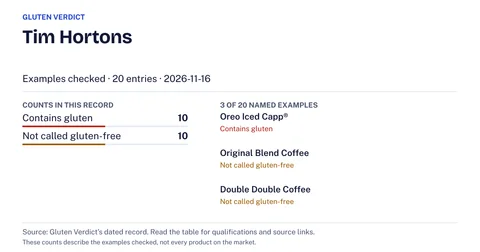 Tim HortonsDepends on the order10 of 20 menu items we checked contain glutenTim Hortons · checked Nov 16, 2026
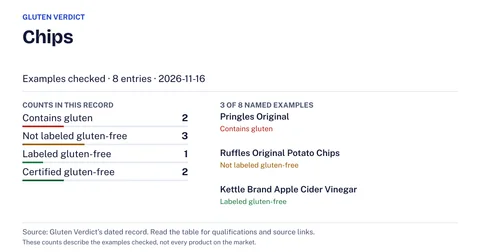 ChipsDepends on the product2 of 8 products we checked contain gluten: Pringles Original and Pringles Salt & Vinegarchecked Nov 16, 2026
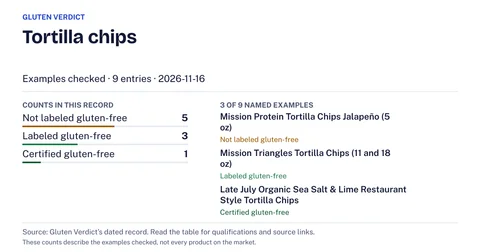 Tortilla chipsDepends on the productchecked Nov 16, 2026
Questions people ask
Does a shared fryer always put gluten on fries?
Not in the one study that measured it: six of 98 samples exceeded 20 ppm, and 84 measured below 5 ppm2. The authors describe an observational study in which shared fryers were not uniformly associated with meaningful gluten cross-contact6, and they list limits, including that each establishment was sampled once8.
Does changing the fryer oil daily matter?
In the study, all samples from establishments reporting daily oil changes measured under 20 ppm, while samples from those reporting weekly changes were higher and more variable5. The oil-change answers came from staff and were not independently verified7, and this is an observational study1.
Which chains say their fried foods share a fryer?
In the documents we read: Popeyes lists products fried in a shared fryer, and says the list may not be complete19, Buffalo Wild Wings says it does not use separate fryers15, and Arby’s says fried items are cooked in common oil12. Five Guys’ FAQ says its fries are fried in fryers that cook absolutely nothing else31.
More in Eating out and chain restaurant policies
 Casual-dining chains and gluten: what nine chains’ own allergen documents sayWhat Olive Garden, Outback, Applebee’s, Texas Roadhouse, Red Lobster, Chili’s and others say in writing about fryers, gluten menus and cross-contact.
 Burger and chicken chains and gluten: what Popeyes, Arby’s, Wendy’s and Five Guys say in writingWhat Popeyes, Arby’s, Wendy’s and Five Guys say in their own allergen documents about fryers, buns, breading and cross-contact, with dates.
 Where gluten hides in a restaurant kitchen, and the question to ask about each sourceFryers, sauces, roux, marinades, grills, pasta water and eggs: how gluten reaches restaurant food and the question GIG lists for each source.
 Eating out with celiac disease: what to check, ask and watch forPlan a restaurant meal with celiac disease: what to check before you go, the questions to ask in order, how to read the answers, and what studies measured.
 Ordering steak and burgers with celiac disease: marinades, sides, fryers and bunsWhat to ask about marinades, seasoning, butters, grills, fryers, sides and buns when you order steak or a burger with celiac disease.
 What Chipotle, Moe’s and Taco Bell say about gluten, fryers and tortillasWhat Chipotle, Moe’s and Taco Bell say on their own pages about flour tortillas, fryers, gloves and shared kitchens, with the date we read each.
Related guides
 How to read a restaurant allergen chart for glutenWhat a mark, a blank cell, an X and a footnote mean on real US chain allergen charts, and which gluten questions the chart cannot answer.
 What “gluten-free” on a restaurant menu meansFDA’s gluten-free rule is written for packaged food. See what a menu label can mean, and how to tell a recipe from a procedure or an audited program.
 Frying at home with celiac disease: fresh oil, a separate fryer or an air fryerFry at home without cross-contact: when to use fresh oil, a separate fryer or an air fryer, and what the 2026 shared-fryer study does and does not show.
 Gluten-free food at the airport: what to check first and what to ask at the counterHow to judge an airport food counter for gluten: what airport and chain pages can tell you, the questions to ask, and when to eat what you packed.
Sources
- [1, 2, 3, 4, 5, 6, 7, 8, 9, 10, 32] Nutrients (MDPI), via PubMed Central, Shared Fryers May Not Always Be as Risky for Gluten Cross-Contact in Celiac Disease as Dietary Guidance Suggests (abstract: design), checked Nov 17, 2026.
Read the full text on 2026-11-17: Table 3, “Gluten concentrations by restaurant type”, has the rows Casual dining (not a chain), Chain restaurant/franchise, Fast casual, Fast food, Fine dining, Café and Other, and names no restaurant or brand.
Read the full text on 2026-11-17: the header reads “Nutrients . 2026 Oct 20;18(20):3433”, the first author is Vanessa Maltin Weisbrod, and the first listed affiliation is the Celiac Disease Foundation, Woodland Hills, CA.
- [11, 12, 13, 14] Arby’s, Nutrition & Allergen Information (U.S.): legend, checked Nov 17, 2026.
Read the PDF on 2026-11-17: the row Crinkle Fries – Medium lists † Egg, Milk, Soy, Wheat, Fish (where available); the row Potato Cakes (3) lists † Egg, Milk, Soy, Wheat, Fish (where available); the row Curly Fries – Medium lists Contains: Wheat and † Egg, Milk, Soy, Fish (where available); the row Chicken Tenders (3) lists Contains: Wheat and † Fish (where available).
- [15, 16, 17, 18] Buffalo Wild Wings, Allergen & Preparation Guide: preparation of menu items, checked Nov 17, 2026.
- [19, 20] Popeyes Louisiana Kitchen, Allergen Information (US, November 2026): shared fryer products, checked Nov 17, 2026.
Read the PDF on 2026-11-17: the cover is headed “Allergen Information” and “November 2026”; in the chart, the rows Classic Tenders, Spicy Tenders, Blackened Tenders and Cajun Fries each carry F in the Shared Fryer (F) / Toaster (T) column.
- [21, 22] Wendy’s, Nutrition & Food Allergens: cross contact, checked Nov 17, 2026.
Read the page text on 2026-11-17: the words fryer, fried, oil and gluten do not appear on it.
- [23, 24] Five Guys, Nutrition & Allergen Information, USA (PDF): cross-contact, checked Nov 17, 2026.
Read the PDF text on 2026-11-17: the fries nutrition table is headed with a line beginning “FRIES - COOKED IN” and naming peanut oil; the words fryer and fried do not appear in the PDF text.
- [25, 26] Chipotle Mexican Grill, Allergens & Special Diet: corn items, checked Nov 17, 2026.
Read the page text on 2026-11-17 (the allergen chart itself loads separately and was not part of the text read): the words fryer, fried and oil do not appear on it.
- [27, 28, 29] Tim Hortons (US site), Allergen Information (US PDF): shared equipment, checked Nov 17, 2026.
Read the PDF text on 2026-11-17: the words fryer, fried and oil do not appear in it.
- [30] Gluten Intolerance Group, Questions to Ask When Eating Out, checked Nov 17, 2026.
- [31] Five Guys, Nutrition & Allergy Information (FAQ page): fries, checked Nov 17, 2026.