Setting up a gluten-free kitchen: what to replace, wash or share
Short answer
Sort every item in the kitchen into one of three groups:
- Replace, or buy a second one of, anything with pores, grooves, scratches or mesh holes: wooden spoons, scratched boards and non-stick pans, colanders and sifters. Add the air fryer and, on GIG’s advice, the toaster1, 2, 3, 4, 5, 6, 38.
- Wash anything that takes hot soapy water, or a dishwasher that cleans well: most pots, dishes, utensils and counters7, 8, 9, 22.
- Share, under a rule, what you cannot split: the oven, the microwave and the fridge and pantry shelves10, 11, 12. Charities differ on a few items, and this page marks each one.
Part of Cross-contact and the home kitchen, 19 guides
Key points
- Wood, scratched coatings, mesh holes, grooves and fans are the reasons GIG gives for replacing an item or keeping a second one1, 3, 4, 5.
- Heat does not count as cleaning: gluten is a protein that is not destroyed by heat and has to be physically removed13, 14.
- Most pots, dishes and utensils are washed, not replaced7, 8, 9.
- The toaster, sponges, cast iron and blenders are where the guidance differs, and one small study did not find gluten transfer above 20 parts per million from a shared toaster6, 15, 16, 17, 18, 33, 34, 38, 45.
- If you cannot change everything, GIG says to focus first on toasters and cutting boards19.
How to sort every item: replace, wash or share
The Gluten Intolerance Group (GIG) advises a mixed household by how hard an item is to clean23. It says wood fibers could harbor gluten particles1, that gluten could settle into the crevices of pitted or scratched boards2, and that removing gluten from tiny mesh strainers can be very difficult3. For items that wash easily the advice reverses: GIG says thorough cleaning with soap and water is sufficient for most items7, and Coeliac UK says standard washing-up liquid or a dishwasher will remove gluten8.
| Group | What goes in it | Examples from the charity pages |
|---|---|---|
| Replace, or keep a second one | Porous, scratched, grooved or meshed items, and the air fryer, whose fan could blow particles onto food1, 3, 4, 5. | Wooden spoons and rolling pins, scratched boards and non-stick pans, colanders and sifters, the toaster, the air fryer1, 20, 2, 4, 3, 30, 6, 38, 5. |
| Wash | Items that take hot soapy water or a dishwasher that cleans thoroughly7, 8. | Most pots, pans, dishes, cooking utensils and counters21, 22, 9. |
| Share under a rule | Large fixed items you cannot split, where the rule is a barrier, a wipe-down or a shelf order10, 11, 12. | The oven, the microwave, the fridge and the pantry10, 11, 12. |
Heat is not a cleaning step. GIG says gluten cannot be “burned” off by high temperature14 and that, unlike bacteria, it is not destroyed by heat or killed by most standard cleaning sprays, so it must be physically removed13.
How much to replace depends on who eats what. If the whole household goes gluten-free, GIG says you may want to replace the harder-to-clean items; if only some members do, it recommends a separate set of those items for gluten-free preparation23.
Counters, sink, dishwasher and cloths
Wash counters, tables and prep areas with hot soapy water and a clean cloth or paper towel before gluten-free preparation begins22. GIG adds that the area around the toaster, the bread box and anywhere wheat-based foods are regularly prepared needs particular attention24, and that prep and cooking surfaces should be wiped often and always after dishes with gluten-containing ingredients25.
For washing up, GIG says most standard dish soaps remove gluten when used with hot water and proper scrubbing26, and Coeliac UK says to clean pots, pans and cooking utensils with hot soapy water21. A shared dishwasher load is fine, GIG says, as long as the machine removes food particles and cleans thoroughly9.
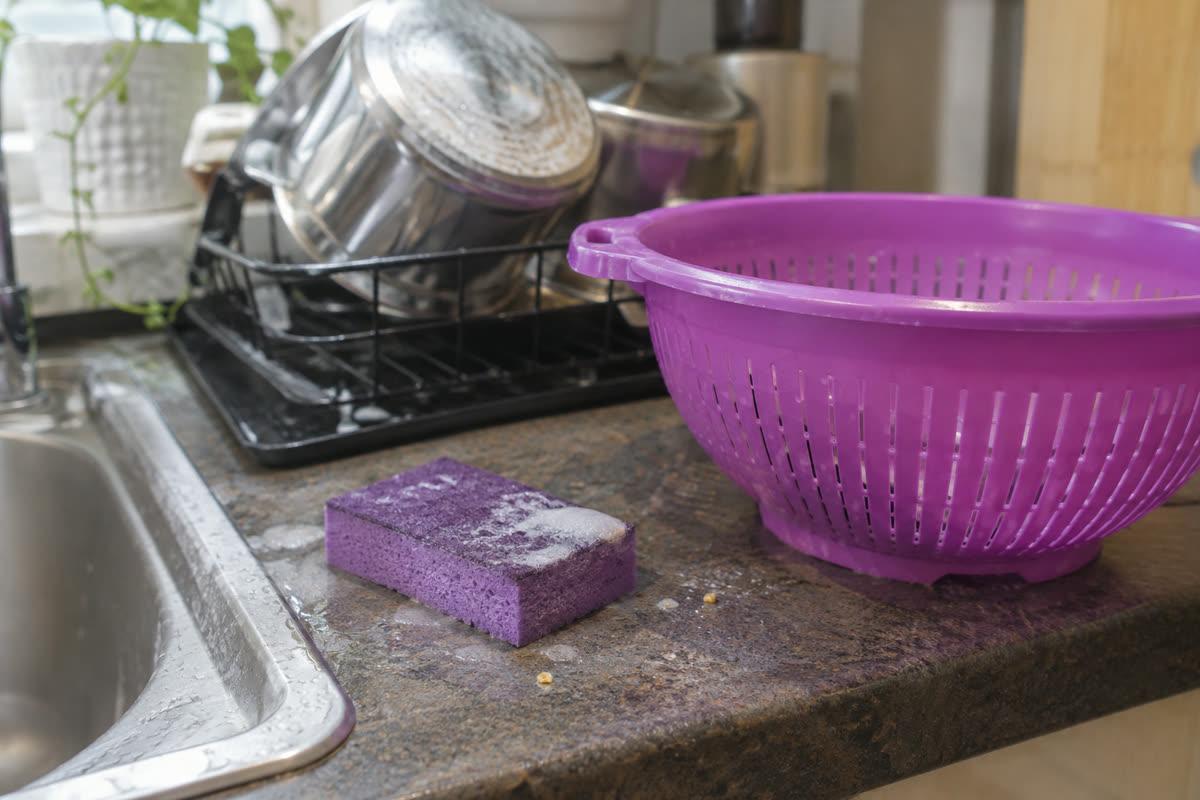
Sponges and dish cloths are the first place the guidance splits. GIG says shared sponges and dish rags should be replaced or laundered frequently16; Coeliac UK says you do not need separate cloths or sponges17. The comparison table further down puts the two side by side.
Cookware, bakeware, boards and utensils
The “What the page says” column is the charity’s advice, tied to its own words; the “Call” column is our summary of it. Where two pages give different answers for the same item, the disagreement section covers it.
| Item | Call | What the page says |
|---|---|---|
| Wooden spoons and utensils | Replace, or keep a gluten-free set | Wood fibers could harbor gluten particles and enter your food with the next stir1. |
| Cutting and bread boards | Replace if pitted or scratched; keep a separate board for gluten-free bread | GIG says gluten could settle into the crevices of pitted or scratched boards2. Coeliac UK says you may want separate bread boards27. |
| A wooden board in good condition | Resurface, or keep it for gluten-free use only | GIG says wood is porous and traps gluten in grooves and knife marks28. Its spring-cleaning page says a deeply scratched or very old board should be considered for replacement, and one in good shape can be sanded lightly29. |
| Colanders, strainers and sifters | Do not share if possible; otherwise clean thoroughly between every use | GIG says starchy pasta can leave residue and removing gluten from tiny mesh strainers can be very difficult3. GIG says these should not be shared if possible, and if they are, cleaned thoroughly between every use30. |
| Wooden rolling pin | Retire it for gluten-free baking, or keep a second one | GIG says it is best to shelve a wooden rolling pin that was used on gluten-containing items, because flour pushed into the wood could transfer gluten to gluten-free pastries and pies20. |
| Pizza stone | Keep one for gluten-free pizza, or bake on parchment | Traditional stones are porous; GIG says not to use the same stone for both kinds of pizza, or to put gluten-free pizza on parchment paper if you do31. |
| Non-stick pans | Replace once scratched | GIG says scratched non-stick surfaces can develop grooves where gluten could remain4. GIG’s 2026 article says that when non-stick cookware shows signs of wear, it may be time to designate a separate gluten-free pan32. |
| Cast iron | Guidance differs: see the disagreement section | GIG’s older page says the jury is still out33; its 2026 article recommends a dedicated pan34. |
| Other pots, pans and utensils | Wash | Wipe down surfaces and clean pots, pans and cooking utensils with hot soapy water, says Coeliac UK21. |
| Muffin tins and cake pans | Keep a second set, or line them | If a new set is not an option, GIG says to use cupcake liners and parchment paper35. |
| Potholders and oven mitts | Wash before gluten-free cooking, or buy a separate pair and label it | GIG says to wash potholders before gluten-free baking and cooking, or buy a separate one and label it36. |
A second set is easier to keep apart when it looks different. GIG suggests giving everything that is strictly gluten-free one colour, such as cutting boards, mixing bowls, storage containers, tongs and spatulas, and making sure everyone knows what the colour means37.
Appliances: toaster, air fryer, oven, microwave and the rest
| Appliance | Call | What the page says |
|---|---|---|
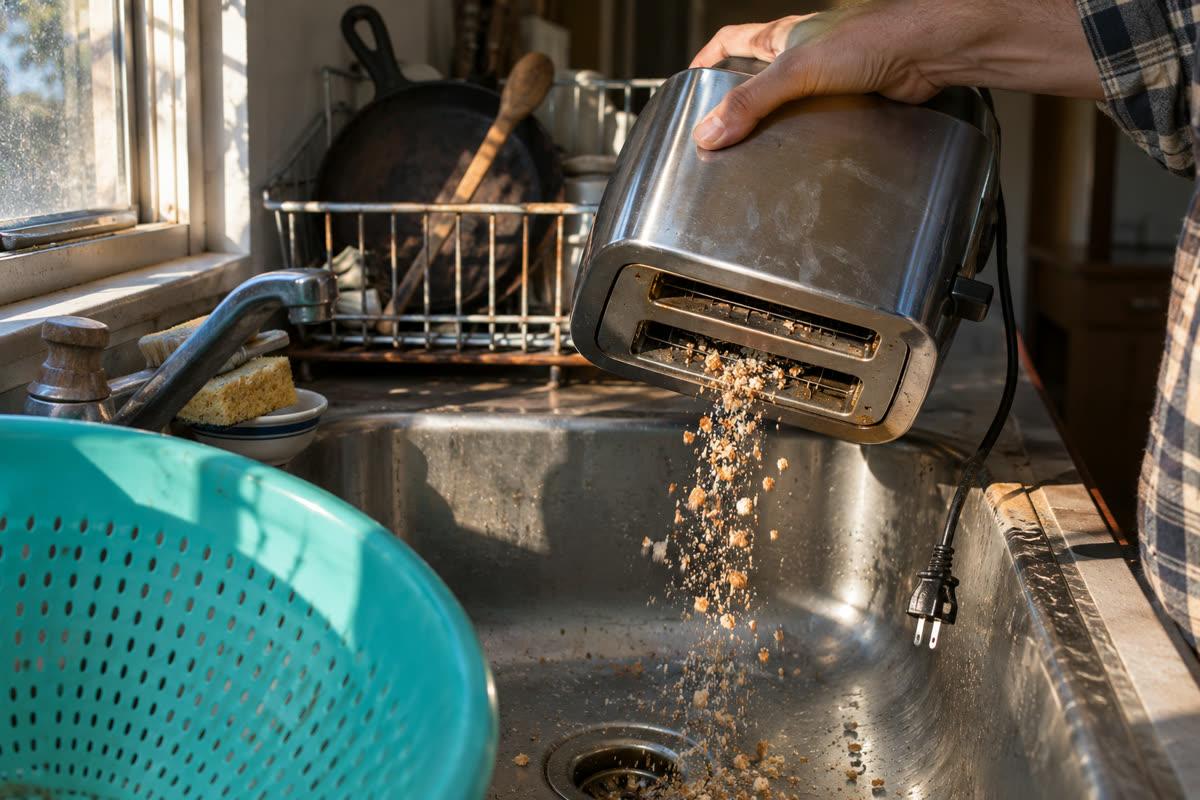
| Toaster | Keep a toaster for gluten-free bread, or use toaster bags until you have one; guidance differs | GIG says gluten crumbs can end up on gluten-free bread and suggests toaster bags or a new toaster used only for gluten-free toasting6; its 2026 article lists toasters among the appliances to designate gluten-free only38 and suggests a toaster bag as a temporary solution39. Coeliac UK says to use toaster bags or consider a separate toaster15. |
| Air fryer | Do not share | GIG says the fan could blow particles of earlier gluten-containing food onto the gluten-free food, and not to use the same air fryer for both5. |
| Bread machine | Keep a dedicated machine | GIG says to use a dedicated gluten-free bread machine and not to bake both kinds of bread in one40. |
| Waffle iron | Keep a second one, unless the plates come out and go in the dishwasher | GIG says waffle irons can be tricky to clean with all those grooves41. |
| Standard oven | Share, with a barrier | GIG says to bake or broil separately when you can, otherwise put gluten-free items on the higher rack42; before baking, wipe the racks and interior, use fresh foil on the rack or a clean baking sheet10. |
| Convection oven | Share only with the gluten-free food covered | GIG says a fan could blow wheat dust or food particles onto the food, so it says to cover it, even when it is alone in the oven43. |
| Microwave | Share, heating items separately and wiping it out | GIG notes that a microwave is smaller than a conventional oven, so there could be a significant risk of items spilling onto each other44 and says to wipe the microwave down after each use when it is shared11. |
| Blender, food processor, stand mixer | Wash every part that touches the food after every use; guidance differs | GIG’s appliance page says to wash all components that can touch the food after every use45; its 2026 article puts blenders on the list of appliances to designate gluten-free only38. |
| Slow cooker or Instant Pot | Wash | GIG says to clean thoroughly between uses with gluten-free and other food46. |
| Outdoor grill | Scrub with soap, water and a metal scrubber; use foil or mats as a barrier | High heat does not remove gluten; thorough cleaning does14. GIG suggests grill mats or foil if gluten-containing food has been grilled directly on the surface47. |
| Dishwasher | Share | A shared load is fine if the machine removes food particles and cleans thoroughly9. |
Appliances with removable parts also have parts that cannot go in water. GIG says no bits of gluten-containing food should remain on the non-washable parts, and to wipe them down thoroughly before gluten-free use48.
Pantry, fridge and shared spreads
The NIDDK defines cross-contact as foods or products that contain gluten coming into contact with gluten-free foods49. For households it advises storing and preparing gluten-free foods separately from other family members’ foods that contain gluten50.
GIG gives the shelf rule: flour and baking mixes can make dust and crackers and cookies can generate crumbs, so in a shared fridge or cupboard put the gluten-free packages above the gluten-containing ones and keep them securely packaged12. Its 2026 article adds sealing everything and using higher shelves in both the pantry and the fridge51. GIG also suggests designated areas for gluten-free storage and prep25 and labels on food, utensils and cookware when in doubt52.
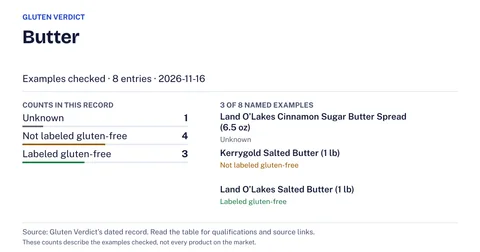
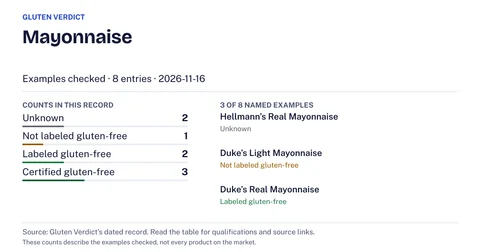
Shared spreads need a rule of their own. GIG calls double-dipping one of the most common ways crumbs reach gluten-free food53, and Coeliac UK says to have separate condiments, or at least clean cutlery for shared butters, jams and spreads54. What is in the jar is a separate question from what has been dipped into it: our verdicts for butter and mayonnaise show what the makers’ own pages say.
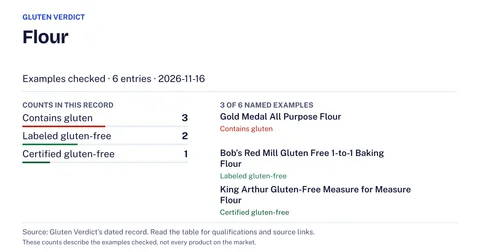
Bread, pasta and flour have their own verdicts on what is in each product: bread, pasta and flour.
Where the charities and the research disagree
The charity pages do not agree item by item, and the main controlled study we read used a small sample61. Each disagreement is below with both sides in their own words. We do not pick a winner. A dash means the page we read does not address the item.
| Item | GIG | Coeliac UK | Research |
|---|---|---|---|
| Toaster | Crumbs can end up on gluten-free bread6. Toasters head its 2026 list of appliances to designate gluten-free only38, with a toaster bag as a temporary solution39. | Toaster bags, or consider a separate toaster15. | Weisbrod and colleagues: in shared toasters, transfer was not above 20 ppm and four samples had 5.1 to 8.3 ppm18. Crumbs were visible in all toasters and none was cleaned55. |
| Sponges and cloths | Replace or launder shared sponges and dish rags frequently16; its spring-cleaning list names sponges among the harder-to-clean items56. | You do not need separate cloths or sponges17. | — |
| Pots and pasta water | Wash pots with hot soapy water26. | Clean pots with hot soapy water21. | Gluten-free pasta cooked in water used for gluten-containing pasta had gluten in every sample, and rinsing the pasta brought it under 20 ppm57. Rinsing the pot with water alone was as effective as scrubbing with soap at preventing detectable gluten transfer58. |
| Colanders and utensils | Do not share colanders, sifters and waffle irons if possible30. | Clean utensils with hot soapy water21. | A 2024 mini-review: in general, shared spoon, ladle, colander, knife, fryer and toaster did not lead to significant contamination of samples in controlled experiments59. |
| Cast iron | Older page: the jury is still out33. 2026 article: a dedicated pan is strongly recommended34. | — | — |
| Blender | Appliance page: wash all components after every use45. 2026 article: designate it gluten-free only38. | — | — |
| Outdoor grill | Appliance page: gluten cannot be “burned” off by high temperature14. 2026 spring-cleaning page: scrub the grates, then heat the grill to burn off leftover residue66. | — | — |
| Shared oven | Bake separately or on the higher rack; cover the food in a convection oven42, 43. | — | The mini-review reports a low risk of contamination from cooking gluten-containing and gluten-free pizzas together in shared ovens60. |
Read the research column as early data. The Weisbrod authors list small sample size, subsampling of homogenized foods and use of a sandwich ELISA among their limits61, and they measure against the Codex definition of gluten-free as under 20 parts per million62. The mini-review found five relevant studies in its literature search63. Weisbrod and colleagues say that diet guides from societies, hospitals and advocacy organizations suggest dedicated toasters and give conflicting advice on dedicated utensils64, which is the gap this table shows.
The first-week list if you cannot replace everything
GIG tells people starting out that they do not have to replace everything overnight and to focus first on the highest-risk items, such as toasters and cutting boards19. In that order:
- Mark the zones: one cupboard and one fridge shelf for gluten-free food, above the gluten-containing food, in sealed packages12, 25.
- Sort out the toaster: a separate one, or toaster bags until you have one39, 15.
- Give the gluten-free cook their own board and spoons: replace wooden or scratched ones, or keep a colour-coded second set2, 1, 37.
- Take the colander and sifter out of shared use, or clean them thoroughly between every use30.
- End shared spreads: separate jars, or clean cutlery every time54, 53.
- Line what you cannot replace: liners and parchment in muffin tins and cake pans, foil or a clean baking sheet in the oven, foil or mats on the grill35, 10, 47.
- Wash everything else with hot soapy water21, 26.
Then settle the disputed items from the table above: cast iron, sponges, the blender. What each packaged food contains still comes from its label: see how to read a US food label for gluten.
Verdicts in this guide


Questions people ask
Do I need a separate toaster?
GIG says gluten crumbs can end up on gluten-free bread and suggests toaster bags as a stopgap6, 39. Coeliac UK says to use toaster bags or consider a separate toaster15. One small study of shared toasters found gluten in four samples at 5.1 to 8.3 ppm18, and its authors list a small sample size among their limits61.
Does heat or a hot dishwasher cycle remove gluten?
GIG says gluten cannot be “burned” off by high temperature14 and, unlike bacteria, must be physically removed13. Coeliac UK says using a dishwasher will remove gluten8, and GIG says a shared load is fine when the machine cleans thoroughly9.
More in Cross-contact and the home kitchen
 Gluten-free with roommates, partners and family: a shared-kitchen agreementHow to split a shared kitchen when one person is gluten-free: what to keep separate, what to wash and share, and how to put the rules to housemates.
 Toasters, colanders, cast iron, wood and air fryers: which can be cleanedWhich kitchen items the charities say to keep, wash or replace after going gluten-free, item by item, with what the studies we found measured.
 What to clean after wheat flour lands in a gluten-free kitchenThe order of jobs after wheat flour reaches a gluten-free kitchen, what charities and studies say about each item, and what no source covers.
 Storing gluten-free food in a shared fridge, pantry and freezerWhere gluten-free food goes in a shared fridge, pantry and freezer, how to label it so everyone follows, and what the sources say and leave out.
 A weekly gluten-free kitchen routine: wipe, label, restock, re-checkA one-page weekly pass for a gluten-free kitchen: what to wipe, label, restock and do with leftovers, and where the charities and small studies differ.
 What studies measured in shared kitchens: pasta water, toasters, knives and spreadsWhat four experimental studies measured when gluten-free food met shared pots, toasters, knives and spreads: samples, results, and what went untested.
Related guides
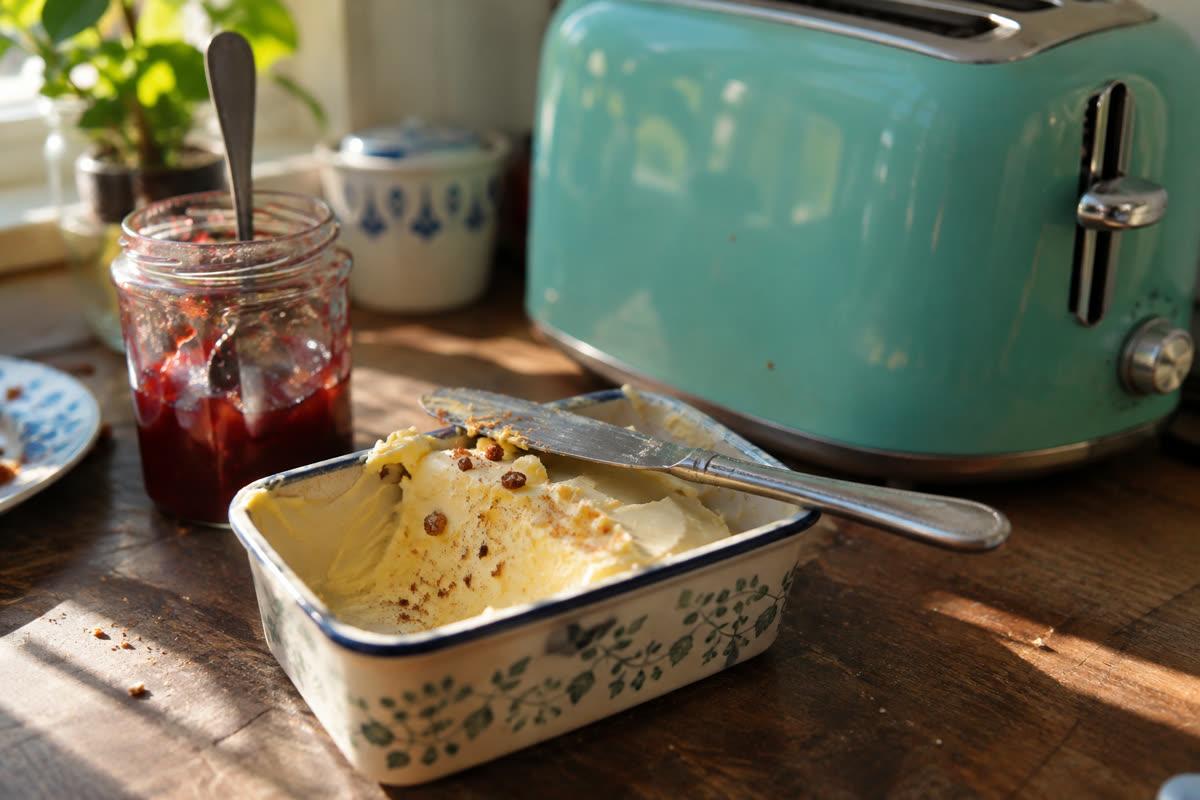 Gluten cross-contact at home: where it happens and what to do about itHow gluten reaches gluten-free food at home, whether to separate, wash or ask for each route, and which rules have lab data behind them.
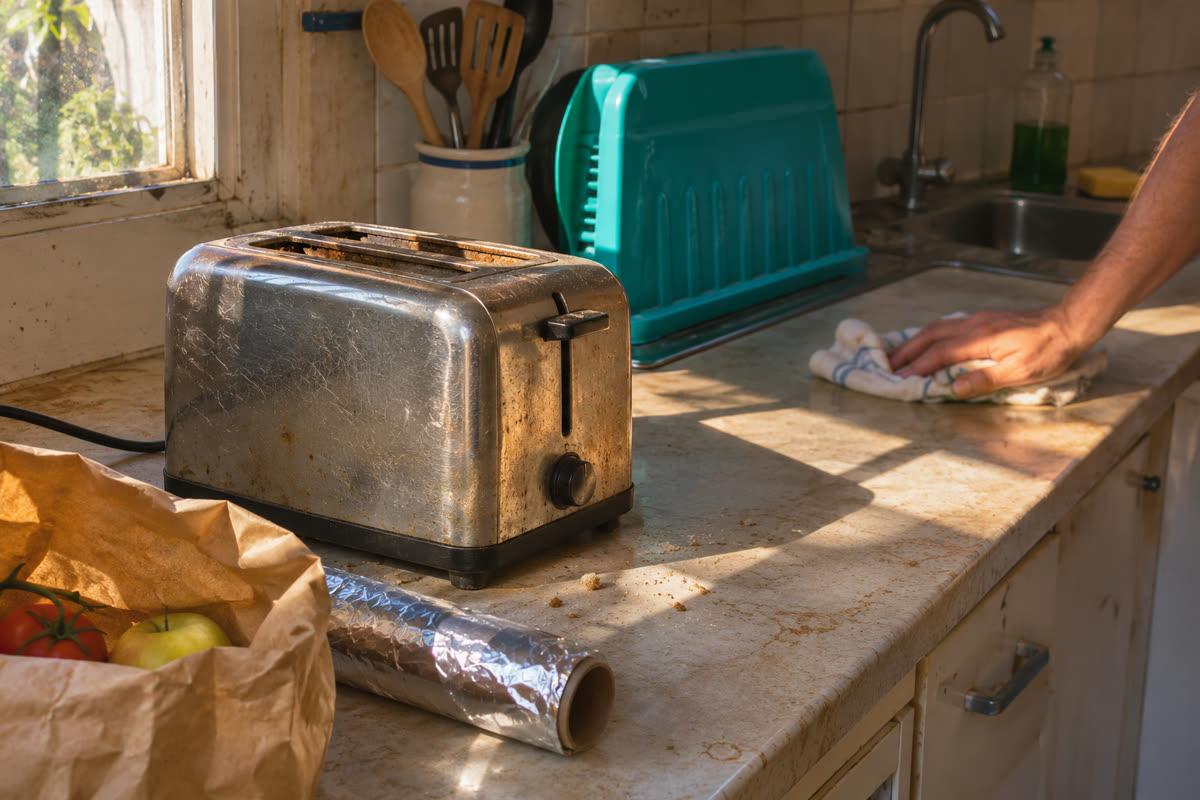 Setting up a gluten-free kitchen in a vacation rentalAsk the host, pack the few items that hold gluten, and wash a rental kitchen with soap and water, with each step tied to a source.
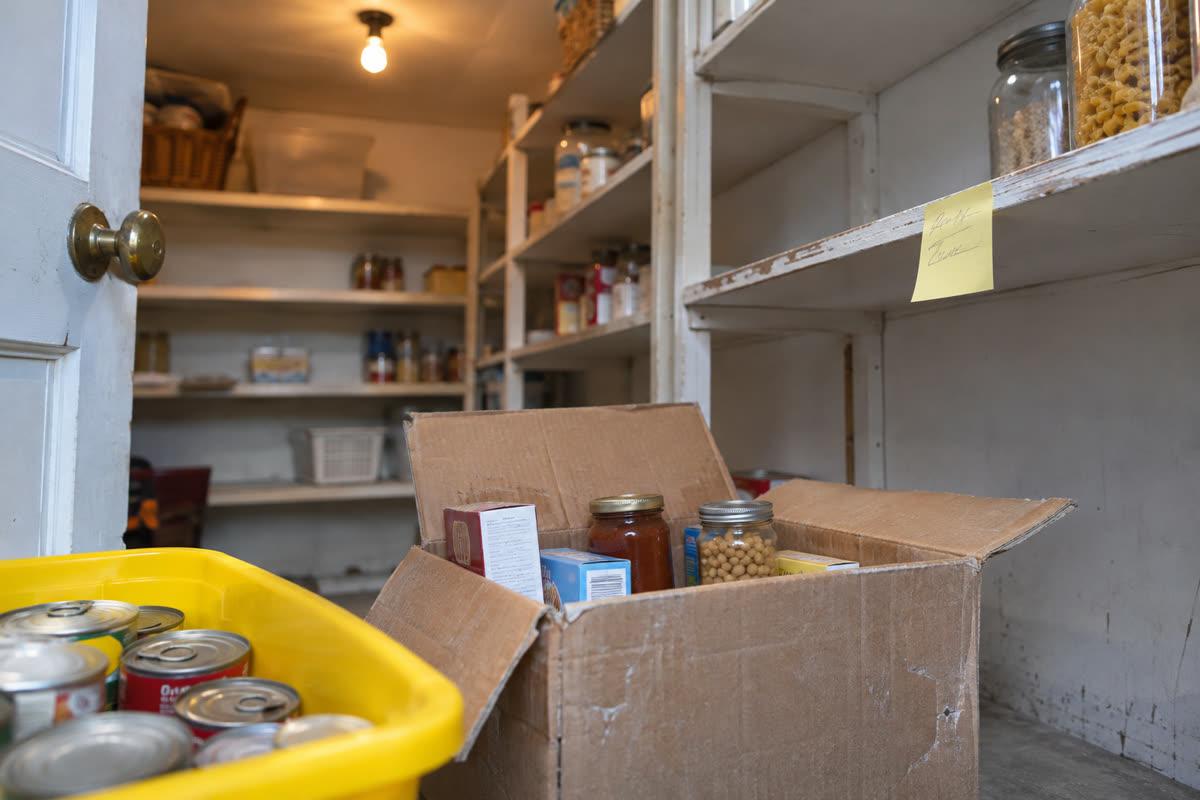 Going gluten-free: what to remove and what to keep in your pantry and kitchenSort a full pantry into foods to remove, labels to read and plain foods to keep, then decide on shared jars, toasters and pans.
 When your partner has celiac disease: gluten-free home or split kitchenChoose between a gluten-free home and a split kitchen, and find what to say at restaurants and to family, with NIH and charity sources.
Sources
- [1, 2, 3, 4, 20, 23, 31, 33, 35, 36] Gluten Intolerance Group, The Tools to Replace in Your Gluten-Free Kitchen, checked Nov 17, 2026.
- [5, 6, 9, 11, 14, 40, 41, 42, 43, 44, 45, 46, 48] Gluten Intolerance Group, Appliances: Risks of Cross-Contact, checked Nov 17, 2026.
- [7, 12, 25, 30, 52, 53] Gluten Intolerance Group, 25 Ways Cross-Contact Could Happen (And How to Avoid It), checked Nov 17, 2026.
- [8, 15, 17, 21, 27, 54] Coeliac UK, Avoid Gluten Free Cross Contamination at Home, checked Nov 17, 2026.
- [10, 13, 16, 22, 24, 26, 32, 34, 37, 38, 39, 51] Gluten Intolerance Group, Your Kitchen, Their Kitchen, Our Kitchen: Navigating Gluten-Free Cohabitation, checked Nov 17, 2026.
- [18, 55, 57, 58, 61, 62, 64] Gastroenterology (Weisbrod and colleagues, 2020), PubMed Central, Preparation of Gluten-Free Foods Alongside Gluten-Containing Food May Not Always Be as Risky for Celiac Patients as Diet Guides Suggest, checked Nov 17, 2026.
- [19, 28, 29, 47, 56, 66] Gluten Intolerance Group, Spring Cleaning Your Gluten-Free Kitchen (March 2026), checked Nov 17, 2026.
Read on 2026-11-17: under the heading “Check High-Risk Items”, the list names toasters, colanders, sieves, waffle makers, cast iron pans and sponges.
- [49, 50] National Institute of Diabetes and Digestive and Kidney Diseases (NIDDK), Eating, Diet, & Nutrition for Celiac Disease, checked Nov 17, 2026.
- [59, 60, 63] Nutrients (Damasceno and colleagues, 2024), via Europe PMC, Risk of Gluten Cross-Contamination Due to Food Handling Practices: A Mini-Review (abstract), checked Nov 17, 2026.
- [65] Gluten Intolerance Group, Gluten in Your Food: Cross-Contact or Cross-Contamination?, checked Nov 17, 2026.