What studies measured in shared kitchens: pasta water, toasters, knives and spreads
Short answer
Four experimental studies measured how much gluten shared kitchen items pass to gluten-free food. A 2024 review of six such studies, these four among them, found that the majority of samples did not exceed 20 parts per million, FDA’s limit for a gluten-free label53, 56, 1, 2. Cooking gluten-free pasta in water used for gluten-containing pasta was the procedure that most triggered readings above it, and the review also names a shared fryer and its oil1, 54. One study’s authors list small sample size as a limit and call for larger studies3, 4.
Part of Cross-contact and the home kitchen, 19 guides
Key points
- In Weisbrod’s test, all 12 gluten-free pasta samples cooked in water used for gluten-containing pasta had gluten detected, at 33.9 to 115.7 ppm5, 6.
- In the same paper, no sample from shared toasters was above 20 ppm; the four with detectable gluten had 5.1 to 8.3 ppm, and no toaster was cleaned7, 8.
- Parsons’s team found mayonnaise and peanut butter samples above 20 ppm when the spreads were applied with a knife used on gluten-containing bread; butter is not among the spreads its abstract names9, 10.
- Two studies found that the way utensils and pots were cleaned made little difference to the gluten left, and Coeliac UK says washing-up liquid or a dishwasher will remove gluten11, 12, 13.
- Both charities read here still point to toaster bags or a separate toaster14, 15; Weisbrod’s paper says that the diet guides it cites, which suggest dedicated toasters, rest on expert consensus with scant data16.
Which studies were run, and how big were they?
This page reads four peer-reviewed experimental studies. The table shows what each one shared between gluten-containing and gluten-free food, and how much testing it reports.
| Study | What was shared | What the paper reports testing |
|---|---|---|
| Weisbrod and colleagues, 2020, Gastroenterology | Pasta water and pots, toasters, and a knife used on cupcakes17 | Groups of 6 to 30 samples, one group per condition6 |
| Studerus and colleagues, 2018, Journal of Food Protection | A wooden spoon, a colander, a ladle and a knife, with bread and pasta18 | Ten scenarios, each replicated three times, in a kitchen split into two areas 4 m apart, as a later review describes it19 |
| Parsons and colleagues, 2021, Clinical Nutrition | A fryer, a toaster, and a knife used for mayonnaise, jam and peanut butter20 | 60 mayonnaise and 60 peanut butter samples, as a later review counts them21 |
| Korth and colleagues, 2021, Journal of Food Protection | A four-compartment restaurant pasta pot22 | Five consecutive batches, at 52 g and at 140 g of pasta22 |
Each paper reports gluten against 20 parts per million (ppm) or 20 mg/kg5, 12, 9, 23, the line FDA uses for a gluten-free label2. That is a labeling line, not a measure of what any one person tolerates52; the last section returns to this.
Pasta water, pots and strainers
Pasta water shared with gluten-containing pasta gave readings above 20 ppm in two of the papers: Weisbrod’s reused water5 and Korth’s 140 g batches24. In Weisbrod’s test, gluten-containing pasta was boiled and lifted out with handheld strainers, and the same water was then reused to cook gluten-free pasta25. Gluten was detected in all of those samples, at 33.9 to 115.7 ppm5; the paper’s table lists 12 samples, all above 20 ppm6.
Rinsing changed the result in that test. Cooked, contaminated pasta was run under cold tap water for 30 seconds26, which reduced gluten to less than 20 ppm; two of the rinsed samples still had detectable gluten, at 5.1 and 17.5 ppm5. The table gives six rinsed samples6.
Korth’s team tested a restaurant-style pot with four compartments, three holding regular penne and one gluten-free penne22. At 52 g of pasta, a recommended serving, gluten stayed under 20 ppm in the water and the gluten-free pasta through five batches23. At 140 g, a typical restaurant portion, gluten in the cooking water rose above 50 ppm after the fourth batch and above 80 ppm after the fifth, and the gluten-free pasta reached nearly 40 ppm after the fifth24. The authors conclude that gluten-free pasta should be prepared in a separate cooking vessel in restaurant and food service establishments27.
Pots, colanders and ladles
In Weisbrod’s test, a pot rinsed with water alone after gluten-containing pasta was as effective as scrubbing with soap and water at preventing detectable gluten transfer11; each condition had six samples6. Studerus’s team found gluten below 20 mg/kg in bread and pasta made with shared kitchenware, and all samples below 10 mg/kg whichever cleaning method was used18, 12.
One signal stood out in Studerus’s PCR test for wheat DNA: the only sample with a higher concentration of wheat DNA came from the contaminated ladle used to serve gluten-free pasta28. That led the authors to hypothesize that shared ladles pose a higher risk than shared wooden spoons, colanders or knives29. It is a hypothesis the paper raises; the abstract does not report a test of it.
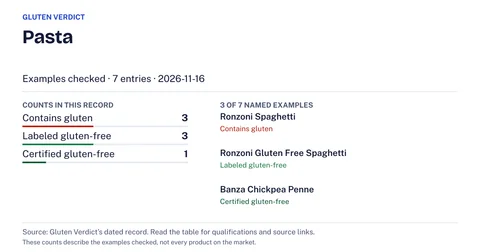
Our verdict page on pasta covers the product itself; the studies above are about the pot, the water and the tools.
Toasters
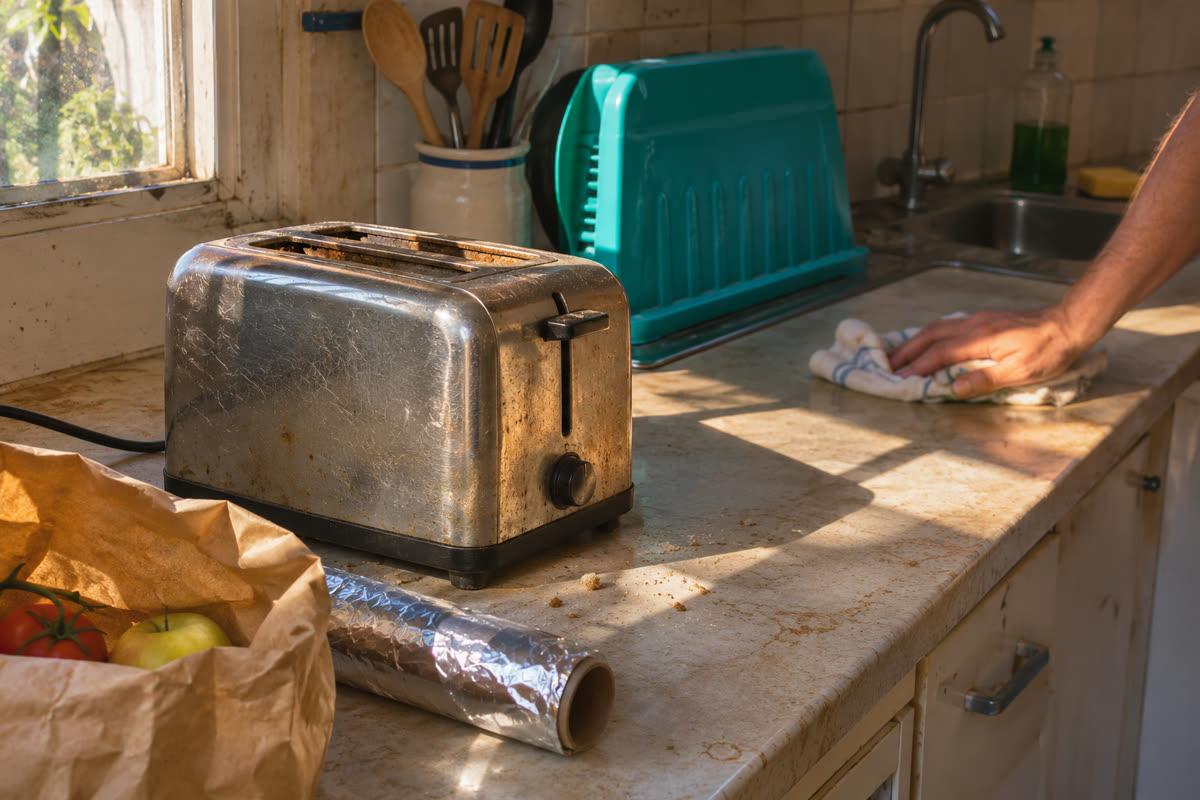
Weisbrod’s toaster test used two rolling toasters in a busy hospital cafeteria and three shared pop-up toasters used right after gluten-containing bread30. Gluten-containing crumbs were visible in all the toasters, and no cleaning was attempted8. No sample was above 20 ppm; four had detectable gluten, at 5.1 to 8.3 ppm7. All four came from the rolling-toaster group of 20, and none of the 20 pop-up samples reached 5 ppm6.
Parsons’s team toasted gluten-free bread in a toaster that had been used for gluten-containing bread; a later review reports no sample above 20 ppm31.
The charities read toasters differently (see the section on what they say). For the bread itself, our verdict page is bread.
Knives, spoons and spreads
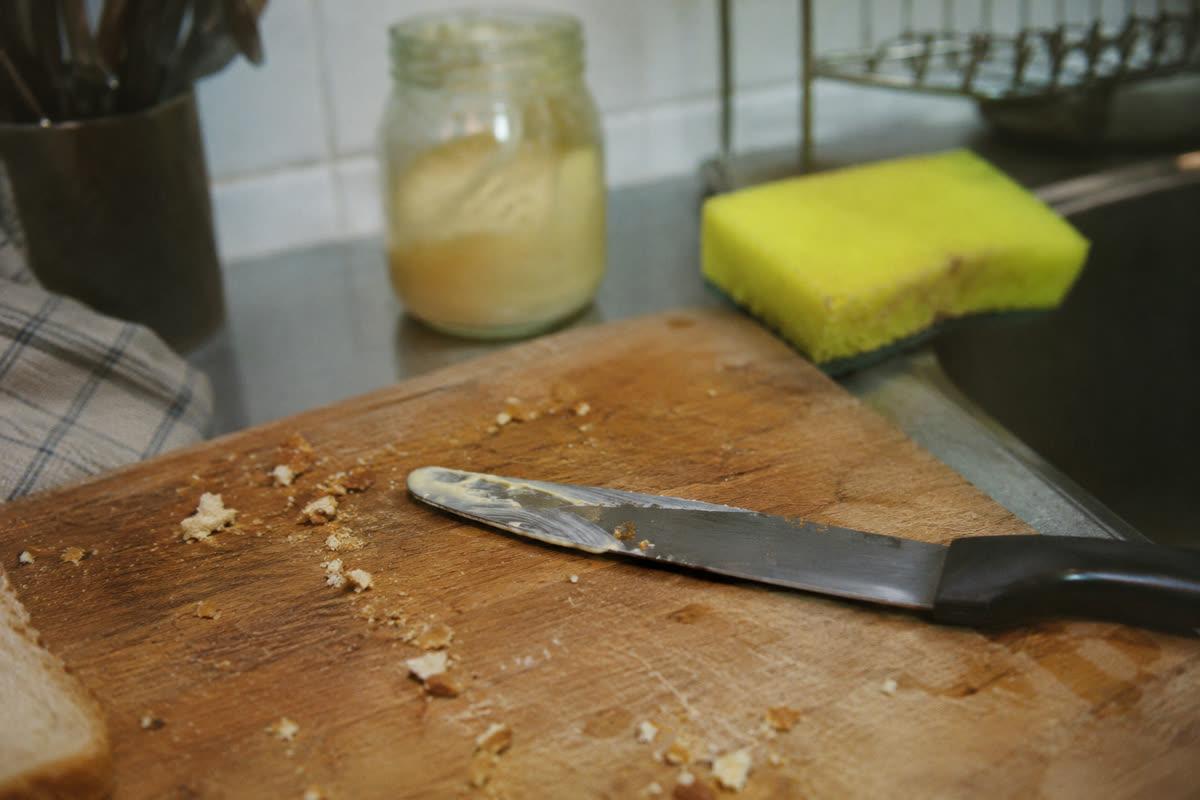
Weisbrod’s team sliced a frosted gluten-containing cupcake and reused the knife on a frosted gluten-free one, then repeated it with the knife washed in soap and water, rinsed in running water, or wiped with an antibacterial wipe32. Of the gluten-free cupcake samples, 28 of 30 had detectable gluten and two tested above 20 ppm; all three washing methods were effective in removing gluten33.
Studerus’s knife and spoon scenarios used bread and pasta rather than frosting18; the authors conclude that utensils used to prepare gluten-containing pasta and cut gluten-containing bread should not pose a relevant problem to patients with celiac disease, at least in a domestic environment34.
Parsons’s team asked what happens when mayonnaise, jam or peanut butter is applied with a knife used on gluten-containing bread20. Across its three practices, the majority of results (93.6%) showed no significant cross-contact, but mayonnaise and peanut butter samples were contaminated above 20 ppm9. A later review reports gluten detected in 30 of 60 mayonnaise samples, 11 of them above 20 ppm, and in 12 of 60 peanut butter samples, 6 of them above 20 ppm21.
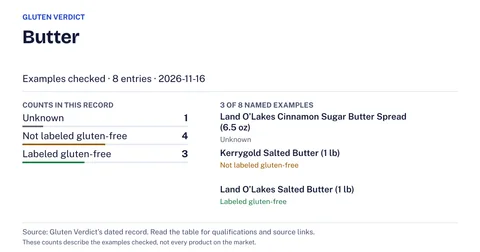
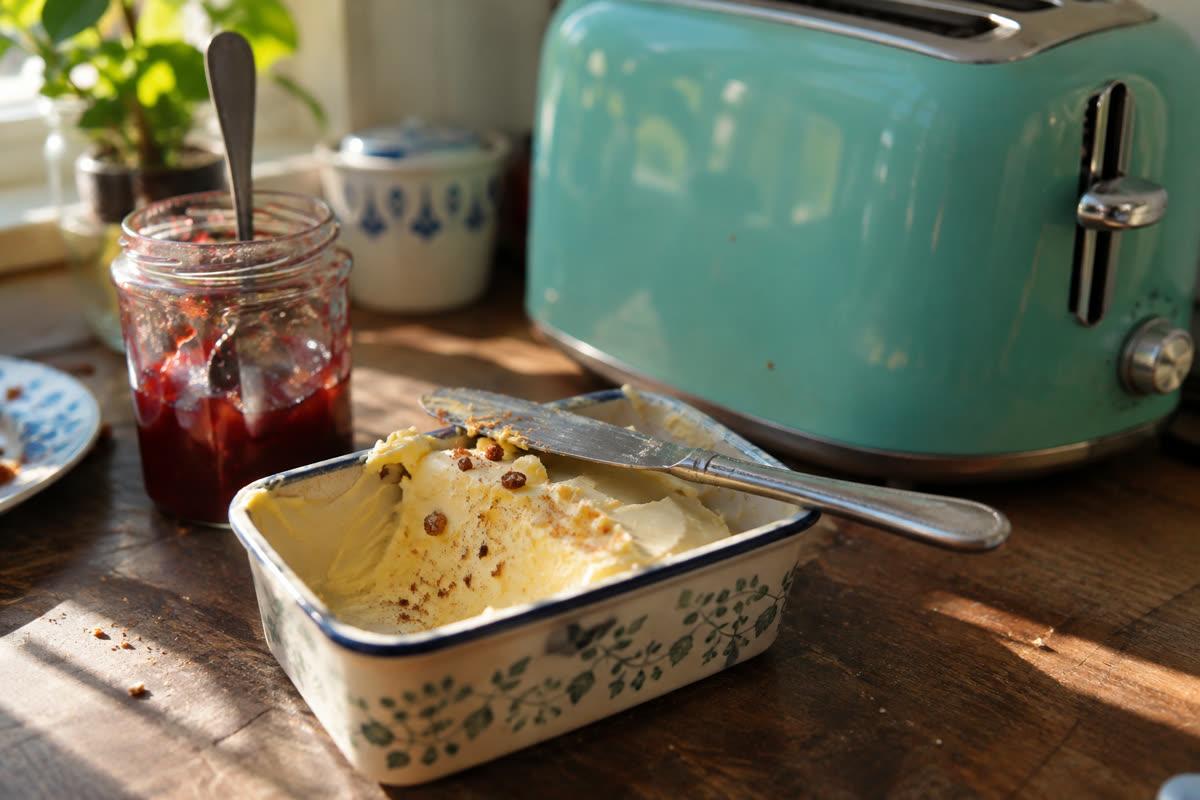
None of the four papers tested butter. Weisbrod’s scenarios were pasta, toast and cupcakes35; Studerus’s abstract names bread, pasta and four utensils36; Parsons’s spreads were mayonnaise, jam and peanut butter10; Korth tested pasta22. Coeliac UK advises separate condiments to avoid breadcrumbs, or at least clean cutlery for shared butters, jams and spreads37. Our verdict page on butter covers the product.
What the studies did not cover
A paper measures only what its authors set up. Reading the methods, these gaps stand out:
- Cutting boards, sponges and cloths: not among Weisbrod’s scenarios35, and not among Studerus’s kitchenware36. Coeliac UK says you do not need separate cloths or sponges, and that you may want separate bread boards38, 39. We found no measurement of either in the papers and abstracts read for this page.
- Flour dust and moving air: Weisbrod’s paper cites other work (Miller and colleagues) showing that a 2 meter radius from wheat flour and good hygiene practices facilitated preparing gluten-free meals alongside gluten-containing ones40. GIG warns that in a convection oven wheat dust or food particles could be blown onto gluten-free foods41, and that an air fryer’s fan could blow particles of previously cooked gluten-containing food onto gluten-free food55.
- Fryer oil: Parsons’s team tested a shared fryer20. A 2026 cross-sectional study sampled French fries and tortilla chips from fryers shared with gluten-containing foods across US food service settings, 98 samples in all42; six exceeded 20 ppm43. That is a separate question from a home kitchen.
- Other kitchens: gluten transfer will vary between kitchen environments, Weisbrod’s authors write3, and they call for larger studies in home and commercial settings covering more scenarios, surfaces and foods4.
What the charities say about the same items
Gluten Intolerance Group (GIG) writes that errant gluten crumbs can end up on gluten-free bread, and suggests toaster bags or a new toaster used only for gluten-free toasting14. On the dishwasher it says a shared load is fine if the machine removes food particles and cleans thoroughly44.
Coeliac UK, the UK charity, lists these steps to avoid cross-contamination at home:
- Standard washing-up liquid or a dishwasher will remove gluten13.
- Clean pots, pans, utensils and surfaces with hot soapy water45.
- Separate cloths or sponges are not needed38.
- Use separate condiments, or at least clean cutlery for shared butters, jams and spreads37.
- Separate bread boards are an option39.
- Use toaster bags or consider a separate toaster15.
- Use clean oil or a separate fryer for frying gluten-free foods46.
On washing, Coeliac UK and the papers line up: Coeliac UK says washing-up liquid or a dishwasher will remove gluten13, and two papers found the cleaning method made little difference to what was left11, 12. On toasters they sit apart: no toaster sample in Weisbrod’s test exceeded 20 ppm7, while both charities still point to toaster bags or a separate toaster14, 15. Weisbrod’s paper says guides from professional societies, hospitals and advocacy organizations suggest dedicated toasters and give conflicting advice on dedicated utensils47, and that those recommendations are based upon expert consensus with scant data to support them16.
How much weight can small studies carry?
These are the limits the papers and the review name, so you can weigh the numbers yourself:
- Small groups. Weisbrod’s authors list small sample size among their limitations3. For groups of six pasta samples with none above 20 ppm, the paper’s table puts the 95% confidence interval for the share above 20 ppm at 0 to 48%, and at 0 to 20% for groups of 206.
- Kitchens differ. Cross-contact will inevitably vary in different kitchen environments3; Studerus’s scenarios ran in a kitchen split into two areas 4 m apart19.
- The test used. Weisbrod’s team used a sandwich ELISA with a limit of detection of 5 ppm, and note that a competitive ELISA is able to detect hydrolyzed gluten48, 3.
- Few studies overall. The 2024 review says there are few studies on the risk of gluten cross-contamination due to food handling practices49, and that further studies are necessary to confirm the procedures that put patients at risk50.
- Who paid. Weisbrod’s paper reports support from philanthropic gifts from the Celiac Disease Foundation, Dr. SCHAR USA and Bia Diagnostics51.
- A labeling line, not a tolerance. The 20 ppm line is FDA’s limit for a gluten-free label2; the review notes that gluten intake as high as 10 mg a day may be harmful for some individuals with celiac disease52.
This page reports measurements; it does not rank household rules. For a step-by-step sort of every item in a kitchen, see setting up a gluten-free kitchen.
Verdicts in this guide

Questions people ask
Can you share a toaster with someone who has celiac disease?
In Weisbrod’s test, no toaster sample was above 20 ppm and four had 5.1 to 8.3 ppm7; a later review reports no sample above 20 ppm in Parsons’s toaster test31. GIG and Coeliac UK still point to toaster bags or a separate toaster14, 15.
Does pasta water carry gluten?
In two of the papers read here, under some conditions. Gluten was detected in every Weisbrod sample cooked in water used for gluten-containing pasta, at 33.9 to 115.7 ppm5, and Korth’s cooking water passed 50 ppm after four 140 g batches24; at Korth’s 52 g serving it stayed under 20 ppm23.
More in Cross-contact and the home kitchen
 Gluten-free with roommates, partners and family: a shared-kitchen agreementHow to split a shared kitchen when one person is gluten-free: what to keep separate, what to wash and share, and how to put the rules to housemates.
 Setting up a gluten-free kitchen: what to replace, wash or shareWalk each kitchen zone and decide, item by item, what to replace, what to wash and what a mixed household can keep sharing, with charity sources.
 A weekly gluten-free kitchen routine: wipe, label, restock, re-checkA one-page weekly pass for a gluten-free kitchen: what to wipe, label, restock and do with leftovers, and where the charities and small studies differ.
 Toasters, colanders, cast iron, wood and air fryers: which can be cleanedWhich kitchen items the charities say to keep, wash or replace after going gluten-free, item by item, with what the studies we found measured.
 Cooking gluten-free pasta in a kitchen that also cooks regular pastaSet up a pasta night where gluten-free and regular pasta share a kitchen: what one small study found on shared water and pots, and what charities advise.
 What to clean after wheat flour lands in a gluten-free kitchenThe order of jobs after wheat flour reaches a gluten-free kitchen, what charities and studies say about each item, and what no source covers.
Related guides
 Gluten cross-contact at home: where it happens and what to do about itHow gluten reaches gluten-free food at home, whether to separate, wash or ask for each route, and which rules have lab data behind them.
 Going gluten-free as a family: choose the household rule, then fix the kitchenAll gluten-free, shared with rules or split: what NIDDK, the charities and one small study say, plus rules for siblings and visiting relatives.
 Setting up a gluten-free kitchen in a vacation rentalAsk the host, pack the few items that hold gluten, and wash a rental kitchen with soap and water, with each step tied to a source.
 A care sheet for the babysitter or grandparent of a child with celiac diseaseA one-page care sheet for a babysitter or grandparent: the checked foods, the kitchen cross-contact points, what to do after an exposure, and whom to call.
Sources
- [1, 19, 21, 31, 49, 50, 52, 53, 54, 56] Nutrients (PubMed Central), Risk of Gluten Cross-Contamination Due to Food Handling Practices: A Mini-Review (Damasceno and colleagues, 2024), checked Nov 17, 2026.
Read on 2026-11-17: Table 1 of the review, headed “Main characteristics and results of experimental studies that analyzed gluten cross-contamination”, lists six studies: Vincentini 2016 (pizza ovens), Studerus 2018, Weisbrod 2020, Parsons 2020, Korth 2021 and Thompson 2021 (fryers).
- [2] US Food and Drug Administration, Questions and Answers on the Gluten-Free Food Labeling Final Rule, checked Nov 17, 2026.
- [3, 4, 5, 6, 7, 8, 11, 16, 17, 25, 26, 30, 32, 33, 35, 40, 47, 48, 51] Gastroenterology (PubMed Central author manuscript), Preparation of Gluten-Free Foods Alongside Gluten-Containing Food May Not Always Be as Risky for Celiac Patients as Diet Guides Suggest (Weisbrod and colleagues, 2020), checked Nov 17, 2026.
Read on 2026-11-17: Table 1 lists gluten-free pasta cooked in shared water (n=12, all 12 above 20 ppm), cooked in shared water then rinsed for 30 seconds (n=6), cooked in a pot washed with soap and water (n=6) and in a pot rinsed with water (n=6); gluten-free bread toasted in a communal rolling toaster (n=20: 16 below 5 ppm, 4 at 5-10 ppm) and in a shared pop-up toaster (n=20: all 20 below 5 ppm); and gluten-free cupcakes sliced with a knife used on a gluten-containing cupcake (n=30: 2 below 5 ppm, 12 at 5-10 ppm, 14 at 10-20 ppm, 2 above 20 ppm). For the share of samples above 20 ppm, its 95% confidence interval is 0-20% for each group of 20 toasted-bread samples with none above 20 ppm and 0-48% for each group of 6 pasta samples with none above 20 ppm.
Read on 2026-11-17: the Methods section describes three scenarios (cooking pasta, toasting bread, slicing cupcakes); none involves a cutting board, a sponge or cloth, a fryer or oil, or flour dust.
- [9, 10, 20] Clinical Nutrition (PubMed record), Gluten cross-contact from common food practices and preparations (Parsons and colleagues, 2021), checked Nov 17, 2026.
Read the abstract on 2026-11-17: it names the spreads as mayonnaise, jam and peanut butter; butter is not named.
- [12, 18, 28, 29, 34, 36] Journal of Food Protection (PubMed record), Cross-Contamination with Gluten by Using Kitchen Utensils: Fact or Fiction? (Studerus and colleagues, 2018), checked Nov 17, 2026.
Read the abstract on 2026-11-17: it names the kitchenware tested as a wooden spoon, a colander, a ladle and a knife, and the foods as bread and pasta; it names no toaster, cutting board, sponge, fryer or spread.
- [13, 15, 37, 38, 39, 45, 46] Coeliac UK, Avoid Gluten Free Cross Contamination at Home, checked Nov 17, 2026.
- [14, 41, 44, 55] Gluten Intolerance Group, Appliances: Risks of Cross-Contact, checked Nov 17, 2026.
- [22, 23, 24, 27] Journal of Food Protection (PubMed record), Gluten Cross-Contact in Restaurant-Scale Pasta Cooking (Korth and colleagues, 2021), checked Nov 17, 2026.
- [42, 43] Nutrients (PubMed Central), Shared Fryers May Not Always Be as Risky for Gluten Cross-Contact in Celiac Disease as Dietary Guidance Suggests (Weisbrod and colleagues, 2026), checked Nov 17, 2026.