Gluten-free at an all-inclusive resort: what to ask before you book and at the buffet
Short answer
Of the three resort brands whose dietary pages we read, only Club Med says anything about buffet cross-contact2, 10, 12. We found no ranking of all-inclusive resorts from a regulator, a celiac charity or a resort brand, so this page ranks none; it gives the questions to ask and the steps to take:
- Before you book, put your questions to the resort in writing: who handles the request, how much notice it needs (Beaches requires one month’s notice for special preparations or products it does not carry)9, and whether there is a separate kitchen (Club Med says it has none)3.
- On arrival, ask to speak with the Head Chef or Restaurant Manager, which is what Club Med’s policy asks guests to do1.
- At a buffet, ask the chef to walk the line with you, knowing that Club Med names other guests as a source of cross-contact at self-serve buffets2.
- At a table-service restaurant, hand over a card and check the plate against your order before you eat28, 17.
Part of Travel planning and logistics, 22 guides

Key points
- Club Med’s own page says there is always the potential for cross-contact by other guests at its self-serve buffets2.
- Club Med says it has no separate kitchens to prepare allergen-free items and no separate dining areas for guests with allergies or intolerances3.
- The Beaches and Sandals dining pages we read name no gluten policy; Beaches requires one month’s notice for special preparations10, 12, 9.
- GIG suggests a printed translation card and memorizing how to say “gluten-free” in the local language27, 29.
Why this page ranks no resorts
A ranking of the “best gluten-free resorts” is only as useful as what it says about who ate where, what the kitchen was asked, and on what date. We found no ranking of all-inclusive resorts for gluten-free dining from a regulator, a celiac charity or a resort brand, so we rank none.
What you can check is what each brand says on its own page, with the date we read it, and what a resort will put in writing for your dates. One more thing you can ask about: the Gluten-Free Food Program, a certifier, says its certification for hotels and resorts covers kitchen protocols, staff training, ingredient sourcing, menu management and cross-contact controls, reviewed on-site by one of its auditors34. Its page says certification is not required35, so ask whether the resort holds it or a similar one.
What three resort brands publish
| Brand | Who handles a request, and when | Buffets and kitchens | Gluten named |
|---|---|---|---|
| Club Med | Guests ask to speak with a Head Chef or Restaurant Manager on arrival1 | Self-serve buffets carry a potential for cross-contact by other guests; no separate kitchens or dining areas2, 3 | “Cereals containing gluten” is on its list of allergies it accommodates, with “limited choice/selection”4, 5 |
| Beaches | Lists accommodating food allergies and special dietary requirements among its culinary concierge services; one month’s notice for special preparations or products not carried8, 9 | Not stated10 | Not stated10 |
| Sandals | “Let us know if there are any foods or ingredients you want to avoid”11 | Not stated12 | Not stated12 |
“Not stated” means the page says nothing, not that the resort does nothing. We could not read a dietary page for every brand (some refused our fetch and others had none we could find), so the table lists only the three we read. A brand silent on its page is a brand to email, not a brand to rule out.
Club Med says its chefs can often substitute ingredients at the specialty corners of its main restaurants and in its à la carte restaurants7.
Questions to put in writing before you book
Send these to the resort, not to a booking site, and keep the reply to show on arrival. GIG, a celiac charity, advises calling a restaurant ahead to speak to the chef13; for a resort, ask for the same conversation by email.
- Who handles a gluten request, and how much notice do you need? Beaches requires one month’s notice for special preparations or products it does not carry9.
- Will a chef or restaurant manager meet me on the first day? Club Med’s policy tells guests to ask for the Head Chef or Restaurant Manager on arrival1.
- Is there a separate kitchen or dining area for guests who avoid gluten? Club Med says it has no separate kitchens for allergen-free items and no separate dining areas for guests with allergies or intolerances3; ask every resort the same.
- At the buffet, can the chef walk the line with me, and how are serving spoons and stations kept apart? Club Med’s chef can walk guests through the buffet2.
- In the à la carte restaurants, are cutting boards, utensils, fryers and toasters separate? GIG lists these questions24.
- Is the grill shared with gluten foods, and if so how is it cleaned and how often? Can my meal be cooked in a separate pan? GIG lists both questions22, 23.
- Which sauces, dressings and soups are made in the kitchen, and can the chef read me the ingredients? GIG notes that dressings, sauces and marinades may contain added gluten as a thickener or binding agent20.
- Who speaks English, and who should I speak to? Club Med recommends guests with serious allergies speak with the Head Chef or Restaurant Manager only, because of language barriers at some resorts6.
- Does the resort’s kitchen hold a third-party gluten-free certification? The Gluten-Free Food Program says its certification of hotels and resorts is reviewed on-site by one of its auditors34, and that certification is not required35.
Buffet or à la carte: where cross-contact comes in
At a self-serve buffet, Club Med names other guests as the source of cross-contact, even when the chef has shown you which dishes suit your allergy2.
The source Club Med names is self-service. At a table-service restaurant the questions move to the kitchen: shared grills, fryers and pans22, 23, 19.
Where GIG says cross-contact is common in restaurants
- Salads: cutting boards used to chop ingredients, croutons and dressings containing gluten can all bring gluten in18.
- Fried foods: the oil may be used for both breaded and non-breaded items, in which case GIG says they should be avoided19.
- Sauces and marinades: they may contain added gluten as a thickener or binding agent20.
GIG also suggests timing a meal before or after the busiest mealtime, so you have more time and easier access to the people who can help14.
Arrival day: meeting the chef or restaurant manager
Do this before your first meal, not after. Club Med’s policy is for guests to ask for the Head Chef or Restaurant Manager on arrival to discuss the allergy or intolerance1.
- Show the email reply from the resort and say which grains you avoid. GIG’s own script for explaining a restriction reads: “Hi, I need your help with my menu selection. I am on a medically restricted diet and am unable to eat wheat, rye, barley, and foods made with these grains. I have some questions for you or the chef.”21
- Ask which restaurants and corners can offer the most. Club Med says chefs at its specialty corners and à la carte restaurants can often substitute ingredients7.
- Walk the buffet with the chef, if the resort offers it2.
- At a table-service restaurant, GIG suggests asking for your food to be prepared on a clean surface with clean utensils16.
- At every meal, check what arrives against what you ordered. GIG suggests confirming with the server that you were served the “special” meal17.
A card in Spanish
GIG suggests carrying a printed translation card when the main language of your destination is not yours27, so you can hand it to the server or restaurant manager28, and memorizing how to say “gluten-free” where you are going29.
GIG also cautions about restaurants where language may create a communication barrier and staff may not easily understand dietary restrictions15. It publishes a Spanish restaurant card, “Ficha para Restaurantes”. It says it is essential (“FUNDAMENTAL”) that people with this disorder do not eat TRIGO, CENTENO and CEBADA or anything derived from them31. It says oats should not be eaten unless certified or labeled “sin gluten”32. It also lists possible sources of gluten, such as Adobos, Salsa de Soya, Malta and Caldos y bases de sopas33.
We do not write a Spanish request of our own: no page we read supplies a translation of the questions on this page. Print GIG’s card, and have a Spanish speaker put any extra question into words. Where a resort is in Mexico, our Mexico guide covers the local labels.
Drinks, bars and snack stands
For drinks, start with what our verdicts say for the common ones: beer, tequila, rum and margarita. Each page shows what the answer depends on, such as the mix or a malt base.
At snack stands and grills the question is the fryer. GIG says the oil used to deep-fry foods may be used for both breaded and non-breaded items19. Our verdicts for tortillas, corn tortillas, refried beans, guacamole, salsa and nachos show what each food depends on. For ordering in a Mexican-style kitchen, see how to order at a Mexican restaurant.
Packaged foods and what to bring
GIG says taking some gluten-free foods along should be part of the plan whether you travel by car, plane or train25. For daily outings it suggests individual packages of nuts, protein bars, crackers and other small packaged snacks30.
Crossing a border adds a rule: GIG notes that, depending on the destination, you may need to toss uneaten perishable food, including fruits and vegetables26. Check the destination’s rules and your airline’s before you pack; our air travel guide covers the flight.
If a meal goes wrong
Tell the resort’s chef or restaurant manager the same day, and note what you ate and where. Club Med’s policy names the Head Chef or Restaurant Manager as the contacts for allergy and intolerance questions1. Writing down the dish, the restaurant and the time gives you something specific to report.
Verdicts in this guide
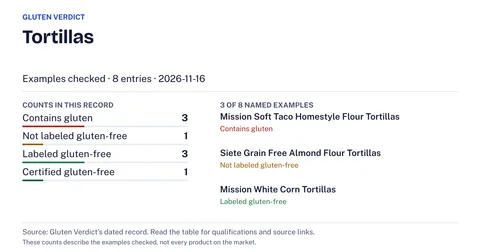 TortillasDepends on the product3 of 8 products we checked contain gluten: Mission Soft Taco Homestyle Flour Tortillas, Guerrero Riquisimas Soft Taco Flour Tortillas (24 ct), and Guerrero Corn and Wheat Tortillaschecked Nov 16, 2026
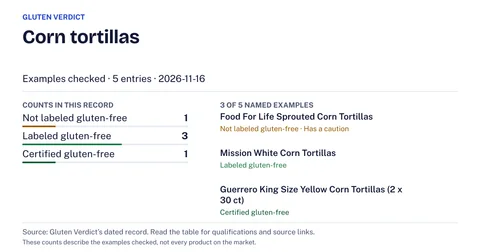 Corn tortillasDepends on the productchecked Nov 16, 2026
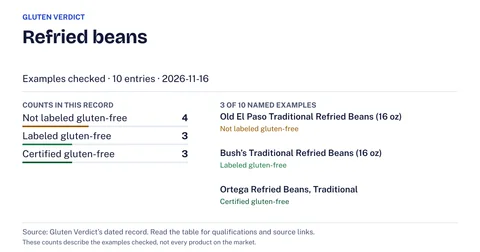 Refried beansDepends on the productchecked Nov 16, 2026
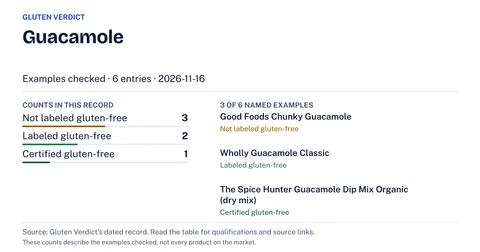 GuacamoleDepends on the productchecked Nov 16, 2026
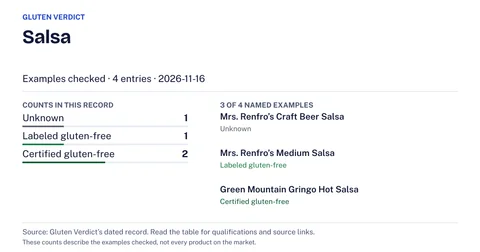 SalsaDepends on the productchecked Nov 16, 2026
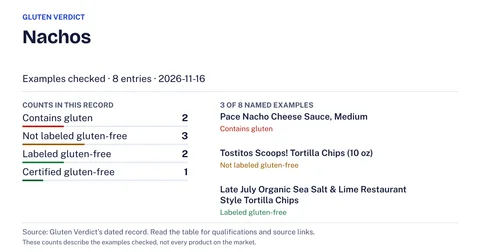 NachosDepends on the product2 of 8 products we checked contain gluten: Pace Nacho Cheese Sauce, Medium and Pace Nacho Cheese Sauce, Mildchecked Nov 16, 2026
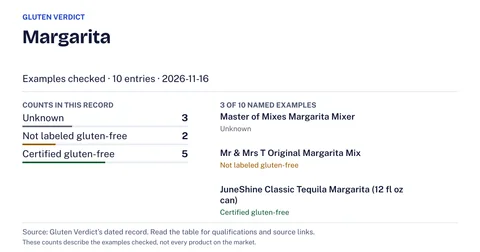 MargaritaDepends on the productchecked Nov 16, 2026
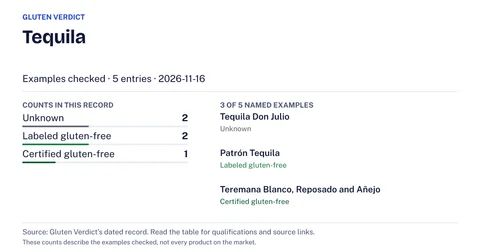 TequilaDepends on the productchecked Nov 16, 2026
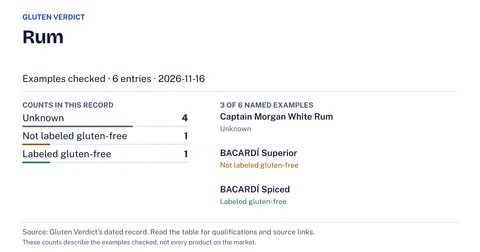 RumDepends on the productchecked Nov 16, 2026
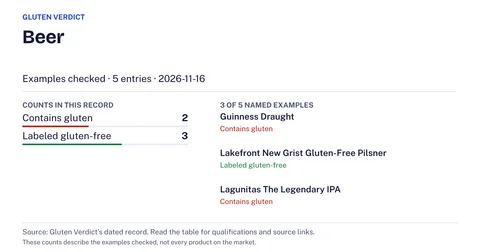 BeerDepends on the product2 of 5 products we checked contain gluten: Guinness Draught and Lagunitas The Legendary IPAchecked Nov 16, 2026
Questions people ask
Do all-inclusive resorts have a separate kitchen for gluten-free food?
Club Med says it has no separate kitchens to prepare allergen-free items and no separate dining areas for guests with allergies or intolerances3. The Beaches and Sandals dining pages we read do not say10, 12, so ask.
How much notice does a resort need for a dietary request?
The two brands whose pages address it differ. Beaches requires one month’s notice for special preparations or products the resort does not carry9. Club Med’s policy is for guests to ask to speak with the Head Chef or Restaurant Manager on arrival1.
Is there a Spanish card I can print for the restaurant?
GIG publishes “Ficha para Restaurantes”, a Spanish restaurant card that names TRIGO, CENTENO and CEBADA and anything derived from them31.
Does a gluten-free request cover every buffet dish?
Not on Club Med’s account: its chef can indicate what can be eaten, but other guests can still cause cross-contact at self-serve buffets2.
More in Travel planning and logistics
 Gluten-free dining cards in other languages: where the wording comes fromWhich gluten-free card wording comes from EU law or a celiac society, which cards are members-only, and how to hand one to a server.
 Gluten-free at US theme parks outside Walt Disney World: what each park publishesWhat Universal, Disneyland, SeaWorld, Busch Gardens, Cedar Point and Knott’s each publish about food allergies and gluten, and what to ask.
 Gluten-free airline meals: what each airline’s own page says and how to request oneWhat Delta, American, Air Canada, Qantas, Virgin Atlantic and JetBlue say on their own pages about gluten-free meals: where to ask and by when.
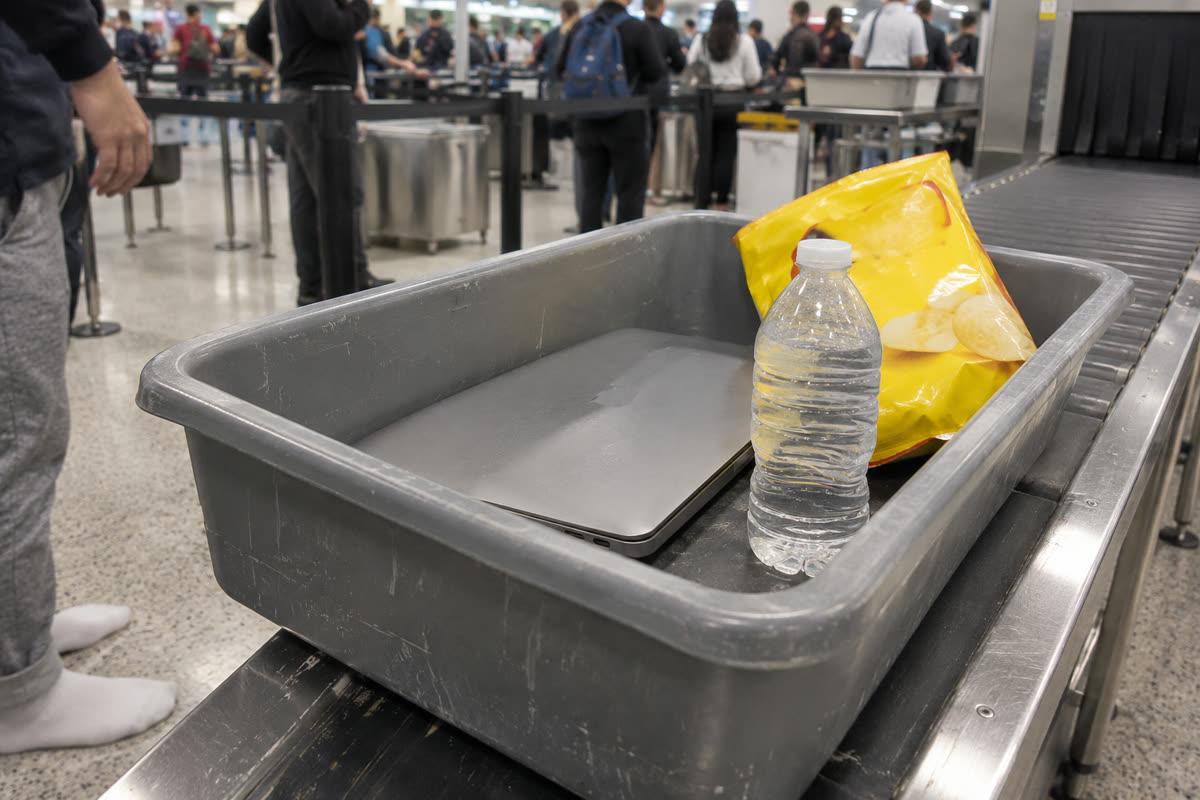 Gluten-free food through TSA security: what carries on and what goes in a checked bagWhich gluten-free foods go in a carry-on or checked bag under TSA’s own pages, and how the 3.4-ounce liquid limit applies to spreads, soups and dips.
 State restaurant allergy laws: what eight states’ laws say, and what they leave out for barley and ryeWhat CA, VA, NY, MA, RI, MD, IL and MI law says about restaurant allergens, whether wheat is covered, and what is left out for barley and rye.
 Gluten-free hotel breakfast: what to email ahead and what to ask at the buffetA hotel breakfast buffet can mean shared utensils, toasters and waffle irons. What to write the hotel before you arrive, and what to ask at each station.
Related guides
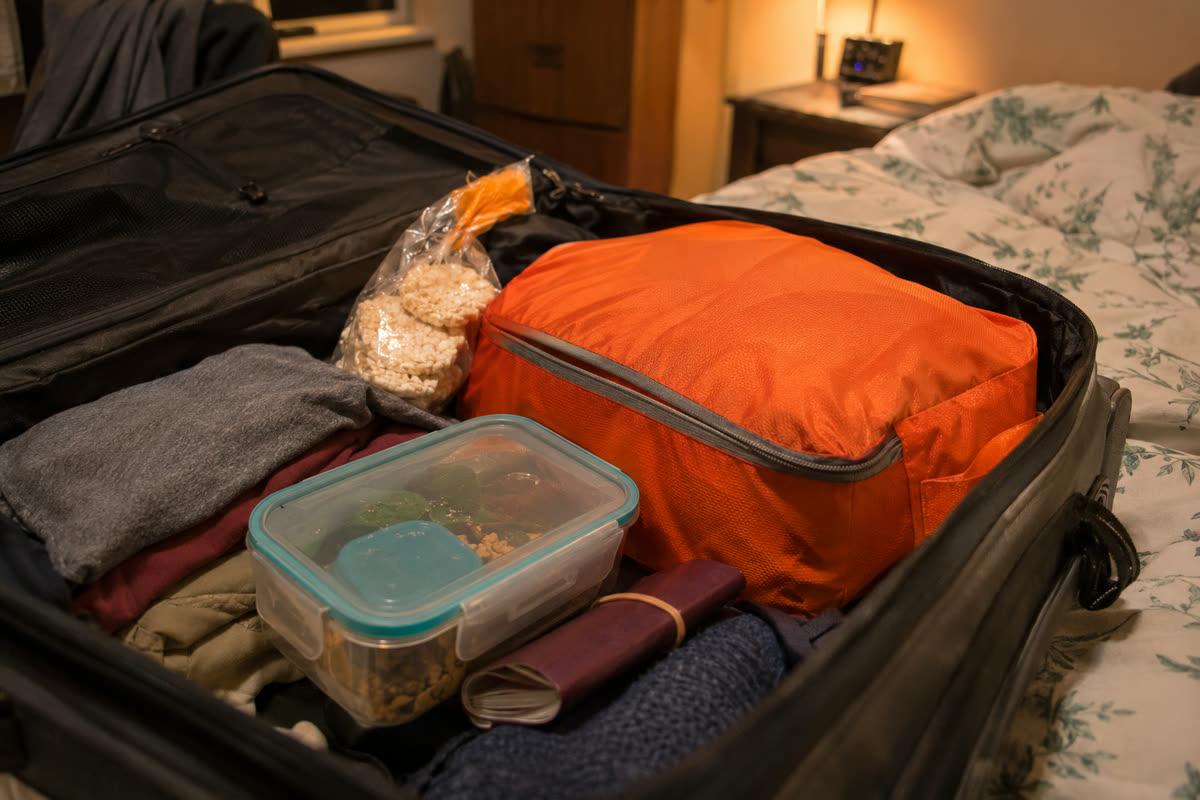 Planning a gluten-free trip: what to arrange, in orderA gluten-free trip in order: how you will eat, what to tell hotels and airlines, which cards and notes to carry, and what food to pack.
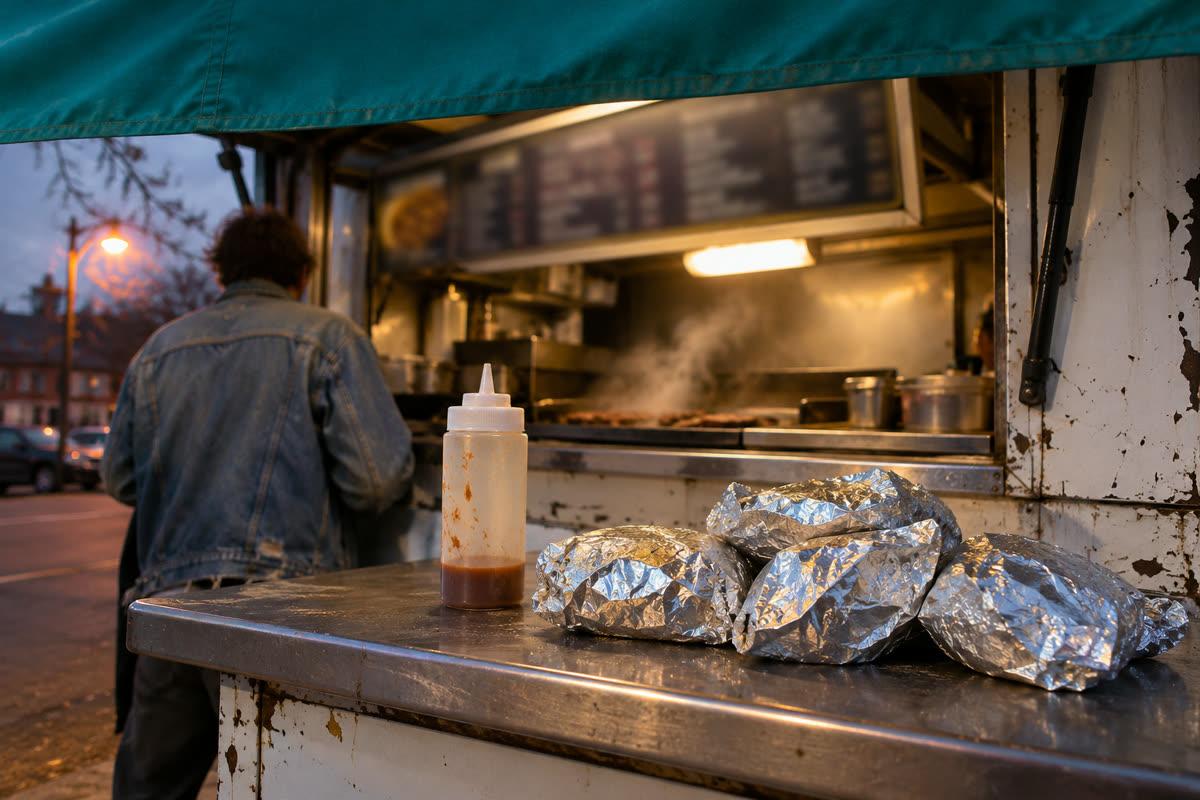 Buffets, food courts and food trucks with celiac disease: what to ask at eachHow to decide whether a buffet, food court counter or food truck is workable with celiac disease, what to ask at each stop, and what to order.
 Travel insurance and finding a doctor abroad with celiac diseaseWhat a travel policy says about pre-existing conditions, the questions to put to an insurer in writing, and where to look for a doctor abroad.
 Gluten-free in Mexico: tortillas, Maggi seasonings and the Mexican allergen lineTell a corn tortilla from a corn-and-wheat blend, spot the Maggi seasonings that list wheat, read the Mexican allergen line and ask about the griddle.
Sources
- [1, 2, 3, 4, 5, 6, 7] Club Med, Special Dietary Requests & Food Allergies Policy, checked Nov 17, 2026.
- [8, 9, 10] Beaches Resorts, All-Inclusive Restaurants & Dining Experiences, checked Nov 17, 2026.
Read on 2026-11-17: under “Dietary Requirements?” the list headed “Culinary Concierge Services:” names viewing menus, making dinner reservations, and accommodating food allergies and special dietary requirements.
Read the Beaches all-inclusive dining page on 2026-11-17: the words “gluten”, “celiac” and “cross-contact” do not appear; “buffet” appears once in the page’s visible text, in the heading “A la Carte & Buffet Hybrid”, with no statement about how a buffet is kept apart.
- [11, 12] Sandals Resorts, Restaurants & Gourmet Food, checked Nov 17, 2026.
Read the Sandals all-inclusive dining page on 2026-11-17: the words “gluten”, “celiac”, “allergy”, “buffet” and “cross-contact” do not appear; the “Dietary Restrictions?” entry is the only dietary text.
- [13, 14, 15, 16, 17, 18, 19, 20, 21] Gluten Intolerance Group, Eating Out: 7 Tips For Staying Gluten-Free, checked Nov 17, 2026.
- [22, 23] Gluten Intolerance Group, What are some of the most important questions to ask the wait staff or management of a food service or restaurant?, checked Nov 17, 2026.
- [24, 25, 26] Gluten Intolerance Group, Traveling Gluten-Free, checked Nov 17, 2026.
- [27, 28, 29, 30] Gluten Intolerance Group, Traveling Gluten-Free with Confidence, checked Nov 17, 2026.
- [31, 32, 33] Gluten Intolerance Group, Ficha para Restaurantes (Spanish restaurant card), checked Nov 17, 2026.
Read the card on 2026-11-17: the list that follows “Algunas posibles fuentes de gluten incluyen” names Pasta, Harina, Adobos, Rellenos, Crutones, Espesantes, Te de hierba, Salsa de Soya, Pan/ Pan tostado, Aderezos y Salsas, Malta, Aves presazonadas, Saborizante de Malta, Caldos y bases de sopas, Tocinos y Mariscos de imitación, Proteína de trigo hidrolizada, and Mezclas para cubrir carnes u otros alimentos.
- [34, 35] Gluten-Free Food Program (GFFP), GF Destinations: Gluten-Free Certification for Holiday Resorts, Hotels and Convention Centers, checked Nov 17, 2026.