Gluten-free in Mexico: tortillas, Maggi seasonings and the Mexican allergen line
Short answer
GIG calls corn one of the most central ingredients in Mexico1, yet corn does not settle it: GIG notes that some corn tortillas are a corn-and-wheat mix2, and Nestlé México lists wheat in several of its Maggi seasonings4, 5. Check four things, in this order:
- The tortilla. The Gluten Intolerance Group (GIG) notes that some corn tortillas contain a mix of corn and wheat flour2; one US maker lists wheat flour and vital wheat gluten in its corn-and-wheat tortilla3.
- The seasoning sauce. Nestlé México’s own pages list wheat vegetable protein in Jugo Maggi and wheat in its soy sauce, and carry the line “Contiene gluten”4, 5.
- The Mexican allergen line. Mexico’s labelling norm makes makers declare cereals that contain gluten, oats included, under the title “Contiene”, with exceptions for wheat-based glucose syrups and maltodextrins6, 7, 10.
- The cooking surface. GIG suggests asking whether the grill is shared with gluten foods and how it is cleaned8.
- Gluten-free limit
- Not confirmed: the text of the labelling norm and its 2020 modification that we read gives no numeric limit for a “sin gluten” claim13, 12
- Set by
- Norma Oficial Mexicana NOM-051-SCFI/SSA1-2010, as modified in the Diario Oficial of 27 March 202031
- Oats
- The norm lists oats among the cereals that contain gluten and must always be declared6
Part of Travel: the Americas and Oceania, 10 guides
Key points
- The same maker sells a corn tortilla and a corn-and-wheat tortilla, and the ingredient list shows which is which9, 3.
- The Mexican norm we read lists oats with wheat, rye, barley and spelt as gluten cereals to declare, and exempts wheat-based glucose syrups and maltodextrins from that declaration6, 10.
- FDA’s 20 parts per million rule is a US rule11; the Mexican norm text we read gives no number for a “sin gluten” claim12, 13.
- Of six Maggi pages we read, five carry “Contiene gluten” and the sixth lists “gluten” under “Puede contener”4, 14, 5, 15, 16, 17.
Corn, wheat and the blends in between
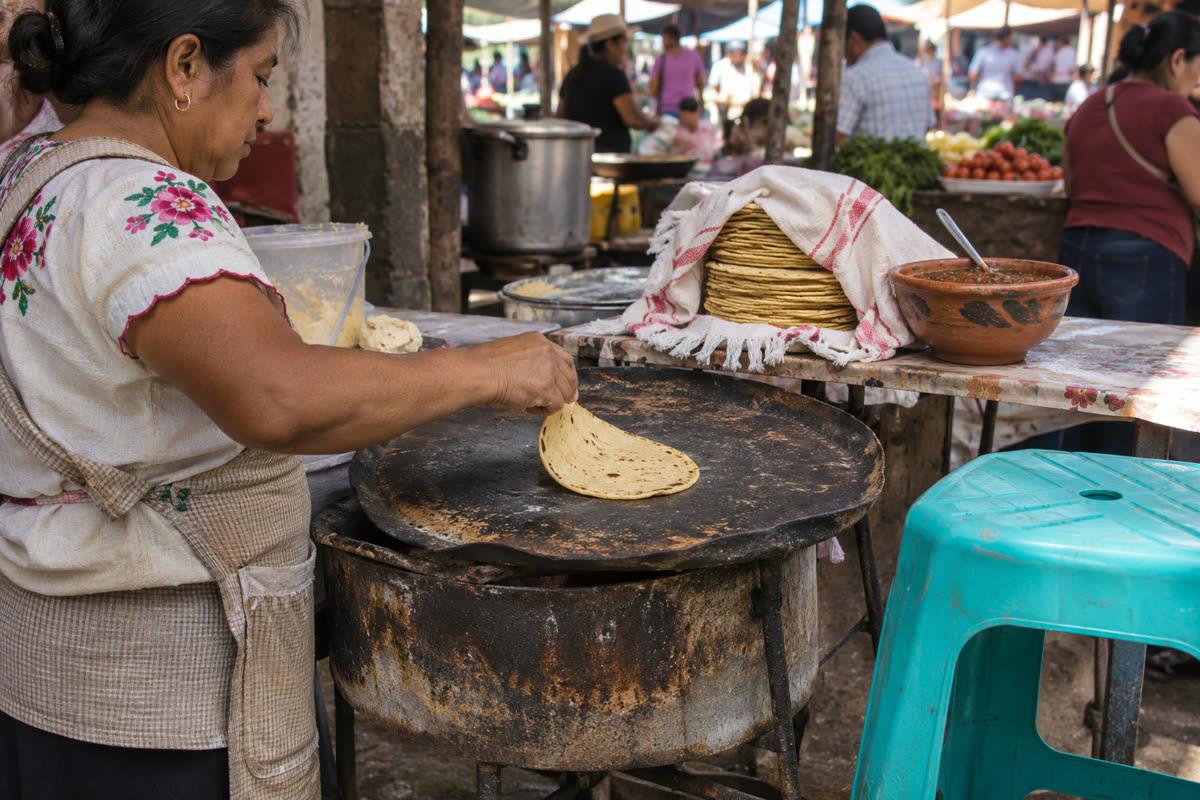
GIG calls corn one of the most central ingredients throughout Mexico1. It shows up as tortillas, tostadas, gorditas, tamales and atole, among other forms18. Wheat arrives when a tortilla is not pure corn: GIG’s note is that some corn tortillas contain a mix of corn and wheat flour, so the gluten-free status of Mexican corn products is worth confirming2.
One maker shows how different two bags that both say “corn” can be. Guerrero’s product page says its tortillas are baked in the United States19, while its FAQ lists 19 plants in the United States and 3 in Mexico25. Either way, these pages show what to look for, not what a tortillería in Mexico uses.
| Tortilla (maker’s page) | Ingredients as listed | What else the maker says |
|---|---|---|
| Guerrero White Corn Tortillas | Corn masa flour, water, and 2% or less of cellulose gum, guar gum and acids to maintain freshness9 | “Guerrero corn products do not contain gluten”20; corn lines are dedicated to corn products21 |
| Guerrero Corn and Wheat Tortillas | Water, corn masa flour, wheat flour, vital wheat gluten and more3 | The product page ends its ingredient list with “Contains: Wheat”3 |
| Mission White Corn Tortillas | Corn masa flour, water, and 2% or less of gums, amylase and acids22 | Mission says its corn products are certified gluten free23 |
A maker’s FAQ speaks for that maker’s lines, not for a market stall. At a stall or a tortillería, the check is the one you can make yourself: ask what the tortillas are made of.
For packaged corn products we have checked, our verdicts show each maker’s own lists: corn tortillas, tortillas and tortilla chips. Our guide to corn versus flour tortillas goes through the same question for the US.
Shared griddles and grills
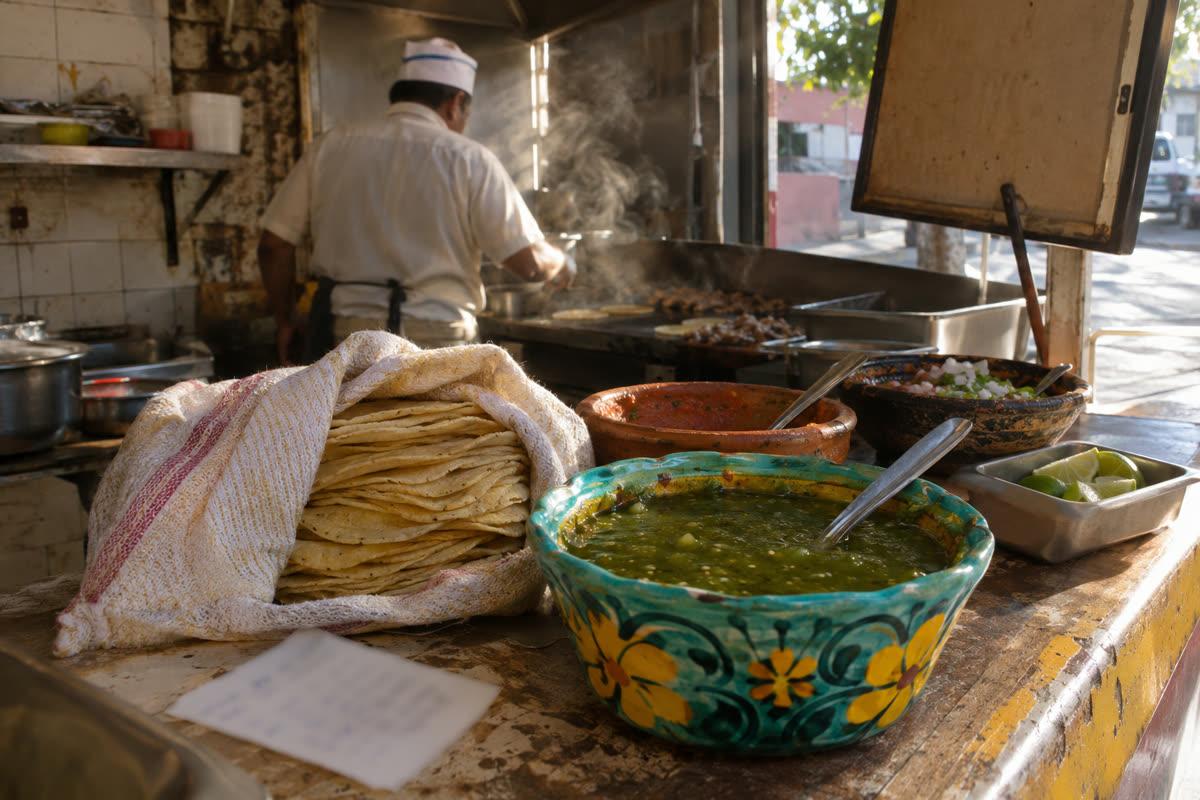
The comal is a griddle24. Whatever the surface is called, the question is the one GIG lists for any restaurant: is the grill used to cook gluten-free foods separate or shared with gluten foods, and if shared, how is it cleaned and how often8?
If you order a corn tortilla or a taco filling at a stand that also heats flour tortillas, ask before the food goes on the surface. GIG also suggests finding out whether breaded or gluten-containing foods have been cooked on the same surface beforehand, and proposes foil over the cooking surface as a way to avoid cross-contact26.
Once the plate arrives, GIG’s advice is to check with your server that it is the special meal you ordered and that your instructions were followed27.
Jugo Maggi and other Maggi seasonings
Nestlé México lists ingredients and an allergen line on each of the Maggi product pages we read. We read six seasonings; five name wheat, and the sixth does not:
| Product | Wheat in the ingredient list | Allergen line on the page |
|---|---|---|
| Jugo Sazonador Maggi | Proteína vegetal de trigo4 | Contiene gluten. Puede contener soya4 |
| Salsa Inglesa Maggi | Proteína vegetal de trigo14 | Contiene gluten. Puede contener soya14 |
| Salsa de Soya Maggi | Salsa de soya y trigo5 | Contiene gluten. Puede contener soya5 |
| Sazonador Mi-Che Maggi | Proteína vegetal de trigo15 | Contiene gluten. Puede contener soya15 |
| Papelitos Sazonadores Maggi, Pastor | Harina de trigo16 | Contiene gluten, sulfitos y soya16 |
| Papelitos Sazonadores Maggi, Chipotle | No wheat ingredient listed17 | Contiene soya; gluten appears under Puede contener17 |
The Chipotle row is the useful contrast. A product can list no wheat and still name gluten in its “Puede contener” line17, while a sibling lists wheat flour and carries “Contiene gluten”16. Read each product; do not read the brand.
Worcestershire-style and soy sauces are a known check in GIG’s restaurant questions: GIG notes that Worcestershire-type sauces and soy sauce could contain gluten28. Our verdicts: Worcestershire sauce and soy sauce.
Ask the kitchen what goes in the marinade and the seasoning for the dish you want; GIG lists that question for restaurants29. Its Spanish restaurant card names “Adobos” (marinades) among the possible sources of gluten30.
Bouillon, broth and seasoning powders
We could not open a Mexican maker page for powdered chicken bouillon or soup base, so this guide makes no claim about a particular brand. What a source does say: GIG’s Spanish restaurant card lists “Caldos y bases de sopas” and “Proteína de trigo hidrolizada” among possible sources of gluten30. “Proteína vegetal de trigo”, the wording on the Maggi liquid seasonings above4, 14, 15, is the kind of phrase to look for on a sachet or cube.
For how we treat these ingredients, see our verdicts for chicken broth, hydrolyzed vegetable protein, MSG and taco seasoning. For restaurant food, the question is the one in the previous section: what is in the seasoning.
Reading a Mexican pack: Contiene and Puede contener
Mexico’s labelling norm for prepackaged foods and non-alcoholic drinks is NOM-051-SCFI/SSA1-2010, and a modification of it was published in the Diario Oficial on 27 March 202031. Its first transitional article sets 1 April 2021 for the modification’s provisions other than the front-of-pack warning labelling, which start on 1 October 2020, with details in the transitional articles that follow32. We read that published text; we did not check for later amendments.
| On the pack | What the norm says |
|---|---|
| Cereales que contienen gluten | Always declared: wheat, rye, oats, barley, spelt or their hybrid strains, and products of them6 |
| A Contiene line | Allergens are declared at the end of the ingredient list, in bold type at least as large as the ingredients, under the title “Contiene”7 |
| A derivative with its source named | An ingredient that is a derivative containing gluten may be declared by its origin33 |
| A Puede contener line | Where cross-contamination is possible between production and packing, the norm says the phrase “Puede contener” must be added at the end of the ingredient list, naming the allergen34 |
| Wheat-based glucose syrups, maltodextrins | Exempted from the always-declare rule, as are barley-based glucose syrups10 |
Two points matter to a traveler. First, oats are on Mexico’s list of gluten cereals6. Second, because the exemption exists, a Mexican pack may carry wheat-based maltodextrin or glucose syrup without a Contiene line naming gluten, so read the ingredient list for those words as well10.
On the “sin gluten” claim: in the 2010 norm text and in the 2020 modification, we found no “sin gluten” or “libre de gluten” wording and no numeric limit13, 12. That does not mean no Mexican rule exists elsewhere; we could not confirm one. FDA’s requirement of less than 20 parts per million belongs to US labels11, so do not carry that number onto a Mexican pack.
Our gluten scanner looks for gluten ingredient names in a photo of a label or in pasted text. For the wider picture, see our guide to gluten-free labeling laws by country.
Street and market dishes: ask about the recipe
A dish name does not settle the recipe. GIG’s example is the chile relleno: its recipe is gluten-free, but some chiles rellenos contain wheat flour in the egg batter35. GIG’s other Mexican recipes, such as pozole, enchiladas and esquites, are described as ones whose ingredients should be gluten-free, with the reminder to confirm the version or brand of any packaged ingredient36.
GIG describes tamales as made of masa dough, gorditas as made with masa harina or corn flour, and atole as made with masa18. The questions are the ones for tortillas: what else is in the dough, and what else touches the cooking surface.
Our verdicts for sides, sweets and drinks you may meet on a menu: refried beans, salsa, churros, horchata, tequila and beer. Each shows the sources behind it and the date we read them.
What to ask, and how to hand it over in Spanish
GIG suggests carrying a printed translation card when the local language is not yours, to hand to the server or manager37. It also warns about restaurants where a language barrier may keep staff from understanding your dietary restrictions38.
We do not write a Spanish request of our own: none of the pages we read supplies a translation of the comal question, so have a Spanish speaker put it into words. What we can point to is GIG’s Spanish restaurant card, and steps built around it:
- Print GIG’s Spanish restaurant card, “Ficha para Restaurantes”. It names trigo, centeno and cebada, and anything made from them, as grains that people with gluten-related disorders should not eat39 (GIG’s English script names wheat, rye and barley40), and says oats are not to be eaten unless certified or labeled “sin gluten”41.
- Start from GIG’s English script and have it put into Spanish: “Hi, I need your help with my menu selection. I am on a medically restricted diet and am unable to eat wheat, rye, barley, and foods made with these grains. I have some questions for you or the chef.”40
- Ask whether the grill or griddle is shared with gluten foods and how it is cleaned8.
- Ask what is in the marinade, the seasoning and the sauces for your dish29, 28.
- Confirm the plate when it arrives27.
The card’s list of possible sources of gluten runs from pasta and flour to soy sauce, malt, soup bases and hydrolyzed wheat protein30. Show it with the printed request, not instead of it.
Verdicts in this guide
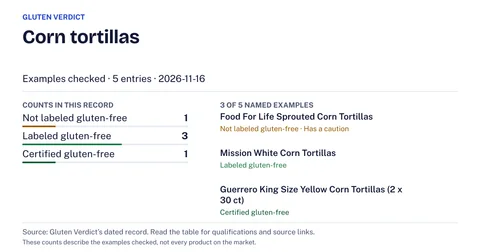 Corn tortillasDepends on the productchecked Nov 16, 2026
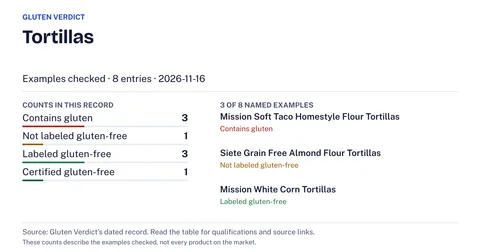 TortillasDepends on the product3 of 8 products we checked contain gluten: Mission Soft Taco Homestyle Flour Tortillas, Guerrero Riquisimas Soft Taco Flour Tortillas (24 ct), and Guerrero Corn and Wheat Tortillaschecked Nov 16, 2026
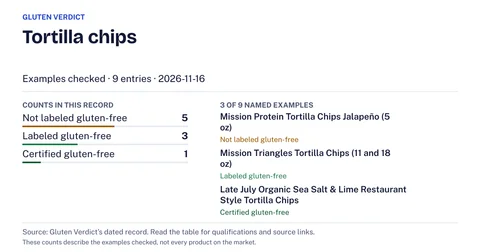 Tortilla chipsDepends on the productchecked Nov 16, 2026
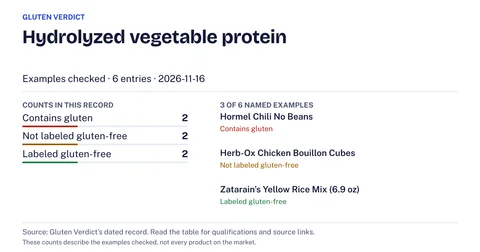 Hydrolyzed vegetable proteinDepends on the product2 of 6 products we checked contain gluten: Hormel Chili No Beans and Pioneer Brown Gravy Mix (1.61 oz)checked Nov 16, 2026
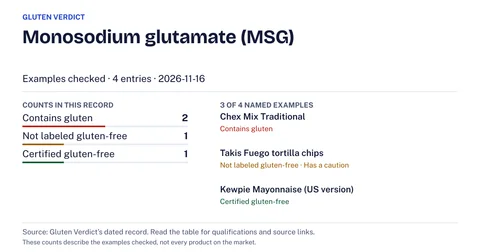 Monosodium glutamate (MSG)Naturally gluten-free2 of 4 products we checked contain gluten: Chex Mix Traditional and S&B Golden Curry Mix (Mild)checked Nov 16, 2026
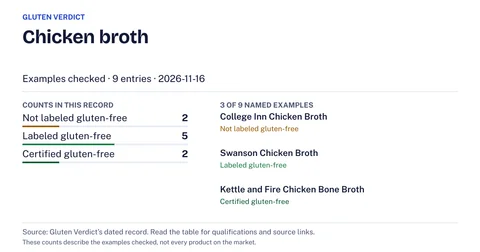 Chicken brothDepends on the productchecked Nov 16, 2026
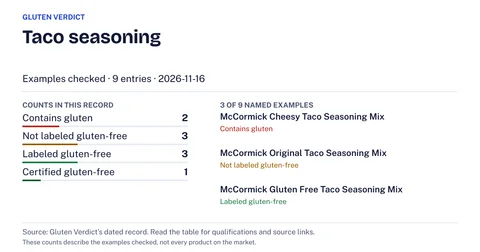 Taco seasoningDepends on the product2 of 9 products we checked contain gluten: McCormick Cheesy Taco Seasoning Mix and Lawry’s Taco Seasoning Mixchecked Nov 16, 2026
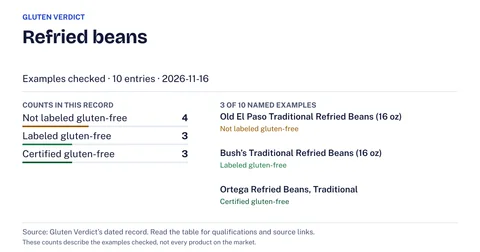 Refried beansDepends on the productchecked Nov 16, 2026
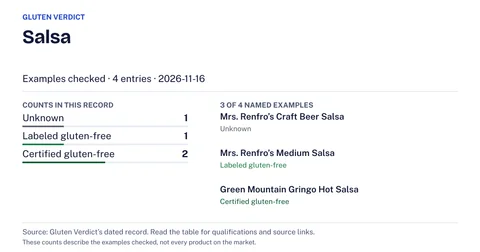 SalsaDepends on the productchecked Nov 16, 2026
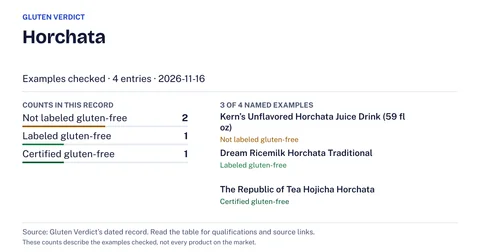 HorchataDepends on the productchecked Nov 16, 2026
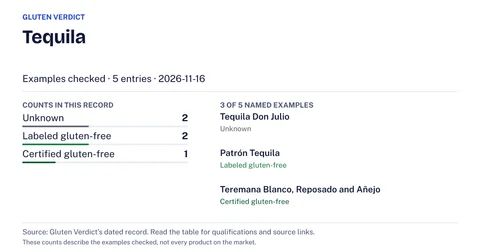 TequilaDepends on the productchecked Nov 16, 2026
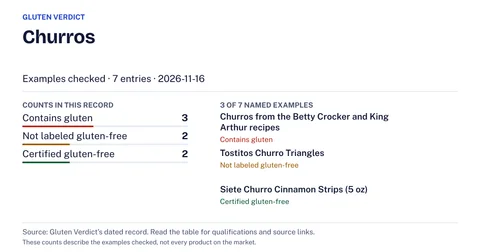 ChurrosContains glutenchecked Nov 16, 2026
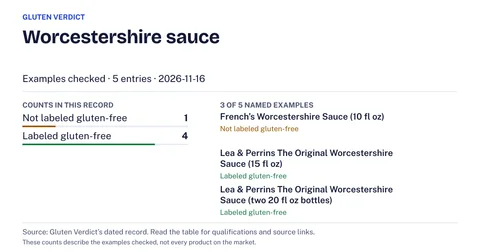 Worcestershire sauceDepends on the productchecked Nov 16, 2026
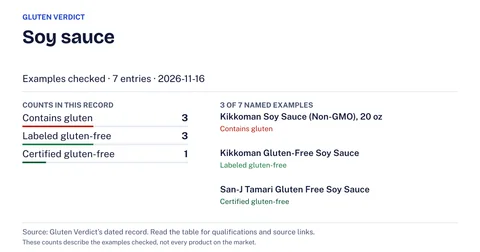 Soy sauceDepends on the product3 of 7 products we checked contain gluten: Kikkoman Soy Sauce (Non-GMO), 20 oz; San-J Organic Shoyu Soy Sauce; and Lee Kum Kee Premium Soy Sauce (No Preservatives Added)checked Nov 16, 2026
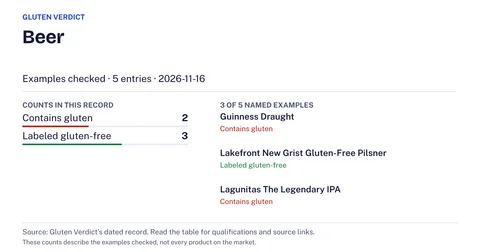 BeerDepends on the product2 of 5 products we checked contain gluten: Guinness Draught and Lagunitas The Legendary IPAchecked Nov 16, 2026
Questions people ask
Are corn tortillas in Mexico gluten-free?
Not always. GIG notes that some corn tortillas contain a mix of corn and wheat flour2, and one US maker sells a corn-and-wheat tortilla whose ingredients include wheat flour and vital wheat gluten3. Read the list or ask what the tortilla is made of.
Does Jugo Maggi contain gluten?
Nestlé México’s page for Jugo Sazonador Maggi lists proteína vegetal de trigo and says “Contiene gluten”4.
What does “Puede contener” mean on a Mexican pack?
It is the phrase the norm says must be added at the end of the ingredient list when cross-contamination is possible between production and packing, naming the allergen34. Nestlé México’s Maggi pages use it, for example “Puede contener soya”4.
Is oats on the Mexican allergen list?
Yes. The norm’s list of gluten cereals to declare names wheat, rye, oats, barley and spelt6.
Is “sin gluten” in Mexico the same as the US “gluten-free” claim?
We could not confirm it. FDA requires less than 20 parts per million for US labels11, and we found no numeric limit for a “sin gluten” claim in the text of Mexico’s labelling norm or its 2020 modification13, 12. Read the ingredient list and the Contiene line.
More in Travel: the Americas and Oceania
 Gluten-free in Hawaii, Puerto Rico and the US Virgin IslandsDoes the US gluten-free label rule hold in Hawaii, Puerto Rico and the USVI? Plus poke sauce, SPAM, musubi, seasoning packets and rum.
 Gluten-free in the Caribbean: island dishes, jerk labels and cruise port daysWhich Caribbean doughs, soup mixes and jerk sauces list wheat, what a cruise line’s dietary request covers on a port day, and what to ask.
 Gluten-free in Peru: chifa soy sauce, bread in the sauce and Ley 31881Where wheat enters Peruvian cooking (sillao in chifa dishes, bread in sauces), what Peru’s gluten-free label law settles, and how to plan trek meals.
 Gluten-free in New Zealand: the shared food code, oats, Marmite and the borderWhat a US visitor needs for gluten-free food in New Zealand: the shared Australian claim, oats, Marmite, Coeliac NZ marks and border declaration.
 Gluten-free in Brazil: the “contém glúten” line, pão de queijo, farofa and tapiocaHow to read Brazil’s mandatory “contém glúten” line, and how to judge pão de queijo, farofa, tapioca and fried snacks by recipe and kitchen.
 Bringing gluten-free food into Canada, Mexico, Australia and New ZealandWhat a US traveler can carry into Canada, Mexico, Australia and New Zealand: declare food, pack to each country’s list, and know what to buy there.
Related guides
 Seasoning packets, bouillon cubes and spice blends: where wheat entersWhy a packet, cube or blend can list wheat flour or barley when a single spice lists one item, and the order to read the label in.
 Hydrolyzed protein, yeast extract and wheat starch on a US food labelWhich grain is behind hydrolyzed protein, yeast extract and wheat starch, what a US label must name, and what to ask the maker.
 How to order at a Mexican restaurant when you avoid glutenCorn is not the whole story at a Mexican restaurant. What to ask about tortillas, chip fryers, sauces, seasoning and shared grills.
 Gluten-free labeling rules by country: ceilings, claim wording and where no rule was foundLook up the gluten-free limit and claim wording for the US, Canada, EU, UK, Australia, New Zealand and more, each figure tied to the page we read.
Sources
- [1, 2, 18, 35, 36] Gluten Intolerance Group, The Wonders of Gluten-Free Mexican Meals, checked Nov 17, 2026.
- [3] Guerrero Tortillas (Gruma), Corn and Wheat Tortillas, checked Nov 17, 2026.
- [4] Nestlé México (Recetas Nestlé), Jugo Sazonador MAGGI, checked Nov 17, 2026.
- [5] Nestlé México (Recetas Nestlé), Salsa de Soya MAGGI, checked Nov 17, 2026.
- [6, 7, 10, 12, 31, 32, 33, 34] Secretaría de Economía and Secretaría de Salud (Diario Oficial de la Federación), Modificación a la NOM-051-SCFI/SSA1-2010, labelling of prepackaged foods (27 March 2020), checked Nov 17, 2026.
Read the PDF text on 2026-11-17: the word “gluten” appears twice, in the list of foods and ingredients that must always be declared (cereals that contain gluten) and in the example of declaring the origin of a derivative; the phrases “sin gluten” and “libre de gluten” appear nowhere in the text.
- [8, 28, 29] Gluten Intolerance Group, What are some of the most important questions to ask the wait staff or management of a food service or restaurant?, checked Nov 17, 2026.
- [9, 19] Guerrero Tortillas (Gruma), White Corn Tortillas, checked Nov 17, 2026.
- [11] US Food and Drug Administration, Gluten and Food Labeling, checked Nov 17, 2026.
- [13] Secretaría de Economía and Secretaría de Salud (Diario Oficial de la Federación), NOM-051-SCFI/SSA1-2010, labelling of prepackaged foods (5 April 2010), checked Nov 17, 2026.
Read the full 2010 text on 2026-11-17: the word “gluten” appears once, in the list of foods and ingredients that must always be declared (cereals that contain gluten: wheat, rye, barley, oats, spelt or their hybrid strains); the phrases “sin gluten” and “libre de gluten” appear nowhere in the text.
- [14] Nestlé México (Recetas Nestlé), Salsa Inglesa MAGGI, checked Nov 17, 2026.
- [15] Nestlé México (Recetas Nestlé), Sazonador Mi-Che MAGGI, checked Nov 17, 2026.
- [16] Nestlé México (Recetas Nestlé), Papelitos Sazonadores MAGGI, Pastor, checked Nov 17, 2026.
- [17] Nestlé México (Recetas Nestlé), Papelitos Sazonadores MAGGI, Chipotle, checked Nov 17, 2026.
- [20, 21, 25] Guerrero Tortillas (Gruma), Guerrero FAQs, checked Nov 17, 2026.
- [22] Mission Foods (Gruma), White Corn Tortillas, checked Nov 17, 2026.
- [23] Mission Foods (Gruma), Mission Foods FAQ, checked Nov 17, 2026.
- [24] Dictionary.com, comal, checked Nov 17, 2026.
- [26, 27, 38, 40] Gluten Intolerance Group, Eating Out: 7 Tips For Staying Gluten-Free, checked Nov 17, 2026.
- [30, 39, 41] Gluten Intolerance Group, Ficha para Restaurantes (Spanish restaurant card), checked Nov 17, 2026.
Read the card on 2026-11-17: the list that follows “Algunas posibles fuentes de gluten incluyen” names Pasta, Harina, Adobos, Rellenos, Crutones, Espesantes, Te de hierba, Salsa de Soya, Pan/ Pan tostado, Aderezos y Salsas, Malta, Saborizante de Malta, Aves presazonadas, Caldos y bases de sopas, Tocinos y Mariscos de imitación, Proteína de trigo hidrolizada, and Mezclas para cubrir carnes u otros alimentos.
- [37] Gluten Intolerance Group, Traveling Gluten-Free with Confidence, checked Nov 17, 2026.