Planning a gluten-free trip: what to arrange, in order
Short answer
Plan the food before the bookings, in this order. Providers set their own notice windows. Delta says it cannot guarantee its gluten intolerant meals are gluten free1, and Carnival says it cannot guarantee a fully allergen free environment2, so every step is a request, not a promise.
- Decide how you will eat (a kitchen, restaurants or a mix) before you book lodging: a hotel can be asked about a refrigerator and microwave3, and a rental can come with a kitchen4.
- When you book, tell the hotel, tour operator, airline, rail line and cruise line that you need gluten-free meals5, 6, 19.
- Check each request again before you leave: American Airlines takes meal requests on select flights from 30 days to 20 hours before takeoff7, 65, and Delta says advance notice is required8.
- Carry a printed translation card for a country whose language you do not speak9, and ask your own doctor about a letter or note10, 11.
- Pack food for the gap: TSA allows solid food in carry-on and checked bags, but liquid or gel food over 3.4 oz is not allowed in a carry-on and should go in a checked bag if possible12.
Part of Travel planning and logistics, 22 guides
Key points
- Notice windows belong to each provider: American Airlines accepts special meal requests on select flights from 30 days to 20 hours before takeoff7, 65; Delta requires advance notice and a new request for every new or changed reservation8, 13.
- Delta says it cannot guarantee its gluten intolerant meals are gluten free1, and Carnival says it cannot guarantee a fully allergen free environment2. Carry backup food either way.
- The Celiac Disease Foundation says finding food in transit is typically harder than at the destination14, and advises non-perishable backup food15.
- The Celiac Disease Foundation suggests a doctor’s note for carrying “medical foods” through airport security10; TSA says its officers make the final decision on what is permitted16.
- Ask again at every stage: GIG suggests re-checking a flight meal request a day or two before the flight17.
How will you eat on this trip?
Start with the food, because it decides which questions you put to the hotel. The Celiac Disease Foundation (CDF) says finding something to eat in transit is typically more difficult than eating at your final destination14.
| If you will mostly… | Settle this before you book |
|---|---|
| Cook in a kitchen you control | Ask the hotel whether the room has a refrigerator and microwave3. Gluten Intolerance Group (GIG) lists booking a vacation rental with a kitchen among the ways a favorite destination becomes easy4. In a rental shared with people who eat gluten, GIG suggests designating cooking utensils, cutting boards and kitchen tools strictly for gluten-free use18. |
| Eat in restaurants | Book accommodation and restaurants in advance, requesting gluten free meals at the same time, as Coeliac UK advises19. Learn what the local cuisine consists of, so you can identify dishes that may be naturally gluten-free and items to watch out for20. |
| Mix both | Pack backup food for the gaps between meals15, and book the one or two restaurants that matter most to you. |
Then look up the country. GIG notes that some countries understand gluten-free diets on a large scale while others are less aware21. Our travel hub links a guide for each country we have covered, with its labeling rule and national celiac society.
When you book: tell every provider, then check again
Say you need gluten-free meals at the moment you book, to every provider in the chain. Coeliac UK, a UK charity, advises contacting the tour or cruise operator when you book5, and notes that some tour operators have a department you must contact about gluten free meals in your chosen hotel22. GIG says to notify the providers of flights, trains and cruises about your requirements6. For cruises, CDF says the cruise line typically has a division that handles allergies and meals, and suggests contacting that division23.
Airlines and cruise lines set their own rules
| Provider | How and when to ask | What the page says about the meal |
|---|---|---|
| Delta Air Lines | Special meals are offered on international flights and on most domestic routes for customers in Delta First8. Advance notice is required, and the request must be added for every new or changed reservation8, 13. | Meals are prepared with foods and ingredients that do not contain gluten, but Delta says it cannot guarantee they are gluten free1. |
| American Airlines | Special meals are available on select flights65. Request from 30 days before to no later than 20 hours before takeoff7. On a partner airline’s flight, order with that airline24. | Its gluten-intolerant meal “eliminates all foods prepared with wheat, rye, barley and oats”25. |
| Carnival Cruise Line | Tell the Maître d' and your dining team on the first evening26, and complete the Allergies Form before sailing27. | Gluten-free pizza dough, pasta, deli bread, buns and cake are available on request28. Dietary requirements can only be accommodated in the main dining room with the chef29. |
The two airlines describe their gluten-free meals differently1, 25, so ask what a meal contains rather than assuming. GIG’s 2019 bulletin says it is up to you to contact the airline about its gluten-free standards, and that most airlines require special meals to be pre-ordered 24-72 hours in advance30; an airline’s own page, as above, is the better guide for that airline. Our airline special meals guide points to more airlines’ own pages.
Then ask again. GIG suggests double-checking a meal request a day or two before the flight17. CDF says to confirm with the airline at check-in31. Delta says to tell the gate agent about a pre-ordered meal and confirm with a flight attendant once on board32. Coeliac UK says to double check arrangements before you leave and make yourself known to staff when you arrive33.
Cards, notes and documents to carry
A translation card
If the main language is not one you speak, GIG suggests a printed translation card to hand to your server or restaurant manager, and memorizing how to say “gluten-free” where you are going9. CDF also points to language cards that explain specific food allergies in a variety of languages34. Coeliac UK says its travel guides for over 50 countries carry translations of useful phrases35. We do not print translations on this page: take them from a charity or regulator source you trust.
A letter or a note
CDF suggests a doctor’s note allowing you to carry “medical foods” through airport security, so that items such as peanut butter, hummus, yogurt or soups are not confiscated10. TSA’s own page says its officers make the final decision on whether items are permitted into the secured areas of the airport16. For taking food into another country, Coeliac UK says your GP can provide a letter explaining coeliac disease and why you need the products11. Whether to ask for one is a conversation for you and your own doctor. Keep any letter and the card in your carry-on, with a photo of each on your phone.
Insurance and medicines
Coeliac UK, advising UK travellers, says to arrange travel insurance, tell the insurer you have coeliac disease, and notes that many insurers do not charge extra for covering someone with coeliac disease36. It also says cover varies by company, so read the full policy details37. CDF says to take enough prescription and over-the-counter medicines, vitamins and supplements for the whole trip, so you do not have to find a pharmacist abroad to check ingredients38.
What food to pack for the gap
TSA’s page says solid food items can travel in carry-on or checked bags, and that liquid or gel food items larger than 3.4 oz are not allowed in carry-on bags and should go in checked bags if possible12. Its FAQ adds that all food must undergo x-ray screening and that liquid, gel or aerosol foods must follow the 3-1-1 liquids rule16.
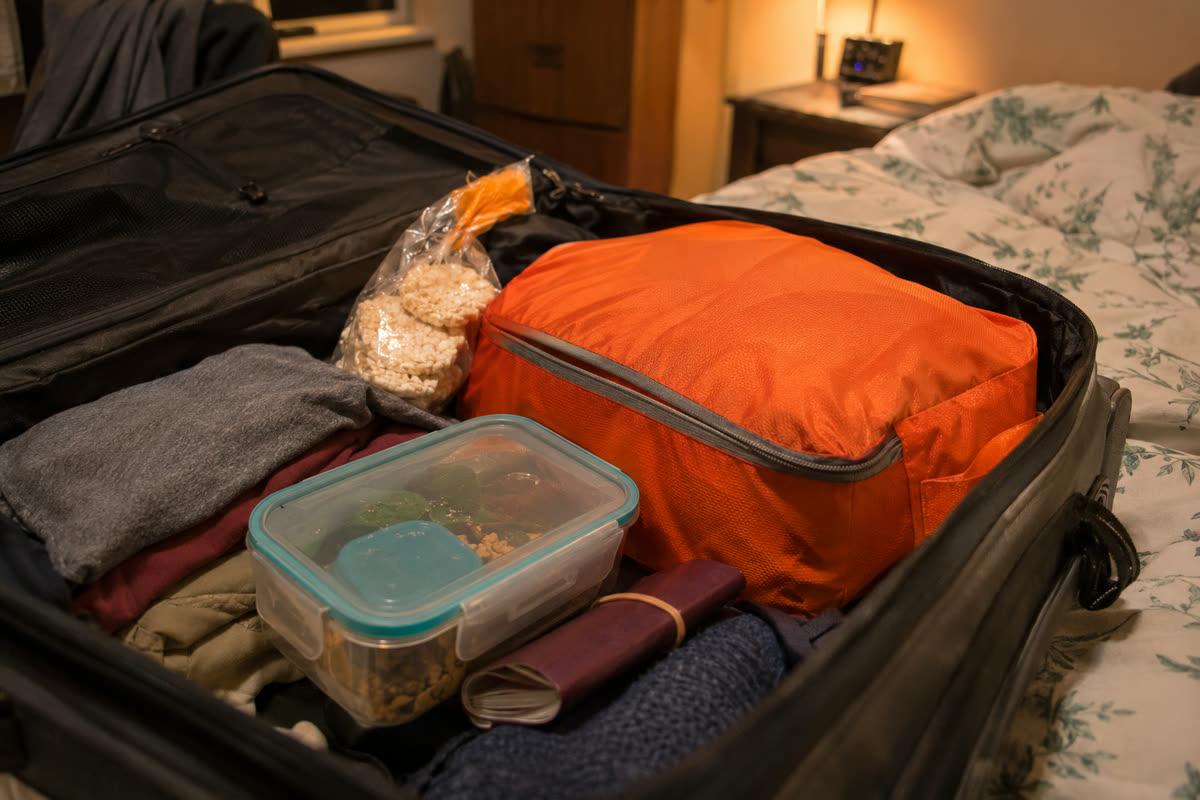
CDF’s advice is to always travel with non-perishable “backup” food, in case you are caught in a place without gluten-free options15. GIG suggests individual packages of nuts, protein bars, crackers and other small packaged snacks for daily travel39, and dehydrated foods such as gluten-free noodle cups that only need hot water for a plane40.
Read the label on every packaged snack before it goes in the bag. On foods FDA regulates, a “gluten-free” claim means less than 20 parts per million of gluten, FDA says41; our label guide shows where else to look, and our gluten scanner looks for gluten names in a photo of a label or in pasted text. Check our verdict before a snack goes in the bag, each with its sources and the date we read them: granola bars (not gluten-free by default), beef jerky (depends on brand and flavor), popcorn (plain popcorn is naturally gluten-free), oatmeal (gluten-free only if the oats are) and CLIF BAR chocolate chip (contains gluten).
Food across a border
Coeliac UK says to check with your airline or tour operator whether sealed packs of gluten free products can be brought into the country you are visiting, and that some countries are extremely strict about plant based products42. GIG’s bulletin warns that, depending on the destination, you may need to toss out uneaten perishable food, including fruits and vegetables43. Coming home to the US, US Customs and Border Protection says all agriculture items must be declared and are subject to inspection44, and that undeclared prohibited items will be confiscated and can result in a civil penalty45.
Getting there: air, rail, road and sea
Coeliac UK says gluten free choices can be limited at some airports, train stations, motorway service stations and on ferries, so plan ahead and prepare food or take snacks for the journey46, and always carry emergency snacks in case of delays or cancellations47.
- By air: flying gluten-free covers what to arrange, pack and ask from booking to landing, and airport dining covers the terminals.
- By train or bus: GIG says to inform the operators in advance, and that many transportation companies are happy to provide gluten-free meal options when given prior notice48.
- By road: GIG suggests researching gluten-free-friendly restaurants along your route and at your destination49, and filling a cooler with snacks, meals and drinks50.
- By sea: tell the cruise line’s allergy and meals division before you sail23. Carnival’s own page asks guests to tell the Maître d' and dining team on the first evening26. See cruises and all-inclusive resorts.
Delta cannot guarantee its gluten intolerant meals are gluten free1, and Carnival cannot guarantee a fully allergen free environment2. That is why the backup food stays in your bag.
At the destination: the first meal and the first shop
The first meal
Coeliac UK says to speak to the chef or front of house staff when you arrive, to confirm that gluten free meals have been arranged51. GIG suggests reviewing the menu for items that appear to be gluten-free, then speaking directly with staff to confirm the ingredients and find out whether practices are in place to avoid cross-contact52. Among its questions: whether separate cutting boards, utensils, fryers and toasters are used to avoid cross-contact53.
Local food can help. CDF says many cultural foods are naturally gluten-free and suggests double-checking for gluten-containing ingredients with travel cards54. Its example for Japanese and Korean food is that most sauces will contain soy sauce (wheat)55. In Europe and the UK, GIG says allergens are often shown by number on menus, with each dish listing the numbers of the allergens it contains, and still advises asking about cross-contact and preparation56.
In the US, FDA’s gluten-free definition is for food manufacturers that voluntarily label FDA-regulated foods, and FDA says restaurants’ use of gluten-free labeling should be consistent with it57; state and local governments oversee restaurants58. For another country, look up that country’s own rule: each of Coeliac UK’s travel guides has information on that country’s labelling laws59, and our country guides start from each country’s regulator. For ordering and reading menus, see eating out with celiac disease and how to read a restaurant allergen guide.
Apps and recommendations age. GIG says apps are not perfect and that you must always do your due diligence by checking directly with a restaurant for its hours60, and Coeliac UK says to check that a local coeliac organisation’s recommendations are still current and the chef has not moved on61.
The first shop
Coeliac UK says gluten free products are increasingly available in Europe and other countries but can be difficult to source, and that it is sometimes possible to order online in advance and have the goods delivered to your hotel or villa62. It adds that bread and pasta are frequently found in large supermarket branches, health food shops and some pharmacies, often under the Diet section63. For packaged products, GIG says scanner apps can be a huge help, as well as translating ingredients64; our own gluten scanner is one way to check a label.
When something goes wrong
Plan for the day when no kitchen can answer your questions. The backup food is for that day: CDF advises it for when you are caught in a place without gluten-free options15, and Coeliac UK’s emergency snacks cover delays and cancellations47. With your own supply, you are not guessing at a dish nobody has confirmed.
If the flight meal you ordered is not there, the step that matters happens earlier: Delta’s page asks you to mention a pre-ordered meal at the gate and confirm with a flight attendant on board32. If you have a connection on a partner airline, American says to order a special meal with that airline too24.
This page does not give medical advice. For symptoms or a possible exposure, contact your own doctor or the local health service. Coeliac UK says to check the full details of your travel insurance policy carefully37.
Where each guide in the travel section fits
| Step | Guide |
|---|---|
| Choosing a country | Travel hub: country guides |
| Flying: booking, packing, security, the flight | Air travel |
| Asking an airline for a meal | Airline special meals |
| Eating in the terminal | Airport dining |
| Sailing | Cruises |
| Resort stays | All-inclusive resorts |
| Theme parks | Disney World and theme park allergy services |
| The first restaurant meal | Eating out with celiac disease and how to read a restaurant allergen guide |
| A label in your hand | How to read a US food label for gluten and the gluten scanner |
| Chains you may meet on the road | Our verdicts for Chipotle, Panera and Five Guys, each with its sources and the date we read them |
Verdicts in this guide
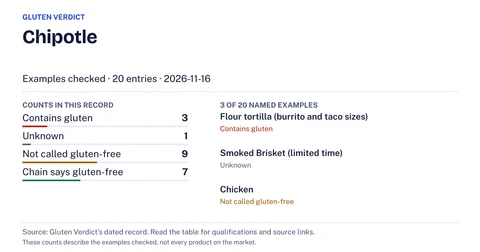 ChipotleDepends on the order3 of 20 menu items we checked contain gluten: Flour tortilla (burrito and taco sizes), Burrito, and QuesadillaChipotle Mexican Grill · checked Nov 16, 2026
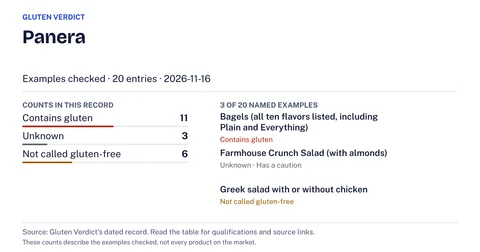 PaneraDepends on the order11 of 20 menu items we checked contain glutenPanera Bread · checked Nov 16, 2026
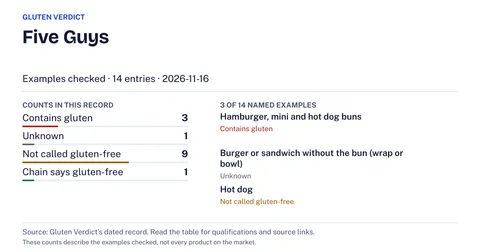 Five GuysDepends on the order3 of 14 menu items we checked contain gluten: Hamburger, mini and hot dog buns; Malt vinegar (fry condiment); and Oreo® Cookie Pieces shake mix-inFive Guys · checked Nov 16, 2026
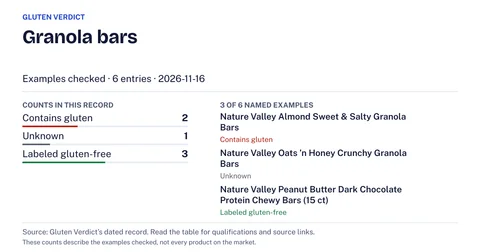 Granola barsDepends on the product2 of 6 products we checked contain gluten: Nature Valley Almond Sweet & Salty Granola Bars and Nature Valley Cinnamon Brown Sugar Soft-baked Oatmeal Squareschecked Nov 16, 2026
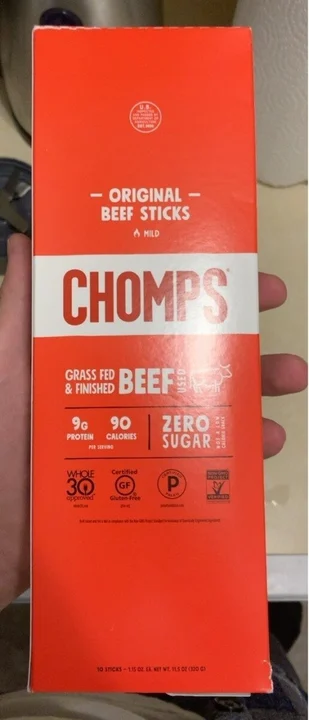 Beef jerkyDepends on the product3 of 8 products we checked contain gluten: Jack Link’s Original Beef Jerky, Jack Link’s Teriyaki Beef Jerky, and Old Trapper Teriyaki Beef Jerky (bulk)checked Nov 16, 2026
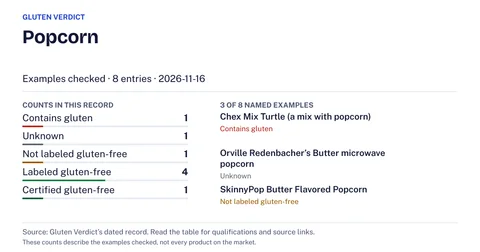 PopcornNaturally gluten-free1 of 8 products we checked contains gluten: Chex Mix Turtle (a mix with popcorn)checked Nov 16, 2026
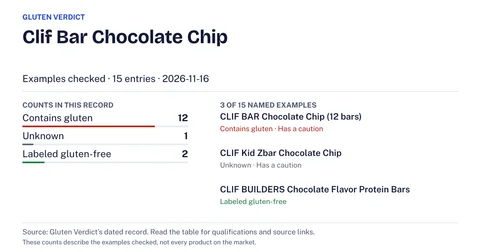 Clif Bar Chocolate ChipContains glutenClif Bar & Company · checked Nov 16, 2026
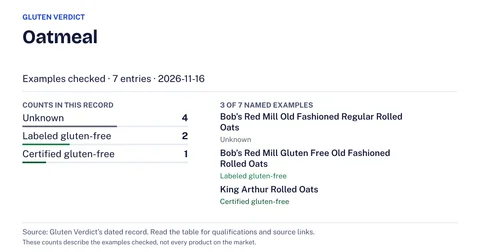 OatmealDepends on the productchecked Nov 16, 2026
Questions people ask
Can I bring my own food through airport security?
Yes. TSA says you may pack food in a carry-on or checked bag, all food must undergo x-ray screening, and foods that are liquids, gels or aerosols must follow the 3-1-1 liquids rule16.
How far ahead should I ask an airline for a gluten-free meal?
It depends on the airline. American Airlines takes requests on select flights from 30 days before takeoff to no later than 20 hours before7, 65. Delta requires advance notice, and a new request for each new or changed reservation8, 13. GIG’s 2019 bulletin says most airlines require 24-72 hours30.
Do I need a doctor’s letter to travel with gluten-free food?
Two charities suggest one. CDF suggests a doctor’s note for carrying “medical foods” through TSA10, and Coeliac UK says a GP can provide a letter for taking food into another country11. TSA says its officers make the final decision at the checkpoint16.
More in Travel planning and logistics
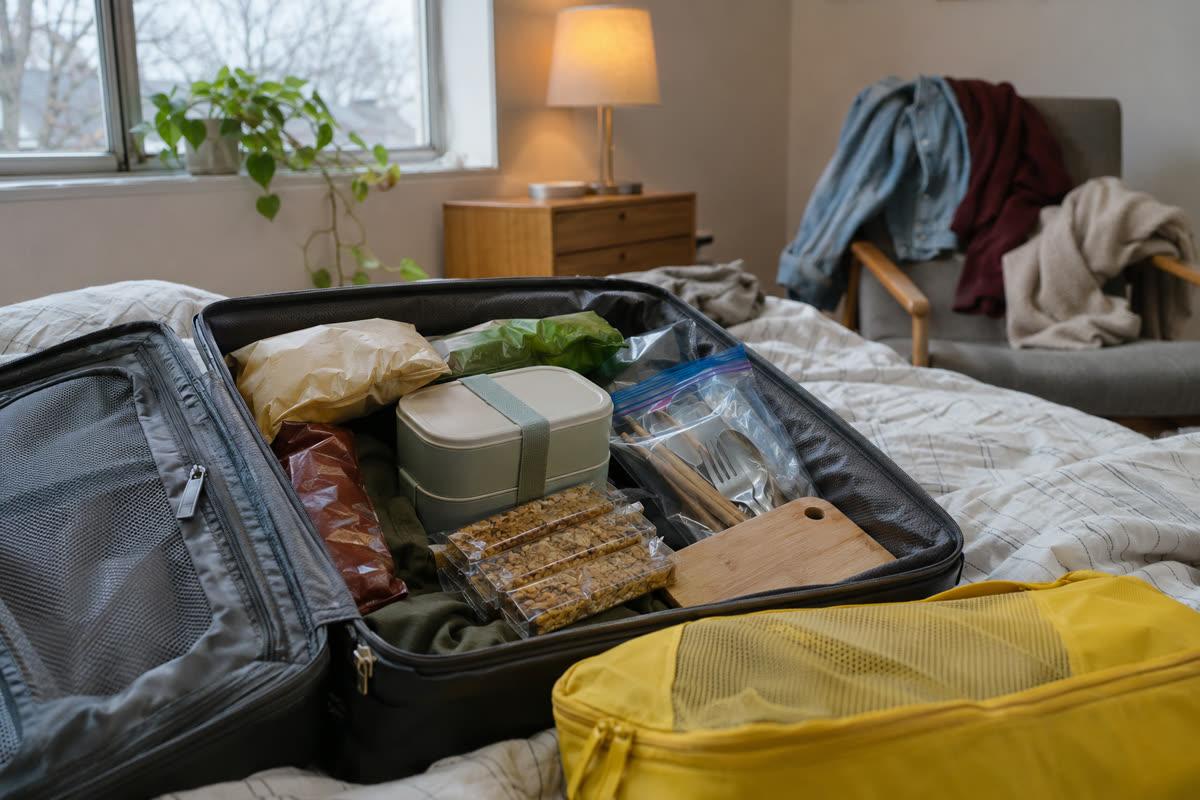 Gluten-free travel packing checklist by trip typeWhat to pack for a flight, hotel, rental kitchen or road trip, with TSA and airline limits and what sensors and enzyme pills do not show.
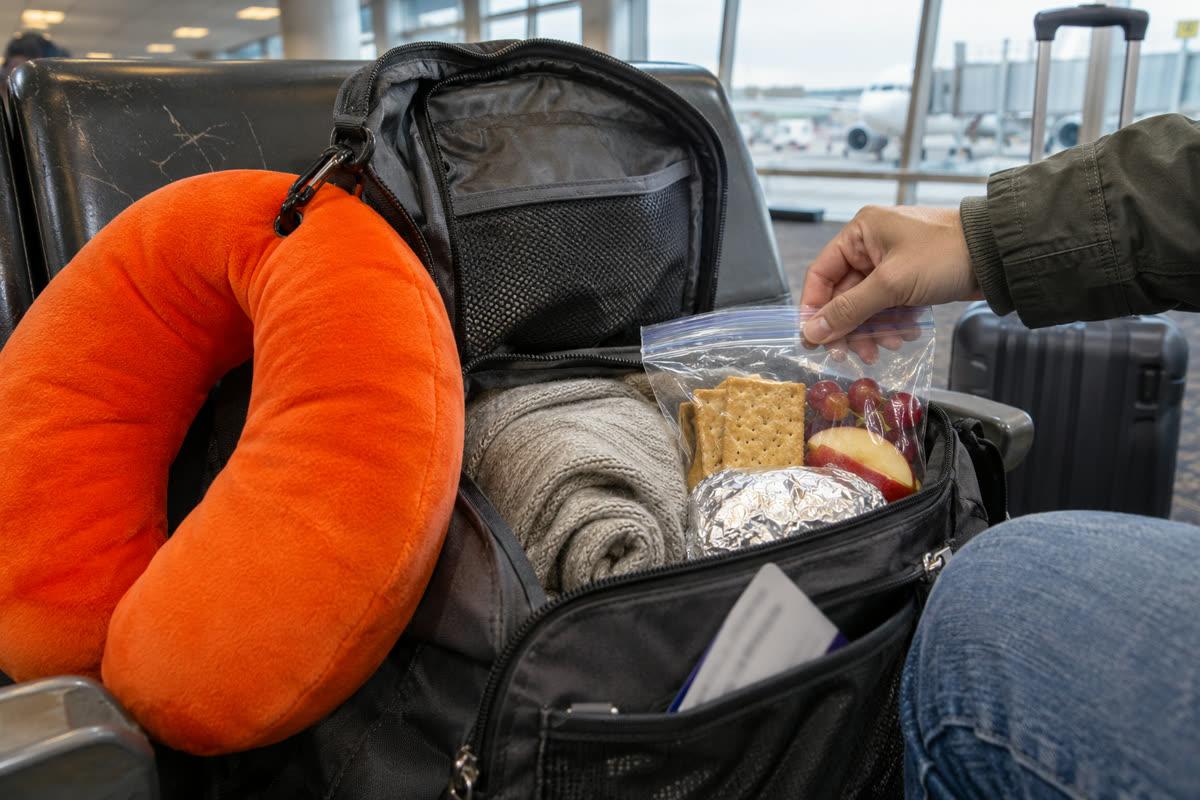 Flying gluten-free: what to arrange, pack and ask, from booking to landingA gluten-free flight in order: the airline's special-meal request, what TSA allows through the checkpoint, and the food to carry as a backup.
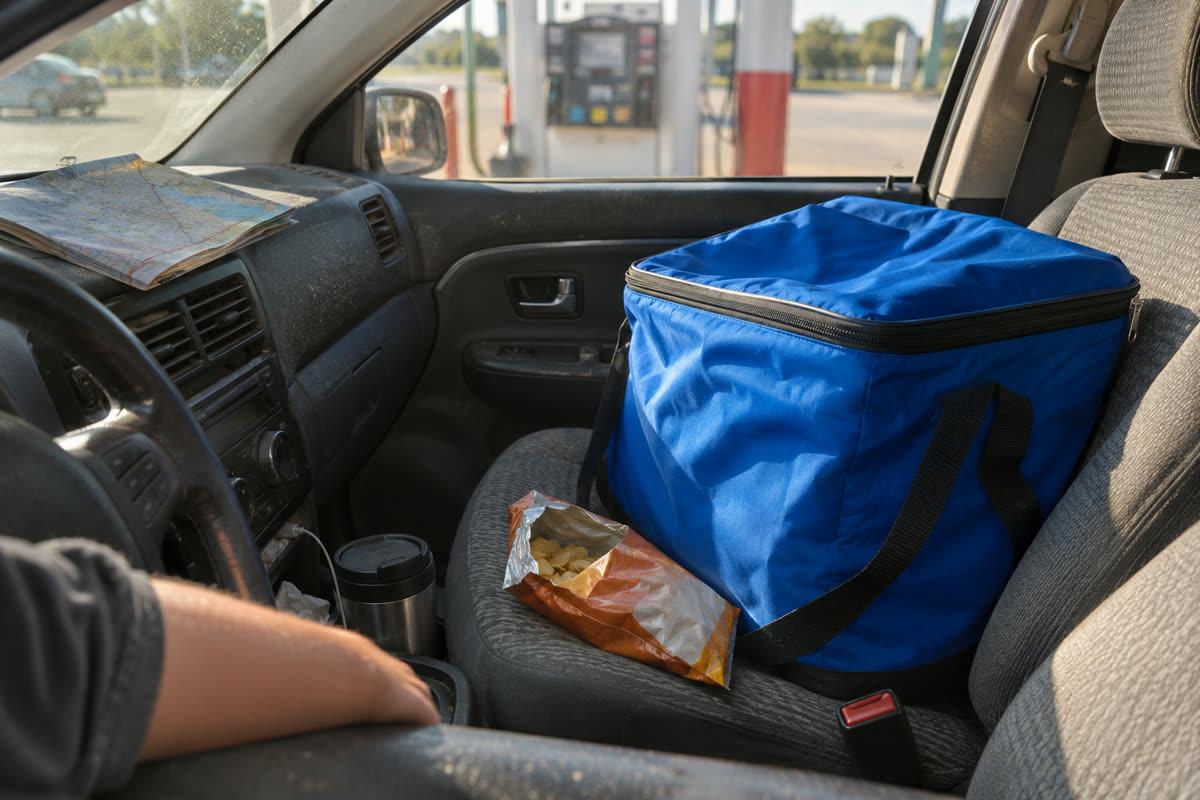 Gluten-free on a road trip: stops, snacks, cooler and hotel nightsPlan each driving day: chain stops with dated verdicts, snacks read at the gas station, a cooler packed to USDA time limits and hotel fridge questions.
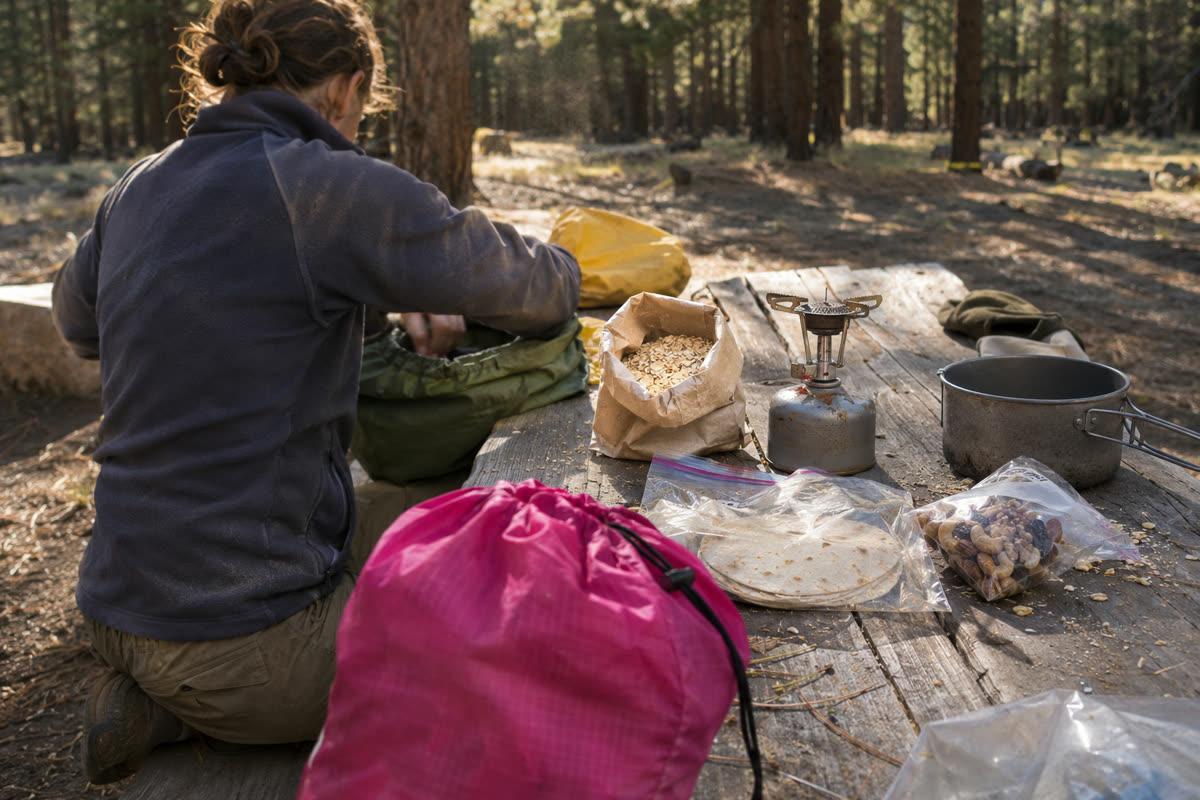 Gluten-free food for camping and hiking: pack lists and label checksPack gluten-free camping and hiking food by trip length, check pouch meals and bars against their labels, and run a shared camp kitchen.
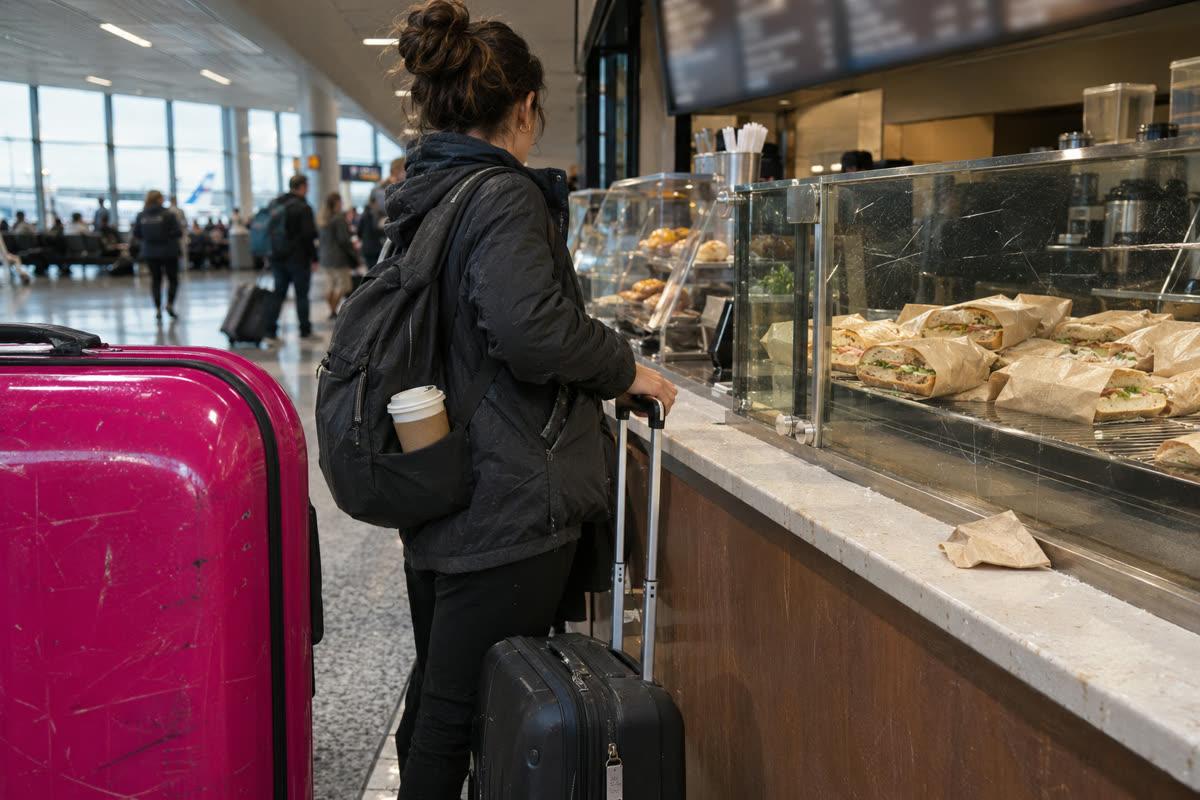 Gluten-free food at the airport: what to check first and what to ask at the counterHow to judge an airport food counter for gluten: what airport and chain pages can tell you, the questions to ask, and when to eat what you packed.
 Gluten-free on long-distance trains and buses: your own food, onboard menus and stopsWhat Amtrak, Greyhound and FlixBus say about your own food, gluten-free meals and stops, and how to pack for a long train or bus day.
Related guides
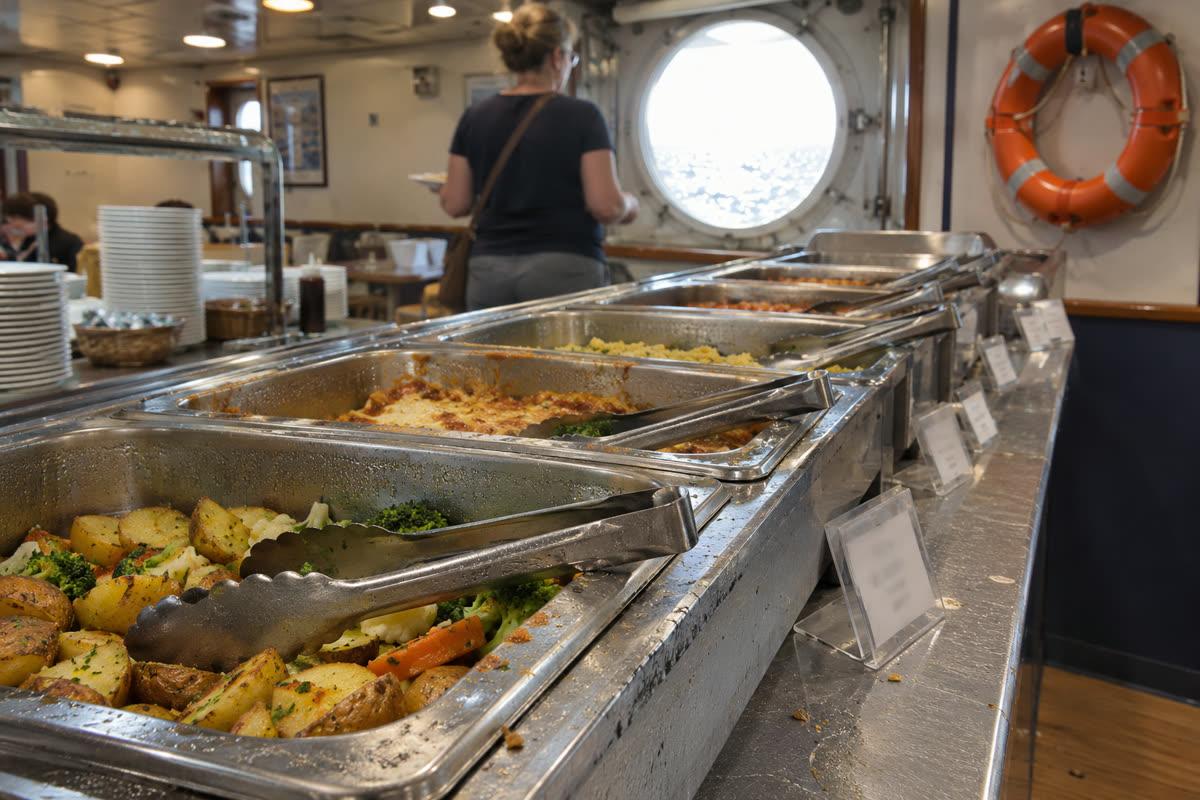 Gluten-free cruising: request channels, notice windows and port daysHow six cruise lines take a gluten-free request, the notice each page states, and what to plan around for buffets, snacks and port days.
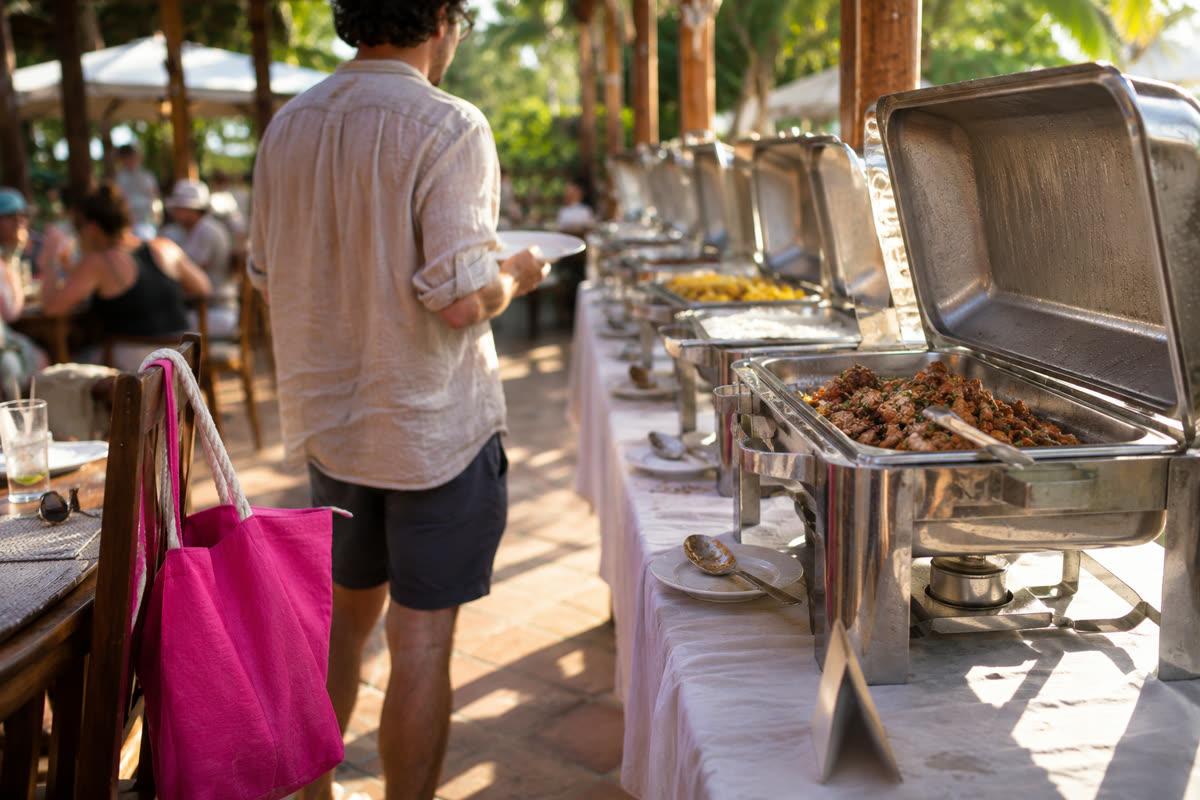 Gluten-free at an all-inclusive resort: what to ask before you book and at the buffetWhat to ask an all-inclusive resort before you book, what three brands say on their own pages, and how to handle a buffet and a Spanish card.
 Gluten-free dining cards in other languages: where the wording comes fromWhich gluten-free card wording comes from EU law or a celiac society, which cards are members-only, and how to hand one to a server.
 Travel insurance and finding a doctor abroad with celiac diseaseWhat a travel policy says about pre-existing conditions, the questions to put to an insurer in writing, and where to look for a doctor abroad.
Sources
- [1, 8, 13, 32] Delta Air Lines, Special In-Flight Meals, checked Nov 17, 2026.
- [2, 26, 27, 28, 29] Carnival Cruise Line, Guests with allergies, checked Nov 17, 2026.
- [3, 10, 14, 15, 23, 31, 34, 38, 54, 55] Celiac Disease Foundation, Tips for Traveling Gluten-Free, checked Nov 17, 2026.
- [4, 9, 20, 21, 39, 40, 56, 60, 64] Gluten Intolerance Group, Traveling Gluten-Free with Confidence, checked Nov 17, 2026.
- [5, 11, 19, 22, 33, 35, 36, 37, 42, 46, 47, 51, 59, 61, 62, 63] Coeliac UK, Travelling with coeliac disease, checked Nov 17, 2026.
- [6, 17, 48, 49, 50] Gluten Intolerance Group, Travel Made Easy: Embracing Your Adventures Gluten-Free, checked Nov 17, 2026.
- [7, 24, 25, 65] American Airlines, Special meals and nut allergies, checked Nov 17, 2026.
- [12] Transportation Security Administration, What Can I Bring? Food, checked Nov 17, 2026.
- [16] Transportation Security Administration, May I pack food in my carry-on or checked bag?, checked Nov 17, 2026.
- [18] Gluten Intolerance Group, Sharing a Vacation House: Navigating Gluten-Free Needs with Non-Gluten-Free Guests, checked Nov 17, 2026.
- [30, 43, 52, 53] Gluten Intolerance Group, Traveling Gluten-Free (educational bulletin, 2019), checked Nov 17, 2026.
- [41, 57, 58] US Food and Drug Administration, Gluten and Food Labeling, checked Nov 17, 2026.
- [44, 45] US Customs and Border Protection, Bringing Food into the U.S., checked Nov 17, 2026.