Constipation and celiac disease: when it is the main symptom
Short answer
Yes: constipation is a recognized symptom of celiac disease, in children and in adults, and it can be the main complaint1, 2, 3. It has many other causes, and celiac disease is not diagnosed from symptoms alone4, 5; for children, a European guideline says to consider testing when chronic constipation does not respond to usual treatment6, 7. On a gluten-free diet, Coeliac UK says the diet can be low in fibre, and the National Celiac Association says not getting enough fiber can be an issue8, 9.
Part of Symptoms, reactions and persistent complaints, 22 guides

Key points
- NIDDK lists constipation among the digestive symptoms of celiac disease and says digestive symptoms are more common in children than in adults1, 10.
- Studies disagree, and they studied different children: children referred in the Netherlands after laxatives failed had more celiac disease than the population rate, and constipated children in a Delhi study had more than comparison children, while a Colombian school survey found a similar rate in children with and without functional constipation11, 12, 13.
- Celiac disease is not diagnosed from symptoms alone, and NIDDK says doctors do not recommend starting a gluten-free diet before diagnostic testing, because it can affect the results5, 14.
- In a Mayo Clinic review of 248 children who presented with constipation and were diagnosed with celiac disease, 32% had resolved constipation on a gluten-free diet without ongoing laxatives, and 68% needed laxatives15, 16, 34.
- Coeliac UK says a gluten-free diet can be low in fibre, the National Celiac Association says not getting enough fiber can be an issue8, 9, and NIDDK lists not eating enough fiber as a cause of constipation17.
Is constipation a symptom of celiac disease?
NIDDK says symptoms of celiac disease vary widely and that a person may have multiple symptoms that come and go18. Its list of digestive symptoms includes constipation, next to chronic diarrhea, bloating and gas1. NIDDK adds that digestive symptoms are more common in children than in adults10.
The link also runs the other way. NIDDK’s list of health and nutrition problems that can cause constipation names celiac disease, as one item among many17.
How often does constipation show up beside diarrhea? The ESPGHAN guideline for diagnosing coeliac disease describes the ProCeDE study, which assessed stool type prospectively in 653 children and adolescents with newly diagnosed celiac disease: 13% had hard stools and 17% had soft or liquid stools. The guideline notes there was no control group and says the data indicate that constipation is almost as frequent as diarrhea in children with celiac disease19.
The Celiac Disease Foundation, summarizing a Mayo Clinic study, says constipation is not considered a classic symptom of celiac disease but is frequently part of the non-classical presentation that prompts testing, particularly in children with refractory or chronic symptoms20.
What studies report in children
The reports below do not agree. They studied different groups of children, so read each row with its group in mind.
| Report | Who was studied | What it found |
|---|---|---|
| Chart review cited by the ESPGHAN guideline | 165 children with celiac disease | Abdominal pain (52.7%) and constipation (38.9%) were the most frequent presenting features21. |
| Prospective study cited by the ESPGHAN guideline | 101 children with functional constipation lasting more than 2 months | Four had positive TGA-IgA, three were biopsied and one had celiac disease; the guideline reports a prevalence of 1%22. |
| Delhi, India (Indian Pediatrics, 2024) | Children aged 1 to 12 with constipation and age- and sex-matched healthy children with normal bowel habits, 230 in each group23, 24 | Celiac disease in 5.65% of the constipated children against 0.87% of the comparison children; wasting and stunting were associated with celiac disease among the constipated children12. |
| Colombia (Journal of Pediatrics, 2020) | Schoolchildren: 203 with functional constipation matched with 419 controls without functional gastrointestinal disorders25 | Celiac disease in 1 (0.5%) of the children with functional constipation and in 3 (0.7%) of the controls13. |
| Turkish Journal of Gastroenterology, 2018 | 1,046 children aged 2 to 18 with chronic constipation26 | Blood tests were positive in 36 patients, which the authors report as 3.25%27. |
| Netherlands (Jornal de Pediatria, 2012) | 370 consecutive children with constipation, referred by a general practitioner because laxative treatment failed28 | Seven had biopsy-proven celiac disease, which the authors describe as significantly higher than the 1:198 prevalence in the Netherlands11. |
The Colombian authors concluded that routine testing of schoolchildren with functional constipation for celiac disease is not indicated29. For less specific symptoms, the ESPGHAN guideline says there is evidence that patients with diarrhoea-predominant IBS-like symptoms, iron deficiency anaemia, chronic constipation and enamel defects have increased risk, and that for abdominal pain, dyspepsia and bloating the evidence is insufficient2.
What is reported in adults
A 2015 review of how celiac disease presents in adults says constipation may be the only manifestation in an adult with celiac disease3.
Numbers are harder to find. A small Danish series of 50 consecutive adult patients, published in 1996, listed constipation at 12% of presenting symptoms and diarrhoea at 56%30. Treat that as one example from one series, not as a rate for adults today.
Why constipation is often put down to something else
Constipation has many causes. NIDDK says a person may be constipated for many reasons and may have more than one cause at a time4. Its list of health and nutrition problems that can cause constipation opens with not eating enough fiber, not drinking enough liquids and not getting enough physical activity17.
The symptoms also overlap with other digestive conditions. NIDDK says celiac disease is not diagnosed from symptoms alone because some of them are like the symptoms of other digestive disorders, such as irritable bowel syndrome or lactose intolerance5. A NASPGHAN clinical report says that because gluten-related disorders show up in so many ways, they cannot be told apart on clinical grounds alone31.
What guidelines say about testing
For children and adolescents, the ESPGHAN guideline for diagnosing coeliac disease recommends considering testing in those with the symptoms, signs and conditions shown in its Table 26. The gastrointestinal entries in that table are chronic or intermittent diarrhea; chronic constipation not responding to usual treatment; chronic abdominal pain; distended abdomen; and recurrent nausea and vomiting7.
The wording matters: the table says chronic constipation not responding to usual treatment, not constipation in general. That guideline covers children and adolescents; this guide does not cite an adult testing rule.
In the United States, NIDDK says doctors typically diagnose celiac disease with blood tests and biopsies of the small intestine32. How the tests work is covered in our guides to the celiac blood test and the diagnosis process.
NIDDK says doctors do not recommend starting a gluten-free diet before diagnostic testing, because a gluten-free diet can affect test results14.
Constipation that continues after starting a gluten-free diet
NIDDK says symptoms of celiac disease typically improve and may go away after a person begins eating a gluten-free diet33. Constipation, in the children studied, did not always follow that pattern16.
A Mayo Clinic review looked at health records from 1994 to 2024 for children who presented with constipation and were then diagnosed with celiac disease34. It identified 248 such children15. Over an average of 5.3 years of follow-up, constipation was resolved in 32% of children, while 68% required ongoing laxatives; among children with encopresis, only 29% had documented resolution16. The authors counted constipation as resolved only when a child improved on a gluten-free diet without ongoing laxative use35.
The authors concluded that many children with celiac disease continue to have unresolved constipation despite adherence to a gluten-free diet, and that comorbidities were associated with a lower rate of resolution36. They also saw trends toward more anxiety, depression and thyroid disorders in the unresolved group, but none reached statistical significance37.
The Celiac Disease Foundation’s summary of the study says persistent constipation does not mean the gluten-free diet is ineffective or that celiac disease is being poorly managed38. It quotes the senior author, Dr. Imad Absah, saying constipation frequently requires its own long-term treatment plan, including behavioral strategies and medications, even when celiac disease is well controlled39.
A second study was single-center and retrospective, and looked at children with biopsy-proven celiac disease who were adherent to a gluten-free diet and whose antibody levels had fallen40. Of its 191 patients, 43% met Rome IV criteria for a disorder of gut-brain interaction, and functional constipation (27 of the 83) and functional abdominal pain (24 of the 83) were the most common41.
A series in the Turkish Journal of Gastroenterology reported a different outcome: after describing its 36 patients with positive blood tests, its authors reported that all patients followed a gluten-free diet, resulting in a resolution of symptoms; the abstract does not say constipation specifically27, 42. The two reports studied different groups and are not directly comparable.
Constipation from the diet itself: fiber, fluids and products
Separate from the disease, what a gluten-free diet contains matters. Coeliac UK says a gluten free diet can be low in fibre and wholegrains because wheat, rye and barley are removed8. The National Celiac Association says gluten-free baked goods and flour mixes are often lower in fiber and higher in sugar and starches than their regular counterparts9. NIDDK says that if a person starts avoiding gluten without advice from a doctor or a registered dietitian, the diet may not provide enough of the nutrients needed, such as fiber, iron and calcium, and that some packaged gluten-free foods may be higher in fat and sugar43.
For constipation in general, NIDDK says to eat enough fiber and drink plenty of liquids to help the fiber work better44, and that adults should get 22 to 34 grams of fiber a day depending on age and sex45. The National Celiac Association adds that fiber can cause GI symptoms without enough water, and that fiber should be increased gradually46; Coeliac UK also says to increase fibre gradually and drink plenty of fluids alongside47.
Where NIDDK’s fiber examples meet a gluten-free diet
NIDDK’s general constipation page names whole grains, legumes and other foods as fiber sources48. Some of its examples raise questions on a gluten-free diet:
| NIDDK’s example | What the sources say for a gluten-free diet | Our verdict |
|---|---|---|
| Whole wheat bread and pasta | NIDDK lists breads and pastas among foods made from gluten-containing grains49, and says packaged gluten-free types of baked goods, bread and pasta are sold50. | bread |
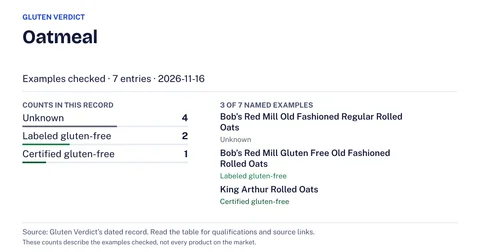
| Oatmeal | NIDDK says to talk with a doctor or a registered dietitian about whether to include oats in the diet and how much51. | oatmeal |
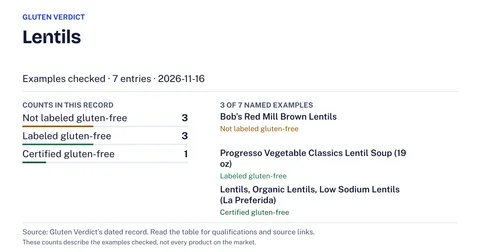
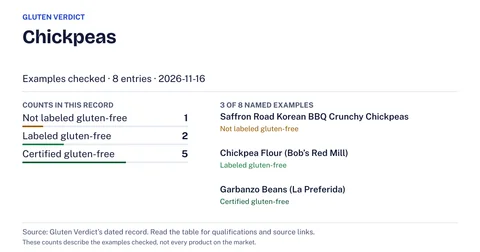
| Lentils, chickpeas and other legumes | The National Celiac Association says legumes have a risk of cross-contact with gluten-containing grains, so always pick through them before soaking, even if labeled GF52. | lentils, chickpeas |
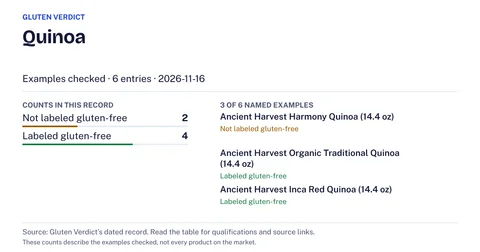
| Gluten-free whole grains such as quinoa (not on NIDDK’s constipation list) | The National Celiac Association lists amaranth, buckwheat, quinoa, millet, sorghum, teff, brown rice and wild rice as nutritious GF whole grains53, and says to make sure whole grains are labeled GF as many have had cross-contact with gluten-containing grains54. | quinoa |
For a fuller look at fiber on the diet, see our guide to fiber on a gluten-free diet. If other symptoms continue after starting the diet, the checklist for still being symptomatic covers more than constipation.
Other causes a clinician reviews, and signs that need prompt care
NIDDK’s causes of constipation go well beyond diet: slow movement of stool through the colon, delayed emptying from pelvic floor disorders or colon surgery, and functional gastrointestinal disorders such as irritable bowel syndrome55. It also lists medicines and supplements that can make constipation worse, among them antacids that contain aluminum and calcium, iron supplements, calcium channel blockers, diuretics and narcotic pain medicines56.
On when to see a doctor, NIDDK says to do so if symptoms do not go away with self-care or there is a family history of colon or rectal cancer57. It says to see a doctor right away when constipation comes with any of these: bleeding from the rectum, blood in the stool, constant pain in the abdomen, inability to pass gas, vomiting, fever, lower back pain, or losing weight without trying58.
Verdicts in this guide

Questions people ask
Can celiac disease cause constipation without diarrhea?
It can be the main complaint. A review of adult presentation says constipation may be the only manifestation in an adult with celiac disease3, and in the Mayo Clinic review of children, constipation was the main presenting symptom, though most children also had additional symptoms59.
Does a gluten-free diet clear constipation caused by celiac disease?
Not always. In the Mayo Clinic review, constipation was resolved in 32% of children without ongoing laxatives, and 68% required them16. A series in the Turkish Journal of Gastroenterology reported that all patients followed a gluten-free diet, resulting in a resolution of symptoms (not constipation specifically)42.
Is constipation on a gluten-free diet a sign the diet is not working?
The Celiac Disease Foundation, summarizing the Mayo study, says persistent constipation does not mean the gluten-free diet is ineffective or that celiac disease is being poorly managed38.
Should I stop eating gluten to see whether constipation improves?
NIDDK says doctors do not recommend starting a gluten-free diet before diagnostic testing, because it can affect test results14.
More in Symptoms, reactions and persistent complaints
 A food and symptom diary for tracking possible gluten exposureWhat to write in a food and symptom diary on a gluten-free diet, how to read it, a template to copy, and what to bring to a dietitian or doctor.
 Still tired on a gluten-free diet: the causes clinicians checkWhy fatigue can continue on a gluten-free diet: gluten exposure, other gut conditions, iron, B12, thyroid, sleep, mood, and follow-up lists.
 Stomach pain after gluten-free bread: what the label can and cannot tell youWhy gluten-free bread can hurt: ingredients that cause gas, how gluten gets in, a one-change log to tell them apart, and when sources say see a doctor.
 Still having symptoms on a gluten-free diet? Where gluten can still get inA checklist of label, kitchen, restaurant, product and medicine sources of gluten, and what the sources say about when to see a doctor.
 Celiac disease symptoms in adults: what the sources list and who gets testedDigestive and non-digestive celiac symptoms as NIDDK, ACG and Coeliac UK list them, who guidelines say to test, and why gluten stays in the diet first.
 Celiac disease symptoms in teenagers and older adults: what changes with ageWhat NIH, celiac charities and clinical guidelines report about celiac disease in teenagers and older adults, and why diagnosis is often late.
All 22 guides in Symptoms, reactions and persistent complaints
Related guides
 Celiac disease symptoms in children, and who pediatric guidelines say to testTypical and less typical celiac signs in children, who pediatric guidelines say to test, and why the child keeps eating gluten until testing ends.
 Starting a gluten-free diet: testing first, then labels, oats and the kitchenWhat NIH and the celiac charities say about starting a gluten-free diet: testing first, which foods to start with, a US label check, oats and the kitchen.
 Fiber on a gluten-free diet: where it drops and what fills the gapCheck the fiber on gluten-free breads and pastas against the US Daily Value, and see which gluten-free whole foods charities list to add more.
 What to eat after a celiac diagnosis: what the sources document and what they do notBone broth, collagen, glutamine or plain staples? What NIDDK, ACG and celiac charities document after a diagnosis, and what no page we read names.
Sources
- [1, 10, 18, 33] National Institute of Diabetes and Digestive and Kidney Diseases (NIDDK), Symptoms & Causes of Celiac Disease, checked Nov 17, 2026.
Read on 2026-11-17: the list that follows “Digestive symptoms of celiac disease may include” names bloating, chronic diarrhea, constipation, gas, lactose intolerance due to damage to the small intestine, loose, greasy, bulky, and bad-smelling stools, nausea or vomiting, and pain in the abdomen.
- [2, 6, 7, 19, 21, 22] ESPGHAN, Guidelines for diagnosing coeliac disease (ESPGHAN), checked Nov 17, 2026.
Read on 2026-11-17: Table 2, “Symptoms and signs suggesting coeliac disease”, lists under Gastrointestinal: chronic or intermittent diarrhea; chronic constipation not responding to usual treatment; chronic abdominal pain; distended abdomen; recurrent nausea, recurrent vomiting.
- [3] World Journal of Gastrointestinal Pharmacology and Therapeutics (PubMed Central), Age-related differences in celiac disease: Specific characteristics of adult presentation, checked Nov 17, 2026.
- [4, 17, 55, 56, 57, 58] National Institute of Diabetes and Digestive and Kidney Diseases (NIDDK), Symptoms & Causes of Constipation, checked Nov 17, 2026.
Read on 2026-11-17: the list that follows “Certain health and nutrition problems can cause constipation” names not eating enough fiber; not drinking enough liquids, or dehydration; not getting enough physical activity; celiac disease; disorders that affect your brain and spine, such as Parkinson’s disease; spinal cord or brain injuries; conditions that affect your metabolism, such as diabetes; conditions that affect your hormones, such as hypothyroidism; inflammation linked to diverticular disease or proctitis; intestinal obstructions, including anorectal blockage and tumors; and anatomic problems of your digestive tract.
Read on 2026-11-17: the list that follows “Causes of constipation may include” names slow movement of stool through your colon; delayed emptying of the colon from pelvic floor disorders, especially in women, and colon surgery; and functional gastrointestinal disorders, such as irritable bowel syndrome.
Read on 2026-11-17: the list that follows “Medicines and dietary supplements that can make constipation worse include” names antacids that contain aluminum and calcium; anticholinergics and antispasmodics; anticonvulsants; calcium channel blockers; diuretics; iron supplements; medicines used to treat Parkinson’s disease; narcotic pain medicines; and some medicines used to treat depression.
Read on 2026-11-17: the list that follows “You should see a doctor right away if you have constipation and any of the following symptoms” names bleeding from your rectum, blood in your stool, constant pain in your abdomen, inability to pass gas, vomiting, fever, lower back pain, and losing weight without trying.
- [5, 14, 32] National Institute of Diabetes and Digestive and Kidney Diseases (NIDDK), Diagnosis of Celiac Disease, checked Nov 17, 2026.
- [8, 47] Coeliac UK, Fibre and the gluten free diet, checked Nov 17, 2026.
- [9, 46, 52, 53, 54] National Celiac Association, What can I eat to increase my fiber intake and lower my cholesterol?, checked Nov 17, 2026.
- [11, 28] PubMed (Jornal de Pediatria), Celiac disease is overrepresented in patients with constipation, checked Nov 17, 2026.
- [12, 23, 24] PubMed (Indian Pediatrics), Prevalence and Predictors of Celiac Disease in Children With Constipation, checked Nov 17, 2026.
- [13, 25, 29] PubMed (Journal of Pediatrics), Celiac Disease in Children with Functional Constipation: A School-Based Multicity Study, checked Nov 17, 2026.
- [15, 16, 34, 35, 36, 37, 59] PubMed (Journal of Pediatric Gastroenterology and Nutrition), Clinical outcome of constipation as the presenting symptom in children with celiac disease, checked Nov 17, 2026.
- [20, 38, 39] Celiac Disease Foundation, New study from Mayo Clinic finds constipation often persists in children with celiac disease, checked Nov 17, 2026.
- [26, 27, 42] PubMed (Turkish Journal of Gastroenterology), Is celiac disease misdiagnosed in children with functional constipation?, checked Nov 17, 2026.
- [30] PubMed (Scandinavian Journal of Gastroenterology), Symptoms and haematologic features in consecutive adult coeliac patients, checked Nov 17, 2026.
- [31] PubMed (NASPGHAN clinical report), NASPGHAN Clinical Report on the Diagnosis and Treatment of Gluten-related Disorders, checked Nov 17, 2026.
- [40, 41] PubMed (Journal of Pediatric Gastroenterology and Nutrition), The prevalence and predictive factors of overlapping disorders of gut-brain interaction and celiac disease in children, checked Nov 17, 2026.
- [43, 49, 50, 51] National Institute of Diabetes and Digestive and Kidney Diseases (NIDDK), Eating, Diet, & Nutrition for Celiac Disease, checked Nov 17, 2026.
- [44, 45, 48] National Institute of Diabetes and Digestive and Kidney Diseases (NIDDK), Eating, Diet, & Nutrition for Constipation, checked Nov 17, 2026.
Read on 2026-11-17: the list that follows “Good sources of fiber are” names whole grains, such as whole wheat bread and pasta, oatmeal, and bran flake cereals; legumes, such as lentils, black beans, kidney beans, soybeans, and chickpeas; fruits; vegetables; and nuts.