What to eat after a celiac diagnosis: what the sources document and what they do not
Short answer
Four things are documented after a celiac diagnosis, and bone broth, collagen and glutamine are not among them on any page we read41, 42, 43, 44, 45, 46:
- A gluten-free diet for life1, with a doctor or registered dietitian able to guide what to eat and drink2.
- A visit with a dietitian after diagnosis and follow-up visits, which ACG says may come, for example, at 3, 6 and 12 months in the first year28, 29.
- Possible blood tests for low vitamins and minerals, and supplements if a doctor recommends or prescribes them7.
- Lactose intolerance, which Coeliac UK says is associated with undiagnosed coeliac disease and is usually temporary15, 16.
Part of Nutrition and combining diets, 24 guides
Key points
- Many people see symptoms improve within days to weeks, NIDDK says; healing of the intestine takes longer, and ACG cites a US study with a median of 3 years in adults6, 32, 33.
- ACG finds insufficient evidence to recommend for or against probiotics for treating celiac disease36. Gluten Intolerance Group suggests fermented foods but says the benefits should not be counted on23, 25.
- NIDDK says starting the diet without advice from a doctor or registered dietitian may leave it short of nutrients such as fiber, iron and calcium5.
- Coeliac UK says not to remove lactose from your diet before speaking to a healthcare professional, because that could reduce calcium intake17.
- Plain meat, fish, fruits, vegetables, rice and potatoes are naturally gluten-free without additives or some seasonings, per NIDDK3.
What do the sources document after a diagnosis?
NIDDK says following a gluten-free diet can relieve celiac disease symptoms and heal damage to the small intestine, and that people with celiac disease need to follow it for life1. It adds that a doctor or registered dietitian can guide what to eat and drink to maintain a balanced diet2.
The American College of Gastroenterology (ACG) guideline says a visit with a dietitian after diagnosis is mandatory, with later visits as needed to reinforce gluten-free diet education and adherence28.
None of the pages we read names bone broth, collagen or glutamine41, 42, 43, 44, 45, 46. The food guidance in them is the ordinary gluten-free kind, covered below.
What does follow-up check, and when?
ACG says follow-up after diagnosis may need several visits in the first year, for example at 3, 6 and 12 months, and regular visits after that, such as twice a year or yearly29. Coeliac UK’s page for healthcare professionals says the British Society of Gastroenterology recommends regular follow-up in the first two years after diagnosis13.
NIDDK says follow-up may include blood tests for certain antibodies, which are higher in untreated celiac disease but typically return to normal after treatment, and in some cases additional biopsies to find out whether the small intestine has healed8.
ACG’s monitoring figure says other tests may include complete blood count, alanine aminotransferase, aspartate aminotransferase, vitamins A, D, E and B12, copper, zinc, folic acid, ferritin and iron30.
These pages describe what clinicians do. Which tests you have, and when, is for your own doctor to decide.
Where do nutrients come in?
NIDDK says that when you are diagnosed your doctor may test you for low levels of certain vitamins and minerals and may recommend or prescribe supplements if you need them7. Coeliac UK’s page for healthcare professionals says patients should be assessed and monitored for deficiencies in iron, folate, vitamin B12, vitamin D and calcium at diagnosis and during follow-up14.
Gluten Intolerance Group says gluten-free diets can be high in fat and low in complex carbohydrates and fiber, iron, folate, niacin, thiamin and riboflavin, and that some people with celiac disease may have poor absorption of, and higher needs for, calcium, folate, iron and vitamins A, B12, D, E and K19.
NIDDK also says some packaged gluten-free foods may be higher in fat and sugar than the same foods with gluten, and that starting the diet without advice from a doctor or registered dietitian may leave it short of nutrients such as fiber, iron and calcium5.
For a plate, Gluten Intolerance Group’s guidelines say to fill approximately half with non-starchy vegetables20, one quarter with grains and starchy vegetables such as potatoes, sweet potatoes and winter squash21, and one quarter with protein sources22. The gluten-free grains it names include amaranth, quinoa, buckwheat, brown rice, teff, millet and corn21.
Can lactose intolerance follow a diagnosis?
Coeliac UK says lactose intolerance is associated with undiagnosed coeliac disease and is usually temporary, and that most people with coeliac disease do not have a problem with lactose once they have followed the gluten-free diet for some time15. Its explanation is that at diagnosis the gut lining still has damage from gluten, which can mean the body does not make enough lactase, the enzyme does not work properly, or people may not be able to digest lactose16.
NIDDK lists lactose intolerance among the health problems that cause symptoms similar to those of celiac disease and may occur along with it12.
Coeliac UK says to discuss lactose with your dietitian or GP and not to remove it from your diet until you have spoken to a healthcare professional, as this could potentially reduce your calcium intake17.
Coeliac UK also says that, although made from milk, yogurts and cheeses (hard and soft) are very low in lactose and can be eaten by most people with lactose intolerance18. Our yogurt and milk verdicts cover the gluten side of those products.
Bone broth, collagen, glutamine and other gut-healing claims
We checked the pages cited in this guide for the foods and supplements people most often ask about. The status column is our label for what the pages say, not the sources’ own wording.
| Claim | What the pages we read say | Status |
|---|---|---|
| Bone broth, collagen, glutamine | Not named on NIDDK’s eating page41 or treatment page42, Coeliac UK’s follow-up page43, Gluten Intolerance Group’s eating guidelines44 or the Academy of Nutrition and Dietetics grocery-list page45. In the ACG guideline the only match for “collagen” is “collagenous sprue”, named among conditions that may be misdiagnosed as celiac disease46. | Not named on any page we read |
| Probiotics | ACG finds insufficient evidence to recommend for or against the use of probiotics for the treatment of celiac disease36. | Mixed: benefit not established |
| Fermented foods such as kimchi, miso, kombucha and yogurt | Gluten Intolerance Group suggests adding fermented foods to meals23. It says these foods may increase microbial diversity in the gut and may reduce inflammation, support nutrient absorption and reduce the risk of infection and illness24; that the benefits may not be seen in everyone and should not be counted on25; and that some versions may contain gluten26. | Mixed: one charity’s hedged suggestion |
| Gluten-free oats | ACG recommends gluten-free oats for people with celiac disease, and says contamination of oats, variable toxicity in different varieties and the small risk of an immune reaction to the oat protein avenin require monitoring for oat tolerance37. NIDDK says to talk with your doctor or a registered dietitian about whether to include oats and how much4. | Documented: discuss with your doctor or dietitian |
| Plain meat, fish, fruits, vegetables, rice, potatoes | NIDDK lists them as naturally gluten-free without additives or some seasonings3. It lists them as gluten-free foods, not as gut healers. | Documented as gluten-free |
“Not named” describes the pages we read on 2026-11-17. It is not a finding that no study exists. The Celiac Disease Foundation’s pages blocked our reader, so they are not part of this check.
How long does healing take?
NIDDK says many people see symptoms improve within days to weeks of starting the diet6. ACG says symptoms are expected to improve within days of strict adherence and gives, as an example, diarrhea improving in most patients (80%) within 60 days31.
ACG says mucosal healing after starting the diet takes time and is incomplete or absent in a substantial number of patients diagnosed during adult life32. It cites a US study in which the median time to mucosal healing in adults was 3 years33, and says mucosal healing was observed in 95% of children within 2 years34.
One meta-analysis (Szakács and colleagues, PLOS ONE, 2017) concluded that several celiac patients fail to achieve complete mucosal recovery even if a strict dietary regimen is followed38. For adults without symptoms, ACG says a follow-up biopsy could be considered after 2 years on the diet, after shared decision-making between patient and provider35.
NIDDK also gives timings for other problems. It says dermatitis herpetiformis may not go away until a person has followed the diet for 6 months to 2 years9. It also says symptoms continue or come back in about 20 percent of people with celiac disease even on the diet10, and that they may be caused by consuming small amounts of gluten, other health problems or refractory celiac disease11.
What do people eat while they wait?
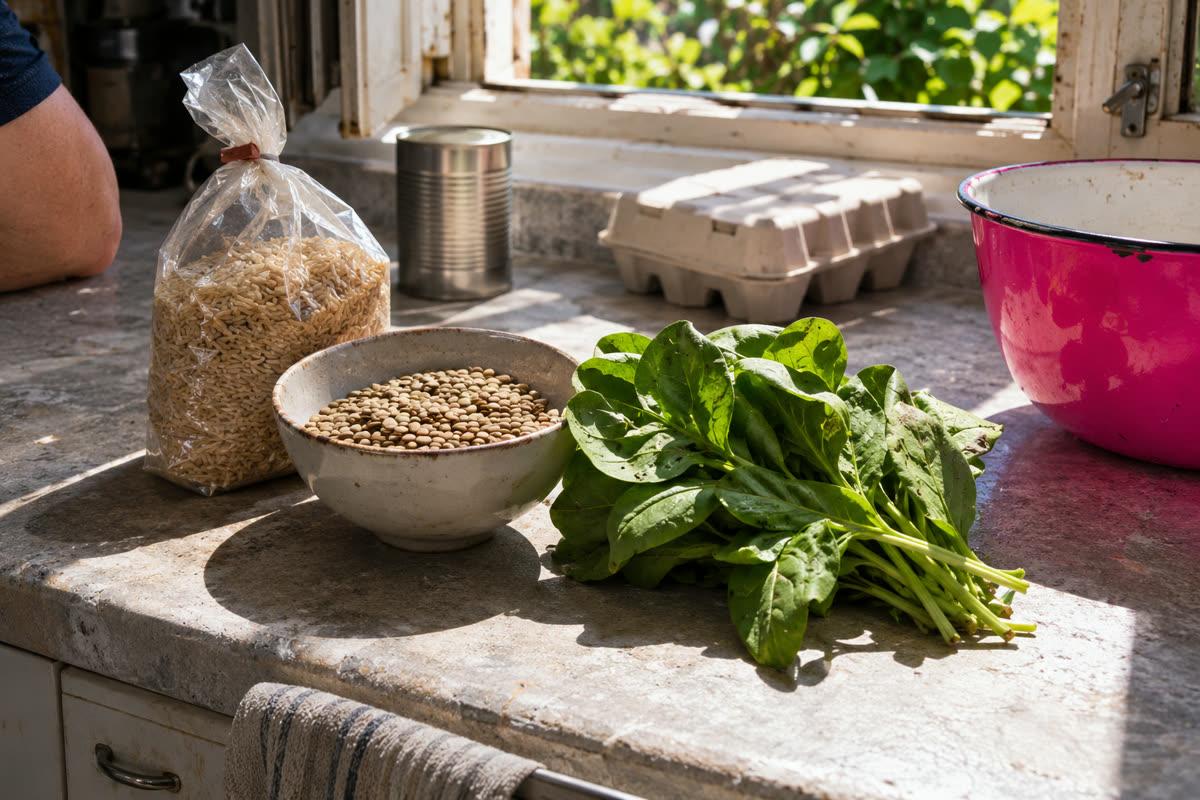
NIDDK says many foods, such as meat, fish, fruits, vegetables, rice and potatoes, are naturally gluten-free when they come without additives or some seasonings3. The Academy of Nutrition and Dietetics adds single-ingredient foods such as fresh fruits and vegetables, milk, butter, eggs, lentils, nuts and seeds, fish and poultry, honey and water39.
Packaged or seasoned versions of these staples need their labels read. Our verdicts show what the sources we cite said on the date we read them: rice, potatoes, eggs, chicken, bananas, oatmeal, yogurt and chicken broth.
The Academy of Nutrition and Dietetics advises reading all product labels each time you purchase a product, even a familiar one, because the manufacturer may change an ingredient40. Gluten Intolerance Group notes a risk of gluten cross-contact and advises avoiding buying grains, nuts, seeds, legumes and beans from bulk bins27.
Oats are the staple with a documented condition: ACG recommends gluten-free oats for people with celiac disease, with monitoring for oat tolerance37. Our oatmeal verdict covers which oat products we checked carry a gluten-free claim.
Questions to bring to the first dietitian visit
These are prompts, not medical advice. Your doctor and dietitian have your results.
- Which vitamin and mineral levels were checked at my diagnosis, which will be rechecked, and when?
- Is a supplement part of my plan, and is the product I would buy free of gluten?
- Has lactose been a problem for me, and what should I do about dairy in the meantime?
- Should oats be part of my diet, and how much?
- Which packaged staples are worth buying, and how should I check their labels?
- I read about bone broth, collagen, glutamine or probiotics: does anything in my results make them relevant to me?
- When is my next follow-up, and what will it look at?
Verdicts in this guide
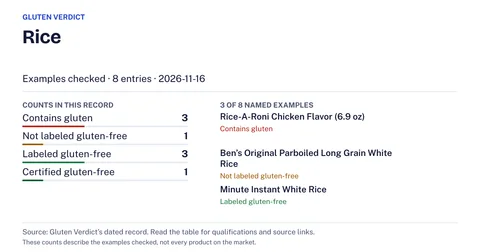 RiceNaturally gluten-free3 of 8 products we checked contain gluten: Rice-A-Roni Chicken Flavor (6.9 oz), Near East Original Rice Pilaf, and Ben’s Original Ready Rice Rice PilafBuy it labeled gluten-freechecked Nov 16, 2026
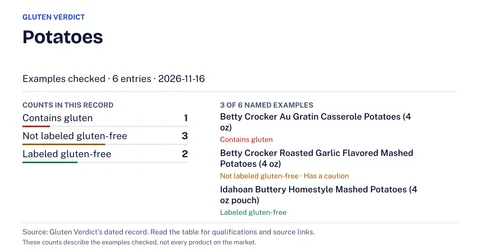 PotatoesNaturally gluten-free1 of 6 products we checked contains gluten: Betty Crocker Au Gratin Casserole Potatoes (4 oz)checked Nov 16, 2026
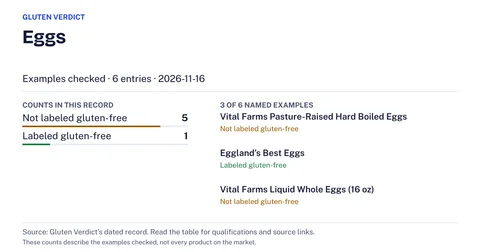 EggsNaturally gluten-freechecked Nov 16, 2026
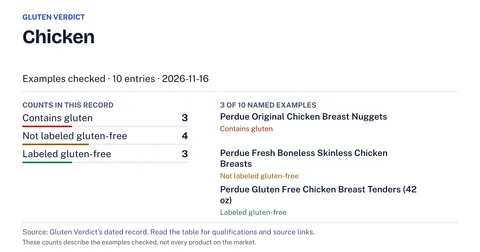 ChickenNaturally gluten-free3 of 10 products we checked contain gluten: Perdue Original Chicken Breast Nuggets, Bell & Evans Breaded Chicken Tenders, and Foster Farms Chicken Nuggets (33.6 oz)checked Nov 16, 2026
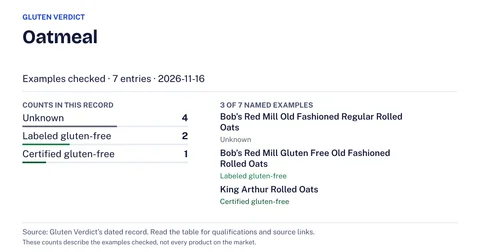 OatmealDepends on the productchecked Nov 16, 2026
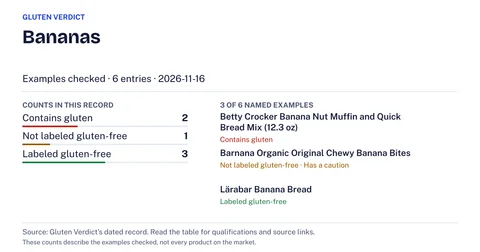 BananasNaturally gluten-free2 of 6 products we checked contain gluten: Betty Crocker Banana Nut Muffin and Quick Bread Mix (12.3 oz) and Bob’s Red Mill Chocolate Chip & Banana Pancake & Waffle Mixchecked Nov 16, 2026
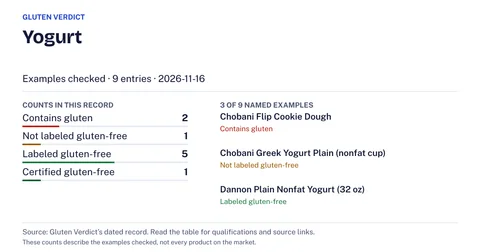 YogurtDepends on the product2 of 9 products we checked contain gluten: Chobani Flip Cookie Dough and Chobani Flip Cookies & Creamchecked Nov 16, 2026
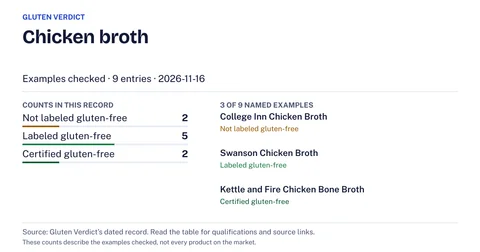 Chicken brothDepends on the productchecked Nov 16, 2026
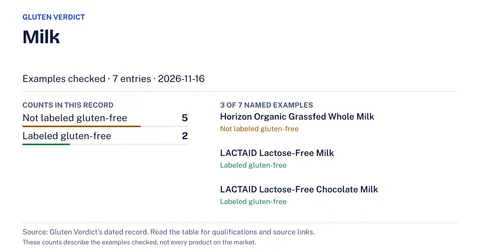 MilkNaturally gluten-freechecked Nov 16, 2026
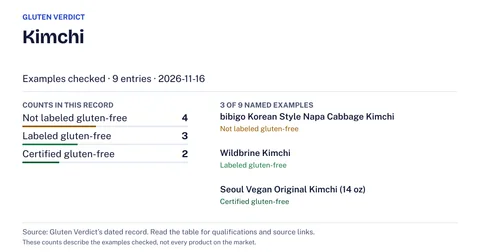 KimchiDepends on the productchecked Nov 16, 2026
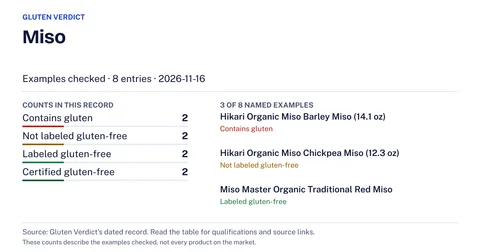 MisoDepends on the product2 of 8 products we checked contain gluten: Hikari Organic Miso Barley Miso (14.1 oz) and Hikari Miso Soup Akadashi (12 servings, 7.0 oz)checked Nov 16, 2026
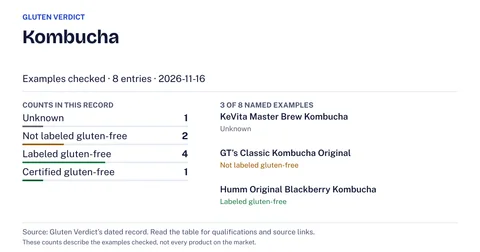 KombuchaDepends on the productchecked Nov 16, 2026
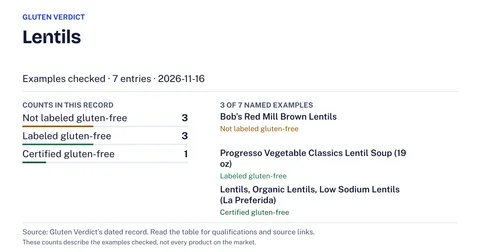 LentilsDepends on the productchecked Nov 16, 2026
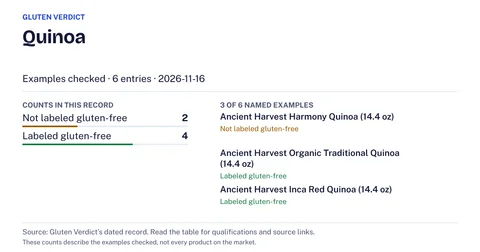 QuinoaNaturally gluten-freeBuy it labeled gluten-freechecked Nov 16, 2026
Questions people ask
Is bone broth recommended after a celiac diagnosis?
It is not named on any of the pages we read41, 42, 43, 44, 45, 46. Whether a broth is gluten-free depends on the product: our chicken broth verdict covers the ones we checked.
Do collagen or glutamine supplements help the gut heal?
They are not named on the pages we read41, 42, 43, 44, 45, 46. NIDDK says your doctor may recommend or prescribe supplements if you need them after testing for low vitamins and minerals7, so a supplement question is one for your doctor or dietitian.
More in Nutrition and combining diets
 Iron, B12 and B6 on a gluten-free diet: where they come from and how to check a labelWhich foods supply iron, B12 and B6, what US enrichment standards name, and how to check whether a gluten-free flour, bread or cereal is fortified.
 Gluten-free with type 2 diabetes or high cholesterol: where the plans overlapWhere a gluten-free plan and a diabetes or cholesterol plan agree, where packaged gluten-free foods cut across them, and what to ask a dietitian.
 Fiber on a gluten-free diet: where it drops and what fills the gapCheck the fiber on gluten-free breads and pastas against the US Daily Value, and see which gluten-free whole foods charities list to add more.
 Gluten-free for older adults: swallowing difficulty, small appetite and thickenersHow to check thickeners, nutrition drinks and soft foods for a gluten statement, what the IDDSI texture levels are, and whom to ask about swallowing.
 Gluten-free vegetarian protein: what to check on beans, lentils, tofu and tempehWhat to read on beans, lentils, tofu, tempeh and meat substitutes when you are vegetarian and gluten-free: stray grain, added grains, sauces and batters.
 Weight gain or loss after a celiac diagnosis: what the research foundWhat two studies found about weight before and after a celiac diagnosis, what sources say about gluten-free foods, and what to bring to a dietitian.
Related guides
 Nutrient deficiencies in celiac disease: what the guidance names for checkingWhich nutrients a celiac guideline and a charity's clinician page name for checking, where reported deficiency figures differ, and questions to bring.
 Lactose intolerance after a celiac diagnosis: why it happens and how long it lastsWhy lactose intolerance can follow a celiac diagnosis, what published studies report about recovery on a gluten-free diet, and how lactose-free milk fits.
 Starting a gluten-free diet: testing first, then labels, oats and the kitchenWhat NIH and the celiac charities say about starting a gluten-free diet: testing first, which foods to start with, a US label check, oats and the kitchen.
 A gluten-free meal plan as a shopping template, by meal slotA weekly gluten-free shopping template: staples for each meal slot, the check each packaged item needs, and a ledger of when you last read each label.
Sources
- [1, 2, 3, 4, 5, 41] National Institute of Diabetes and Digestive and Kidney Diseases (NIDDK), Eating, Diet, & Nutrition for Celiac Disease, checked Nov 17, 2026.
Read the page on 2026-11-17: no mention of bone broth, collagen or glutamine anywhere in its text.
- [6, 7, 8, 9, 10, 11, 12, 42] National Institute of Diabetes and Digestive and Kidney Diseases (NIDDK), Treatment for Celiac Disease, checked Nov 17, 2026.
Read the page on 2026-11-17: no mention of bone broth, collagen or glutamine anywhere in its text.
- [13, 14, 43] Coeliac UK, Follow up after diagnosis (healthcare professionals), checked Nov 17, 2026.
Read the page on 2026-11-17: no mention of bone broth, collagen or glutamine anywhere in its text.
- [15, 16, 17, 18] Coeliac UK, Lactose intolerance and coeliac disease, checked Nov 17, 2026.
- [19, 20, 21, 22, 23, 24, 25, 26, 27, 44] Gluten Intolerance Group, Healthy Gluten-Free Eating Guidelines, checked Nov 17, 2026.
Read the page on 2026-11-17: no mention of bone broth, collagen or glutamine anywhere in its text.
- [28, 29, 30, 31, 32, 33, 34, 35, 36, 37, 46] American College of Gastroenterology (American Journal of Gastroenterology), ACG Guidelines Update: Diagnosis and Management of Celiac Disease (Rubio-Tapia and colleagues, 2023), checked Nov 17, 2026.
Searched the full text of the guideline on 2026-11-17: no mention of bone broth or glutamine; the only match for “collagen” is “collagenous sprue”, named among conditions that may be misdiagnosed as celiac disease.
- [38] PLOS ONE, Younger age at diagnosis predisposes to mucosal recovery in celiac disease on a gluten-free diet: a meta-analysis, checked Nov 17, 2026.
- [39, 40, 45] Academy of Nutrition and Dietetics, Gluten-Free Diet: Building the Grocery List, checked Nov 17, 2026.
Read the page on 2026-11-17: no mention of bone broth, collagen or glutamine anywhere in its text.