Ordering at an Indian restaurant: where wheat enters the menu
Short answer
Most Indian food is built on rice, vegetables, meats, beans and lentils1, so the question is where wheat enters. Ask about five places:
- Breads such as naan, chapati and puri, which are often made with wheat flour2.
- Hing (asafoetida), which the Gluten Intolerance Group says is often processed with wheat3.
- Gravy thickeners and kofta fillers4, 5.
- Fried starters such as samosas and pakoras, and the oil they share6, 7, 10.
- The tandoor, where meats are often cooked in the same oven as bread8.
Part of Eating out and chain restaurant policies, 25 guides
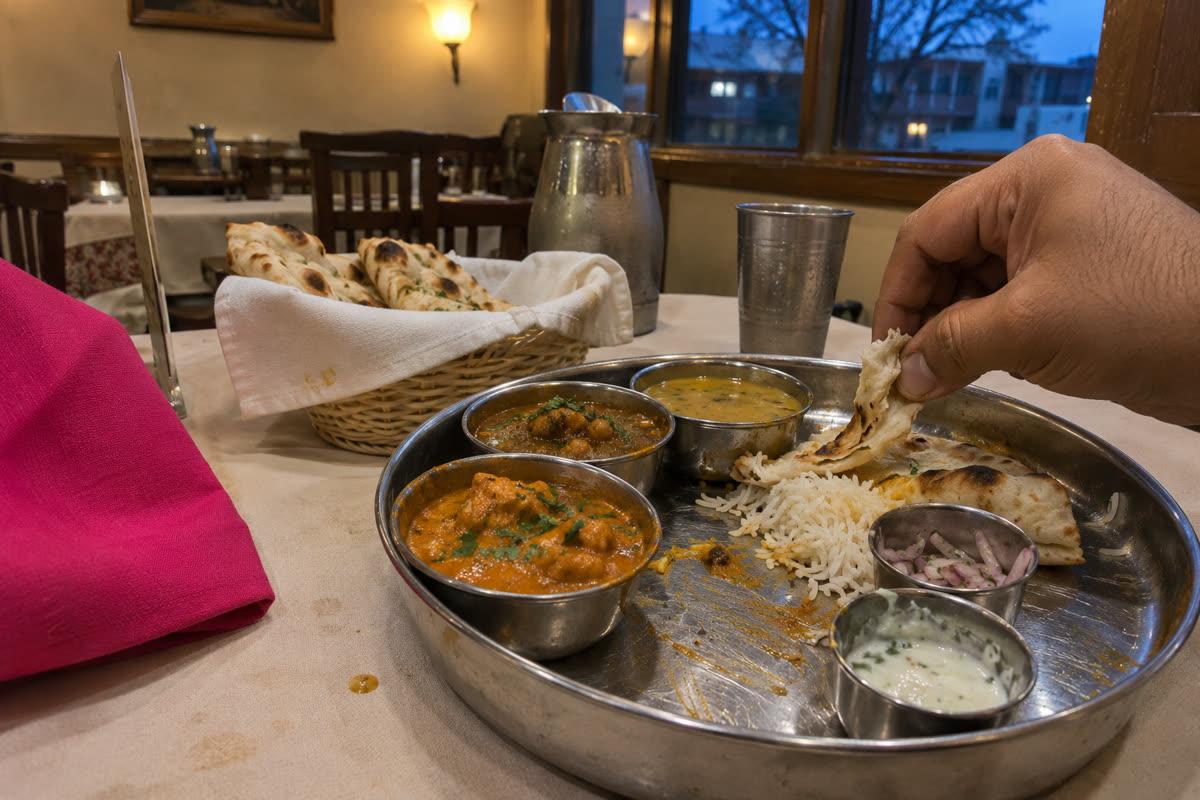
Key points
- Rice, lentils and chickpeas are the base of many dishes1, but many Indian breads are made with wheat flour, according to the Gluten Intolerance Group2.
- Hing is often processed with wheat, according to the Gluten Intolerance Group3, and one hing compound from the Ayurvedic Institute’s store lists wheat as an ingredient9.
- The Gluten Intolerance Group says most Indian sauces are not thickened with wheat flour, and still tells readers to ask4.
- One maker’s frozen onion pakora lists both chick pea flour and wheat flour, so a chickpea batter is not a given10.
- The fryer and the tandoor are shared-handling questions that the Gluten Intolerance Group names6, 8.
What an Indian menu is built on
The Gluten Intolerance Group (GIG) says most Indian food is naturally gluten-free, because the major staples are rice, vegetables and meats, with beans and legumes such as chickpeas and lentils1. Rice, lentils and chickpeas are the staples these dishes are built on. The wheat enters in specific places, which the sections below take one at a time.
US Indian restaurants tend to lean toward North Indian or South Indian cooking, most of them toward the north11. GIG’s regional lists show why that matters: wheat is the staple crop and naan and roti are the breads in the North, while rice is the staple in the South12 and its breads are more commonly made from lentils and rice13.
Some restaurants carry a gluten-free menu or mark items on the regular menu. When nothing is marked, GIG says not to assume there are no options, because many Indian dishes are inherently gluten-free, and to ask about cross-contact in how your dish is prepared14.
This guide is about ordering at a restaurant in the US. For eating in India itself, see gluten-free travel in India.
Breads: naan, roti, chapati, puri, paratha and kulcha
GIG lists naan, chapati, puri and other Indian breads among the places wheat comes in, and says many Indian breads are made with wheat flour2. Our verdict for naan is that it contains gluten. Packaged versions of other breads read the same way: one maker’s frozen lachcha paratha and onion kulcha both begin their ingredient lists with wheat flour15, 16. Restaurant recipes differ, so ask what a bread is made from rather than assuming.
The South Indian dosa (a lentil and rice crepe) and idli (a steamed lentil rice cake) are the breads GIG lists as gluten-free12. One caution from the same page: suji or rava is semolina, which is wheat, and is often used as a batter for dishes such as upma17. If a menu says rava or suji, ask what it is made from.
If you order bread for the table, the oven and the basket are shared handling questions too: see the tandoor section below.
Hing (asafoetida) and spice blends
GIG singles out hing, a potent spice that it says is often processed with wheat and could be used in chutneys, soups and sauces3. The same page says pure spices, Indian or otherwise, are naturally gluten-free18, so the question is how the hing was prepared, not spices in general.
Two sellers’ pages show why the jar matters. The Ayurvedic Institute’s “Hing Asafoetida Compound” lists asafoetida, wheat, gum arabic, rice and rice bran as ingredients9. Pure Indian Foods’ hing page says the key is to make sure the hing in use is free of wheat flour, starch or other unsuitable anti-caking agents or preservatives19.
Ask it directly: “Do you use hing or asafoetida in the dal, sauces or chutneys, and is it mixed with wheat flour?” A kitchen that can read the jar can answer from the ingredient list; a compound that lists wheat, as in the example above, is a no9.
For other blends, see our spices verdict and the guide to seasoning packets, bouillon and spice blends.
Gravies, sauces and thickeners
GIG says the majority of Indian sauces are not thickened with wheat flour, and still tells readers to ask the server to confirm4. A 2013 paper in Nutrients on the gluten-free diet among Indian patients with celiac disease lists thickeners, fillers or binders used when eating out among the ways gluten can reach food unintentionally20.
Kofta, the meatballs, could contain breadcrumbs or gluten-containing fillers, according to GIG5. Questions that cover a gravy dish:
- Is this sauce thickened with flour, or only with onion, tomato, yogurt, cream or nuts?
- Do the kofta, cutlets or fritters in it contain breadcrumbs or flour?
- Does the sauce start from a packaged mix, paste or stock, and can someone read its label? In a guide written for parents of children who eat gluten-free, GIG lists kitchen staff refusing or hesitating to check the labels of packaged sauces or mixes as a red flag21.
- Is the seasoning blend on this dish gluten-free? This is one of the questions GIG suggests asking22.
Packaged curry products differ by brand; see our curry verdict.
Samosas, pakoras, papad and the fryer
GIG says fried foods raise the risk of cross-contact and tells diners to ask whether gluten-containing items are cooked in the same fryer6. The items themselves also deserve a question:
| Item | What the sources show | What to ask |
|---|---|---|
| Samosa | One maker’s frozen jumbo samosa lists wheat flour7. | What is the shell made from? |
| Pakora or bhaji | One maker’s frozen onion pakora lists both chick pea flour and wheat flour10. | Is the batter only chickpea flour, and is it fried in its own oil? |
| Papad or papadum | In one Indian laboratory study of black gram papad, the method flagged the potential presence of refined flour in one of the samples analysed23. The authors cite reports of wheat and refined flour being added to papad flour to make the dough easier to roll24. | What is the papad made from, and can the kitchen read the pack? |
On shared oil, one 2026 study in Nutrients measured gluten in 98 samples of French fries and tortilla chips that were naturally gluten-free before frying in fryers shared with gluten-containing foods at US food service establishments25. Six of the 98 (6.1%) exceeded 20 parts per million26. Every sample from an establishment reporting daily oil changes measured below 20 ppm, while those reporting weekly changes were higher and more variable27. The study did not test Indian dishes. It is a reason to ask which items share the oil and how often it is changed.
In that same parents’ guide, GIG’s sample question for fries is “Are the french fries cooked in a dedicated fryer, or do they share oil with breaded items?”28 Adapt it: “Are the pakoras fried in their own oil, or the same oil as the samosas?” GIG also lists confirmation that gluten-free foods share cooking oil or grill spaces with heavily breaded items as a reason to consider eating elsewhere29.
The tandoor, grills, buffets and shared plates
Tandoori chicken is traditionally cooked in a tandoor, a high-temperature round clay oven30. GIG says tandoori meats are often cooked in the same oven as bread, and that cross-contact with crumbs may be an issue8. On grills, a separate GIG page says gluten cannot be burned off by high temperature31.
Ask whether the meat can be cooked away from the bread, on a clean skewer or in a separate pan, and what the marinade contains.
GIG says Indian buffets exponentially increase the risk of cross-contact and suggests using your best judgement or ordering off the menu32. Indian meals are often served family-style; GIG says that if you share several dishes, everything at the table has to be gluten-free, and that ordering your own entree is fine too33.
Rice, dal, desserts and drinks
GIG calls basmati rice a gluten-free foundation for a meal34. For lentils, it advises choosing lentils that are certified or labeled gluten-free to avoid cross-contact, and notes they may be less available when eating out35. See our lentils verdict; in a restaurant, ask how the dal is prepared and what it is cooked with.
Among desserts, GIG flags maida, a refined wheat flour found in some Indian desserts, breads and other menu items36, and sevian, a North Indian noodle dessert that often contains wheat37. Suji or rava, the semolina above, shows up in rawa ladoo17. For drinks, our verdicts for chai and yogurt show that both depend on the product, so ask how the drink is made.
A short order and the questions behind it
- Call ahead and ask for a manager or chef. Coeliac UK, a UK charity, recommends this so they understand the requirements and the risks of cross-contamination38.
- Say it is a health need. Coeliac UK says to explain your restrictions so they are understood as a health necessity and not a dietary choice39.
- Build the order from rice, dal and chickpea dishes, grilled or sauced dishes, and South Indian dosa or idli, confirming each with the kitchen.
- Ask the five questions: bread, hing, thickener, fryer, tandoor.
- Check how the dish is cooked. Coeliac UK says to double check that cooking methods such as the fryer and utensils are specifically used for gluten-free options40.
If a menu marks a dish “gluten-free”, FDA says restaurants’ gluten-free labeling should be consistent with the federal definition41, and that state and local governments play an important role in overseeing restaurants42. Ask the same questions anyway; they are about how your dish is handled.
For the wider picture, see our guides to eating out with celiac disease and where gluten hides in restaurant kitchens.
Verdicts in this guide
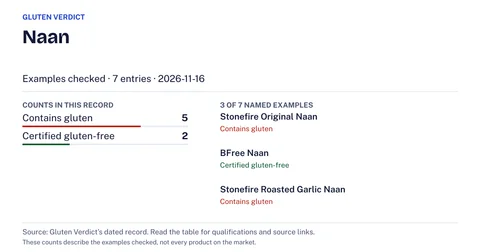 NaanContains glutenchecked Nov 16, 2026
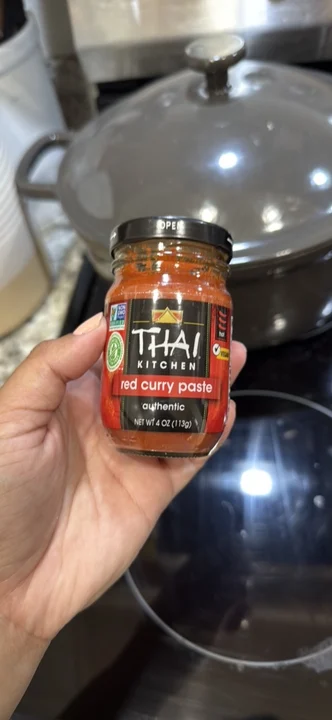 CurryDepends on the product2 of 11 products we checked contain gluten: S&B Golden Curry Mix, Mild (curry roux block) and S&B Golden Curry Sauce with Vegetables, Mild (pouch)checked Nov 16, 2026
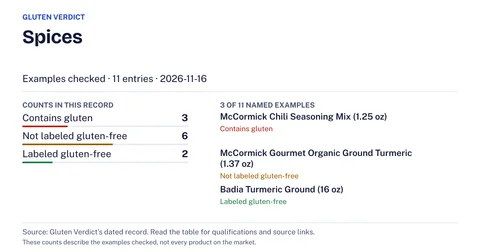 SpicesDepends on the product3 of 11 products we checked contain gluten: McCormick Chili Seasoning Mix (1.25 oz), Lawry’s Chili Spices & Seasonings Mix (1.48 oz), and McCormick Cheesy Taco Seasoning Mix (1.12 oz)checked Nov 16, 2026
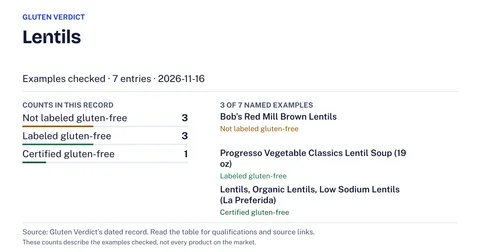 LentilsDepends on the productchecked Nov 16, 2026
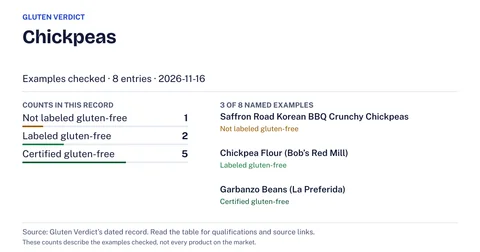 ChickpeasNaturally gluten-freechecked Nov 16, 2026
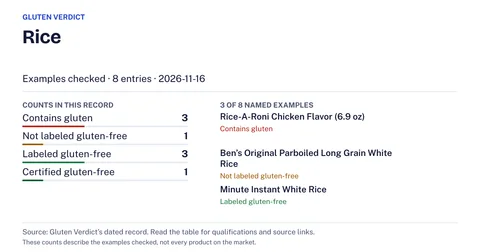 RiceNaturally gluten-free3 of 8 products we checked contain gluten: Rice-A-Roni Chicken Flavor (6.9 oz), Near East Original Rice Pilaf, and Ben’s Original Ready Rice Rice PilafBuy it labeled gluten-freechecked Nov 16, 2026
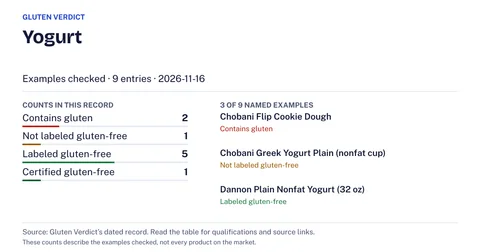 YogurtDepends on the product2 of 9 products we checked contain gluten: Chobani Flip Cookie Dough and Chobani Flip Cookies & Creamchecked Nov 16, 2026
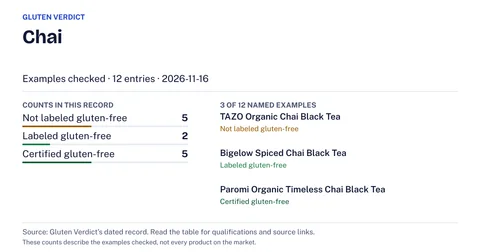 ChaiDepends on the productchecked Nov 16, 2026
Questions people ask
Is hing (asafoetida) gluten-free?
It depends on the product. GIG says hing is often processed with wheat3, and one hing compound from the Ayurvedic Institute’s store lists wheat among its ingredients9. Pure Indian Foods says the key is to make sure the hing is free of wheat flour and starch19.
Is naan gluten-free?
Not in the usual form. GIG says many Indian breads, naan among them, are made with wheat flour2; see our naan verdict.
Are dosa and idli gluten-free?
GIG lists dosa (a lentil and rice crepe) and idli (a steamed lentil rice cake) as gluten-free breads of South India12. It also notes that suji or rava is semolina, which is wheat17, so ask about rava versions.
Does tandoori chicken contain gluten?
GIG notes that tandoori meats are often cooked in the same oven as bread and that crumbs may cause cross-contact8. Ask about the oven and the marinade.
More in Eating out and chain restaurant policies
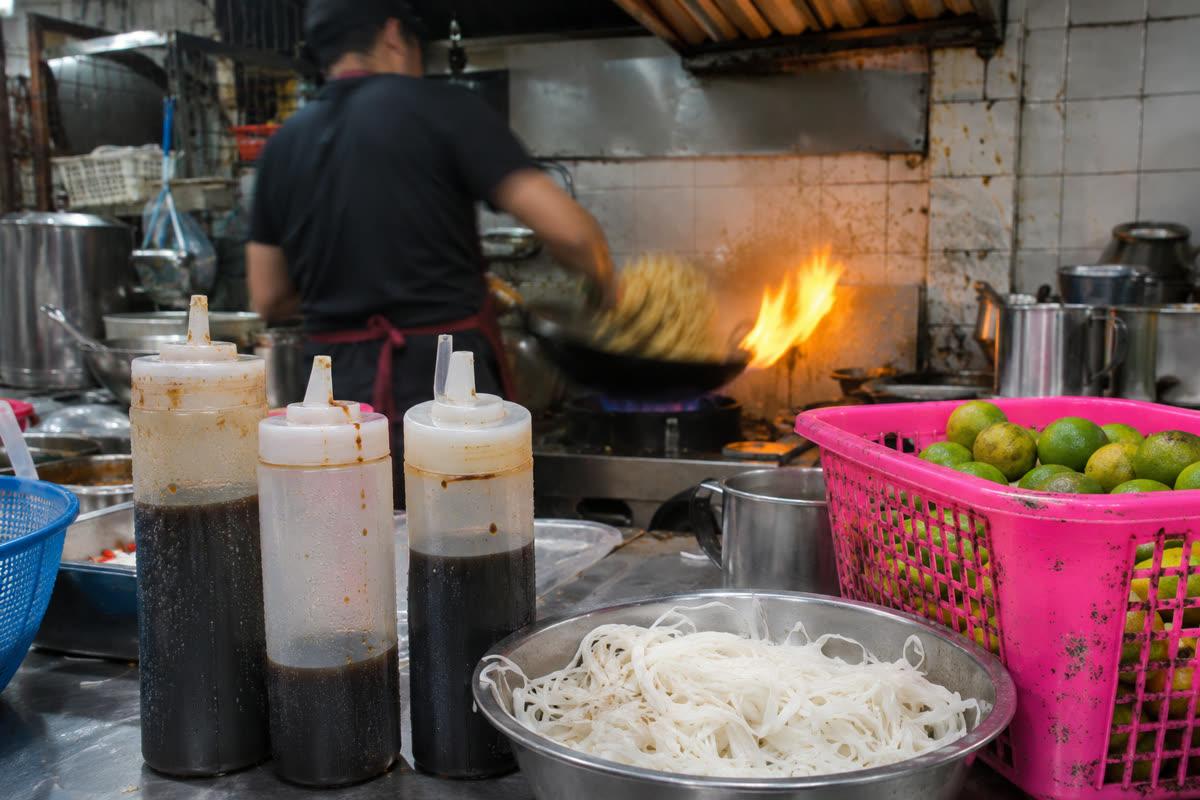 Ordering at a Thai restaurant when you avoid gluten: sauces, noodles and woksWhich Thai sauces, noodles, coatings and kitchen habits can bring in wheat, and the questions to ask before you order at a Thai restaurant.
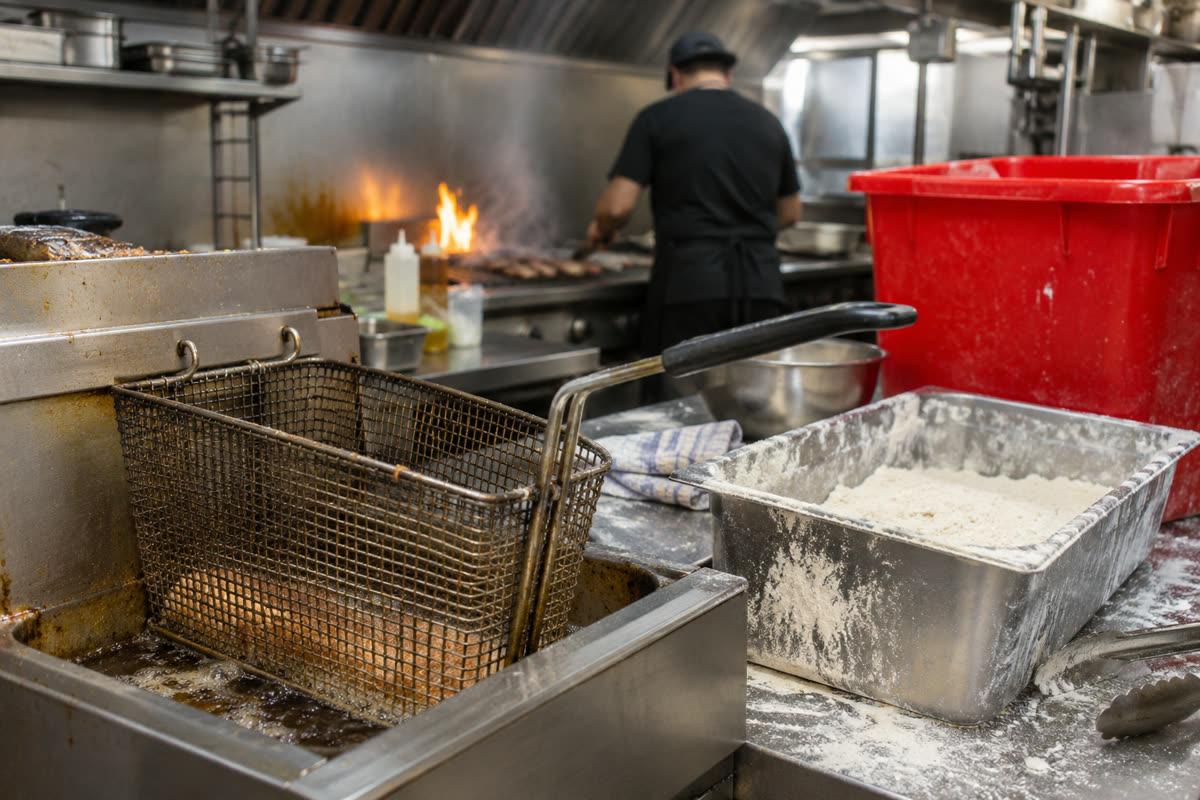 Where gluten hides in a restaurant kitchen, and the question to ask about each sourceFryers, sauces, roux, marinades, grills, pasta water and eggs: how gluten reaches restaurant food and the question GIG lists for each source.
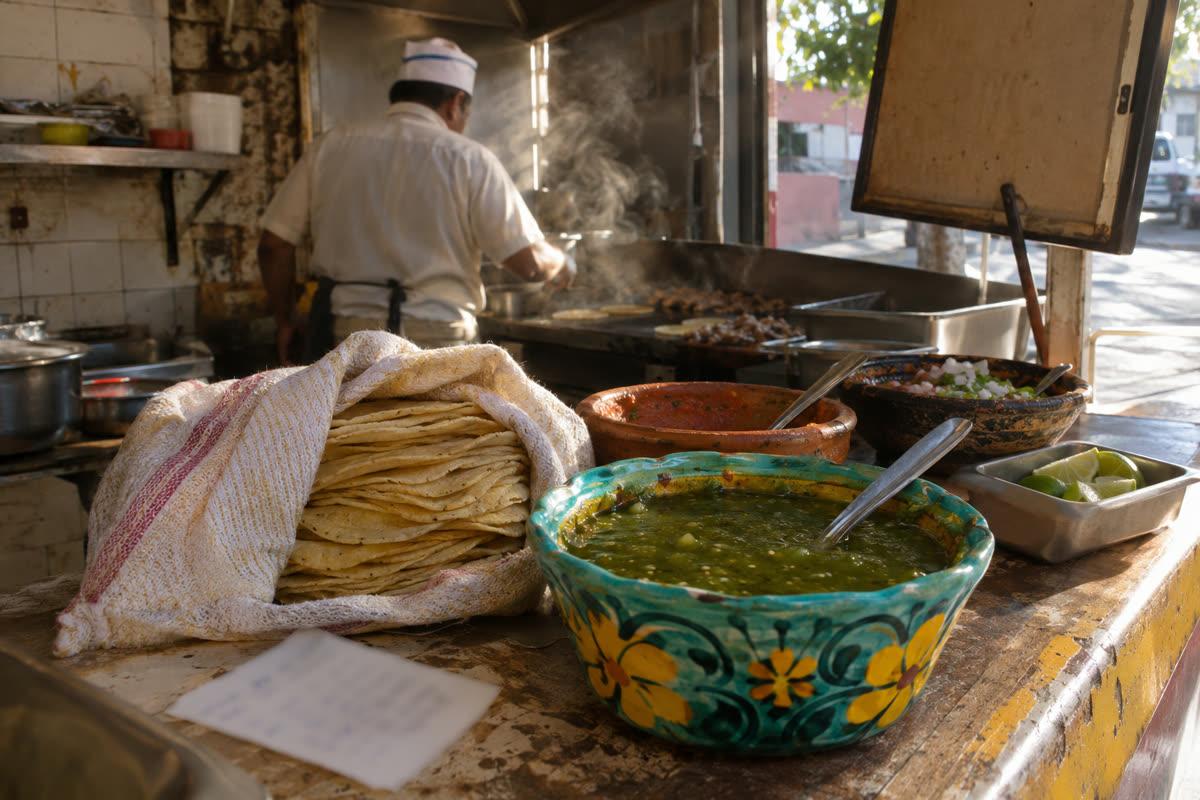 How to order at a Mexican restaurant when you avoid glutenCorn is not the whole story at a Mexican restaurant. What to ask about tortillas, chip fryers, sauces, seasoning and shared grills.
 Ordering steak and burgers with celiac disease: marinades, sides, fryers and bunsWhat to ask about marinades, seasoning, butters, grills, fryers, sides and buns when you order steak or a burger with celiac disease.
 Buffets, food courts and food trucks with celiac disease: what to ask at eachHow to decide whether a buffet, food court counter or food truck is workable with celiac disease, what to ask at each stop, and what to order.
 What Chipotle, Moe’s and Taco Bell say about gluten, fryers and tortillasWhat Chipotle, Moe’s and Taco Bell say on their own pages about flour tortillas, fryers, gloves and shared kitchens, with the date we read each.
Related guides
 Eating out with celiac disease: what to check, ask and watch forPlan a restaurant meal with celiac disease: what to check before you go, the questions to ask in order, how to read the answers, and what studies measured.
 Seasoning packets, bouillon cubes and spice blends: where wheat entersWhy a packet, cube or blend can list wheat flour or barley when a single spice lists one item, and the order to read the label in.
 Gluten-free in India: hing, atta, rava and what a pack must sayWheat routes in Indian food that curry advice misses (hing, atta, rava, biryani seals, shared griddles) and what India’s own gluten free rules say.
 Is hing (asafoetida) gluten-free? How to read the jarHing powder can be a blend. How to read its binder, and what “gluten friendly”, “wheat free” and “batch tested” do and do not promise.
Sources
- [1, 2, 3, 4, 5, 6, 8, 11, 12, 13, 14, 17, 18, 30, 32, 33, 34, 35, 36, 37] Gluten Intolerance Group, Venturing into Indian Cuisine, checked Nov 17, 2026.
Read on 2026-11-17: the list under “North India Cuisine” names “Staple crop: Wheat” and “Wheat-based breads: Naan, Roti”; the list under “South India Cuisine” names “Staple crop: Rice” and, under “Gluten-free breads”, “Dosa (lentil and rice crepe)” and “Idli (steamed lentil rice cake)”.
- [7] Deep Foods, Jumbo Punjabi Style Samosas (15 pieces), checked Nov 17, 2026.
Read on 2026-11-17: the ingredient list on this frozen samosa product page names potatoes first and wheat flour second, followed by sunflower oil, water and green peas.
- [9] Ayurvedic Institute, Hing Asafoetida Compound (1 oz), checked Nov 17, 2026.
- [10] Deep Foods, Onion Pakora (10 oz), checked Nov 17, 2026.
Read on 2026-11-17: the ingredient list on this frozen onion pakora product page names onions, water, chick pea flour, corn oil and wheat flour, among others.
- [15] Deep Foods, Lachcha Paratha (5 pieces), checked Nov 17, 2026.
Read on 2026-11-17: the ingredient list on this frozen lachcha paratha product page begins with wheat flour, then water and corn oil.
- [16] Deep Foods, Onion Kulcha (4 pieces), checked Nov 17, 2026.
Read on 2026-11-17: the ingredient list on this frozen onion kulcha product page begins with wheat flour, then onions and water.
- [19] Pure Indian Foods, Best Hing Ever (Asafoetida / Asafetida), checked Nov 17, 2026.
- [20] Rajpoot and Makharia, Nutrients (via PubMed Central), Problems and Challenges to Adaptation of Gluten Free Diet by Indian Patients with Celiac Disease, checked Nov 17, 2026.
- [21, 22, 28, 29] Gluten Intolerance Group, Questions to Ask When Eating Out, checked Nov 17, 2026.
- [23, 24] Amane and Ananthanarayan, Food Chemistry X (via PubMed Central), Protein profiling of Indian black gram varieties and detection of adulteration in black gram-based food products, checked Nov 17, 2026.
- [25, 26, 27] Weisbrod et al., Nutrients (via PubMed Central), Shared Fryers May Not Always Be as Risky for Gluten Cross-Contact in Celiac Disease as Dietary Guidance Suggests, checked Nov 17, 2026.
Read on 2026-11-17: the abstract says the study analyzed 98 samples, French fries (n = 55) and tortilla chips (n = 43), collected from US food service establishments; all were naturally gluten-free before frying and were prepared in fryers shared with gluten-containing foods.
- [31] Gluten Intolerance Group, Appliances: Risks of Cross-Contact, checked Nov 17, 2026.
- [38, 39, 40] Coeliac UK, Hints and tips for eating out, checked Nov 17, 2026.
- [41, 42] US Food and Drug Administration, Gluten and Food Labeling, checked Nov 17, 2026.