Gluten-free in India: hing, atta, rava and what a pack must say
Short answer
The Gluten Intolerance Group (GIG) says most Indian food is naturally gluten-free1, so look for the specific places wheat gets in, and read a pack against India’s own rules:
- GIG says hing (asafoetida) is often processed with wheat2; one jar we read lists wheat and says it contains wheat3, 4, another lists asafoetida, edible gum and rice flour5.
- Wheat flour hides under Indian names: atta is whole wheat flour and maida is refined wheat flour6, 7, and suji or rava is wheat semolina8.
- Tandoor ovens and fryers add cross-contact: GIG says tandoori meats are often cooked in the same oven as bread9, and that fried foods increase the risk of cross-contact34.
- On a pack, India’s gluten free standard means below 20 mg of gluten per kg when analysed10, and a gluten free product made in a plant that also makes gluten-containing products has to say so11.
- Gluten-free limit
- Gluten levels below 20 mg/kg when a product labelled gluten free is analysed10; the claims compendium says the gluten content shall not exceed 20 mg/kg40
Part of Travel: Asia and the Middle East, 12 guides
Key points
- The Gluten Intolerance Group (GIG) calls most Indian food naturally gluten-free, and lists naan, chapati, puri, other breads, hing, suji or rava and maida among the exceptions1, 12, 2, 8, 13.
- Hing jars differ: one page lists wheat, one lists no wheat and makes a gluten free claim without a test result on the page, and one sells a batch-tested version beside an untested one3, 14, 15.
- India’s rules name oats, spelt, wheat, rye and barley as cereals containing gluten for allergen declaration16, and set the gluten free level at below 20 mg/kg when a product is analysed10.
- FSSAI’s text says prepared food served in hotels, by food service vendors and on airlines and railways has to accompany or display allergen information17, 18.
Where wheat enters Indian cooking
Most Indian dishes start from ingredients with no gluten: GIG says staples include rice, vegetables and meats, and the cuisine features beans and legumes such as chickpeas and lentils1. Where the wheat is depends partly on the region19, 20.
A 2013 review by authors at the All India Institute of Medical Sciences in New Delhi says wheat is the staple cereal in northern India, with wheat flat bread in almost every meal, while rice is a staple in the south and northeast19. GIG’s regional list says the same thing in menu terms: wheat-based breads such as naan and roti under the north, dosa and idli under the south20. GIG’s article also notes that restaurants in the United States tend to emphasize either North or South Indian cuisine, a majority leaning north52, so it is a charity primer, not a survey of kitchens in India. Treat the review and GIG’s list as patterns, not promises about one kitchen.
Even the lentils carry a note. GIG advises choosing lentils that are certified or labeled gluten-free, to avoid the risk of cross-contact21. Our lentils verdict reports the same advice.
Hing (asafoetida): wheat in a spice jar
Hing is essential in Indian cooking and used a lot in dals, subzis and sambhars, according to one seller’s product page22. GIG’s warning about it is specific: pure spices are naturally gluten-free, but hing is often processed with wheat and could be used in chutneys, soups and sauces2.
Jars differ, so here are three product pages we read on 2026-11-17. They are examples of label wording, not a ranking, and the last column is what each page says, in its own words.
| Jar | Ingredients on the page | What the page says about gluten |
|---|---|---|
| Ayurvedic Institute, Hing Asafoetida Compound (1 oz) | Asafoetida, wheat, gum arabic, rice, rice bran3 | “Please Note: Contains wheat”4. The page address says “wheat-free”23. |
| Rani Brand, Asafetida (Hing) Ground (3.75 oz) | Asafoetida, edible gum, rice flour5 | Titled “Gluten Friendly”, with a “GLUTEN FREE” line in the description and no test result or certification named on the page14. |
| Pure Indian Foods, Green Label powder | Asafoetida, edible gum from acacia trees24 | No gluten ingredients; processed in a facility that also handles gluten-containing ingredients; not batch tested25, 26. |
| Pure Indian Foods, Blue Label powder | Same ingredients as the Green Label24 | The maker says it is batch tested gluten-free; the Green Label is not tested15. |
| Pure Indian Foods, Gold Label lumps | Pure asafoetida27 | Batch tested gluten-free, according to the maker26. |
The Ayurvedic Institute page lists wheat and says “Contains wheat” even though its web address says wheat-free. Read the ingredient list on the page or the jar, not the product name or the link.
In a restaurant or a home kitchen you cannot read the jar. The question that fits is whether the hing contains or is processed with wheat, and the fallback is a dish made without it. See our spices verdict for how single spices and blends differ. Rice flour, which one jar uses as a binder, has its own verdict.
Words on a menu or in a kitchen that mean wheat
These are the wheat words the sources name.
| Word | What the source says |
|---|---|
| Atta | FSSAI’s bread-naming table lists “Whole wheat flour (Atta)”6. GIG says many Indian breads, including naan, chapati and puri, are made with wheat flour12. Our naan verdict covers packaged naan. |
| Maida | FSSAI’s table lists “Refined wheat flour (Maida)”7. GIG finds it in some Indian desserts, breads and other menu items13. |
| Suji or rava | GIG: semolina (wheat)-based, used as a batter for dishes such as upma and rawa ladoo8. |
| Sevian | GIG: a North Indian dessert made from noodles that often contains wheat28. |
| Kofta | GIG: meatballs that could contain breadcrumbs or gluten-containing fillers29. |
GIG adds that the majority of Indian sauces are not thickened with wheat flour, but asks you to confirm that with the server30. For fried snacks, the question is what flour is in the batter and whether the oil is shared: the ingredient decides, not the dish name. Our chickpeas and rice flour verdicts cover those two ingredients on their own, not any dish.
Biryani and the dough seal
A chef quoted by Tasting Table describes dum cooking as slow steaming, with the pot sealed with dough or foil31, and the same page calls a thin layer of wheat dough the traditional seal, one that traps more steam than the lid alone32. A recipe on Indian Healthy Recipes gives one way to do it: mix atta with water into a dough and press it onto the rim of the lid for an airtight seal33.
None of the pages we read says whether gluten passes from the dough into the rice, so we do not claim it either way. The practical step is the question: is any dough used to seal the pot? The same recipe also covers the pot with foil or a cloth51, so foil in the pot does not by itself mean no dough.
Dosa, idli and rava
GIG’s list of southern gluten-free breads names dosa, a lentil and rice crepe, and idli, a steamed lentil rice cake20. The word to listen for is rava: GIG describes suji or rava as wheat semolina and names upma and rawa ladoo as dishes made with it8. If a menu says rava, that note applies.
Shared griddles are covered in the next section.
Shared griddles, tandoors and fryers
GIG says tandoori meats are often cooked in the same oven as bread, and that cross-contact with crumbs may be an issue9. It asks you to find out whether gluten-containing items are cooked in the same fryer34, and says Indian buffets “exponentially increase your risk of cross-contact”, advising you to use your judgement or order off the menu35.
The 2013 review lists ways gluten contamination of food can occur. At home, it says, that includes using the same utensils for gluten-containing and gluten-free flours, and it names the rolling pin, the surface griddle, dusters and oil for frying36. That passage is about home kitchens, not restaurants, but the same items are the ones worth asking about: is the griddle also used for wheat breads, and is the frying oil shared?
GIG’s general advice for an Indian meal is to ask about cross-contact risks during the preparation of your dish37.
What India’s rules say on a pack
India’s food regulator, FSSAI, has its own definition of gluten free food38. Its PDFs could not be opened directly from our systems on 2026-11-17, so we read the Internet Archive’s copies, and each source below says which copy. For the US rules see how to read a US food label.
| Question | What the FSSAI text says |
|---|---|
| What counts as gluten free food? | It consists of or is made of one or more ingredients containing rice, millets, ragi, pulses or legumes38. The text does not mention oats or wheat starch39. |
| How much gluten? | When a product labelled gluten free is analysed, gluten levels shall be below 20 mg/kg, by a method declared by the OECD or the AOAC10. The claims compendium (Version IV, 14 December 2022) says gluten content shall not exceed 20 mg/kg40. The two texts use “below” and “not exceed”. |
| A food that is gluten free by nature | It may carry the statement “This food is by its nature gluten free”, provided it meets the essential composition provisions and does not mislead41. |
| Made in a plant that also makes gluten food | The label has to say “Processed in a plant where gluten containing products are manufactured”11. |
| Allergen declaration | Cereals containing gluten, meaning wheat, rye, barley, oats, spelt or their hybridized strains, are declared by the name of the cereal16, in a separate “Contains” statement42. Cross-contamination may be declared separately as “May Contains”43. |
| Exceptions to that declaration | The entry carries an exception list that includes wheat based glucose syrups and maltodextrins, barley based glucose syrups and cereals used for alcoholic distillates; a note ties the starred items to gluten of not more than 20 mg/kg44. Raw agricultural commodities are exempt from allergen labelling45. |
The gluten free level is set by the text, but a pack’s claim is still the maker’s statement. Look for a test or certification line on the maker’s page, as in the Pure Indian Foods example above, and read the ingredient list for wheat, atta, maida and suji.
Eating out, prepared food and the national society
The 2013 review says that eating out with friends or at school were the most difficult places to follow a gluten-free diet46, and that, because gluten labeling on food items in India was lacking, it was difficult to know whether a product was gluten free47.
FSSAI’s labelling text has a rule for prepared food. It says prepared food served for immediate consumption, in hotels, by food service vendors, caterers, halwais or hospitals, at religious gatherings, or on airlines and railways, shall accompany or display minimum information17, and that list includes information relating to allergens18. That is what the text says; we have no source on how often a stall or dhaba displays it, so ask the cook directly.
A news item of 11 January 2019 says the Celiac Society of India (CSI) was organising a symposium on wheat related disorders in New Delhi, in collaboration with FSSAI48. Another news item on the symposium describes CSI as the first and only non-profit organization on a mission to create awareness about early diagnosis and management of celiac disease49. We could not open a current contact page for CSI or for any other Indian society, and the Celiac Disease Foundation’s list of associations around the world was behind a bot check, so we give no link.
A card for the cook or host
Our own request wording, in English, built from the terms the sources above use. We give no translations because we found no source for any.
- I have celiac disease. No wheat, rye or barley, and no oats or spelt.
- That includes atta, maida, suji (rava) and sevian.
- Please do not use hing (asafoetida) that contains wheat or is processed with it. If you are not sure what is in it, leave it out.
- Is any dough used to seal the biryani pot, on the lid or under it? If so, please use foil only, or leave the biryani out.
- Please use a clean griddle or pan and oil that has not fried bread or snacks.
Verdicts in this guide
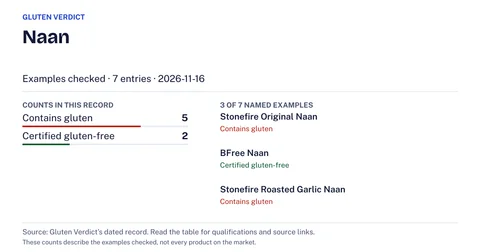 NaanContains glutenchecked Nov 16, 2026
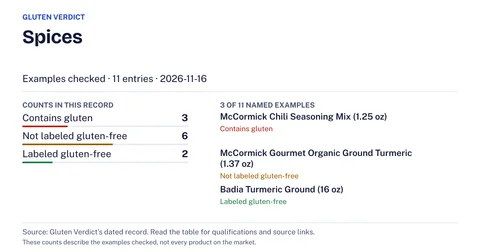 SpicesDepends on the product3 of 11 products we checked contain gluten: McCormick Chili Seasoning Mix (1.25 oz), Lawry’s Chili Spices & Seasonings Mix (1.48 oz), and McCormick Cheesy Taco Seasoning Mix (1.12 oz)checked Nov 16, 2026
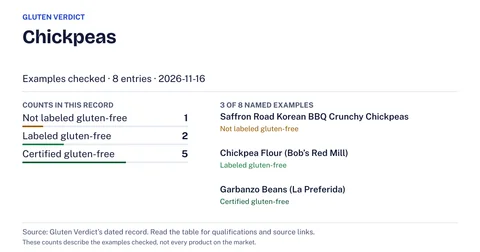 ChickpeasNaturally gluten-freechecked Nov 16, 2026
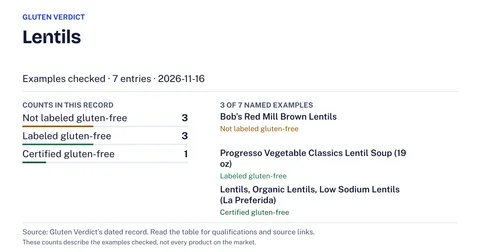 LentilsDepends on the productchecked Nov 16, 2026
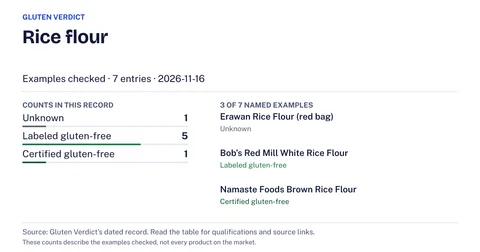 Rice flourNaturally gluten-freeBuy it labeled gluten-freechecked Nov 16, 2026
Questions people ask
Is Indian food gluten-free?
Mostly by ingredients, according to GIG1, with exceptions it names: wheat breads, hing, suji or rava and maida12, 2, 8, 13. Shared ovens and fryers add cross-contact9, 34.
Is hing gluten-free?
It depends on the jar. GIG says hing is often processed with wheat2. One jar page lists wheat3; another lists asafoetida and edible gum from acacia trees24.
What is India’s limit for a gluten free claim?
FSSAI’s standard says gluten levels shall be below 20 mg/kg when a product is analysed10, and its claims compendium says not more than 20 mg/kg40.
Does an Indian pack say if gluten is handled in the plant?
For a gluten free product made in a plant that also makes gluten-containing products, the label has to say so11.
More in Travel: Asia and the Middle East
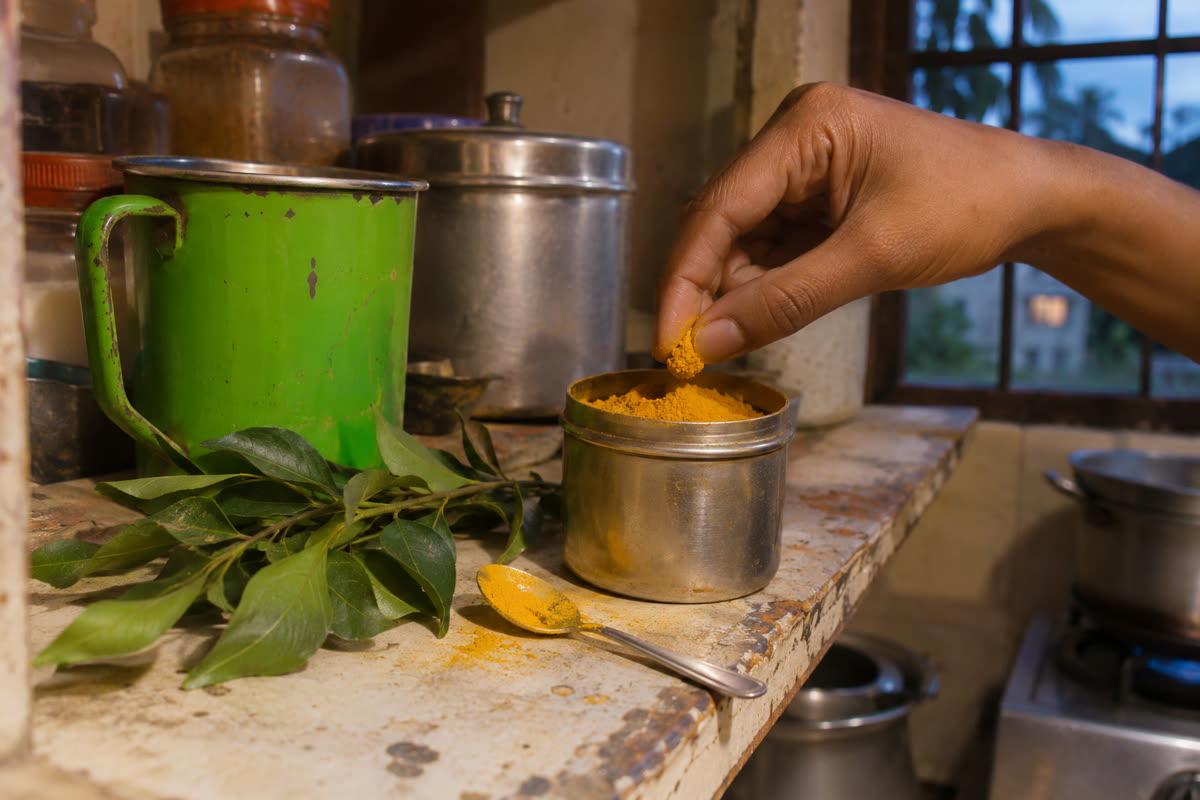 Is hing (asafoetida) gluten-free? How to read the jarHing powder can be a blend. How to read its binder, and what “gluten friendly”, “wheat free” and “batch tested” do and do not promise.
 Gluten-Free in Israel: Labels, Kosher and the Israeli TableIsrael’s gluten label rules, the Hebrew words in the regulation, why kosher and kosher for Passover are not gluten-free claims, and where wheat enters.
 Gluten-free in Dubai and the Gulf: dishes by grain, imported packs and label checksWhich Gulf dishes start with wheat, how to read an imported pack in the UAE, and what Dubai Municipality says its laboratory tests.
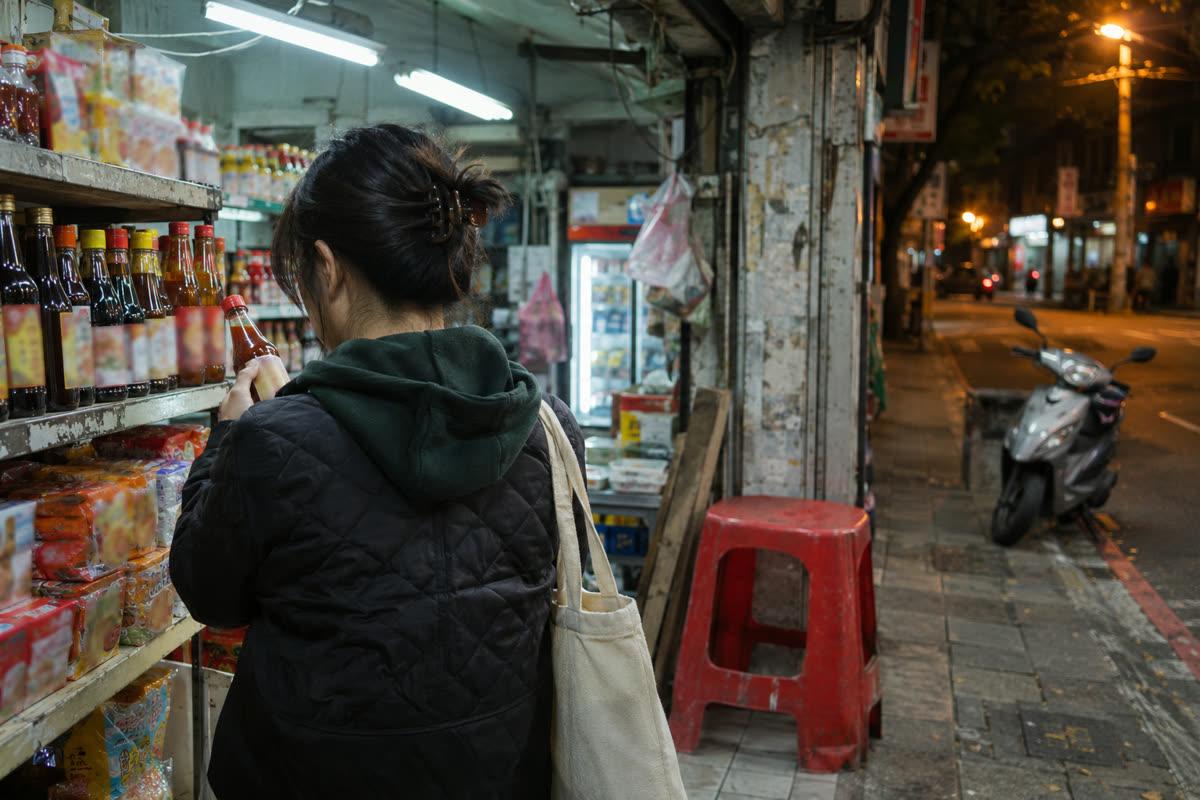 What “gluten-free” means on a pack in Asia, country by countryWhat a gluten-free claim requires in six Asian countries, what Japan, Hong Kong, Taiwan and China print instead, and how to read a pack in hand.
 Gluten-free in China: wheat staples, sauces, hot pot and the label rulesWhere wheat sits in Chinese staples, sauces and hot-pot bases, what China’s label standard requires, and the Chinese words it prints for wheat and gluten.
 Eating gluten-free in Thailand: sauces, noodles and street stallsWhere wheat shows up in Thai sauces, noodles and street food, how Thailand words its own gluten-free rule, and the Thai words to look for on a pack.
Related guides
 Ordering at an Indian restaurant: where wheat enters the menuWhere wheat enters an Indian menu (naan, hing, thickeners, samosas, the fryer and the tandoor) and the questions to ask before you order.
 Gluten-free dining cards in other languages: where the wording comes fromWhich gluten-free card wording comes from EU law or a celiac society, which cards are members-only, and how to hand one to a server.
 Festival foods and gluten: where wheat enters and what to ask the cookWhere wheat enters South Asian and East Asian festival meals, what the sources leave out for Ramadan and Eid, and what to ask a host or sweet shop.
 Iron, B12 and B6 on a gluten-free diet: where they come from and how to check a labelWhich foods supply iron, B12 and B6, what US enrichment standards name, and how to check whether a gluten-free flour, bread or cereal is fortified.
Sources
- [1, 2, 8, 9, 12, 13, 20, 21, 28, 29, 30, 34, 35, 37, 52] Gluten Intolerance Group, Venturing into Indian Cuisine (updated July 19, 2021), checked Nov 17, 2026.
Read on 2026-11-17: under “North India Cuisine” the list includes “Staple crop: Wheat” and the wheat-based breads naan and roti; under “South India Cuisine” it includes “Staple crop: Rice” and, headed “Gluten-free breads”, dosa (lentil and rice crepe) and idli (steamed lentil rice cake).
- [3, 4, 23] Ayurvedic Institute store, Ayurvedic Institute Hing Asafoetida Compound (1 oz), checked Nov 17, 2026.
Read on 2026-11-17: the page address ends “hing-asafoetida-compound-wheat-free”, while the page itself lists wheat among the ingredients and says “Contains wheat”.
- [5, 14, 22] Rani Brand, Rani Asafetida (Hing) Ground 3.75oz, checked Nov 17, 2026.
Read on 2026-11-17: the product title says “Gluten Friendly” and a line of the description says “GLUTEN FREE”; the description also lists turmeric among what it is made of, which the ingredient list does not; no gluten test result or certification mark is named on the page.
- [6, 7, 11, 16, 17, 18, 42, 43, 44, 45, 50] Food Safety and Standards Authority of India (FSSAI), Labelling and Display compendium, Version VIII, 9 September 2025 (Internet Archive copy of the FSSAI PDF), checked Nov 17, 2026.
Read on 2026-11-17: the entry for cereals containing gluten carries an exception naming wheat based glucose syrups including dextrose, wheat based maltodextrins, glucose syrups based on barley, and cereals used for making alcoholic distillates including ethyl alcohol of agricultural origin; a note beneath it, attached to the starred items (wheat based glucose syrups and wheat based maltodextrins), says the gluten shall not be more than 20 mg/kg.
- [10, 38, 39, 41] Food Safety and Standards Authority of India (FSSAI), FSSAI gluten free food standard, regulation 2.14 (Internet Archive copy of the FSSAI PDF), checked Nov 17, 2026.
Read on 2026-11-17: the text of regulation 2.14 names rice, millets, ragi, pulses or legumes as the ingredients of a gluten free food; the words oats and wheat starch do not appear in it.
- [15, 24, 25, 26, 27] Pure Indian Foods, Hing (asafoetida): Green, Blue and Gold labels, checked Nov 17, 2026.
Read on 2026-11-17: the table headed “Is it Batch Tested Gluten-Free?” answers No for the Green Label (powder), Yes for the Blue Label (powder) and Yes for the Gold Label (lumps).
- [19, 36, 46, 47] Rajpoot and Makharia, Nutrients (via PubMed Central), Problems and Challenges to Adaptation of Gluten Free Diet by Indian Patients with Celiac Disease (Nutrients, 2013; full text read on Europe PMC), checked Nov 17, 2026.
- [31, 32] Tasting Table, A Chef’s Guide To Making The Absolute Best Biryani At Home, checked Nov 17, 2026.
- [33, 51] Indian Healthy Recipes, Chicken Dum Biryani, checked Nov 17, 2026.
- [40] Food Safety and Standards Authority of India (FSSAI), Advertising and Claims compendium, Version IV, 14 December 2022 (Internet Archive copy of the FSSAI PDF), checked Nov 17, 2026.
- [48] News clipping hosted on the FSSAI website (Internet Archive copy), News item on the Symposium on Wheat Related Disorder, 11 January 2019 (Internet Archive copy of the FSSAI PDF), checked Nov 17, 2026.
- [49] News clipping hosted on the FSSAI website (Internet Archive copy), News item on the International Symposium on Wheat Related Disorders, 10 January 2019 (Internet Archive copy of the FSSAI PDF), checked Nov 17, 2026.