Ordering at a Thai restaurant when you avoid gluten: sauces, noodles and woks
Short answer
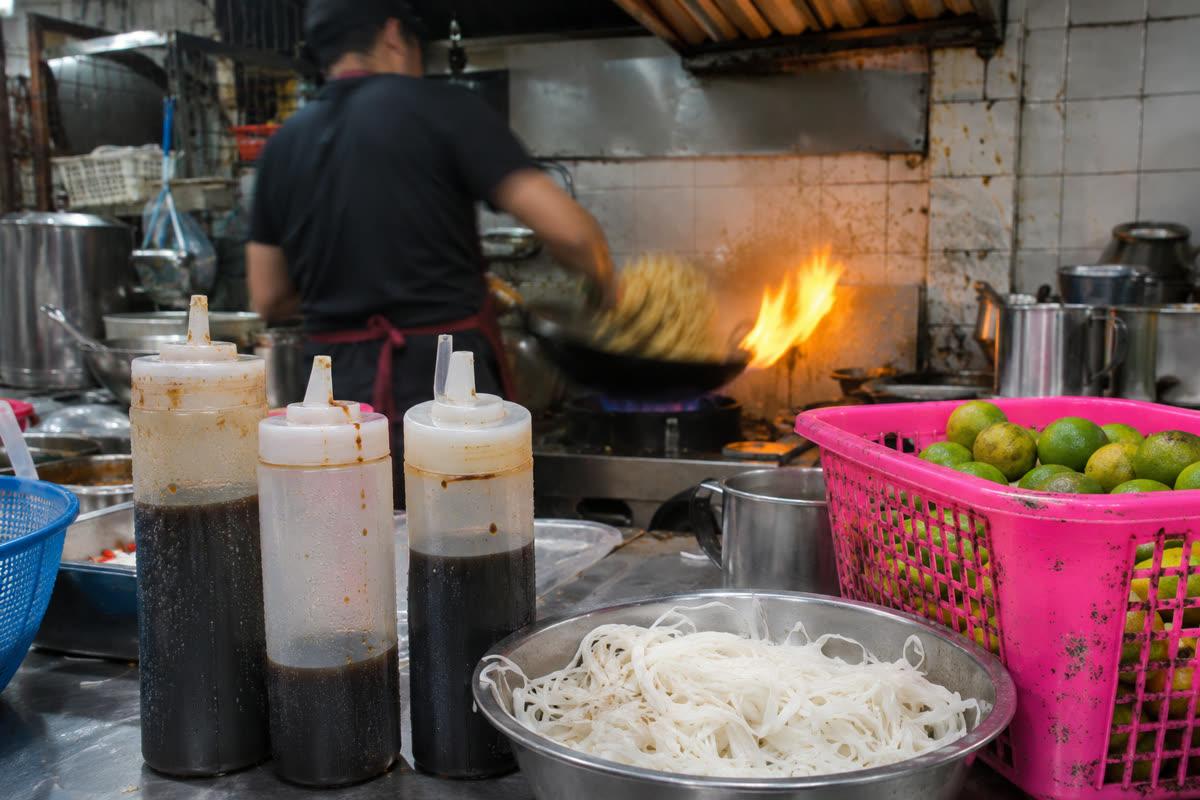
Rice, rice noodles, fish sauce and coconut milk are on the Gluten Intolerance Group’s list of naturally gluten-free Thai ingredients, but the same group says some Thai sauces and flavorings may contain gluten1, 2, 3. Ask four things before you order:
- What the noodles are: rice noodles, not egg noodles4, 5.
- Which sauces go in the wok, because soy sauce is ordinarily made from soybeans and wheat and some oyster and seasoning sauces list wheat6, 7, 8.
- Whether anything is battered, and whether the oil is shared with breaded items9, 10.
- Whether the wok and utensils are clean, and whether the kitchen will check the labels of its bottled and canned sauces11, 12, 13.
Part of Eating out and chain restaurant policies, 25 guides
Key points
- Soy sauce is ordinarily made by fermenting soybeans and wheat, though FDA notes that some soy sauces are not made using wheat6.
- Oyster sauce depends on the bottle: one maker’s Premium oyster sauce lists wheat flour, and the same maker’s green-label version lists none7, 14.
- Fried tofu and other fried items may carry a wheat-flour batter, and gluten-free items fried in the same oil as gluten-containing ones have a higher likelihood of cross-contact, says the Gluten Intolerance Group9.
- FDA’s gluten-free rule covers packaged foods; for a restaurant menu FDA recommends that a “gluten-free” claim match its definition15.
- Ask the server, and ask to talk with the chef if you want more detail about the menu: that is the advice of NIDDK16.
What a Thai menu is built on
The Gluten Intolerance Group (GIG) describes the following as naturally gluten-free and common in Thai cooking: rice, rice noodles, fish sauce, palm sugar, tamarind paste, shrimp paste, Thai chilies, lemongrass, kaffir leaves and coconut milk2, 3. Rice noodles come with a caution in the same article: they are “almost always gluten-free”, so GIG says to confirm they are rice noodles5.
That list describes ingredients, not a dish. GIG also says that some sauces and flavorings in Thai cuisine may contain gluten1, and that you should still ask about the gluten-free status of any dish you are interested in and confirm that cross-contact with gluten is being avoided17.
Our verdict pages show what makers and charities say about the ingredients behind a Thai menu: soy sauce, oyster sauce, fish sauce, curry, coconut milk, rice noodles and pad thai.
Which noodle is in the dish?
GIG’s advice for a noodle dish is to choose rice noodles and avoid egg noodles, to confirm with the server that the rice noodles are gluten-free, and to choose steamed rice if there is any doubt4. The question to ask is plain: “Is this made with rice noodles only?”
Pad thai shows why the sauce needs its own question. GIG lists tamarind paste as an ingredient used in making pad thai18 and calls fish sauce naturally gluten-free19. One retail pad thai sauce, Thai Kitchen’s, lists sugar, rice vinegar, fish sauce, preserved radish, tamarind and other ingredients, with no wheat named20. A restaurant may make its sauce differently, so ask what is in the kitchen’s own, and read our pad thai verdict for what the products we checked say.
We found no source that sets out the sauces used for particular noodle dishes such as drunken noodles or noodle soups, so we do not guess at them. Ask the same questions of every noodle dish: which noodle, which sauces, what else goes in the wok.
Soy, oyster and seasoning sauces
Soy sauce
FDA says soy sauce is a food ordinarily made by fermenting a mixture of soybeans and wheat, and that some soy sauces are not made using wheat6. GIG says soy sauce traditionally contains wheat21. A dish made with soy sauce is therefore a dish to ask about; the answer depends on the bottle the kitchen uses.
Oyster sauce
Oyster sauce shows how much one bottle can differ from another. Lee Kum Kee’s Premium Oyster Flavored Sauce lists wheat flour among its ingredients7. The same maker’s green-label Panda Brand oyster sauce lists no wheat14 and is described on its page as a gluten-free oyster sauce22. Our oyster sauce verdict lists the other bottles we read.
Seasoning and cooking sauces from Thailand
Thai brands also sell bottled seasoning and cooking sauces that a menu may never name. Maggi Thailand’s own product pages, which are in Thai, show how they can differ. In each row below the claim is what the allergen line of that page says (we read ข้าวสาลี as wheat and กลูเตน as gluten).
| Maggi Thailand sauce | What the page says |
|---|---|
| Seasoning sauce, red cap | The allergen line says the sauce contains gluten from wheat8. |
| Cooking sauce, yellow cap | The allergen line names wheat in the fermentation of the soybeans23. |
| Cooking sauce, green cap | The allergen line names wheat in the fermentation of the soybeans24. |
| Dipping sauce | The allergen line names wheat in the fermentation of the soybeans25. |
| Oyster sauce, reduced sodium | The allergen line names wheat, among other allergens26. |
| Oyster sauce, regular | The ingredient list names no wheat, and the page carries no allergen line27. |
These are one brand’s retail bottles. We do not know which bottle a given restaurant uses, and a kitchen may use none of them. What the table shows is that a sauce’s name or cuisine does not decide the question, and that the same maker’s oyster sauces can differ. Hence the question about checking labels in the last section.
Two more bottles have their own verdicts: hoisin sauce and sriracha. Read each before you assume.
Curry pastes, soups and coconut milk
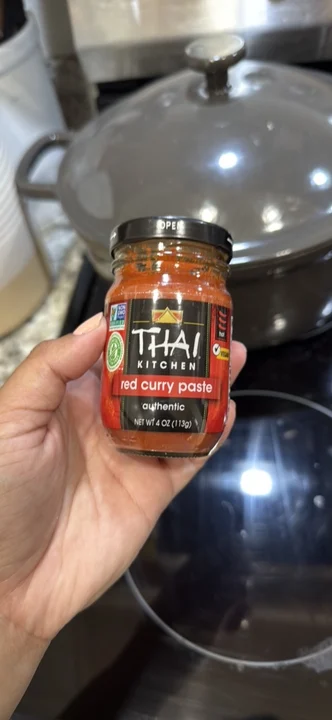
A curry paste can be made without wheat. Thai Kitchen’s red curry paste, a retail product, lists spices including red chili pepper, garlic, lemongrass, salt, shallot, coriander root and makrut lime peel28. GIG lists coconut milk among the naturally gluten-free ingredients of Thai cooking3. What a kitchen adds to the pot is the next question.
GIG’s restaurant tips name the additions to ask about. Soup bases could be made with roux, a combination of butter and flour29. Soups could also contain hydrolyzed wheat protein, which GIG says is not gluten-free30. Dressings, sauces and marinades may contain added gluten as a thickener or binding agent31.
GIG adds a practical step: some restaurants use canned sauces, so you might be able to ask to check the ingredients list on the can12. For a curry or a soup, ask what goes in besides the paste and coconut milk: stock, seasoning sauce, a thickener. See our curry verdict for the pastes and sauces we read.
Fried dishes and coatings
GIG’s advice is to avoid fried items such as fried tofu and to get steamed or pan-seared food instead, because the batter on tofu or other foods might be wheat-flour based9. The same passage points to a second risk: a higher likelihood of cross-contact with gluten when gluten-containing and gluten-free items are fried in the same oil9.
See our tofu verdict. Ask whether a fried item is battered or dusted with flour, and what else is cooked in the same oil.
Woks, fry oil and shared surfaces
NIDDK defines the problem: cross-contact occurs when foods that contain gluten come into contact with gluten-free foods32. In a kitchen, the places to ask about are the wok, the utensils and the fry oil.
GIG suggests asking to have your food prepared on a clean surface with clean utensils, and finding out whether breaded or gluten-containing foods were cooked on the same surface beforehand11. GIG’s list of questions for servers includes two that we adapt to a Thai kitchen: whether the french fries are cooked in a dedicated fryer or share oil with breaded items33, and whether an item is cooked on a clean section of the grill or flat-top, separate from breaded foods34. For a fried dish the matching question is what else shares the oil, and for a wok, whether it has been cleaned since the last dish.
What two studies of shared fryers found
Two studies looked at shared fryers in restaurants. Neither was about Thai food; both tested fried potatoes and, in one, tortilla chips, so treat them as evidence about fry oil in general. In a pilot study, 20 orders of fries were bought from 10 restaurants35; one test method found gluten in 9 of the 20 orders, at 7 to more than 80 parts per million, and a second method found it in 3 of 20, at 14 to more than 270 ppm36. The authors concluded that gluten cross-contact may occur when gluten-free foods are cooked in shared fryers with wheat37.
A later cross-sectional study analyzed 98 samples of French fries and tortilla chips38; it found that six samples, or 6.1%, exceeded FDA’s 20 ppm threshold39. Its authors reported that all samples from establishments that reported daily oil changes measured below 20 ppm, while samples from those reporting weekly oil changes were higher and more variable40, and concluded that shared fryers were not uniformly associated with meaningful gluten cross-contact41. The second study ties its lower results to daily oil changes, so a practical question is how often the oil is changed, and what else is fried in it.
GIG lists these among the red flags for walking away: kitchen staff refusing or acting hesitant to check the ingredient labels on packaged sauces or mixes13, and confirmation that gluten-free foods share cooking oil or grill spaces with heavily breaded items42. The list is written for someone ordering for a gluten-free child or dependent, and we apply it to any order.
Rice, fried rice and sides
Plain rice is on GIG’s list of naturally gluten-free Thai ingredients3. Seasoned rice is a different matter: GIG says some rice pilafs and seasoned rice may have added gluten-containing ingredients, and that plain or steamed rice cooked in water is a good choice43. Ask the soy, oyster and seasoning sauce questions above of fried rice too. See also rice.
What “gluten-free” on a Thai menu means
FDA’s rule says foods labeled “gluten-free”, “no gluten”, “free of gluten” or “without gluten” must contain less than 20 parts per million of gluten44. That rule applies to packaged foods. For a restaurant menu, FDA recommends that a restaurant making a gluten-free claim be consistent with its definition15, and says state and local governments play an important role in oversight of restaurants45.
A menu tag is therefore something FDA recommends restaurants match to its definition, not something this FDA rule sets for menus15. One study of crowd-sourced data from users of a portable gluten-detection device across the United States detected gluten in 32% of foods labeled gluten-free at restaurants46. Its authors noted that the device may detect gluten at levels below 20 ppm, which means exposure of unknown clinical significance, and that their findings raise a potential concern47. It was one study, of all kinds of restaurant food rather than Thai food. Treat a gluten-free tag as the start of the conversation with the kitchen, not the end of it.
A short order and the questions behind it
This is the order of the conversation, using GIG’s and NIDDK’s advice. GIG suggests allowing extra time, and gives this opening: that you are on a medically restricted diet, unable to eat wheat, rye, barley and foods made with these grains, with some questions for the server or the chef48. NIDDK advises telling the server you have celiac disease, asking about ingredients, how food is prepared and whether a gluten-free menu is available, and asking to talk with the chef if you want more detail16.
- Name the need, then ask the questions below of the server, or of the chef if the server is unsure16.
- Noodles: “Are these rice noodles only?”4
- Sauces: “Which sauces go into this dish, and can the kitchen check the labels on the bottled and canned ones?”12
- Coatings: “Is anything battered or dusted with flour?”9
- Wok and oil: “Is it cooked in a clean wok with clean utensils, and what else is fried in the same oil?”11
- When the plate arrives, confirm that it is the order you placed and that your instructions were followed49.
If the answers are vague, or the kitchen will not check its sauce labels, GIG’s red flags apply13. For other cuisines, see the guides on Chinese restaurants, sushi and Japanese restaurants and where gluten hides in restaurant kitchens, and for a trip see eating gluten-free in Thailand.
Verdicts in this guide
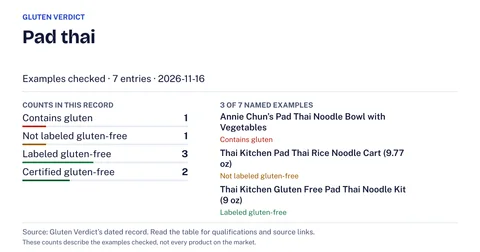 Pad thaiDepends on the product1 of 7 products we checked contains gluten: Annie Chun’s Pad Thai Noodle Bowl with Vegetableschecked Nov 16, 2026
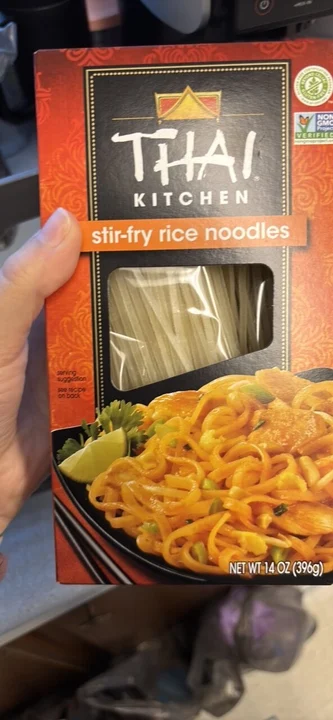 Rice noodlesNaturally gluten-free2 of 9 products we checked contain gluten: Annie Chun’s Pad Thai Noodle Bowl with Vegetables and Annie Chun’s Pho Soup Bowl with VegetablesBuy it labeled gluten-freechecked Nov 16, 2026
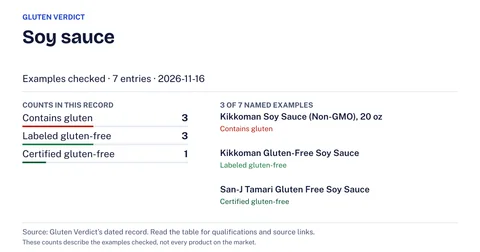 Soy sauceDepends on the product3 of 7 products we checked contain gluten: Kikkoman Soy Sauce (Non-GMO), 20 oz; San-J Organic Shoyu Soy Sauce; and Lee Kum Kee Premium Soy Sauce (No Preservatives Added)checked Nov 16, 2026
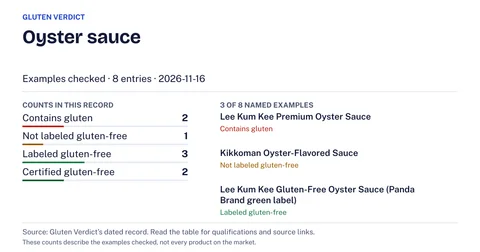 Oyster sauceDepends on the product2 of 8 products we checked contain gluten: Lee Kum Kee Premium Oyster Sauce and Lee Kum Kee Panda Brand Oyster Flavored Saucechecked Nov 16, 2026
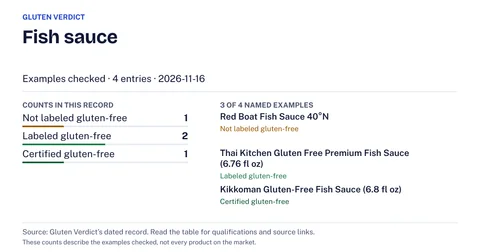 Fish sauceDepends on the productchecked Nov 16, 2026
 CurryDepends on the product2 of 11 products we checked contain gluten: S&B Golden Curry Mix, Mild (curry roux block) and S&B Golden Curry Sauce with Vegetables, Mild (pouch)checked Nov 16, 2026
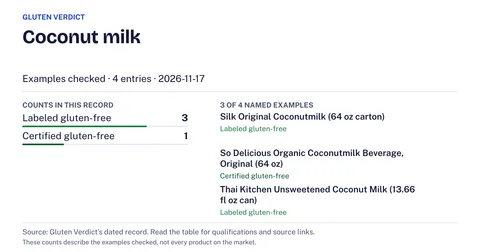 Coconut milkNaturally gluten-freechecked Nov 17, 2026
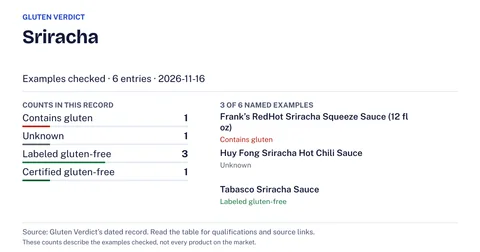 SrirachaDepends on the product1 of 6 products we checked contains gluten: Frank’s RedHot Sriracha Squeeze Sauce (12 fl oz)checked Nov 16, 2026
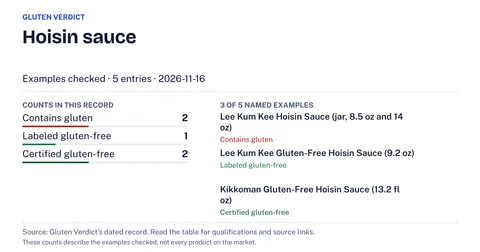 Hoisin sauceDepends on the product2 of 5 products we checked contain gluten: Lee Kum Kee Hoisin Sauce (jar, 8.5 oz and 14 oz) and Kikkoman Hoisin Sauce (9.3 oz)checked Nov 16, 2026
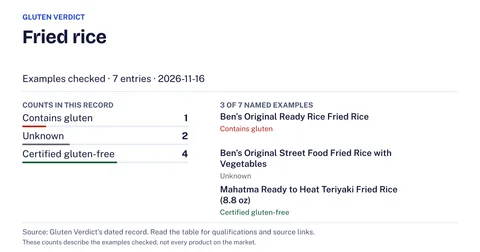 Fried riceDepends on the product1 of 7 products we checked contains gluten: Ben’s Original Ready Rice Fried Ricechecked Nov 16, 2026
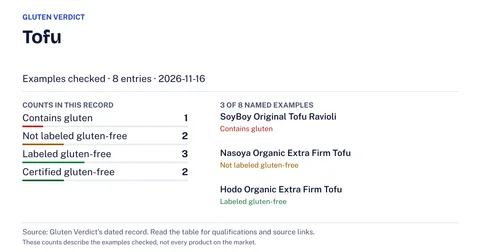 TofuDepends on the product1 of 8 products we checked contains gluten: SoyBoy Original Tofu Raviolichecked Nov 16, 2026
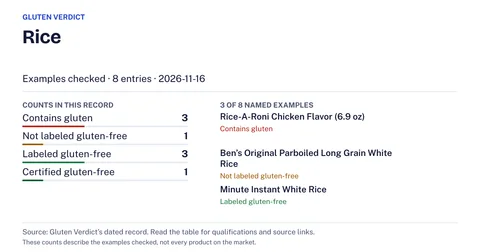 RiceNaturally gluten-free3 of 8 products we checked contain gluten: Rice-A-Roni Chicken Flavor (6.9 oz), Near East Original Rice Pilaf, and Ben’s Original Ready Rice Rice PilafBuy it labeled gluten-freechecked Nov 16, 2026
Questions people ask
Is pad thai gluten-free?
It depends on the noodles and the sauce. GIG says rice noodles are almost always gluten-free5, and soy sauce, if the kitchen uses it, is ordinarily made with wheat6. Ask what is in the kitchen’s own sauce; see our pad thai verdict.
Is fish sauce gluten-free?
GIG calls fish sauce naturally gluten-free19. The one bottle we looked at here, Thai Kitchen’s, lists anchovy, sea salt, water and sugar50. A restaurant’s bottle may differ; see fish sauce.
More in Eating out and chain restaurant policies
 Ordering gluten-free at a Chinese restaurant: sauces, coatings, wine, woks and MSGWhere wheat enters Chinese-restaurant cooking (sauces, coatings, cooking wine, woks), why MSG is not a gluten source, and what to ask before you order.
 Ordering at an Indian restaurant: where wheat enters the menuWhere wheat enters an Indian menu (naan, hing, thickeners, samosas, the fryer and the tandoor) and the questions to ask before you order.
 How to order at a Mexican restaurant when you avoid glutenCorn is not the whole story at a Mexican restaurant. What to ask about tortillas, chip fryers, sauces, seasoning and shared grills.
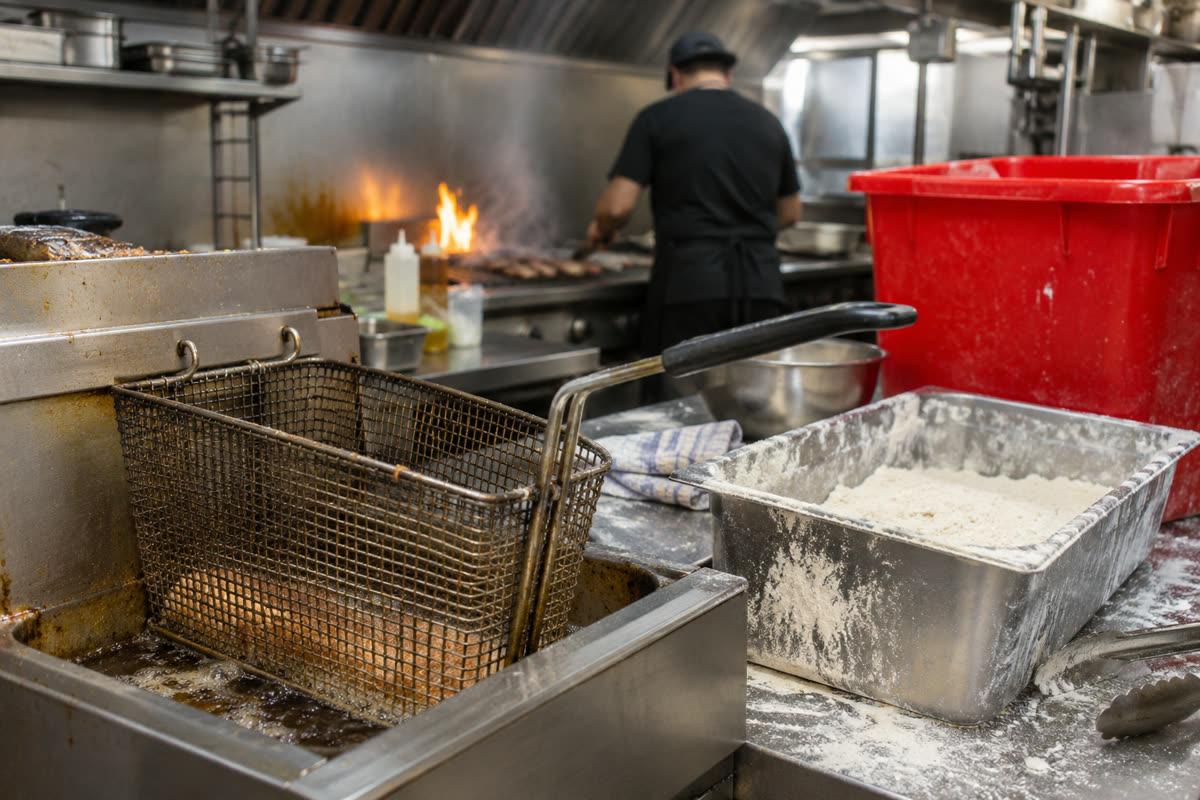 Where gluten hides in a restaurant kitchen, and the question to ask about each sourceFryers, sauces, roux, marinades, grills, pasta water and eggs: how gluten reaches restaurant food and the question GIG lists for each source.
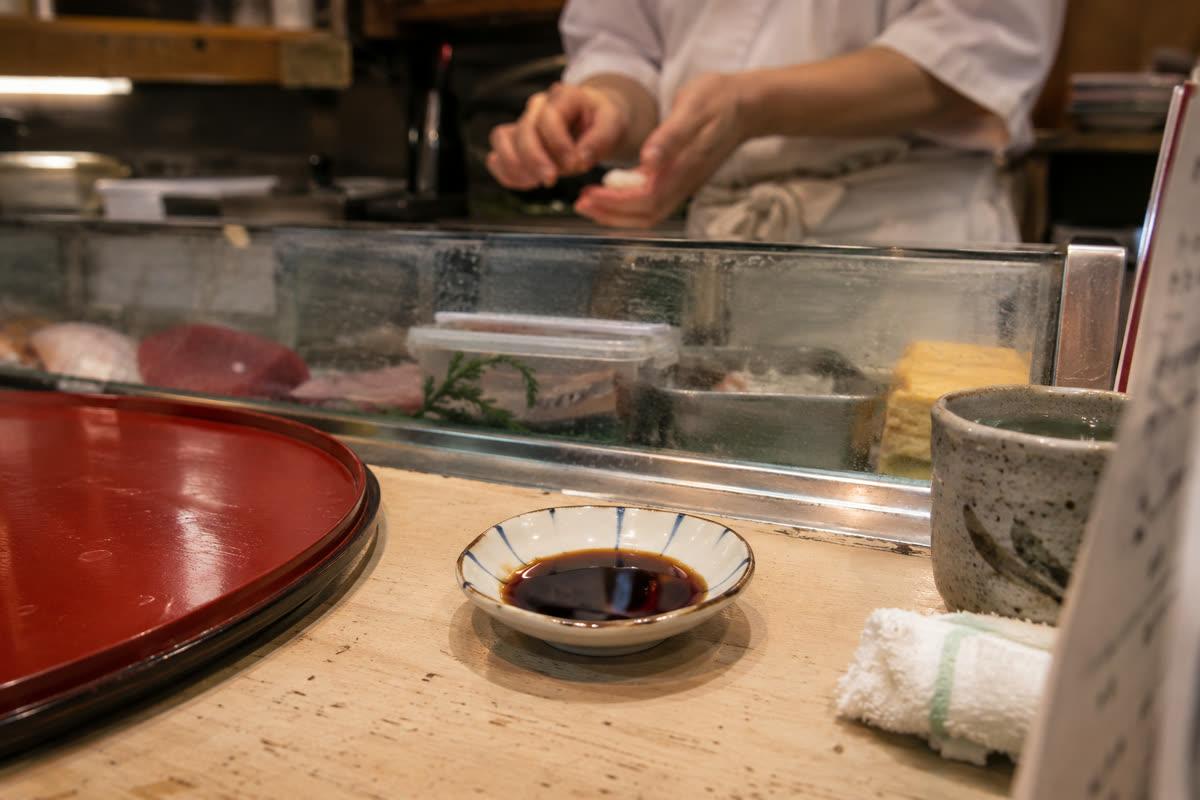 Ordering sushi and Japanese food when you avoid glutenWhich sushi, ramen and hibachi items carry wheat, what to ask about soy sauce, imitation crab, tempura and shared fryers, and a first-visit order.
 Eating out with celiac disease: what to check, ask and watch forPlan a restaurant meal with celiac disease: what to check before you go, the questions to ask in order, how to read the answers, and what studies measured.
Related guides
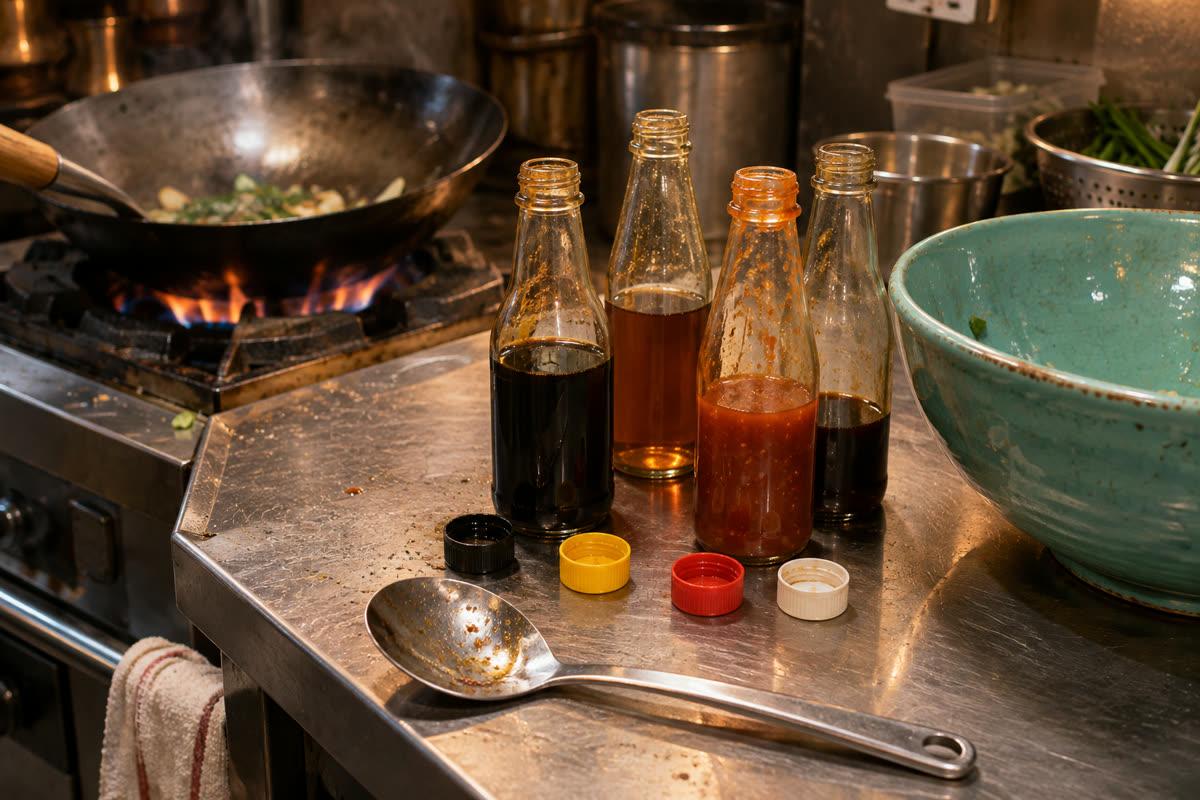 Soy, hoisin, oyster, teriyaki and fish sauce: which bottles carry wheatSoy, hoisin, oyster, teriyaki and fish sauce compared by the ingredient lists of Kikkoman, Lee Kum Kee, San-J and Red Boat, plus what to ask at a counter.
 Eating gluten-free in Thailand: sauces, noodles and street stallsWhere wheat shows up in Thai sauces, noodles and street food, how Thailand words its own gluten-free rule, and the Thai words to look for on a pack.
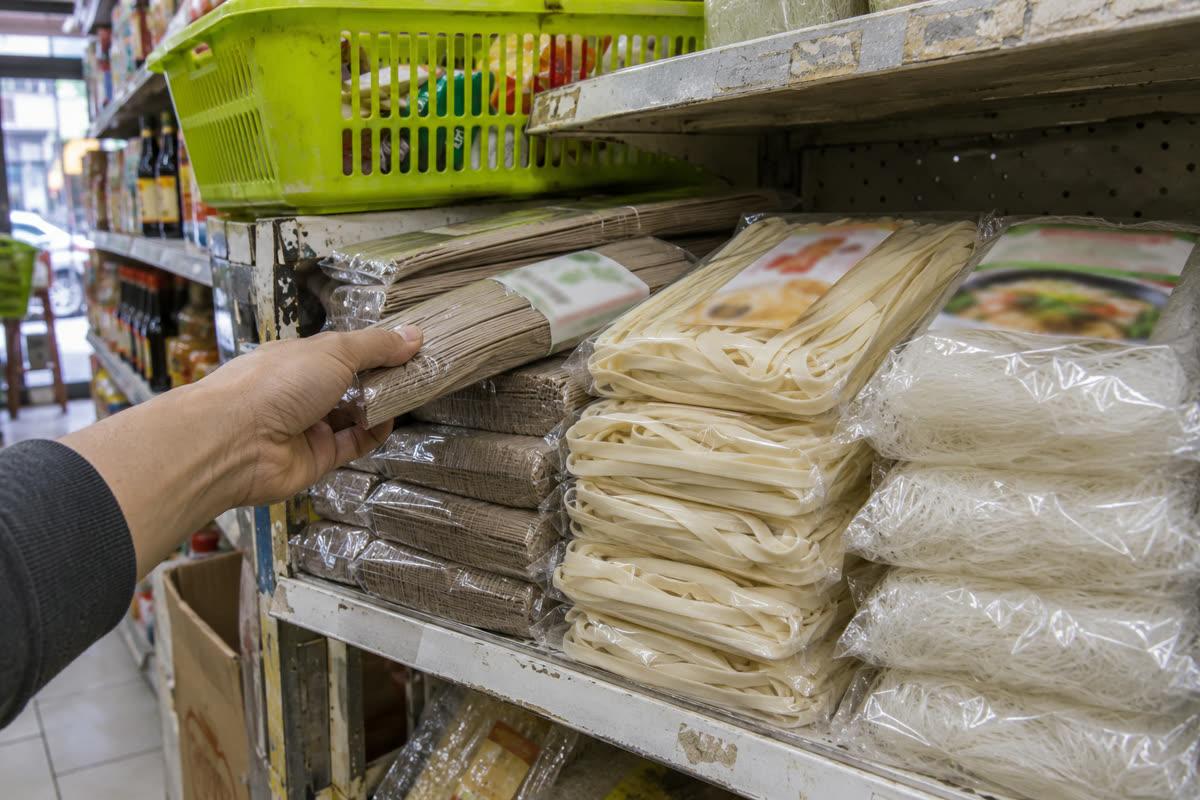 Soba vs udon vs rice noodles: which noodle holds wheatUdon is wheat, soba can be a buckwheat and wheat mix, and rice noodles are rice. How to read a package and ask about the broth and dipping sauce.
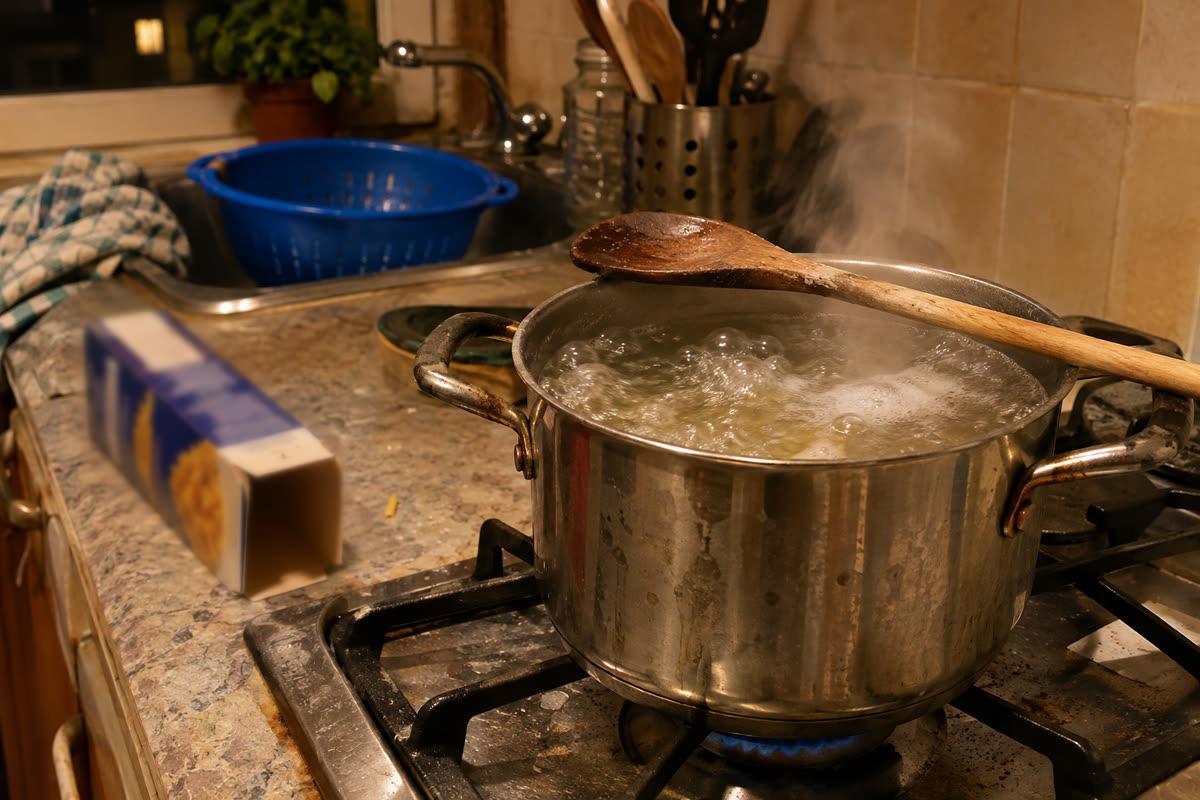 Cooking gluten-free pasta and rice noodles: what makers’ directions sayCompare what Jovial, Banza, Tinkyada, Lotus Foods and Thai Kitchen print for water, stirring, rinsing and time, then match the directions to your pasta.
Sources
- [1, 2, 3, 4, 5, 9, 17, 18, 19] Gluten Intolerance Group, Exploring Thai Cuisine on a Gluten-Free Diet, checked Nov 17, 2026.
Read on 2026-11-17: under the sentence “All food items listed below are naturally gluten-free and are commonly found in Thai cuisine.” the page lists rice, rice noodles, fish sauce, palm sugar, tamarind paste, shrimp paste, Thai chilies, lemongrass and kaffir leaves, and coconut milk.
- [6, 15] US Food and Drug Administration, Questions and Answers on the Gluten-Free Food Labeling Final Rule, checked Nov 17, 2026.
- [7] Lee Kum Kee (USA), Premium Oyster Flavored Sauce, checked Nov 17, 2026.
- [8] Maggi Thailand (Nestlé), ซอสแม็กกี้ ฝาแดง (Maggi Seasoning, red cap), allergen line, checked Nov 17, 2026.
- [10, 11, 12, 29, 30, 31, 43, 48, 49] Gluten Intolerance Group, Restaurant Dining: Seven Tips for Staying Gluten-Free, checked Nov 17, 2026.
- [13, 33, 34, 42] Gluten Intolerance Group, Questions to Ask When Eating Out, checked Nov 17, 2026.
- [14, 22] Lee Kum Kee (USA), Gluten Free Oyster Sauce (Panda Brand green label), checked Nov 17, 2026.
- [16, 32] NIDDK (NIH), Eating, Diet, & Nutrition for Celiac Disease, checked Nov 17, 2026.
- [20] McCormick (Thai Kitchen), Thai Kitchen Gluten Free Pad Thai Sauce, 8 fl oz, checked Nov 17, 2026.
- [21] Gluten Intolerance Group, Explore Asian Cuisine – Gluten-Free, checked Nov 17, 2026.
- [23] Maggi Thailand (Nestlé), ซอสแม็กกี้ฝาเหลือง (yellow-cap cooking sauce), allergen line, checked Nov 17, 2026.
- [24] Maggi Thailand (Nestlé), ซอสแม็กกี้ฝาเขียว (green-cap cooking sauce), allergen line, checked Nov 17, 2026.
- [25] Maggi Thailand (Nestlé), ซอสเหยาะจิ้มแม็กกี้ (dipping sauce), allergen line, checked Nov 17, 2026.
- [26] Maggi Thailand (Nestlé), ซอสหอยนางรม แม็กกี้ สูตรลดโซเดียม (reduced-sodium oyster sauce), allergen line, checked Nov 17, 2026.
- [27] Maggi Thailand (Nestlé), ซอสหอยนางรมแม็กกี้ (oyster sauce), ingredient list, checked Nov 17, 2026.
Read on 2026-11-17: the ingredient list on the page (Thai) names iodized salt, sugar, modified starch, monosodium glutamate, caramel color, flavoring, oyster extract, citric acid, aspartame, acesulfame potassium and potassium sorbate; it names no wheat, and the page carries no allergen line.
- [28] McCormick (Thai Kitchen), Thai Kitchen Gluten Free Red Curry Paste, 4 oz, checked Nov 17, 2026.
- [35, 36, 37] Frontiers in Nutrition (PubMed), Gluten-Free Foods Cooked in Shared Fryers With Wheat: A Pilot Study Assessing Gluten Cross Contact (Thompson et al., 2021), checked Nov 17, 2026.
- [38, 39, 40, 41] Nutrients (PubMed), Shared Fryers May Not Always Be as Risky for Gluten Cross-Contact in Celiac Disease as Dietary Guidance Suggests (Weisbrod et al., 2026), checked Nov 17, 2026.
- [44, 45] US Food and Drug Administration, Gluten and Food Labeling, checked Nov 17, 2026.
- [46, 47] American Journal of Gastroenterology (PubMed), Detection of Gluten in Gluten-Free Labeled Restaurant Food: Analysis of Crowd-Sourced Data (Lerner et al., 2019), checked Nov 17, 2026.
- [50] McCormick (Thai Kitchen), Thai Kitchen Gluten Free Premium Fish Sauce, 6.76 fl oz, checked Nov 17, 2026.