Salad dressing, ketchup, mustard and mayo: the condiment aisle label check
Short answer
Some condiments are plain, as GIG says of mayonnaise16, but NIDDK lists condiments and salad dressing among foods where gluten may be found1, and one brand can sell a flavor with gluten beside others without2. The label on the bottle in your hand decides. Check, in this order:
- A gluten-free statement from the maker. On foods FDA regulates, its definition of “gluten-free” includes that any unavoidable gluten is under 20 parts per million, and the claim is voluntary3, 4.
- With no statement, the whole ingredient list: wheat, flour, malt vinegar, soy sauce made with wheat, beer, and modified food starch made from wheat5, 6, 7, 8, 9.
- The Contains line. GIG says that on an FDA-regulated product wheat must be declared there or in parentheses in the list, but that barley and rye are not considered top allergens in the US10, 11.
- The exact product and flavor, because a maker can list one flavor with gluten in a range that is otherwise gluten-free2, 12.
Part of Hidden gluten in ingredients, sauces and processed foods, 21 guides

Key points
- NIDDK lists condiments and salad dressing among foods where gluten may be found1.
- GIG names malt vinegar, soy sauce and flour as things a salad dressing may contain5.
- Heinz’s 38 oz ketchup page says “It's gluten free”, while its 32 oz page gives the same ingredient list and no statement, so a missing claim does not settle the question either way13, 14.
- FDA says malt vinegar cannot be used in a food labeled gluten-free, but an ingredient from a gluten grain that has been properly distilled may be6, 15.
- GIG says barley and rye are not considered top allergens in the US, so a Contains line without wheat does not clear barley or rye11.
Why condiments are easy and hard at once
The National Institute of Diabetes and Digestive and Kidney Diseases (NIDDK) lists condiments and salad dressing among the foods where gluten may be found1. The Gluten Intolerance Group (GIG) says a salad dressing may contain malt vinegar, soy sauce or flour5.
The same aisle holds plain cases. GIG says mayonnaise is typically eggs and oil and that most popular brands add no gluten-containing flavorings16. It also puts specialty ketchup and mustard on its list of foods that are usually gluten-free but could contain gluten17.
Imported jars can differ from US ones. GIG says some imported packaged foods could contain gluten grain derivatives even when similar US products are considered gluten-free, and names certain mustards, sauces and spreads18.
Ketchup, mustard and mayonnaise: what the makers’ pages show
This table is a snapshot of single products, read on 2026-11-17. It is not a ranking. Formulas change: Cholula’s FAQ tells readers to check the ingredient statement on the package at purchase because product formulas may change19.
| Product | What the page says | What to take from it |
|---|---|---|
| Heinz Tomato Ketchup, 38 oz | Says “It's gluten free”13. | A maker’s statement for this size of bottle. |
| Heinz Tomato Ketchup, 32 oz | Lists distilled vinegar, spice and natural flavoring, and carries no gluten-free statement in its page text14. | The ingredient list on the two pages is the same, but only one page makes the claim. A missing claim means read the bottle. Our Heinz ketchup verdict has each size. |
| French’s Classic Yellow Mustard, 8 oz | Says it is gluten free20. The list names distilled vinegar, mustard seed, spice, natural flavor and garlic powder, with no gluten grain21. | A plain mustard with a statement. |
| Plochman’s Craft Beer mustard | The list starts with beer and the page ends it with “CONTAINS MUSTARD, GLUTEN (BARLEY), WHEAT”8. | Beer in a list is a flag. A mustard made with it is a different product from a plain one. |
| Duke’s Real Mayonnaise | Says “Kosher and gluten-free”22. The list names distilled and cider vinegar and natural flavors23. | A plain mayonnaise with a statement. |
Mustard seed is inherently gluten-free, but GIG says some manufacturers add flour as a thickener or bulking agent to their mustards24, and that wheat flour could be added to specialty mustards like English mustard25. Some specialty ketchups may use malt vinegar or miso, which GIG says may not be gluten-free26.
Our verdicts cover more bottles: ketchup, mustard and mayonnaise.
Ranch, Italian and vinaigrette dressings
Hidden Valley’s FAQ says most of its ranch dressings, dips and seasoning packets are gluten-free, and tells readers to check the back label for the product they buy27. It also says wheat, rye or barley may be an ingredient, so the back label is the place to confirm, and it invites readers to contact the company for help28.
That is a maker describing its own range. Another brand’s bottle needs its own check. For brand-by-brand detail, see our ranch dressing verdict and Wish-Bone Italian dressing verdict, which shows what a very common bottle lists when the maker makes no claim.
These are the words worth scanning for on a dressing or condiment label:
| On the label | What the sources say |
|---|---|
| Malt vinegar | GIG lists it among things a dressing may contain5. FDA says it cannot be used in a food labeled gluten-free6. |
| Distilled vinegar | FDA says an ingredient from a gluten-containing grain that has been properly distilled may be used in a food bearing the gluten-free claim15. The French’s mustard and Heinz ketchup above list distilled vinegar21, 14. |
| Soy sauce | FDA says soy sauce made from soybeans and wheat may not bear a gluten-free claim7. Frank’s RedHot Sriracha Squeeze Sauce lists soy sauce made with wheat29. |
| Flour | GIG lists flour among things a dressing may contain5, and says some mustards have it added24. |
| Modified food starch | GIG says it is usually made from corn in the US and that if it is made from wheat, the label must say so9. |
| Natural flavors and spices | GIG says wheat must be declared when present in a natural flavor, but US labels may not always identify barley or rye the same way30. The law treats a flavoring that contains a major allergen under the same labeling rule31. Cholula says some ingredients may sit under broader terms like “spices” or “natural flavors”32. |
| Beer | Plochman’s Craft Beer mustard lists beer and names barley and wheat in its Contains line8. |
Caesar dressing, croutons and Worcestershire sauce
Two dressing makers each single out one flavor. Cardini’s FAQ says all of its salad dressings but the Roasted Asian Sesame are gluten free2. Girard’s FAQ says the only flavor with gluten is Toasted Ginger Sesame12. The exception sits in the same range as the plain flavors, so check the flavor, not only the brand.
On a Caesar salad the dressing and the croutons are two products. Cardini’s Original Caesar Dressing lists its allergens as eggs, milk and anchovies33. Its Caesar Garlic Croutons list enriched wheat flour, malted barley flour, rye flour and wheat gluten34. Our Caesar dressing verdict covers the bottled dressings we read.
With Worcestershire sauce, the question is the vinegar. Lea & Perrins’ Original page lists distilled white vinegar first and names no gluten grain35. FDA says malt vinegar, made from barley, cannot be used in a food labeled gluten-free6, so read the vinegar on the bottle you are holding.
Hot sauce, sriracha, salsa and dips
Cholula’s FAQ says gluten, when present, is always declared on the label by the grain’s common name, such as barley, wheat, rye, oats or triticale36, and that a product with a gluten-free claim has been validated, manufacturing line included37. That is one maker’s policy. Another brand’s FAQ may say something different, or nothing.
A sriracha’s name does not show what is in it. Frank’s RedHot Sriracha Squeeze Sauce lists soy sauce made with water, wheat, soybeans and salt, and ends “Contains: Wheat, Soy, Sesame Seed”29. Check a sriracha’s list for soy sauce. Our hot sauce and sriracha verdicts list more bottles.
Salsa follows the same pattern. Mrs. Renfro’s Medium Salsa page says it is gluten-free38. Its Craft Beer Salsa lists beer as an ingredient and its page carries no gluten statement39. See our salsa verdict.
Pesto, hummus and tahini each have a verdict with the jars we read. The routine below applies to them too.
Reading a dressing or condiment label in order
- Look for a gluten-free statement on that bottle. FDA’s rule makes the claim voluntary4, so a bottle without one is not a warning; it means the next steps matter.
- Read the whole ingredient list for the words in the table above: wheat, flour, malt vinegar, soy sauce, beer, modified food starch.
- Read the Contains line. GIG says wheat must be named there or in parentheses in the list on an FDA-regulated product10, but that barley and rye are not considered top allergens in the US11.
- Check the vinegar and any “natural flavor” line. If the list is unclear, contact the maker, as Hidden Valley invites readers to do28.
- Treat “made with no gluten-containing ingredients” as a different statement from “gluten-free”. FDA says that unless the label also bears a gluten-free claim, consumers should not assume the food meets the claim’s requirements40.
For the vinegars and flavor extracts that turn up in these lists, see our vinegar and flavor extract label check. For sauces with a longer ingredient list, see BBQ sauces, rubs and marinades. Our wider list of where gluten hides covers other aisles.
Shared jars, squeeze bottles and restaurant dressings
A bottle can be fine on its label and still pick up gluten at home. GIG gives the example of a knife used to spread mayonnaise on wheat bread, then dipped back into the jar to spread it on gluten-free bread, and calls it a cross-contact warning41. A squeeze bottle, or a jar kept for the gluten-free eater, avoids the knife.
At a restaurant you usually cannot read the bottle. Useful questions are: which brand or recipe is the dressing; can the label be seen; and does it contain soy sauce, malt vinegar or flour. Single-serve packets can differ from the bottle: Girard’s FAQ says its dressings in packets come from another manufacturer and that the bottle formulas are different from the packet formulas42. Our guide to restaurant allergen guides covers reading what a restaurant can show you.
Verdicts in this guide
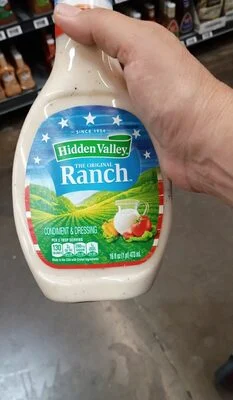 Ranch dressingDepends on the productchecked Nov 16, 2026
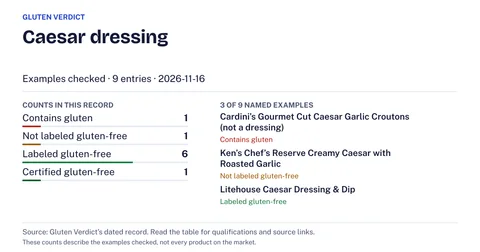 Caesar dressingDepends on the product1 of 9 products we checked contains gluten: Cardini’s Gourmet Cut Caesar Garlic Croutons (not a dressing)checked Nov 16, 2026
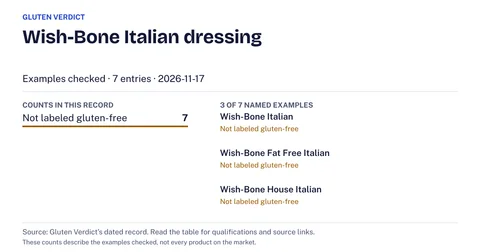 Wish-Bone Italian dressingNot labeled gluten-freeConagra Brands · checked Nov 17, 2026
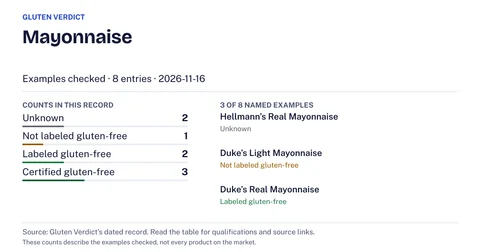 MayonnaiseNaturally gluten-freechecked Nov 16, 2026
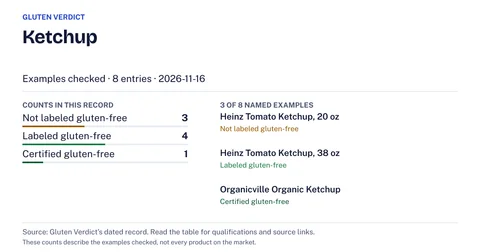 KetchupDepends on the productchecked Nov 16, 2026
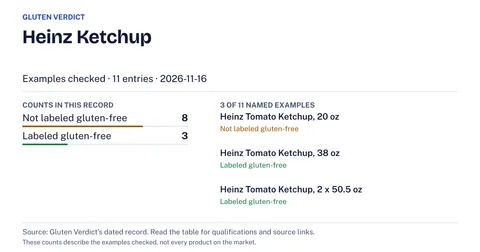 Heinz KetchupLabeled gluten-freeHeinz · checked Nov 16, 2026
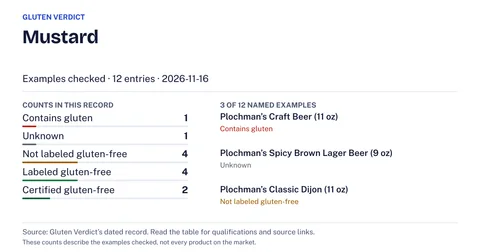 MustardDepends on the product1 of 12 products we checked contains gluten: Plochman’s Craft Beer (11 oz)checked Nov 16, 2026
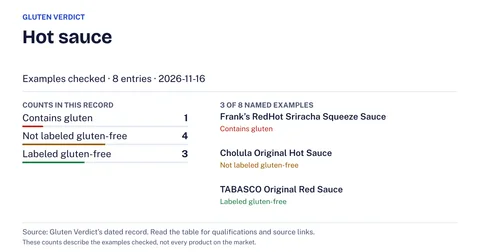 Hot sauceDepends on the product1 of 8 products we checked contains gluten: Frank’s RedHot Sriracha Squeeze Saucechecked Nov 16, 2026
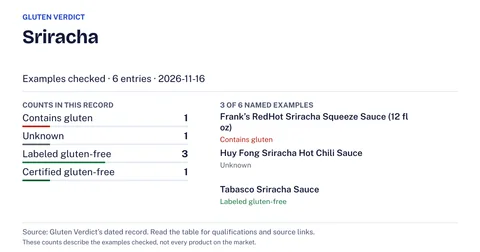 SrirachaDepends on the product1 of 6 products we checked contains gluten: Frank’s RedHot Sriracha Squeeze Sauce (12 fl oz)checked Nov 16, 2026
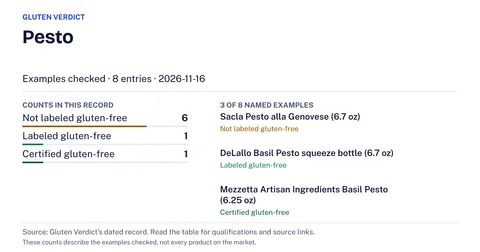 PestoDepends on the productchecked Nov 16, 2026
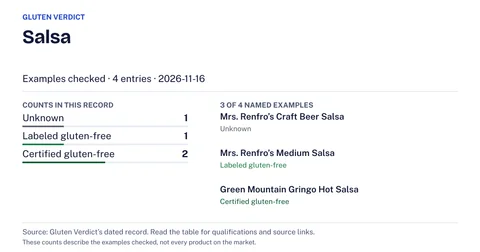 SalsaDepends on the productchecked Nov 16, 2026
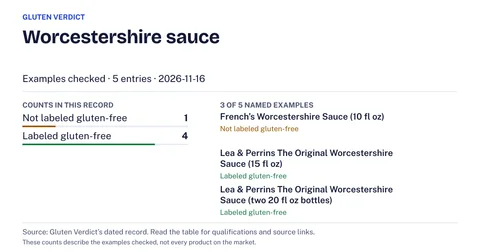 Worcestershire sauceDepends on the productchecked Nov 16, 2026
Questions people ask
Is ketchup gluten-free?
It depends on the bottle. Heinz’s 38 oz page says “It's gluten free”13, while its 32 oz page lists the same ingredients and makes no statement14. GIG says some specialty ketchups may use malt vinegar or miso26.
Does a Contains line without wheat mean the dressing has no gluten?
Not necessarily. GIG says wheat is a top allergen in the US but barley and rye are not11, so read the full ingredient list.
Is Worcestershire sauce gluten-free?
Check the vinegar on the label. FDA says malt vinegar cannot be used in a food labeled gluten-free6. Lea & Perrins’ Original page lists distilled white vinegar first35.
Is distilled vinegar a problem?
FDA says an ingredient from a gluten-containing grain that has been properly distilled may be used in a food bearing the gluten-free claim15.
More in Hidden gluten in ingredients, sauces and processed foods
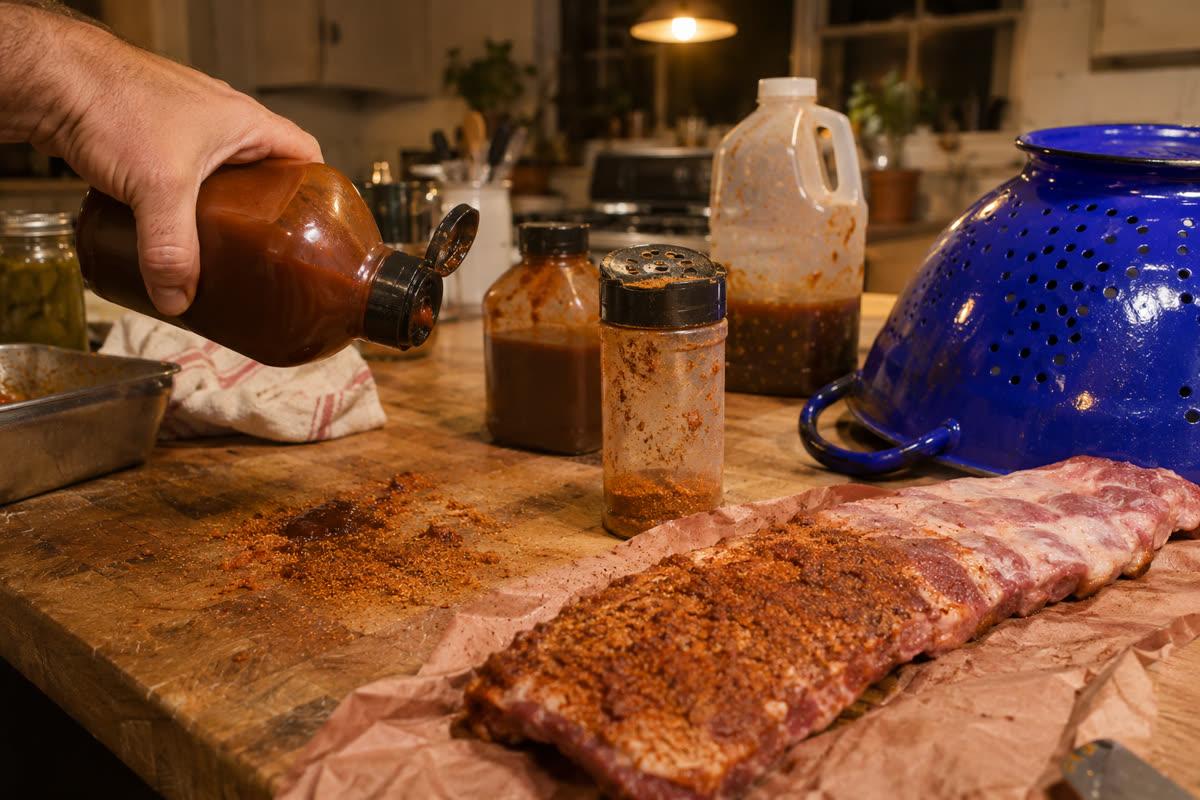 BBQ sauce, dry rub and marinade labels: which state gluten-free and which list wheatSort a BBQ sauce, dry rub or marinade label into three groups: maker states gluten-free, no grain listed, or wheat listed.
 Where wheat, barley and rye hide in processed food: 15 places to checkFifteen processed foods where wheat, barley or rye turn up, the label step that catches each, and what US allergen law does and does not flag.
 Gravy, jarred pasta sauce and cheese sauce: where flour and starch thicken the potHow to read a gravy packet, gravy jar, cheese sauce or pasta sauce for wheat flour, wheat gluten and starch, with maker pages read on 2026-11-17.
 Natural flavors, caramel color and modified food starch: which can carry glutenWhich additives on a US label can come from a gluten grain, which sources describe as gluten free, and what the maker has to disclose.
 Seasoning packets, bouillon cubes and spice blends: where wheat entersWhy a packet, cube or blend can list wheat flour or barley when a single spice lists one item, and the order to read the label in.
 Foods that contain gluten, aisle by aisle, and the label words that give them awayA store-order map of foods that contain gluten, which depend on the brand, and which need a cross-contact check, with the label words to look for.
All 21 guides in Hidden gluten in ingredients, sauces and processed foods
Related guides
 Vinegar, vanilla and other flavor extracts: what to check on the bottleSort a bottle of vinegar or extract into ordinary, check the label or avoid, using the ingredient line and what the charities and makers say.
 A gluten-free grocery list by aisle for US supermarketsAn aisle-by-aisle gluten-free grocery list for US stores: what needs no label, what needs a check, and what stays off the list.
 Super Bowl and tailgate food: label checks for dips, wings, chips and bunsCheck dips, chips, wings, sauces and buns for gluten before game day, ask the right questions about wings, and keep one dish apart on a shared table.
 Sharing butter, jam and spreads with gluten eatersHow crumbs reach shared butter, jam and peanut butter, and what a second jar, squeeze bottle, knife rule or shelf each does and does not do.
Sources
- [1] National Institute of Diabetes and Digestive and Kidney Diseases (NIDDK), Eating, Diet, & Nutrition for Celiac Disease, checked Nov 17, 2026.
- [2] Caesar Cardini's (Marzetti), Cardini's FAQ, checked Nov 17, 2026.
- [3, 4, 6, 7, 15, 40] US Food and Drug Administration, Questions and Answers on the Gluten-Free Food Labeling Final Rule, checked Nov 17, 2026.
- [5, 9, 10, 17, 18, 25, 26] Gluten Intolerance Group, 43 Foods Where Gluten May Be Hidden, checked Nov 17, 2026.
- [8] Plochman's, Craft Beer mustard, checked Nov 17, 2026.
- [11, 30] Gluten Intolerance Group, Advanced Label-Reading Tips, checked Nov 17, 2026.
- [12, 42] Girard's (Marzetti), Girard's FAQ, checked Nov 17, 2026.
- [13] Heinz (heinz.com US), Heinz Tomato Ketchup, 38 oz, checked Nov 17, 2026.
- [14] Heinz (heinz.com US), Heinz Tomato Ketchup, 32 oz, checked Nov 17, 2026.
- [16, 24] Gluten Intolerance Group, The Gluten-Free Sandwich, checked Nov 17, 2026.
- [19, 32, 36, 37] Cholula (McCormick), Cholula FAQ, checked Nov 17, 2026.
- [20, 21] McCormick (French's), French's Classic Yellow Mustard, 8 oz, checked Nov 17, 2026.
- [22, 23] Duke's Mayo, Duke's Real Mayonnaise, checked Nov 17, 2026.
- [27, 28] Hidden Valley (Clorox), Hidden Valley Ranch FAQs, checked Nov 17, 2026.
- [29] McCormick (Frank's RedHot), Frank's RedHot Sriracha Squeeze Sauce, checked Nov 17, 2026.
- [31] US Food and Drug Administration, Food Allergen Labeling and Consumer Protection Act of 2004 (FALCPA), checked Nov 17, 2026.
- [33] Caesar Cardini's (Marzetti), Cardini's The Original Caesar Dressing (12 oz), checked Nov 17, 2026.
- [34] Caesar Cardini's (Marzetti), Cardini's Gourmet Cut Caesar Garlic Croutons, checked Nov 17, 2026.
- [35] Kraft Heinz (Lea & Perrins US), Lea & Perrins The Original Worcestershire Sauce (15 fl oz), checked Nov 17, 2026.
- [38] Mrs. Renfro's, Medium Salsa, checked Nov 17, 2026.
- [39] Mrs. Renfro's, Craft Beer Salsa, checked Nov 17, 2026.
- [41] Gluten Intolerance Group, 25 Ways Cross-Contact Could Happen (And How to Avoid It), checked Nov 17, 2026.