A gluten-free grocery list by aisle for US supermarkets
Short answer
Plain fresh produce, eggs, milk, meat, fish and rice start gluten-free1, 2, but processed foods need a label read3. Tag each line one of three ways:
- Naturally gluten-free: single-ingredient foods bought plain, with nothing added1.
- Check the label: processed foods, where additives, flavorings, starches and thickeners can come from gluten grains3.
- Buy labeled: oats, which the Gluten Intolerance Group (GIG) says may not be gluten-free without a label or certification mark4, and soy sauce, which FDA says is ordinarily made with wheat5.
- Skip the bulk bins, which GIG advises staying clear of6.
Part of Grocery shopping and meal planning, 15 guides
Key points
- Plain fruits, vegetables, eggs, meat, fish and rice are the naturally gluten-free core of the list1, 7; a missing claim is not a warning by itself7.
- Processed foods are where gluten hides: colorings, flavorings, starches and thickeners can be made from grains that contain gluten3.
- GIG says oats may not be gluten-free without a gluten-free label or certification mark4, and FDA says grains, legumes and seeds that are naturally free of gluten often come into contact with gluten-containing grains through crop rotation and shared harvesting, transport and storage equipment8.
- The allergen law names wheat, not barley or rye, so read the full ingredient list9, 10.
- GIG advises staying clear of bulk bins6.
How to read this list: three tags
Every line in the aisles below carries one of three tags. They are our shorthand for the kind of check a line needs, not a ruling on a product. The verdict link on a line opens the products we have checked, each with the wording we read and the date we read it.
| Tag | What it asks of you | What the sources say |
|---|---|---|
| Naturally gluten-free | Buy it plain: one ingredient, nothing added. | The National Institute of Diabetes and Digestive and Kidney Diseases (NIDDK) says many foods, such as meat, fish, fruits, vegetables, rice, and potatoes, are naturally gluten-free when they come without additives or some seasonings1. A food like this may not carry a gluten-free claim at all7. |
| Check the label | Read the whole ingredient list, every time you buy it. | Colorings, flavorings, starches and thickeners can be made from grains that contain gluten, and they are added to many processed foods, including boxed, canned, frozen, packaged and prepared ones3. The Academy of Nutrition and Dietetics says to read product labels each time you buy, even a product you have bought before, because the maker may change an ingredient11. |
| Buy labeled | Pick the version that says gluten-free. | Under FDA’s rule, a food labeled “gluten-free”, “no gluten”, “free of gluten” or “without gluten” must contain less than 20 parts per million of gluten12. The claim itself is voluntary13. |
For how the claim, the Contains line and may-contain lines work on a package, read how to read food labels.
Produce, eggs and dairy: the short part of the list
FDA names fruits, vegetables and eggs among the foods that are naturally gluten-free7. The Academy of Nutrition and Dietetics adds milk and butter to its single-ingredient examples2.
| Line | Tag | What to check |
|---|---|---|
| Fresh fruit and vegetables | Naturally gluten-free | GIG says plain fruits and vegetables are gluten-free and to confirm the ingredients in any add-ons or seasonings14. |
| Eggs | Naturally gluten-free | FDA lists eggs among naturally gluten-free foods7. |
| Milk and butter | Naturally gluten-free | Plain, single-ingredient dairy appears on the Academy’s naturally gluten-free list2. |
| Cheese, yogurt and other cultured or flavored dairy | Check the label | GIG says to read the ingredient list for gluten-containing ingredients added as flavorings, and that cultured dairy products could in some cases contain small amounts of gluten because cultures can be grown on gluten-containing grains15. |
| Canned and frozen fruit and vegetables | Check the label | Read the list for anything added beyond the fruit or vegetable: NIDDK says additives made from gluten grains are added to many processed foods, including canned and frozen ones3. |
Meat, poultry and fish: plain cuts, processed meats and the USDA label
NIDDK’s examples of naturally gluten-free foods include meat and fish without additives or some seasonings1, and the Academy lists fish and poultry among single-ingredient foods2. The line to watch is anything beyond the plain cut.
| Line | Tag | What to check |
|---|---|---|
| Plain chicken, turkey, beef, pork and fish | Naturally gluten-free | Buy it without a marinade, seasoning, coating or sauce; NIDDK’s examples are meat and fish “without additives or some seasonings”1. |
| Seasoned, marinated or breaded cuts | Check the label | Read the list for what was added. NIDDK names starches, thickeners and flavorings as ingredients that can come from gluten grains3. |
| Bacon | Check the label | The six bacons in our verdict are all listed by their maker as gluten-free; a flavored or seasoned bacon needs its own ingredient read. |
| Sausage and hot dogs | Check the label | NIDDK names hot dogs and sausages among foods where gluten may be found16. In our sausage verdict, two plant-based sausages list wheat. |
| Sliced deli meat | Check the label | The Academy lists deli meats among foods where gluten may appear, and says many of them are also sold gluten-free17. Six of the seven products in our verdict carry the maker’s gluten-free claim; one, a scrapple, lists whole wheat flour. |
Why a meat label follows different rules
FDA’s gluten-free rule does not apply to foods whose labeling USDA regulates, which generally means meat, poultry and certain egg products18. GIG’s description of USDA’s share adds mixed products that generally contain more than 3% raw or 2% cooked meat, such as some soups and frozen entrees19.
GIG also says USDA-regulated products are not required to comply with the allergen labeling law (FALCPA), but estimates that 80-90% do so voluntarily20. So on a meat product, read the ingredient list itself for barley and rye, which the allergen law does not name (more in the last section).
Dry goods: rice, grains, beans, lentils, flours and oats
The Academy of Nutrition and Dietetics’ grocery list names gluten-free grains to shop for, and says some of them are sold whole or ground into flour21, 22. The caution is cross-contact before the package: FDA says shared harvesting and transport equipment and storage silos, and crop rotation, often put gluten-containing grains in contact with other grains, legumes and seeds that are naturally free of gluten8.
| Line | Tag | What to check |
|---|---|---|
| Rice, wild rice, corn, polenta and grits, sorghum, quinoa, millet, buckwheat, amaranth, teff | Naturally gluten-free | All on the Academy’s grain list for a gluten-free grocery list21. A bag labeled gluten-free has to meet FDA’s limit of less than 20 ppm12. |
| Rice mixes and pilafs | Check the label | The Academy says a food that seems gluten-free, such as a rice mix, may have traces of gluten23. Three of the eight rice products in our verdict, all pilafs or flavored mixes, list wheat flour or orzo. |
| Oatmeal and rolled or steel-cut oats | Buy labeled | Oats are by nature gluten-free but often contaminated with gluten-containing grains during processing, says the Academy24. Oats labeled gluten-free must contain less than 20 ppm of gluten25. GIG says that without “gluten-free” or a certification mark on the package, oats may not be gluten-free4. |
| Dry beans and lentils | Buy labeled | Legumes are among the crops in FDA’s cross-contact point above8. If you cannot find a labeled bag, GIG’s advice for beans is washing and visually sorting for stray grains26. |
| Gluten-free flours: rice, soy, potato, tapioca, chickpea, arrowroot | Buy labeled | The Academy names these as gluten-free flours you may come across22; buy the bag that carries a gluten-free label. |
FDA’s gluten-free definition rules out an ingredient derived from a gluten-containing grain that has not been processed to remove gluten, naming wheat flour as the example27, so wheat flour stays off the gluten-free part of the list. Barley is a gluten grain too33.
If the bag is not labeled
GIG describes a wash for beans and grains you cannot find labeled or certified. For rice and sorghum it suggests a fine sieve or colander, plus a visual sort28. For millet, teff and amaranth, too small to strain, it suggests a visual sort first, then shaking the grain in a jar of water and letting it settle29. This is a charity’s advice for a bag with no label, not a labeling rule, and it does not replace buying a labeled bag.
Sauces, condiments, broth and canned goods: the check-the-label lines
This is where the list gets long. NIDDK says gluten may be found in a variety of foods, including candy, condiments, hot dogs and sausages, ice cream, salad dressing and soups16. The Academy adds bouillon cubes, gravy, modified food starch, rice mixes and soy sauce to its list, and says many of these are also sold gluten-free17.
| Line | Tag | What to check |
|---|---|---|
| Soy sauce | Buy labeled | FDA says soy sauce is ordinarily made by fermenting soybeans and wheat, and that soy sauce made from wheat or any other gluten-containing grain may not bear a gluten-free claim5. Three of the seven bottles in our verdict list wheat; the other four carry a gluten-free claim or certification. |
| Malt vinegar | Check the label | Fermented from barley and not processed to remove gluten, so FDA says it cannot be used in a food labeled gluten-free30. |
| Ketchup, mustard, mayonnaise, salsa | Check the label | Condiments are on NIDDK’s list16. None of the eight ketchups in our verdict lists a gluten grain, but a beer mustard in our mustard verdict lists barley and a beer salsa lists beer. |
| Chicken broth, bouillon and gravy | Check the label | Bouillon cubes and gravy are on the Academy’s list of foods where gluten may appear17. None of the nine broths in our chicken broth verdict is marked as containing gluten. |
| Canned soup | Check the label | Soups are on NIDDK’s list16. Three of the eight cans in our soup verdict list wheat. |
| Refried beans | Check the label | None of the refried bean lists we read for our verdict names a gluten grain; read the list for added flavorings and thickeners3. |
| Spices and seasoning mixes | Check the label | Three of the 11 spice products in our verdict list wheat flour; all three are seasoning mixes, not single spices. |
| Lines that list natural flavors or modified food starch | Check the label | GIG says a wheat derivative such as modified food starch must clearly indicate wheat as its source31, and that an ingredient derived from barley or rye, such as malt, needs no such clarification10. |
Snacks, cereal and bars: oats and barley malt
FDA lists cereals among the foods that typically contain gluten32, and malt extract and malt syrup are made from barley33.
| Line | Tag | What to check |
|---|---|---|
| Cereal | Check the label | Of the 12 boxes in our cereal verdict, five contain wheat or barley malt and seven carry a gluten-free claim from the maker or a certifier. Look for malt in the list on a box with no claim. |
| Granola bars | Buy labeled | Ordinary oats are often contaminated during processing24. In our verdict, Nature Valley’s Oats ’n Honey bars list oats with no gluten-free claim, and two other Nature Valley bars list barley malt extract or wheat flour. |
| Candy and chocolate | Check the label | Candy is on NIDDK’s list of foods where gluten may be found16. |
Frozen and prepared foods
NIDDK says additives made from gluten grains are added to many processed foods, including frozen and prepared ones3. Frozen entrees and soups that contain meat may sit under USDA’s labeling rather than FDA’s19.
| Line | Tag | What to check |
|---|---|---|
| Frozen french fries and potato products | Check the label | French fries are on the Academy’s list of foods where gluten may appear17. Two frozen seasoned fries in our verdict list wheat flour. |
| Corn tortillas | Check the label | Corn tortillas made from corn masa flour and water list no gluten ingredient in our verdict. GIG notes that some corn tortillas contain a mix of corn and wheat flour37, so the list decides. |
| Frozen entrees and meals | Check the label | Read the full list; USDA-regulated entrees are not required to follow the allergen law, though GIG estimates 80-90% do voluntarily20. |
Counters and bins that stay off the list
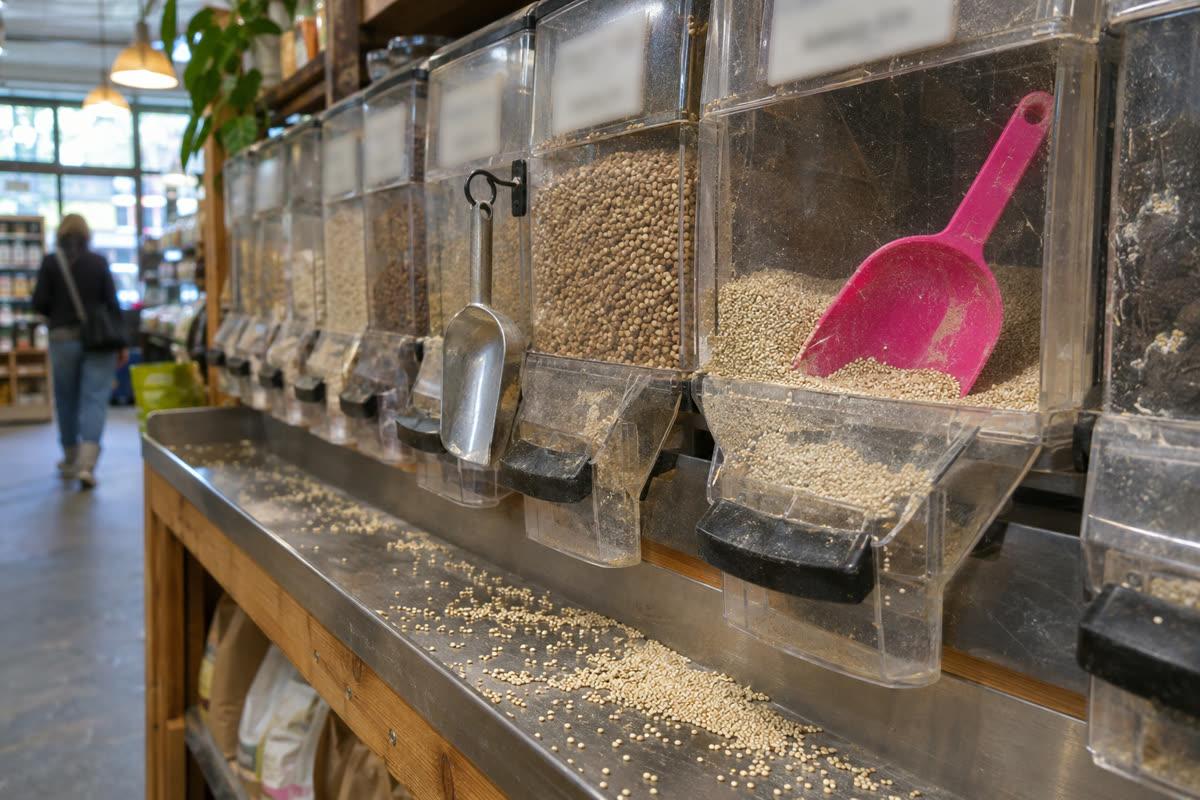
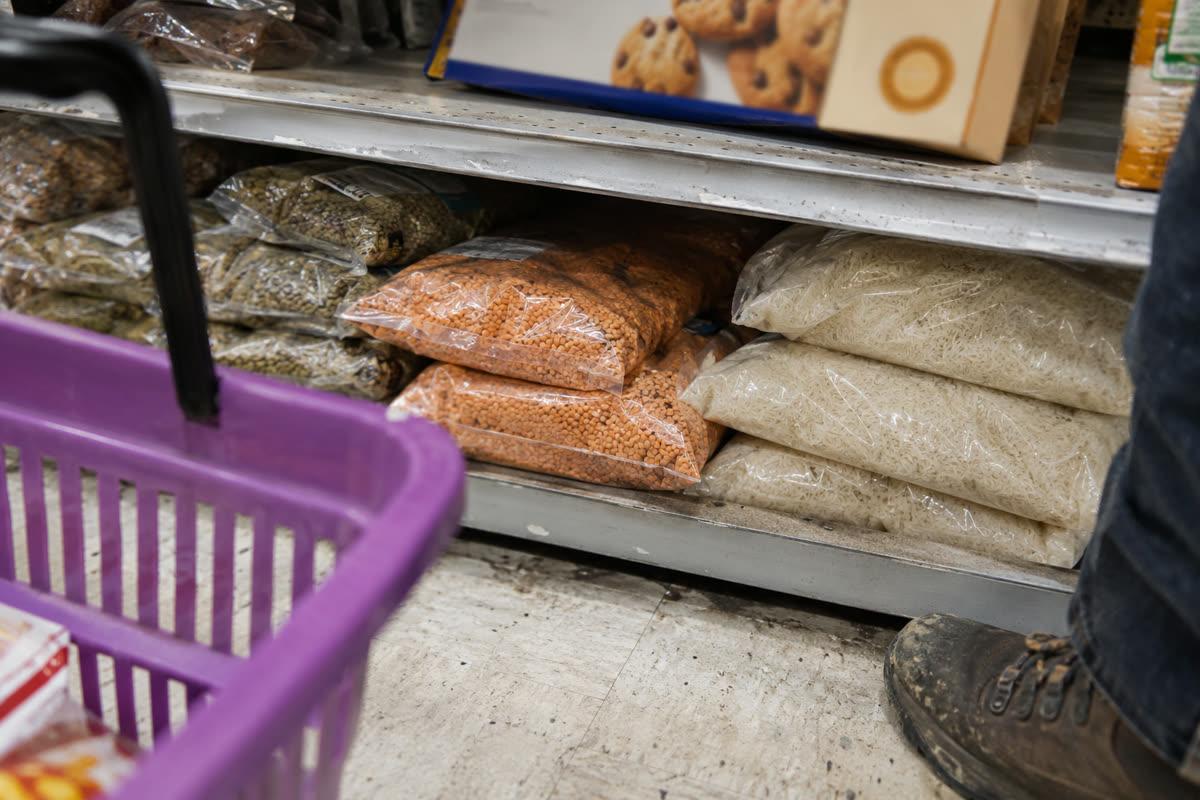
GIG advises staying clear of the store’s bulk section, because gluten-containing ingredients could linger on scoops or surrounding bins6. Our list treats everything in that section as off the list, bulk rice, oats and flour included.
The deli and bakery counters are the same kind of problem. Breads and cakes are foods that typically contain gluten32, deli meats are on the Academy’s list of foods where gluten may appear17, and NIDDK says cross-contact can occur at any time, including when foods are prepared or served34. Cross-contact, in NIDDK’s words, occurs when foods or products that contain gluten come into contact with gluten-free foods35.
Our list therefore uses the packaged version of each food, where you can read the ingredient list.
Why barley and rye can be missing from the allergen line
The US allergen law lists wheat among the major food allergens, and the FDA page we read names no barley or rye there9. GIG says that is why malt from barley need not be identified by its source in an ingredient list10.
So a Contains line without wheat does not clear a food. GIG puts it plainly: a wheat-free product can still contain gluten from rye or barley36. Our gluten scanner looks for barley, rye and malt in a photo of a label or in pasted text, and the verdict on barley shows what the products we checked list.
Print the aisle list
Our printable gluten-free grocery list is built from the same verdict records: staples by aisle, labeled products and a label card, every line dated. It is free and needs no email. Recipes and brands change, so the package in your hand has the final word.
Verdicts in this guide
 Soy sauceDepends on the product3 of 7 products we checked contain gluten: Kikkoman Soy Sauce (Non-GMO), 20 oz; San-J Organic Shoyu Soy Sauce; and Lee Kum Kee Premium Soy Sauce (No Preservatives Added)checked Nov 16, 2026
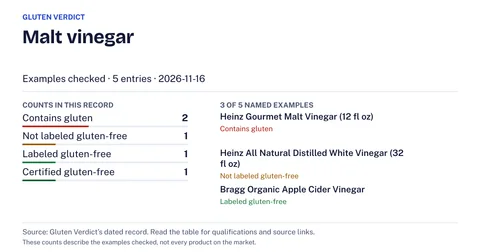 Malt vinegarContains glutenchecked Nov 16, 2026
 OatmealDepends on the productchecked Nov 16, 2026
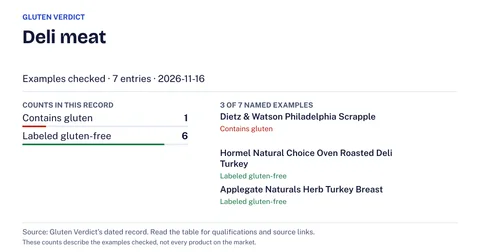 Deli meatDepends on the product1 of 7 products we checked contains gluten: Dietz & Watson Philadelphia Scrapplechecked Nov 16, 2026
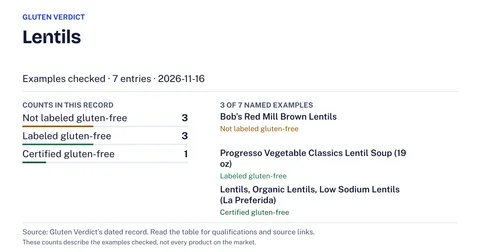 LentilsDepends on the productchecked Nov 16, 2026
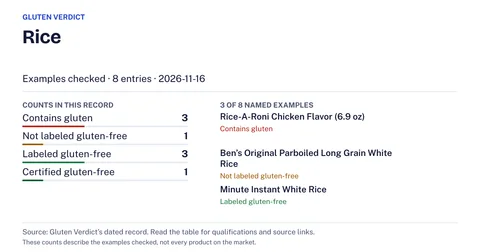 RiceNaturally gluten-free3 of 8 products we checked contain gluten: Rice-A-Roni Chicken Flavor (6.9 oz), Near East Original Rice Pilaf, and Ben’s Original Ready Rice Rice PilafBuy it labeled gluten-freechecked Nov 16, 2026
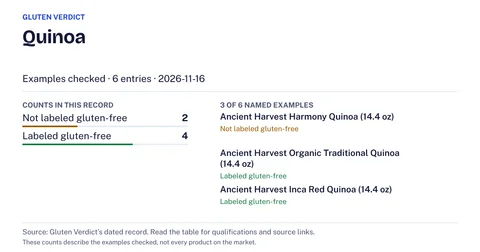 QuinoaNaturally gluten-freeBuy it labeled gluten-freechecked Nov 16, 2026
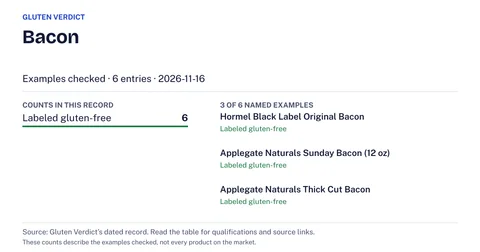 BaconDepends on the productchecked Nov 16, 2026
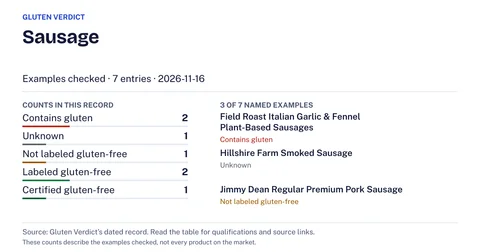 SausageDepends on the product2 of 7 products we checked contain gluten: Field Roast Italian Garlic & Fennel Plant-Based Sausages and Tofurky Plant-Based Italian Sausagechecked Nov 16, 2026
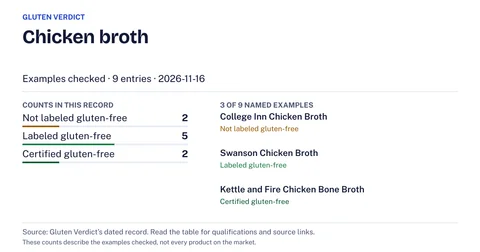 Chicken brothDepends on the productchecked Nov 16, 2026
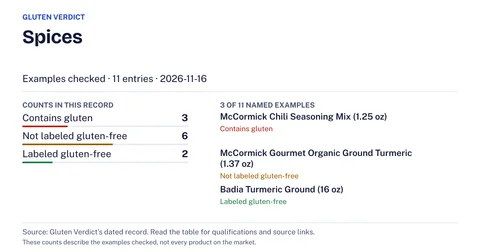 SpicesDepends on the product3 of 11 products we checked contain gluten: McCormick Chili Seasoning Mix (1.25 oz), Lawry’s Chili Spices & Seasonings Mix (1.48 oz), and McCormick Cheesy Taco Seasoning Mix (1.12 oz)checked Nov 16, 2026
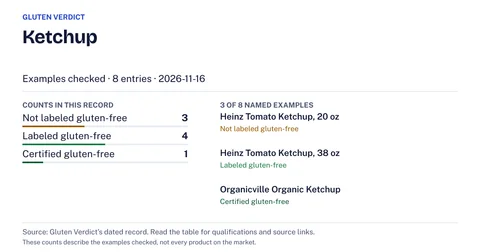 KetchupDepends on the productchecked Nov 16, 2026
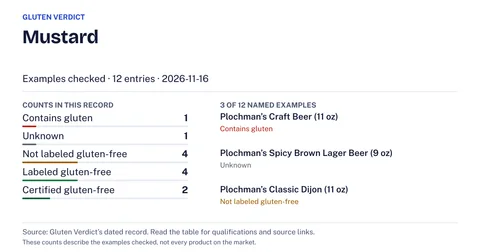 MustardDepends on the product1 of 12 products we checked contains gluten: Plochman’s Craft Beer (11 oz)checked Nov 16, 2026
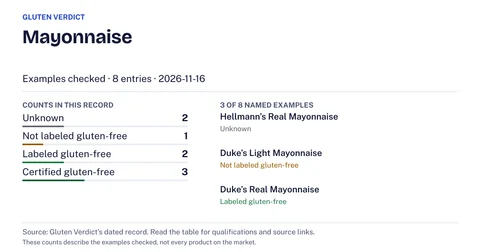 MayonnaiseNaturally gluten-freechecked Nov 16, 2026
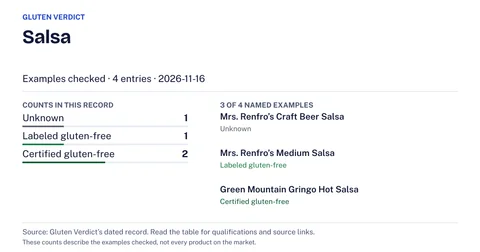 SalsaDepends on the productchecked Nov 16, 2026
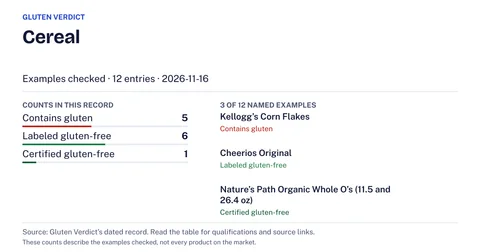 CerealDepends on the product5 of 12 products we checked contain glutenchecked Nov 16, 2026
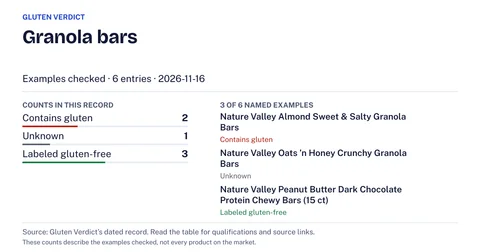 Granola barsDepends on the product2 of 6 products we checked contain gluten: Nature Valley Almond Sweet & Salty Granola Bars and Nature Valley Cinnamon Brown Sugar Soft-baked Oatmeal Squareschecked Nov 16, 2026
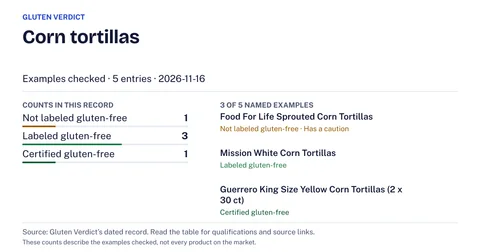 Corn tortillasDepends on the productchecked Nov 16, 2026
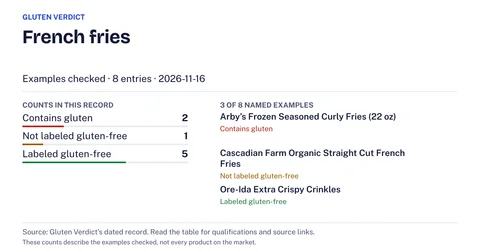 French friesDepends on the product2 of 8 products we checked contain gluten: Arby’s Frozen Seasoned Curly Fries (22 oz) and Checkers Frozen Crispy Seasoned Fries (28 oz)checked Nov 16, 2026
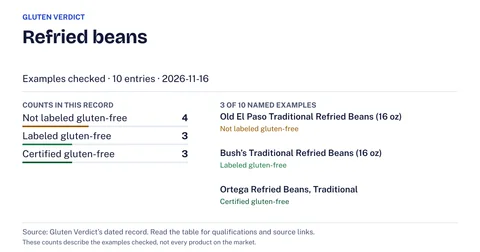 Refried beansDepends on the productchecked Nov 16, 2026
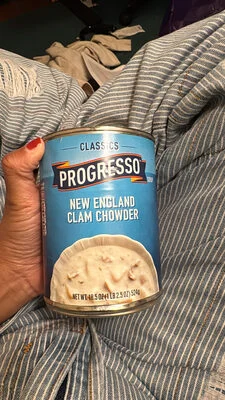 SoupDepends on the product3 of 8 products we checked contain gluten: Campbell’s Condensed Tomato Soup (10.75 oz), Campbell’s Condensed Cream of Mushroom Soup (10.5 oz), and Progresso Traditional Chicken Noodlechecked Nov 16, 2026
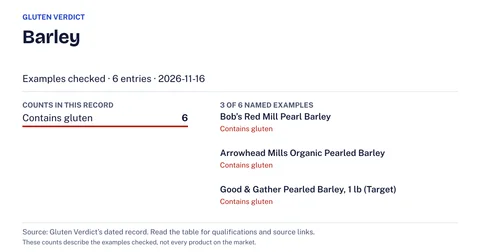 BarleyContains glutenchecked Nov 16, 2026
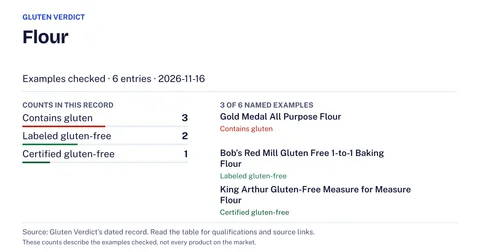 FlourContains glutenchecked Nov 16, 2026
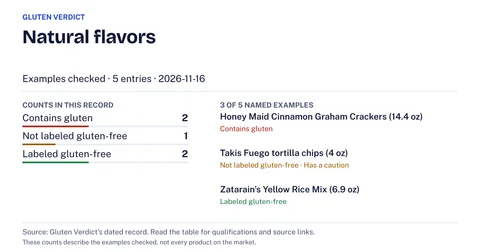 Natural flavorsDepends on the product2 of 5 products we checked contain gluten: Honey Maid Cinnamon Graham Crackers (14.4 oz) and Chex Mix Sour Cream & Onionchecked Nov 16, 2026
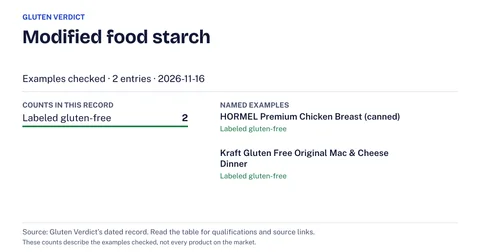 Modified food starchDepends on the productchecked Nov 16, 2026
Questions people ask
Does everything on a gluten-free list need a gluten-free label?
No. The claim is voluntary13, and FDA notes that naturally gluten-free foods such as fruits, vegetables and eggs may not carry it7.
Is a wheat-free product gluten-free?
Not necessarily. GIG says a wheat-free product can still contain gluten from rye or barley36.
More in Grocery shopping and meal planning
 Gluten-free grocery shopping: what to check at the shelf, the bulk bins and the checkoutOne reading order for any US supermarket pack, plus what to do about bulk bins, frozen cases, wheat starch and storage once the bags are home.
 How to check a grocery listing for gluten before you orderRead an online grocery listing for gluten in a fixed order, tell a store tag from a maker claim and a certifier mark, and re-check on reorders.
 Gluten-free grocery pickup and delivery: setting substitutions and checking swapsHow to set no-substitution choices on Instacart, Target and Whole Foods orders, check each swapped item at the door, and report a swap that fails.
 A starter gluten-free pantry: 30 shelf items and the label check for eachThirty shelf items for a first gluten-free pantry, tagged by the label check each needs, plus how to keep jars, toaster and colander apart at home.
 Deli, bakery and bulk-bin counters on a gluten-free dietFor each store counter (deli, bakery, bulk bins, bars): skip it, ask first, or buy the packaged item, and what a store’s own statement tells you.
 A gluten-free meal plan as a shopping template, by meal slotA weekly gluten-free shopping template: staples for each meal slot, the check each packaged item needs, and a ledger of when you last read each label.
Related guides
 Foods that contain gluten, aisle by aisle, and the label words that give them awayA store-order map of foods that contain gluten, which depend on the brand, and which need a cross-contact check, with the label words to look for.
 The Contains line names wheat, not barley or rye: what US allergen labels coverWhat the US allergen Contains line covers, why it names wheat but not barley or rye, and which ingredient-list names stand in for them.
 How to read a US food label for glutenWhere gluten shows up on a US food label: the gluten-free claim, the Contains line, the ingredient list and may-contain lines, and what each means.
 Certified or naturally gluten-free: when a seal mattersWhich naturally gluten-free foods are worth buying with a claim or seal: produce, grains, flours, oats and processed foods, with FDA rules and test data.
Sources
- [1, 3, 16, 34, 35] National Institute of Diabetes and Digestive and Kidney Diseases (NIDDK), Eating, Diet, & Nutrition for Celiac Disease, checked Nov 17, 2026.
- [2, 11, 17, 21, 22, 23, 24] Academy of Nutrition and Dietetics, The Gluten-Free Diet: Building the Grocery List, checked Nov 17, 2026.
Read on 2026-11-17: under the heading “Build a Gluten-Free Grocery List”, the list of grains for a grocery list names rice, wild rice, corn (maize, polenta, grits), sorghum, quinoa, millet, buckwheat, amaranth, teff and gluten-free oats.
- [4, 10, 19, 20, 31, 36] Gluten Intolerance Group, 3 Tips for Gluten-Free Label Reading, checked Nov 17, 2026.
- [5, 8, 13, 18, 25, 27, 30, 33] US Food and Drug Administration, Questions and Answers on the Gluten-Free Food Labeling Final Rule, checked Nov 17, 2026.
- [6, 15] Gluten Intolerance Group, 25 Ways Cross-Contact Could Happen and How to Avoid It, checked Nov 17, 2026.
- [7, 12, 32] US Food and Drug Administration, Gluten and Food Labeling, checked Nov 17, 2026.
- [9] US Food and Drug Administration, Food Allergen Labeling and Consumer Protection Act of 2004 (FALCPA), checked Nov 17, 2026.
- [14] Gluten Intolerance Group, 9 Fresh Ways to Enjoy Naturally Gluten-Free Produce, checked Nov 17, 2026.
- [26, 28, 29] Gluten Intolerance Group, How to wash beans and grains, checked Nov 17, 2026.
- [37] Gluten Intolerance Group, The Wonders of Gluten-Free Mexican Meals, checked Nov 17, 2026.