Natural flavors, caramel color and modified food starch: which can carry gluten
Short answer
Natural flavors, caramel color and modified food starch can each be made from a gluten-containing grain1, 2, 31, 3, but the label tells you something different about each:
- Modified food starch: on an FDA-regulated food, a wheat source has to be named in the ingredient list or in a Contains line3.
- Natural flavors: on an FDA-regulated food wheat has to be named, barley and malt do not, so a Contains line without wheat narrows the question without closing it4.
- Caramel color: FDA’s rule lets it be made from malt sirup or starch hydrolysates2, and the two charities we read differ on whether that matters5, 6.
- Gums, citric acid and MSG: the sources we read describe them as not containing gluten or as gluten free, so the rest of the product decides7, 8, 9.
Part of Hidden gluten in ingredients, sauces and processed foods, 21 guides
Key points
- A “gluten-free” claim covers the finished food: FDA’s definition rules out an ingredient derived from a gluten grain that was not processed to remove gluten, and unavoidable gluten has to stay under 20 ppm10. The National Celiac Association says that on a food labeled gluten free you do not have to worry about natural flavorings11.
- Meat and poultry labels follow USDA, not FDA’s allergen law, and the National Celiac Association says the wheat source of a modified starch may not be disclosed on them13, 14.
- In the product pages we read for this guide, the wheat, rye or barley malt that made a food a gluten food was named in the ingredient list itself, not hidden behind an additive15, 16, 17, 56.
- For mono- and diglycerides and seasoning blends, the open question is a wheat or barley carrier in the particular product18, 19.
Why additives get the blame, and the two groups used here
NIDDK says many food ingredients and additives, such as colorings, flavorings, starches and thickeners, are made from grains that contain gluten20. This page sorts the names so you do not have to treat every one as suspect.
The Gluten Intolerance Group explains why this is hard in the US: wheat is a top allergen but barley and rye are not, so gluten can hide behind other names in an ingredient list21.
Group one can be made from a gluten grain: natural flavors, caramel color and modified food starch1, 31, 3. Group two is names that the sources we read either treat as gluten free or describe without naming a gluten grain: gums, citric acid, MSG, lecithin and sodium benzoate. The rules below are US rules for foods FDA regulates unless a line says otherwise.
Natural and artificial flavors: what the label has to say
FDA’s definition of a natural flavor covers an essential oil, an extractive, a protein hydrolysate or a distillate, among other things, whose flavoring constituents come from a spice, fruit, vegetable, edible yeast, herb, meat, seafood, poultry, eggs, dairy products or fermentation products of them22.
The label does not have to say which. The rule lets the flavor be declared simply as “natural flavor” or “artificial flavor”23, so the ingredient list alone does not show the source.
An artificial flavor is a flavor substance that is not derived from those kinds of sources24. The National Celiac Association describes artificial flavorings as blended from chemical compounds and answers “Yes” to whether they are gluten free25.
Where gluten can enter a natural flavor
The Gluten Intolerance Group says that on a product not labeled or certified gluten-free, a natural flavor could be made using a gluten-containing ingredient such as yeast extract grown on barley1. The National Celiac Association says wheat in a natural flavor has to be disclosed on FDA-regulated foods, but malt or barley does not4. GIG’s label-reading article adds that U.S. labels may not always identify barley or rye26.
Two rules narrow the gap. Federal law applies the allergen labeling requirements to a flavoring, coloring or incidental additive that is, or bears or contains, a major food allergen27, and a protein hydrolysate used for its effect on flavor may not be declared simply as “flavor” or “natural flavor”28. When a food uses a Contains statement, FDA’s guidance says it is to name the food sources of all major food allergens used as ingredients29.
On a food labeled gluten-free, the National Celiac Association says you do not have to worry about natural flavorings11. The Gluten Intolerance Group says the GFCO program confirms that every natural flavor used in its certified products does not contain yeast extract grown on barley or other gluten sources30.
Caramel color: how it is made and where gluten could enter
FDA’s color-additive rule defines caramel as the material that results from carefully controlled heat treatment of food-grade carbohydrates: dextrose, invert sugar, lactose, malt sirup, molasses, starch hydrolysates and fractions of them, and sucrose2. The National Celiac Association says caramel may be made from a variety of sources including malt syrup and starch hydrolysates, such as wheat starch hydrolysates, and adds that it is most often made from cornstarch31.
The two celiac charities we read differ. The National Celiac Association considers caramel gluten free regardless of the starting material and says that even if made from wheat or barley it is highly unlikely to bring an otherwise gluten-free food to 20 ppm or more5. The Gluten Intolerance Group says some sources suggest caramel color could potentially contain malt syrup, which would make it not gluten-free6. Neither page gives a test result for caramel color32, 33.
The color is a different thing from caramel candy, which the National Celiac Association says may contain gluten34.
Where the two charities differ, a gluten-free claim on the product, which on an FDA-regulated food has to meet FDA’s definition10, or the maker’s own statement of what its caramel color is made from is the clearer case for that product. Our verdict page for caramel color keeps both views with the dates we read them.
Modified food starch: sources and the wheat declaration
The National Celiac Association says modified food starch is made from corn most of the time in the United States, but not always35. The Gluten Intolerance Group lists corn, potato, tapioca, rice, wheat and other sources, and says wheat has to be declared on a US food label when it is the source36.
“Modified” describes a treatment, not a grain: FDA’s regulation on food starch-modified lists treatments such as acid modification with hydrochloric or sulfuric acid37. The source grain is the thing to look for. For the plain starches, see our verdicts for cornstarch and tapioca.
When the starch comes from wheat, the National Celiac Association says that on an FDA-regulated food it is shown in one of two ways: in a Contains statement after the ingredient list, or in parentheses after the ingredient, as in “Modified food starch (wheat)”3. The same page says rye and barley are not used as starches38.
A food can be labeled gluten free and still contain wheat starch. The National Celiac Association says such a label is required to carry the statement that the wheat has been processed to allow the food to meet FDA’s requirements for gluten-free foods39.
Meat and poultry products follow USDA labeling
The National Celiac Association says that on a USDA-regulated food it may not be disclosed whether the modified food starch is from wheat, and that the answer has to come from the manufacturer14. It lists meats, poultry, egg products and processed foods containing more than 3% raw meat or 2% cooked meat or poultry as the USDA-labeled foods40. FDA says its allergen-law enforcement does not include meat, poultry and egg products13.
What a Contains line tells you for each of the three
A Contains line is the word “Contains” followed by the name of the food source of each major food allergen, printed right after or next to the ingredient list41. “Wheat” in that law means any species in the genus Triticum42, and the major allergens are milk, egg, fish, Crustacean shellfish, tree nuts, wheat, peanuts, soybeans and sesame12. Barley and rye are not among them.
| Additive | If the source is wheat | If the source is barley, rye or malt |
|---|---|---|
| Natural flavor | Has to be disclosed4. | Barley or malt does not have to be disclosed4; U.S. labels may not always identify barley or rye26. |
| Caramel color | The allergen law covers a coloring that bears or contains a major allergen27, and FDA’s guidance puts colors derived from a major allergen outside the requirements when they contain no protein from it43. Neither charity page says how this applies to caramel color32, 33. | Barley is not a major food allergen12, so allergen law does not require it to be named as an allergen. |
| Modified food starch | Named in the list or in a Contains line3. | The National Celiac Association says rye and barley are not used as starches38. |
So a Contains line with no wheat means no wheat was declared for these additives on an FDA-regulated food. It says nothing about malt or barley in a flavor, and the full ingredient list still has to be read. For meat and poultry products the Contains line may not tell you the starch source at all14.
Gums, lecithin, acids, MSG and preservatives: what the sources say
For these names the sources we read either call the ingredient gluten free or describe how it is made without a gluten grain. The question that stays open is the rest of the product.
| Name on the label | What the sources say |
|---|---|
| Guar gum | The National Celiac Association says it is extracted from the seed of the guar plant and does not contain gluten7. |
| Xanthan gum | The National Celiac Association says it is derived from a bacterium, is often used in gluten-free baked goods, and does not contain gluten44. |
| Citric acid | The National Celiac Association considers it gluten free even when made from wheat, barley or rye, because the gluten protein is removed in processing8. FDA’s regulation describes recovery from lemon or pineapple juice and fermentation45. |
| MSG (monosodium glutamate) | FDA says glutamate and glutamic acid have nothing to do with gluten, and that the wheat that may be present in soy sauce is a separate matter9. FDA says MSG is produced by fermentation of starch, sugar beets, sugar cane or molasses46. |
| Soy lecithin | FDA’s regulation says commercial lecithin is isolated as a gum from solvent-extracted soy, safflower or corn oils47. |
| Sodium benzoate | FDA’s regulation says it is produced by neutralizing benzoic acid48. |
| Color additives (NCA’s entry, separate from caramel) | The National Celiac Association says these generally come from chemicals and dyes and are free from food allergens and gluten49. |
| Mono- and diglycerides | The National Celiac Association says they do not contain gluten, though wheat is occasionally used as a carrier and, on an FDA-regulated package, would be listed in the ingredients or the Contains statement18. |
For lecithin and sodium benzoate we found no charity statement to quote: the National Celiac Association’s list of confusing ingredients has no entry for either50. Our verdicts for soy lecithin and sodium benzoate say what the sources do and do not cover.
What can still bring gluten in alongside some of these names is a carrier. The National Celiac Association says wheat starch, wheat flour and malted barley flour are common carrier agents in seasoning blends19, and that on a seasoning the spices, flavoring and colorings may be listed collectively but the carrier has to be named in a sub-ingredient list51. The “gum” in guar and xanthan gum is a thickener7, not chewing gum; for chewing gum itself see our verdict for gum.
What makers’ pages show: the additive is rarely what decides
These are product pages we read on 2026-11-17. They show how these additives appear on real lists, and what else the same pages name or claim.
| Product page | Additives listed | What the page names or claims |
|---|---|---|
| Cocoa PEBBLES cereal (Post) | Caramel color and natural and artificial flavor52 | The page calls the cereal “Gluten-free!”53 |
| HORMEL Premium Chicken Breast (canned) | Modified food starch and natural flavors, with no source grain named54 | The page calls the canned chicken gluten free55. Poultry is among the foods the National Celiac Association lists under USDA labeling40. |
| Chex Mix Sour Cream & Onion | Natural flavor and caramel color56 | The same list names wheat flour, whole wheat, rye flour and barley malt syrup15, 56, and the page says “Contains wheat, milk and soy ingredients.”57 |
| Honey Maid Cinnamon Graham Crackers | Natural flavor and soy lecithin58 | Wheat flour and graham flour, and “CONTAINS: WHEAT, SOY”16, 58 |
| Lee Kum Kee Premium Oyster Flavored Sauce | Modified corn starch, caramel color and monosodium glutamate17 | Wheat flour, and “Allergens: Wheat”17 |
Our verdict pages show the same additives on the lists of specific products, with the dates we read them: natural flavors, caramel color, modified food starch, cornstarch, yeast extract, Coca-Cola, Worcestershire sauce, taco seasoning, Takis and Goldfish.
When to contact the maker, and what to ask
The National Celiac Association says that for a food not labeled gluten free, a natural flavor means you need to investigate further, and that the best way to find out is to ask the manufacturer11. It gives the same instruction for a modified starch on a USDA-regulated food14. A gluten-free claim on an FDA-regulated food has to meet FDA’s definition10, which makes it the clearer case for that product.
- Is the product tested or labeled gluten-free, and to what limit?
- Is the natural flavor, caramel color or starch made from wheat, barley, rye or malt, or from a gluten-free source such as corn?
- Does any additive travel on a carrier, such as wheat starch, wheat flour or malted barley flour?
- Does the maker’s answer apply to the exact product and size in your hand?
Our guide on what to ask a manufacturer about gluten has the wording, and how to read food labels covers the rest of the label. Recipes change, so the package in your hand has the final word.
Verdicts in this guide
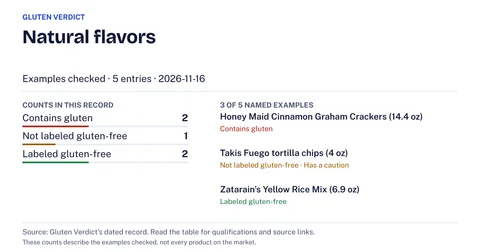 Natural flavorsDepends on the product2 of 5 products we checked contain gluten: Honey Maid Cinnamon Graham Crackers (14.4 oz) and Chex Mix Sour Cream & Onionchecked Nov 16, 2026
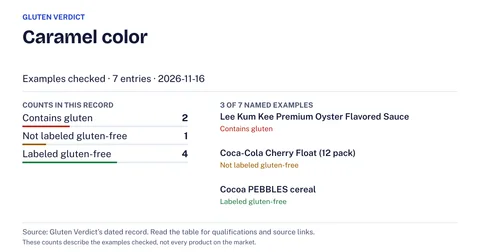 Caramel colorDepends on the product2 of 7 products we checked contain gluten: Lee Kum Kee Premium Oyster Flavored Sauce and Chex Mix Traditionalchecked Nov 16, 2026
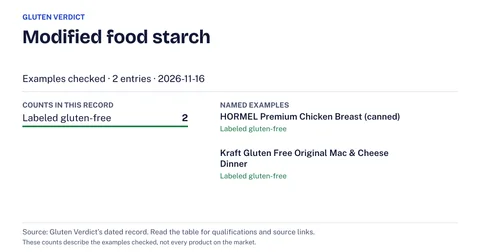 Modified food starchDepends on the productchecked Nov 16, 2026
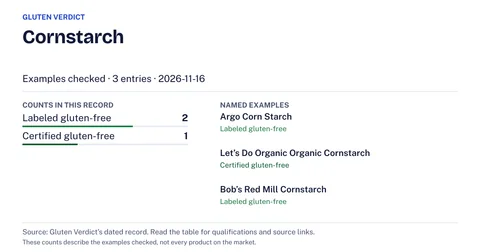 CornstarchNaturally gluten-freeBuy it labeled gluten-freechecked Nov 16, 2026
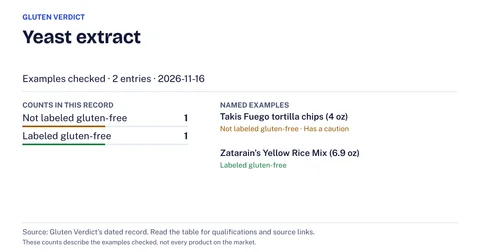 Yeast extractDepends on the productchecked Nov 16, 2026
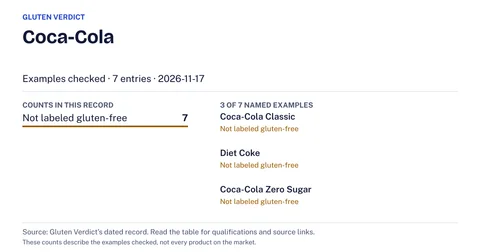 Coca-ColaNot labeled gluten-freeThe Coca-Cola Company · checked Nov 17, 2026
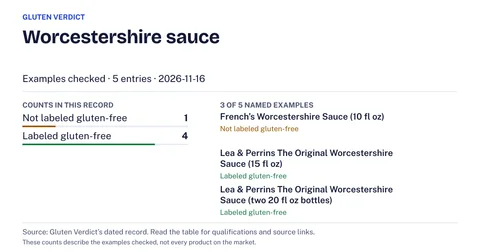 Worcestershire sauceDepends on the productchecked Nov 16, 2026
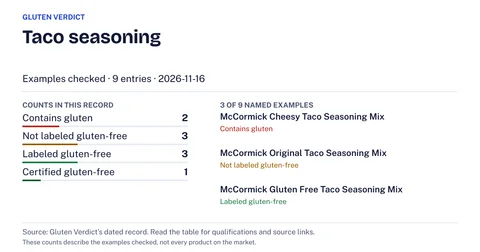 Taco seasoningDepends on the product2 of 9 products we checked contain gluten: McCormick Cheesy Taco Seasoning Mix and Lawry’s Taco Seasoning Mixchecked Nov 16, 2026
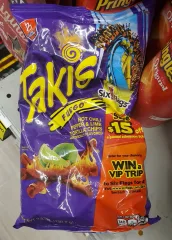 TakisNot labeled gluten-free1 of 9 varieties we checked contains gluten: Takis Fuego MixWheat warning on 7 of 9 varieties we checkedBarcel USA · checked Nov 16, 2026
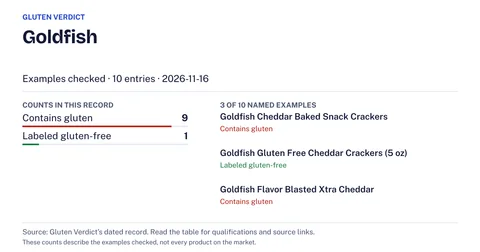 GoldfishContains glutenPepperidge Farm · checked Nov 16, 2026
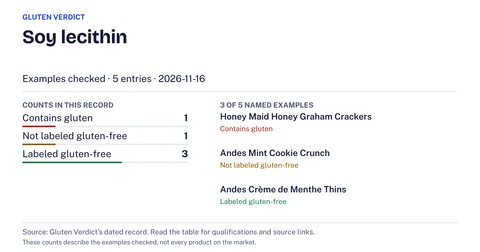 Soy lecithinUnknown1 of 5 products we checked contains gluten: Honey Maid Honey Graham Crackerschecked Nov 16, 2026
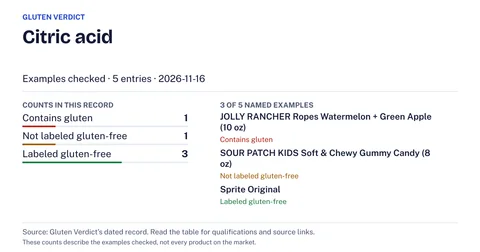 Citric acidUnknown1 of 5 products we checked contains gluten: JOLLY RANCHER Ropes Watermelon + Green Apple (10 oz)checked Nov 16, 2026
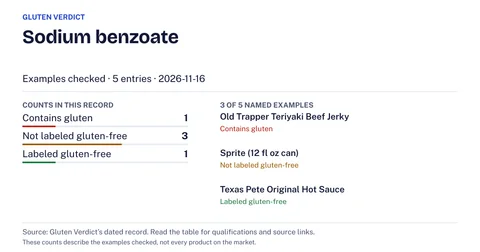 Sodium benzoateUnknown1 of 5 products we checked contains gluten: Old Trapper Teriyaki Beef Jerkychecked Nov 16, 2026
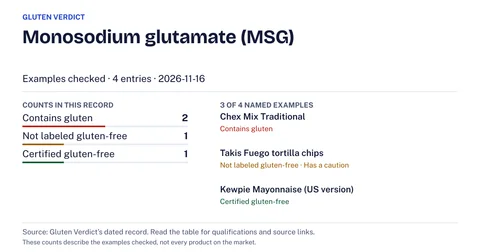 Monosodium glutamate (MSG)Naturally gluten-free2 of 4 products we checked contain gluten: Chex Mix Traditional and S&B Golden Curry Mix (Mild)checked Nov 16, 2026
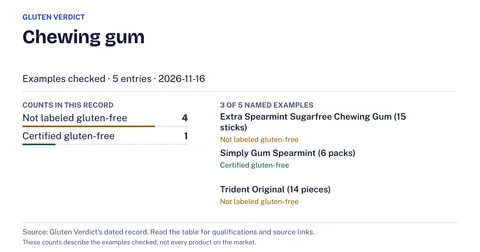 Chewing gumDepends on the productchecked Nov 16, 2026
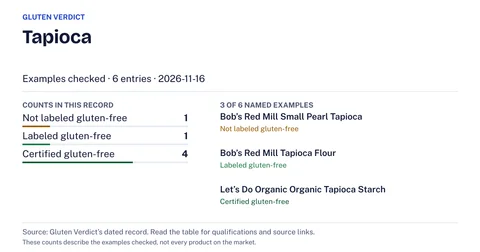 TapiocaNaturally gluten-freeBuy it labeled gluten-freechecked Nov 16, 2026
Questions people ask
Can a gluten-free product still list natural flavors, caramel color or modified food starch?
Yes. Post’s Cocoa PEBBLES page lists caramel color and natural and artificial flavor and calls the cereal “Gluten-free!”52, 53. FDA’s definition applies to the finished food, and any unavoidable gluten in it has to be under 20 ppm10.
Is modified food starch the same as wheat starch?
Not necessarily. “Modified” describes a treatment of the starch37, and modified food starch is most often made from corn in the United States35. Wheat starch is its own ingredient, and the National Celiac Association says a gluten-free label that includes it is required to carry FDA’s statement about the wheat having been processed39.
Can “flavoring” on a label hide wheat?
On an FDA-regulated food, a flavoring that is, or bears or contains, a major food allergen is subject to the allergen labeling rules27, though FDA’s guidance exempts an ingredient derived from an allergen that contains no protein from it43. Barley and rye are not major allergens12, and the Gluten Intolerance Group says U.S. labels may not always identify them in a natural flavor26.
More in Hidden gluten in ingredients, sauces and processed foods
 Wheat, barley and rye on an ingredient list: the names to look forLook up wheat, barley and rye names on a US ingredient list, from durum to malt, and sort each as contains gluten, depends on the maker, or lookalike.
 Where wheat, barley and rye hide in processed food: 15 places to checkFifteen processed foods where wheat, barley or rye turn up, the label step that catches each, and what US allergen law does and does not flag.
 Vinegar, vanilla and other flavor extracts: what to check on the bottleSort a bottle of vinegar or extract into ordinary, check the label or avoid, using the ingredient line and what the charities and makers say.
 Seasoning packets, bouillon cubes and spice blends: where wheat entersWhy a packet, cube or blend can list wheat flour or barley when a single spice lists one item, and the order to read the label in.
 Hydrolyzed protein, yeast extract and wheat starch on a US food labelWhich grain is behind hydrolyzed protein, yeast extract and wheat starch, what a US label must name, and what to ask the maker.
 Gravy, jarred pasta sauce and cheese sauce: where flour and starch thicken the potHow to read a gravy packet, gravy jar, cheese sauce or pasta sauce for wheat flour, wheat gluten and starch, with maker pages read on 2026-11-17.
All 21 guides in Hidden gluten in ingredients, sauces and processed foods
Related guides
 Maltodextrin, dextrin and glucose syrup made from wheat: what the label rules sayWhat US label law, FDA and the two US celiac charities say about wheat-made maltodextrin, dextrin and glucose syrup, and how to confirm one.
 How to read a US food label for glutenWhere gluten shows up on a US food label: the gluten-free claim, the Contains line, the ingredient list and may-contain lines, and what each means.
 Gluten-free thickeners: cornstarch, tapioca, arrowroot, potato starch and rice flourPick a gluten-free thickener for gravy, soup or pie filling, follow the maker's directions, choose slurry or roux, and spot wheat thickeners.
 Baking pantry items that can carry glutenBaking powder, cornstarch, powdered sugar, chocolate chips, sprinkles and food coloring: what to read on each label and what the makers say.
Sources
- [1, 30] Gluten Intolerance Group, Are “natural flavors” a concern if I’m gluten-free?, checked Nov 17, 2026.
- [2] Electronic Code of Federal Regulations, 21 CFR 73.85 Caramel, checked Nov 17, 2026.
- [3, 14, 35, 38, 39, 40] National Celiac Association, Is modified food starch gluten free?, checked Nov 17, 2026.
- [4, 5, 7, 8, 11, 18, 19, 25, 31, 32, 34, 44, 49, 50, 51] National Celiac Association, Confusing Gluten-Free Diet Ingredients, checked Nov 17, 2026.
Read on 2026-11-17: the entry headed “Caramel / Caramel Coloring” gives no gluten test result for caramel and does not say whether wheat in caramel has to be declared on the label.
Read on 2026-11-17: the list of confusing ingredients has no entry for lecithin or for sodium benzoate.
- [6, 21, 26, 33, 36] Gluten Intolerance Group, Advanced Label-Reading Tips, checked Nov 17, 2026.
Read on 2026-11-17: the “Caramel color” item in the list of ingredients that may contain gluten gives no gluten test result for caramel color and does not say whether wheat in it has to be declared on the label.
- [9, 46] US Food and Drug Administration, Questions and Answers on Monosodium glutamate (MSG), checked Nov 17, 2026.
- [10] US Food and Drug Administration, Questions and Answers on the Gluten-Free Food Labeling Final Rule, checked Nov 17, 2026.
- [12, 29, 42, 43] US Food and Drug Administration, Questions and Answers Regarding Food Allergens, Including the Food Allergen Labeling Requirements (Edition 5), checked Nov 17, 2026.
- [13] US Food and Drug Administration, Food Allergies, checked Nov 17, 2026.
- [15, 56, 57] Chex Mix (chexmix.com), Chex Mix Sour Cream & Onion, checked Nov 17, 2026.
- [16, 58] Snackworks (Mondelez International), Honey Maid Cinnamon Graham Crackers, checked Nov 17, 2026.
- [17] Lee Kum Kee (usa.lkk.com), Premium Oyster Flavored Sauce, checked Nov 17, 2026.
- [20] NIDDK (NIH), Eating, Diet, & Nutrition for Celiac Disease, checked Nov 17, 2026.
- [22, 23, 24, 28] Electronic Code of Federal Regulations, 21 CFR 101.22 Foods; labeling of spices, flavorings, colorings and chemical preservatives, checked Nov 17, 2026.
- [27, 41] US Food and Drug Administration, Food Allergen Labeling and Consumer Protection Act of 2004 (FALCPA), checked Nov 17, 2026.
- [37] Electronic Code of Federal Regulations, 21 CFR 172.892 Food starch-modified, checked Nov 17, 2026.
- [45] Electronic Code of Federal Regulations, 21 CFR 184.1033 Citric acid, checked Nov 17, 2026.
- [47] Electronic Code of Federal Regulations, 21 CFR 184.1400 Lecithin, checked Nov 17, 2026.
- [48] Electronic Code of Federal Regulations, 21 CFR 184.1733 Sodium benzoate, checked Nov 17, 2026.
- [52, 53] Post Consumer Brands (pebblescereal.com), Cocoa PEBBLES cereal, checked Nov 17, 2026.
- [54, 55] Hormel Foods, HORMEL Premium Chicken Breast, checked Nov 17, 2026.