Foods that contain gluten, aisle by aisle, and the label words that give them away
Short answer
Sort each food into one of three groups as you go down the aisles, then settle the middle group on the package:
- Gluten by nature: foods made from wheat, rye, barley or crossbreeds of them, which FDA says typically include breads, cakes, cereals and pastas1.
- Depends on the brand: processed foods, because flavorings, starches and thickeners can be made from gluten grains; NIDDK names candy, condiments, hot dogs and sausages, ice cream, salad dressing and soups2.
- Naturally gluten-free: meat, fish, fruits, vegetables, rice and potatoes without additives or some seasonings3, though FDA flags products made from grains, legumes and seeds as higher risk for cross-contact4.
- The package settles the middle group: a gluten-free claim on an FDA-regulated food means less than 20 parts per million5; without one, read the full ingredient list, because allergen labeling covers wheat but not barley or rye6, 7.
Part of Hidden gluten in ingredients, sauces and processed foods, 21 guides

Key points
- Wheat, barley, rye and crossbreeds of them, such as triticale, are the gluten grains1, 50; FDA says foods that typically contain gluten include breads, cakes, cereals and pastas1.
- On an FDA-regulated food, “gluten-free” means less than 20 ppm of gluten, and the claim is voluntary5, 8.
- A Contains line names wheat, not barley or rye, so the full ingredient list still has to be read6, 7.
- USDA generally regulates the labeling of meats and poultry, and TTB most alcoholic beverages, so FDA’s gluten-free rule does not apply to them9.
- Even naturally gluten-free foods can pick up gluten when grown, processed, stored, prepared or served10.
The aisle map at a glance
Walk the store in this order. Each aisle below has its own section with what to check and where the sources are. On our verdict pages, bread, pasta, flour, couscous, bulgur and malt vinegar are filed as containing gluten; the other foods with verdict pages linked below are filed as depending on the product.
| Aisle | Gluten by nature | Depends on the label | Free of gluten as made, check the handling |
|---|---|---|---|
| Bakery and bread | Breads, cakes, baked goods and baking mixes1, 11 | Packaged gluten-free baked goods and bread are sold12 | — |
| Pasta, grains and flour | Pasta, wheat varieties such as durum, spelt and semolina, couscous and bulgur1, 13 | Seasoned rice and rice pilaf14, 15; oats16, 17 | Rice and potatoes without additives or some seasonings3 |
| Cereal and bars | Cereals1 | Corn flakes and crisp rice cereal, granola and energy bars18, 19 | — |
| Canned goods and soups | — | Soups, soup thickened with roux, and packaged broth2, 20, 21 | — |
| Sauces, condiments and spices | Soy sauce made from soybeans and wheat; malt vinegar22, 23 | Dressings, marinades, mustard, ketchup, pickles, taco seasoning24, 25, 26, 27, 28, 29 | Plain distilled vinegar, which NCA says is gluten free even when made from gluten-containing grains30 |
| Frozen foods and snacks | — | Frozen vegetables with sauces, seasoned fries, flavored chips31, 32, 33 | Plain frozen vegetables; plain packaged nuts, which do not typically contain gluten, but not bulk-bin nuts31, 34 |
| Meat, deli and seafood | Seitan, which is made of wheat gluten35 | Hot dogs, sausages, deli meats, jerky, imitation crab2, 36, 37, 38, 39 | Meat and fish without additives or some seasonings; fresh seafood3, 40 |
| Dairy, candy and frozen desserts | — | Flavored cheeses, ice cream, frozen bars, chocolate, licorice2, 41, 42, 43, 44 | — |
| Drinks and alcohol | Fermented malt drinks such as hard lemonade45 | Beer, which FDA says is most commonly made from malted barley or wheat72; flavored liquors and other malt beverages11; cocktail mixers, coffee alternatives46, 47 | Wine fermented from grapes, spirits distilled from potatoes48 |
| Produce, eggs and fresh foods | — | — | Fruits, vegetables and eggs49 |
Our grocery list follows the same order, and the gluten scanner checks a photo of a label or pasted ingredients.
Three label checks that settle the middle column
Start with the claim. “Gluten-free” is a voluntary claim, and on a food FDA regulates it means less than 20 parts per million of gluten5, 8. A food labeled gluten-free cannot be intentionally made with wheat, rye, barley or an ingredient from them that was not processed to remove gluten50.
Then the allergen line. Allergen law lets a maker name a major allergen, wheat included, in a line that starts with “Contains” next to the ingredient list, or in parentheses after the ingredient6, 51, 52. FDA defines wheat as any species in the genus Triticum, and says it includes grains such as spelt, semolina, durum, einkorn, emmer, Khorasan and triticale53. Barley and rye do not appear on FDA’s list of major food allergens6, and the Gluten Intolerance Group (GIG) notes that labels carry no required warnings for them7.
Last, the full ingredient list. NIDDK’s shopping advice is to read labels for wheat, barley, rye and ingredients or additives made from them54, and to contact the maker when unsure55. GIG calls gluten “hidden” when a label does not mention it obviously or when it is in foods that do not seem likely to contain it56.
A certification mark is a separate route. GFCO says a product counts as certified if it appears on its list and carries one of its marks57. FDA does not endorse, accredit or recommend any particular certification program58.
The full label walk-through is in How to read a US food label for gluten; the names to look for are in the hidden sources guide.
Bakery and bread
FDA lists breads, cakes, cereals, pastas and many other grain-based foods as foods that typically contain gluten1; NIDDK adds baked goods and baking mixes11.
Gluten-free versions are sold: NIDDK says packaged gluten-free baked goods, bread and pasta are available12. In that case the claim is what to look for; the label checks above explain what it means.
Our verdicts for this aisle: bread and tortillas. The guide on corn tortillas and flour tortillas covers the difference in detail.
Pasta, rice, grains and flour
GIG’s starter guide lists wheat as including durum, spelt, semolina, couscous, bulgur, emmer, farina, farro and einkorn13. The National Celiac Association (NCA) says couscous is made from semolina, which comes from durum wheat59. Pasta is on FDA’s list of foods that typically contain gluten1, and FDA’s gluten-free definition gives wheat flour as its example of an ingredient derived from a gluten-containing grain that has not been processed to remove gluten60.
Rice and potatoes without additives or some seasonings are naturally gluten-free, NIDDK says3. GIG names rice, corn, potato, tapioca, sorghum, quinoa, millet, buckwheat and several others as naturally gluten-free grains and flours61. Two rice dishes need a closer look: GIG says seasoned rice can carry soy sauce solids, wheat flour or wheat starch14, and rice pilaf can be made with orzo, a small wheat pasta15.
Oats
FDA treats oats like any other non-gluten-containing grain: oats labeled gluten-free must contain less than 20 ppm of gluten16. GIG’s concern is that oats come into contact with gluten grains from the field to processing17, and it says the best way to know oats are gluten-free is a third-party certification mark62. NIDDK says to talk with a doctor or registered dietitian about whether to include oats and how much63.
Our verdicts: pasta, flour, couscous, bulgur and oatmeal. See also the gluten-free flour guide and the guide to oat sorting and purity protocol labels.
Cereal, breakfast foods and bars
Cereals are on FDA’s list of foods that typically contain gluten1. The brand-dependent cases GIG names are corn flakes and crisp rice cereal, where some popular brands are made with malt from barley18, and granola and energy bars, many of which are made with oats and often not labeled or certified gluten-free19.
Malt is the word to look for. FDA says malt extract and malt syrup are derived from barley that has not been processed to remove gluten64, and our malt extract page covers the ingredient.
Our verdicts: cereal, granola bars and oatmeal.
Canned goods, soups and broths
NIDDK says flavorings, starches and thickeners can be made from grains that contain gluten, that they are added to boxed, canned, frozen, packaged and prepared foods, and it names soups among the foods where gluten may be found2.
- Thickener: GIG lists soup thickened with roux, a mixture of fat and flour20.
- Broth and stock: GIG says some powdered or packaged broths can contain gluten, such as yeast extract derived from barley, and some may contain hydrolyzed wheat protein21.
Our verdicts: soup and chicken broth.
Sauces, condiments, dressings and spices
This aisle is where the label matters most, because one bottle can be made with wheat and its neighbor without. The table lists what GIG, FDA and NCA name as the usual sources.
| Item | What the sources say |
|---|---|
| Soy sauce and teriyaki | FDA: soy sauce is ordinarily made by fermenting soybeans and wheat, and in general soy sauce made with wheat may not bear a “gluten-free” claim; some soy sauces are made without wheat22. GIG: teriyaki sauce is traditionally made with fermented crushed wheat and soy65. |
| Salad dressings, marinades, barbecue sauces | May contain malt vinegar, soy sauce or flour24, 25. |
| Taco seasoning | Certain brands contain wheat29. |
| Mustard and ketchup | Wheat flour could be added as a thickener in some specialty mustards such as English mustard26; some specialty ketchups use malt vinegar or miso27. |
| Pickles | Some brands are made using malt vinegar, which comes from barley28. |
| Malt vinegar and other vinegars | FDA: malt vinegar is derived from barley, is fermented and has not been processed to remove gluten, so it cannot be used in foods that bear a gluten-free claim23. NCA: plain distilled vinegars are gluten free even when made from gluten-containing grains30, while flavored vinegars may contain malt or wheat66. |
| Modified food starch | NCA: most of the time it is made from corn in the United States, but not always67. NCA adds that on FDA-regulated foods wheat has to be disclosed on the label68. |
GIG warns that imported packaged foods, such as certain mustards, sausages, sauces and spreads, could contain gluten grain derivatives even when similar products are considered gluten-free in the U.S.69
Our verdict for seasonings is spices.
Frozen foods and salty snacks
- Frozen vegetables: plain vegetables, fresh or frozen, are naturally gluten-free, but GIG says any with sauces, seasonings, add-ons or special shapes could contain wheat gluten31.
- Fries: GIG says frozen seasoned fries from the grocery store could contain wheat flour32.
- Chips: some brands use wheat starch or whole wheat in their reconstituted chips, and GIG says to watch for flavorings derived from wheat or barley33.
- Nuts: plain packaged nuts do not typically contain gluten, GIG says, but nuts from bulk bins carry a possible cross-contact risk34.
Our verdicts: french fries, crackers and pretzels.
Meat, deli and seafood counters
Meat and fish without additives or some seasonings are naturally gluten-free, NIDDK says3, and FDA names fresh seafood as an example of a food that is by nature free of gluten40. The trouble starts with processing: NIDDK names hot dogs and sausages among the foods where gluten may be found2.
- Sausage: GIG says some types, such as British “banger” sausages, use rusk, a gluten-containing bread filler, and some specialty or plant-based sausages could contain wheat gluten36.
- Deli meats: GIG says they may contain wheat-derived dextrin or modified food starch as thickeners, and that these additives are not always derived from gluten-containing grains, but some are37. GIG also says to watch for cross-contact when deli workers use the same slicing machines for all products70.
- Beef jerky: GIG says certain flavors, such as teriyaki, contain soy sauce38.
- Meat substitutes: seitan is made of wheat gluten35.
- Imitation crab: some products use wheat starch to bind, and GIG says unless labeled or certified, wheat starch cannot be assumed to be gluten-free39.
Meat labels generally follow USDA’s rules, not FDA’s gluten-free rule
FDA’s gluten-free regulation does not apply to foods whose labeling USDA regulates, and USDA generally regulates meats, poultry and certain egg products9. NCA notes that on USDA-regulated foods it may not be disclosed whether the modified food starch is from wheat, and that contacting the manufacturer is the next step71.
Dairy, candy and frozen desserts
NIDDK names candy and ice cream among the foods where gluten may be found2. GIG’s examples are specific:
- Cheese: some cheeses have added flavors or other ingredients that could contain gluten, and some hard cheeses could be soaked in beer41.
- Frozen bars: fudge bars could be made with malted barley extract42.
- Licorice: red and black licorice typically contain wheat flour44.
- Chocolate: some additives, such as emulsifiers and flavoring agents, could contain gluten, and some specialty chocolates contain barley malt powder43.
Drinks and alcohol
NIDDK lists beer, lagers, ale, flavored liquors and malt beverages as drinks that may contain gluten11. FDA says beer is derived from fermented malted cereal grains, most commonly malted barley or wheat72.
Most alcoholic beverages are outside FDA’s gluten-free rule; the U.S. Department of the Treasury regulates them73. TTB authorizes “gluten-free” on a label if the product would be entitled to the claim under FDA’s definition74; its examples are wines fermented from grapes and spirits distilled from potatoes, and also spirits distilled from gluten-containing grains when good manufacturing practices prevent gluten from entering the final product48. For products fermented from gluten-containing grains, TTB allows a claim that the product was processed, treated or crafted to remove gluten, with a qualifying statement75.
On distilled spirits, FDA says that distillation, if done properly, is capable of removing all proteins, including gluten76. GIG adds that a distilled drink could still pick up gluten afterward, such as whiskey aged in a beer barrel77.
- Fermented malt drinks, such as a hard lemonade: GIG says they are not gluten-free, since malt is derived from barley45.
- Cocktail mixers: GIG says some, such as certain Bloody Mary mixers, contain wheat or barley derivatives46.
- Coffee alternatives: GIG says they could be made with roasted barley47.
Our verdict: beer. For beers labeled as having the gluten removed, see gluten-removed beer explained.
Naturally gluten-free aisles and the cross-contact caveat
FDA gives bottled spring water, fruits, vegetables and eggs as examples of foods that are naturally gluten-free, and notes that such foods may not carry a gluten-free claim because the claim is not required49. A missing claim on fresh produce is not a warning.
The caveat is cross-contact. NIDDK defines it as foods or products that contain gluten coming into contact with gluten-free foods78, and says it can occur whenever food is grown, processed, stored, prepared or served10. FDA names products made from grains, legumes and seeds as naturally gluten-free foods at higher risk of cross-contact4, and says crop rotation and shared harvesting and transport equipment and storage silos often bring gluten-containing grains into contact with them79. For those foods, a gluten-free claim gives the expectation that any gluten present is under 20 ppm4. GIG says any processed and packaged food could have cross-contact somewhere between the farm and the plant80.
A certification listing is a second check for packaged foods. GFCO’s product finder can be searched by categories such as bread and baked goods, cereal, sauces or dressings, soups, spices, meats and seafood81.
A gluten-free claim on one product does not cover the rest of a brand. FDA says a manufacturer may make a wide variety of foods, including some that are gluten-free and some that contain gluten82.
Verdicts in this guide
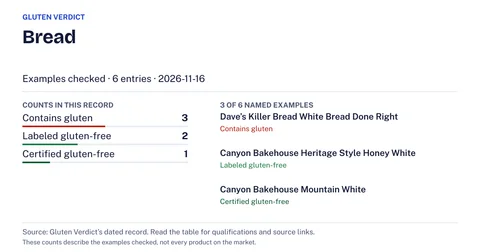 BreadContains glutenchecked Nov 16, 2026
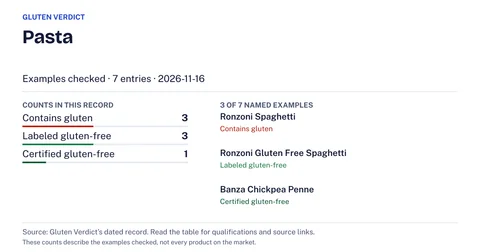 PastaContains glutenchecked Nov 16, 2026
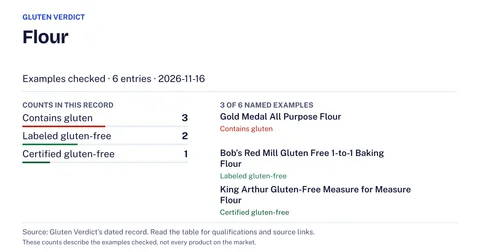 FlourContains glutenchecked Nov 16, 2026
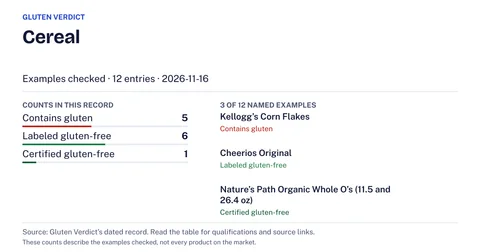 CerealDepends on the product5 of 12 products we checked contain glutenchecked Nov 16, 2026
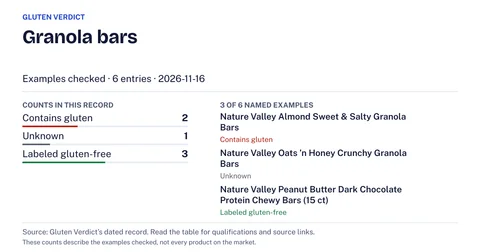 Granola barsDepends on the product2 of 6 products we checked contain gluten: Nature Valley Almond Sweet & Salty Granola Bars and Nature Valley Cinnamon Brown Sugar Soft-baked Oatmeal Squareschecked Nov 16, 2026
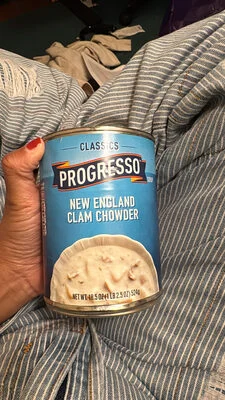 SoupDepends on the product3 of 8 products we checked contain gluten: Campbell’s Condensed Tomato Soup (10.75 oz), Campbell’s Condensed Cream of Mushroom Soup (10.5 oz), and Progresso Traditional Chicken Noodlechecked Nov 16, 2026
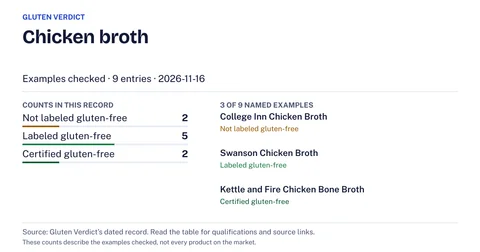 Chicken brothDepends on the productchecked Nov 16, 2026
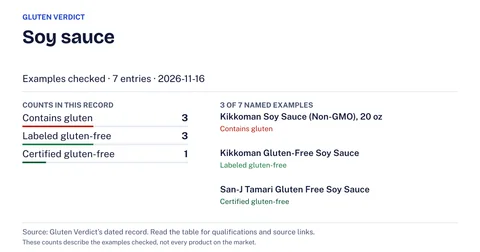 Soy sauceDepends on the product3 of 7 products we checked contain gluten: Kikkoman Soy Sauce (Non-GMO), 20 oz; San-J Organic Shoyu Soy Sauce; and Lee Kum Kee Premium Soy Sauce (No Preservatives Added)checked Nov 16, 2026
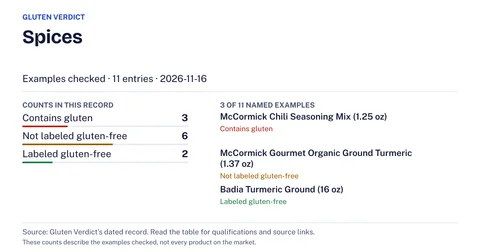 SpicesDepends on the product3 of 11 products we checked contain gluten: McCormick Chili Seasoning Mix (1.25 oz), Lawry’s Chili Spices & Seasonings Mix (1.48 oz), and McCormick Cheesy Taco Seasoning Mix (1.12 oz)checked Nov 16, 2026
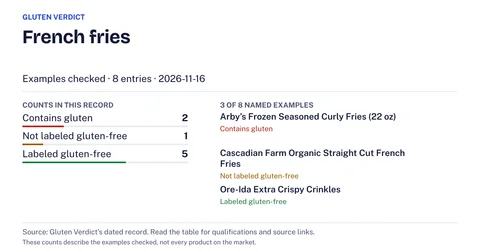 French friesDepends on the product2 of 8 products we checked contain gluten: Arby’s Frozen Seasoned Curly Fries (22 oz) and Checkers Frozen Crispy Seasoned Fries (28 oz)checked Nov 16, 2026
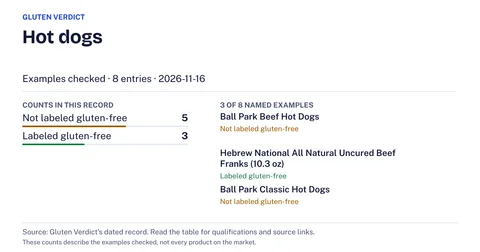 Hot dogsDepends on the productchecked Nov 16, 2026
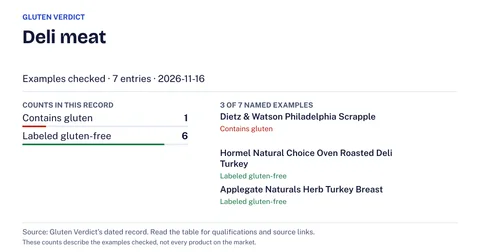 Deli meatDepends on the product1 of 7 products we checked contains gluten: Dietz & Watson Philadelphia Scrapplechecked Nov 16, 2026
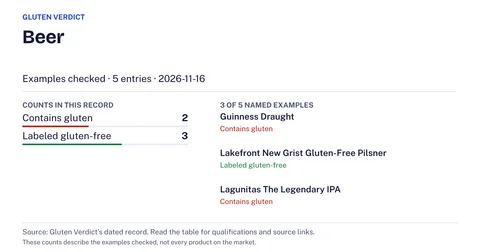 BeerDepends on the product2 of 5 products we checked contain gluten: Guinness Draught and Lagunitas The Legendary IPAchecked Nov 16, 2026
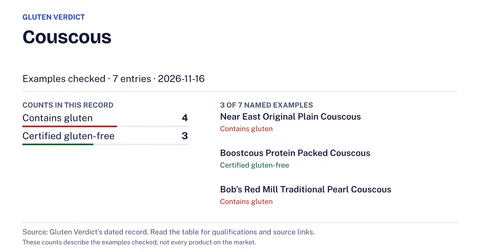 CouscousContains glutenchecked Nov 16, 2026
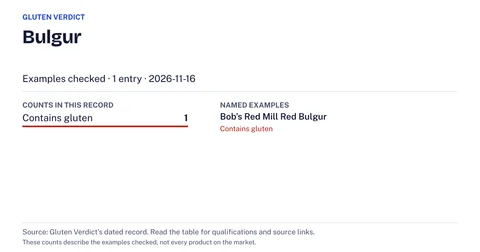 BulgurContains glutenchecked Nov 16, 2026
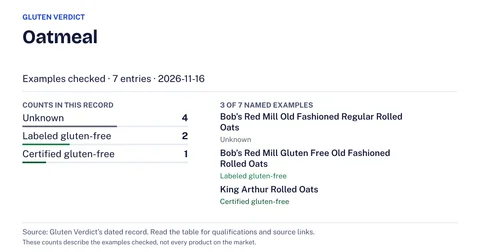 OatmealDepends on the productchecked Nov 16, 2026
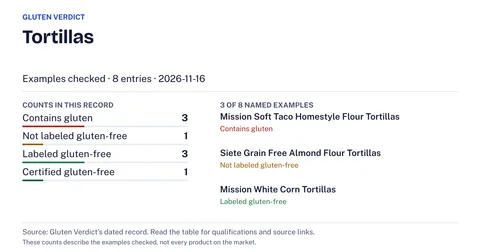 TortillasDepends on the product3 of 8 products we checked contain gluten: Mission Soft Taco Homestyle Flour Tortillas, Guerrero Riquisimas Soft Taco Flour Tortillas (24 ct), and Guerrero Corn and Wheat Tortillaschecked Nov 16, 2026
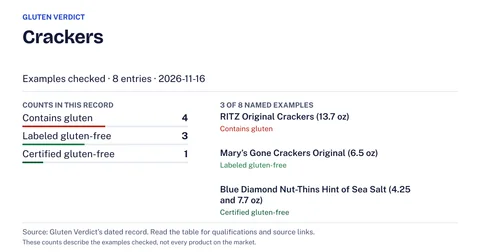 CrackersDepends on the product4 of 8 products we checked contain glutenchecked Nov 16, 2026
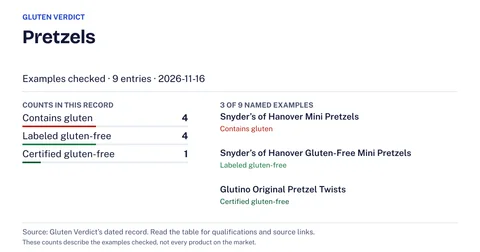 PretzelsDepends on the product4 of 9 products we checked contain glutenchecked Nov 16, 2026
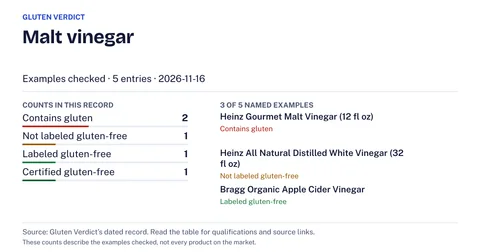 Malt vinegarContains glutenchecked Nov 16, 2026
Questions people ask
Does a Contains line without wheat mean a food has no gluten?
No. Barley and rye are not on FDA’s list of major food allergens6, and GIG notes there are no required warnings for them7. Read the whole ingredient list.
Do naturally gluten-free foods need a gluten-free label?
No. The claim is voluntary and may not appear even when the food is gluten-free49.
Does a gluten-free claim on one product cover everything a brand sells?
No. FDA says a manufacturer may make both gluten-free foods and foods that contain gluten82.
More in Hidden gluten in ingredients, sauces and processed foods
 Where wheat, barley and rye hide in processed food: 15 places to checkFifteen processed foods where wheat, barley or rye turn up, the label step that catches each, and what US allergen law does and does not flag.
 Wheat, barley and rye on an ingredient list: the names to look forLook up wheat, barley and rye names on a US ingredient list, from durum to malt, and sort each as contains gluten, depends on the maker, or lookalike.
 Keto and low-carb breads, wraps and bars: where wheat gluten hidesSome keto and low-carb breads, wraps and bars list wheat gluten. How to read the label, with named products and the makers’ own statements.
 Malt on a food label: which forms are barley and what to checkWhat malt extract, syrup, flavoring and vinegar on a US label mean for gluten, why the Contains line misses barley, and what to check first.
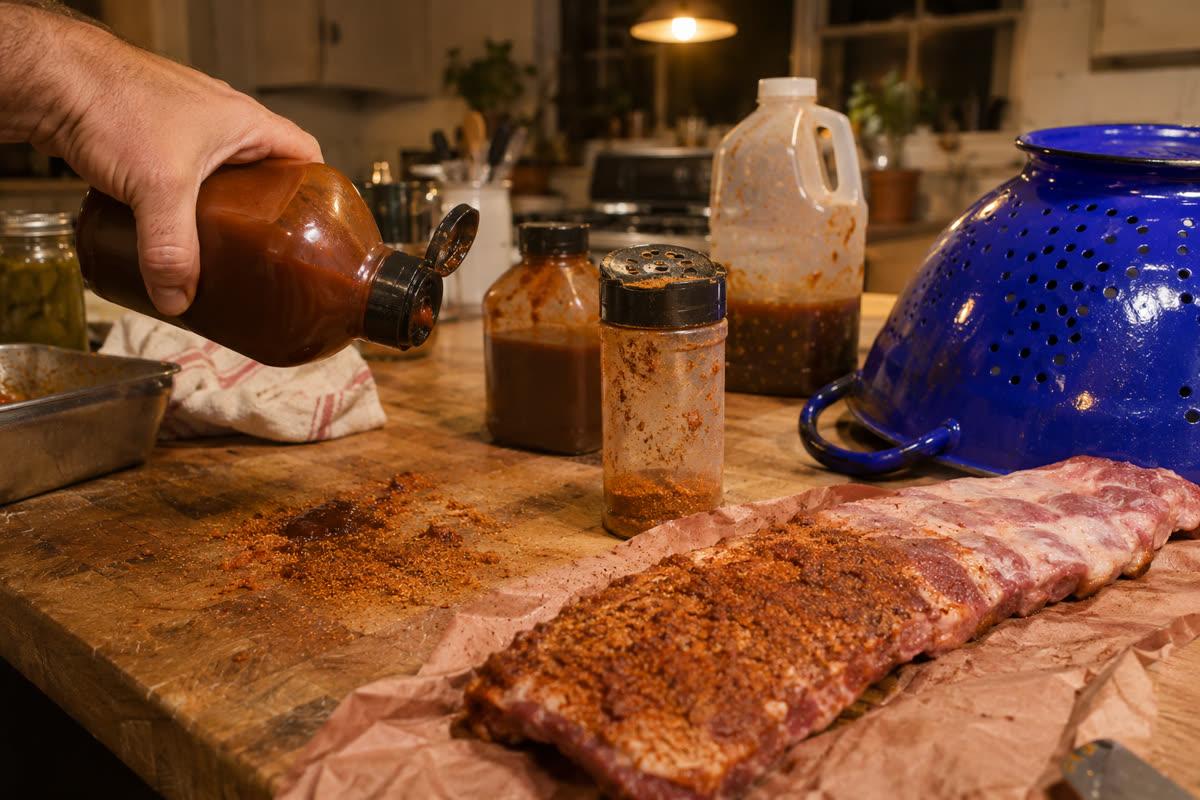 BBQ sauce, dry rub and marinade labels: which state gluten-free and which list wheatSort a BBQ sauce, dry rub or marinade label into three groups: maker states gluten-free, no grain listed, or wheat listed.
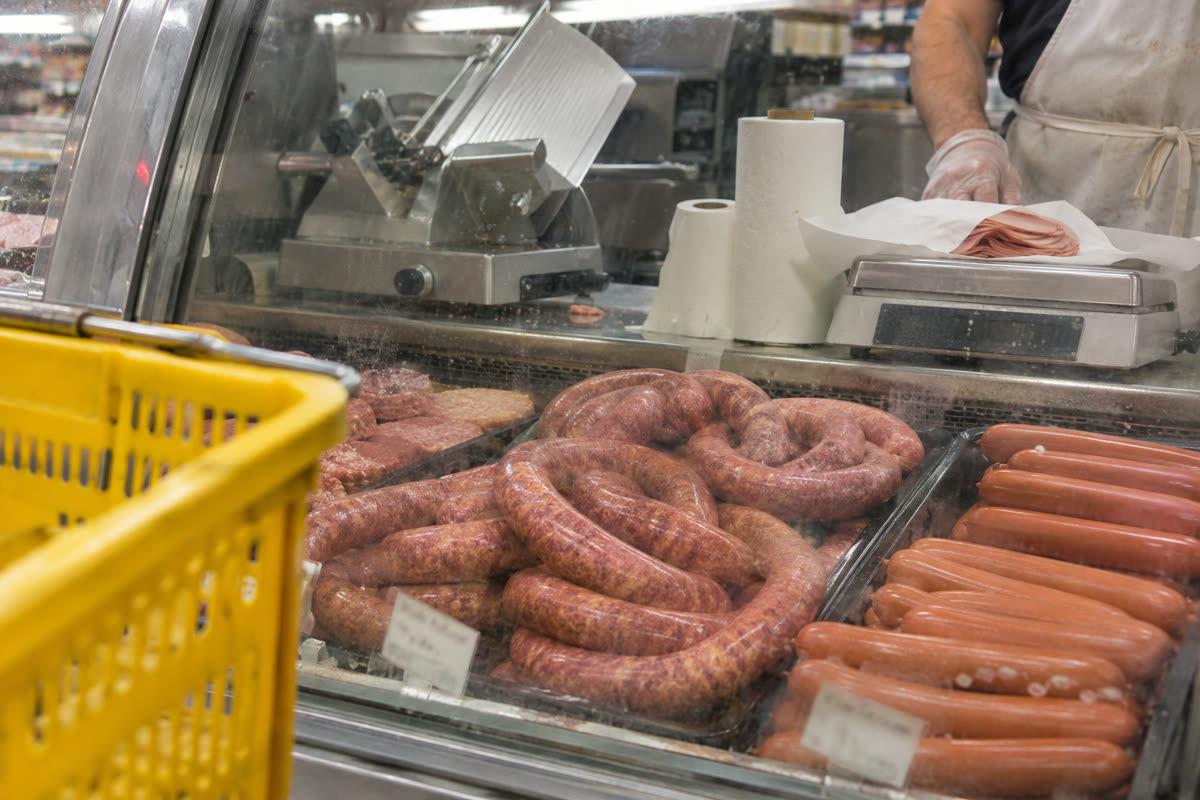 Gluten in sausage, hot dogs and deli meat: fillers, binders and flavoringsHow to read sausage, hot dog, deli meat and jerky labels for wheat, malt, starch and soy sauce, and which USDA label rules apply to meat.
All 21 guides in Hidden gluten in ingredients, sauces and processed foods
Related guides
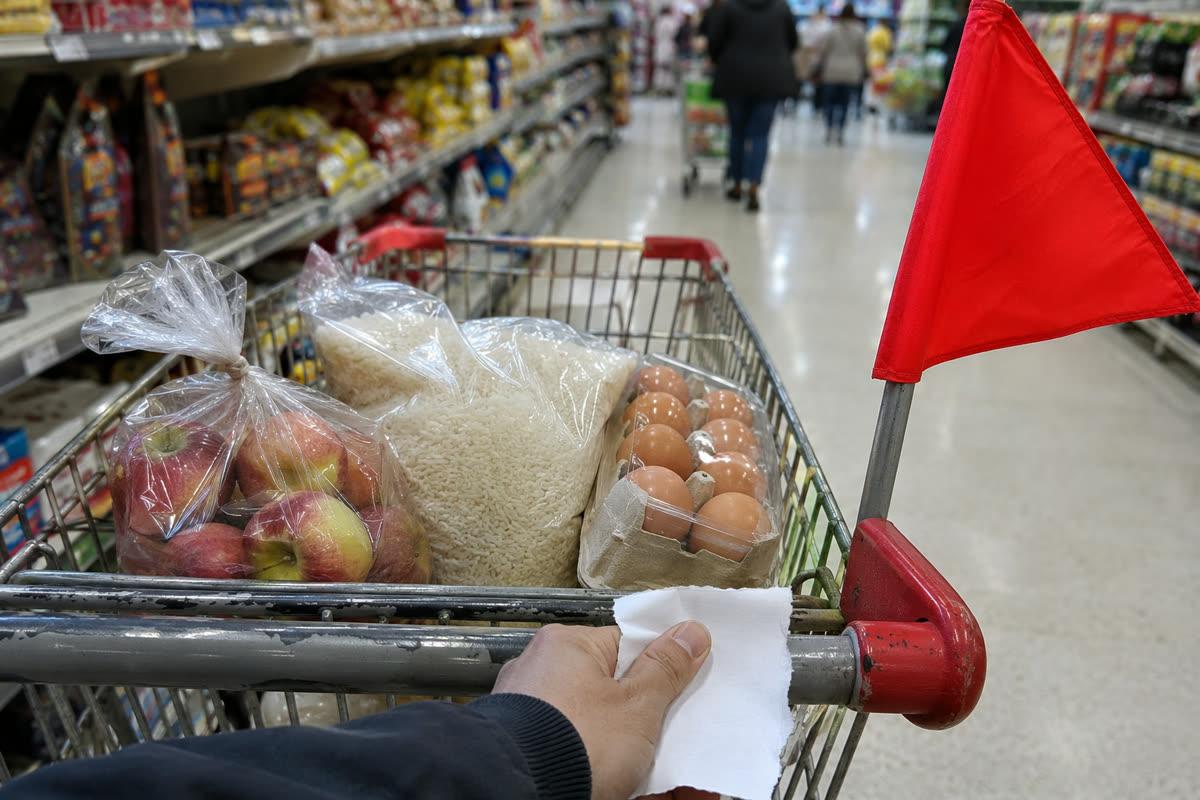 A gluten-free grocery list by aisle for US supermarketsAn aisle-by-aisle gluten-free grocery list for US stores: what needs no label, what needs a check, and what stays off the list.
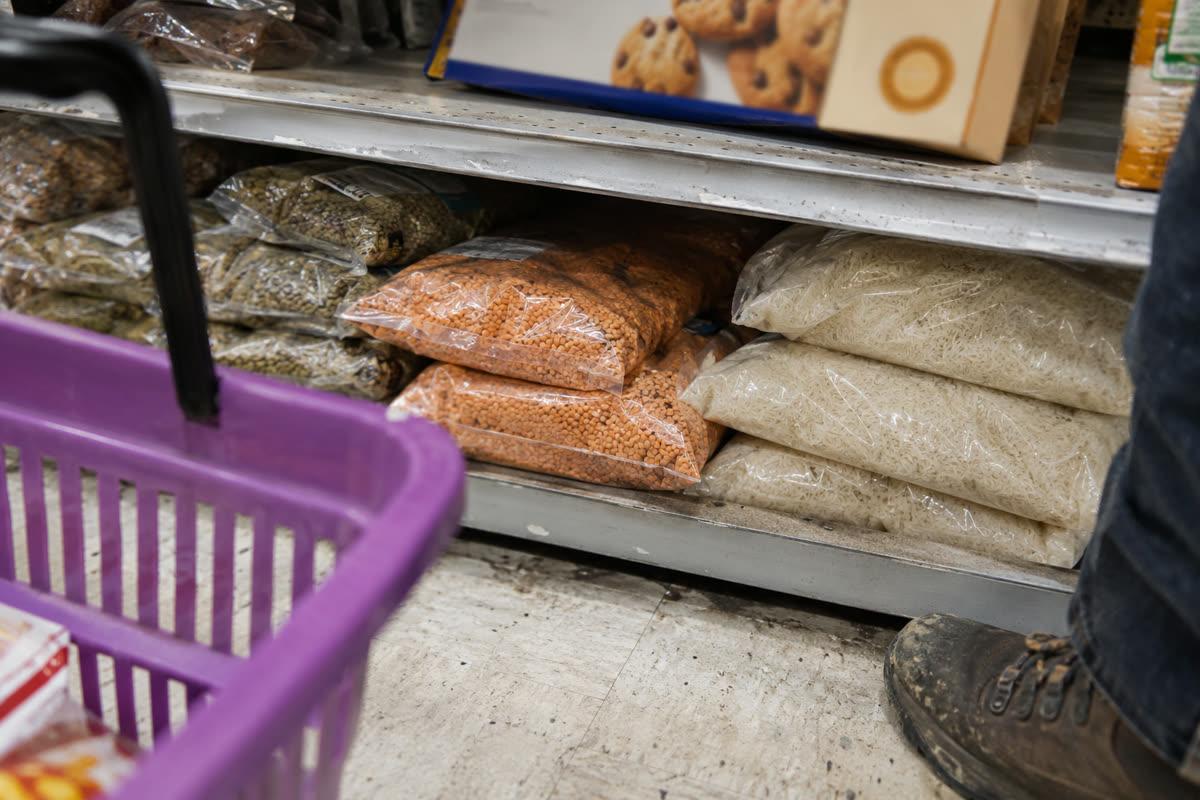 Certified or naturally gluten-free: when a seal mattersWhich naturally gluten-free foods are worth buying with a claim or seal: produce, grains, flours, oats and processed foods, with FDA rules and test data.
 Gluten-free at Meijer: Meijer-brand packs, True Goodness and the pharmacy aisleHow to read a Meijer-brand or True Goodness pack for gluten, and why a supplement or medicine label follows different rules than food.
 Frozen meals, pizza and nuggets on a gluten-free diet: what to read on the boxCheck a frozen meal, pizza or nugget box for gluten in order: the claim, any certification mark, the ingredient list, the Contains line and facility lines.
Sources
- [1, 5, 8, 49, 58] US Food and Drug Administration, Gluten and Food Labeling, checked Nov 17, 2026.
- [2, 3, 10, 11, 12, 54, 55, 63, 73, 78] National Institute of Diabetes and Digestive and Kidney Diseases (NIDDK), Eating, Diet, & Nutrition for Celiac Disease, checked Nov 17, 2026.
- [4, 9, 16, 22, 23, 40, 50, 60, 64, 72, 76, 79, 82] US Food and Drug Administration, Questions and Answers on the Gluten-Free Food Labeling Final Rule, checked Nov 17, 2026.
- [6, 53] US Food and Drug Administration, Questions and Answers Regarding Food Allergens, Including the Food Allergen Labeling Requirements (Edition 5), checked Nov 17, 2026.
- [7, 14, 15, 18, 19, 20, 21, 24, 25, 26, 27, 28, 29, 31, 32, 33, 34, 35, 36, 37, 38, 39, 41, 42, 43, 44, 46, 47, 56, 65, 69, 70, 80] Gluten Intolerance Group, 38 Foods Where Gluten May Be “Hidden”, checked Nov 17, 2026.
- [13, 61] Gluten Intolerance Group, Getting Started on a Gluten-Free Diet: A Step-By-Step Guide, checked Nov 17, 2026.
- [17, 62] Gluten Intolerance Group, Are Oats and Oat Flour Gluten-Free?, checked Nov 17, 2026.
- [30, 66] National Celiac Association, Is vinegar gluten-free?, checked Nov 17, 2026.
- [45, 77] Gluten Intolerance Group, Does Fermentation or Distillation Make a Product Gluten-Free?, checked Nov 17, 2026.
- [48, 74, 75] Alcohol and Tobacco Tax and Trade Bureau (TTB), TTB Ruling 2020-2: Gluten Content Statements in the Labeling and Advertising of Wine, Distilled Spirits, and Malt Beverages, checked Nov 17, 2026.
- [51, 52] US Food and Drug Administration, Food Allergen Labeling and Consumer Protection Act of 2004 (FALCPA), checked Nov 17, 2026.
- [57, 81] Gluten-Free Certification Organization (GFCO), GFCO Product Finder, checked Nov 17, 2026.
Read on 2026-11-17: the finder’s category filter names, among others, Bread and Baked Goods, Cereal, Chips or Pretzels, Meats, Pasta, Sauces or Dressings, Seafood, Soups, and Spices or Spice Blends.
- [59] National Celiac Association, Couscous: Is couscous gluten-free?, checked Nov 17, 2026.
- [67, 68, 71] National Celiac Association, Is modified food starch gluten free?, checked Nov 17, 2026.