Tequila, rum and brandy: what to check on the bottle for gluten
Short answer
The National Celiac Association lists brandy, rum and tequila among the pure distilled spirits it considers free of gluten protein1, 9. What can change that is something added after distillation or picked up afterward5, 35, so read it in this order:
- The class name. Patrón’s FAQ says tequila not labeled 100 percent agave is made from agave sugar plus added grain or cane sugar3, and the US class allows up to 49 percent of the mash to come from sugars other than agave2.
- The designation. A flavored spirit has to be named for its base spirit and flavor, such as “Pineapple Flavored Tequila”4, and the National Celiac Association considers flavored spirits gluten-free unless a gluten-containing ingredient was added after distillation5.
- Color and finishing. Caramel and other harmless coloring, flavoring and blending materials customarily used in a spirit can be added without changing the class, up to 2.5 percent by volume when they are not essential to that class6, 30, with exceptions the rule lists41.
- The maker’s own page. Alcohol labels are not required to disclose major food allergens7, and TTB allows a “gluten-free” claim where the product would meet the FDA standard8.
Part of Drinks and alcohol, 18 guides
Key points
- The National Celiac Association considers distilled spirits free of gluten protein even when the starting material is wheat, barley or rye9.
- Patrón’s FAQ says tequila not labeled 100 percent agave is sometimes called “mixto” and is made from agave sugar plus added grain or cane sugar3.
- Flavored spirits are the case to check: the National Celiac Association says they are gluten-free unless a gluten-containing ingredient was added after distillation5.
- TTB allows a “gluten-free” claim on a spirit distilled from gluten-containing grains if good manufacturing practices keep gluten-containing material out of the final product10.
- Spirits labels do not have to carry an allergen line7, so a maker’s statement is the thing to look for.
What the celiac charities and TTB say about distilled spirits
The National Celiac Association (NCA) says distilling removes the proteins of the starting materials, and that it considers distilled spirits free of gluten protein even when the starting material is wheat, barley or rye9. Its list of distilled alcohols names brandy, rum and tequila1. That is why the question for these three is rarely the base ingredient.
The Alcohol and Tobacco Tax and Trade Bureau (TTB) lets a spirit distilled from gluten-containing grains carry a “gluten-free” claim when good manufacturing practices keep gluten-containing material out of the final product10.
The catch is what goes in after distillation. The NCA considers flavored spirits gluten-free unless a gluten-containing ingredient was added after distillation5. TTB says a spirit that combines a distillate from gluten-containing grains with protein-containing ingredients added afterward may bear a “gluten-free” claim if the maker is prepared to substantiate, on request, the absence of protein in the distillate, the absence of gluten in the added ingredients and the precautions against cross-contact11. The Gluten Intolerance Group (GIG) names two trouble spots, fermentation and added flavors: “Where it becomes tricky is with fermentation and ADDED FLAVORS”12.
Whiskey, vodka and gin have their own page: whiskey, vodka and gin maker statements and flavors. For the wider picture, see the gluten-free alcohol guide.
Tequila: 100 percent agave, or just “tequila”?
In US rules the class is “agave spirits”, with two types, Tequila and Mezcal13, 40. Tequila has to be made in Mexico under Mexican law14. The US class called agave spirits is distilled from a mash of which at least 51 percent comes from plants of the genus Agave and up to 49 percent from other sugars2.
Patrón’s FAQ explains the two labels you will see. Plain “tequila” is sometimes called “mixto” and is made from a mixture of agave sugar and added grain or cane sugar; the other class, “100% de Agave”, is made exclusively from the sugars of the Blue Weber Agave3. We rely on Patrón’s FAQ alone for the word “mixto”.
For a celiac reader the extra sugar is not the deciding point, because the NCA’s position does not depend on the starting material9. A 100 percent agave claim tells you about the sugar source. It does not tell you what was added afterward, and the US rule lets agave spirits carry added flavoring or coloring materials15.
Mezcal falls under the same US class13, so the same two questions apply: what was added, and what does the maker say.
Rum: white, dark, spiced and flavored
TTB’s rum standard covers spirits distilled from the fermented juice of sugar cane, cane syrup, cane molasses or other cane by-products16. The rule lists one type of rum, cachaça, and does not use the word “spiced”17, so a spiced rum is described by its maker rather than by a federal rum type.
Captain Morgan’s Original Spiced Rum page gives the product line as “Premium Caribbean Rum With Vanilla, Spice And Other Natural Flavors”18. Its coconut rum page gives “Caribbean Rum With Natural Flavors”19. Neither page says anything about gluten20, 21, and the pages do not itemize the natural flavors.
GIG says rum made from sugarcane is naturally gluten-free in its pure state22. Flavored versions are where the flavor rule applies: a flavored spirit is a spirit to which nonbeverage natural flavors, wine or nonalcoholic natural flavoring materials, with or without sugar, have been added23.
Our rum verdict shows what the maker pages said for the bottles we checked, with the date we read them. Mixed drinks add more ingredients; see the margarita verdict for the mix, the liqueur and the rim.
Brandy and cognac
Under TTB’s standard, brandy is spirits distilled from the fermented juice, mash or wine of fruit24. The bare word “brandy” can label only grape brandy; other fruit brandies carry a qualifier such as “peach” or “marc”25. Wine, which the NCA says is fermented from grapes and does not contain gluten26, is one of the things brandy is distilled from24. Our champagne verdict covers the sparkling-wine side.
Cognac is grape brandy distilled exclusively in the Cognac region of France27. Courvoisier says its cognac “contains no allergens or sulfites and is gluten and lactose free”28. That is one maker’s statement about its own product on the date we read it.
For cognac the rule is narrower: adding any material other than caramel, infusion of oak chips and sugar requires a redesignation29.
Color, flavor and barrels: the additions to check
TTB lets coloring, flavoring and blending materials that are not essential to a spirit’s class go in without changing its designation, as long as together they do not exceed 2.5 percent by volume of the finished product6. The rule makes this subject to special rules that require a new designation in some cases41. The rule defines such materials by examples: caramel, straight malt or straight rye malt whiskies, fruit juices, sugar, an infusion of oak chips and wine30. That is the definition of the term, not a statement that any particular tequila, rum or brandy uses each one.
For tequila, Patrón’s FAQ says the color can be standardized with other ingredients approved by the Tequila Official Standard, such as caramel coloring, glycerin and sugar-based syrups, and that the additives must stay under 1 percent of the volume or weight31. A Mexican government consumer magazine from May 2024 describes a tequila called “joven u oro” as one that can also be made by mixing white tequila with caramel color, natural oak extract, glycerin or a sugar-based syrup, a step it calls abocamiento (our reading of its Spanish)32.
Caramel color is the addition people ask about most. The NCA says caramel is considered gluten free regardless of the starting material33. Our caramel color verdict lays out what each source says.
Flavors are the other one. GIG says “natural flavors” on a product not labeled or certified gluten-free could be made with a gluten-containing ingredient such as yeast extract grown on barley34. That advice is general, not about spirits in particular; our natural flavors verdict has the detail.
Barrels can matter after distillation. GIG notes that a spirit could still pick up gluten after distillation, for example whiskey aged in a beer barrel35. If a bottle is aged or finished in a used barrel, ask the maker what the barrel held.
What a “gluten-free” claim on a spirits label means
TTB allows “gluten-free”, “no gluten”, “free of gluten” or “without gluten” on wine, distilled spirits or malt beverages that would be entitled to a gluten-free claim under the FDA regulation, 21 CFR 101.91(a)(3)8.
Alcohol labels do not have to disclose major food allergens, TTB’s allergen page says7, so the absence of a “Contains wheat” line tells you little on a bottle. The maker’s statement, or a gluten-free claim on the label, is the evidence to look for.
What the maker pages we read say
| Bottle | What the page says | Gluten statement |
|---|---|---|
| Patrón Tequila | Made from Blue Weber agave36 | Says the tequilas are gluten-free36 |
| Casamigos Tequila | FAQ answers the gluten question directly37 | Says Casamigos Tequila is gluten free37 |
| Tequila Don Julio Blanco | Made from water, a yeast strain and Blue Weber agave38 | None on the FAQ page39 |
| Captain Morgan Original Spiced Rum | Vanilla, spice and other natural flavors18 | None on the page20 |
| Captain Morgan Coconut Rum | Rum with natural flavors19 | None on the page21 |
| Courvoisier cognac | FAQ answer on allergens, sulfites and gluten28 | Says its cognac is gluten and lactose free28 |
These are the makers’ own statements on one date, not a test of any bottle. Our tequila verdict and rum verdict keep the full record for each product we checked.
What to ask a maker
- Name the exact bottle: class, flavor and size. A flavored version carries its own designation, such as “Pineapple Flavored Tequila”4.
- Ask whether anything containing gluten is added after distillation: flavors, color, sweeteners or finishing ingredients5, 11.
- Ask whether the maker has a gluten-free statement for that bottle, and keep the reply with its date.
- If the spirit is aged or finished in a used barrel, ask what the barrel held35.
Verdicts in this guide
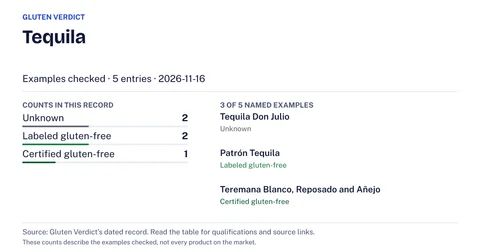 TequilaDepends on the productchecked Nov 16, 2026
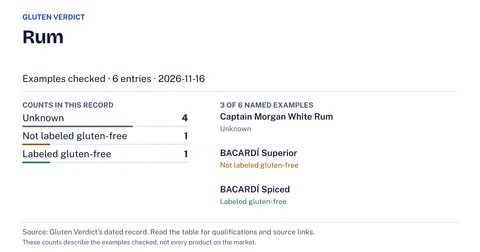 RumDepends on the productchecked Nov 16, 2026
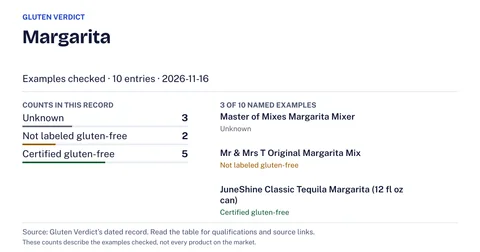 MargaritaDepends on the productchecked Nov 16, 2026
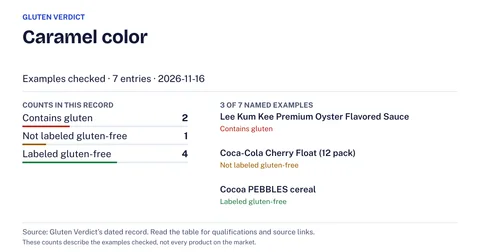 Caramel colorDepends on the product2 of 7 products we checked contain gluten: Lee Kum Kee Premium Oyster Flavored Sauce and Chex Mix Traditionalchecked Nov 16, 2026
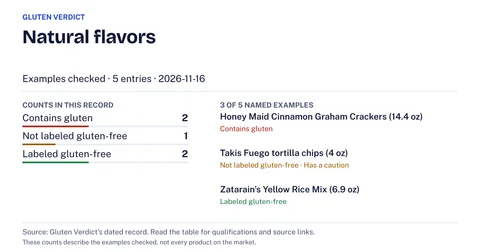 Natural flavorsDepends on the product2 of 5 products we checked contain gluten: Honey Maid Cinnamon Graham Crackers (14.4 oz) and Chex Mix Sour Cream & Onionchecked Nov 16, 2026
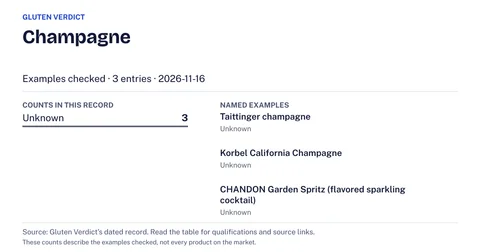 ChampagneNaturally gluten-freechecked Nov 16, 2026
Questions people ask
Is mixto tequila gluten-free?
Patrón’s FAQ says tequila not labeled 100 percent agave is sometimes called “mixto” and is made from agave sugar and added grain or cane sugar3. The NCA considers distilled spirits free of gluten protein even when the starting material is wheat, barley or rye9, so the thing to check is what was added after distillation5.
Is spiced rum gluten-free?
The Captain Morgan spiced rum page lists vanilla, spice and other natural flavors18. The NCA considers flavored spirits gluten-free unless a gluten-containing ingredient was added after distillation5. The Captain Morgan page does not mention gluten20, so ask the maker about the bottle you have.
More in Drinks and alcohol
 Gluten-free alcohol: what US beer, spirits, wine and cider labels may sayWhich US alcohol labels may say gluten-free, who sets the wording, and how beer, spirits, wine, cider and hard seltzer differ, each rule sourced.
 Liqueurs and cream liqueurs: what a maker’s page can and cannot tell youSplit a liqueur into base spirit, flavors, sugar and cream, read what each maker’s own page says about gluten, and know what to ask when it says nothing.
 Flavored coffee, pods and creamers: where gluten can enter a cup you make at homeCheck a flavored bean, pod, instant mix or creamer against the maker's own statement; eight makers' pages read on 2026-11-17.
 Whiskey, vodka and gin: what makers say about grain, distillation and added flavorsHow to read a maker’s gluten statement on vodka, whiskey and gin, tell plain bottles from flavored ones by label wording, and know what to ask.
 Reading the label of a flavored syrup, sauce or cookie topping for glutenHow to read coffee and bar syrup, sauce and cookie-topping labels for gluten, and what Torani, Monin and DaVinci Gourmet say on their own pages.
 Cider, wine, hard seltzer and malt beverages: where barley can still show upHow to read a can for a malt base, and when cider, wine, hard seltzer and coolers need the maker’s own page to settle the barley question.
Related guides
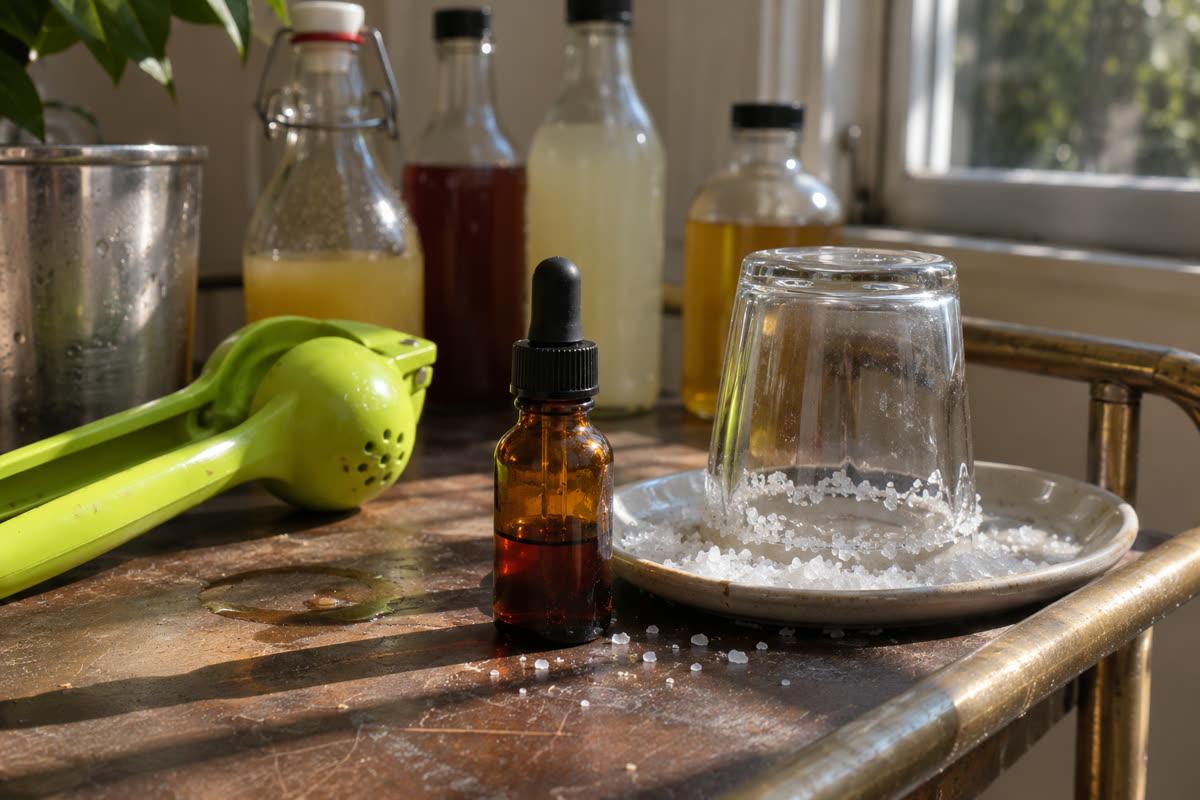 Cocktail mixers, bitters and rims: what can carry gluten besides the spiritTake a cocktail apart: spirit, mixer, bitters, beer, rim and garnish. See what makers and charities say about each, and what to ask the bar.
 Gluten-free at an all-inclusive resort: what to ask before you book and at the buffetWhat to ask an all-inclusive resort before you book, what three brands say on their own pages, and how to handle a buffet and a Spanish card.
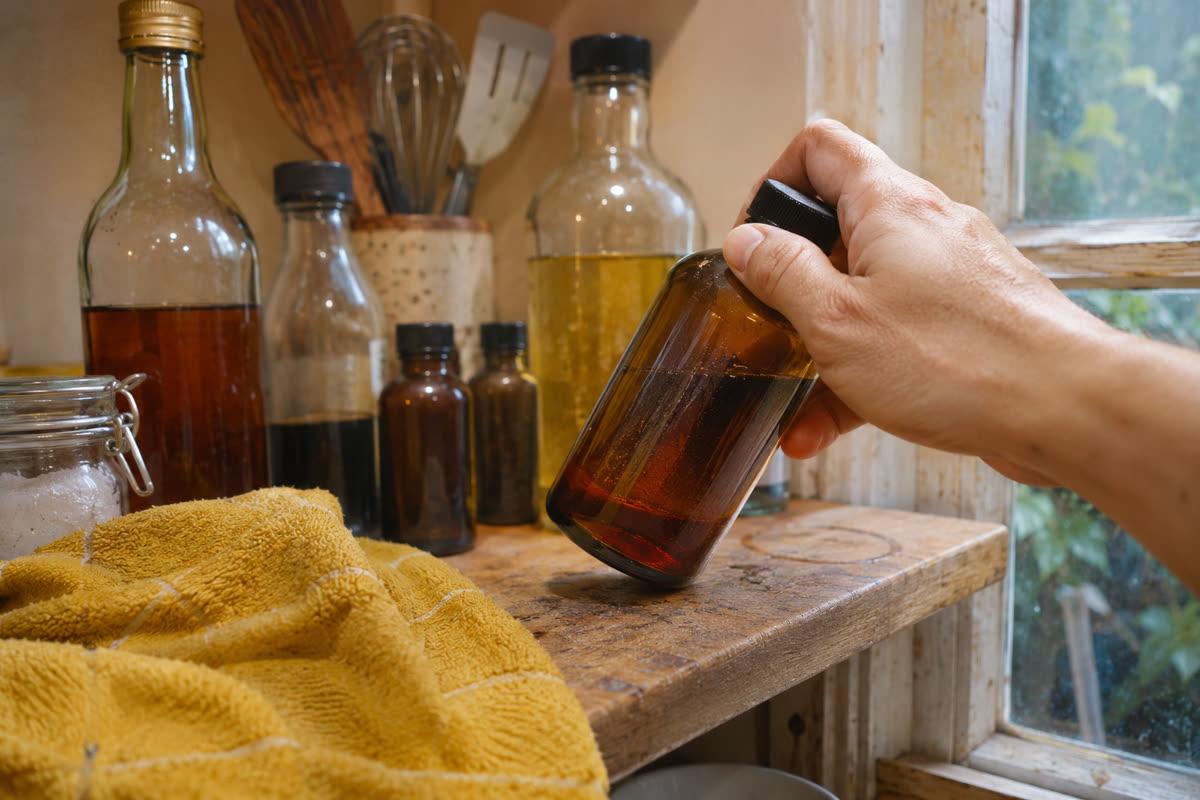 Vinegar, vanilla and other flavor extracts: what to check on the bottleSort a bottle of vinegar or extract into ordinary, check the label or avoid, using the ingredient line and what the charities and makers say.
 Natural flavors, caramel color and modified food starch: which can carry glutenWhich additives on a US label can come from a gluten grain, which sources describe as gluten free, and what the maker has to disclose.
Sources
- [1, 5, 9] National Celiac Association, Alcohol on the Gluten-Free Diet, checked Nov 17, 2026.
Read on 2026-11-17: the list headed “Distilled alcohols include:” names pure distilled spirits such as vodka, gin, whisky, brandy, rum, and tequila; flavored spirits, such as flavored vodka and flavored gin; and liqueurs and cordials.
- [2, 13, 14, 15, 40] Electronic Code of Federal Regulations (eCFR), 27 CFR 5.148 Agave spirits, checked Nov 17, 2026.
- [3, 31, 36] Patrón Tequila, FAQs, checked Nov 17, 2026.
- [4, 23] Electronic Code of Federal Regulations (eCFR), 27 CFR 5.151 Flavored spirits, checked Nov 17, 2026.
- [6, 29, 30, 41] Electronic Code of Federal Regulations (eCFR), 27 CFR 5.155 Alteration of class and type, checked Nov 17, 2026.
- [7] Alcohol and Tobacco Tax and Trade Bureau (TTB), Major Food Allergen Labeling for Wines, Distilled Spirits, and Malt Beverages, checked Nov 17, 2026.
- [8, 10, 11] Alcohol and Tobacco Tax and Trade Bureau (TTB), TTB Ruling 2020-2: Gluten Content Statements in the Labeling and Advertising of Wine, Distilled Spirits, and Malt Beverages, checked Nov 17, 2026.
- [12, 22] Gluten Intolerance Group, Gluten-Free Spirits for National Happy Hour Day: Tequila, Rum, and More, checked Nov 17, 2026.
- [16, 17] Electronic Code of Federal Regulations (eCFR), 27 CFR 5.147 Rum, checked Nov 17, 2026.
Read 27 CFR 5.147 on 2026-11-17: the type table lists one rum type, Cachaça (the second row is “[Reserved]”), and the word “spiced” does not appear on the page.
- [18, 20] Captain Morgan (Diageo), Captain Morgan Original Spiced Rum, checked Nov 17, 2026.
Read the Captain Morgan Original Spiced Rum page on 2026-11-17: no gluten statement on the page.
- [19, 21] Captain Morgan (Diageo), Captain Morgan Coconut Rum, checked Nov 17, 2026.
Read the Captain Morgan Coconut Rum page on 2026-11-17: no gluten statement on the page.
- [24, 25, 27] Electronic Code of Federal Regulations (eCFR), 27 CFR 5.145 Brandy, checked Nov 17, 2026.
- [26] National Celiac Association, Is wine OK on the gluten-free diet?, checked Nov 17, 2026.
- [28] Courvoisier, FAQ, checked Nov 17, 2026.
- [32] Revista del Consumidor (gob.mx), Estudio de calidad: tequila reposado (Revista del Consumidor, mayo 2024), checked Nov 17, 2026.
- [33] National Celiac Association, Ingredients People Question, checked Nov 17, 2026.
- [34] Gluten Intolerance Group, Are “natural flavors” a concern if I’m gluten-free?, checked Nov 17, 2026.
- [35] Gluten Intolerance Group, Does Fermentation or Distillation Make a Product Gluten-Free?, checked Nov 17, 2026.
- [37] Casamigos (Diageo), FAQ, checked Nov 17, 2026.
- [38, 39] Tequila Don Julio (Diageo), FAQ, checked Nov 17, 2026.
Read the FAQ page on 2026-11-17: no gluten statement on the page.