A doctor’s letter or travel card for celiac disease: what TSA, airlines and customs say
Short answer
At TSA a doctor’s letter is optional, and it is a courtesy rather than a pass: TSA names medical documentation as one way to tell an officer about a medical condition1, but every passenger is screened2 and the officer makes the final decision on an item3.
- TSA officer: optional. TSA lists medical documentation as one of three ways to tell an officer about a condition1, the Celiac Disease Foundation advises a doctor’s note for carrying food4, and the TSA pages we read never mention celiac disease6, 7. A Celiac Canada magazine article on Canadian airports, not on TSA, says a note is “not required”5.
- Airline: the Delta page requires advance notice and the American and United pages give request deadlines8, 9, 10, and none of them mentions a letter11, 12, 13.
- Customs officer: Coeliac UK, the Coeliac Society of Ireland and SickKids mention a doctor’s letter14, 15, 16, while the US and Australian agency pages we read do not17, 18.
- Restaurant or ship kitchen: language cards can help when you explain your diet to staff19.
Part of Travel planning and logistics, 22 guides
Key points
- TSA’s Notification Card says that presenting it “does not exempt me from screening”20.
- Charity advice differs by checkpoint: a Celiac Canada article says a note is “not required” for airport security5, while the Coeliac Society of Ireland says a letter “might be necessary” for customs15. A 2025 research letter on coeliac organizations’ travel pages found a lack of standardization but no evidence of contradictory information21.
- We found no agency page that says a doctor’s letter lifts a restriction on a food6, 17, 18.
- Airline pages ask for a special-meal request no later than 20 hours (American) or at least 24 hours (United) before the flight9, 10; Royal Caribbean says requests received less than 45 days before sailing depend on the ship’s product availability22.
- The sources describe a letter that explains coeliac disease, the diagnosis or the medical need for gluten-free food14, 16, 32; the exact wording is the physician’s to decide.
A doctor’s letter, a TSA card and a restaurant card: who each is for
“Celiac travel card” gets used for three different pieces of paper. They have different readers, so decide which one you need before you ask anyone for anything.
| Paper | Who reads it | What the sources say |
|---|---|---|
| Doctor’s letter | A TSA officer, an airline agent or a customs officer, if they ask | TSA lists “medical documentation” as one way to tell an officer about a condition1. Charities mention a letter, with different emphasis4, 14. |
| TSA Notification Card | A TSA officer | TSA’s own card says presenting it “does not exempt me from screening”20. It also tells you to call 72 hours ahead to request a Passenger Support Specialist at the checkpoint23. |
| Restaurant or language card | A waiter, chef or cruise dining team | Language cards can be helpful when you discuss your dietary restrictions with restaurant staff19. |
The sections below follow the order you meet them: security, the airline, the border, then the kitchen. For the rest of the trip checklist, see trip planning.
What TSA says about medical documentation and its Notification Card
TSA’s Disabilities and Medical Conditions page starts with a rule for everyone: all passengers and their property are required to undergo screening at the checkpoint2.
It then says you or a traveling companion may talk to the TSA officer about how to complete screening, and that you may inform the officer of a disability or medical condition verbally, by using the TSA Notification Card or by providing medical documentation1. Documentation is one of three listed options; the other two are saying it aloud and handing over TSA’s card1.
The page does not mention celiac disease, gluten, diets or allergies6. Its rule on larger amounts of liquids sits under the Medications heading: TSA allows larger amounts of medically necessary liquids, gels and aerosols in reasonable quantities for your flight, but you must declare them to officers at the checkpoint for inspection24. Whether a gluten-free food counts as a medically necessary liquid is not addressed on the page6.
The Notification Card’s own text says alternate procedures with an equivalent level of security screening are available and can be done in private, and that presenting the card does not exempt the holder from screening20.
TSA’s Food page says the final decision on whether an item is allowed through the checkpoint rests with the TSA officer3, and its text does not mention celiac disease, gluten, diets or allergies7. What the liquids rule means for a yogurt, hummus or soup is in TSA food rules.
What the charities add
The Celiac Disease Foundation’s travel tips advise getting a doctor’s note to carry “medical foods” through airport security, so that nothing is confiscated by TSA4. A Celiac Canada magazine article on Canadian airports says that, while not required, a doctor’s note confirming a celiac diagnosis can ease the journey through airport security5.
Airlines: what the special-meal pages ask for
On the three airline pages we read, a special meal is requested in advance, and none of the pages mentions a doctor’s letter11, 12, 13.
| Airline | The request | Doctor’s letter on the page? |
|---|---|---|
| Delta | “Advanced notice is required.”8 | Not mentioned11 |
| American Airlines | Request your meal starting 30 days before and no later than 20 hours before takeoff9 | Not mentioned12 |
| United | Order at least 24 hours before your flight10 | Not mentioned13 |
What each airline’s gluten-free meal is and how it words the limits is in airline special meals. Coeliac UK also advises checking with your airline or tour operator whether sealed packs of gluten-free products can be brought into the country you are visiting, and notes they can sometimes give additional baggage allowance if you ask25. More on the flight itself is in air travel.
Customs and agriculture agencies: what they say, and what charities suggest
Border agencies publish their own food rules. Two we read today:
- US Customs and Border Protection: all agriculture items must be declared and are subject to inspection by a CBP Agriculture Specialist, and prohibited or restricted items may include meats, fresh fruits and vegetables, plants, seeds, soil and products made from animal or plant materials26. Undeclared prohibited items will be confiscated and can bring a civil penalty27. The page names no doctor’s letter or medical exception17.
- Australia’s Department of Agriculture, Fisheries and Forestry: all imported food must meet biosecurity requirements28; an officer who inspects declared goods may ask for more information or documentation29; and a traveller who declares and presents all goods is not penalised under the Biosecurity Act 2015, even if the goods are not allowed in30. The leaflet we read does not mention a doctor’s letter18.
We found no agency page that says a doctor’s letter lifts a restriction on a food17, 18. Charities and a children’s hospital do mention a letter at the border:
| Source | What it says |
|---|---|
| Coeliac UK | “If you require further reassurance”, your GP can provide a letter explaining coeliac disease and why you need these products14. It also says some countries are extremely strict on the plant-based products you can bring in, and to check in advance31. |
| Coeliac Society of Ireland | It “might be necessary” to get a letter from your doctor to bring gluten-free food through customs; it also advises bringing shop-bought items, saying packaged foods are easier to explain than tin-foil wrapped homemade items15. |
| Canadian Celiac Association | Some travellers have reported less trouble with customs if they have a signed letter from their doctor indicating a medical need to eat gluten free, and it says this “doesn’t hurt” to have32. |
| SickKids (The Hospital for Sick Children) | For a child, ask the health-care team for a signed doctor’s note outlining the diagnosis and the medical need for gluten-free foods; the document “may be helpful at customs”16. |
Read together, the advice runs from “doesn’t hurt” to “might be necessary”, and a 2025 Journal of Travel Medicine research letter that evaluated the travel pages of national coeliac organizations found a lack of standardization in the travel information they give, though no evidence of contradictory information21. Check the destination’s own agency before you pack; our guide to bringing gluten-free food across borders collects the rules we have checked.
Cruise lines, hotels and resorts
Cruise lines set their own notice periods, as the two pages below show. The Celiac Disease Foundation advises contacting cruise lines ahead of time and notes that they typically have a division that handles allergies and meals33.
- Royal Caribbean: special meal requests received less than 45 days before sailing (90 days for European and Asian itineraries) depend on the ship’s product availability22. The page does not mention a doctor’s note34.
- Norwegian Cruise Line: for gluten-free food, tell a reservations agent or your travel agent at the time of booking, and note that many such requests need 30 days’ notice before sailing35. The page does not mention a doctor’s note36.
For hotels and rentals, Coeliac UK advises booking accommodation and restaurants in advance and requesting gluten-free meals at the same time37, and the Celiac Disease Foundation suggests asking whether the room has a refrigerator and microwave38. More in cruises and all-inclusive resorts.
What to ask the doctor to put in a letter
We do not supply letter wording: what a physician certifies is the physician’s decision, and we found no authority page with a template. The sources describe the contents like this:
- Coeliac UK: a GP letter “explaining coeliac disease and why you need these products”14.
- SickKids: a signed note outlining the child’s celiac disease diagnosis and medical need for gluten-free foods16.
- Canadian Celiac Association: a signed letter indicating a medical need to eat gluten free32.
Between them, the sources mention an explanation of coeliac disease, the diagnosis, the medical need for gluten-free food and a signature14, 16, 32. When you book the appointment, tell the office what the letter is for (a flight, a border crossing, a cruise) and for which dates, and ask for two copies. We found no authority page that supplies translated letter wording, so we give none.
A card you make yourself
This card is our suggestion, in our words, and it is not an official document. It is for a chef, a host or a ship’s dining team, not for an officer. Put on it:
- One line on what you need: that you have celiac disease and need food prepared without gluten.
- The grains to leave out: wheat, rye and barley, plus triticale, which FDA names as a crossbred hybrid of them when it lists the gluten-containing grains behind its gluten-free rule39.
- What you ask the kitchen to do: use clean utensils and a clean surface, and tell you if they are unsure about an ingredient.
- What you will do if the answer is unsure: choose something simpler, or skip the dish.
For a card in another language, start with our translated dining cards guide. The Celiac Disease Foundation says language cards can help when you discuss your dietary restrictions with restaurant staff in foreign countries19, and SickKids suggests giving resort or ship kitchen staff a translated celiac restaurant card in the country’s native language40.
Copies, and the parent’s folder for a child
Carry a paper copy of any letter where you can reach it without unpacking, and keep a photo of it on your phone.
For a child, TSA’s children page adds two steps to the airport routine: tell the officer if the child has a medical condition41, and call TSA Cares 72 hours before you travel with questions or to request help at the checkpoint42.
A parent’s folder can hold the doctor’s note, if you asked for one16, the airline’s meal confirmation, the cruise or resort dietary confirmation, and a card for each kitchen. More in traveling with a gluten-free child.
Questions people ask
Do I need a doctor’s letter to carry gluten-free food through TSA?
None of the TSA pages we read requires one. TSA lists medical documentation as one way to tell an officer about a condition1, and the officer makes the final decision on an item3. The Celiac Disease Foundation advises a note4; a Celiac Canada magazine article says one is not required for Canadian airport security5.
Does a TSA Notification Card let me skip screening?
No. The card’s own text says presenting it does not exempt the holder from screening20.
Will a letter get food past customs?
Charities say a letter may help or might be necessary14, 15, but the CBP and Australian agency pages we read name no medical exception17, 18. Undeclared prohibited items are confiscated in the US and can bring a civil penalty27; Australia’s leaflet says a traveller who declares and presents all goods is not penalised under the Biosecurity Act 2015, even if the goods are not allowed in30.
More in Travel planning and logistics
 Travel insurance and finding a doctor abroad with celiac diseaseWhat a travel policy says about pre-existing conditions, the questions to put to an insurer in writing, and where to look for a doctor abroad.
 Flying gluten-free: what to arrange, pack and ask, from booking to landingA gluten-free flight in order: the airline's special-meal request, what TSA allows through the checkpoint, and the food to carry as a backup.
 Gluten-free food through TSA security: what carries on and what goes in a checked bagWhich gluten-free foods go in a carry-on or checked bag under TSA’s own pages, and how the 3.4-ounce liquid limit applies to spreads, soups and dips.
 Gluten-free travel packing checklist by trip typeWhat to pack for a flight, hotel, rental kitchen or road trip, with TSA and airline limits and what sensors and enzyme pills do not show.
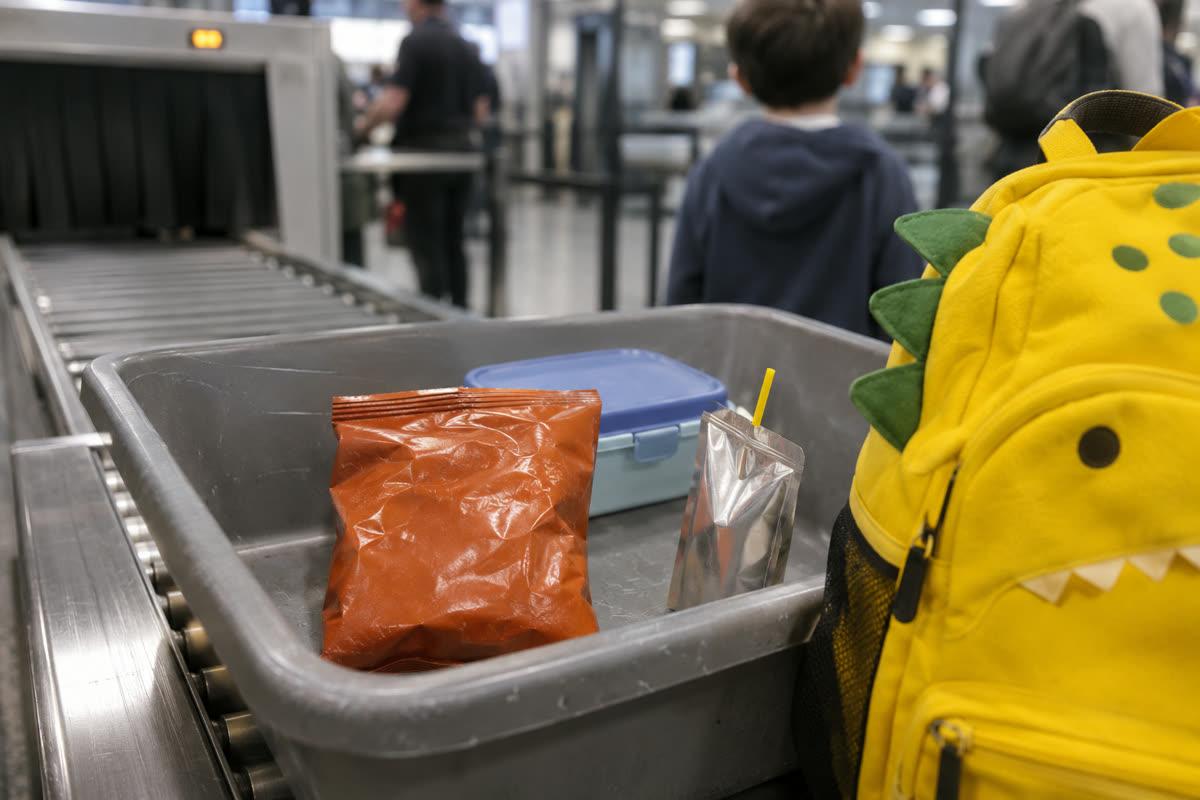 Traveling with a gluten-free child: TSA’s rules for children’s food and what to packWhat TSA says about a child’s food and screening, how to pack the snack bag, and how to brief the adults who will feed a gluten-free child.
 Gluten-free dining cards in other languages: where the wording comes fromWhich gluten-free card wording comes from EU law or a celiac society, which cards are members-only, and how to hand one to a server.
Related guides
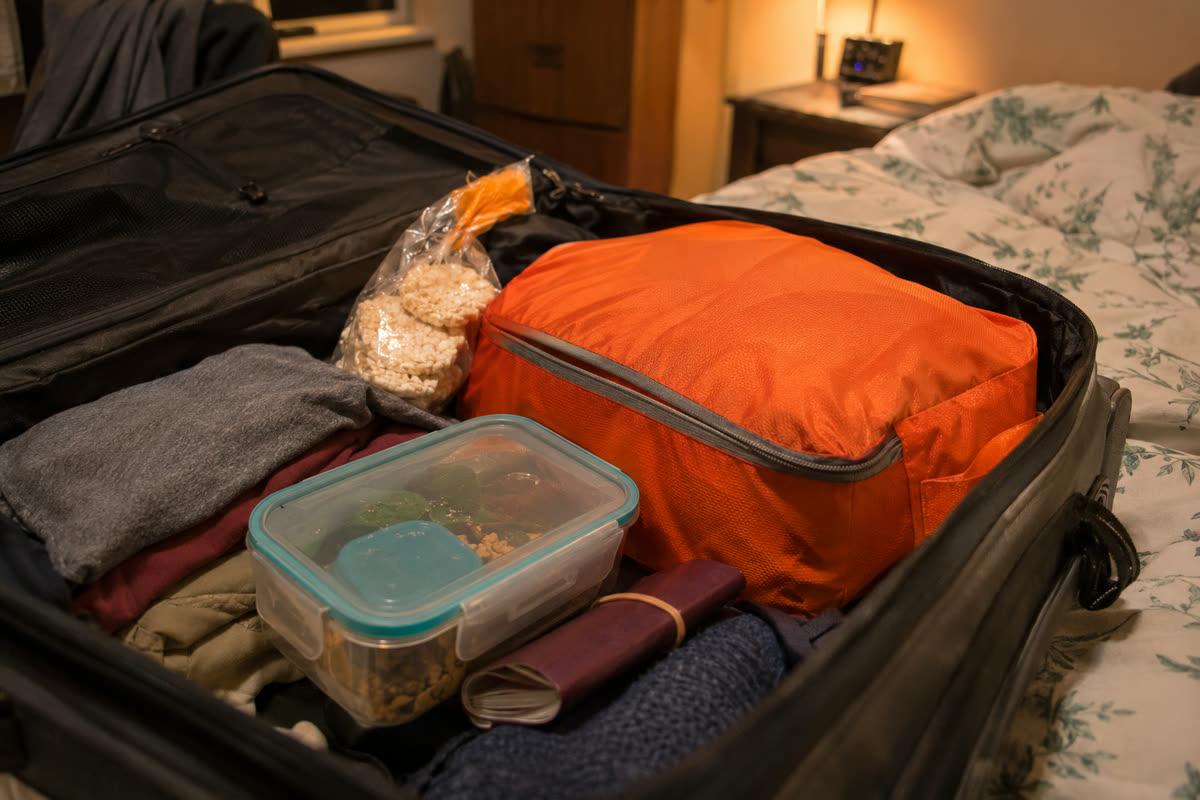 Planning a gluten-free trip: what to arrange, in orderA gluten-free trip in order: how you will eat, what to tell hotels and airlines, which cards and notes to carry, and what food to pack.
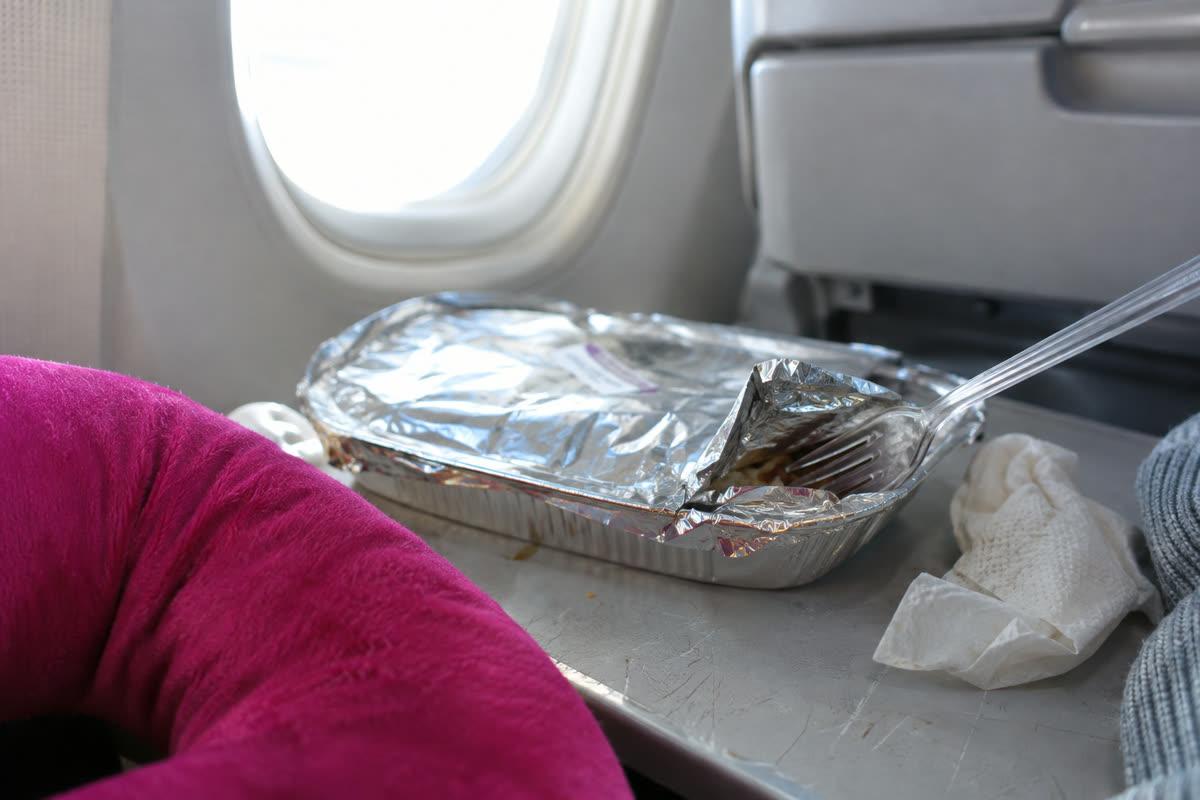 Gluten-free airline meals: what each airline’s own page says and how to request oneWhat Delta, American, Air Canada, Qantas, Virgin Atlantic and JetBlue say on their own pages about gluten-free meals: where to ask and by when.
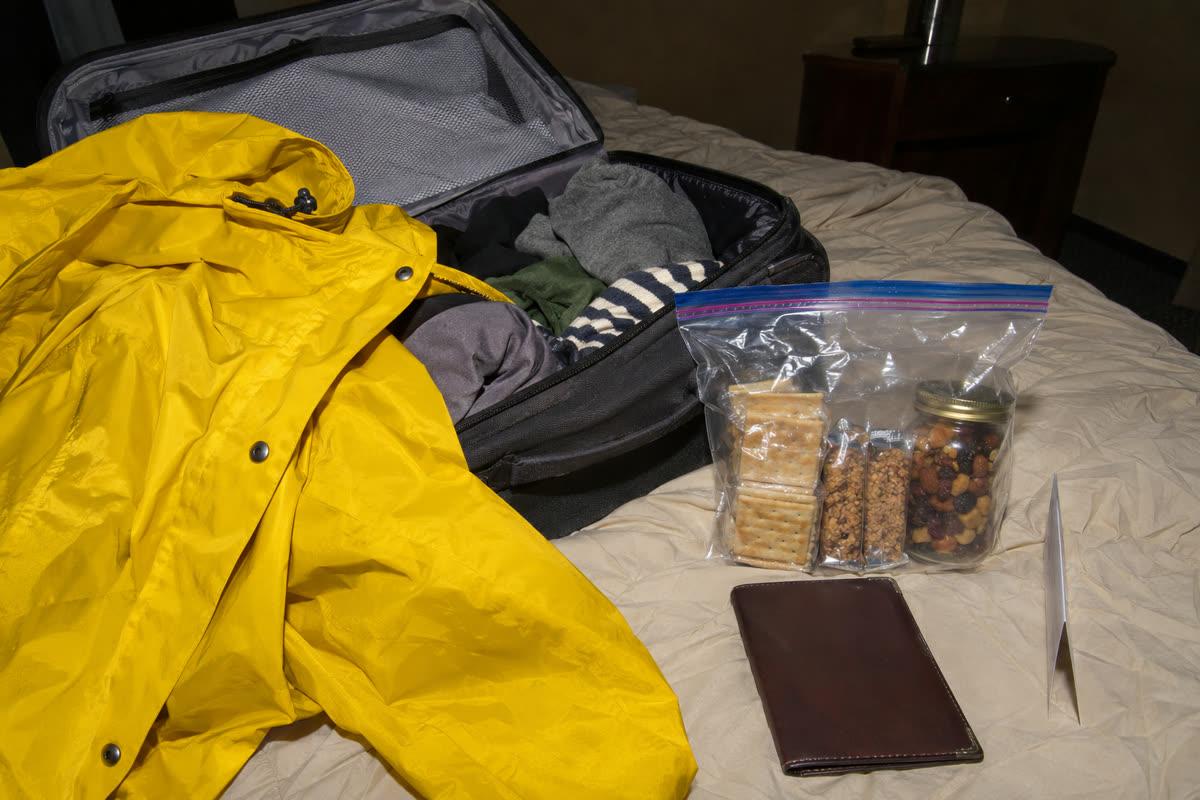 Bringing gluten-free food into Canada, Mexico, Australia and New ZealandWhat a US traveler can carry into Canada, Mexico, Australia and New Zealand: declare food, pack to each country’s list, and know what to buy there.
Sources
- [1, 2, 6, 24] Transportation Security Administration, Disabilities and Medical Conditions, checked Nov 17, 2026.
Read on 2026-11-17: the text of the page, including its Medications section and the rule on medically necessary liquids, does not contain the words celiac, gluten, diet or allergy.
- [3, 7] Transportation Security Administration, What Can I Bring? Food, checked Nov 17, 2026.
Read on 2026-11-17: the text of the Food page does not contain the words celiac, gluten, diet or allergy.
- [4, 19, 33, 38] Celiac Disease Foundation, Tips for Traveling Gluten-Free, checked Nov 17, 2026.
- [5] Celiac Canada, CanadianCELIAC magazine: Navigating Airports, checked Nov 17, 2026.
- [8, 11] Delta Air Lines, Special meals, checked Nov 17, 2026.
Read on 2026-11-17: the text of the page does not mention a doctor’s note, letter or medical documentation for a special meal.
- [9, 12] American Airlines, Special meals and nut allergies, checked Nov 17, 2026.
Read on 2026-11-17: the text of the page does not mention a doctor’s note, letter or medical documentation for a special meal.
- [10, 13] United Airlines, Special meals, checked Nov 17, 2026.
Read on 2026-11-17: the text of the page does not mention a doctor’s note, letter or medical documentation for a special meal.
- [14, 25, 31, 37] Coeliac UK, Travelling with coeliac disease, checked Nov 17, 2026.
- [15] Coeliac Society of Ireland, Travelling, checked Nov 17, 2026.
- [16, 40] The Hospital for Sick Children (SickKids), AboutKidsHealth, Travelling with celiac disease, checked Nov 17, 2026.
- [17, 26, 27] US Customs and Border Protection, Bringing Food into the U.S., checked Nov 17, 2026.
Read on 2026-11-17: the text of the page does not contain the words doctor, letter, physician or medical.
- [18, 29, 30] Australian Department of Agriculture, Fisheries and Forestry, Travelling or returning to Australia (leaflet), checked Nov 17, 2026.
Read on 2026-11-17: the text of the leaflet does not contain the words doctor, letter or physician; for medicines and other therapeutic goods it refers readers to the Therapeutic Goods Administration.
- [20, 23] Transportation Security Administration, TSA Notification Card: Individuals with Disabilities and Medical Conditions (PDF), checked Nov 17, 2026.
- [21] Journal of Travel Medicine, Gluten-free journeys: an evaluation of online travel health information for patients living with coeliac disease, checked Nov 17, 2026.
- [22, 34] Royal Caribbean International, What Options Are Available for Dietary Restrictions?, checked Nov 17, 2026.
Read on 2026-11-17: the text of the page does not mention a doctor’s note, letter or medical documentation.
- [28] Australian Department of Agriculture, Fisheries and Forestry, International travel, checked Nov 17, 2026.
- [32] Canadian Celiac Association, Gluten-Free Travel, checked Nov 17, 2026.
- [35, 36] Norwegian Cruise Line, What about special dietary needs, checked Nov 17, 2026.
Read on 2026-11-17: the text of the page does not mention a doctor’s note, letter or medical documentation.
- [39] US Food and Drug Administration, Questions and Answers on the Gluten-Free Food Labeling Final Rule, checked Nov 17, 2026.
- [41, 42] Transportation Security Administration, Traveling with Children, checked Nov 17, 2026.