Bringing gluten-free food into Canada, Mexico, Australia and New Zealand
Short answer
Declare your food when you arrive (Canada and New Zealand ask for all of it; Australia asks for certain foods and says to declare anything you are unsure about), then pack to each country’s own list: officers can inspect what you declare, and a declared item can still be refused1, 2, 3, 4, 36.
- Canada, from the US: baked goods, snack foods and grain-derived foods, up to 20 kg per person, with no meat in baked goods or snack foods5.
- Mexico: products on SENASICA’s tourist-import list, such as cereal flours, in personal-use amounts; any homemade or artisanal product is prohibited6, 7.
- Australia: fully cooked, shelf-stable bread and biscuits with no meat, and commercially packaged pasta made only from plant ingredients; raw rice is not permitted8, 9, 10.
- New Zealand: most dried or highly processed plant products are allowed if identifiable, clean and unable to be grown into plants, at 2 kg per product when they contain no meat or egg; homemade bars and snacks must be baked11, 12, 13.
Part of Travel: the Americas and Oceania, 10 guides
Key points
- Declare all food. Canada says officers may seize undeclared food and you may have to pay a penalty of up to $1,30014, New Zealand charges NZ$400 for a false declaration15, and Australia says declaring avoids a penalty even for goods it does not allow16.
- Canada’s page for personal-use food sorts food by type and does not mention gluten or a medical exemption17.
- A Mexican consulate guide lists any homemade or artisanal product as prohibited7; New Zealand requires homemade bars and snacks to be baked13.
- Egg, honey and meat bring extra rules: New Zealand wants plant products that contain them to state on the packaging less than 2% honey, 5% egg and/or 5% meat18, and Canada’s baked goods and snack foods cannot contain meat5.
- Coming home, CBP says you may bring bakery items, but failing to declare agricultural items costs a first-time offender a $300 civil penalty19, 20.
Declare first: four countries, four declarations
Start with the declaration, because that is where each country asks about food.
| Country | Where you declare food | What the page says |
|---|---|---|
| Canada | At arrival: “you must declare all food products you bring with you into Canada”1 | Border officers may seize undeclared food, and you may have to pay a penalty of up to $1,30014 |
| Mexico | A customs declaration form if you arrive by plane or ship, except at the airports the guide lists21; by vehicle, you choose between the “Self-declaration” and “Nothing to declare” lanes22 | Its list of prohibited products includes any homemade or artisanal product7 |
| Australia | The Incoming Passenger Card23 | No penalty if you declare all goods, even goods that are not allowed16 |
| New Zealand | The New Zealand Traveller Declaration3 | A false declaration is a strict liability offence, with an NZ$400 infringement fee24, 15 |
Declaring is not the same as being allowed in. In Australia, anything you declare is assessed by a biosecurity officer who decides the risk and whether to inspect it25. Depending on the risk, you may then have to pay for treatment or export, or give up the goods for destruction53. In New Zealand, the rules for each food are listed on MPI’s page, and the products listed there are inspected on arrival4. Canada says your food may be inspected by the CBSA at the border crossing or airport26.
Celiac Canada gives the same advice from the traveler’s side: declare all food when asked, regardless of where it came from, including food from the airplane27.
Canada: what a US traveler may carry for personal use
Canada’s personal use exemption covers food that is solely for your own use, not commercial use, and within the CFIA’s maximum quantity limits28. These are the rows of the CFIA’s table for travelers coming from the United States that matter most to a gluten-free pack5:
| Food, as CFIA names it | Restriction | Limit per person |
|---|---|---|
| Baked goods such as bread, pastries, cakes, fruit pies, biscuits | Cannot contain meat5 | 20 kg (44.09 lbs)5 |
| Confectionary, sweeteners, snack foods | Cannot contain meat5 | 20 kg (44.09 lbs)5 |
| Grain-derived foods | None5 | 20 kg (44.09 lbs)5 |
| Nuts, grains, seeds | Refer to AIRS5 | 20 kg (44.09 lbs)5 |
Eggs follow their own row: they must be retail packaged and labelled “Product of the USA”29. The CFIA’s table sends dried foods and nuts, grains and seeds to AIRS30, which is the CFIA’s Automated Import Reference System, and the CBSA tells travelers to check it before crossing the border with food31.
The CFIA’s page has a second table for travelers coming from a country other than the United States, and its rows differ5. If you are travelling from another country, read that table instead.
The page sorts food by type and says nothing about gluten, diets or medical need17. Celiac Canada reports that some travelers have had less trouble with customs when carrying a signed letter from their doctor about a medical need to eat gluten free32. That is the charity’s report of what some travelers experienced, not a rule on the CFIA’s page.
Mexico: the prohibited list and the permitted plant list
We found two Mexican government documents for this: a 2026 guide from the Mexican consulate in Houston and a copy of SENASICA’s tourist-import annex on another consulate’s site. SENASICA’s own current list would not open for us, the annex copy carries no date we could see, and the consulate guide is a program for Mexicans residing abroad33. Check the current SENASICA list before you pack34.
What the guide lists as prohibited
- Any homemade or artisanal product7
- Snacks, sandwiches and similar items with dairy and/or meat content that lack whole packaging or a health authority stamp7
- Vegetables, fruit and fresh plants7
What the plant-origin lists name
The guide’s list of plant-origin products that can be introduced names cereal pellets, “meals”, oilseed and legume meals, shelled almonds, hazelnuts and walnuts, spices and roasted coffee, among others35. SENASICA’s annex says the products on its plant list may enter with only a visual inspection when they are free of pests and in personal-use amounts, and it names cereal flours and legume flours6.
Bread, crackers, cookies, bars and pasta are not named in the plant-origin lists we read6, 35. The guide says its lists are not limited to the items shown34, so an item missing from them is not necessarily prohibited, but we cannot tell you from these pages whether it is allowed. Declare it and ask at the crossing.
Australia: the Incoming Passenger Card and BICON
Australia requires a declaration by law for certain food, plant material and animal products2, made on the Incoming Passenger Card23. The department says to declare when unsure36. Its page of food entries is not exhaustive, and anything not listed goes to the Biosecurity Import Conditions system, BICON37.
| Food | What the page says |
|---|---|
| Bread, biscuits, cakes, pastries | Allowed if for personal consumption, fully cooked, shelf stable (no refrigeration needed) and meat-free, with any fillings or toppings cooked8 |
| Pasta and noodles | Permitted if commercially manufactured and packaged and made only from ingredients of plant origin9 |
| Rice | Raw rice is not permitted and will be destroyed10; processed rice products, including rice flour, must meet import conditions38 |
| Peanuts | Commercially prepared and packaged processed peanuts are permitted but must meet BICON conditions39; the entry does not name peanut butter40 |
The department also warns that some foods may be restricted even when commercially packaged, naming eggs, dairy, meat, grains, seeds and nuts, fruit and vegetables, and honey41. A baking mix with egg or milk powder is worth checking against BICON before it goes in the bag.
Coeliac Australia says it has prepared a Travelling to Australia fact sheet that covers bringing food and medicine into Australia, shopping and eating out42. Our Australia guide covers the gluten-free rules on the other side of the border.
New Zealand: the NZ Traveller Declaration
For every product on MPI’s food page, you must declare it, an officer inspects it on arrival, and clearance is not assured4. A false declaration is a strict liability offence, so you may have broken the law even if you did not mean to24; the penalty is an NZ$400 infringement fee15.
The page has no entry for bread, crackers or baking mixes by name11. Its “Plant products” category covers canned, cooked, preserved, dried and highly processed plant products, and says most are allowed if they are identifiable, cannot be grown into plants and are clean11. Where that category applies, these details matter to a gluten-free pack:
- Plant products that contain honey, egg or meat must be commercially manufactured and packaged, in their original unopened container, and not need refrigeration43.
- The packaging must also clearly state that it contains less than 2% honey, 5% egg, and/or 5% meat18.
- Homemade muesli, bars or snacks must be baked13.
- The limit is 2 kg per product if it contains no meat or egg, and 1 kg if it does12.
You cannot bring any fresh fruit or vegetables44. The “cannot bring” list also names pasta salad, frozen unprocessed grains and seeds, and whole grain and seeds that are not rated “Basic” on the Plants Biosecurity Index45. Our New Zealand guide covers the shared food code and local labels.
Checking your pantry against the lists
Which version of each food is gluten-free is a separate question from whether it clears the border. Our verdicts show how products compare: see bread, crackers, cookies, granola bars, pasta, cereal and peanut butter. The border lists above are about type, packaging and ingredients, and the Canadian page does not mention gluten17.
- Sort the bag into sealed commercial packs and everything else. Mexico prohibits homemade or artisanal products7; New Zealand wants homemade bars baked13; Australia’s pasta entry turns on commercial manufacture and packaging9.
- Read each ingredient list for egg, milk, honey and meat. Canada’s baked goods and snack foods cannot contain meat5; New Zealand sets egg, honey and meat limits on the label18; Australia says eggs, dairy, meat and honey products may be restricted even when commercially packaged41.
- Leave out fresh fruit and vegetables: New Zealand does not allow them44 and Mexico prohibits them7. Celiac Canada’s general tip is that fruits, veggies, eggs, dairy and meat are all big no-nos46, but that is not a country rule: the CFIA’s table for travellers from the US lists dairy with no restriction5 and eggs on conditions29.
- Check nuts and raw grains and rice before packing. Celiac Canada says nuts are frequently forbidden47; Australia does not permit raw rice10.
- Keep packages sealed and labels readable. New Zealand asks for original unopened containers for some products43.
- Declare everything, including food from the flight27.
What to buy on arrival instead
Celiac Canada suggests researching grocery stores at the destination that sell gluten-free products rather than trying to bring all kinds of food along48. Coeliac New Zealand suggests finding out what foods and drinks you can take to your destination country49 and contacting the local coeliac society about local resources and the law on food50.
Each country’s labels and rules differ, so read the local guide before you shop: Canada, Mexico, Australia and New Zealand. For the flight itself, see gluten-free food through TSA security and flying gluten-free; for work trips, gluten-free at work.
Coming back into the United States
CBP says you may bring bakery items and certain cheeses into the United States19, and that many prepared foods are admissible51. It advises avoiding rice because it can harbor insects52. Failing to declare agricultural items costs a first-time offender a $300 civil penalty20.
Verdicts in this guide
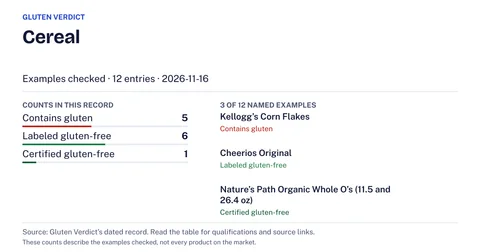 CerealDepends on the product5 of 12 products we checked contain glutenchecked Nov 16, 2026
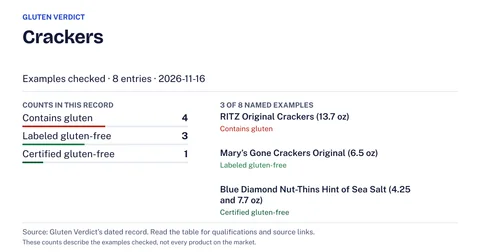 CrackersDepends on the product4 of 8 products we checked contain glutenchecked Nov 16, 2026
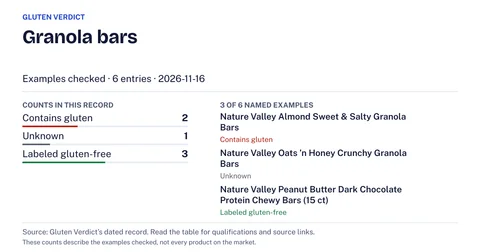 Granola barsDepends on the product2 of 6 products we checked contain gluten: Nature Valley Almond Sweet & Salty Granola Bars and Nature Valley Cinnamon Brown Sugar Soft-baked Oatmeal Squareschecked Nov 16, 2026
 PastaContains glutenchecked Nov 16, 2026
 BreadContains glutenchecked Nov 16, 2026
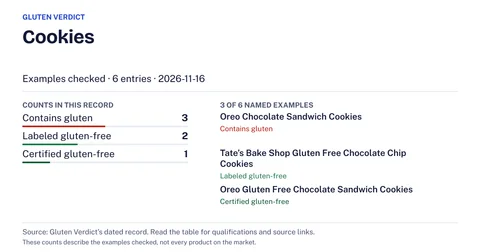 CookiesContains glutenchecked Nov 16, 2026
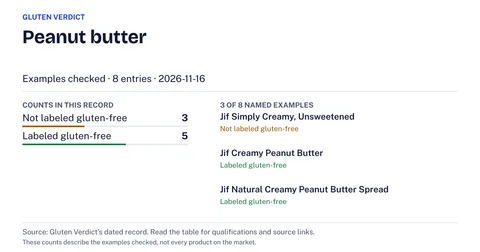 Peanut butterDepends on the productchecked Nov 16, 2026
Questions people ask
Do I have to declare sealed gluten-free snacks?
Canada says you must declare all food products you bring1, and New Zealand requires you to declare all food3. Australia requires a declaration for certain food, plant material and animal products2 and says to declare if unsure36.
Can I bring homemade gluten-free bread or bars?
Mexico lists any homemade or artisanal product as prohibited7. New Zealand requires homemade muesli, bars and snacks to be baked13. Australia’s bread entry asks for fully cooked, shelf-stable, meat-free goods8, and Canada’s baked goods cannot contain meat5.
Will a doctor’s letter help at customs?
Celiac Canada reports that some travellers have had less trouble with customs when they carried a signed letter from their doctor32. The CFIA’s page does not mention a medical exemption17.
What happens if I declare something that is not allowed?
In Australia you will not face a penalty if you declare all goods, even goods not allowed in16; a biosecurity officer assesses what you declared25, and depending on the risk you may have to pay to have the goods treated or exported, or give them up for destruction53.
More in Travel: the Americas and Oceania
 Gluten-free in Argentina: sin TACC, the ANMAT list, parrilla and milanesaWhat “sin TACC” means, how to check a product in ANMAT’s official list, and how to judge parrilla, milanesa, empanadas and alfajores in Argentina.
 Gluten-free in Brazil: the “contém glúten” line, pão de queijo, farofa and tapiocaHow to read Brazil’s mandatory “contém glúten” line, and how to judge pão de queijo, farofa, tapioca and fried snacks by recipe and kitchen.
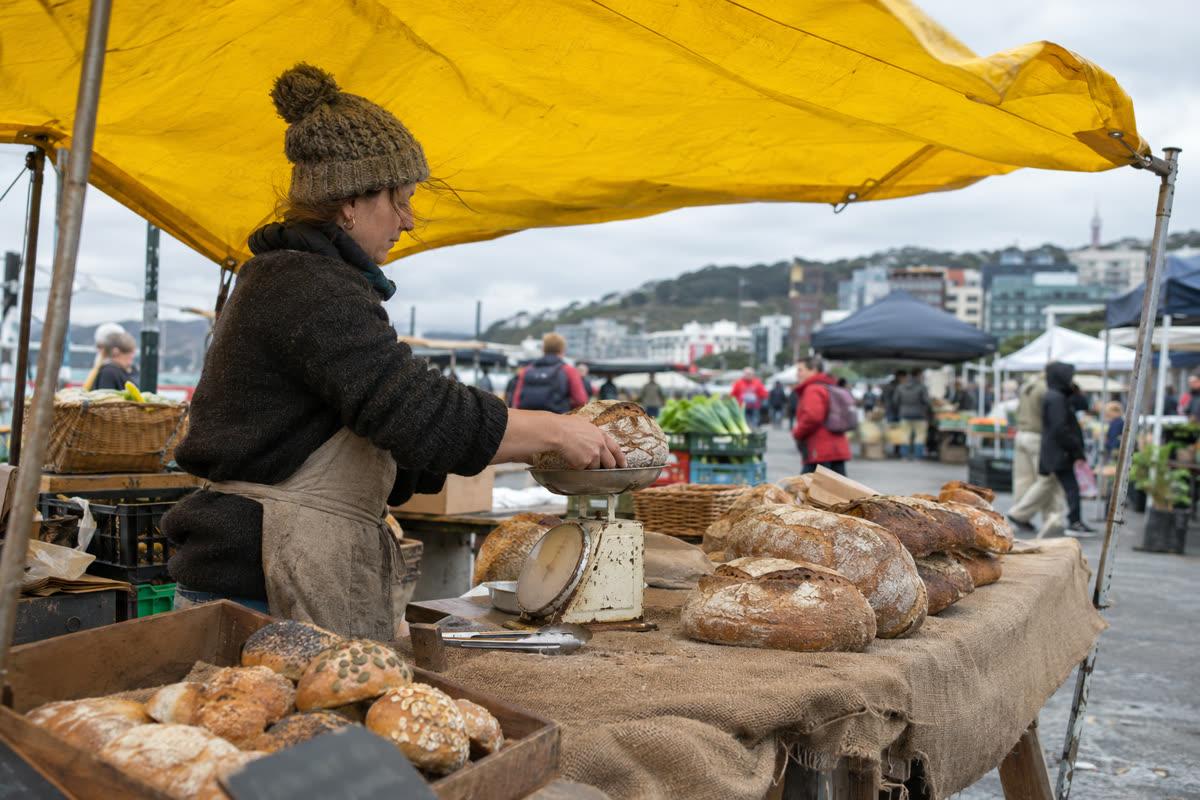 Gluten-free in New Zealand: the shared food code, oats, Marmite and the borderWhat a US visitor needs for gluten-free food in New Zealand: the shared Australian claim, oats, Marmite, Coeliac NZ marks and border declaration.
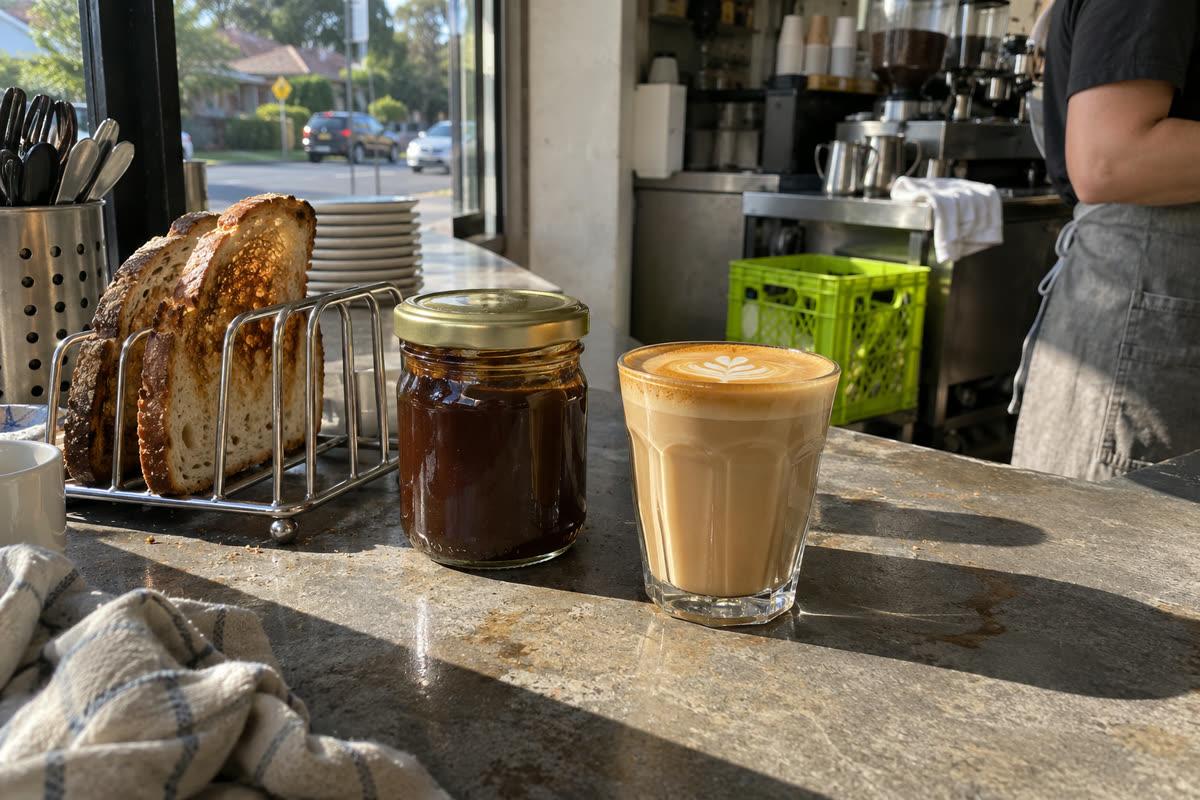 Eating gluten-free in Australia: the oats rule, Vegemite and the borderWhat “gluten free” means on an Australian pack, why oats cannot carry the claim, which Vegemite to check, and what to declare on arrival.
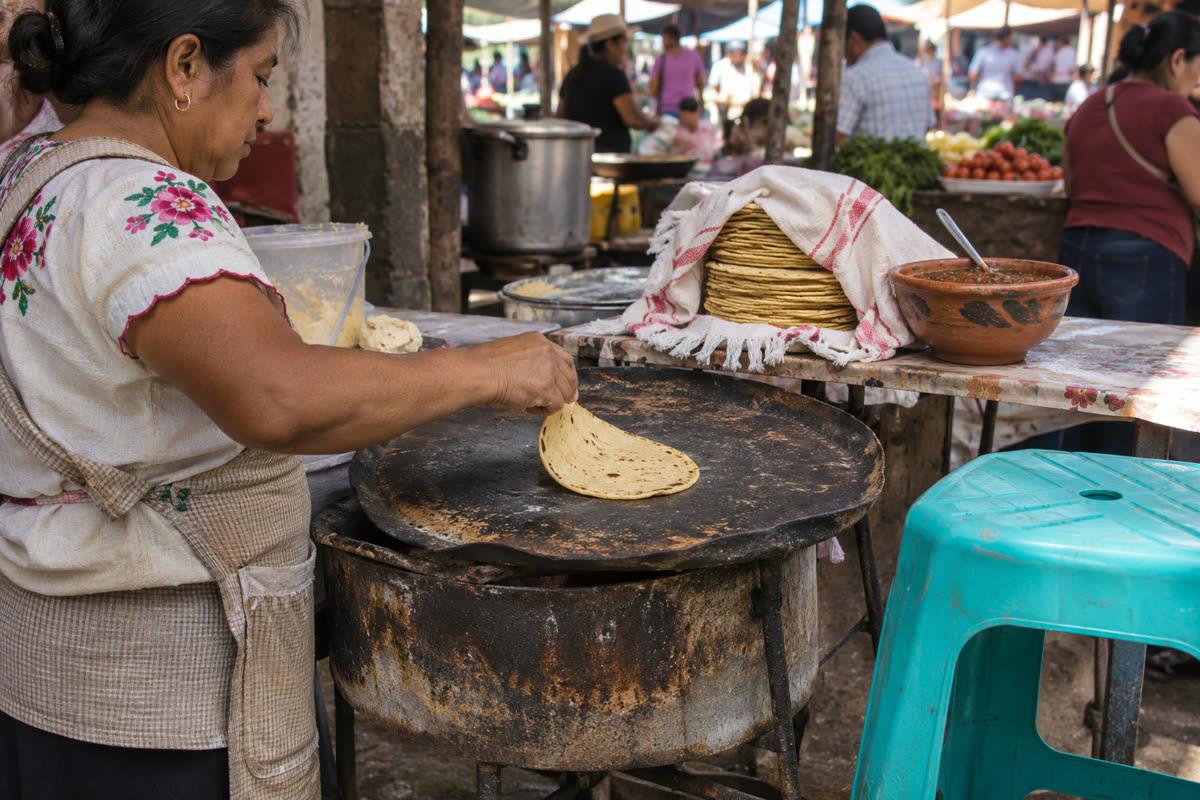 Gluten-free in Mexico: tortillas, Maggi seasonings and the Mexican allergen lineTell a corn tortilla from a corn-and-wheat blend, spot the Maggi seasonings that list wheat, read the Mexican allergen line and ask about the griddle.
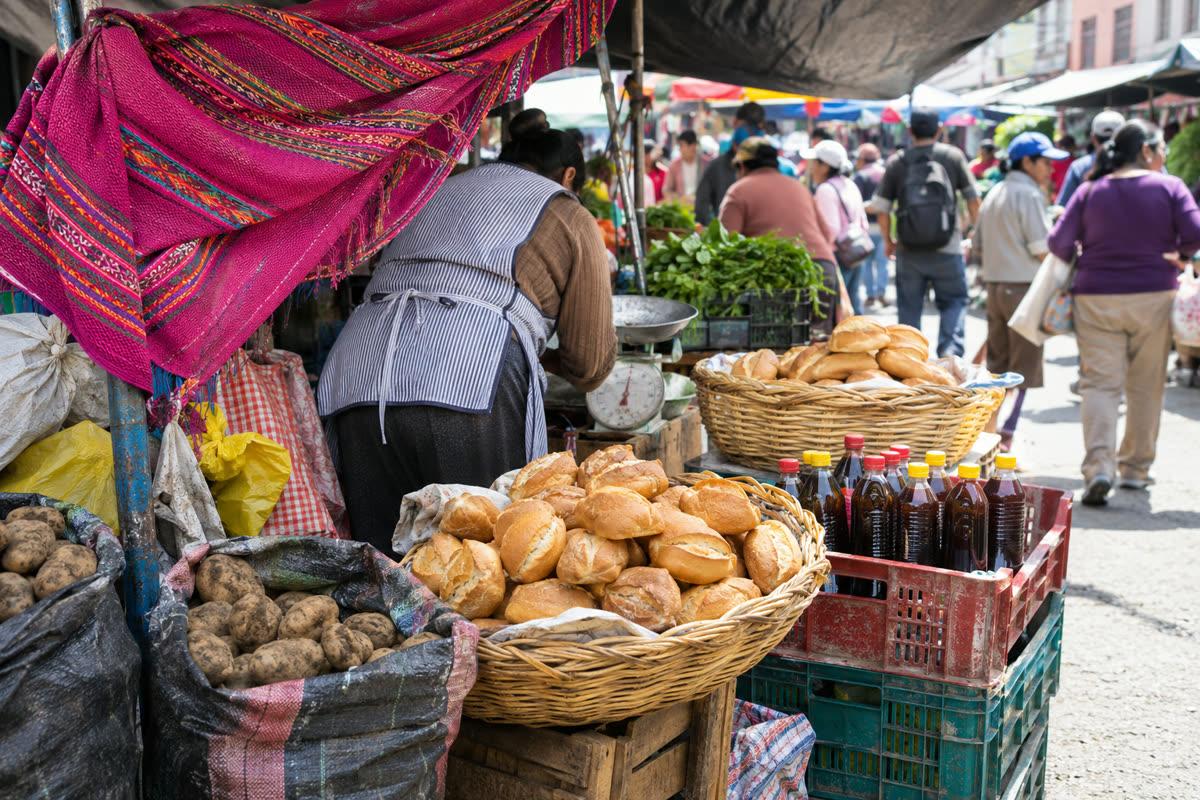 Gluten-free in Peru: chifa soy sauce, bread in the sauce and Ley 31881Where wheat enters Peruvian cooking (sillao in chifa dishes, bread in sauces), what Peru’s gluten-free label law settles, and how to plan trek meals.
Related guides
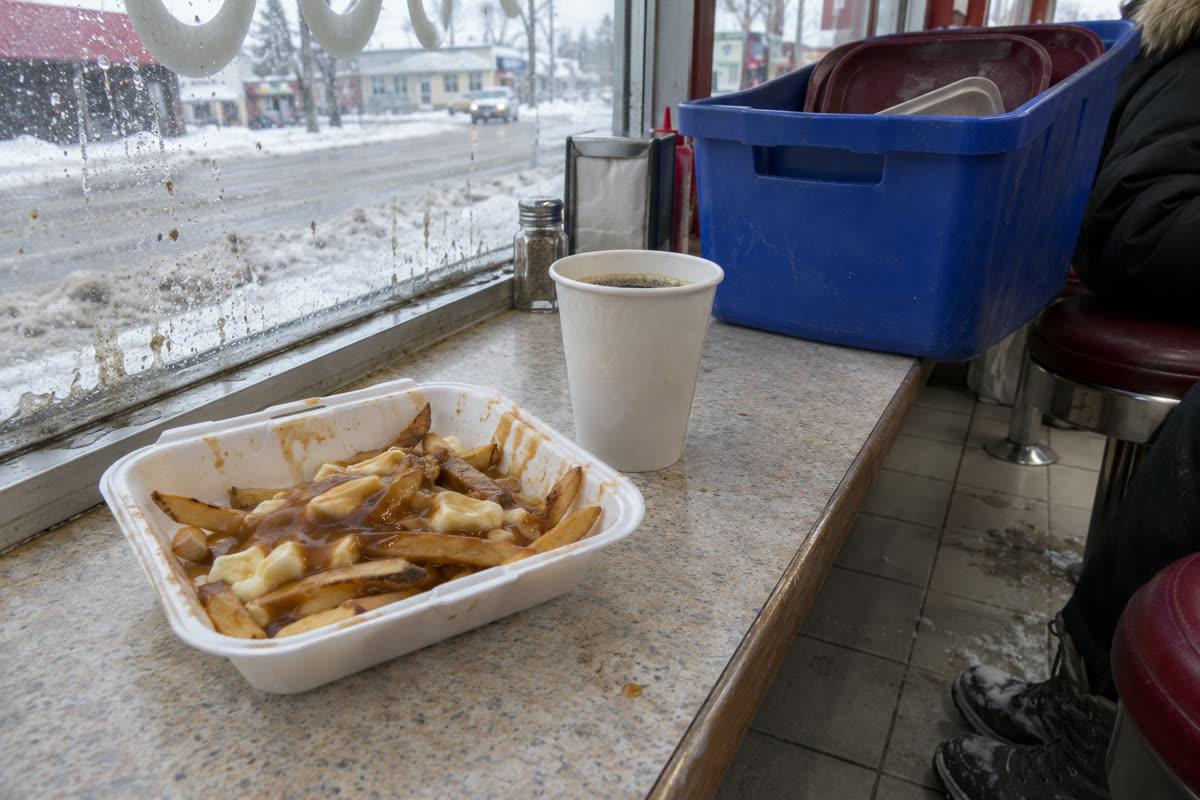 Eating gluten-free in Canada: gluten-source labels, poutine and Tim HortonsHow a Canadian label names gluten sources, what Health Canada says about gluten-free claims, and how to judge poutine and Tim Hortons.
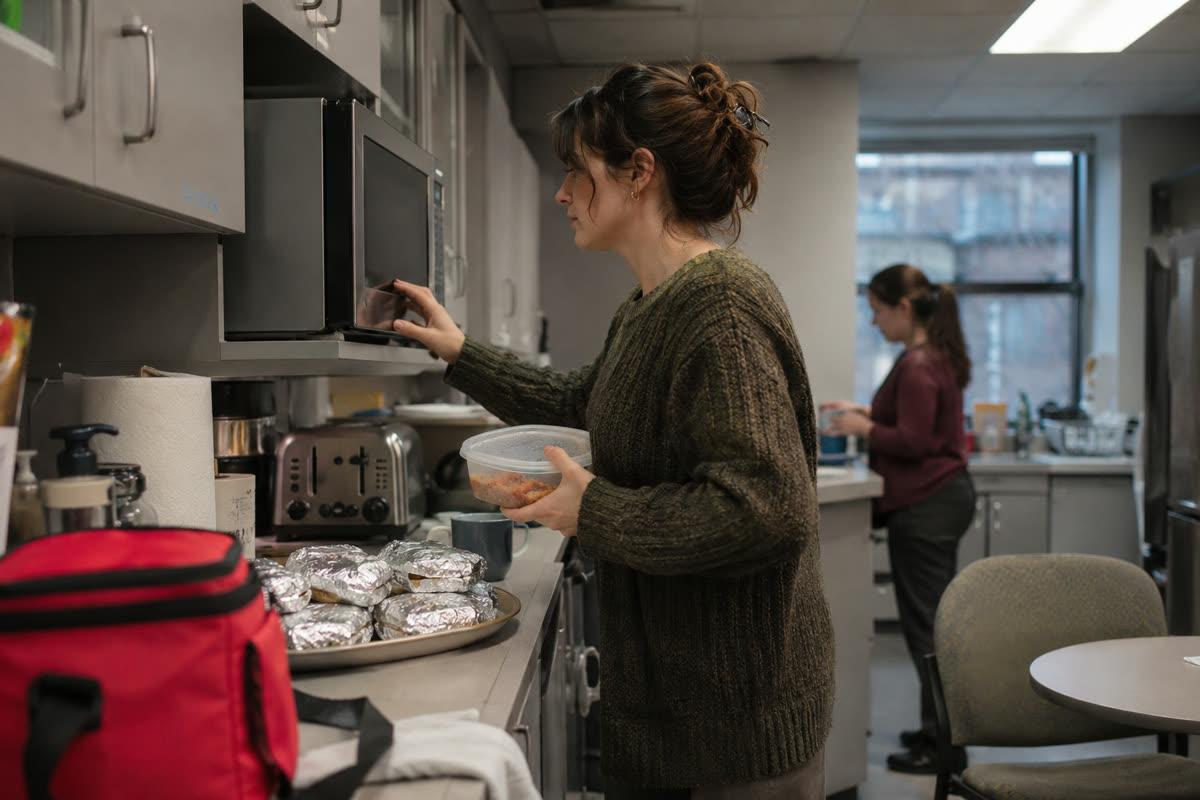 Gluten-free at work: catered lunches, client dinners, the office kitchen and business tripsWhat to ask a caterer, say to a server, label in the office fridge and carry on a business trip, from GIG, NIDDK, FDA and a chain's own allergen page.
 Gluten-free on a trip through several European countries: borders, trains, hostels and supermarketsA packing and shopping plan for a multi-country Europe trip: what each border lets you carry, what the EU label rule covers, and a check for each stop.
 WIC and gluten-free food: what the package includes and how to ask for a substitutionHow WIC food packages treat wheat, how states mark gluten-free items, and what to ask the clinic about a substitute for bread, cereal or grains.
Sources
- [1, 5, 17, 26, 28, 29, 30] Canadian Food Inspection Agency, Bringing food into Canada for personal use, checked Nov 17, 2026.
Read on 2026-11-17: the table headed “Travelling from the United States” lists baked goods such as bread, pastries, cakes, fruit pies and biscuits (“Cannot contain meat.”, 20 kg/44.09 lbs); confectionary, sweeteners and snack foods (“Cannot contain meat.”, 20 kg/44.09 lbs); grain-derived foods (“None”, 20 kg/44.09 lbs); nuts, grains and seeds (“Refer to AIRS”, 20 kg/44.09 lbs); and dairy products (“None”, 20 kg/44.09 lbs). A second table, headed “Travelling from a country other than the United States”, follows, and its rows differ (for example, eggs and processed egg products are “Not permitted”).
Read on 2026-11-17: no mention of gluten, a gluten-free diet or a medical exemption anywhere on the page.
Read on 2026-11-17: under “More information”, the page says that, as a traveller or through an online purchase, you are eligible for the personal use exemption if the food is solely for personal use, not for commercial use, and the quantity does not exceed the Maximum Quantity Limits for Personal Use Exemption prepared by the CFIA.
Read on 2026-11-17: in the table headed “Travelling from the United States”, the row for eggs and processed egg products says they must be retail packaged, for human consumption, and clearly labelled as a “Product of the USA”, with a limit of 5 dozen eggs.
Read on 2026-11-17: in the table headed “Travelling from the United States”, the row for dried foods says “Please see AIRS.” and the row for nuts, grains, seeds says “Refer to AIRS”; the page’s “Travelling from a country other than the United States” table says “Refer to the Automated Import Reference System” for dried foods.
- [2, 8, 9, 10, 37, 38, 39, 40] Australian Government Department of Agriculture, Fisheries and Forestry, Bringing or mailing goods to Australia, checked Nov 17, 2026.
Read on 2026-11-17: the entry “Biscuits, bread, cakes, pastries, Christmas cake, and Christmas pudding (excluding cheesecakes)” says these products are allowed if they are for personal consumption; they are fully cooked, shelf stable (do not require refrigeration) and contain no meat; and any fillings or toppings are cooked with the cake.
Read on 2026-11-17: the entry “Nuts and products containing nuts” does not name peanut butter or any other nut butter.
- [3, 15, 24] New Zealand Ministry for Primary Industries, What happens if you fail to declare, checked Nov 17, 2026.
- [4, 11, 12, 13, 18, 43, 44, 45] New Zealand Ministry for Primary Industries, What food you can bring to NZ, checked Nov 17, 2026.
Read on 2026-11-17: under “Conditions that apply to all products”, the page says that for any product listed you must declare it on your NZ Traveller Declaration, it will be inspected by a biosecurity officer on arrival, and clearance into New Zealand is not assured.
Read on 2026-11-17: the category “Plant products: canned, cooked, preserved, dried, and highly processed plant products, including tea and coffee” says most of these products are allowed if they are identifiable, you cannot grow plants from the products, and they are clean and free of biosecurity contamination like bugs, soil, or disease. The page’s categories and entries do not name bread, crackers or baking mixes.
Read on 2026-11-17: under “Weight limits” for plant products, the page lists 2 kg per product if it contains no meat or egg, and otherwise (if it contains meat or egg) a limit of 1 kg.
Read on 2026-11-17: the list under “Check what you cannot bring” includes fresh fruits, fresh vegetables, pasta salad, frozen unprocessed grains and seeds, and whole grain and seeds that are not “Basic” with the Plants Biosecurity Index (PBI).
- [6] SENASICA (Mexico), copy on the Mexican consulate in Boston’s site, Annex 16. List of Agrifood Products and By-products for Tourist Importation, checked Nov 17, 2026.
Read on 2026-11-17: the list headed “Vegetables, their products and by-products permitted for tourist importation” says entry is permitted, with only visual inspection, as long as the products are free of pests and in quantities for personal use and consumption, and names among others cereal flours, cereal pellets, legume flours and oleaginous flours; it names no bread, crackers, cookies, bars or pasta.
- [7, 21, 22, 33, 34, 35] Consulate of Mexico in Houston (Secretaría de Relaciones Exteriores), Heroes and Heroines Paisanos Program guide (English, 2026), checked Nov 17, 2026.
Read on 2026-11-17: the list headed “Prohibited products” names raw meat products of any species; any type of fresh cheese; snacks, sandwiches, etc., with dairy and/or meat content without whole packaging nor health authority stamp; vegetables, fruit and fresh plants; raw and dry crustaceans; any homemade or artisanal product; and other items.
Read on 2026-11-17: the section headed “Program objective” says the Heroes and Heroines Paisanos Program provides assistance and guidance for the entry, transit and exit of Mexicans residing abroad.
Read on 2026-11-17: the list headed “Of vegetable origin”, under the question about what products can be introduced to the country, names vegetables and dehydrated fruits; shelled almonds, hazelnuts and walnuts; roasted coffee; cereal pellets; meals; yerba mate; dehydrated tobacco; spices; oilseed and legume meals; and dried medicinal herbs; it names no bread, crackers, cookies, bars or pasta.
- [14] Canada Border Services Agency, What visitors can bring into Canada, checked Nov 17, 2026.
- [16, 23, 25, 36, 41, 53] Australian Government Department of Agriculture, Fisheries and Forestry, International travel, checked Nov 17, 2026.
Read on 2026-11-17: under “Know what food you can bring”, the page says some foods may not be allowed or may have restrictions even if they are commercially packaged, and lists eggs and egg products; dairy products; meat and meat products; grains, seeds and nuts; fruit and vegetables; and honey and bee products.
Read on 2026-11-17: under “Unsure? Just declare it”, the page says that, depending on the risk, you may be required to pay for the goods to be treated (for example fumigation or gamma irradiation), pay to export the goods from Australia, or give up your goods for destruction.
- [19, 20, 51, 52] US Customs and Border Protection, Prohibited and Restricted Items, checked Nov 17, 2026.
- [27, 32, 46, 47, 48] Celiac Canada, Gluten Free Travel, checked Nov 17, 2026.
- [31] Canada Border Services Agency, Bringing food, plant and animal products into Canada, checked Nov 17, 2026.
- [42] Coeliac Australia, Travelling to Australia, checked Nov 17, 2026.
- [49, 50] Coeliac New Zealand, Travelling with Coeliac Disease, checked Nov 17, 2026.