Iron deficiency anemia and celiac disease: why it appears and what clinicians check
Short answer
Celiac disease can damage the part of the small intestine where iron is absorbed, which is why iron deficiency anemia can be one way it shows up2, 3. NICE’s UK guideline says to offer celiac blood testing to people with unexplained iron deficiency15, while the US ACG guideline lists unexplained iron deficiency anemia as a scenario where celiac disease is substantially more frequent and notes there is no consensus on which laboratory abnormalities require evaluation17, 16. Whether iron is then given by mouth or by vein is the treating clinician’s decision, and one review ties it to symptom severity, the tolerance and efficiency of oral iron, and factors that predict a poor response to oral iron31.
Part of Related conditions and complications, 16 guides

Key points
- Nearly all dietary iron is absorbed in the duodenum1, and Coeliac UK says damage to the gut lining from gluten is why people with undiagnosed celiac disease often cannot absorb iron well3.
- NICE’s UK guideline says to offer serological testing to people with unexplained iron, B12 or folate deficiency15; the US ACG guideline says there is no consensus on which laboratory abnormalities require evaluation16.
- In one meta-analysis of people with iron deficiency anemia, the weighted pooled prevalence of biopsy-confirmed celiac disease was 3.2%, with high heterogeneity13.
- One review says the choice between oral and IV iron depends primarily on symptom severity, tolerance and efficiency of oral iron, and factors that predict a poor response31.
- Dietary supplements fall under FDA’s gluten-free food rule46; the Gluten Intolerance Group says medications are not covered by it50.
Why does celiac disease lead to iron deficiency?
Nearly all absorption of dietary iron occurs in the duodenum1. The Gluten Intolerance Group says celiac disease can damage the part of the small intestine where iron, folate and vitamin B12 are absorbed, and that this damage reduces how much of each the body takes in2. Coeliac UK describes the same thing for iron: the body cannot absorb iron from food very well because of damage to the gut lining caused by eating gluten3.
The Gluten Intolerance Group adds that iron and folate are absorbed in the upper two parts of the intestine, where damage can occur in earlier stages of celiac disease, while damage to the lower part as the disease progresses can cause vitamin B12 deficiency4. The American College of Gastroenterology (ACG) guideline gives the mechanism as injury to the small intestine with loss of absorptive surface area, which impairs absorption of micronutrients such as iron, and potentially B12 and folic acid5.
Celiac disease is one cause among several. NHLBI notes that losing blood means losing iron6, and it lists celiac disease among the intestinal and digestive conditions that can decrease the body’s ability to absorb iron7. One review lists folate and B12 malabsorption, inflammation, blood loss, refractory celiac disease and Helicobacter pylori infection as other causes of anemia in people with celiac disease8.
How common is anemia at the time of celiac diagnosis?
The figures below come from different sources and are shown as each one gives them.
| Source | What it reports |
|---|---|
| Coeliac UK, iron page | A quarter of adults are estimated to be anaemic due to iron deficiency upon diagnosis9 |
| Coeliac UK, awareness-week statement | Iron deficiency anaemia in 30-50% of people with coeliac disease at diagnosis10 |
| University of Chicago registry review, described in a 2021 review | IDA at diagnosis in 48% of adults and 8% of children, among 554 cases11 |
| 2021 review in Nutrients | IDA “may be present in over half of patients at the time of diagnosis”12 |
The question can also be asked the other way round. In one 2018 systematic review and meta-analysis of people with iron deficiency anemia, the weighted pooled prevalence of biopsy-confirmed celiac disease was 3.2%, with high heterogeneity between studies13. In the 8 studies the authors describe as fulfilling their quality criteria, it was 5.5%14.
When do guidelines say to test for celiac disease?
The UK’s NICE guideline on coeliac disease (NG20) says to offer serological testing to people with unexplained iron, vitamin B12 or folate deficiency, among other groups15.
The US ACG guideline is less specific. It says there is no consensus about which symptoms, laboratory abnormalities or associated diseases require evaluation for celiac disease16. It also says the frequency of celiac disease is modestly elevated in some clinical scenarios and substantially elevated in others, such as unexplained iron deficiency anemia17, and that patients with symptoms or syndromes for which celiac disease is a treatable cause should be considered for testing18.
The authors of the 2018 meta-analysis write that guidelines recommend screening people with iron-deficiency anemia for celiac disease19, and conclude that the prevalence they found justifies the practice of testing20. One review adds that only a minority of people with celiac disease present with diarrhea and weight loss, and that most have subclinical or silent forms in which iron deficiency anemia can be the sole presentation21.
The Gluten Intolerance Group says that when anemia is ongoing and underlying medical conditions have been ruled out, it is advisable to ask a physician about testing for celiac disease23.
Testing happens while gluten is still in the diet
NICE tells clinicians to advise people on a normal diet to eat some gluten in more than one meal every day for at least 6 weeks before testing22.
What the blood tests show
NHLBI says a doctor diagnosing iron-deficiency anemia will order a blood test that checks the complete blood count (CBC), hemoglobin, blood iron and ferritin24. NHLBI describes iron-deficiency anemia as a type of anemia that develops if you do not have enough iron in your body60. The table shows what the sources say about each test.
| Test | What the sources say |
|---|---|
| Hemoglobin and complete blood count | Named by NHLBI as part of the diagnostic blood test24 |
| Ferritin | One review says it is generally considered the best test to assess iron deficiency in people with malabsorption, but notes it is an acute phase reactant, so levels rise with active infection or inflammation25. Coeliac UK says ferritin levels may also be checked27 |
| Serum iron and total iron binding capacity (TIBC) | The same review calls them unreliable indicators of the iron available to tissue, because levels fluctuate with recent iron intake, time of day and other factors such as infection26 |
Iron deficiency does not always come with anemia. The review notes that a variable proportion of people with celiac disease do not have anemia at diagnosis, and that some of them still have indicators of iron deficiency and symptoms28. We do not list cut-off numbers here; reading a result is the clinician’s job.
Iron by mouth or by vein: what the decision turns on
NHLBI describes both routes. Oral iron is the most common treatment for iron-deficiency anemia, and it often takes three to six months to restore iron levels29. IV iron is sometimes used; it often takes only one or a few sessions, and people who have serious iron-deficiency anemia or long-term conditions are more likely to receive it30.
For celiac disease specifically, one review calls the decision controversial and says it depends primarily on the severity of symptoms, the tolerance and efficiency of oral iron, and factors that predict a poor response to oral iron31. The review presents an algorithm for the decision as its authors’ own proposal32.
| Factor | What the sources say |
|---|---|
| How severe the anemia and symptoms are | NHLBI: people with serious iron-deficiency anemia or long-term conditions are more likely to receive IV iron30. The review lists severity of symptoms31 |
| Whether oral iron is tolerated | Coeliac UK: side effects of iron supplements can include nausea, constipation and stomach pain34. The review’s authors say IV iron should be given if oral iron is not tolerated, or not absorbed because of intestinal inflammation33 |
| Factors that predict a poor response to oral iron | The review lists the severity of the histological lesion and poor adherence to the gluten-free diet as examples31 |
| Blood loss from mucosal lesions | The review lists blood loss due to mucosal lesions, such as concomitant inflammatory bowel disease, jejunoileitis or malignancy, among the same examples31 |
Coeliac UK says iron supplements may be recommended by a GP or dietitian35. Which route to use, and how much, is the treating clinician’s decision; this guide gives no doses.
How long does recovery take on a gluten-free diet?
Coeliac UK says that once a person has followed the gluten-free diet for some time the gut begins to heal, absorption improves, and that should lead to an increase in haemoglobin levels36. The Gluten Intolerance Group says it may take between two and 18 months for nutritional deficiencies to be corrected37.
The 2021 review describes individual studies that put numbers on this. In one series of adults, all but one patient had recovered from anemia at the 12-month check, while 50% had recovered from iron deficiency38. In the University of Chicago registry review, 85% of adults and almost all children had hemoglobin in the normal range at the end of follow-up, which averaged 3.0 years for adults and 3.4 years for children39. One study in the review found that people presenting with anemia at diagnosis had more advanced disease and a slower dietary response than those without anemia40.
B12 and folate: other nutrients checked alongside iron
Iron is not the only nutrient involved: NICE’s testing recommendation covers unexplained B12 or folate deficiency as well as iron deficiency15. The ACG guideline’s monitoring figure says tests at follow-up may include a complete blood count, B12, folic acid, ferritin and iron, and that follow-up blood tests should be individualized to verify correction of tests that were abnormal at baseline41.
Iron in food on a gluten-free diet
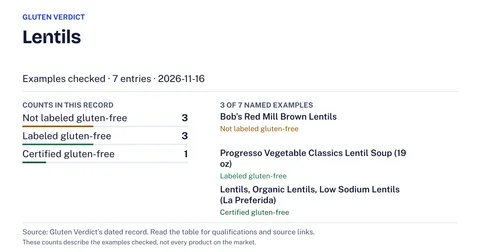
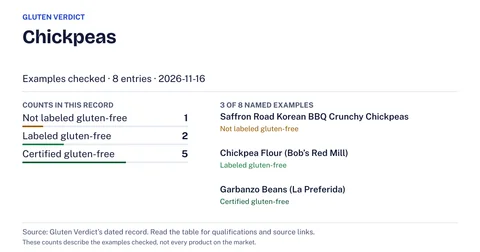
NHLBI lists good sources of iron as beans, dried fruits, eggs, lean red meat, salmon, iron-fortified breads and cereals, peas, tofu and dark green leafy vegetables42. Coeliac UK names pulses (peas, beans and lentils) among the non-haem sources suitable for a gluten-free diet59, and says animal sources of iron are better absorbed than plant sources44.
- NHLBI says vitamin C-rich foods such as oranges, strawberries and tomatoes help the body absorb iron43.
- Coeliac UK says tea, coffee, chocolate and spinach can inhibit the absorption of non-haem iron45.
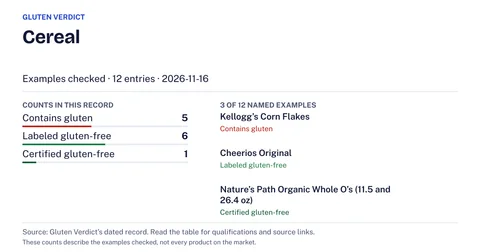
Each of these foods still needs its own gluten check. Our verdicts for lentils, chickpeas and cereal show what makers and charities say, with the dates we read them.
Iron supplements and fortified foods: checking for gluten
FDA’s gluten-free rule applies to FDA-regulated packaged foods, including dietary supplements46, and any food product bearing a “gluten-free” claim must comply with it47. So a product sold as a dietary supplement with a gluten-free claim is covered by the food rule46, 47.
The Gluten Intolerance Group says gluten is not a common ingredient in medications but is more prevalent in supplements, and advises looking for products certified or labeled gluten-free, or reading the ingredients carefully48. It says gluten in natural and herbal supplements can come from added grains, grain grasses or ingredients derived from gluten-containing grains49.
Medicines are different. The Gluten Intolerance Group says prescription and over-the-counter medications are not covered by FDA’s gluten-free labeling regulation, and that gluten is not routinely included in inhalant, injectable, patch or IV forms50. For an iron product that is a medicine rather than a supplement, our related guide on gluten in medications covers the routes for checking one. For any product, what to ask a manufacturer about gluten lists the questions and how to read the reply.
For a fortified cereal or bread, our guide to how to read food labels shows where gluten appears on a US label.
When anemia persists on a strict gluten-free diet
One review says some people with celiac disease continue to show indicators of iron deficiency anemia that do not respond to oral iron after they adopt the gluten-free diet51. It points to several possible contributors:
- Persistent villous atrophy. In one study of adults on an intentionally strict diet, the rate of persistent villous atrophy after two years was 53% despite rigorous dietary monitoring52. The study’s authors concluded that low-level ongoing inadvertent gluten exposures could be a contributing factor to persistent villous atrophy in highly sensitive patients53.
- Blood loss from inflammatory lesions of the intestinal lining54.
The review suggests that, where there are doubts about adherence to the diet, gluten immunogenic peptides in fecal or urine samples may be important to investigate55.
NICE’s advice for people with persistent symptoms despite advice to exclude gluten is to review the certainty of the original diagnosis, refer to a specialist dietitian to investigate continued exposure to gluten, and investigate complications or coexisting conditions56. It also says to consider referral for an endoscopic biopsy when continued gluten exposure has been excluded and symptoms, including unexplained anaemia, persist57. Coeliac UK says to talk to a dietitian or GP about ongoing symptoms of anaemia58.
Verdicts in this guide
Questions people ask
Can celiac disease cause iron deficiency anemia?
Yes. Coeliac UK says iron deficiency is common in undiagnosed coeliac disease because damage to the gut lining stops the body absorbing iron from food very well3. A 2021 review calls iron deficiency anemia the most recognized type of anemia in people with celiac disease12.
Can iron deficiency be the only sign of celiac disease?
One review says most people with celiac disease have subclinical or silent forms, in which iron deficiency anemia can be the sole presentation21.
What do guidelines say about testing for celiac disease in iron deficiency?
NICE’s UK guideline says to offer serological testing for coeliac disease to people with unexplained iron, vitamin B12 or folate deficiency15. The US ACG guideline says patients with unexplained iron deficiency anemia are a group where celiac disease is substantially more frequent, and that there is no consensus on which laboratory abnormalities require evaluation17, 16.
Is an iron infusion used for iron deficiency in celiac disease?
IV iron is used in some cases. NHLBI says people with serious iron-deficiency anemia or long-term conditions are more likely to receive it30, and a review lists severity of symptoms, tolerance of oral iron and factors that predict a poor response to oral iron as what the decision depends on31. The treating clinician makes the choice.
Will the anemia go away on a gluten-free diet?
Coeliac UK says healing of the gut should improve absorption and lead to higher haemoglobin36. The Gluten Intolerance Group says correcting nutritional deficiencies may take between two and 18 months37.
Are iron supplements gluten-free?
Not automatically. The Gluten Intolerance Group says gluten is more prevalent in supplements than in medications and advises looking for a certified or labeled gluten-free product or reading the ingredients carefully48.
More in Related conditions and complications
 Hair loss and celiac disease: four causes to tell apart and what regrowth looks likeShedding, a nutrient shortfall, thyroid disease and alopecia areata can look alike. What dermatology sources and studies say about each and regrowth.
 Type 1 diabetes and celiac disease: the overlap and the screening guidelinesWhy celiac disease is more common with type 1 diabetes, what the ADA, ISPAD and ACG say about screening and timing, and what to ask the care team.
 Lactose intolerance after a celiac diagnosis: why it happens and how long it lastsWhy lactose intolerance can follow a celiac diagnosis, what published studies report about recovery on a gluten-free diet, and how lactose-free milk fits.
 Celiac disease and bone density: who is scanned, how to read the report and what recovery looks likeWhen guidelines advise a bone density scan in celiac disease, how a T-score or Z-score is read by age, and what published studies show about recovery.
 Celiac disease and thyroid disease: how they are linked and which tests the guidelines nameHow often celiac and thyroid disease occur together, which tests guidelines name in each direction, and how to check a thyroid tablet’s label.
 Celiac disease and other autoimmune conditions: which pairings have testing adviceWhich autoimmune conditions are reported with celiac disease, which have testing advice from named bodies, and which do not.
Related guides
 Gluten in medications: what the label, DailyMed and a pharmacist can showFDA’s gluten-free food rule does not cover drugs. Use the ingredient list, DailyMed, the maker and a pharmacist, and know what each can show.
 Follow-up testing after a celiac diagnosis: what the guidelines listWhat celiac guidelines and charities list for follow-up: antibody checks, repeat biopsy, nutrient tests, and what is checked if symptoms continue.
 Celiac Blood Tests: What tTG-IgA, Total IgA, DGP and EMA Each CheckWhat tTG-IgA, total IgA, EMA and DGP check, why total IgA is drawn with tTG-IgA, when back-up tests are used, and why gluten stays in the diet first.
 Iron, B12 and B6 on a gluten-free diet: where they come from and how to check a labelWhich foods supply iron, B12 and B6, what US enrichment standards name, and how to check whether a gluten-free flour, bread or cereal is fortified.
Sources
- [1, 8, 11, 12, 21, 25, 26, 28, 31, 32, 33, 38, 39, 40, 51, 52, 53, 54, 55] Montoro-Huguet and colleagues, Nutrients (2021), Iron Deficiency in Celiac Disease: Prevalence, Health Impact, and Clinical Management, checked Nov 17, 2026.
- [2, 4, 23, 37] Gluten Intolerance Group, Celiac Disease and Anemia (educational bulletin), checked Nov 17, 2026.
- [3, 9, 27, 34, 35, 36, 44, 45, 58, 59] Coeliac UK, Iron and the gluten free diet, checked Nov 17, 2026.
Read on 2026-11-17: under “Good sources of non-haem iron suitable for a gluten free diet include”, the list names leafy green vegetables; pulses (peas, beans and lentils); dried fruit, such as raisins, apricots, figs; and nuts and seeds.
- [5, 16, 17, 18, 41] American College of Gastroenterology (American Journal of Gastroenterology), American College of Gastroenterology Guidelines Update: Diagnosis and Management of Celiac Disease, checked Nov 17, 2026.
- [6, 7, 24, 29, 30, 42, 43, 60] National Heart, Lung, and Blood Institute (NIH), Iron-Deficiency Anemia, checked Nov 17, 2026.
Read on 2026-11-17: under “Certain conditions or medicines can decrease your body’s ability to absorb iron and lead to iron-deficiency anemia”, the page lists “Intestinal and digestive conditions, such as celiac disease, ulcerative colitis, Crohn’s disease, and Helicobacter pylori infection”.
- [10] Coeliac UK, Up to 50% of people with undiagnosed coeliac disease have anaemia, checked Nov 17, 2026.
- [13, 14, 19, 20] Mahadev and colleagues, Gastroenterology (2018), author manuscript on PMC, Prevalence of Celiac Disease in Patients with Iron Deficiency Anemia: a Systematic Review with Meta-analysis, checked Nov 17, 2026.
- [15, 22, 56, 57] National Institute for Health and Care Excellence (NICE, UK), Coeliac disease: recognition, assessment and management (NG20), Recommendations, checked Nov 17, 2026.
Read on 2026-11-17: recommendation 1.1.1, “Offer serological testing for coeliac disease to:”, lists among its groups “unexplained iron, vitamin B12 or folate deficiency”, alongside persistent unexplained abdominal or gastrointestinal symptoms, faltering growth, prolonged fatigue, unexpected weight loss, severe or persistent mouth ulcers, type 1 diabetes at diagnosis, autoimmune thyroid disease at diagnosis, irritable bowel syndrome in adults and first-degree relatives of people with coeliac disease.
Read on 2026-11-17: recommendation 1.5.1, “Consider the following actions in people with coeliac disease who have persistent symptoms despite advice to exclude gluten from their diet”, lists: review the certainty of the original diagnosis; refer the person to a specialist dietitian to investigate continued exposure to gluten; and investigate potential complications or coexisting conditions that may be causing persistent symptoms.
Read on 2026-11-17: recommendation 1.4.1, “Consider referring people with coeliac disease for endoscopic intestinal biopsy if continued exposure to gluten has been excluded and:”, lists persistently high serological titres with little or no change after 12 months, or persistent symptoms including diarrhoea, abdominal pain, weight loss, fatigue or unexplained anaemia.
- [46, 47] US Food and Drug Administration, Questions and Answers on the Gluten-Free Food Labeling Final Rule, checked Nov 17, 2026.
- [48, 49, 50] Gluten Intolerance Group, Are Your Medications and Supplements Gluten-Free?, checked Nov 17, 2026.