Gluten-free grilling and cookouts: what to wrap, clean, bring and ask
Short answer
Heat does not make a shared grill gluten-free: GIG says gluten cannot be burned off by high temperature, only removed by a thorough cleaning1. Four things then decide a gluten-free cookout:
- Where the food cooks: its own foil, a thoroughly scrubbed grate or a dedicated grill1, 2, 5, 6.
- What goes on it: GIG says to read the label on any bottled or packaged sauce or seasoning, because some bottled marinades could use gluten as a thickener or stabilizer19, and that a condiment containing regular soy sauce contains wheat gluten21.
- What touches it: tongs, plates, serving utensils and shared condiments8, 30, 24.
- What you tell the host, or bring yourself36, 37.
Part of Cross-contact and the home kitchen, 19 guides
Key points
- Heat does not remove gluten from a grate; GIG says a thorough cleaning with soap, water and a good metal scrubber can1.
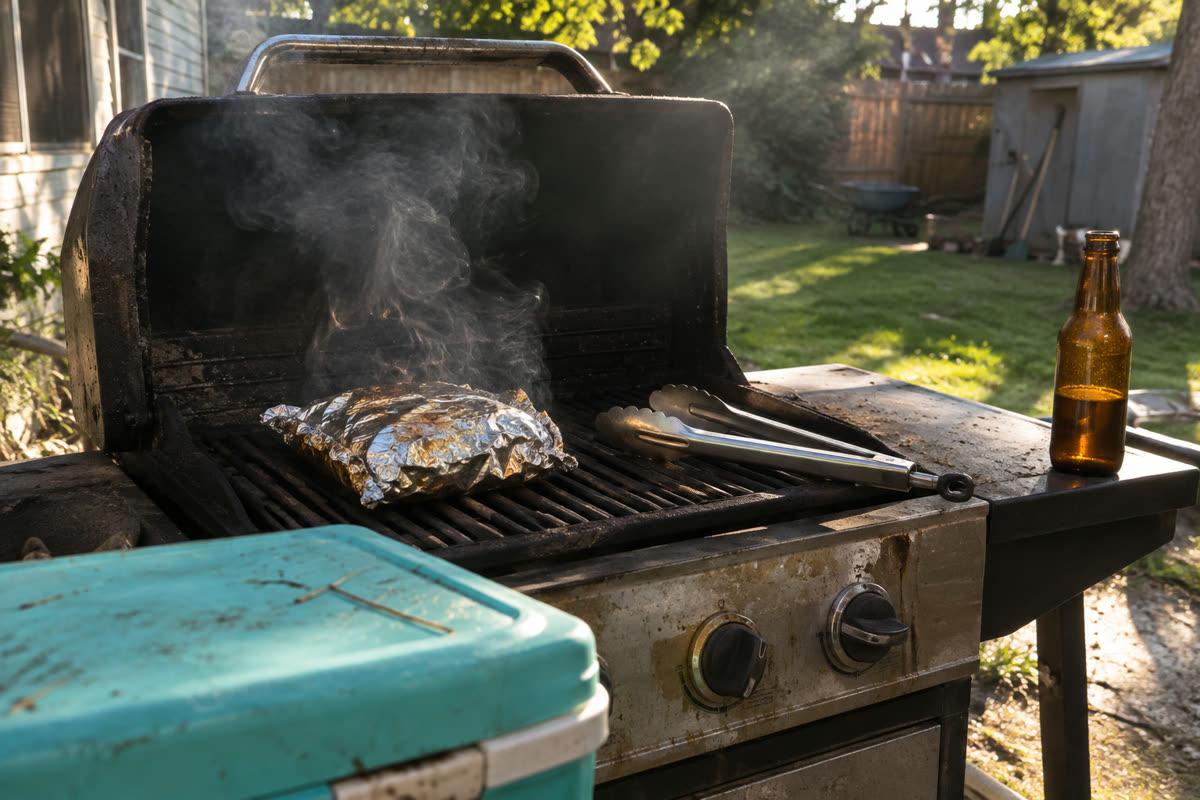
- Foil is the quick fix, and GIG says to bring your own to someone else’s barbecue2.
- The dose research counts milligrams eaten per day: a 2008 systematic review found no evidence to suggest a single definitive threshold17, and a 2007 trial gave 0, 10 or 50 mg a day13.
- Read every bottled marinade and sauce; GIG says some use gluten as a thickener or stabilizer19.
Foil, clean grates or a second grill: what each does
Gluten Intolerance Group (GIG) says a barbecue grill needs a thorough cleaning each time it grills gluten-containing food3. The usual way grills are cleaned is to heat them and scrape off the burnt food4. GIG’s appliance guide adds that gluten cannot be burned off by high temperature but can be removed by a thorough cleaning with soap, water and a good metal grill scrubber, with the grill utensils and the scrubber cleaned too1.
| Option | What GIG says |
|---|---|
| Grill gluten-free items on foil | A quick fix, and a simple, yet effective, approach in a mixed household or at a friend’s barbecue6, 2. |
| Scrub the grates | A thorough cleaning with soap, water and a good metal grill scrubber, plus clean utensils and scrubber1. |
| An extra set of grates | Consider an extra set of grill grates used only for gluten-free grilling2. |
| A dedicated grill | The ideal way, though it may not be viable given the cost of a second grill5. |
| Grill only gluten-free food | Another way to be confident of the grill’s status, though it may not be realistic7. |
GIG’s 2025 grill-prep list adds the rest of the setup: clean grates, a grill mat or foil barrier, separate tongs, spatulas and plates for the gluten-free food, buns and bread kept in sealed containers, and labels on the gluten-free items8.
For cooking equipment and utensils, GIG says thorough cleaning with soap and water is sufficient for most items9, and Coeliac UK, a UK charity, says standard washing-up liquid or a dishwasher will remove gluten10.
A guest cannot scrub someone else’s grill. GIG’s advice for a barbecue at another home is to bring your own foil2.
How much gluten counts? What the studies measured
GIG defines cross-contact as gluten crumbs or particles getting into gluten-free food in amounts that could cause an adverse reaction11. NIDDK describes it as foods that contain gluten coming into contact with gluten-free foods12. Neither says how much a grill leaves behind.
The research on dose counts gluten in milligrams eaten per day. One trial of 49 adults with biopsy-proven celiac disease, all on a gluten-free diet for at least two years, gave capsules of 0, 10 or 50 mg of gluten a day for 90 days13. One patient in the 10 mg group developed a clinical relapse14, and the authors concluded that contaminating gluten should be kept lower than 50 mg a day15.
A 2008 systematic review of 13 studies found the daily amount people tolerated varied widely between studies: some patients tolerated an average of 34–36 mg of gluten per day, while others who consumed about 10 mg per day developed mucosal abnormalities16, 38. It found no evidence to suggest a single definitive threshold, and judged a daily intake under 10 mg unlikely to cause significant histological abnormalities17.
FDA’s label rule measures something else: parts per million of gluten in a food, with any unavoidable gluten in a food labeled gluten-free required to be under 20 ppm18.
None of these sources turns a dose into a crumb, a drip of sauce or a grill mark, so this guide does not either. It treats keeping the gluten source away from the food as the goal.
Marinades, rubs and sauces: what to read
GIG says the meat is naturally gluten-free, but some bottled marinades could use gluten as a thickener or stabilizer, so every bottled sauce and seasoning needs its label read19. GIG’s grill list says the same, and points to gluten-free-labeled barbecue, teriyaki and soy sauces20.
Regular soy sauce is the usual surprise. GIG says a condiment that contains regular soy sauce contains wheat gluten, and suggests gluten-free tamari instead21. FDA says that, in general, soy sauce made from soybeans and wheat may not bear a gluten-free claim22.
What each bottle says, with the date we read it, is on our verdicts for barbecue sauce, teriyaki sauce and Worcestershire sauce. Where a label lists malt vinegar, see malt vinegar.
For rubs, GIG advises choosing spices labeled gluten-free in accordance with FDA regulations or, for additional assurance, GFCO-certified25.
A statement such as “made with no gluten-containing ingredients” is not the same as a gluten-free claim. FDA says that unless the label also bears a gluten-free claim, consumers should not assume the food meets all FDA requirements for that claim26.
GIG says most popular condiments, such as mayonnaise, mustard and ketchup, are gluten-free, that very few brands add gluten to their plain versions, and that flavored ones tend to be free of added gluten, although not necessarily certified23. Squeeze bottles, or no double-dipping, keep a shared jar from picking up crumbs24.
Buns, hot dogs, sausages and beer-simmered brats
Our verdict on hamburger buns shows which buns we read list wheat and which are labeled or certified gluten-free. If you toast a gluten-free bun on the grill, GIG’s tip is to do it on foil, to avoid contact with a shared grill28. A lettuce-wrapped burger or a hot dog in a corn tortilla is another route29.
NIDDK lists hot dogs and sausages among the foods where gluten may be found27. Brand by brand, see our verdicts on hot dogs and sausage. A pack that says “made with no gluten-containing ingredients” but carries no gluten-free claim falls under FDA’s caveat above26.
Brats and sausages simmered in beer are a separate question. FDA says beer is most commonly made from malted barley or wheat, which are gluten-containing grains34, and NIDDK says beer and malt beverages may contain gluten33.
Sides, desserts and drinks
- GIG suggests serving yourself first, so no utensil from a gluten-containing side has been used in a gluten-free one30.
- Deli sides may have few precautions against gluten-containing items falling into gluten-free ones31.
- Desserts: stick to gluten-free ones, or keep the gluten-containing ones far from them and label everything clearly32.
- Drinks: GIG says most mocktails can be made from naturally gluten-free ingredients such as seltzer, tonic water, colas, fruit juices and most bitters35.
A message to send the host before the day
GIG advises telling a host who is unfamiliar with gluten-free needs in advance36, and says you may wish to bring your own food if you do not know the host well37. One way to say it:
“Thanks for the invite. I have celiac disease, so my food cannot touch gluten, including on the grill. I would be glad to bring my own food and a sheet of foil to cook it on. Could you tell me which sauces and marinades you are using, and whether the buns, brats or beer-simmered sausages share the grill? I can bring my own sauce and bun if that is easier.”
If you are the host
Bring-your-own checklist
Verdicts in this guide
 BBQ sauceDepends on the product1 of 6 products we checked contains gluten: Kikkoman Teriyaki BBQ Sauce – Originalchecked Nov 16, 2026
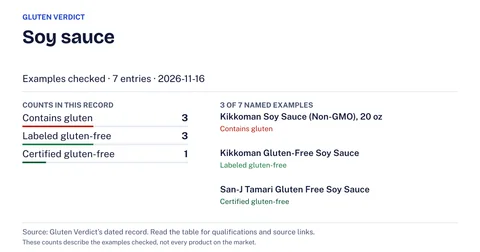 Soy sauceDepends on the product3 of 7 products we checked contain gluten: Kikkoman Soy Sauce (Non-GMO), 20 oz; San-J Organic Shoyu Soy Sauce; and Lee Kum Kee Premium Soy Sauce (No Preservatives Added)checked Nov 16, 2026
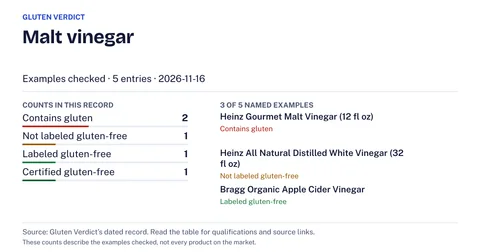 Malt vinegarContains glutenchecked Nov 16, 2026
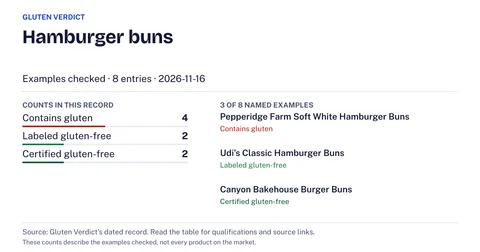 Hamburger bunsContains glutenchecked Nov 16, 2026
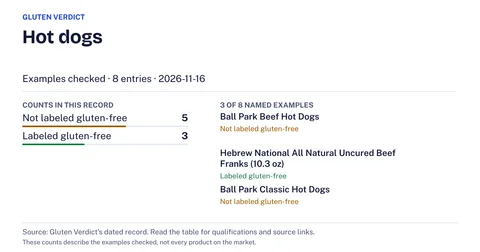 Hot dogsDepends on the productchecked Nov 16, 2026
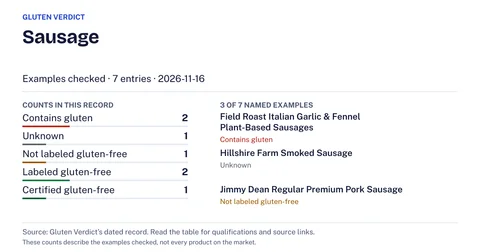 SausageDepends on the product2 of 7 products we checked contain gluten: Field Roast Italian Garlic & Fennel Plant-Based Sausages and Tofurky Plant-Based Italian Sausagechecked Nov 16, 2026
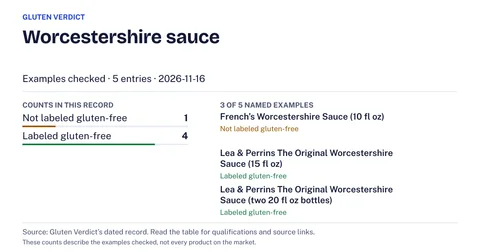 Worcestershire sauceDepends on the productchecked Nov 16, 2026
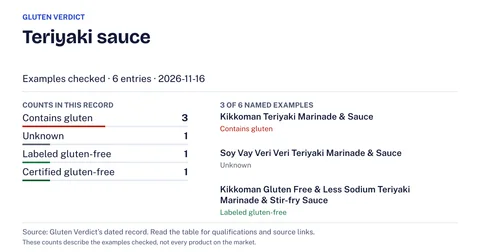 Teriyaki sauceDepends on the product3 of 6 products we checked contain gluten: Kikkoman Teriyaki Marinade & Sauce, Kikkoman Teriyaki Marinade & Stir-fry Sauce – Roasted Garlic, and Kikkoman Teriyaki BBQ Sauce – Originalchecked Nov 16, 2026
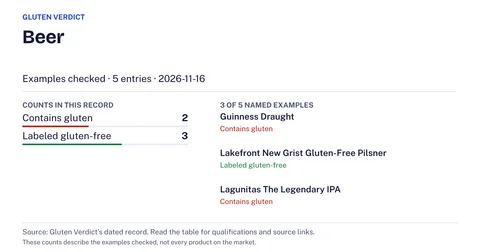 BeerDepends on the product2 of 5 products we checked contain gluten: Guinness Draught and Lagunitas The Legendary IPAchecked Nov 16, 2026
Questions people ask
Is foil enough?
GIG calls grilling gluten-free items on tin foil a simple, yet effective, approach in a mixed household or at a friend’s barbecue6.
Do I need a separate grill?
GIG calls a dedicated grill the ideal way but notes the cost5; it also lists foil, an extra set of grates and grilling only gluten-free food6, 2, 7.
Can I use a bottled marinade without a gluten-free label?
GIG says some bottled marinades could use gluten as a thickener or stabilizer, so read the label19. Our verdicts on barbecue sauce and teriyaki sauce show what we read on each bottle.
More in Cross-contact and the home kitchen
 How to cook dinner for a guest with celiac diseaseA host's plan for one dinner: what to ask the guest, a menu with few risk points, which labels to read, the cooking order, clean tools and serving.
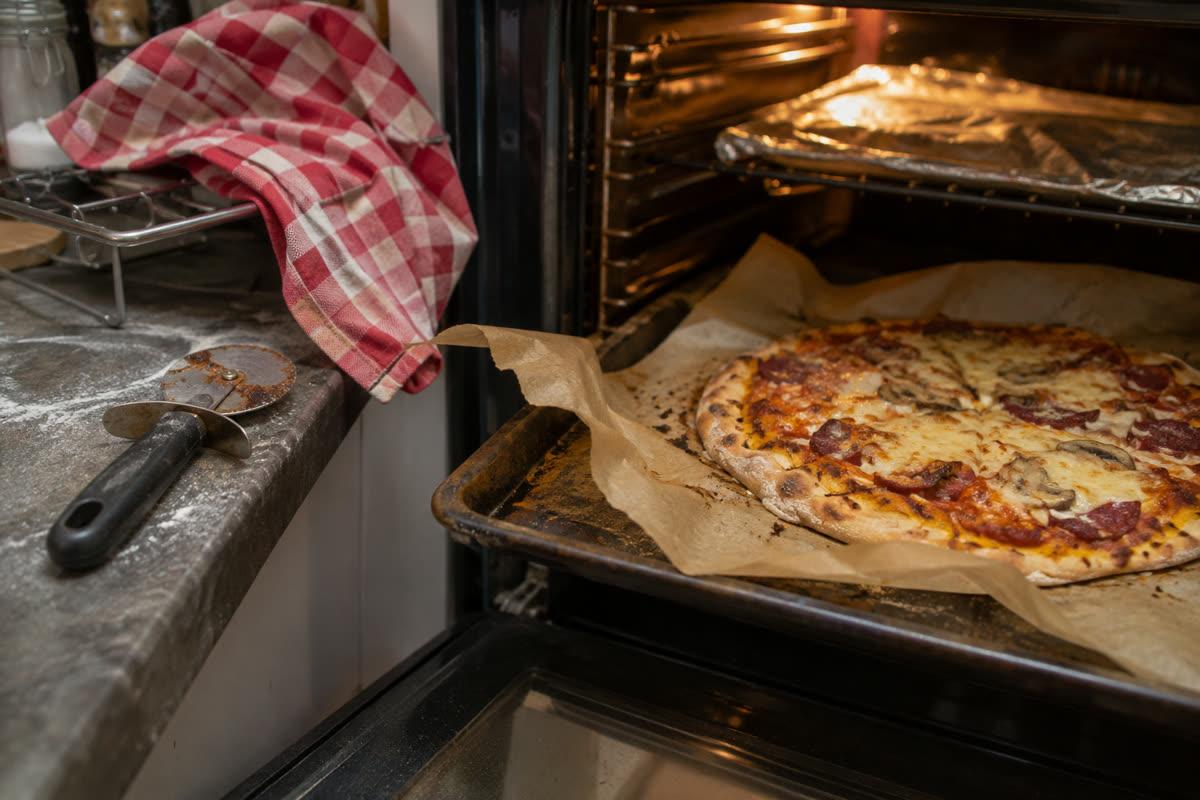 Gluten-free pizza at home: check each part, then keep it apart in the ovenCheck the crust, sauce, cheese and toppings against each maker’s own statement, then set up stone, parchment and oven so a gluten-free pizza stays apart.
 What to clean after wheat flour lands in a gluten-free kitchenThe order of jobs after wheat flour reaches a gluten-free kitchen, what charities and studies say about each item, and what no source covers.
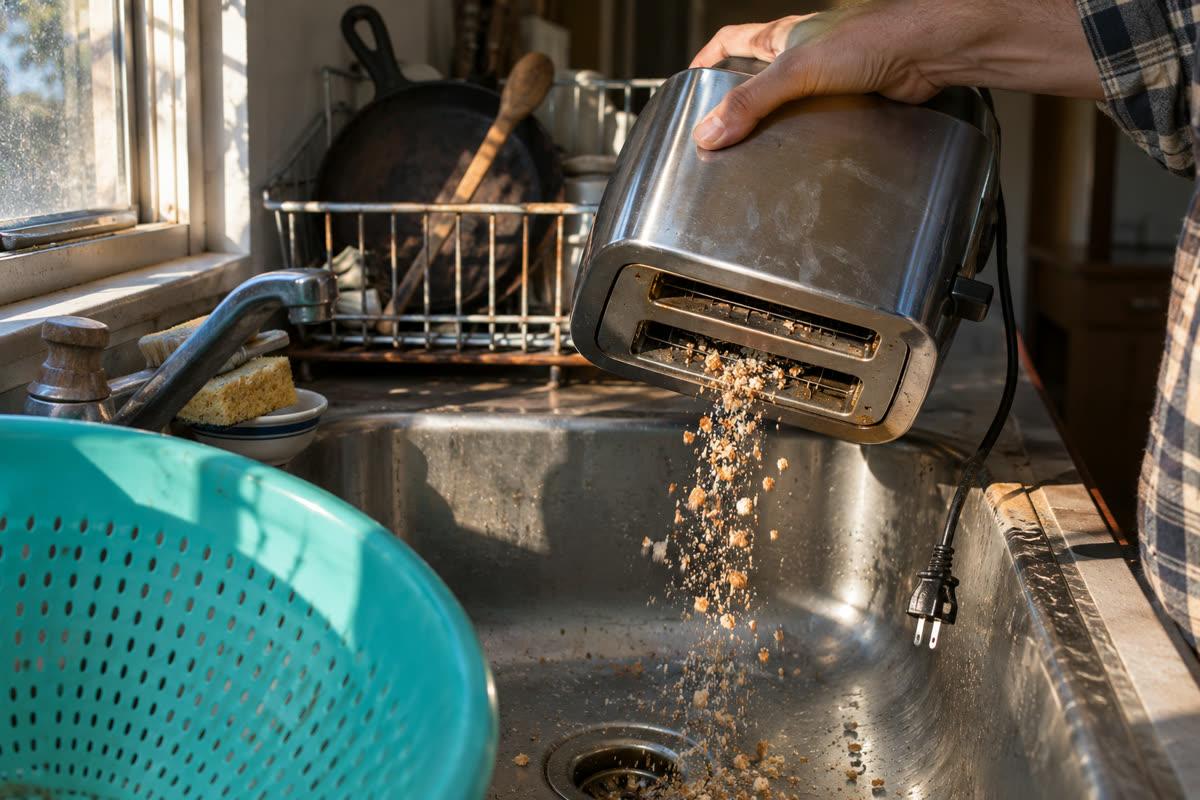 Toasters, colanders, cast iron, wood and air fryers: which can be cleanedWhich kitchen items the charities say to keep, wash or replace after going gluten-free, item by item, with what the studies we found measured.
 Gluten cross-contact at home: where it happens and what to do about itHow gluten reaches gluten-free food at home, whether to separate, wash or ask for each route, and which rules have lab data behind them.
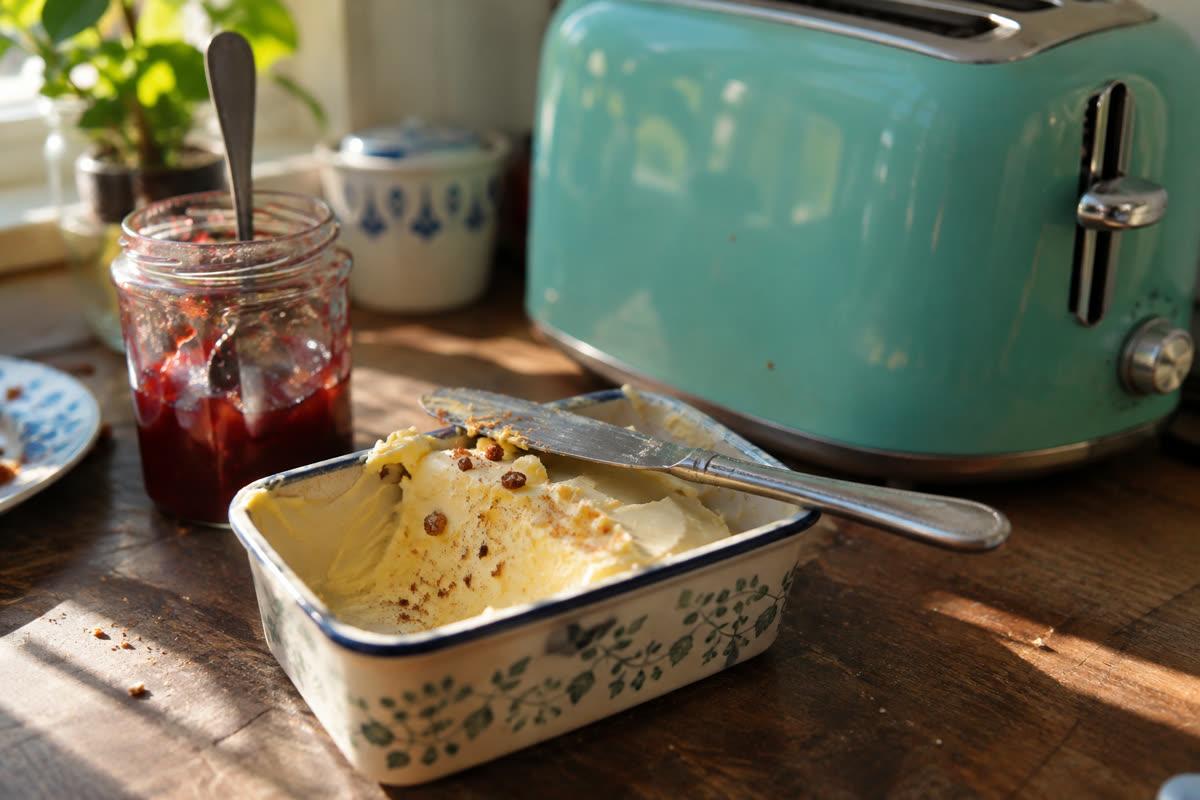
 What studies measured in shared kitchens: pasta water, toasters, knives and spreadsWhat four experimental studies measured when gluten-free food met shared pots, toasters, knives and spreads: samples, results, and what went untested.
Related guides
 Where wheat, barley and rye hide in processed food: 15 places to checkFifteen processed foods where wheat, barley or rye turn up, the label step that catches each, and what US allergen law does and does not flag.
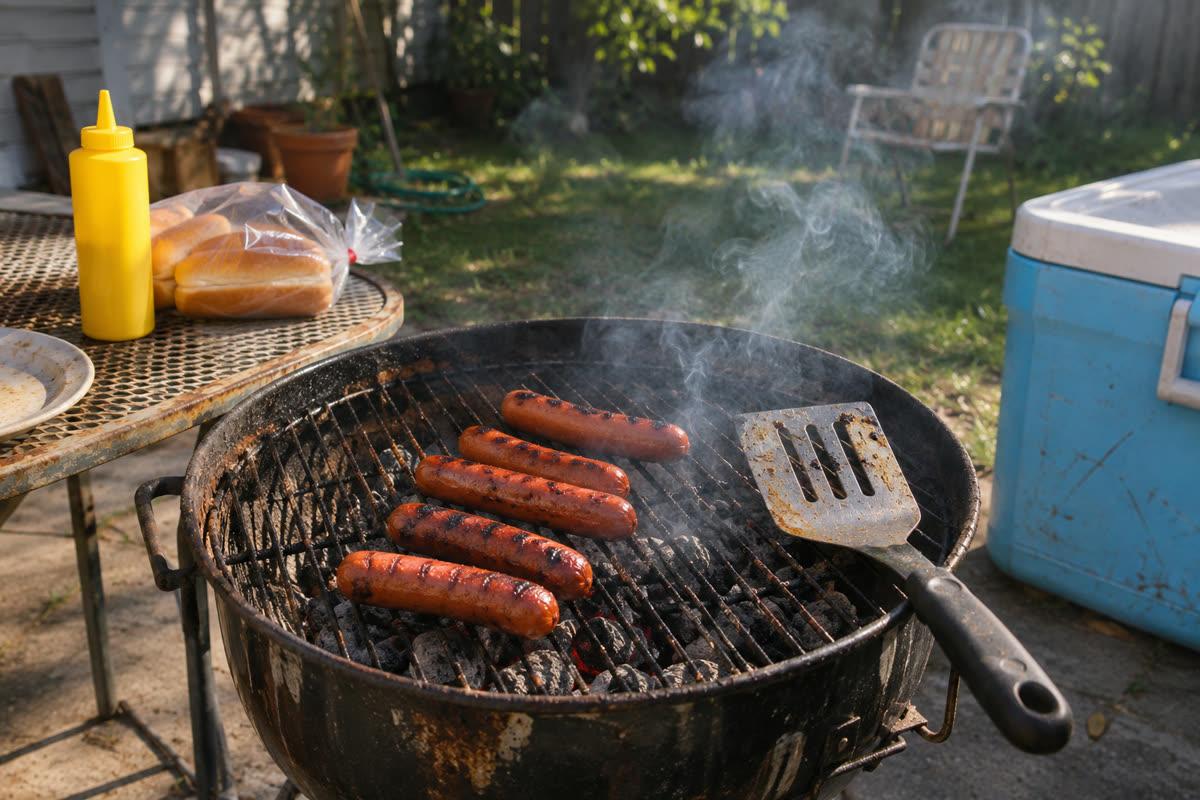 Gluten-free Fourth of July cookout: what to check on the table and at the grillCheck franks, buns, sauces, sides and drinks for gluten, and set up the grill and a mixed table for a Fourth of July, Memorial Day or Labor Day cookout.
 Gluten-free at a holiday dinner, potluck or cookout as a guestHow a guest with celiac disease can message the host, bring a dish, serve first at a buffet and decide when to eat only their own food.
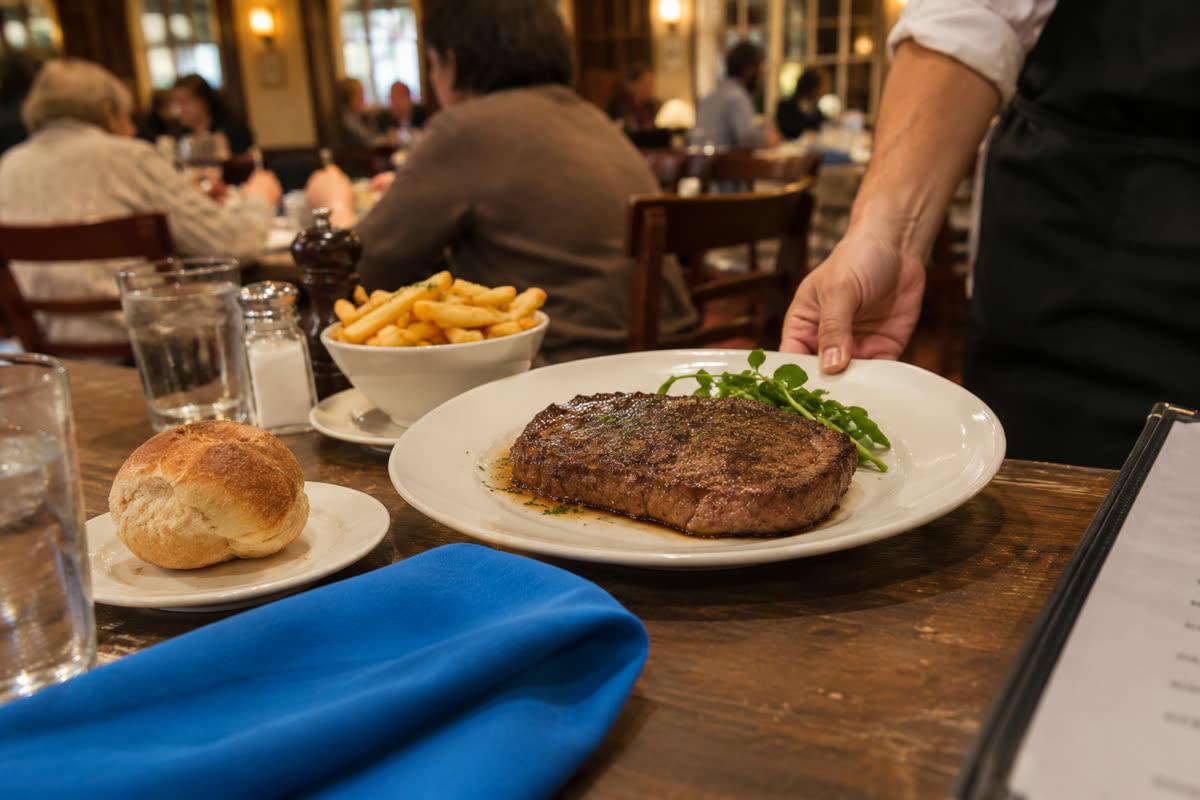 Ordering steak and burgers with celiac disease: marinades, sides, fryers and bunsWhat to ask about marinades, seasoning, butters, grills, fryers, sides and buns when you order steak or a burger with celiac disease.
Sources
- [1, 2] Gluten Intolerance Group, Appliances: Risks of Cross-Contact, checked Nov 17, 2026.
- [3, 4, 5, 6, 7, 19, 21, 23, 24, 29, 30, 31, 32, 35] Gluten Intolerance Group, Your Summertime Guide to Gluten-Free Grill and Chill, checked Nov 17, 2026.
- [8, 20, 28] Gluten Intolerance Group, Flip It Like It’s Hot: Gluten-Free Grilling Tips, checked Nov 17, 2026.
Read on 2026-11-17: the list headed “Grill Prep” names cleaning grill grates thoroughly before use; using a grill mat or foil barrier for gluten-free items; separate utensils for gluten-free foods (tongs, spatulas, plates); keeping buns and bread items in sealed containers; and labeling gluten-free items.
Read on 2026-11-17: the list under the sauce and marinade heading says to double-check sauces and marinades for hidden gluten, to look for gluten-free-labeled barbecue, teriyaki and soy sauces, and that oil, citrus, herbs and vinegar go a long way in homemade marinades.
- [9, 11, 25, 36, 37] Gluten Intolerance Group, 25 Ways Cross-Contact Could Happen (And How to Avoid It), checked Nov 17, 2026.
- [10] Coeliac UK, Cross-contamination (cooking at home), checked Nov 17, 2026.
- [12, 27, 33] National Institute of Diabetes and Digestive and Kidney Diseases (NIDDK), Eating, Diet, & Nutrition for Celiac Disease, checked Nov 17, 2026.
- [13, 14, 15] PubMed (Catassi and colleagues, American Journal of Clinical Nutrition, 2007), Prospective, double-blind, placebo-controlled trial of a gluten threshold in celiac disease, checked Nov 17, 2026.
- [16, 17, 38] PubMed (Akobeng and Thomas, Alimentary Pharmacology and Therapeutics, 2008), Systematic review: tolerable amount of gluten for people with coeliac disease, checked Nov 17, 2026.
- [18, 22, 26, 34] US Food and Drug Administration, Questions and Answers on the Gluten-Free Food Labeling Final Rule, checked Nov 17, 2026.