Toasters, colanders, cast iron, wood and air fryers: which can be cleaned
Short answer
Beyond Celiac lists stainless steel, metal and glass as items to keep when undamaged and thoroughly cleaned33. The charities we read name toasters, colanders, wood, cast iron, scratched non-stick pans and air fryers (some only if hard to clean) as items to replace or keep separate1, 37, 30, 36, 34, 2. In one study, bread from shared toasters stayed under 20 ppm of gluten51, and in a Swiss study food made with shared utensils stayed under 20 mg/kg56; we found no study of cast iron, non-stick pans or air fryers61.
Part of Cross-contact and the home kitchen, 19 guides
Key points
- Beyond Celiac lists stainless steel, metal and glass as items to keep when they are undamaged and thoroughly cleaned33.
- Four charities (GIG, Coeliac UK, Beyond Celiac and the NCA) each name a separate toaster, and most offer a toaster bag as the alternative, rather than a cleaning method1, 21, 37, 30.
- Weisbrod and colleagues found at most 8.3 ppm of gluten in bread from shared toasters, in a small study51, 52.
- Three charities each suggest another or a dedicated cast iron pan, for different reasons, and we found no test of it15, 35, 24, 61.
- Beyond Celiac says bleach or sanitizer will not “kill” gluten and soap and water is sufficient; GIG, writing about grills, says high temperature cannot burn it off31, 7.
Four questions that sort any kitchen item
The charity lists we read keep coming back to the same few features of an item. Put an item through these four questions:
- Is the surface hard and smooth, like stainless steel, metal or glass? Beyond Celiac lists these as items to keep when they are undamaged and thoroughly cleaned33. The National Celiac Association (NCA) says soap and water or a dishwasher should be enough for any non-porous material26.
- Is it wood or cast iron? Gluten Intolerance Group (GIG) says wood fibers could harbor gluten particles11, and Beyond Celiac calls cast iron porous and hard to fully clean35.
- Is it scratched, pitted or cracked? GIG says gluten could settle into the crevices of a pitted or scratched cutting board12, and Beyond Celiac lists scratched non-stick pans under items to consider replacing34.
- Does it have holes, slots, grooves or parts that cannot go in water? GIG names the tiny mesh of strainers13, the grooves of waffle irons4 and appliance bases with electrical parts that cannot be immersed8.
Heat and sanitizer, as two charities put it. Beyond Celiac says gluten is not a virus or bacteria, so bleach or sanitizer will not “kill” it, and that soap and water is sufficient for cleaning31. GIG, writing about grills, says gluten cannot be “burned” off by high temperature but can be removed by a thorough cleaning7.
Stainless steel, metal and glass: wash and keep
Beyond Celiac lists stainless steel, metal and glass items, and metal utensils, as the cookware to keep, on the condition that they are undamaged and thoroughly cleaned33. Coeliac UK, in the UK, says standard washing up liquid or a dishwasher will remove gluten, and to clean pots, pans and cooking utensils with hot soapy water18, 19.
One study tested this for pots. Weisbrod and colleagues boiled gluten-containing pasta in stainless steel pots47, then rinsed or scrubbed the pots and used them to cook gluten-free pasta48. Rinsing the pots with water alone was as effective as scrubbing with soap and water at preventing detectable gluten transfer49. The authors list small sample size among the study’s limits52.
A shared dishwasher is a related question. GIG says a shared load is fine if the dishwasher is functional and cleans thoroughly6; the NCA says putting items through the dishwasher is sufficient, once visible debris is cleaned off before loading25.
Can you clean a toaster for gluten-free use?
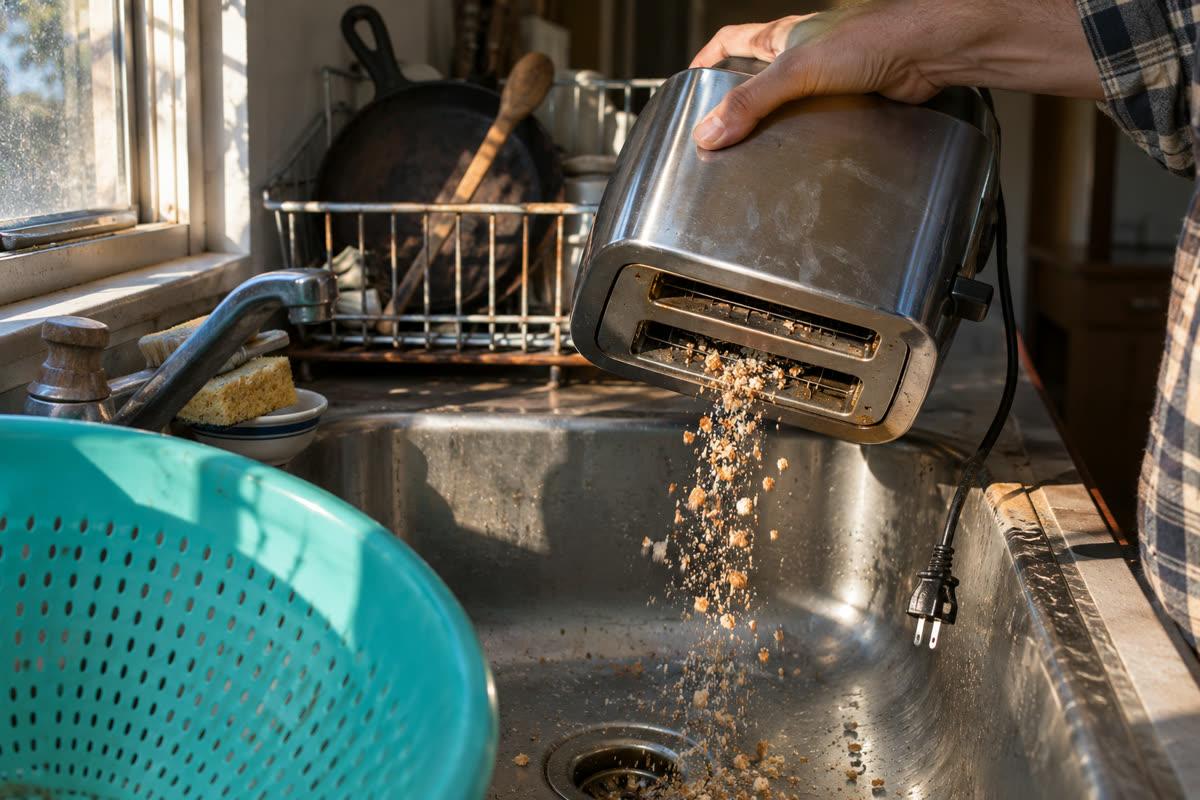
None of the toaster passages we read gives a method for cleaning a shared toaster. They recommend a separate toaster or a toaster bag instead. GIG says gluten crumbs can end up on gluten-free bread, and suggests a separate toaster, or toaster bags as something to try1. Coeliac UK suggests toaster bags or a separate toaster21. The NCA lists a drop-in toaster, or foil in a toaster oven, among the items to keep separate30. Beyond Celiac lists the toaster among items to replace in a fully gluten-free kitchen, and says toaster bags are an option that is less reliable in the long term37; in a shared kitchen it says one toaster can do if gluten-free bread goes in clearly labeled toaster bags38.
Two studies tested shared toasters. Weisbrod and colleagues toasted gluten-free bread in shared pop-up toasters right after gluten-containing bread, and in two rolling toasters in a busy hospital cafeteria. Crumbs were visible in all the toasters and none was cleaned50. Toasting in a shared toaster was not associated with gluten transfer above 20 ppm; the four samples with detectable gluten measured 5.1 to 8.3 ppm51. The study used the 20 ppm line at which Codex defines gluten-free46.
Parsons and colleagues tested a toaster shared with gluten-containing bread as one of three practices, alongside a shared fryer and spreads applied with a shared knife59. Across all three they report small amounts of cross-contact, with 93.6% of results showing no significant cross-contact; mayonnaise and peanut butter samples were above 20 ppm60. The abstract does not break the toaster results out from the other two practices.
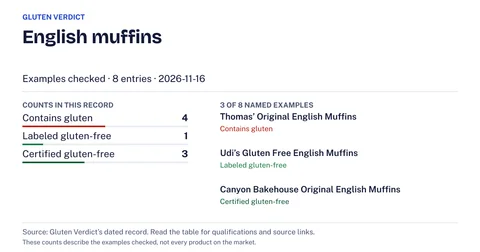
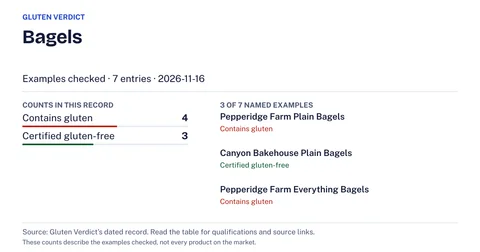
The McMaster Celiac Clinic in Canada says there is low risk of gluten cross-contact when toasting gluten-free bread in a pop-up toaster at home, and suggests a bag or a separate toaster away from home41. Which of these answers to follow is a household decision: the sources above give three different ones. Our verdicts on bread, bagels and English muffins show what the labels say about the foods that go in the slot.
Colanders, strainers and sifters
GIG says starchy pasta can leave residue, and removing traces of gluten from tiny, mesh-like strainers can be very difficult13. Beyond Celiac puts colanders and sifters on its replace list37, and the NCA names strainers, colanders and sifters among items to keep dedicated30. The McMaster Celiac Clinic is conditional: a separate strainer for gluten-free pasta if you are not able to clean it thoroughly43.
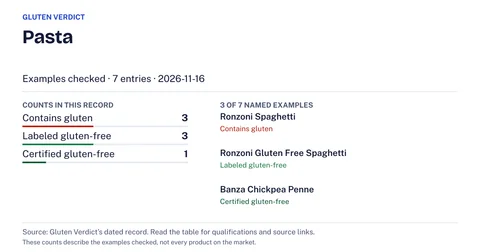
One small Swiss study53 used a shared colander among the kitchenware (a wooden spoon, ladle and knife too) to prepare gluten-free bread and pasta55. Gluten was not detected in relevant and quantifiable amounts, below 20 mg/kg, and the cleaning method did not change that56. It tested a colander but not a sifter. For the pasta water itself, see cooking gluten-free pasta in a mixed kitchen; our verdict on pasta covers the product.
Cast iron, non-stick and other pans
Cast iron
Three charities give three different reasons. GIG says the jury is still out on whether gluten clings to cast iron, but because the pans are usually washed without soap and the surface is pitted, another pan may be worth the money15. Beyond Celiac calls cast iron porous and hard to fully clean, and lists it under items to consider replacing35. The NCA says cast iron pans usually have a coating that is hard to clean and may flake into the food, and recommends a dedicated pan24.
In a PubMed search for these terms we found no test of gluten transfer from cast iron61. Weisbrod and colleagues describe diet-guide advice on dedicated toasters and utensils as based on expert consensus with scant data44, 45.
Non-stick
GIG says non-stick surfaces can get scratched and develop grooves where gluten could remain17. Beyond Celiac lists scratched non-stick pans under items to consider replacing34. The NCA says a non-stick pan washed with water, dish soap and a clean sponge or brush, then rinsed, should be fine to use, and that it would replace one with lots of marks that make it hard to clean27. All three tie their advice to scratches or marks. We found no test of non-stick pans61.
Pots, sheets and tins
The NCA says there is no need to get new pots and pans, plates or utensils, as in most cases they can be used interchangeably if cleaned properly between use23. Beyond Celiac lists baking sheets as an item to duplicate in a shared kitchen, and says the same sheets can be shared if parchment paper or aluminum foil goes down each time39.
Wooden spoons, cutting boards and rolling pins
GIG says wood is tricky to clean thoroughly and that fibers could harbor gluten and enter the next stir11. It says a pitted or scratched cutting board lets gluten settle into crevices12, and that a wooden rolling pin used on gluten-containing items is best shelved14. Beyond Celiac lists wooden and plastic cutting boards, especially with deep cuts, under items to consider replacing36, and wooden or plastic utensils and rolling pins among items to duplicate in a shared kitchen39. The McMaster Celiac Clinic says to avoid wooden or plastic kitchen materials, spoons and boards included, if they cannot be cleaned thoroughly, and to replace any with cracks and cuts42.
The Swiss study included a wooden spoon among its shared kitchenware, and found no gluten in relevant, quantifiable amounts in the food55, 56. Its authors hypothesized that shared ladles pose a higher risk than shared wooden spoons, colanders or knives57, and concluded that utensils used for gluten-containing pasta and bread should not pose a relevant problem to patients with celiac disease, at least in a domestic environment58. Weisbrod and colleagues call it a small study53. The abstract reports the utensils together, not wood on its own.
Air fryers, waffle irons and bread machines
GIG says an air fryer’s fan could blow particles of previously cooked, gluten-containing food onto gluten-free food, and not to use the same air fryer for both2. It describes the same fan problem in convection ovens3. The NCA is conditional: an air fryer that can be cleaned easily and thoroughly between uses should probably be fine, but for one that is very difficult to clean, such as a wire basket with crevices, it would use a dedicated air fryer or a dedicated basket28. It adds that flour used in the fryer could still be circulating the next time29.
Beyond Celiac’s replace and duplicate lists do not name an air fryer40. Coeliac UK’s page on a Panasonic air fryer describes its non-stick coating and removable parts and gives no guidance on sharing it, so it is not an answer to this question22. We found no test of an air fryer in PubMed61.
Waffle irons and bread machines are the same kind of problem. GIG says waffle irons are tricky to clean with all those grooves, and that unless the plates come out and can go in the dishwasher you may need another4; it says to use a dedicated gluten-free bread machine5. Beyond Celiac lists waffle makers to replace37, and the NCA lists bread, sandwich and waffle makers among items to keep dedicated30.
Blenders, food processors, stand mixers and slow cookers
These have parts that wash and parts that do not. GIG says the removable parts can go in a dishwasher or be washed in the sink, while stands and bases with electrical parts cannot be immersed, so no bits of gluten-containing food should remain on them8. For food processors, blenders and stand mixers it says to wash every component that can touch food after each use9, and to treat a slow cooker or Instant Pot like any cooking vessel, cleaned thoroughly between gluten-free and other uses10.
For the rest of the setup, see setting up a gluten-free kitchen.
Where the charities and the studies point different ways
- Toasters. GIG, Beyond Celiac, the NCA and Coeliac UK recommend a separate toaster or a bag1, 37, 30, 21. Weisbrod and colleagues measured at most 8.3 ppm of gluten in bread from shared toasters51, and say recommendations of this kind are based on expert consensus with scant data44, 45.
- Utensils. GIG, Beyond Celiac and the McMaster Celiac Clinic steer away from wood11, 39, 42; the Swiss study found no relevant gluten from shared kitchenware that included a wooden spoon56.
- Pots and pans. The NCA says most can be shared once cleaned23, which fits the pot-rinsing result49. On cast iron the three charities agree on the item and not on the reason15, 35, 24.
- Sponges. Coeliac UK says you do not need separate cloths or sponges20; Beyond Celiac says to designate separate sponges, rags and towels because gluten can hide in them32.
- What no test covers. We found none for cast iron, non-stick pans or air fryers61. Weisbrod and colleagues add that cross-contact will vary between kitchens54.
GIG’s rule of thumb: if the whole household is going gluten-free, you may want to replace the hard-to-clean items, and if only some members are, a separate set of those items is recommended16. Our guide to shared-kitchen studies goes through the measurements in more detail.
Quick table: keep, wash or replace
This table reports what each source says. It is not a ruling on any one kitchen.
| Item | What the charities we read say | Tested in a study? |
|---|---|---|
| Stainless steel, metal and glass | Keep if undamaged and thoroughly cleaned (Beyond Celiac)33; soap and water or a dishwasher for non-porous material (NCA)26. | Stainless steel pots: rinsing was as effective as scrubbing at preventing detectable transfer49. |
| Toaster | Separate toaster or toaster bag (GIG, Coeliac UK, Beyond Celiac, NCA)1, 21, 37, 30. | Yes, two studies51, 59. |
| Colander, strainer, sifter | Keep separate or replace (Beyond Celiac, NCA); McMaster: separate if it cannot be cleaned thoroughly37, 30, 43. | A colander in one small study55. |
| Wooden spoons and boards | Replace or keep separate, especially if cut or scratched (GIG, Beyond Celiac, McMaster)11, 36, 42. | A wooden spoon in one small study55. |
| Cast iron | Dedicated or replace; reasons differ (GIG, Beyond Celiac, NCA)15, 35, 24. | No test found61. |
| Scratched non-stick pan | Grooves can hold gluten (GIG); consider replacing (Beyond Celiac); replace if marks make it hard to clean (NCA)17, 34, 27. | No test found61. |
| Air fryer | Do not share (GIG); depends on how easily it cleans (NCA)2, 28. | No test found61. |
| Waffle iron, bread machine | Dedicated unless the plates come out for the dishwasher (GIG); NCA lists them as separate items4, 5, 30. | No test found61. |
| Blender, food processor, mixer | Wash every component that touches food after each use (GIG)9. | No test found61. |
Verdicts in this guide

Questions people ask
Can you clean a toaster so it can be used for gluten-free bread?
The charity pages we read do not give a cleaning method for a shared toaster; they recommend a separate toaster or toaster bags1, 21, 30. In the Weisbrod study no toaster was cleaned, and gluten transfer to the bread stayed at or below 8.3 ppm in the samples where it was detected50, 51.
Are toaster bags enough?
Coeliac UK and GIG name toaster bags as an option21, 1. Beyond Celiac says clearly labeled bags can serve a shared kitchen with one toaster38, but in a fully gluten-free kitchen says bags are less reliable in the long term than replacing the toaster37.
Does heat or sanitizer remove gluten?
Beyond Celiac says bleach or sanitizer will not “kill” gluten and that soap and water is sufficient31. GIG, writing about grills, says high temperature cannot burn gluten off and that thorough cleaning removes it7.
Do I have to replace all my pots and pans when I go gluten-free?
The NCA says there is no need to get new pots and pans, as in most cases they can be used interchangeably if cleaned properly between use, with cast iron the exception it names23, 24. GIG says a household going entirely gluten-free may want to replace the items that are more difficult to clean16.
More in Cross-contact and the home kitchen
 Setting up a gluten-free kitchen: what to replace, wash or shareWalk each kitchen zone and decide, item by item, what to replace, what to wash and what a mixed household can keep sharing, with charity sources.
 What studies measured in shared kitchens: pasta water, toasters, knives and spreadsWhat four experimental studies measured when gluten-free food met shared pots, toasters, knives and spreads: samples, results, and what went untested.
 Gluten-free with roommates, partners and family: a shared-kitchen agreementHow to split a shared kitchen when one person is gluten-free: what to keep separate, what to wash and share, and how to put the rules to housemates.
 What to clean after wheat flour lands in a gluten-free kitchenThe order of jobs after wheat flour reaches a gluten-free kitchen, what charities and studies say about each item, and what no source covers.
 A weekly gluten-free kitchen routine: wipe, label, restock, re-checkA one-page weekly pass for a gluten-free kitchen: what to wipe, label, restock and do with leftovers, and where the charities and small studies differ.
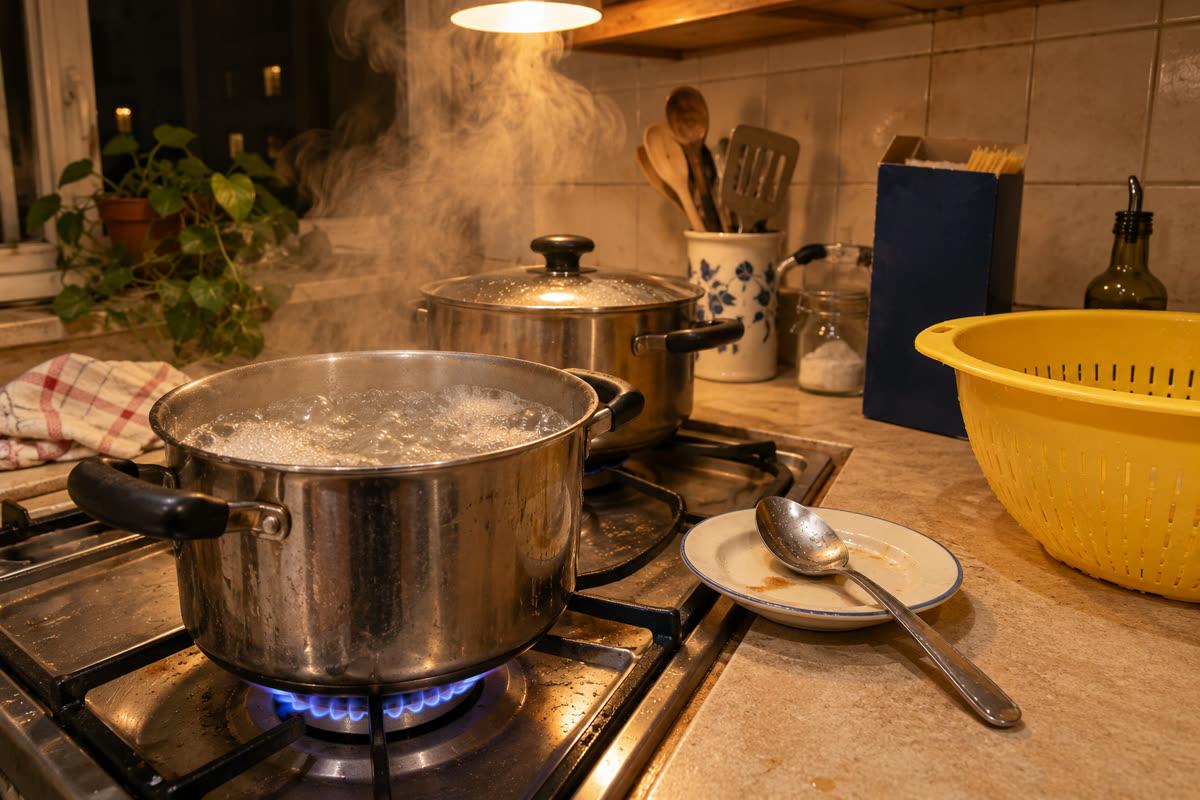 Cooking gluten-free pasta in a kitchen that also cooks regular pastaSet up a pasta night where gluten-free and regular pasta share a kitchen: what one small study found on shared water and pots, and what charities advise.
Related guides
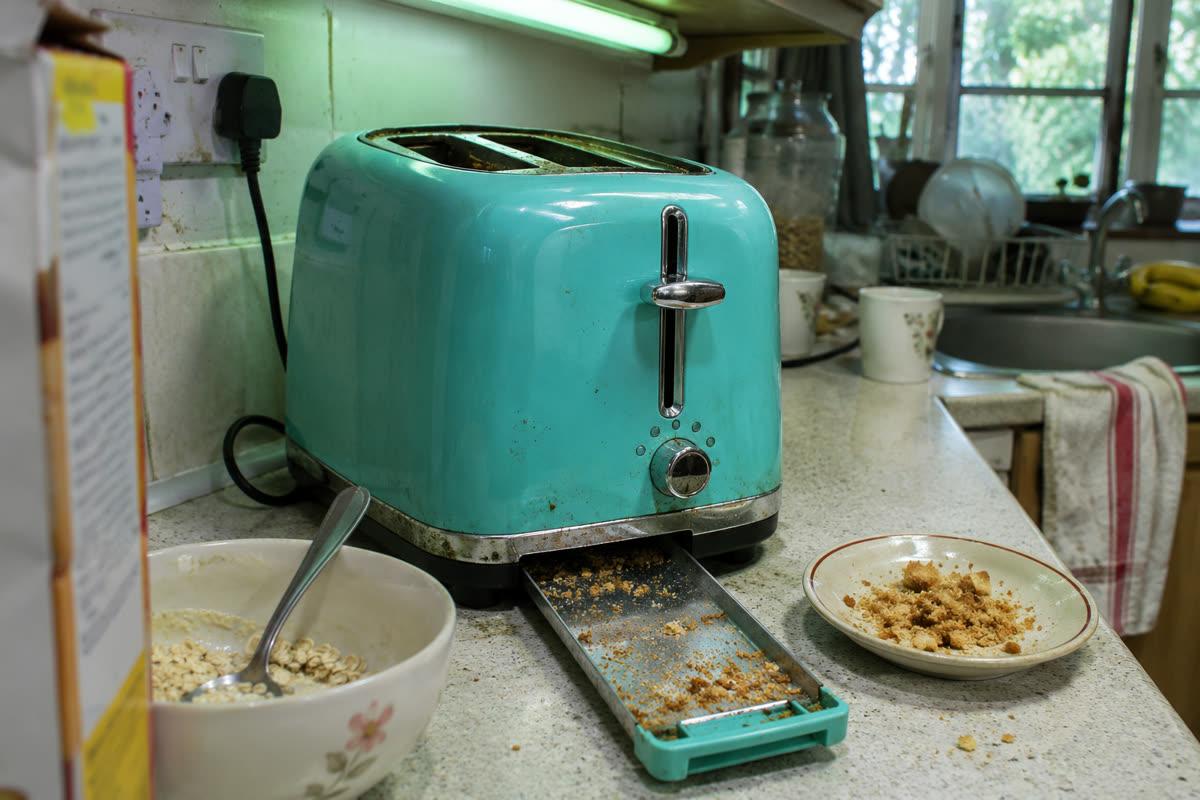 Gluten-free breakfast: what to check on the label and in your kitchenGo through a usual breakfast item by item: what is gluten-free by nature, what needs a label check, and which kitchen habits cause trouble.
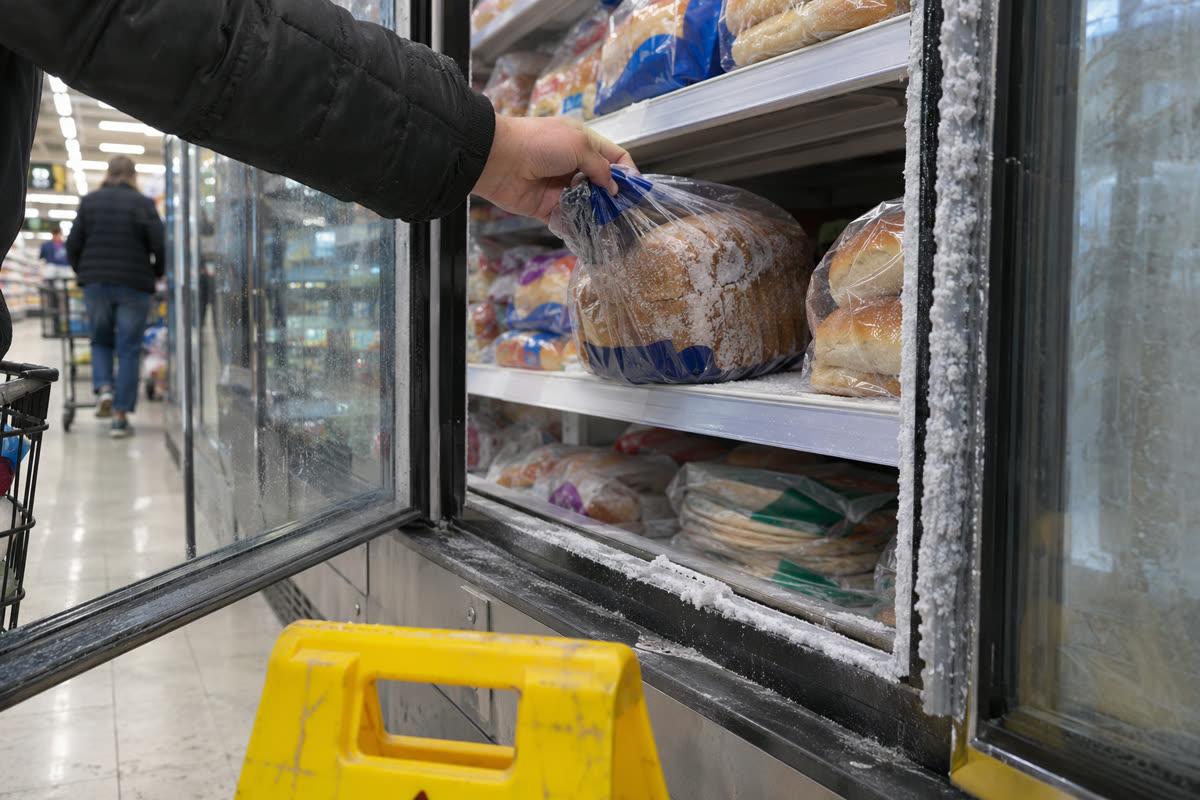 Gluten-free bread, buns and wraps: what the package tells youHow to tell a gluten-free bread, bun or wrap from a wheat look-alike: certification mark, maker’s claim or ingredient list, in a fixed order.
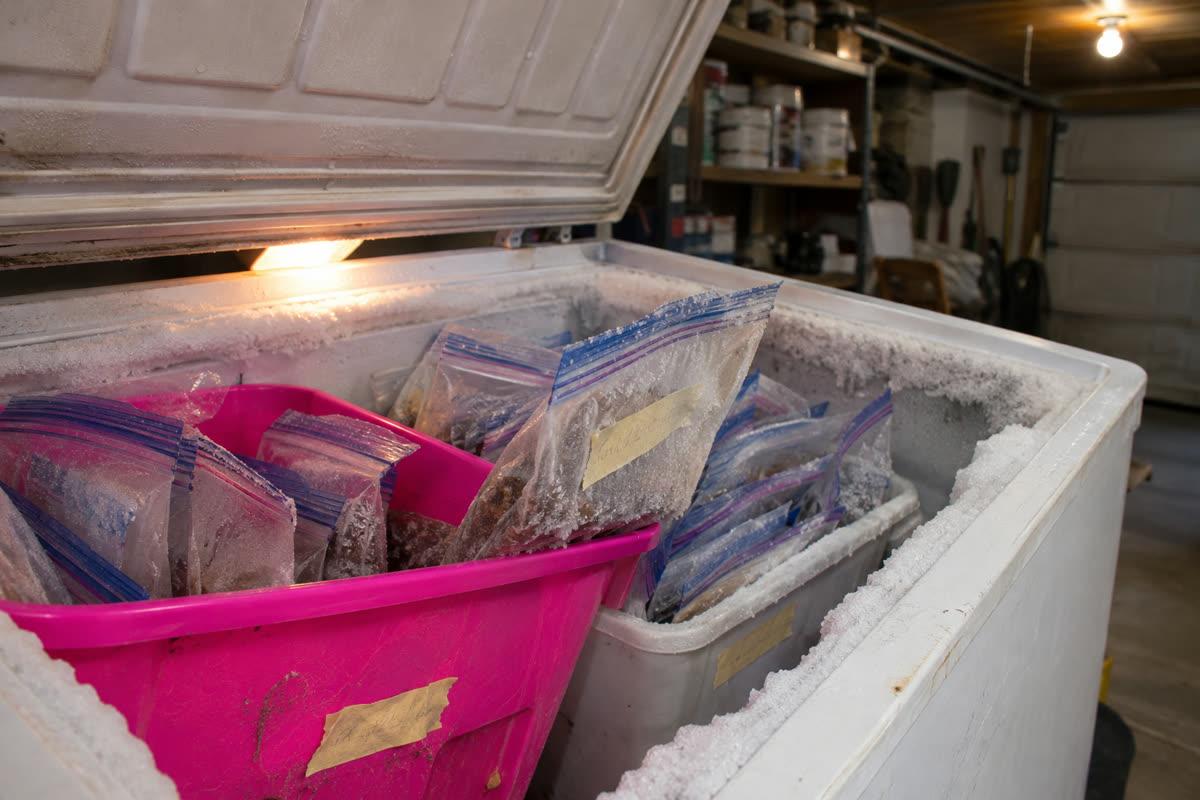 Freezing gluten-free food: what holds up, how to thaw it and how to keep it apartHow to freeze, label and thaw gluten-free food, which foods lose texture, and how to keep gluten-free packages apart in a shared freezer.
 Weight gain or loss after a celiac diagnosis: what the research foundWhat two studies found about weight before and after a celiac diagnosis, what sources say about gluten-free foods, and what to bring to a dietitian.
Sources
- [1, 2, 3, 4, 5, 6, 7, 8, 9, 10] Gluten Intolerance Group, Appliances: Risks of Cross-Contact, checked Nov 17, 2026.
- [11, 12, 13, 14, 15, 16] Gluten Intolerance Group, The Tools to Replace in Your Gluten-Free Kitchen, checked Nov 17, 2026.
- [17] Gluten Intolerance Group, The Tools to Replace in Your Gluten-Free Kitchen (2021 version), checked Nov 17, 2026.
- [18, 19, 20, 21] Coeliac UK, Cross-contamination (cooking at home), checked Nov 17, 2026.
- [22] Coeliac UK, Panasonic air fryer, checked Nov 17, 2026.
Read on 2026-11-17: the page describes the features of Panasonic air fryers, including that the non-stick coating and removable parts make for easy cleaning; it says nothing about sharing an air fryer with gluten-containing cooking.
- [23, 24, 25] National Celiac Association, Do I need new, designated pans, plates, and utensils?, checked Nov 17, 2026.
- [26] National Celiac Association, Dedicated Gluten-Free Kitchen, checked Nov 17, 2026.
- [27, 28, 29, 30] National Celiac Association, Sharing non-stick pans and air fryer, checked Nov 17, 2026.
Read on 2026-11-17: the list headed “Here are the things that should be separate in the kitchen:” names strainer/colander; sifter; cast iron pans; bread maker/sandwich maker/waffle iron; fryolator/air fryer (marked “if difficult to clean”); and a drop-in toaster or foil in a toaster oven.
- [31, 32, 33, 34, 35, 36, 37, 38, 39, 40] Beyond Celiac, Gluten-free kitchen after diagnosis (blog post), checked Nov 17, 2026.
Read on 2026-11-17: in the cookware section, the first list (items to keep if undamaged and thoroughly cleaned) names stainless steel, metal and glass items, and metal utensils.
Read on 2026-11-17: in the section for a 100% gluten-free kitchen, the list headed “Replace These Items” names toaster, rolling pins (especially wooden), waffle makers, colanders, sifters and sponges. Under the toaster entry the page says toaster bags are an option for keeping a gluten-containing toaster, but less reliable in the long term.
Read on 2026-11-17: for a shared kitchen, the list headed “Duplicate and Separate High-Risk Tools and Foods” names toasters, cutting boards, baking sheets (which can be shared if parchment paper or aluminum foil goes down each time), wooden or plastic utensils, rolling pins, oven mitts, waffle makers, colanders, sifters, sponges, towels used during gluten prep and condiments.
Read on 2026-11-17: neither the “Replace These Items” list nor the “Duplicate and Separate High-Risk Tools and Foods” list names an air fryer.
- [41, 42, 43] McMaster Celiac Clinic, Preventing Cross-Contamination, checked Nov 17, 2026.
- [44, 45, 46, 47, 48, 49, 50, 51, 52, 53, 54] Gastroenterology (via PubMed Central), Preparation of Gluten-Free Foods Alongside Gluten-Containing Food May Not Always Be as Risky for Celiac Patients as Diet Guides Suggest (Weisbrod and colleagues, 2020), checked Nov 17, 2026.
- [55, 56, 57, 58] Journal of Food Protection (via PubMed), Cross-Contamination with Gluten by Using Kitchen Utensils: Fact or Fiction? (Studerus and colleagues, 2018), checked Nov 17, 2026.
- [59, 60] Clinical Nutrition (via PubMed), Gluten cross-contact from common food practices and preparations (Parsons and colleagues, 2021), checked Nov 17, 2026.
- [61] PubMed (US National Library of Medicine), PubMed search: gluten with air fryer, cast iron, nonstick or cookware, checked Nov 17, 2026.
Searched PubMed on 2026-11-17 for gluten with “air fryer”, “cast iron”, nonstick or cookware: 2 records, titled “Investigation of the Effects of Different Home Frying Methods (Air Fryer and Deep Fryer) on HMF and Aroma Compounds in Gluten-Free Bean Chips” and “Influence of Infill Level and Post-Processing on Physical Parameters and Betaine Content of Enriched 3D-Printed Sweet Snacks”; neither title concerns gluten transfer from cookware.