How to cook dinner for a guest with celiac disease
Short answer
Ask the guest what they need, then cook in this order:
- Ask which products they trust and whether they are comfortable eating from a kitchen that also handles gluten1, 2.
- Build the menu from naturally gluten-free foods3, with as few boxed, canned, frozen or prepared ingredients as you can, because NIDDK says gluten may be found in those4.
- Read the label and ingredient list of every packaged item; a "gluten-free" claim on a food FDA regulates means under 20 parts per million5.
- Cook the guest's dishes first, in washed pots and pans with clean tools6, before flour or crackers come out, which GIG says could make dust and crumbs7.
- Give each dish its own serving utensil9, let the guest serve first (GIG's suggestion for a big group)8, and let the guest decide what to eat10.
Part of Cross-contact and the home kitchen, 19 guides
Key points
- Cross-contact can happen when food is prepared or served, so the cooking order and the serving matter as much as the menu11.
- Coeliac UK, a UK charity, says standard washing-up liquid or a dishwasher will remove gluten12. GIG says soap-and-water cleaning is sufficient for most items, calls colanders more difficult to clean thoroughly, and says scratched non-stick surfaces can develop grooves where gluten could remain13, 14, 15.
- GIG says gluten cannot be burned off by high temperature, and that a grill has to be cleaned, not just heated16.
- The guest may bring their own dish or pass on yours; GIG says that is about their health, not about you10.
What to ask the guest before you plan
NIDDK tells people with celiac disease to let a host know and to find out whether gluten-free food will be available17. An invitation that opens the subject first makes that easier. GIG's advice to hosts is to ask about favorite products and recipes and to talk through what you have in mind1.
- Which brands or products do you already trust, and is there something you would like on the table?
- Are you comfortable eating food cooked in my kitchen, or would you rather bring a dish?
- Is there anything else I should leave out of the menu?
The second question matters most. GIG says to check that guests are comfortable eating from a kitchen shared with gluten-containing dishes, notes a higher risk of cross-contact when you bake with gluten-containing flour in the same space, and asks hosts to be understanding if a guest brings their own food2. If you baked bread or cookies that day, say so.
A menu with few risk points
Meat, fish, fruit and vegetables are naturally gluten-free foods, as are potatoes and rice18, 3. NIDDK adds the catch: that holds without additives or some seasonings3. Gluten may be found in processed items: NIDDK names candy, condiments, hot dogs and sausages, ice cream, salad dressing and soups4. A menu built on plain ingredients therefore leaves you fewer labels to read.
GIG describes the simplest route for a host as deciding from the outset that everything served is gluten-free19. Its example menu is a salad with homemade dressing, roast chicken with roasted vegetables and rice, and baked apples with vanilla ice cream20. It also suggests cooking recipes you have made before rather than trying something new that night21. Pasta, bread and baked goods are what GIG calls the most common foods where you need gluten-free versions22.
| Course | Lower-risk choice | What still needs a check |
|---|---|---|
| Main | Plain roast or pan-cooked meat or fish18 | Some bottled marinades could use gluten as a thickener or stabilizer23. Read any seasoning blend: spices. |
| Sides | Potatoes and rice3 | Processed vegetable products such as frozen chips are on Coeliac UK's check-the-label list24. Packaged mashed potatoes need the same read. |
| Gravy and sauces | Gravy thickened with cornstarch or rice flour instead of wheat flour25 | Stock cubes and pre-bought sauces are on that same list24. See our verdicts for chicken broth and gravy. |
| Stuffing | Cook it in a separate dish. GIG's example: do not stuff a turkey with gluten-containing ingredients26 | Bread-based stuffing needs a gluten-free bread and a read of every other ingredient. |
| Salad | A homemade dressing20 | Salad dressing is one of the processed foods NIDDK says may contain gluten4. |
| Dessert | Baked apples with vanilla ice cream20, or a recipe with no flour such as flourless chocolate cake or meringues27 | Ice cream is on NIDDK's list of foods that may contain gluten4; read the tub, including any mix-ins. |
Labels and the ingredients that hide gluten
On a food FDA regulates, "gluten-free", "no gluten", "free of gluten" and "without gluten" all mean less than 20 parts per million of gluten5. The claim is voluntary, so a naturally gluten-free food may not carry it28. Generally, USDA regulates the labeling of meats, poultry and certain egg products, and TTB that of most alcoholic beverages, and FDA's regulation does not apply to foods whose labeling they regulate29. Our guide to reading a US food label for gluten covers the claim, the Contains line and the ingredient list in full.
NIDDK's advice to someone with celiac disease is to read labels for wheat, barley, rye and ingredients made from them, to look for a gluten-free claim, and to avoid a food when unsure whether it contains gluten, contacting the maker if possible30, 31. When you cannot tell, treat that as a reason to swap the item or leave it off the guest's plate.
| Item | What to check | Our verdict |
|---|---|---|
| Soy sauce, and sauces made with it | FDA: in general, soy sauce made from soybeans and wheat may not carry a gluten-free claim32 | Soy sauce |
| Vinegar | FDA: malt vinegar, which comes from barley, cannot be used in a food labeled gluten-free33 | Malt vinegar |
| Spices and seasoning blends | GIG suggests spices labeled gluten-free under FDA's rule, or GFCO-certified for more assurance34 | Spices |
| Stock cubes, bought sauces, frozen chips | Coeliac UK lists these as products to check24 | Chicken broth |
| Marinades and bottled sauces | GIG: some use gluten as a thickener or stabilizer23 | Read each label |
| Cultured dairy products | GIG: cultured dairy products could, in some cases, contain small amounts of gluten35 | Yogurt |
"Made with no gluten-containing ingredients" is not a gluten-free claim. FDA says that unless the label also carries a "gluten-free" claim, consumers should not assume the food meets the rule36.
Even a gluten-free claim has limits. FDA's rule does not require manufacturers to test starting ingredients or finished foods, though they remain responsible for complying with it37. GIG notes that GFCO certification means a threshold of 10 parts per million or less38. Keep the packages: GIG lists asking to see the package among its tips for eating out39.
Cooking order, pans and clean tools
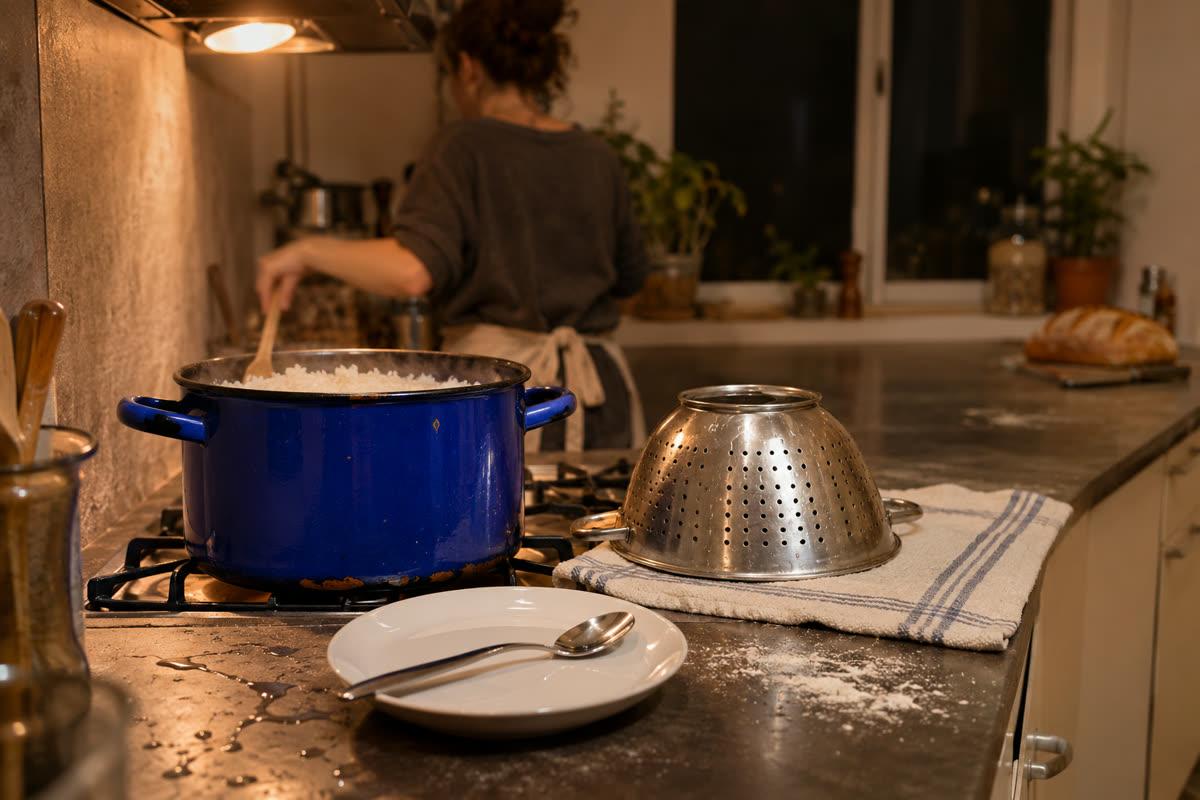
Gluten moves on surfaces and utensils: particles left on a surface, or on a utensil that has not been cleaned properly, can be transferred to gluten-free food40. Your order of work is the way to keep that from happening.
- Wash first. Wipe surfaces and clean pots, pans and utensils with hot soapy water6. Coeliac UK says standard washing-up liquid or a dishwasher will remove gluten, and that you do not need separate cloths or sponges12, 41. GIG agrees that cleaning with soap and water is sufficient for most items13.
- Cook the guest's dishes before you open flour, bread or crackers for the rest of the table. In a tip about storing gluten-free and gluten-containing food together, GIG notes that flour or baking mixes could make dust and crackers and cookies could generate crumbs7.
- Skip what is hard to clean. GIG says colanders, sifters and waffle irons should not be shared between gluten-free and other use if possible; otherwise clean them thoroughly between uses14. Use a freshly washed pot, not one that sat with last night's pasta.
- Coeliac UK says to use clean oil or a separate fryer for frying gluten-free food42.
- Check the oven and grill before the guest's food goes in (table below).
- Wash oven mitts and potholders before they touch the guest's dish, or keep a separate one43.
| Tool | What they say |
|---|---|
| Dishwasher | GIG: a functional dishwasher that cleans thoroughly can take a shared load44 |
| Wooden spoons | GIG: wood is tricky to clean thoroughly, and its fibers could harbor gluten particles that enter your food with the next stir45 |
| Cutting boards | GIG: if boards are pitted or scratched, gluten could settle into crevices46 |
| Colander | GIG: starchy pasta can leave residue, and removing traces of gluten from mesh-like strainers can be very difficult47 |
| Non-stick pans | GIG: scratched surfaces can develop grooves where gluten could remain15 |
| Oven | GIG: if they cannot go in separately, put the gluten-free items on the higher rack48 |
| Convection oven | GIG: the fan blows air through the oven, so cover the gluten-free dish, even when it is alone in the oven49, 50 |
| Toaster | GIG: errant gluten crumbs can end up on gluten-free bread51. Coeliac UK suggests toaster bags or a separate toaster52. |
| Microwave | GIG: wipe it after each use if shared with gluten-containing foods53 |
| Air fryer | GIG: do not use the same one for both54 |
| Grill | GIG: gluten is removed by thorough cleaning, not by high temperature, and tin foil under the food is a quick fix16, 55. It also suggests grilling the gluten-free food first56. More in our grilling guide. |
Plating and serving spoons
GIG says there are two main points of cross-contact at a table: in preparation and in serving57. For serving, three habits for a host, drawn from GIG's guidance:
- Give each dish its own utensil, and never share one between gluten-containing and gluten-free food9. The same goes for condiments: use squeeze bottles, or make sure nobody double-dips58. GIG calls the same utensil in both foods one of the most common routes for crumbs59.
- For a big group, GIG says to let gluten-free guests serve first, so utensils from gluten-containing dishes are not moved around and shared before they get their food8. With one guest at your table, plating their food in the kitchen before the other dishes come out does the same job.
- At a buffet, GIG suggests labeling the gluten-free dishes, or that end of the table60. If the table is mixed, GIG suggests laying out gluten-containing dishes well away, even in another room61.
Keep gluten-containing food off the same platter, too26. Set bread baskets down at the far end, after the guest has served. For butter and spreads, Coeliac UK suggests separate condiments or clean cutlery for shared ones62.
Drinks and dessert
NIDDK lists beer, lagers, ale, flavored liquors and malt beverages among drinks that may contain gluten63. GIG's holiday guidance suggests offering distilled liquors, wines, gluten-free (not gluten-removed) beer, and hard seltzers or ciders labeled gluten-free64. Check each bottle; FDA's gluten-free rule does not apply to foods whose labeling TTB regulates, which covers most alcoholic beverages29. Our beer verdict has the details. For a non-alcoholic option, GIG says most mocktails can be made with naturally gluten-free ingredients such as seltzer water, tonic water, flavored colas and sodas, fruit juices and most bitters65.
For dessert, GIG points to certified gluten-free sweets, ready to eat or ready to bake66, and to recipes with no flour at all27. A purchased dessert needs the same label read as everything else.
What the guest may decide
You have cooked carefully; the guest still decides. GIG advises guests who do not know their host well that they may want to bring their own gluten-free food67, and tells hosts that a guest who skips a dish or brings their own is acting on health, not slighting you10. Keep the packages where you can pull them out.
Tell the guest what you did: which dishes are theirs, which brands you used and where the packages are. They can then make the call with the facts.
Verdicts in this guide
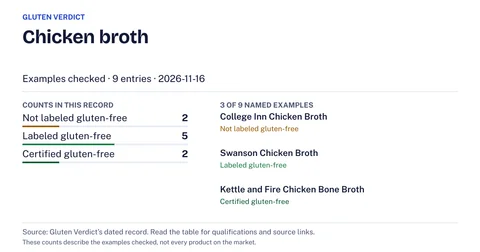 Chicken brothDepends on the productchecked Nov 16, 2026
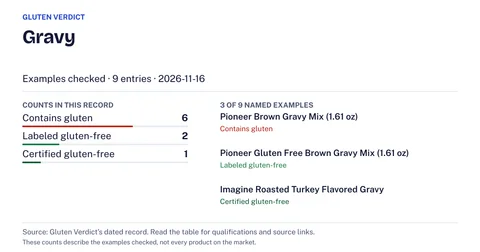 GravyDepends on the product6 of 9 products we checked contain glutenchecked Nov 16, 2026
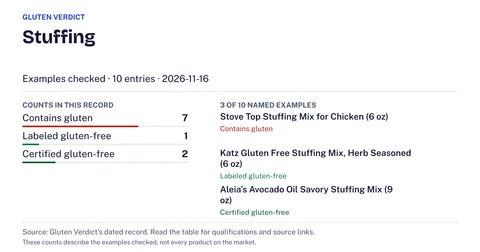 StuffingContains glutenchecked Nov 16, 2026
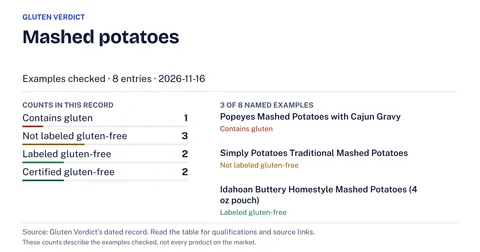 Mashed potatoesDepends on the product1 of 8 products we checked contains gluten: Popeyes Mashed Potatoes with Cajun Gravychecked Nov 16, 2026
 Soy sauceDepends on the product3 of 7 products we checked contain gluten: Kikkoman Soy Sauce (Non-GMO), 20 oz; San-J Organic Shoyu Soy Sauce; and Lee Kum Kee Premium Soy Sauce (No Preservatives Added)checked Nov 16, 2026
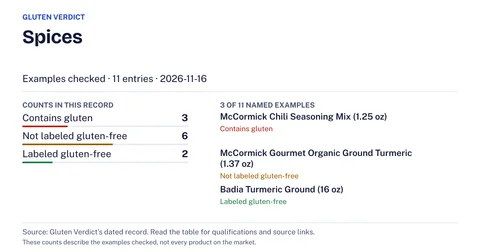 SpicesDepends on the product3 of 11 products we checked contain gluten: McCormick Chili Seasoning Mix (1.25 oz), Lawry’s Chili Spices & Seasonings Mix (1.48 oz), and McCormick Cheesy Taco Seasoning Mix (1.12 oz)checked Nov 16, 2026
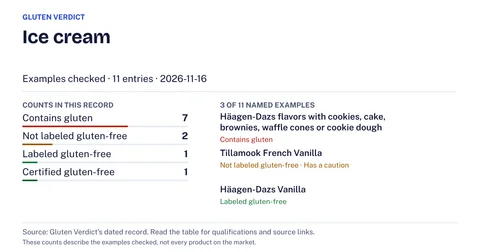 Ice creamDepends on the product7 of 11 products we checked contain glutenchecked Nov 16, 2026
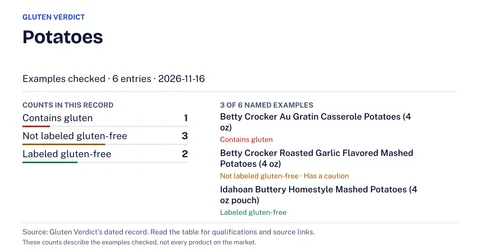 PotatoesNaturally gluten-free1 of 6 products we checked contains gluten: Betty Crocker Au Gratin Casserole Potatoes (4 oz)checked Nov 16, 2026
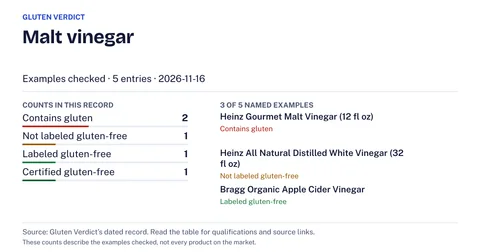 Malt vinegarContains glutenchecked Nov 16, 2026
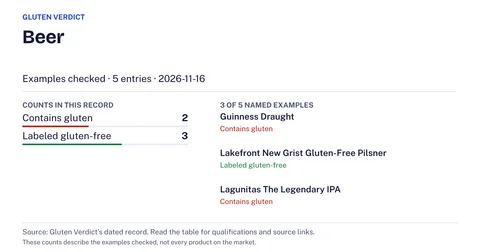 BeerDepends on the product2 of 5 products we checked contain gluten: Guinness Draught and Lagunitas The Legendary IPAchecked Nov 16, 2026
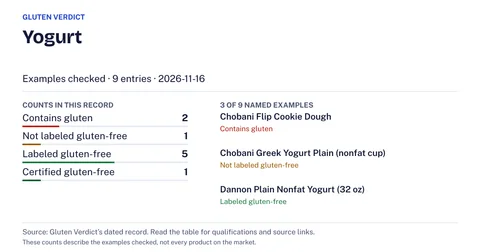 YogurtDepends on the product2 of 9 products we checked contain gluten: Chobani Flip Cookie Dough and Chobani Flip Cookies & Creamchecked Nov 16, 2026
Questions people ask
Do I need separate pots and pans for one dinner?
Coeliac UK says to clean pots, pans and utensils with hot soapy water, and that washing-up liquid or a dishwasher will remove gluten6, 12. GIG says colanders, sifters and waffle irons are harder to clean, and that scratched non-stick surfaces can develop grooves where gluten could remain14, 15.
Does cooking at a high temperature remove gluten?
GIG says gluten cannot be burned off by high temperature but can be removed by a thorough cleaning16.
More in Cross-contact and the home kitchen
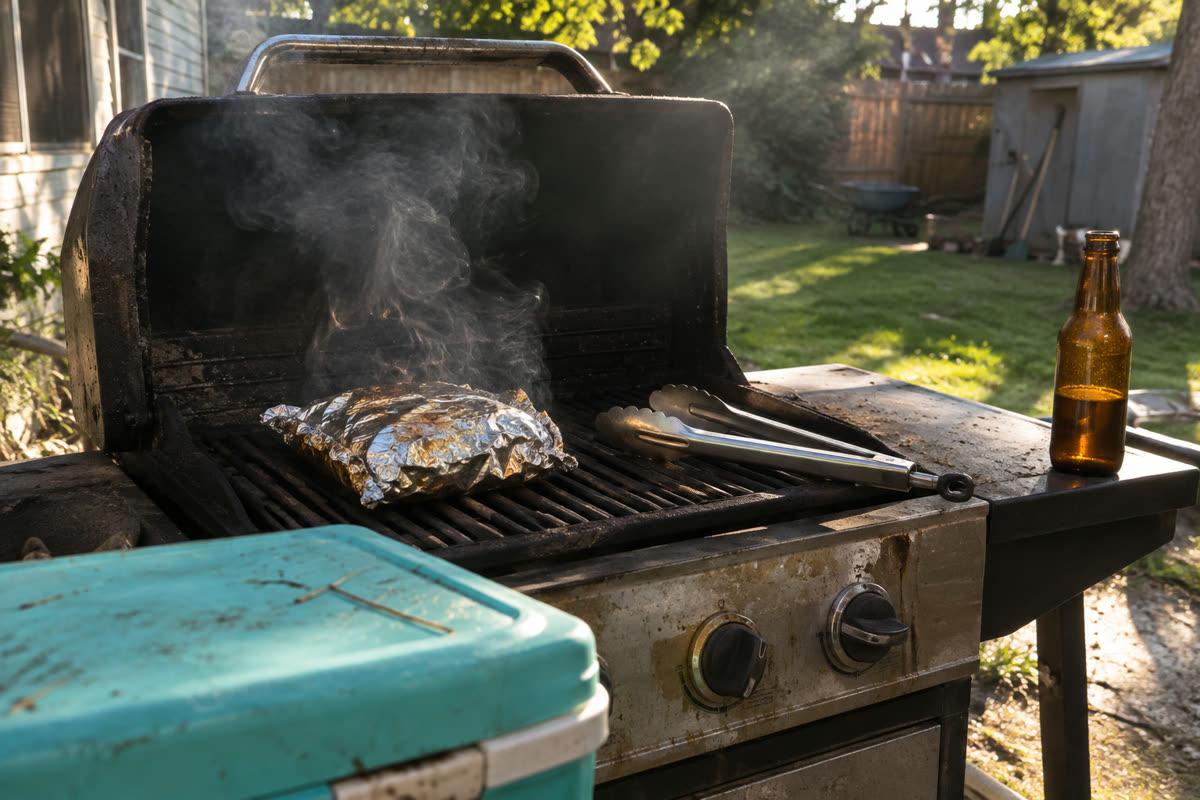 Gluten-free grilling and cookouts: what to wrap, clean, bring and askHow to keep gluten off the grill at a cookout: foil, clean grates, sauces, buns, sides, a note to send the host and a bring-your-own list.
 Storing gluten-free food in a shared fridge, pantry and freezerWhere gluten-free food goes in a shared fridge, pantry and freezer, how to label it so everyone follows, and what the sources say and leave out.
 What to clean after wheat flour lands in a gluten-free kitchenThe order of jobs after wheat flour reaches a gluten-free kitchen, what charities and studies say about each item, and what no source covers.
 Gluten-free pizza at home: check each part, then keep it apart in the ovenCheck the crust, sauce, cheese and toppings against each maker’s own statement, then set up stone, parchment and oven so a gluten-free pizza stays apart.
 Baking gluten-free in a home where someone else bakes with wheat flourA baking-day plan for a shared kitchen: order, counters, flour storage, tools and oven, and which timing rules have no published source.
 Toasters, colanders, cast iron, wood and air fryers: which can be cleanedWhich kitchen items the charities say to keep, wash or replace after going gluten-free, item by item, with what the studies we found measured.
Related guides
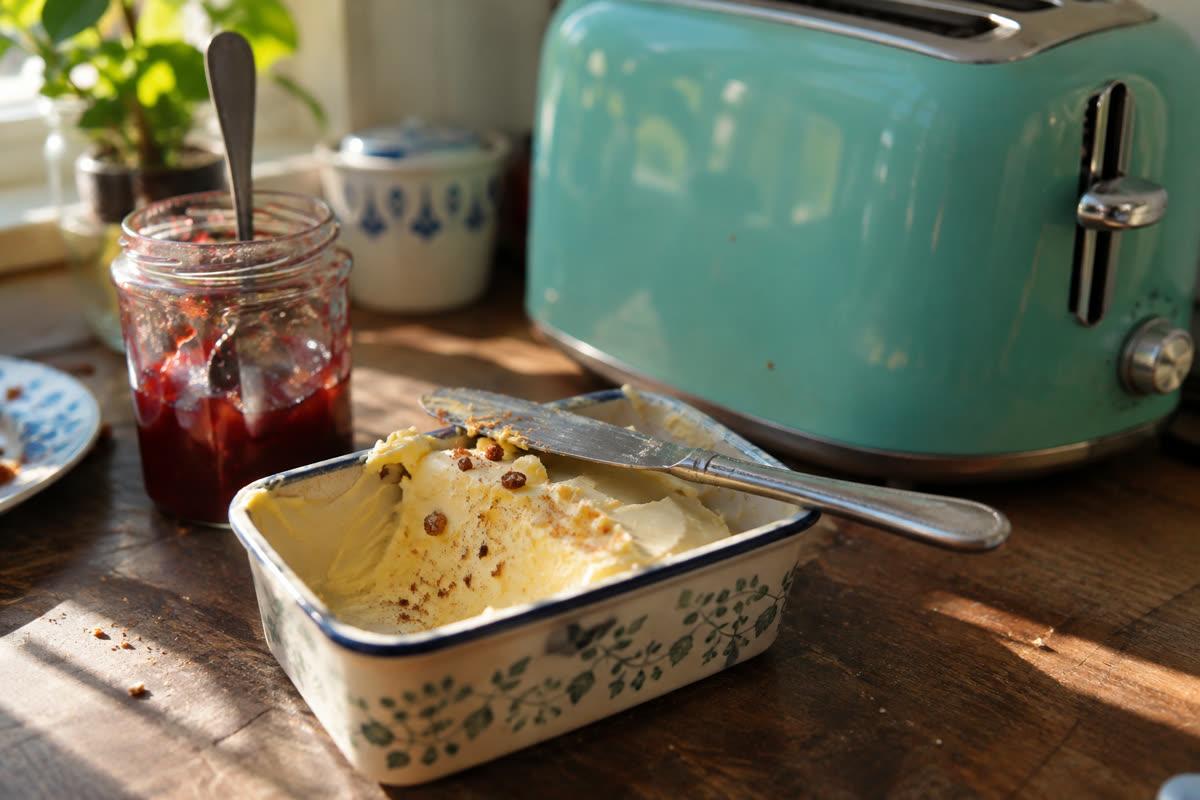 Gluten cross-contact at home: where it happens and what to do about itHow gluten reaches gluten-free food at home, whether to separate, wash or ask for each route, and which rules have lab data behind them.
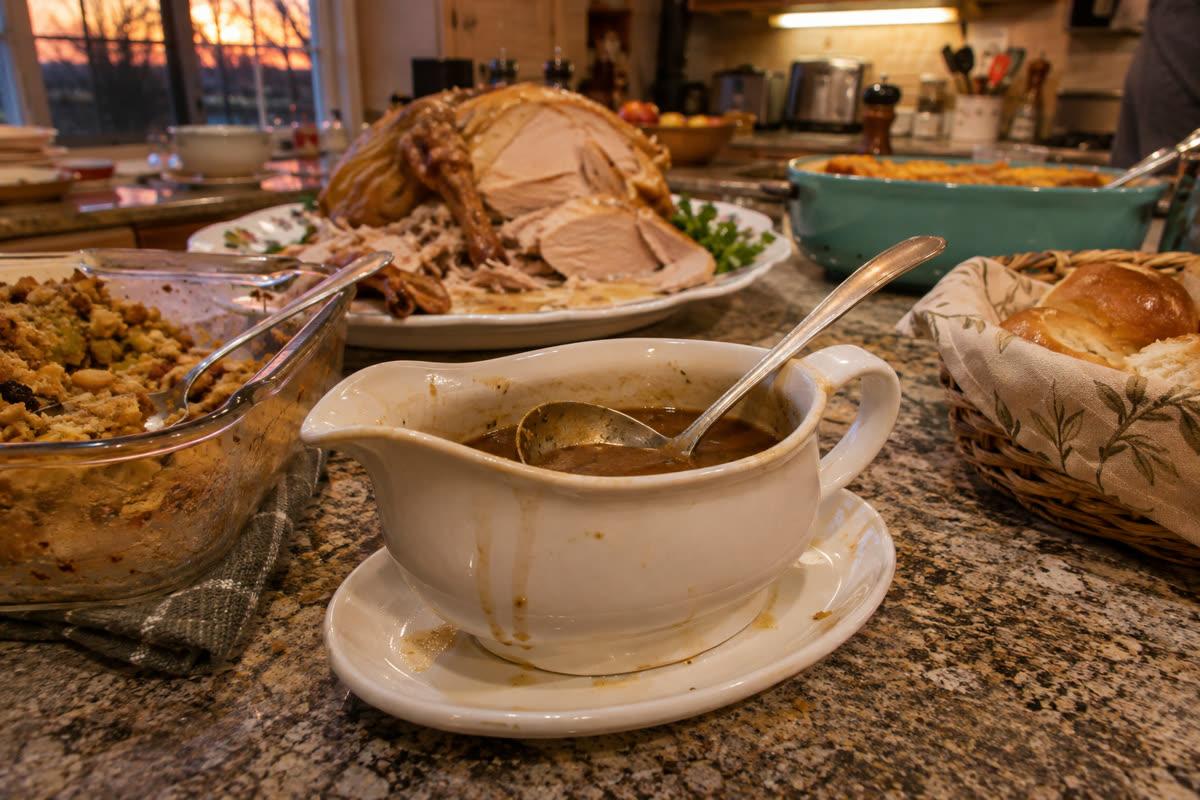 Gluten-free Thanksgiving: a dish-by-dish check of the menuTurkey, stuffing, gravy, cranberry sauce, casserole and pie: which dishes need a label or maker check, and how to order the work in a shared kitchen.
 Where wheat, barley and rye hide in processed food: 15 places to checkFifteen processed foods where wheat, barley or rye turn up, the label step that catches each, and what US allergen law does and does not flag.
 How to read a US food label for glutenWhere gluten shows up on a US food label: the gluten-free claim, the Contains line, the ingredient list and may-contain lines, and what each means.
Sources
- [1, 2, 8, 9, 25, 26, 27, 60, 64, 66] Gluten Intolerance Group, Tips for Entertaining Your Gluten-free Family and Friends This Holiday Season, checked Nov 17, 2026.
- [3, 4, 11, 17, 30, 31, 63] National Institute of Diabetes and Digestive and Kidney Diseases (NIDDK), Eating, Diet, & Nutrition for Celiac Disease, checked Nov 17, 2026.
- [5, 28] US Food and Drug Administration, Gluten and Food Labeling, checked Nov 17, 2026.
- [6, 12, 41, 42, 52, 62] Coeliac UK, Cross contamination (cooking at home), checked Nov 17, 2026.
- [7, 13, 14, 34, 35, 38, 39, 59, 67] Gluten Intolerance Group, 25 Ways Cross-Contact Could Happen (And How to Avoid It), checked Nov 17, 2026.
- [10] Gluten Intolerance Group, I Heart My Gluten-Free Friends & Family: How to Show Love and Support, checked Nov 17, 2026.
- [15, 43, 45, 46, 47] Gluten Intolerance Group, The Tools to Replace in Your Gluten-Free Kitchen, checked Nov 17, 2026.
- [16, 44, 48, 49, 50, 51, 53, 54, 55] Gluten Intolerance Group, Appliances: Risks of Cross-Contact, checked Nov 17, 2026.
- [18, 24] Coeliac UK, Hints and tips for cooking at home, checked Nov 17, 2026.
- [19, 20, 21, 22, 57, 61] Gluten Intolerance Group, Gluten-Free Safe Entertaining, checked Nov 17, 2026.
- [23, 56, 58, 65] Gluten Intolerance Group, Your Summertime Guide to Gluten-Free Grill and Chill, checked Nov 17, 2026.
- [29, 32, 33, 36, 37] US Food and Drug Administration, Questions and Answers on the Gluten-Free Food Labeling Final Rule, checked Nov 17, 2026.
- [40] Gluten Intolerance Group, Gluten in Your Food: Cross-Contact or Cross-Contamination?, checked Nov 17, 2026.