Gluten-free on a trip through several European countries: borders, trains, hostels and supermarkets
Short answer
Pack shelf-stable, packaged staples with no meat or dairy in them, and buy the rest locally: inside the EU, one regulation sets the gluten-free limit at 20 mg/kg in every member state1, 2. Each border has its own food rules:
- Entering the EU from a non-EU country: no meat or dairy3.
- Between EU countries: meat and dairy may be carried for personal consumption, though outbreaks can add limits4, 5.
- EU country to Great Britain: cheese, milk and other dairy are not allowed, while bread, biscuits and pasta are on the unrestricted list6, 7.
- Flying home to the US: declare all agricultural products, which covers food, to customs officers8.
Part of Travel: Europe, 19 guides

Key points
- “Gluten-free” on a package in any EU member state means no more than 20 mg/kg of gluten, and “very low gluten” is a separate statement that allows up to 100 mg/kg1, 9.
- The EU allergen group “cereals containing gluten” names oats, spelt and kamut as well as wheat, rye and barley10; the US list of major allergens names wheat among the grains11.
- For loose food, EU law makes allergen information mandatory, but member states may adopt national measures on how it is made available and presented12, 13.
- Coeliac UK says gluten-free choices can be limited at some airports, train stations, motorway service stations and on ferries, so carry food for each journey14.
- Declare all food when you fly home: APHIS says that if you declare all the agricultural products you bring, you face no penalties even if an inspector decides an item cannot enter15.
What each border lets you carry
Food rules follow the direction of travel, not only the country you land in. The table covers the legs a multi-country trip usually has. Animal-disease outbreaks can add restrictions5, so open the linked page in the week you travel.
| Leg | What the authority says | For your staples bag |
|---|---|---|
| US to an EU country | Arriving from a non-EU country, you may not bring meat or dairy; a limited quantity of fruit and vegetables, eggs, egg products and honey is allowed3. Undeclared meat or dairy is confiscated and destroyed, and you may be fined or face criminal prosecution16. | Read each ingredient list for meat and milk before packing. The page does not say how it treats a packaged food with milk as an ingredient, such as a bar with milk chocolate17. Its table also gives 2 kg per person for “products other than those described above which do not contain meat or milk”, and does not say whether packaged staples fall in that row64. |
| Between EU countries | For these rules the EU also covers Andorra, Iceland, Liechtenstein, Norway, San Marino and Switzerland18. Travelling within it, you can carry meat or dairy for your own personal consumption4; outbreaks can add limits on type and amount5. | Cheese or cured meat can go with you from one country to the next for your own consumption, subject to those limits4, 5. |
| EU country to Great Britain | GOV.UK lists as unrestricted from any country: bread (not sandwiches filled with meat or dairy), cakes without fresh cream, biscuits, and pasta and noodles (not if filled with meat), among others7. From the EU you cannot bring cheese, milk or dairy such as butter and yoghurt, or pork, beef, lamb, mutton, goat, venison and products made from them6; the page ties this to animal disease outbreaks in the EU19. Northern Ireland has different rules20. | The unrestricted list names bread, biscuits and pasta without saying what grain they are made from7. Leave cheese and milk-based items out. The same page says there are restrictions on bringing fruit, vegetables, nuts and seeds into Great Britain from abroad65, so check that page before packing trail mix or nuts. |
| Great Britain to an EU country | Your Europe’s list of what counts as the EU for these rules does not name the United Kingdom18. Read plainly, a leg from Britain to the continent is a leg from a non-EU country, where meat and dairy are not allowed3. We found no page that says otherwise, so confirm with the customs service of the country you arrive in. | Same as the US-to-EU row. |
| Europe to the US | Travelers must declare all agricultural products to CBP officers8. APHIS says that if you declare all the agricultural products you bring, you will not face penalties even if an inspector decides an item cannot enter15. CBP says you may bring bakery items and certain cheeses21. | Declare packaged staples and keep receipts and original packaging, as APHIS recommends22. |
CBP’s warning about rice names rice itself: “Because rice can often harbor insects, it is best to avoid bringing it into the United States”23. It does not mention rice cakes or rice crackers, so declare them and let the officer decide.
What to pack: staples that travel
The charities agree on carrying your own food. Coeliac UK says to prepare food or take snacks for journeys14 and to keep emergency snacks for delays and cancellations24. The Celiac Disease Foundation lists non-perishable backup food such as bars, trail mix, chips and cereal25, and GIG names individually packaged nuts, protein bars and crackers26.
Whether a bar, cracker or loaf is gluten-free depends on the product. Our verdicts show which of the products we read carry a gluten-free claim: granola bars, crackers, rice cakes, cereal, bread and oatmeal. Pack packages that carry the claim, and read the list for milk, egg and meat as well, because of the border rules above.
Liquids, spreads and cabin bags
Leaving a US airport, TSA allows solid food in carry-on or checked bags, and liquid or gel food over 3.4 oz goes in checked bags where possible27; our TSA food rules guide goes through it item by item. On a flight leaving an EU airport, liquid containers over 100 ml go in checked baggage, with medicines and baby food excepted28. Among the exemptions it lists, the Commission’s page on the rule names liquids to be used during the trip for medical purposes or special dietary requirements29; it does not say whether gluten-free food counts. It also counts pastes, syrups and soups as liquids30. Nut butter is not named, so put large jars in checked baggage or ask your airline. Cabin baggage size and item limits are set by each airline31. More on flying is in flying gluten-free.
Letters and exemptions
Coeliac UK suggests asking your airline or tour operator whether sealed packs of gluten free products can be brought into the country you are visiting32, and notes that some countries are extremely strict on plant-based products33. It says a GP can provide a letter explaining coeliac disease and why you need the products34. The Celiac Disease Foundation suggests a doctor’s note for carrying “medical foods” through airport security35.
The European Commission’s personal-imports page lists an exemption for powdered infant milk, infant food and special foods required for medical reasons, if weighing less than 2 kilograms and meeting its conditions36. Neither it nor the Your Europe page says whether gluten-free products count17, so do not count on it: ask the arrival country’s customs service.
One label rule across the EU, and where it stops
Inside the EU, “gluten-free” on a package means the same thing in every member state: the statement may only be made where the food as sold contains no more than 20 mg/kg of gluten1, and the regulation is binding in its entirety and directly applicable in all member states2. It may be accompanied by “suitable for coeliacs”37.
- “Very low gluten” is a different statement. It allows up to 100 mg/kg, and only for food containing an ingredient from wheat, rye, barley, oats or crossbred varieties that was specially processed to reduce gluten9.
- Oats in a food presented as gluten-free or very low gluten must be specially produced, prepared or processed to avoid contamination by wheat, rye, barley or crossbred varieties, and cannot exceed 20 mg/kg38.
- The EU’s allergen group is “cereals containing gluten, namely: wheat, rye, barley, oats, spelt, kamut or their hybridised strains, and products thereof”, with listed exceptions10. The US list of major allergens names wheat as the grain11, so a habit of scanning the Contains line for wheat does not carry over: look for the whole group.
- On an EU ingredient list the allergen name must be emphasised through a typeset that clearly distinguishes it from the rest of the list, for example by font, style or background colour39. With no ingredient list, the word “contains” followed by the name is used40.
Where the rule stops
Loose food. For food offered for sale without prepackaging, or packed at the customer’s request or prepacked for direct sale, the regulation makes allergen information mandatory12, but member states may adopt national measures on how it is made available and presented13. Our guide to European restaurant allergen rules goes country by country. GIG says that in Europe and the UK it is common for allergens to be assigned numbers, with each dish showing the numbers of the allergens it contains41; it adds that it is still important to ask about cross-contact and preparation practices42.
“May contain” lines. The regulation lists information on the possible and unintentional presence of allergens among its voluntary food information43. What each regulator says is in may-contain labels abroad; the EU’s own gluten statements are in gluten-free and very low gluten on EU labels.
Britain. The UK version of the regulation on legislation.gov.uk carries the same 20 mg/kg statement44; the rest is in our UK labelling guide and UK travel page.
Trains, stations and budget flights
Coeliac UK says gluten-free choices can be limited at some airports, train stations, motorway service stations and on ferries14. The Celiac Disease Foundation says airlines, airports and trains still have a way to go45.
GIG’s article on trains, which starts from US trains, says that if a train has a café or dining car, most do not offer accommodation for special dietary needs46; it adds that in other countries, such as across Europe, accommodations for gluten-free options are common47. It adds that if ingredients are not listed on individual packages, steer clear48. Coeliac UK suggests asking for gluten-free meals at the time of booking, for a flight, train, coach or ferry49.
What follows for the plan: board every leg with a meal and a snack you can eat cold, and treat anything bought on board or at a station kiosk as a bonus. On a travel day that crosses a border, expect to arrive with whatever you carried.
Hostels and apartments: sharing a kitchen
None of the authority pages we fetched covers hostel kitchens, so this section applies charity advice on cross-contact written for home kitchens. A hostel’s toaster, spread jars, colanders and cupboards raise the same questions.
- Coeliac UK says to wipe down surfaces and clean pots, pans and cooking utensils with hot soapy water50, and that standard washing-up liquid or a dishwasher will remove gluten51.
- For shared butter, jam and spreads, Coeliac UK says to use separate condiments or at least clean cutlery52; it suggests toaster bags, or a separate toaster, for gluten-free bread53.
- GIG says colanders, sifters and waffle irons are harder to clean thoroughly and should not be shared if possible; if they must be, clean them between every use54.
- For shared fridges and cupboards GIG says to put gluten-free packages above gluten-containing ones, securely packaged55, and warns that one common route for crumbs is the same utensil used in both foods56.
Before you book, ask whether there is a kitchen and fridge space; the Celiac Disease Foundation suggests calling a hotel to ask if a refrigerator and microwave are available57. A one-pot meal cooked in your own pan, with your own spoon and a package you opened yourself, uses the advice above with the least dependence on shared equipment. For an apartment you control, see setting up a kitchen in a vacation rental.
Buying locally: supermarkets, pharmacies and a language card
Coeliac UK says gluten-free products are increasingly available in Europe but can be difficult to source58. It says bread and pasta are frequently found in large branches of supermarkets and health food shops, and in some pharmacies, often under the Diet section59. It notes that you can sometimes order online in advance and have the goods delivered to a hotel or villa60.
At the shelf, look for the “gluten-free” statement, then read the ingredient list for the emphasised allergen group1, 39. Read the list on foods with no statement too.
For a language card, GIG suggests a printed translation card to hand to a server or manager61, and the Celiac Disease Foundation describes cards with translations explaining specific food allergies in several languages62. Coeliac UK’s travel guides, which members can download, include useful phrases in the local language63. We do not translate phrases here; for Spanish and Portuguese see asking for gluten-free in Spanish and Portuguese.
A check for each border and each stop
- Before you leave: read the ingredient list of every packed food for meat, milk and egg, because arrivals from a non-EU country may not bring meat or dairy3.
- Before each leg: name the direction (US to EU, EU to EU, EU to Great Britain, Britain to EU, Europe to US), re-read its row in the table above, and open the authority’s page that week5, 19.
- Before each flight or train: carry a meal and a snack; on a flight leaving an EU airport, liquid containers over 100 ml go in checked baggage28.
- On arrival at a hostel or apartment: look at the kitchen before unpacking: the toaster, shared spreads, colanders53, 54.
- At the first supermarket in each EU country: find the gluten-free statement and read the ingredient list for the emphasised allergen group1, 39.
- Before flying home: declare all food and keep receipts and original packaging8, 22.
Country pages for each stop
Each country page gives that country’s own rule and its celiac society, and the Nordic page covers five countries together: France, Germany, Greece, Ireland, Italy, the Nordic countries, Portugal, Spain, Turkey, the United Kingdom and Scotland. The list Your Europe gives for the EU rules above does not name the United Kingdom or Turkey18, so read their pages for what applies there. For planning a single trip step by step, see planning a gluten-free trip.
Verdicts in this guide
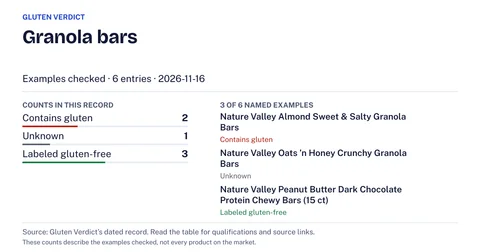 Granola barsDepends on the product2 of 6 products we checked contain gluten: Nature Valley Almond Sweet & Salty Granola Bars and Nature Valley Cinnamon Brown Sugar Soft-baked Oatmeal Squareschecked Nov 16, 2026
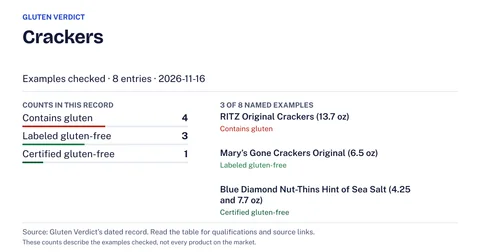 CrackersDepends on the product4 of 8 products we checked contain glutenchecked Nov 16, 2026
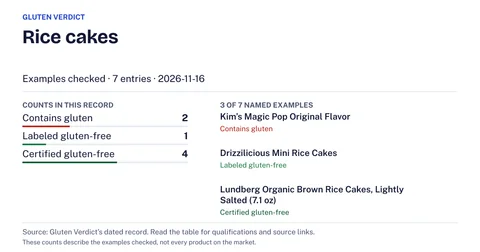 Rice cakesDepends on the product2 of 7 products we checked contain gluten: Kim’s Magic Pop Original Flavor and Kim’s Magic Pop Whole Wheat Flavorchecked Nov 16, 2026
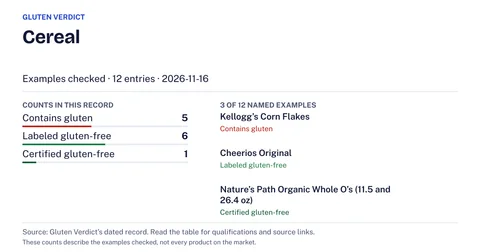 CerealDepends on the product5 of 12 products we checked contain glutenchecked Nov 16, 2026
 BreadContains glutenchecked Nov 16, 2026
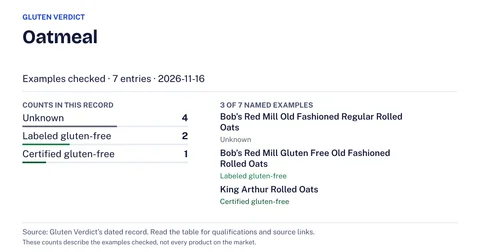 OatmealDepends on the productchecked Nov 16, 2026
Questions people ask
Can I carry cheese and cured meat from one EU country to the next?
Your Europe says that when travelling in the EU you can carry meat or dairy for your own personal consumption4, with possible limits during outbreaks5. Crossing into Great Britain is different: cheese and other dairy from the EU are not allowed6.
Can I bring gluten-free bread from the US into Europe?
Your Europe’s page bars meat and dairy from non-EU countries3 and does not mention bread or gluten-free products17. Coeliac UK’s advice is to check with the airline or tour operator whether sealed packs can be brought into the country32.
Does “gluten-free” mean the same on a package in two different EU countries?
For packaged food, yes: the same regulation applies in all member states2 and sets 20 mg/kg1. Loose food is left to national measures on how allergen information is made available13.
Do I declare gluten-free snacks when I fly back to the US?
APHIS says travelers must declare all agricultural products8. APHIS says that if you declare all the agricultural products you bring, you face no penalties even if an inspector decides an item cannot enter15. CBP says you may bring bakery items21.
More in Travel: Europe
 Gluten-free ranges at European supermarkets, as the chains describe themWhat Mercadona, Carrefour, Tesco, Sainsbury’s, Albert Heijn and Migros say about their gluten-free lists, filters and marks, read from their own pages.
 Gluten-free in Denmark, Sweden, Norway, Finland and IcelandOne rule table for Denmark, Sweden, Norway, Finland and Iceland, with the regulator and society pages, the claim words, oats, rye and licorice.
 Gluten-free in Ireland: labels, pub rules, Guinness and the Crossed Grain symbolWhat Irish labels, pub allergen rules and the Crossed Grain symbol say about gluten, and what Guinness lists, so a US traveler knows what to check.
 Gluten-free in Central Europe: the rules in five countries and where wheat hides in the dishesWhich gluten-free rule covers a pack in Austria, Czechia, Hungary, Poland and Switzerland, and where wheat enters schnitzel, dumplings and sauces.
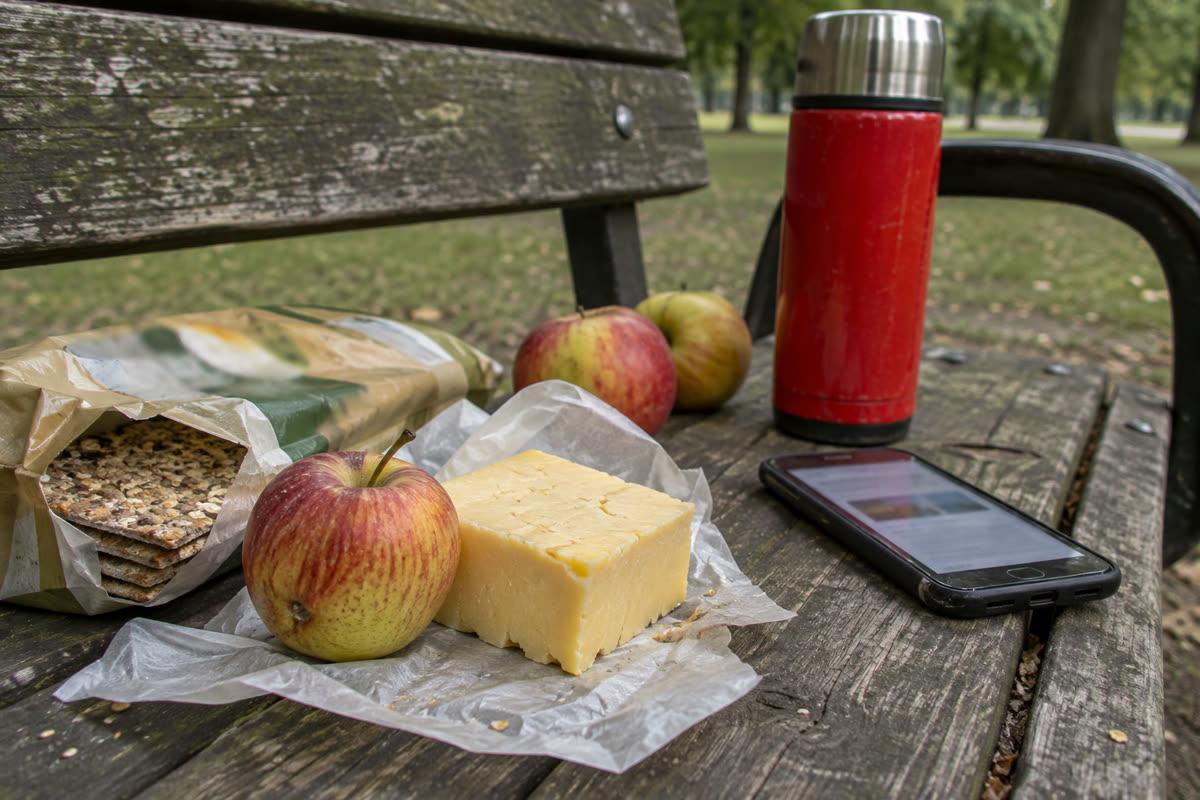 Gluten words on European food labels, language by languageFind the ingredient list, the gluten-cereal name and the gluten-free claim on a European pack in 11 languages, using words from the EU’s own texts.
 Gluten-free in Italy: what the AIC program covers and what to askWhat “senza glutine” means in Italy, what AIC’s restaurant program asks of a kitchen, and the questions to ask in a restaurant, pharmacy or shop.
Related guides
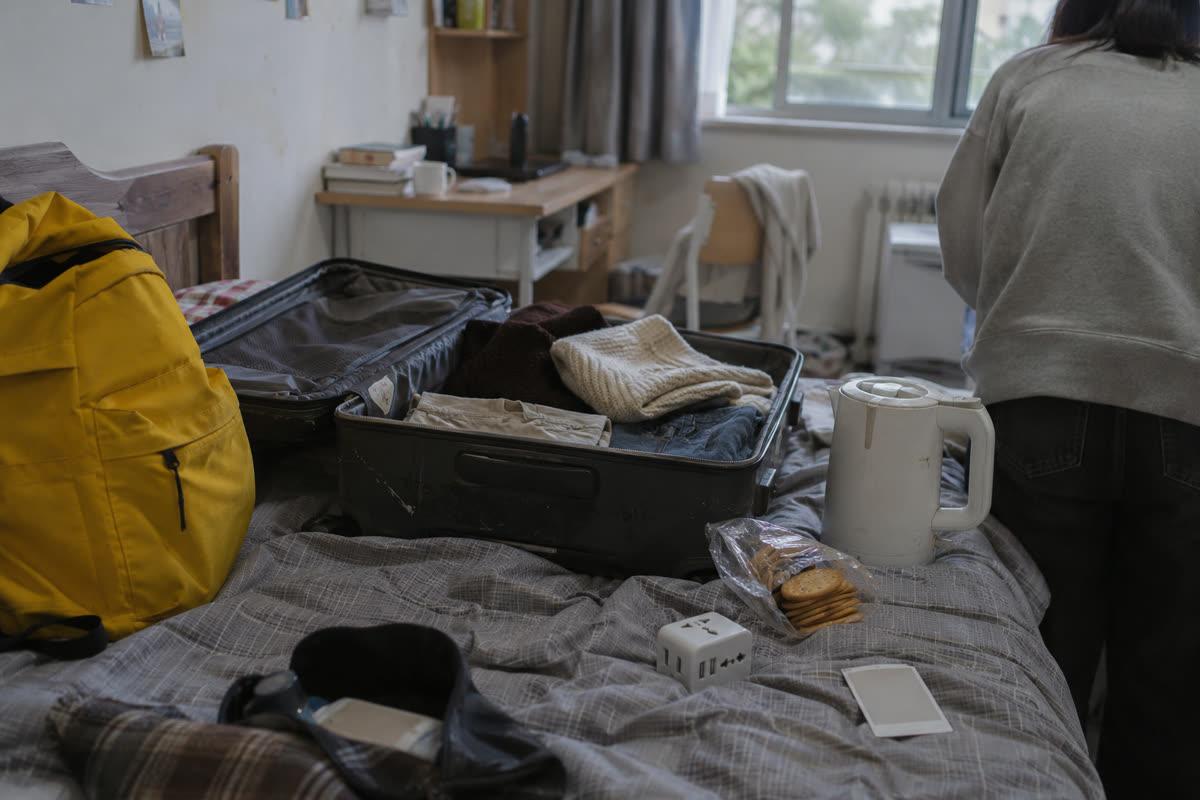 Study abroad and gap years with celiac disease: what to settle before you goWhat to ask a study abroad program or host family in writing, how gluten-free labeling differs abroad, and what to carry for a semester or gap year.
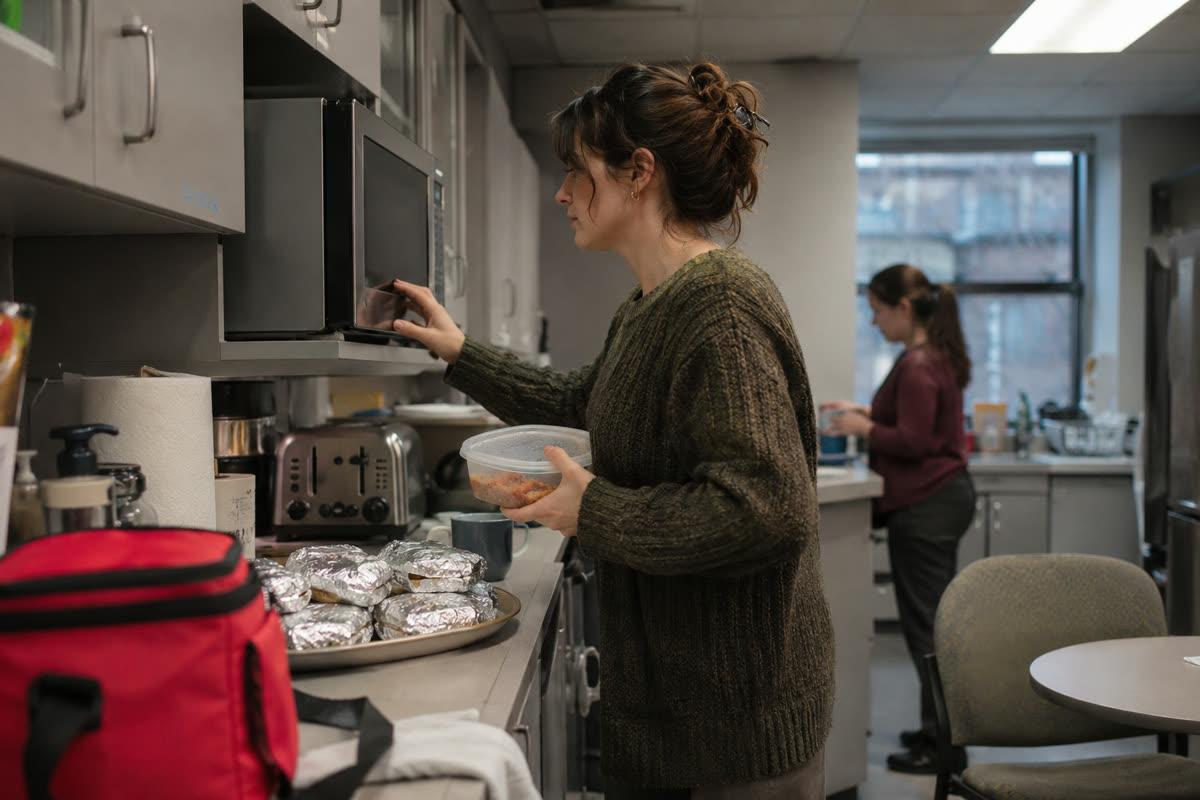 Gluten-free at work: catered lunches, client dinners, the office kitchen and business tripsWhat to ask a caterer, say to a server, label in the office fridge and carry on a business trip, from GIG, NIDDK, FDA and a chain's own allergen page.
 Fine on bread in Europe? What it does and does not showWhat a trip where bread felt fine does and does not show about celiac disease, and how EU and US gluten-free label rules compare.
 Gluten-free travel packing checklist by trip typeWhat to pack for a flight, hotel, rental kitchen or road trip, with TSA and airline limits and what sensors and enzyme pills do not show.
Sources
- [1, 2, 9, 37, 38] European Commission (EUR-Lex), Commission Implementing Regulation (EU) No 828/2014 on the absence or reduced presence of gluten in food, checked Nov 17, 2026.
- [3, 4, 5, 16, 17, 18, 64] European Union (Your Europe), Taking animal products, food or plants with you, checked Nov 17, 2026.
Read on 2026-11-17: the page “Taking animal products, food or plants with you” does not mention gluten or gluten-free products, and its tables name no bread, biscuits or other bakery items.
Read on 2026-11-17: in the table under “Rules when travelling from a non-EU country”, the row “Products other than those described above which do not contain meat or milk (e.g. honey)” gives “2kg” under “Amount per person” and “None” under “Additional restrictions”; the page does not say which packaged foods fall in that row.
- [6, 19] UK Government (GOV.UK), Bringing food into Great Britain: Meat, dairy, fish and animal products, checked Nov 17, 2026.
Read on 2026-11-17: under “From the EU, Switzerland, Norway, Iceland, Liechtenstein, the Faroe Islands and Greenland”, the list headed “You cannot bring in any of the following” names cheese, milk and dairy products like butter and yoghurt; pork; beef; lamb; mutton; goat; venison; and other products made from these meats, for example sausages.
- [7, 20, 65] UK Government (GOV.UK), Bringing food into Great Britain: Overview, checked Nov 17, 2026.
Read on 2026-11-17: the list under “You can bring the following into Great Britain from any country without any restrictions” names bread, but not sandwiches filled with meat or dairy products; cakes without fresh cream; biscuits; chocolate and confectionery, but not those made with a lot of unprocessed dairy ingredients; pasta and noodles, but not if mixed or filled with meat or meat products; packaged soup, stocks and flavourings; processed and packaged plant products; and food supplements containing small amounts of an animal product.
- [8, 15, 22] US Department of Agriculture (APHIS), Traveling With Food or Agricultural Products, checked Nov 17, 2026.
- [10, 12, 13, 39, 40, 43] European Commission (EUR-Lex), Regulation (EU) No 1169/2011 on the provision of food information to consumers, checked Nov 17, 2026.
- [11] US Food and Drug Administration, Food Allergen Labeling and Consumer Protection Act of 2004 (FALCPA), checked Nov 17, 2026.
- [14, 24, 32, 33, 34, 49, 58, 59, 60] Coeliac UK, Travelling with coeliac disease, checked Nov 17, 2026.
- [21, 23] US Customs and Border Protection, Prohibited and Restricted Items, checked Nov 17, 2026.
- [25, 35, 45, 57, 62] Celiac Disease Foundation, Tips for Traveling Gluten-Free, checked Nov 17, 2026.
- [26, 41, 42, 61] Gluten Intolerance Group, Traveling Gluten-Free with Confidence, checked Nov 17, 2026.
- [27] Transportation Security Administration, What Can I Bring? Food, checked Nov 17, 2026.
- [28, 31] European Union (Your Europe), Luggage restrictions, checked Nov 17, 2026.
- [29] European Commission, Mobility and Transport, Liquids, aerosols and gels, checked Nov 17, 2026.
- [30] European Commission, Mobility and Transport, Information for air travellers, checked Nov 17, 2026.
- [36] European Commission, Personal imports, checked Nov 17, 2026.
- [44] legislation.gov.uk (UK law), Commission Implementing Regulation (EU) No 828/2014, UK version, checked Nov 17, 2026.
- [46, 47, 48] Gluten Intolerance Group, Gluten-Free on Trains, Planes, and Automobiles, checked Nov 17, 2026.
- [50, 51, 52, 53] Coeliac UK, Avoid gluten free cross contamination at home, checked Nov 17, 2026.
- [54, 55, 56] Gluten Intolerance Group, 25 Ways Cross-Contact Could Happen (And How to Avoid It), checked Nov 17, 2026.
- [63] Coeliac UK, Travel Guides, checked Nov 17, 2026.