Can someone with celiac disease eat gluten again?
Short answer
For confirmed celiac disease, the sources say no: the American College of Gastroenterology defines it as a permanent immune-mediated response to gluten1, and NIDDK says the gluten-free diet is for life2. Complications can develop without symptoms if the disease goes untreated3. A gluten challenge is a diagnostic test run with clinicians, most commonly when gluten was cut before the diagnosis was complete4, 5.
Part of Gut science, healing and treatment research, 11 guides

Key points
- ACG calls celiac disease permanent and names strict gluten-free eating plus lifelong medical follow-up as treatment1, 6.
- NIDDK says people with celiac disease who have no symptoms can still develop complications over time without treatment3.
- In one study of celiac patients on a gluten-free diet, about 24% had mucosal damage on biopsy, and among them 60% to 80% were asymptomatic with negative serology7, 8.
- A gluten challenge is a diagnostic procedure most commonly used when gluten was reduced or eliminated before diagnosis was complete, and a clinician’s guide says it should follow a comprehensive clinical assessment4, 5.
- Non-celiac gluten sensitivity is a separate question from celiac disease9.
What the guidelines say about celiac disease and gluten
The American College of Gastroenterology (ACG) defines celiac disease as a permanent immune-mediated response to gluten present in wheat, barley and rye1. Its 2023 guideline says current treatment requires strict adherence to a gluten-free diet and lifelong medical follow-up6.
NIDDK, part of the US National Institutes of Health, says people with celiac disease need to follow a gluten-free diet for life to prevent symptoms and intestinal damage from coming back2. So for a confirmed diagnosis the answer is no. The sections below cover why feeling well does not change it, and the few situations where the question is a real one.
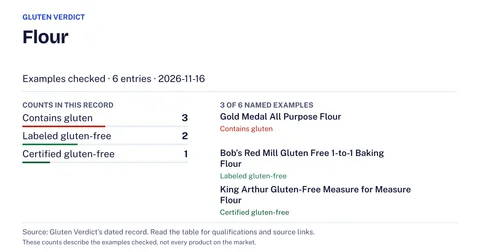
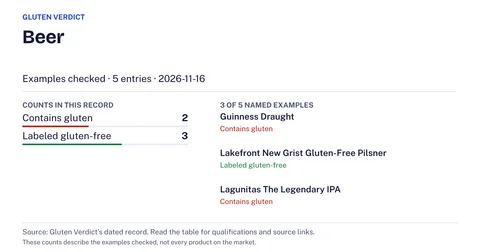
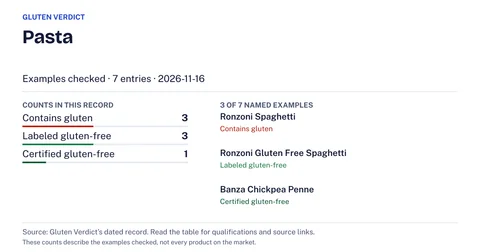
NIDDK describes gluten as a protein found naturally in wheat, barley and rye, common in foods such as bread, pasta, cookies and cakes10. Our verdicts for bread, pasta, flour and beer show what each one says on the pages we read.
Why feeling well is not proof of healing
NIDDK says people with celiac disease who have no symptoms can still develop complications over time if they do not get treatment3. It also says symptoms may return if a person consumes small amounts of gluten11.
Four studies, each reported by its own authors:
- A 2000 study followed patients with villous atrophy and endomysial antibodies who started a gluten-free diet, with antibody tests at 3, 6 and 12 months and a duodenal biopsy at 12 months12. Of 53 patients who were EmA-positive at the start and completed the study criteria, EmA was undetectable in 46 (87%) after 12 months, but only 21 (40%) had complete villous recovery13. The authors concluded that the antibody they tracked (EmA) is a poor predictor of persisting atrophy, though it may help monitor dietary compliance14.
- A 2020 study of celiac patients eating a gluten-free diet found that about 24% (18 of 76) had Marsh II-III mucosal damage7. Among those 18, between 60% and 80% were asymptomatic with negative serology and adherence that looked appropriate on a questionnaire; 17 of the 18 had detectable gluten immunogenic peptides in urine8.
- A 2018 analysis of earlier clinical data on celiac patients concluded that many individuals following a gluten-free diet regularly consume enough gluten to trigger symptoms and perpetuate intestinal histologic damage15.
- A 2023 multicentre study of 2211 patients with celiac disease: 694 had a follow-up duodenal biopsy and 157 of them (23%) had persistent villous atrophy23, which the authors say has an unclear meaning in people on a gluten-free diet24. They report that risk of complications and mortality was increased in those patients25.
These are findings in specific groups of patients, not a measure of the chance that any one person has damage.
What researchers found in people who went back to eating gluten
Two follow-up studies included people with celiac disease who were eating gluten. Here is what each reported.
| Study | Who | What the authors reported |
|---|---|---|
| Matysiak-Budnik and colleagues, Gut, 2007 | Adults aged 18-65 whose celiac disease was diagnosed in childhood16; 61 had resumed a normal diet and were asymptomatic17 | 48 had villous atrophy, which the authors call silent celiac disease; 13 had no detectable atrophy, which they call latent17. Two latent patients later relapsed clinically and histologically18. The authors wrote that latency can be transient and regular follow-up is mandatory19. |
| Norsa and colleagues, J Pediatr Gastroenterol Nutr, 2018 | Patients with celiac disease diagnosed more than 30 years earlier20; follow-up histology in 6321 | Twenty had normal histology on a gluten-containing diet21. The authors wrote that poor adherence to the gluten-free diet was the major predictor of persisting mucosal lesions, but a proportion of patients did not show a relapse of villous atrophy despite chronic voluntary gluten ingestion, nor an increase in mortality22. |
Matysiak-Budnik and colleagues also say the increased risk of osteoporosis in the silent group supports the need for a gluten-free diet26.
What a doctor-run gluten challenge is, and when it is used
A 2023 clinician’s guide in the Journal of Pediatric Gastroenterology and Nutrition defines a gluten challenge as reintroducing or increasing the amount of gluten consumed to facilitate diagnostic testing27. Its stated aim is to guide testing in pediatric patients62, though it also draws on adult studies37.
The reason is that the tests need gluten in the diet. The guide says diagnosis involves symptoms, serology and duodenal histology, which normalize on a gluten-free diet, so accurate evaluation requires patients to be ingesting sufficient gluten when tested28. NIDDK likewise says doctors don’t recommend starting a gluten-free diet before diagnostic testing, because the diet can affect test results29.
According to the guide, a challenge is most commonly used when gluten intake was reduced or eliminated before a definitive diagnostic evaluation was completed4. The ACG guideline says that for people who started a gluten-free diet before evaluation, HLA testing is central, and with a celiac-compatible haplotype a gluten challenge can be offered30.
Who runs it
The guide says a challenge should only be undertaken after a comprehensive clinical assessment and a discussion of benefits versus risks5. It lists contraindications: a known anaphylactic response to gluten, severe neurological manifestations, or debilitating symptoms31. It also says clinicians should not remove gluten from the diet before diagnostic testing is complete and a gastroenterologist has been consulted32.
The ACG guideline notes a limit. Among patients with highly elevated serology who started a diet before referral and report a severe symptomatic response to gluten exposure, a challenge followed by biopsy may not be advisable33. For symptomatic adults with a 10-fold or greater elevation of tTG-IgA, it describes an “after-the-fact” diagnosis of likely celiac disease, with a second confirmatory test advisable34.
What a challenge does in the body
In a 2013 study of 20 adults with biopsy-proven celiac disease35, the authors concluded that the challenge they ran induced histological and serological changes in the majority of adults with celiac disease36. We do not list amounts or weeks for a challenge here. The guide says studies have tried to work out how much gluten is needed, but consensus has not been reached37. Amounts and weeks belong to the clinician and the guideline in use, not to this page.
Three readers, three different questions
Celiac disease confirmed by testing
NIDDK says doctors typically diagnose celiac disease with blood tests and biopsies of the small intestine38. For a diagnosis made that way, the sources above give one answer: a gluten-free diet for life2.
Gluten-free before any testing
NIDDK says that if you avoid gluten before testing, the results may not be accurate39. The clinician’s guide adds that normal celiac serologies in patients taking little or no gluten cannot be used to confidently exclude celiac disease40. Cutting gluten before testing is the situation a challenge is most commonly used for4.
NIDDK also says that if you do not have the DQ2 or DQ8 gene variants, you are very unlikely to have celiac disease41, but that having them alone does not mean you have it, since most people with the variants do not develop it42. The ACG guideline says that if the HLA test is negative, celiac disease is ruled out43.
Tests that were negative or in between
The guide says a challenge should also be considered when results conflict, such as “potential celiac disease” (positive antibodies but no duodenal enteropathy) or gluten-induced symptoms without positive serology44. The 2020 ESPGHAN guideline for children says patients with no or mild histological changes (Marsh 0/I) but confirmed autoimmunity should be followed closely45.
Children who seem to grow out of it
ACG reports that mucosal healing was observed in 95% of children within 2 years of starting a gluten-free diet46, and that follow-up biopsy in asymptomatic children following the diet is currently not recommended47. Healing is what NIDDK says the diet does for most people, preventing more damage48; NIDDK also says the diet is for life2.
The Gut 2007 study above followed people diagnosed in childhood; its authors said the latency can be transient19.
For children weighed for a challenge, the clinician’s guide says age and developmental stage are particularly important when considering reintroduction for a patient thriving on a gluten-free diet49. It notes that previous guidelines discourage a gluten challenge in children less than 5 years or during pubertal development63; its authors suggest that no age or developmental period after infancy absolutely rules one out50. It says there is no consensus on timing, dosing and duration in children51.
The guide reports that NASPGHAN guidelines recommend histologic findings as the endpoint for a challenge52, and that mild serology elevations (under 10 times the upper limit of normal) or symptoms are supportive but not diagnostic53.
Non-celiac gluten sensitivity is a different question
NIDDK says celiac disease is different from gluten sensitivity or wheat intolerance9, and that, unlike celiac disease, gluten sensitivity does not damage the small intestine54.
A 2025 Lancet review defines non-coeliac gluten sensitivity as symptoms related to eating gluten-based or wheat-based foods in the absence of coeliac disease or wheat allergy55. The review’s authors say about 10% of adults worldwide self-report gluten or wheat sensitivity, and that meta-analyses suggest 16-30% of those have symptoms specifically triggered by gluten in controlled challenge studies56. They add that methodological variability, including fermentable carbohydrates in the challenge preparations, limits interpretation56. They describe it as a diagnosis of exclusion57.
By that definition, this research is about people who do not have celiac disease55, so it is not evidence about whether someone with celiac disease can eat gluten.
What medical follow-up checks
NIDDK says a doctor may recommend regular follow-up visits to make sure symptoms and health problems are improving on a gluten-free diet58. Follow-up may include blood tests for antibodies, which typically return to normal after treatment59. In some cases doctors may recommend additional biopsies to find out whether the small intestine has healed60.
ACG reports that in a US study the median time to mucosal healing in adults on the diet was 3 years, and says it is reasonable to consider a follow-up biopsy in adults after 2 years on the diet61.
Verdicts in this guide

Questions people ask
Can celiac disease go away?
ACG defines celiac disease as a permanent immune-mediated response to gluten1. NIDDK says a gluten-free diet heals damage in the small intestine for most people48, and that the diet is for life2.
Can you outgrow celiac disease?
The ACG guideline describes the condition as permanent1. In one follow-up of people diagnosed in childhood who resumed a normal diet, 13 of 61 had no detectable atrophy on biopsy; the authors said this latency can be transient and regular follow-up is mandatory17, 19.
Can I try gluten at home to see what happens?
The clinician’s guide defines a gluten challenge as reintroducing or increasing gluten to facilitate diagnostic testing27, and says it should only be undertaken after a comprehensive clinical assessment and discussion about the benefits versus risks5. It lists contraindications31.
More in Gut science, healing and treatment research
 How long celiac healing takes: symptoms, antibodies and the gut liningWhat studies report on how long symptoms, blood antibodies and the intestinal lining take to recover on a gluten-free diet, and what to ask your care team.
 What gluten does in the gut: celiac disease, wheat allergy and gluten sensitivity comparedHow celiac disease, wheat allergy and non-celiac gluten sensitivity differ in the gut, and why testing comes before cutting out gluten.
 What happens when you stop eating gluten, condition by conditionWhat a gluten-free diet does in celiac disease, dermatitis herpetiformis, wheat allergy, gluten sensitivity and with no diagnosis, with the trials.
 How much gluten causes damage: what dose studies show and what 20 ppm meansWhat dose studies in celiac disease measured, how 20 ppm converts to milligrams for a real portion, and what FDA’s limit is and is not.
 How celiac disease damages the small intestine, step by stepThe steps from gluten to blunted villi in celiac disease: the genes, the immune response, how damage is graded and which test shows which step.
 Leaky gut and gluten: what the studies measured, and in whomIs “gluten causes leaky gut” true? Sort the claims by evidence: cell and biopsy studies, trials in people, zonulin tests, and what to ask a test seller.
All 11 guides in Gut science, healing and treatment research
Related guides
 Celiac Blood Tests: What tTG-IgA, Total IgA, DGP and EMA Each CheckWhat tTG-IgA, total IgA, EMA and DGP check, why total IgA is drawn with tTG-IgA, when back-up tests are used, and why gluten stays in the diet first.
 If you think you were glutened: what the celiac organizations say to doWhat the celiac charities, FDA and NIDDK say to do after accidental gluten exposure, when to contact a clinician, and how to trace the cause.
 Celiac disease vs gluten intolerance: three conditions, three diagnosesHow celiac disease, non-celiac gluten sensitivity and wheat allergy differ in mechanism, diagnosis and diet, with a source behind every point.
 Why gluten problems seem more common: what the evidence separatesGluten problems seem everywhere. Studies separate three things: cases found, cases that exist, and people avoiding gluten.
Sources
- [1, 6] PubMed (Am J Gastroenterol), ACG Guidelines Update: Diagnosis and Management of Celiac Disease (2023), abstract, checked Nov 17, 2026.
- [2, 39] US National Institute of Diabetes and Digestive and Kidney Diseases, Eating, Diet & Nutrition for Celiac Disease, checked Nov 17, 2026.
- [3, 11] US National Institute of Diabetes and Digestive and Kidney Diseases, Symptoms & Causes of Celiac Disease, checked Nov 17, 2026.
- [4, 5, 27, 28, 31, 32, 37, 40, 44, 49, 50, 63] PubMed Central (J Pediatr Gastroenterol Nutr), A Clinician’s Guide to Gluten Challenge (Singh et al., 2023), checked Nov 17, 2026.
- [7, 8] PubMed (Am J Clin Nutr), Negative predictive value of the repeated absence of gluten immunogenic peptides in the urine of treated celiac patients in predicting mucosal healing (2020), checked Nov 17, 2026.
- [9, 10, 54] US National Institute of Diabetes and Digestive and Kidney Diseases, Definition & Facts for Celiac Disease, checked Nov 17, 2026.
- [12, 13, 14] PubMed (Am J Gastroenterol), Disappearance of endomysial antibodies in treated celiac disease does not indicate histological recovery (Dickey et al., 2000), checked Nov 17, 2026.
- [15] PubMed (Am J Clin Nutr), Determination of gluten consumption in celiac disease patients on a gluten-free diet (Syage et al., 2018), checked Nov 17, 2026.
- [16, 17, 18, 19, 26] PubMed (Gut), Long-term follow-up of 61 coeliac patients diagnosed in childhood: evolution toward latency is possible on a normal diet (Matysiak-Budnik et al., 2007), checked Nov 17, 2026.
- [20, 21, 22] PubMed (J Pediatr Gastroenterol Nutr), Celiac Disease 30 Years After Diagnosis: Struggling With Gluten-free Adherence or Gaining Gluten Tolerance? (Norsa et al., 2018), checked Nov 17, 2026.
- [23, 24, 25] PubMed (Gut), Persistent villous atrophy predicts development of complications and mortality in adult patients with coeliac disease (Schiepatti et al., 2023), checked Nov 17, 2026.
- [29, 38, 41, 42] US National Institute of Diabetes and Digestive and Kidney Diseases, Diagnosis of Celiac Disease, checked Nov 17, 2026.
- [30, 33, 34, 43, 46, 47, 61] American College of Gastroenterology (Am J Gastroenterol), ACG Guidelines Update: Diagnosis and Management of Celiac Disease (2023), full text, checked Nov 17, 2026.
- [35, 36] PubMed (Gut), Kinetics of the histological, serological and symptomatic responses to gluten challenge in adults with coeliac disease (Leffler et al., 2013), checked Nov 17, 2026.
- [45] PubMed (J Pediatr Gastroenterol Nutr), European Society Paediatric Gastroenterology, Hepatology and Nutrition Guidelines for Diagnosing Coeliac Disease 2020 (abstract), checked Nov 17, 2026.
- [48, 58, 59, 60] US National Institute of Diabetes and Digestive and Kidney Diseases, Treatment for Celiac Disease, checked Nov 17, 2026.
- [51, 52, 53, 62] PubMed (J Pediatr Gastroenterol Nutr), A Clinician’s Guide to Gluten Challenge (Singh et al., 2023), checked Nov 17, 2026.
- [55, 56, 57] PubMed (Lancet), Non-coeliac gluten sensitivity (Biesiekierski et al., Lancet 2025), abstract, checked Nov 17, 2026.