How long celiac healing takes: symptoms, antibodies and the gut lining
Short answer
Symptoms, blood antibodies and the intestinal lining recover on separate schedules, so feeling better is not proof the lining has healed: in a Mayo Clinic study of adults, clinical response was not a reliable marker of mucosal recovery15.
- Symptoms: NIDDK says many people see improvement within days to weeks, while some symptoms take longer1, 2.
- Antibodies: NIDDK says blood levels typically return to normal after treatment5, but the AGA's clinical practice update says a negative result in a treated patient does not guarantee the lining has healed34.
- The lining: in one study of 241 adults with follow-up biopsies, confirmed recovery was 34% at 2 years and 66% at 5 years13. In one study of children, 81.4% of those with Marsh type III damage had histologic remission after 1 year31.
Part of Gut science, healing and treatment research, 11 guides

Key points
- Three clocks run separately: symptoms (many people see improvement within days to weeks1), antibody levels (typically back to normal after treatment5) and the lining (confirmed recovery in 34% of adults at 2 years and 66% at 5 years in one study13).
- Feeling better did not reliably track recovery of the lining in the Mayo Clinic adult study15, and negative antibody tests do not guarantee healing34.
- One single-centre study found histologic remission in 97.6% of children with Marsh type III damage at 3 years or longer31; the adult figures reported here are lower (66% at 5 years in one study13, a 58.8% mean in a review27), though definitions and follow-up times differ.
- Poor adherence to the diet was associated with persistent damage in two adult studies16, 25.
- The ACG guideline describes treatment as the diet plus lifelong medical follow-up39.
Three clocks, three different answers
This page follows three measures the sources use, and each answers a different question. Reading one alone can mislead, as the next sections show.
| Clock | What it measures | What the sources report |
|---|---|---|
| Symptoms | How you feel | NIDDK: many people see symptoms improve within days to weeks, and some take longer1, 2. |
| Blood antibodies | Celiac antibody levels in a blood test | NIDDK: higher in untreated celiac disease and typically back to normal after treatment5. AGA update: negative serology in a treated patient does not guarantee the intestinal mucosa has healed34. |
| The lining | The small intestine's tissue, examined in a biopsy | NIDDK: in some cases, doctors may recommend additional biopsies to find out if the small intestine has healed6. Mayo Clinic adult study: Kaplan-Meier rate of confirmed recovery 34% at 2 years and 66% at 5 years13. |
NIDDK says that for most people the diet heals damage in the small intestine4. The studies below ask how long that takes and in whom it does not happen.
Symptoms: what changes first, and why they are not the whole story
NIDDK says many people see symptoms improve within days to weeks of starting the diet1. It adds that some symptoms take longer than others and some may need additional help2. For dermatitis herpetiformis, NIDDK says it may not go away until a person has followed the diet for 6 months to 2 years3.
The ACG guideline says most patients have an excellent clinical response to the diet39. The AGA update says the majority of patients will comply satisfactorily and experience relief of their symptoms along with decreasing antibody levels38.
Feeling better is not the same as healed
In the Mayo Clinic study of adults with follow-up biopsies, 82% had some clinical response, but clinical response was not a reliable marker of mucosal recovery15. A second study of 263 patients with biopsy-proven disease split them by whether the lining had recovered after 1 year19. Its abstract reports no difference in symptoms or quality of life between the two groups, without saying at which time point21.
The sources differ on how much symptoms reveal. In a multicentre cohort, lack of clinical response to the diet was one of four predictors in a score for persistent damage25.
Blood antibodies: what follow-up tests show
NIDDK says antibody levels are higher in untreated celiac disease but typically return to normal after treatment5. In the Mayo Clinic cohort, 44 of the 79 patients who had tested positive at diagnosis and were retested (56%) became seronegative at follow-up17.
How far a normal result can be relied on is where the sources are careful. The AGA update says negative serology in a treated patient does not guarantee the intestinal mucosa has healed34. It says it may be concluded that the usefulness of serology at follow-up is limited for adults and better for children36.
| Result | What the sources say |
|---|---|
| Back to normal | NIDDK: antibodies typically return to normal after treatment5. AGA update: a negative result does not guarantee the lining has healed34. |
| Still high | AGA update: persistently positive serology usually indicates ongoing intestinal damage and gluten exposure35. Gluten Intolerance Group: high antibody levels can indicate gluten exposure and incomplete healing42. |
The lining in adults: what follow-up biopsy studies found
| Study | Who was included | What it reported |
|---|---|---|
| Mayo Clinic, 2010 | 381 adults with biopsy-proven disease; 241 had both a diagnostic and a follow-up biopsy12 | Confirmed mucosal recovery in 34% at 2 years and 66% at 5 years; median time to confirmed recovery about 3.8 years13, 14 |
| Pekki et al., 2015 | 263 biopsy-proven patients, grouped by recovery or incomplete recovery after 1 year19 | In patients with high dietary adherence, incomplete villous recovery after 1 year did not affect clinical response or long-term prognosis22 |
| Multicentre cohort, 2023 | 694 patients with a follow-up duodenal biopsy, out of 221123 | 157 of the 694 (23%) had persistent villous atrophy23; risk of complications and mortality was increased in those patients24 |
| Review of 46 studies, 2025 | 15,530 patients in 46 studies26 | Mean histologic remission of 58.8% across cohorts, with considerable variation between studies27 |
Reported rates differ partly because studies define recovery differently28. The 2025 review found criteria ranging from strict Marsh 0 histology to more inclusive definitions that counted Marsh 1 or non-atrophic mucosa as recovery, and said this substantially influenced the reported rates28.
The Mayo Clinic and multicentre figures include only people who had a follow-up biopsy: 241 of 381 in the Mayo Clinic group12 and 694 of 2211 in the multicentre cohort23. Those figures therefore describe people who were rebiopsied, not everyone diagnosed.
The studies also differ on what incomplete recovery means for health. The multicentre cohort found increased risk of complications and mortality in people with persistent damage24. The study of 263 patients found no effect on clinical response or long-term prognosis after 1 year in patients with high dietary adherence22.
Children: what one long follow-up study found
A single-centre study followed 105 children with biopsy-confirmed disease who had follow-up biopsies at least 1 year after starting the diet30. Among the 86 with Marsh type III damage, histologic remission was seen in 81.4% after 1 year, 91.8% within 2–3 years and 97.6% in long-term follow-up of 3 years or more31. All 19 children with Marsh type II damage had normalized within the first year32.
The authors concluded that recovery in children takes at least 1 year and might be incomplete only in a small proportion of children, mainly associated with IgA immunodeficiency33. The AGA update says it may be concluded that serology at follow-up is better for children than for adults36.
This is one centre's experience, so read its percentages as that centre's results.
What was linked to slower progress, and when no progress is worth raising
The sources name several factors. Each is an association found in a study or a cause NIDDK lists, not a prediction for any one person.
- Diet adherence. In the Mayo Clinic study, poor compliance with the diet was strongly associated with persistent mucosal damage16. In the multicentre cohort, poor adherence was one of four predictors in a score for persistent damage25. The 2025 review found that longer time on the diet and rigorous adherence assessment were associated with higher remission rates29.
- Severity at diagnosis. The Mayo Clinic study tied severe disease (defined by diarrhea and weight loss) and total villous atrophy at diagnosis to persistent damage16. In the 263-patient study, the incomplete recovery group had more severe mucosal damage, higher antibody values and more signs of malabsorption at diagnosis20.
- Age and pattern of disease. In the multicentre score, age 45 or older at diagnosis and a classical pattern of disease were two of the four predictors25.
- Small amounts of gluten. NIDDK lists consuming small amounts of gluten, other health problems and refractory celiac disease as possible causes of symptoms that continue8, and says finding and avoiding all sources of gluten may help symptoms improve9. Our guides on hidden sources of gluten, cross-contamination and gluten-free oats versus regular oats cover where it turns up.
- IgA immunodeficiency in children. In the children's study, incomplete recovery was mainly associated with IgA immunodeficiency33.
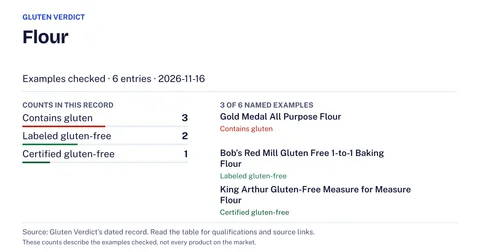
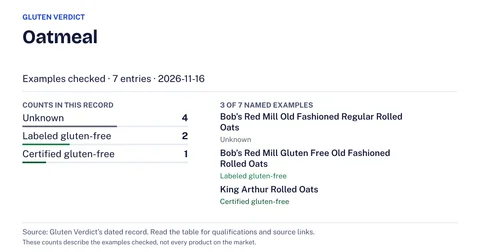
For specific foods, our verdict pages record what the pages we read said and the date we read them, for example bread, flour and oatmeal.
When progress stalls
NIDDK says that in about 20 percent of people with celiac disease, symptoms continue or come back on the diet7. The ACG guideline defines nonresponsive celiac disease as persistent or recurrent symptoms despite the diet, and says these patients require a systematic workup to rule out specific conditions, especially unintentional gluten contamination40.
The AGA update says patients with persistent or relapsing symptoms and no other obvious explanation should have endoscopic biopsies to determine healing, even when antibody tests are negative37. NIDDK describes refractory celiac disease as a rare condition in which symptoms and damage continue or come back even on a strict diet11. A workup is run by the care team; this page cannot say which cause applies to any one person.
Follow-up care: what the guidelines say, and questions to bring
The ACG guideline describes treatment as strict adherence to the diet and lifelong medical follow-up39. NIDDK says doctors may recommend regular follow-up visits to make sure symptoms and health problems related to celiac disease are improving10. The Gluten Intolerance Group calls the screening blood tests done at diagnosis a primary component of a follow-up visit42.
| Source | What it says |
|---|---|
| AGA clinical practice update | Follow-up serology 6 and 12 months after diagnosis, and yearly thereafter35 |
| Gluten Intolerance Group | More frequent follow-ups generally recommended during the first year; frequency to be discussed and determined with a personal physician and healthcare team41, 43 |
| NIDDK | Regular follow-up visits may be recommended, with antibody blood tests and, in some cases, additional biopsies10, 5, 6 |
These questions follow from the evidence above. They are prompts for an appointment, not medical advice:
- Which antibody result is my baseline, and when is the next test due?
- My symptoms have changed. What do my antibody results say about how things are going?
- Is a follow-up biopsy part of my plan, and what would its result change?
- If my antibodies are still high, which sources of gluten should we look at first?
- If I feel well but my antibodies have not fallen, what happens next?
- How often should we review this, given my own situation?
Verdicts in this guide

Questions people ask
How long does it take to feel better after going gluten-free?
NIDDK says many people see symptoms improve within days to weeks, and that some symptoms take longer1, 2.
If I feel fine, has my gut healed?
Not necessarily. In the Mayo Clinic study, clinical response was not a reliable marker of mucosal recovery15, and the AGA update says negative serology does not guarantee the mucosa has healed34.
Do celiac antibodies go back to normal?
NIDDK says they typically return to normal after treatment5. In the Mayo Clinic cohort, 44 of 79 patients who had tested positive at diagnosis and were retested (56%) were seronegative at follow-up17.
More in Gut science, healing and treatment research
 What gluten does in the gut: celiac disease, wheat allergy and gluten sensitivity comparedHow celiac disease, wheat allergy and non-celiac gluten sensitivity differ in the gut, and why testing comes before cutting out gluten.
 Can someone with celiac disease eat gluten again?What NIDDK, the ACG guideline and studies say about eating gluten again with celiac disease, why feeling well is not healing, and who runs a challenge.
 How much gluten causes damage: what dose studies show and what 20 ppm meansWhat dose studies in celiac disease measured, how 20 ppm converts to milligrams for a real portion, and what FDA’s limit is and is not.
 Leaky gut and gluten: what the studies measured, and in whomIs “gluten causes leaky gut” true? Sort the claims by evidence: cell and biopsy studies, trials in people, zonulin tests, and what to ask a test seller.
 How celiac disease damages the small intestine, step by stepThe steps from gluten to blunted villi in celiac disease: the genes, the immune response, how damage is graded and which test shows which step.
 What happens when you stop eating gluten, condition by conditionWhat a gluten-free diet does in celiac disease, dermatitis herpetiformis, wheat allergy, gluten sensitivity and with no diagnosis, with the trials.
All 11 guides in Gut science, healing and treatment research
Related guides
 The repeat biopsy in celiac disease: when guidelines suggest one and what the result meansWhen guidelines suggest a repeat biopsy in celiac disease, what Marsh grades on the report mean, and what the guidelines say follows if damage persists.
 Non-responsive celiac disease: what clinicians check, and in what orderWhat guidelines say clinicians check when celiac disease does not settle on the diet: gluten exposure, antibodies, biopsy, other causes.
 Refractory celiac disease: what it is, how rare it is and how it is diagnosedWhat refractory celiac disease is, how rare it is, how type 1 and type 2 differ and why doctors rule out other causes first, per AGA, ACG and BSG.
 Feeling worse after going gluten-free: what the sources say to check firstWhat NIDDK, Coeliac UK and clinical reviews say about symptoms that do not improve or get worse on a gluten-free diet, and which causes you can check.
Sources
- [1, 2, 3, 4, 5, 6, 7, 8, 9, 10, 11] National Institute of Diabetes and Digestive and Kidney Diseases, Treatment for Celiac Disease, checked Nov 17, 2026.
- [12, 13, 14, 15, 16, 17, 18] American Journal of Gastroenterology (Mayo Clinic study, via PubMed Central), Mucosal recovery and mortality in adults with celiac disease after treatment with a gluten-free diet (Rubio-Tapia et al., 2010), checked Nov 17, 2026.
- [19, 20, 21, 22] American Journal of Gastroenterology (via PubMed), Predictors and significance of incomplete mucosal recovery in celiac disease after 1 year on a gluten-free diet (Pekki et al., 2015), checked Nov 17, 2026.
- [23, 24, 25] Gut (via PubMed Central), Persistent villous atrophy predicts development of complications and mortality in adult patients with coeliac disease (Schiepatti et al., 2023), checked Nov 17, 2026.
- [26, 27, 28, 29] Journal of Clinical Medicine (via PubMed Central), Outcomes in Adults with Celiac Disease Following a Gluten-Free Diet (Balaban et al., 2025), checked Nov 17, 2026.
- [30, 31, 32, 33] Archives of Medical Science (via PubMed Central), Histologic recovery among children with celiac disease on a gluten-free diet: a long-term follow-up single-center experience (2018), checked Nov 17, 2026.
- [34, 35, 36, 37, 38] Gastroenterology (AGA Clinical Practice Update, via PubMed Central), AGA Clinical Practice Update on Diagnosis and Monitoring of Celiac Disease: Changing Utility of Serology and Histologic Measures (2019), checked Nov 17, 2026.
- [39, 40] American Journal of Gastroenterology (via PubMed), American College of Gastroenterology Guidelines Update: Diagnosis and Management of Celiac Disease (2023), checked Nov 17, 2026.
- [41, 42, 43] Gluten Intolerance Group, I was diagnosed with celiac disease fairly recently, am on a gluten-free diet, and am now feeling fine. Do I need to continue to have follow-up appointments?, checked Nov 17, 2026.