If you think you were glutened: what the celiac organizations say to do
Short answer
The National Celiac Association (NCA) says there is not much one can do once gluten has been eaten beyond tips for looking after yourself, and that severe symptoms are a reason to seek medical attention1, 6. What you can still do is trace the source:
- Note what you ate, where and when; FDA’s list of what to include in a report to it covers the product, where it was bought and the date of the reaction35.
- If a packaged product that carried a gluten-free claim is the suspect, keep the packaging, photograph it and contact the maker, as the National Celiac Association relays from Gluten Free Watchdog23.
- If it was a restaurant, the Gluten Intolerance Group advises asking how gluten-free items are prepared and what procedures avoid cross-contact44.
- If symptoms keep coming back on the diet, NIDDK says to talk with a doctor or registered dietitian45.
Part of Symptoms, reactions and persistent complaints, 22 guides

Key points
- The National Celiac Association says there is not much one can do once gluten has been ingested; its tips cover fluids, small meals and avoiding very spicy or fatty foods1, 2, 4, 5.
- Reactions vary: the National Celiac Association says some people react within 2-3 hours, others the next day or later, and some not at all16, 17.
- Charcoal and gluten-digesting enzymes lack support in these sources: the National Celiac Association says there is no evidence to recommend charcoal and that none of the several enzymes marketed to break down gluten has been studied or approved for people with celiac disease15, 7.
- FDA says anyone who becomes ill after a food, including people with celiac disease, should first seek appropriate medical care and afterward contact FDA27.
What the organizations say to do after exposure
Getting “glutened” is an unofficial, non-medical term for eating gluten without realizing it until it is too late, the Gluten Intolerance Group (GIG) writes12. The National Celiac Association (NCA) says there is not much one can do once gluten has been ingested, and then lists tips for recovery1:
- Replace lost fluids. NCA notes that an exposure will often cause vomiting or diarrhea and that replacing the fluids helps the body recover and avoid dehydration2.
- Peppermint or ginger tea. NCA says some people find it soothes the gut and reduces nausea and cramping3.
- Small, frequent meals rather than large ones when cramping, gas and diarrhea are heavy4.
- Avoid very spicy or fatty foods, which NCA says could increase digestive symptoms5.
GIG adds that recovery varies from person to person and depends on how much gluten was ingested9. These are the organizations’ own descriptions, not a protocol, and they are not a substitute for your care team.
NCA also reminds readers that many foods and food ingredients, not only gluten-containing ones, can cause uncomfortable digestive symptoms for some people22.
How soon it shows, and what no symptoms mean
NCA says some people have a reaction within 2-3 hours with severe vomiting or diarrhea, while others feel nothing until the next day or a few days later, and some not at all16, 17.
Some people notice nothing at all. NCA says some people with celiac disease have no short-term outward symptoms at all19, and that gluten still causes damage to the small intestine even when no obvious symptoms are present20.
On amounts, NCA gives the threshold for someone with celiac disease as about 10 mg of gluten a day21.
Flushing, charcoal and enzymes: what the sources say
- Flushing it out. GIG says there is no way to “flush” gluten out of your system quickly to lessen the discomfort11.
- Activated charcoal. NCA says there is currently no evidence to recommend charcoal or activated charcoal to anyone with celiac disease in the event of being glutened15.
- Enzyme products. NCA says several enzymes are marketed to break down gluten and none of these have been studied or approved for use in people with celiac disease7; GIG says there is no data showing that glutenase-type products are effective10.
When the sources say to contact a clinician
NCA says to seek medical attention for severe symptoms, because diarrhea and vomiting can cause serious dehydration and electrolyte imbalances that may require intravenous fluids6. On another page it says to always contact a healthcare provider for severe symptoms18.
The NCA page that says to seek medical attention for severe symptoms does not list which symptoms count as severe8.
FDA gives the same order for anyone who believes a food made them ill, people with celiac disease included: first seek appropriate medical care, and only afterward contact FDA27.
A different condition: wheat allergy
Celiac disease is autoimmune, while a wheat allergy involves an immune response that is not autoimmune, and a person can have both41, 42. FDA’s food-allergy page lists the symptoms of an allergic reaction, which include hives, face, tongue or lip swelling, coughing or wheezing, swelling of the throat and difficulty breathing32. For a person with a known food allergy, FDA lists three steps: stop eating the food, evaluate the need for emergency treatment, and seek medical attention33. FDA also says that any allergic reaction has the potential to lead to anaphylaxis34.
Write down what happened
Tracing a reaction starts with a record made while you still remember it. FDA tells people who report a food problem to include who was affected; where the product was bought; the date of the reaction, all symptoms, how long after eating it started, any medications used and whether it needed further medical care; and the product’s purchase date, lot number, expiration date and UPC code, with photos of the product, label, ingredient statement and lot code35.
The same list works as a diary for yourself: every item eaten in the hours before, where it came from, and when the symptoms began. NIDDK says that when symptoms continue or come back on a gluten-free diet, a person may still be eating or drinking a small amount of gluten, and advises keeping a food journal to review with a doctor and a registered dietitian47.
Check the label, then the maker
Start with what the package promises. On foods FDA regulates, a label that says “gluten-free”, “no gluten”, “free of gluten” or “without gluten” must mean less than 20 parts per million of gluten28. The rule does not cover foods whose labeling USDA or TTB regulates, such as meat, poultry and most alcohol38, 56, 57. Our guide to how to read a food label for gluten covers the rest, including may-contain lines and malt on a label.
A Contains line will not catch everything. It names the food source of a major allergen and is printed next to the ingredient list39. Wheat is on the list of major food allergens40, and NCA notes that barley and rye are not major allergens58, so a Contains line that names no wheat does not tell you whether they are present. Paste the ingredient list into our gluten scanner to look for those names.
If the label does not tell you enough, NIDDK says to ask the company for an ingredients list50, and in its food-allergy guidance FDA says to keep any food packages because they may contain important information, and that you may want to contact the manufacturer31. For what to ask, see what to ask a manufacturer about gluten.
For a product that carried a gluten-free claim, NCA relays advice from Gluten Free Watchdog: save the food in its original packaging if possible, photograph the whole package including the UPC code, then contact the manufacturer23. NCA adds that if the food is certified, you should contact the certifying organization, and that you can file a consumer complaint with FDA or USDA24.
NCA says FDA can mandate a recall only when a product’s use would cause “serious adverse health consequences or death” and the maker has not already started one, and that it rarely does, relying primarily on manufacturers to initiate recalls59. For undeclared wheat, a major allergen, NCA says FDA has the authority to require a recall25.
If it was a restaurant
GIG says some restaurants offering “gluten-free” menu options may not have the procedures set up to reliably produce gluten-free items43. Its advice is to ask how gluten-free items are prepared and what procedures are in place to avoid cross-contact between foods that contain gluten and those meant to be gluten-free44.
To raise it with the restaurant, say what you ordered and when, and ask the same preparation questions. FDA says restaurants’ use of gluten-free labeling should be consistent with the federal definition30, and that state and local governments play an important role in oversight of restaurants29. NCA mentions printable dining cards, in many languages, to show the person preparing your food26. See also where gluten hides in restaurant kitchens and how to read a restaurant allergen guide.
Foods and ingredients people trace it to
Our verdict pages show what regulators, charities and makers’ own pages said, with the date we read them. FDA’s gluten-free labeling Q&A addresses two of these directly36, 37:
| Ingredient | What FDA says | Our verdict |
|---|---|---|
| Soy sauce | In general, when soy sauce is made from soybeans and wheat, or any other gluten-containing grain, it may not bear a “gluten-free” claim36. | Soy sauce |
| Malt vinegar | It is derived from barley, undergoes fermentation and has not been processed to remove gluten, so it cannot be used in foods that bear a “gluten-free” claim37. | Malt vinegar |
Other verdicts to open while you trace a meal: french fries, gravy, chicken broth, spices and beer. For the wider list, see hidden sources of gluten and cross-contamination.
NIDDK names additives made with wheat as hidden sources, such as modified food starch, malt flavoring, preservatives and stabilizer48, and lists other products that may contain gluten, including lip balm, toothpaste and mouthwash, cosmetics, children’s modeling dough and communion wafers49.
If it keeps happening: the follow-up visit
NIDDK says that if you continue to have celiac disease symptoms on a gluten-free diet, you should talk with your doctor or a registered dietitian, who can help find the cause45. It says that in about 20 percent of people with celiac disease, symptoms continue or come back on the diet, and that the symptoms may be caused by consuming small amounts of gluten, other health problems or refractory celiac disease51, 46.
NCA calls accidental or intentional gluten exposure the most common reason for symptoms on the diet52, and says the dietitian will assess your diet and lifestyle to find overlooked sources of gluten53. NCA also reproduces the American College of Gastroenterology guideline lines that people with celiac disease be monitored regularly for residual or new symptoms and adherence to the diet55, and that consultation with a dietitian be offered if gluten contamination is suspected54. Bring the notes from the section above.
A glutening can also weigh on the mind. GIG says getting glutened, especially after a severe reaction, can lead to anxiety in similar situations13, and suggests reaching out to dietitians, social workers and psychologists with celiac expertise, and to GIG support groups14.
Verdicts in this guide
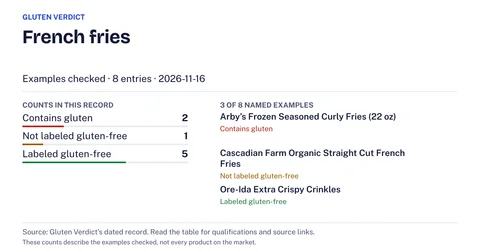 French friesDepends on the product2 of 8 products we checked contain gluten: Arby’s Frozen Seasoned Curly Fries (22 oz) and Checkers Frozen Crispy Seasoned Fries (28 oz)checked Nov 16, 2026
 Soy sauceDepends on the product3 of 7 products we checked contain gluten: Kikkoman Soy Sauce (Non-GMO), 20 oz; San-J Organic Shoyu Soy Sauce; and Lee Kum Kee Premium Soy Sauce (No Preservatives Added)checked Nov 16, 2026
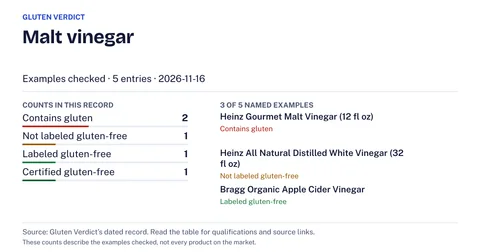 Malt vinegarContains glutenchecked Nov 16, 2026
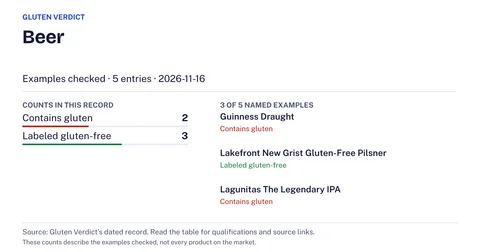 BeerDepends on the product2 of 5 products we checked contain gluten: Guinness Draught and Lagunitas The Legendary IPAchecked Nov 16, 2026
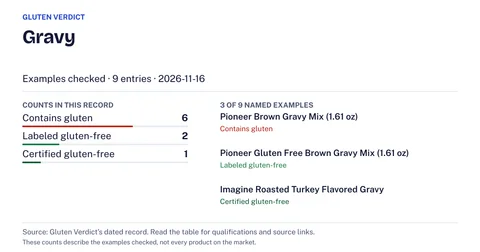 GravyDepends on the product6 of 9 products we checked contain glutenchecked Nov 16, 2026
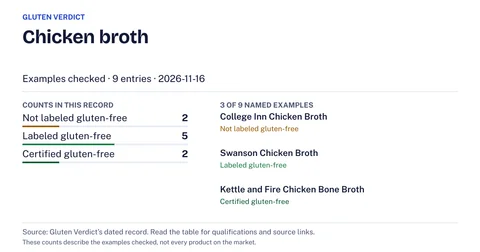 Chicken brothDepends on the productchecked Nov 16, 2026
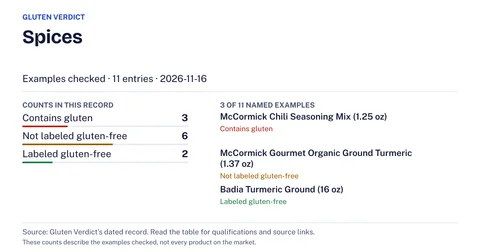 SpicesDepends on the product3 of 11 products we checked contain gluten: McCormick Chili Seasoning Mix (1.25 oz), Lawry’s Chili Spices & Seasonings Mix (1.48 oz), and McCormick Cheesy Taco Seasoning Mix (1.12 oz)checked Nov 16, 2026
Questions people ask
Is there anything that flushes gluten out of your system?
GIG says there is no way to “flush” gluten out of your system quickly to lessen the discomfort11.
Does activated charcoal help after being glutened?
NCA says there is currently no evidence to recommend it to anyone with celiac disease in the event of being glutened15.
More in Symptoms, reactions and persistent complaints
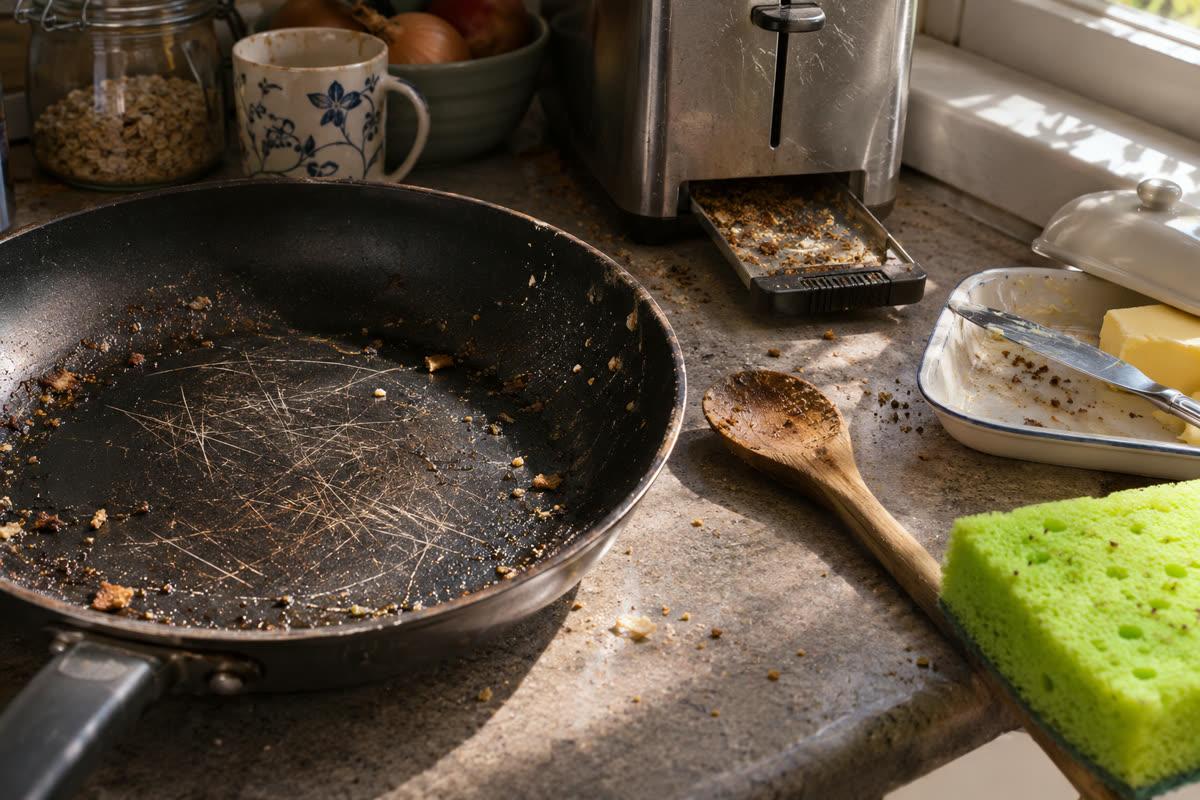 Still having symptoms on a gluten-free diet? Where gluten can still get inA checklist of label, kitchen, restaurant, product and medicine sources of gluten, and what the sources say about when to see a doctor.
 How long after eating gluten do symptoms start, and how long do they last?Onset and duration after gluten as celiac charities and studies report them, and how sources time celiac disease, gluten sensitivity and wheat allergy.
 A food and symptom diary for tracking possible gluten exposureWhat to write in a food and symptom diary on a gluten-free diet, how to read it, a template to copy, and what to bring to a dietitian or doctor.
 Still tired on a gluten-free diet: the causes clinicians checkWhy fatigue can continue on a gluten-free diet: gluten exposure, other gut conditions, iron, B12, thyroid, sleep, mood, and follow-up lists.
 How to trace a reaction after a restaurant meal marked gluten-freeHow to work out how gluten reached a restaurant dish, what to ask the kitchen, what to write down, and which agency takes a complaint.
 Celiac disease symptoms in adults: what the sources list and who gets testedDigestive and non-digestive celiac symptoms as NIDDK, ACG and Coeliac UK list them, who guidelines say to test, and why gluten stays in the diet first.
All 22 guides in Symptoms, reactions and persistent complaints
Related guides
 What happens in the body when a person with celiac disease eats glutenWhat gluten sets off in the small intestine, what challenge studies measured, and why symptoms and damage do not always match.
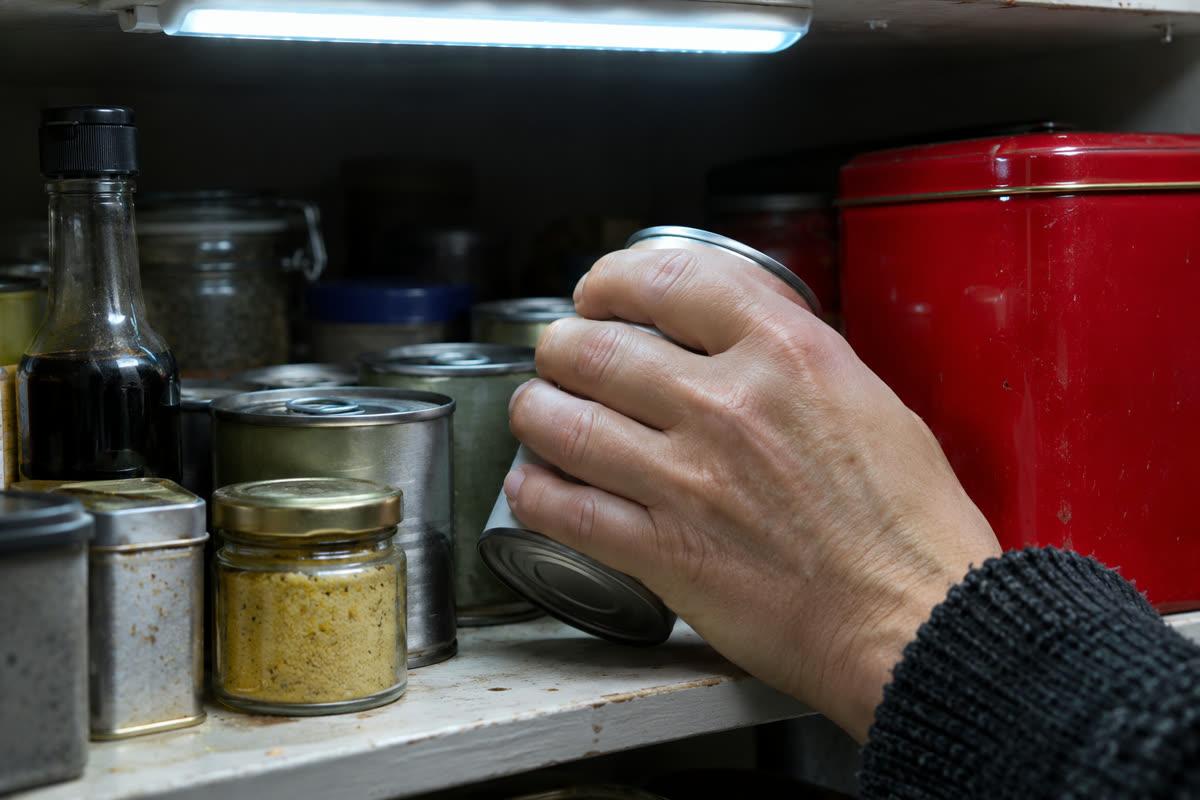 Where wheat, barley and rye hide in processed food: 15 places to checkFifteen processed foods where wheat, barley or rye turn up, the label step that catches each, and what US allergen law does and does not flag.
 Gluten cross-contact at home: where it happens and what to do about itHow gluten reaches gluten-free food at home, whether to separate, wash or ask for each route, and which rules have lab data behind them.
 Feeling worse after going gluten-free: what the sources say to check firstWhat NIDDK, Coeliac UK and clinical reviews say about symptoms that do not improve or get worse on a gluten-free diet, and which causes you can check.
Sources
- [1, 2, 3, 4, 5, 6, 7, 8] National Celiac Association, What to eat/do after being glutened, checked Nov 17, 2026.
Read on 2026-11-17: the page says to seek medical attention for “severe symptoms” and explains the risk of dehydration, but does not list which symptoms count as severe.
- [9, 10] Gluten Intolerance Group, I’ve been “glutened”: how long will it take me to recover?, checked Nov 17, 2026.
- [11, 12, 13, 14] Gluten Intolerance Group, Managing the Stress of Getting “Glutened”, checked Nov 17, 2026.
- [15] National Celiac Association, Use of charcoal or activated charcoal, checked Nov 17, 2026.
- [16, 17, 18] National Celiac Association, How quickly after ingesting gluten can a reaction occur?, checked Nov 17, 2026.
- [19, 20] National Celiac Association, Lack of symptoms following consumption of gluten, checked Nov 17, 2026.
- [21] National Celiac Association, Can a small amount of gluten make somebody sick?, checked Nov 17, 2026.
- [22, 23, 24, 25, 58, 59] National Celiac Association, What should I do if a gluten-free product makes me sick?, checked Nov 17, 2026.
- [26] National Celiac Association, Suggestions for advocating for oneself when dining out, checked Nov 17, 2026.
- [27, 28, 29, 30, 56, 57] US Food and Drug Administration, Gluten and Food Labeling, checked Nov 17, 2026.
- [31, 32, 33, 34, 35] US Food and Drug Administration, Food Allergies: What You Need to Know, checked Nov 17, 2026.
Read on 2026-11-17: the list headed “Symptoms of food allergies (allergic reactions), can include:” names hives; flushed skin or rash; tingling or itchy sensation in the mouth; face, tongue, or lip swelling; vomiting and/or diarrhea; abdominal cramps; coughing or wheezing; dizziness and/or lightheadedness; swelling of the throat and vocal cords; difficulty breathing; and loss of consciousness.
Read on 2026-11-17: under “If you have a known food allergy and start having symptoms of an allergic reaction:” the page lists: stop eating the food immediately; evaluate the need for emergency treatment (such as epinephrine); seek medical attention.
Read on 2026-11-17: under “Reports submitted to FDA should include as much information as possible:” the page lists who is reporting and who was affected; the name and address of the place where the product was purchased; a description of the reaction, including the date it occurred, all symptoms experienced, how long after eating or drinking the product the reaction occurred, medications used to treat symptoms, and whether it required further medical care; and a description of the product, including the date of purchase, codes or identifying marks such as lot number, expiration date and UPC code, and photos of the product, label, ingredient statement and lot code.
- [36, 37, 38] US Food and Drug Administration, Questions and Answers on the Gluten-Free Food Labeling Final Rule, checked Nov 17, 2026.
- [39, 40] US Food and Drug Administration, Food Allergen Labeling and Consumer Protection Act of 2004 (FALCPA), checked Nov 17, 2026.
- [41, 42] Gluten Intolerance Group, Celiac disease, non-celiac gluten sensitivity or wheat allergy: what is the difference?, checked Nov 17, 2026.
- [43, 44] Gluten Intolerance Group, Felt glutened after a restaurant meal marked gluten free: how could this have happened?, checked Nov 17, 2026.
- [45, 46, 47, 48, 49, 50, 51] National Institute of Diabetes and Digestive and Kidney Diseases, Treatment for Celiac Disease, checked Nov 17, 2026.
Read on 2026-11-17: after “Hidden sources of gluten include additives made with wheat, such as” the page lists modified food starch, malt flavoring, preservatives and stabilizer.
Read on 2026-11-17: the list after “Products that may contain gluten include” names children’s modeling dough, such as Play-Doh; cosmetics; lipstick, lip gloss, and lip balm; skin and hair products; toothpaste and mouthwash; and communion wafers.
- [52, 53] National Celiac Association, Following a gluten-free diet but still unwell, checked Nov 17, 2026.
- [54, 55] National Celiac Association, Follow-up care, checked Nov 17, 2026.