Why gluten problems seem more common: what the evidence separates
Short answer
Studies measure three separate things that often get blended into one impression:
- Less celiac disease is hidden: in a US survey, undiagnosed celiac disease fell from 0.6% in 2009 to 2010 to 0.3% in 2013 to 2014, while total celiac disease did not change significantly (0.7% in both periods)1.
- Some studies find more celiac disease in later samples: Finnish adult samples show a total prevalence of 1.05% in 1978-80 and 1.99% in 2000-012, and one meta-analysis of incidence studies found incidence rising3.
- More people avoid gluten without celiac disease: 0.5% in 2009 to 2010 and 1.7% in 2013 to 2014 in the same US survey4.
Part of Gluten basics and myths, 13 guides

Key points
- In the US survey, celiac disease did not change significantly, at 0.7% in 2009 to 2010 and 0.7% in 2013 to 2014, while undiagnosed celiac disease fell from 0.6% to 0.3%1.
- Comparisons of older and newer samples found more celiac disease in the newer ones: undiagnosed cases in 1948-54 Air Force blood samples versus recent Olmsted County, Minnesota groups5, and total prevalence in Finland2.
- In the US general population, the prevalence of people without celiac disease who avoid gluten rose from 0.5% to 1.7% in the same US survey4.
- NIDDK says doctors do not recommend starting a gluten-free diet before diagnostic testing, because the diet can affect test results6.
Three questions hiding in one
“Gluten problems” can mean celiac disease, gluten sensitivity or simply a gluten-free diet. NIDDK says celiac disease is different from gluten sensitivity or wheat intolerance7. Gluten itself is a protein found naturally in wheat, barley and rye, and is common in foods such as bread and pasta8; see our verdicts for bread, pasta, beer and oatmeal.
Each of the three explanations below needs a different kind of study, so the numbers should not be mixed.
| The question | What a study has to measure | Study used here |
|---|---|---|
| Are more existing cases being found? | Cases that were already there, split into diagnosed and undiagnosed. A US national survey tested blood and also asked who had a diagnosis9. | Choung and colleagues, US surveys 2009 to 201410 |
| Has the disease itself become more common? | The share of people with celiac disease, measured from blood samples or population samples at two different times11, 12, or new cases per 100,000 person-years tracked over time13. | Rubio-Tapia and colleagues (Air Force and Olmsted County, Minnesota samples)11; Lohi and colleagues (Finland)12; King and colleagues (a meta-analysis of incidence studies)13 |
| Are more people avoiding gluten without celiac disease? | People who follow a gluten-free diet and do not have celiac disease, identified by an interview about diet and a blood test9. | Choung and colleagues4 |
Are more existing cases being found?
A US national survey repeated over 2009 to 2014 tested blood for celiac disease and interviewed participants about a diagnosis and about following a gluten-free diet9. Its aim was to track diagnosed celiac disease, undiagnosed celiac disease and people without celiac disease who avoid gluten10.
Celiac disease overall did not change significantly: 0.7% in 2009 to 2010, 0.8% in 2011 to 2012 and 0.7% in 2013 to 2014. Undiagnosed celiac disease fell from 0.6% in 2009 to 2010 to 0.3% in 2013 to 20141. The authors summarized it as the overall prevalence staying stable while the proportion of people with celiac disease that is hidden considerably decreased14.
NIDDK adds that many people who have celiac disease have not been diagnosed, and that experts estimate about 2 million people in the United States and about 1 percent of people around the world have it15.
A meta-analysis posted online ahead of print in August 2026 pooled 87 articles with 394,274 participants and reported a global seroprevalence of 1.5% and a biopsy-confirmed prevalence of 0.8%16. Among biopsy-confirmed patients, 41.4% were asymptomatic17.
Has celiac disease itself become more common?
Three studies compare earlier and later periods, each with its own design.
Stored blood from 1948 to 1954 against recent samples
Researchers compared blood collected from 9133 young adults at Warren Air Force Base between 1948 and 1954 with blood from 12,768 people in two recent Olmsted County, Minnesota groups, one with similar years of birth and one with similar age at sampling11. Undiagnosed celiac disease was found in 14 of the Air Force group (0.2%)18, and in 68 (0.9%) and 46 (0.8%) people in the two recent groups5. The rate was 4.5-fold and 4-fold greater in the recent groups, respectively5.
Two samples of Finnish adults (1978-80 and 2000-01)
Population samples of 8000 Finnish adults in 1978-80 and 8028 in 2000-01 were counted for both clinically diagnosed celiac disease and previously unrecognized cases found by blood antibodies12. Total prevalence was 1.05% in 1978-80 and 1.99% in 2000-01; clinically diagnosed cases went from 0.03% to 0.52%, and previously unrecognized cases from 1.03% to 1.47%2.
The authors concluded that prevalence seems to have doubled and that the increase cannot be attributed to better detection19. That bears on the first question: in Finland, the previously unrecognized cases rose too, from 1.03% to 1.47%2.
A meta-analysis of incidence studies
A systematic review identified 86 eligible studies out of 11,189 citations, and 50 were suitable for analysis13. Pooling the average annual change, it reported incidence increasing by 7.5% per year over the past several decades3. Its authors say incidence has been significantly rising from the latter half of the 20th century into the 21st throughout the Western world, and that population-based studies from Africa, Asia and Latin America are needed20.
The Finnish authors left the environmental factors responsible for further study19; the abstracts we read for the other two studies give no cause.
These studies cover different spans, from a US survey covering 2009 to 20141 to samples decades apart11, so they answer different questions and should not be read as contradicting one another.
Are more people avoiding gluten without celiac disease?
In the same US survey, the prevalence of people without celiac disease who avoid gluten in the general population rose significantly: 0.5% in 2009 to 2010, 1.0% in 2011 to 2012 and 1.7% in 2013 to 20144. The authors wrote that the long-term health consequences of a gluten-free diet warrant further investigation21.
A diet is not a diagnosis: this group is defined as people without celiac disease who avoid gluten10, not by any condition they were found to have.
Non-celiac gluten sensitivity is a separate idea. The Gluten Intolerance Group describes it as a health condition characterized by intestinal and other reactions related to ingesting gluten not connected to a celiac disease diagnosis or a wheat allergy22, and says there is no specific diagnostic test for it23. NIDDK says that, unlike celiac disease, gluten sensitivity does not damage the small intestine24.
A dated US timeline of labeling rules
These are US federal dates taken from FDA’s own pages. A timeline shows when the rules changed; it does not show that the rules changed how many people avoid gluten.
| Date | What happened |
|---|---|
| August 2, 2004 | The Food Allergen Labeling and Consumer Protection Act (FALCPA) was approved25. |
| January 1, 2006 | FALCPA’s labeling amendments applied to any food labeled on or after this date26. Wheat is on the law’s list of major food allergens27. |
| August 2013 | FDA issued the final rule defining “gluten-free” for food labeling. FDA’s gluten-free page dates it August 228; its Q&A page says August 529. |
| August 5, 2014 | Manufacturers had until this date to bring their labels into compliance30. |
| August 12, 2020 | FDA issued a final rule on the gluten-free labeling of fermented or hydrolyzed foods31. |
What the market figures count
The one market source we found is a 2023 press release from the Gluten Intolerance Group about a panel at a food-industry trade show32. It says the gluten-free market “is strong and growing fast”, citing Statista for growth expected to reach $14 billion globally by 203233, and that GIG’s certification program certified 9,300 products from more than 800 brands in 202234.
Those are a market-value projection and a count of certified products. They are not counts of people with celiac disease or with symptoms, so they cannot settle which of the three explanations above is at work.
What NIDDK says about testing before cutting gluten
NIDDK says doctors typically diagnose celiac disease with blood tests and biopsies of the small intestine35. It also says doctors don’t recommend starting a gluten-free diet before diagnostic testing, because a gluten-free diet can affect test results6.
That is NIDDK’s statement. This guide gives no advice for any one reader.
Reading a headline about a gluten “epidemic”
Ask five things before accepting a number:
- Which of the three is it about: cases found, cases that exist, or people avoiding gluten?
- Which years? The US survey covered 2009 to 201410, while the stored-blood samples were collected between 1948 and 195411.
- How was it measured: a blood test, a diagnosis or an interview about diet9?
- Whose figure is it: a study, a health agency such as NIDDK15, or a nonprofit advocacy group such as GIG, which describes itself as the largest of its kind32?
- Does the story give a cause? The Finnish authors left the cause open19, so treat a confident cause as a claim to check.
Verdicts in this guide
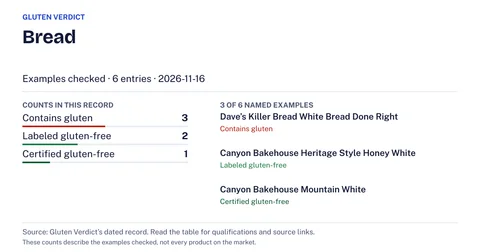
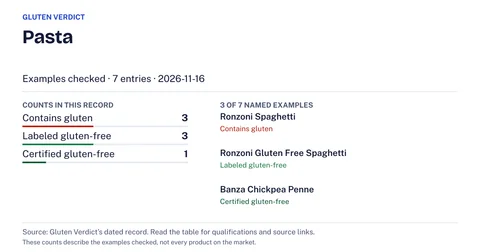
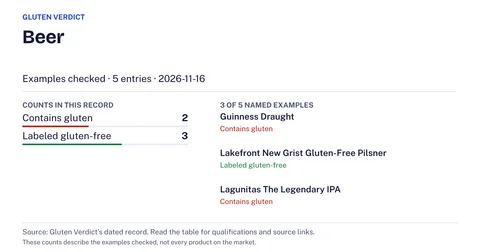
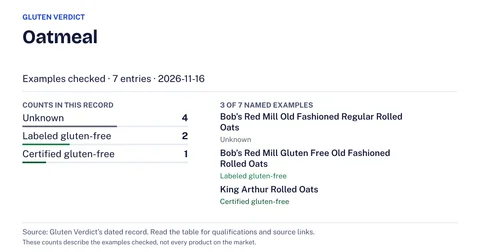
Questions people ask
Is celiac disease new?
Not in the blood samples studied: undiagnosed celiac disease was found in 14 of 9133 people (0.2%) in samples collected between 1948 and 195418. The same study found it 4.5-fold and 4-fold more often in two recent groups5.
How many people in the US have celiac disease?
NIDDK says experts estimate about 2 million people in the United States, and that many people with the disease have not been diagnosed15.
Are more people really avoiding gluten without celiac disease?
In one US survey the share rose from 0.5% in 2009 to 2010 to 1.7% in 2013 to 20144.
More in Gluten basics and myths
 What in wheat bothers people if it is not gluten?The non-gluten candidates for wheat symptoms (fructans, ATIs, wheat allergy), the trial or review behind each, and what limits it.
 Glyphosate, lectins and “wheat belly”: three wheat claims checkedWhere the glyphosate, wheat lectin and “wheat belly” claims come from, what the reviews found, and what NIDDK and FDA’s gluten-free rule say.
 Fine on bread in Europe? What it does and does not showWhat a trip where bread felt fine does and does not show about celiac disease, and how EU and US gluten-free label rules compare.
 Gluten-free myths about labels and food, checked against the rulesNatural, organic, zero gluten, fermenting and oats: each gluten-free myth checked against the page that states the rule, with the wording and read date.
 What gluten is, which grains carry it and what “gluten-free” meansA plain definition of gluten, the grains that carry it, look-alike words such as malt and wheat starch, and what a US gluten-free label means.
 Spelt, Kamut, Durum and Einkorn: Every Kind of Wheat Has GlutenDurum, semolina, spelt, einkorn, kamut, farro: which wheat words on a US label count as gluten, and what the FDA rule and the sources say about each.
Related guides
 How common is celiac disease? The figures people quote, and what each one counts1 in 100, 1 in 22 relatives, 3 percent of gene carriers: the group and study behind each celiac disease figure, and what studies say about a rise.
 How the 20 ppm gluten-free limit was chosen, and by whomWho set the 20 ppm gluten-free limit and when: the 2004 law, FDA's 2013 rule and its stated reasons, the 2020 follow-up rule, and Codex and EU wording.
 Celiac disease vs gluten intolerance: three conditions, three diagnosesHow celiac disease, non-celiac gluten sensitivity and wheat allergy differ in mechanism, diagnosis and diet, with a source behind every point.
 Does a gluten-free diet help you lose weight?What reviews, NIDDK and celiac charities report about a gluten-free diet and weight outside celiac disease, and what the substitute foods contain.
Sources
- [1, 4, 9, 10, 14, 21] Mayo Clinic Proceedings (PubMed record), Less Hidden Celiac Disease But Increased Gluten Avoidance Without a Diagnosis in the United States: NHANES 2009 to 2014 (Choung et al.), checked Nov 17, 2026.
- [2, 12, 19] Alimentary Pharmacology & Therapeutics (PubMed record), Increasing prevalence of coeliac disease over time (Lohi et al., 2007), checked Nov 17, 2026.
- [3, 13, 20] American Journal of Gastroenterology (PubMed record), Incidence of Celiac Disease Is Increasing Over Time: A Systematic Review and Meta-analysis (King et al., 2020), checked Nov 17, 2026.
- [5, 11, 18] Gastroenterology (PubMed record), Increased prevalence and mortality in undiagnosed celiac disease (Rubio-Tapia et al., 2009), checked Nov 17, 2026.
- [6, 35] NIDDK (National Institutes of Health), Diagnosis of Celiac Disease, checked Nov 17, 2026.
- [7, 8, 15, 24] NIDDK (National Institutes of Health), Definition & Facts for Celiac Disease, checked Nov 17, 2026.
- [16, 17] Gastroenterology (PubMed record), Global Prevalence of Celiac Disease and Clinical Characteristics in the General Population: A Systematic Review and Meta-Analysis (Karimzadhagh et al., 2026), checked Nov 17, 2026.
- [22, 23] Gluten Intolerance Group (GIG), What is non-celiac gluten sensitivity or NCGS? Is it same thing as gluten intolerance?, checked Nov 17, 2026.
- [25, 26, 27] US Food and Drug Administration, Food Allergen Labeling and Consumer Protection Act of 2004 (FALCPA), checked Nov 17, 2026.
- [28, 31] US Food and Drug Administration, Gluten-Free Labeling of Foods, checked Nov 17, 2026.
- [29] US Food and Drug Administration, Questions and Answers on the Gluten-Free Food Labeling Final Rule, checked Nov 17, 2026.
- [30] US Food and Drug Administration, Taking a Look at the Real-World Impact of the Gluten-Free Labeling Standard, checked Nov 17, 2026.
- [32, 33, 34] Gluten Intolerance Group (GIG), Press release: panel on trends driving growth in the gluten-free market (March 2, 2023), checked Nov 17, 2026.