Grieving foods after a celiac diagnosis: what people describe and where to get help
Short answer
The Gluten Intolerance Group (GIG) calls the losses that come with a chronic condition real, and the feelings about them valid1. A meta-analysis found depression more common or more severe in adults with celiac disease than in healthy adults, though not reliably different from adults with other physical illnesses2, 15, and NIMH says signs of depression that persist or do not go away are a reason to talk to a health care provider3. In the US, 988 offers 24-hour, confidential support for emotional distress4.
Part of Newly diagnosed: the first weeks, 8 guides

Key points
- GIG describes the losses as favorite foods, occasions with friends and a sense of being a “normal” person5.
- GIG says the stages of grieving come at different times for everyone, and the diagnosis itself sinks in at a different pace for each person6. This page gives no timetable.
- One meta-analysis reports depression more common or more severe in adults with celiac disease than in healthy adults2; another reports higher odds of anxiety and depression symptoms17, and its authors report the gluten-free diet is associated with lower anxiety and depression, saying more studies are needed to confirm that7.
- A meta-analysis found the gluten-free diet improves, but does not normalize, health-related quality of life in adults8.
- NIMH lists a primary care provider among the ways to reach a mental health professional9; for distress at any hour, call or text 9884.
What people describe losing
GIG writes that there can be sad feelings about losing favorite foods, that some people lose occasions with friends they once enjoyed, and that it can feel like losing a sense of being a “normal” person5.
The same article says these are real losses and that the feelings about them are valid1.
A qualitative study of seventeen adults in the midwestern United States, diagnosed between 6 months and 5 years earlier, started from the idea that adjusting to a strict gluten-free diet may change the eating experience in physical, social and emotional ways10, 11.
GIG says some people experience psychological effects, including stress and difficult emotions, that are not directly related to the physical effects of gluten in the body, and that dealing with an autoimmune disease or making major dietary and daily habit changes can be challenging12.
Is there a timeline, or a set of stages?
GIG says there are different stages of grieving and that they can come at different times for everyone, and that the initial diagnosis sinks in at different time periods for each person6. This page does not sort feelings into stages and does not promise a number of weeks or months.
GIG also writes that as you learn more about living gluten-free, the stress you might be feeling should lessen13. That is the charity’s expectation, not a measured timeline.
What research says about mood and the gluten-free diet
Five pieces of research, each described only as far as its abstract goes. They report patterns across groups of people, not what any one person will feel.
| Study | What it looked at | What it reported |
|---|---|---|
| Smith and Gerdes, 2012 (meta-analysis) | Eighteen studies on depression and eleven on anxiety in adult celiac disease14 | Depression more common and/or more severe than in healthy adults2, but not reliably different from adults with other physical illnesses; anxiety not reliably different from either group15 |
| Moawad and colleagues, 2024 (systematic review and meta-analysis) | Associations between celiac disease and anxiety and depression, and the link with gluten-free diet adherence16 | Higher odds of anxiety (odds ratio 2.26) and of depression symptoms (odds ratio 3.36)17; the gluten-free diet is associated with lower anxiety and depression, and the authors say more studies are needed to confirm this7 |
| Burger and colleagues, 2017 (systematic review and meta-analysis) | Eighteen studies of health-related quality of life in adults with coeliac disease, sixteen usable for the meta-analysis18 | The gluten-free diet significantly improves, but does not normalize, health-related quality of life; dietary adherence improves it8 |
| Möller and colleagues, 2021 (systematic review) | Fourteen studies, 3372 participants, on psychosocial factors and quality of life in adults19 | Quality of life was associated with psychological distress, illness perceptions, coping, and attitudes and behaviours about food and the gluten-free diet20 |
| Seventeen-adult interview study (US) | Adults diagnosed 6 months to 5 years before the study10 | The authors conclude that psychosocial and emotional attributes need to be considered to promote maintenance of quality of life and dietary adherence21 |
Smith and Gerdes concluded that depression is common in adult celiac disease and resembles the condition in other physical illnesses22. Möller and colleagues note that people with celiac disease generally see their symptoms go into remission on the gluten-free diet but often report substantial treatment burden and ongoing quality of life issues23.
Ten common foods: what our verdicts show
Ten common foods, each linked to its verdict. The counts are the products listed in that verdict, not a market survey; “gluten-free” there means the maker labeled or a certifier certified the product, and the verdict page shows the evidence and the date we read it.
| Food | Usual form | Labeled or certified gluten-free among products we checked |
|---|---|---|
| Pizza | Contains gluten | 4 of 6 |
| Bread | Contains gluten | 3 of 6 |
| Pasta | Contains gluten | 4 of 7 |
| Beer | Varies by brew | 3 of 5 |
| Bagels | Contains gluten | 3 of 7 |
| Donuts | Contains gluten | 2 of 7 |
| Cake | Contains gluten | 5 of 8 |
| Pancakes | Contains gluten | 5 of 8 |
| Cookies | Contains gluten | 3 of 6 |
| Croissant | Contains gluten | 0 of 4 |
Croissant is the one food in this list where all four products we checked contain gluten. For the other nine, at least two of the products in each verdict carry a gluten-free label or certification.
A GIG article by a dietetic intern puts the same trade this way: not being able to eat the things you once did “leaves the door open for creativity, reformation, and improvement”24. Our verdicts show what exists; they do not say which version will taste like the one you miss.
Small things the sources name
None of these is a treatment for grief, and none is advice for one person. They are options GIG, NIDDK and NIMH name; one or two can fit into a single week.
- Talk about it. GIG writes that one thing that consistently seems to be present in people who seem to move through these feelings, instead of staying stuck in them, is that they talk about it25. NIMH’s depression page lists “Connect with people. Talk to people you trust about how you are feeling” among other things that may help26.
- Look for a group. NIDDK says people diagnosed with celiac disease may find support groups helpful as they adjust, and that a doctor or registered dietitian may be able to recommend them27. GIG runs local groups, in person and online28.
- Bring in a dietitian. GIG says seeing a registered dietitian can help make going gluten-free more manageable29, and NIDDK says a doctor may refer you to one who specializes in celiac disease30.
- Reshape one tradition. Pick one meal that carried meaning and look up what exists in a gluten-free form: start from the foods table above. This is our suggestion, not a clinical one.
Anger, and talking to the people around you
GIG says bottling negative feelings inside can lead to different negative outcomes for different people, which can look like explosions of anger, depression, anxiety, insecurity and paranoia31. It also says it can be hard to discuss things with close people who do not understand32.
If that is where you are, GIG writes that for some people a support group of others who deal with the same thing can be most helpful, and that for many, in addition to friends and groups, a therapist can provide a consistent, recurring check-in33. For wording to use with family and friends, see how to explain celiac disease to friends and family and, for the other side of the conversation, what to say to someone with celiac disease.
When worry about food starts to take over
A GIG article written by a dietetic intern says celiac disease can make a person more prone to anxiety, depression, eating disorders and disordered eating34. It asks readers whether they are cutting out more and more foods “just in case”, avoiding social events because of food anxiety, feeling panic rather than caution around eating, or feeling guilt after eating gluten-free foods that are “too processed”35.
Its suggestion if that feels familiar: speak with a registered dietitian or mental health professional36.
When to talk to a clinician or counselor, and when to call 988
NIMH’s depression page says that if you show signs or symptoms of depression and they persist or do not go away, talk to a health care provider3. It describes major depression as symptoms of depressed mood or loss of interest, most of the time for at least 2 weeks, that interfere with daily activities37. That is NIMH’s description, not a test you can score yourself, and this page cannot say whether you have it.
NIMH says a primary care provider can do an initial mental health screening and refer you to a mental health professional, such as a social worker, psychologist or psychiatrist9, and that treatment for mental illnesses usually includes therapy, medication, or a combination of the two38.
Within celiac care, GIG says that in some cases meeting with a GI psychologist could help address the emotional toll of being unwell39, and that a gluten-free diet is not a substitute for therapy or medication40.
If you are suicidal or in emotional distress, NIMH says to consider the 988 Suicide & Crisis Lifeline41: call or text 988, or start a chat online, to reach a trained crisis counselor, 24 hours a day, confidentially4. In life-threatening situations, NIMH says to call 911 or go to the nearest emergency room42.
Verdicts in this guide
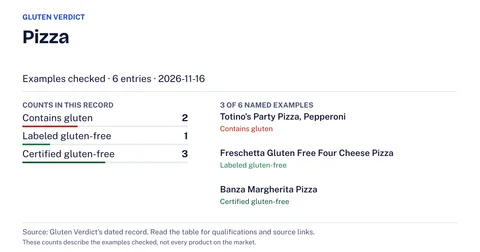 PizzaContains glutenchecked Nov 16, 2026
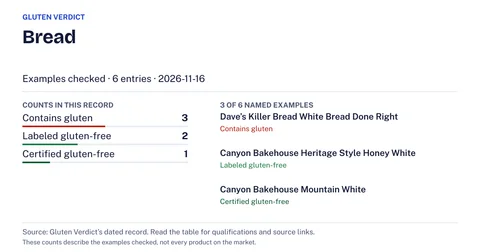 BreadContains glutenchecked Nov 16, 2026
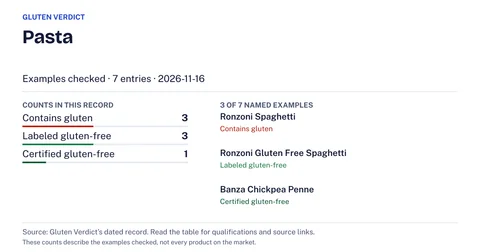 PastaContains glutenchecked Nov 16, 2026
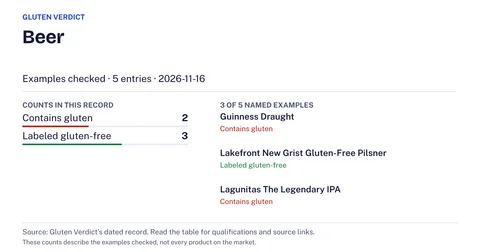 BeerDepends on the product2 of 5 products we checked contain gluten: Guinness Draught and Lagunitas The Legendary IPAchecked Nov 16, 2026
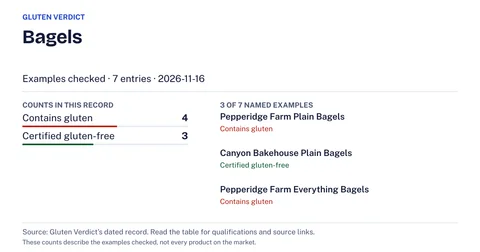 BagelsContains glutenchecked Nov 16, 2026
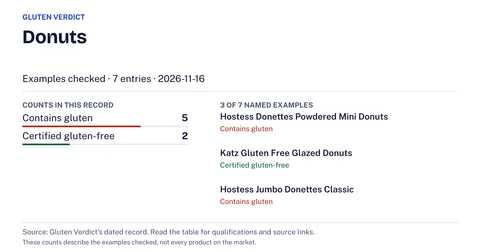 DonutsContains glutenchecked Nov 16, 2026
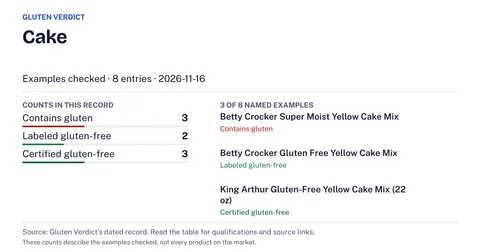 CakeContains glutenchecked Nov 16, 2026
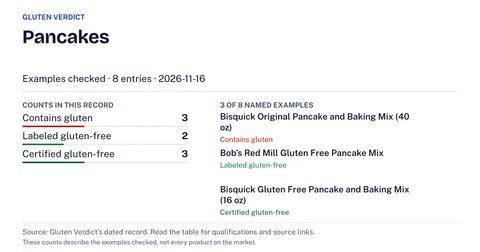 PancakesContains glutenchecked Nov 16, 2026
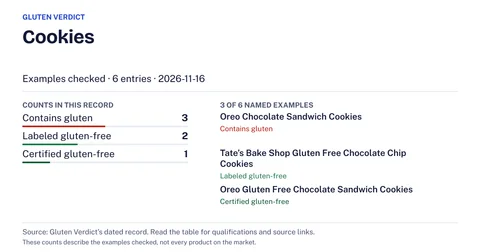 CookiesContains glutenchecked Nov 16, 2026
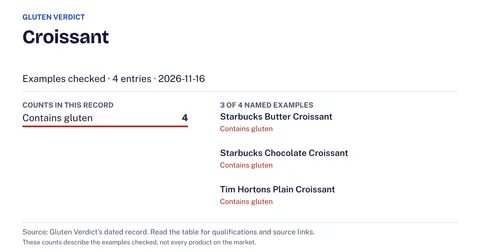 CroissantContains glutenchecked Nov 16, 2026
Questions people ask
Is it normal to grieve foods after a celiac diagnosis?
GIG says there are real losses that come with a chronic condition, including favorite foods, and that those feelings are valid1, 5.
Does the sadness go away by itself?
GIG writes that the stress you might be feeling should lessen as you learn more about living gluten-free13. NIMH says signs of depression that persist or do not go away are a reason to talk to a health care provider3.
Does the gluten-free diet improve mood?
One meta-analysis reports an association between the gluten-free diet and lower anxiety and depression, and says more studies are needed to confirm it7. Another review found the diet improves, but does not normalize, health-related quality of life8. GIG says the diet is not a substitute for therapy or medication40.
More in Newly diagnosed: the first weeks
 Your first 30 days after a celiac diagnosis: a week-by-week planA week-by-week plan for the first month after a celiac diagnosis: label rules, kitchen changes, a dietitian, follow-up tests and questions for your doctor.
 Starting a gluten-free diet: testing first, then labels, oats and the kitchenWhat NIH and the celiac charities say about starting a gluten-free diet: testing first, which foods to start with, a US label check, oats and the kitchen.
 Going gluten-free: what to remove and what to keep in your pantry and kitchenSort a full pantry into foods to remove, labels to read and plain foods to keep, then decide on shared jars, toasters and pans.
 Your first restaurant meal after a celiac diagnosisHow to pick a place, call ahead, ask the kitchen the right questions and decide what to do when answers are vague, for a first meal out.
 How long until you feel better on a gluten-free diet?What NIH, celiac charities and studies report on when symptoms, antibody levels and the gut lining recover after a celiac diagnosis, and why they differ.
 Feeling worse after going gluten-free: what the sources say to check firstWhat NIDDK, Coeliac UK and clinical reviews say about symptoms that do not improve or get worse on a gluten-free diet, and which causes you can check.
Related guides
 Depression, anxiety and celiac disease: what studies report and when to see a clinicianWhat meta-analyses report about depression and anxiety in celiac disease, what is known about the gut-brain link, and when to contact a clinician.
 Celiac support groups: what the national groups say they offerWhat the National Celiac Association and Gluten Intolerance Group say their support groups offer, and how to judge any group before you join.
 Finding a dietitian who knows celiac disease: credentials, directories and questionsWhat RD and RDN mean, which celiac-related credentials and directories exist, and what to ask a dietitian at your first visit after a celiac diagnosis.
 Weight gain or loss after a celiac diagnosis: what the research foundWhat two studies found about weight before and after a celiac diagnosis, what sources say about gluten-free foods, and what to bring to a dietitian.
Sources
- [1, 5, 6, 25, 31, 32, 33] Gluten Intolerance Group, How To Take Care of Yourself Mentally, checked Nov 17, 2026.
- [2, 14, 15, 22] Acta Psychiatrica Scandinavica (via PubMed), Meta-analysis on anxiety and depression in adult celiac disease (Smith and Gerdes, 2012), checked Nov 17, 2026.
- [3, 26, 37] National Institute of Mental Health, Depression, checked Nov 17, 2026.
- [4, 9, 38, 41, 42] National Institute of Mental Health, Help for Mental Illnesses, checked Nov 17, 2026.
- [7, 16, 17] Psychiatry Research and Clinical Practice (via PubMed), Anxiety and Depression Among Adults and Children With Celiac Disease: A Meta-Analysis of Different Psychiatry Scales (Moawad and colleagues, 2024), checked Nov 17, 2026.
- [8, 18] Clinical Nutrition (via PubMed), Systematic review with meta-analysis: Dietary adherence influences normalization of health-related quality of life in coeliac disease (Burger and colleagues, 2017), checked Nov 17, 2026.
- [10, 11, 21] Journal of the Academy of Nutrition and Dietetics (via PubMed), The Exploration of the Eating Experience in Adults with Celiac Disease: A Phenomenological Qualitative Study, checked Nov 17, 2026.
- [12, 13, 29, 39, 40] Gluten Intolerance Group, Gluten and Your Mental Health, checked Nov 17, 2026.
- [19, 20, 23] Journal of Psychosomatic Research (via PubMed), Systematic review: Exploration of the impact of psychosocial factors on quality of life in adults living with coeliac disease (Möller and colleagues, 2021), checked Nov 17, 2026.
- [24, 34, 35, 36] Gluten Intolerance Group, Food Anxiety and the Gluten-Free Diet (article by a dietetic intern), checked Nov 17, 2026.
Read on 2026-11-17: the list that follows the question “Are you…” in the section “Walking the Gluten-Free Tightrope” asks about cutting out more and more foods “just in case”, avoiding social events because of food anxiety, feeling panic (not just caution) around eating, and feeling guilt after eating gluten-free foods that are “too processed”.
- [27] National Institute of Diabetes and Digestive and Kidney Diseases (NIDDK), Celiac Disease: Eating, Diet, and Nutrition, checked Nov 17, 2026.
- [28] Gluten Intolerance Group, Support Groups, checked Nov 17, 2026.
- [30] National Institute of Diabetes and Digestive and Kidney Diseases (NIDDK), Celiac Disease: Treatment, checked Nov 17, 2026.