Going gluten-free: what to remove and what to keep in your pantry and kitchen
Short answer
Sort every shelf into three piles, then give the shared kitchen items their own decision1, 2.
- Foods made with wheat, barley, rye or malt, such as breads, cereals, pastas and beer, leave the gluten-free shelf3, 4.
- Processed foods get a label read, because flavorings, starches and thickeners can be made from grains that contain gluten5.
- Plain foods without additives, such as meat, fish, fruits, vegetables and potatoes, stay1.
- Shared jars, toasters, colanders, wooden tools, scratched cutting boards and worn nonstick pans collect crumbs or are hard to clean, so each gets its own decision6, 7, 8, 9, 10, 11.
Part of Newly diagnosed: the first weeks, 8 guides
Key points
- NIDDK says gluten is found in baked goods, baking mixes, breads, cereals and pastas, that beer and malt beverages may also contain it, and that barley may be found in malt, malt extract, malt vinegar and brewer’s yeast4, 12.
- Many ingredients and additives, such as flavorings, starches and thickeners, are made from gluten grains and go into processed foods, so a boxed, canned or packaged food needs its label read5, 13.
- Meat, fish, fruits, vegetables, rice and potatoes without additives or some seasonings are naturally gluten-free, but grains, beans and seeds that are naturally free of gluten often come into contact with gluten-containing grains before they reach you1, 14.
- Gluten Intolerance Group (GIG) names toasters, colanders, wooden tools, scratched cutting boards and worn nonstick pans as items that can hold gluten7, 8, 9, 10, 11.
- High heat does not remove gluten from a surface; cleaning does15.
How to sort the pantry into three piles
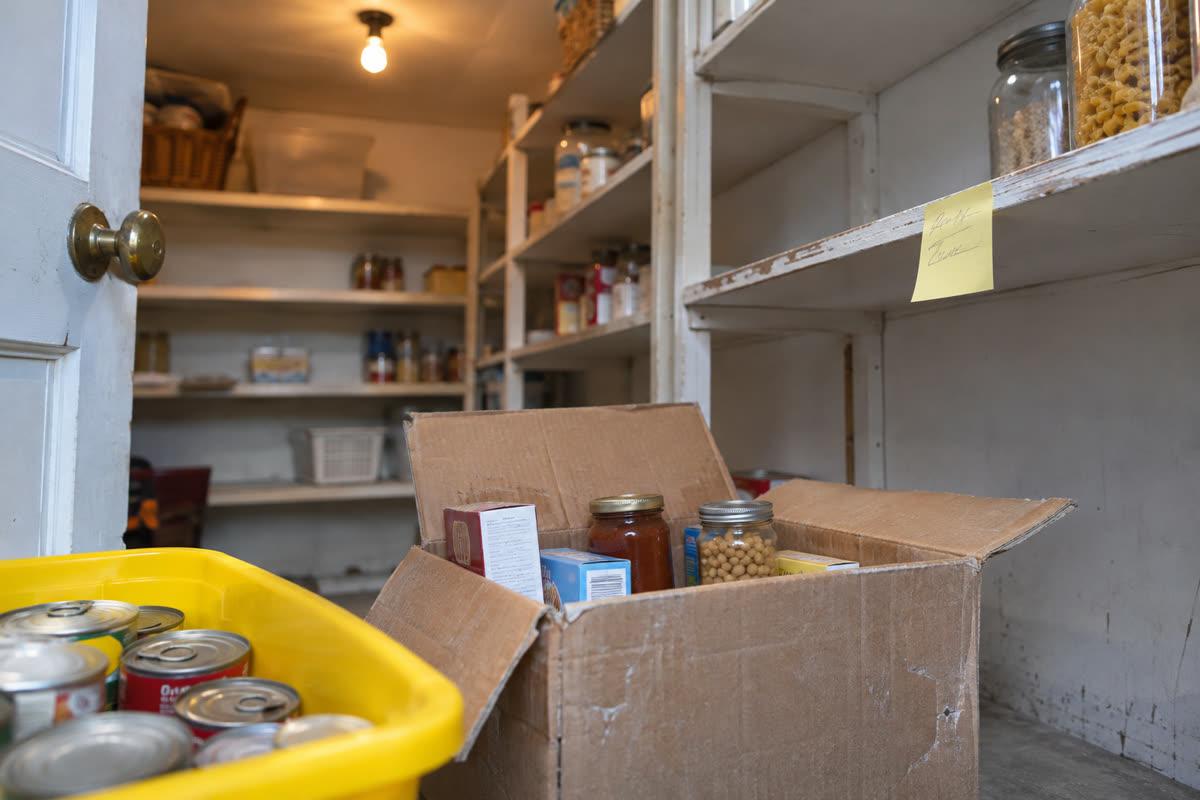
Take everything off one shelf at a time and put each item in one of three piles: gluten by ingredient, needs a label read, or plain food with nothing to check. The rest of this page takes the piles in that order, then the shared items in the kitchen.
Food in the first pile either leaves the house or moves to the shelf of the people who still eat it. NIDDK says to store and prepare gluten-free foods separately from other family members’ foods that contain gluten16.
NIDDK’s page on eating with celiac disease asks whether to start a gluten-free diet before talking with a doctor, and answers no: if you avoid gluten before testing, the test results may not be accurate17. This page describes how to sort a kitchen; it does not replace a clinician’s advice.
Pile 1: foods made with wheat, barley, rye or malt
FDA says gluten occurs naturally in wheat, rye, barley and crossbreeds of these grains, and that foods that typically contain gluten include breads, cakes, cereals, pastas and many other grain-based foods3. NIDDK adds baked goods and baking mixes, and lists beer, lagers, ale, flavored liquors and malt beverages among the drinks that may contain gluten4.
| Item | Why it goes in this pile | Our verdict |
|---|---|---|
| Wheat flour, baking mixes, bread, cakes | Wheat is a gluten grain, and baked goods, baking mixes and breads are made from these grains3, 4. | Flour |
| Pasta | Pastas are on FDA’s list of foods that typically contain gluten3. | Pasta |
| Breadcrumbs, crackers, pretzels, graham crackers | Grain-based baked foods of the kind FDA and NIDDK describe3, 4. Packaged gluten-free baked goods are sold18; they move to pile 2 until you have read the label. | Breadcrumbs, crackers, pretzels, graham crackers |
| Cereal | Cereals are on both FDA’s and NIDDK’s lists of foods that contain gluten3, 4. Check the box for barley and malt. | Cereal |
| Malt vinegar | NIDDK lists malt vinegar among the places barley may be found12. | Malt vinegar |
| Malt extract, malt syrup | FDA describes malt extract and malt syrup as ingredients derived from barley that has not been processed to remove gluten19. | Malt extract |
| Brewer’s yeast | NIDDK lists brewer’s yeast among the places barley may be found12. | Brewer’s yeast |
| Beer and malt beverages | NIDDK lists beer, lagers, ale and malt beverages among the drinks that may contain gluten4. | Beer |
| Soy sauce made from soybeans and wheat | FDA says that, in general, soy sauce made from soybeans and wheat, or any other gluten-containing grain, may not bear a “gluten-free” claim20. | Soy sauce |
| Seitan | See the verdict page for the reason. | Seitan |
Packaged gluten-free types of baked goods, bread and pasta are sold18. A gluten-free replacement still gets a label read, so it starts in pile 2.
Pile 2: read the label before it stays
NIDDK says many food ingredients and additives, such as colorings, flavorings, starches and thickeners, are made from grains that contain gluten5. They are added to many boxed, canned, frozen, packaged or prepared foods, and NIDDK names candy, condiments, hot dogs and sausages, ice cream, salad dressing and soups as foods where gluten may be found13.
For each package in this pile, read these four things in this order:
- A “gluten-free” claim. Under FDA’s rule, a food labeled “gluten-free”, “no gluten”, “free of gluten” or “without gluten” must contain less than 20 parts per million (ppm) of gluten21. The claim is voluntary and may not appear even on a food that is gluten-free22.
- The ingredient list, for wheat, rye, barley and malt3, 12, and for flavorings, starches and thickeners5.
- The Contains line. FALCPA’s list of major food allergens names wheat; barley and rye are not on it23, so a Contains line without wheat does not clear a food. Our guide to reading a US food label covers the line and the ingredient names in full.
- Wording such as “made with no gluten-containing ingredients”. FDA says that unless the label also bears a “gluten-free” claim, consumers should not assume the food meets all FDA requirements for the claim24.
When a label leaves the question open, NIDDK says not to eat a food if you are not sure whether it contains gluten and, if possible, to contact the company that makes it or visit its website25.
Our gluten scanner looks for gluten ingredient names in a photo of a label or in pasted text.
The shelf of small bottles and cans
Sauces, broths, spices and spreads are where the brand and the exact product decide. Each row links our verdict page for that item, which lists its sources and the date we checked them.
| Item | What to look for | Our verdict |
|---|---|---|
| Soy sauce, teriyaki sauce, hoisin sauce | A “gluten-free” claim, and wheat in the ingredient list. FDA says that, in general, soy sauce made from soybeans and wheat may not carry the claim20. | Soy sauce, teriyaki, hoisin |
| Worcestershire sauce | Malt or malt vinegar in the list; NIDDK lists both among the places barley may be found12. | Worcestershire sauce |
| Gravy, soup, broth | Thickeners and flavorings in the list; NIDDK names soups among foods where gluten may be found13. | Gravy, soup, chicken broth |
| Salad dressing, barbecue sauce, ketchup, hot sauce, mustard, mayonnaise | The list, because NIDDK names condiments and salad dressing among foods where gluten may be found13. Example product page: Wish-Bone Italian dressing. | Barbecue sauce, ketchup, hot sauce, mustard, mayonnaise |
| Spice blends and seasoning mixes | The ingredient list: NIDDK’s naturally gluten-free foods are those “without additives or some seasonings”1. | Spices, taco seasoning |
| Hydrolyzed vegetable protein, yeast extract | The source named on the label. FDA gives hydrolyzed soy protein and hydrolyzed wheat protein as examples of hydrolyzed foods26. | Hydrolyzed vegetable protein, yeast extract |
| Oatmeal, granola bars | Oats labeled gluten-free must contain less than 20 ppm of gluten, and FDA does not require them to be certified27. NIDDK says that if you eat oats, make sure they are gluten-free28. | Oatmeal, granola bars |
| Baking powder, cornstarch, vanilla extract | The source of any starch or flavoring in the list; NIDDK says starches and flavorings can be made from gluten grains5. | Baking powder, cornstarch, vanilla extract |
| Peanut butter | Added ingredients on the list; the jar also raises the shared-jar question below. | Peanut butter |
GIG’s spring-cleaning checklist for the pantry includes checking labels, because ingredients can change29. A recipe change is a reason to read the package in your hand again, even on a brand you have read before.
Pile 3: plain food that stays
NIDDK says many foods, such as meat, fish, fruits, vegetables, rice and potatoes, are naturally gluten-free when they come without additives or some seasonings1. FDA gives bottled spring water, fruits, vegetables and eggs as examples, and notes that the “gluten-free” claim is not required on a package, so a package without the claim does not mean the food contains gluten22.
Grains, beans and seeds are the exception to read twice. FDA says crop rotation and the shared use of harvesting and transport equipment and storage silos often bring gluten-containing grains into contact with other grains, legumes and seeds that are naturally free of gluten14. For oats, NIDDK says to make sure they are gluten-free28. A bag with a “gluten-free” claim gets a label read as in pile 2.
By our verdicts, mayonnaise and cornstarch are naturally gluten-free in their plain form. The jar or box still gets a label read for added ingredients, and the knife question in the next section applies to the mayonnaise jar.
Shared jars, spreads and butter
GIG calls double-dipping one of the most common ways gluten crumbs get into gluten-free food. Its example is a knife that spreads mayonnaise on wheat bread and then goes back into the jar to spread mayonnaise on gluten-free bread6. GIG’s household guide gives peanut butter as another case: a knife used to spread regular peanut butter can leave traces behind30.
So the jars to decide about are the ones a bread knife has been into: butter, jam, peanut butter, mayonnaise, mustard. Our verdicts for peanut butter, mayonnaise and mustard cover what is in the product; they cannot tell you what has been dipped into your own jar.
- Start the gluten-free shelf with a new jar and mark it. GIG suggests labeling food items, even utensils and cookware, when in doubt31.
- If a jar is shared, GIG says to make sure housemates understand why double-dipping is not an option, and to keep products sealed and on higher shelves in the pantry or fridge so crumbs do not fall into them32.
- In a shared fridge or cupboard, GIG says to put the gluten-free packages above the gluten-containing ones and keep them securely packaged33.
Toasters, colanders, cutting boards and pans
What to replace depends on the household. GIG says that in a household going entirely gluten-free, some of the hard-to-clean items may be worth replacing, and that when only one or several members are going gluten-free, a separate set of those items is recommended2. It also says you do not have to replace everything overnight: focus first on the highest-risk items, such as toasters and cutting boards34.
| Item | What GIG says |
|---|---|
| Toaster | Crumbs can end up on gluten-free bread; GIG mentions toaster bags and a separate toaster7. Its household guide puts toasters, air fryers and blenders at the top of the list of appliances to designate gluten-free only35, and calls a toaster bag a temporary solution36. |
| Colanders, strainers, sifters | Starchy pastas can leave residue and mesh strainers are hard to clean8. Items like colanders and sifters should not be shared between gluten-free and non-gluten-free use if possible; if they are, clean them thoroughly between every use37. |
| Wooden spoons, wooden rolling pins | Wood fibers could harbor gluten particles9. GIG says it is best to shelve a wooden rolling pin that was used on gluten-containing items38. |
| Cutting boards | If boards are pitted or scratched, gluten could settle into crevices10. For wooden cutting boards and utensils, GIG says to consider replacing them if they are deeply scratched or very old, and to sand them down lightly if they are in good shape39. |
| Nonstick pans | Scratched or worn nonstick pans can trap gluten in the damaged coating; GIG says it may be time to designate a separate gluten-free pan11. |
| Cast iron | GIG’s 2020 list says the jury is still out on whether gluten clings to cast iron40. Its 2026 household guide calls cast iron porous and nearly impossible to fully rid of gluten residue, and strongly recommends a dedicated pan if it is used for gluten-containing foods41. |
| Other pots, pans and utensils | Thorough cleaning with soap and water is sufficient for most items42, and most standard dish soaps remove gluten with hot water and proper scrubbing43. |
| Muffin tins and cake pans | If buying a new set is not an option, GIG says to use cupcake liners and parchment paper44. |
| Dishwasher | A functional dishwasher that cleans thoroughly can take a shared load45. |
| Air fryer, bread machine | GIG says not to use the same air fryer for gluten-free and gluten-containing cooking46, and to use a dedicated gluten-free bread machine47. |
| Microwave, oven | Wipe the microwave down after each use if it is shared48. In a shared oven, GIG says to wipe the racks and interior, use fresh foil on the rack, or set the dish on a clean baking sheet49. |
| Sponges and dish rags | Shared sponges and dish rags can transfer gluten from one surface to another, so GIG says to replace or launder them frequently50. |
Heat does not fix a pan or a grill. GIG says gluten cannot be burned off by high temperature but can be removed by a thorough cleaning with soap, water and a good metal grill scrubber15. Its household guide adds that gluten is a protein that heat and most standard cleaning sprays do not destroy, and that it must be physically removed51.
Restocking: what to buy first
Packaged gluten-free foods are sold, and NIDDK notes they tend to cost more than the same foods that have gluten52. Start with the items you removed from pile 1, and read each replacement the way you read pile 2: look for the “gluten-free” claim21.
FDA does not endorse, accredit or recommend any particular third-party gluten-free certification program53. GIG’s list says purchasing GFCO-certified food means it meets the threshold of 10 ppm of gluten or less54.
Our printable grocery list is built from our verdict records, with staples by aisle, labeled products and a label card. In the store, GIG says to stay clear of the bulk section, where gluten-containing ingredients could linger on scoops or surrounding bins55.
If others in the house still eat gluten: one shelf, one rule
NIDDK’s advice is to store and prepare gluten-free foods separately from family members’ foods that contain gluten16. GIG says designating specific utensils, areas and appliances for gluten-free use can go a long way in limiting risk56. Its tips:
- Wipe down any food prep or cooking surface often, and always after preparing dishes with gluten-containing ingredients57.
- Assign one color to everything strictly gluten-free, such as cutting boards, mixing bowls, storage containers, tongs and spatulas, and make sure everyone knows what it means58.
- Store gluten-free packages above gluten-containing ones, sealed33.
One rule that covers most of this: the gluten-free shelf sits above, stays sealed, and nothing goes into its jars except clean utensils.
Verdicts in this guide
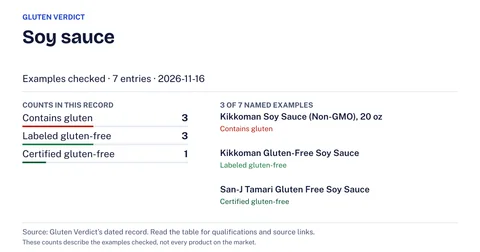 Soy sauceDepends on the product3 of 7 products we checked contain gluten: Kikkoman Soy Sauce (Non-GMO), 20 oz; San-J Organic Shoyu Soy Sauce; and Lee Kum Kee Premium Soy Sauce (No Preservatives Added)checked Nov 16, 2026
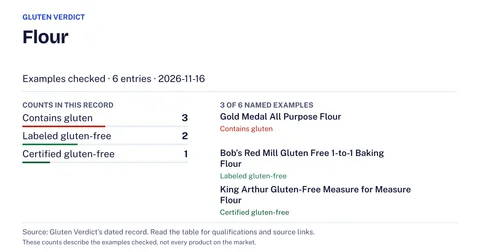 FlourContains glutenchecked Nov 16, 2026
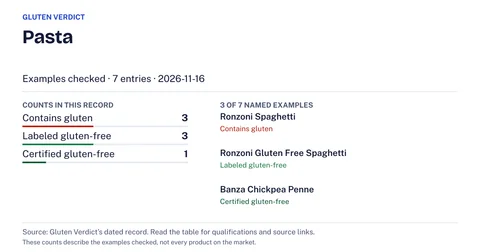 PastaContains glutenchecked Nov 16, 2026
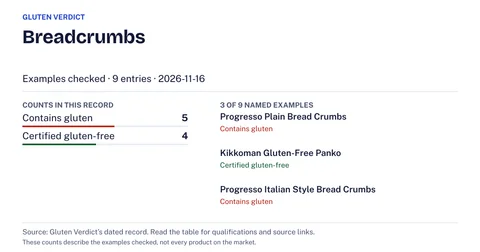 BreadcrumbsContains glutenchecked Nov 16, 2026
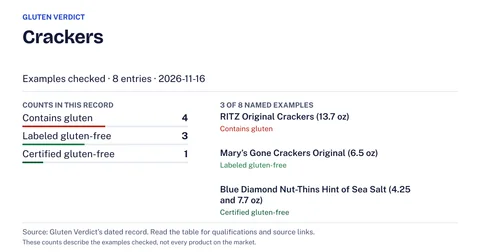 CrackersDepends on the product4 of 8 products we checked contain glutenchecked Nov 16, 2026
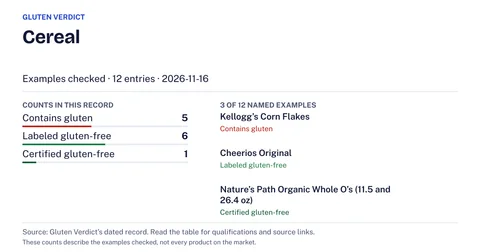 CerealDepends on the product5 of 12 products we checked contain glutenchecked Nov 16, 2026
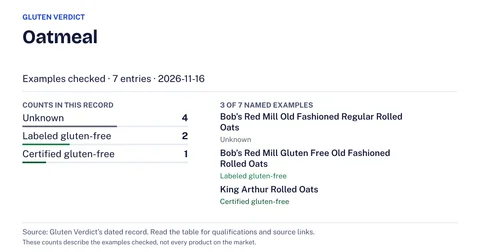 OatmealDepends on the productchecked Nov 16, 2026
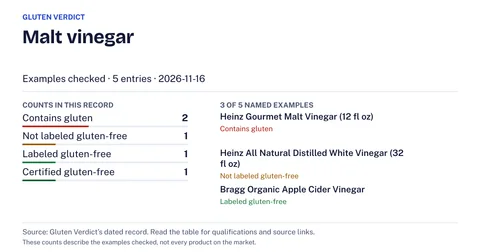 Malt vinegarContains glutenchecked Nov 16, 2026
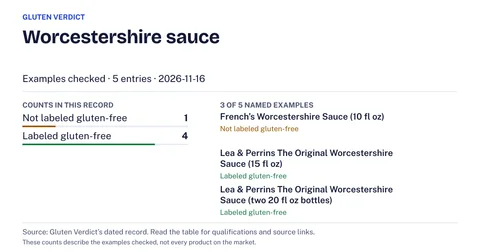 Worcestershire sauceDepends on the productchecked Nov 16, 2026
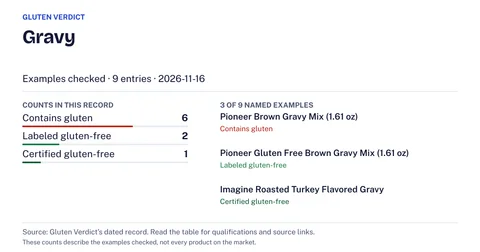 GravyDepends on the product6 of 9 products we checked contain glutenchecked Nov 16, 2026
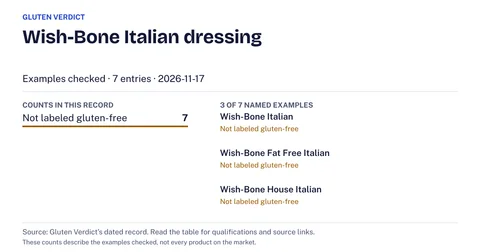 Wish-Bone Italian dressingNot labeled gluten-freeConagra Brands · checked Nov 17, 2026
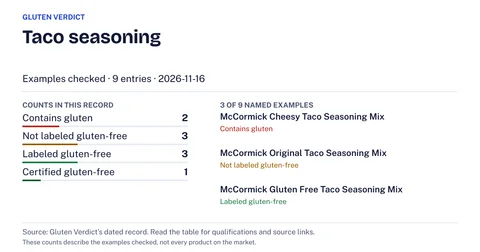 Taco seasoningDepends on the product2 of 9 products we checked contain gluten: McCormick Cheesy Taco Seasoning Mix and Lawry’s Taco Seasoning Mixchecked Nov 16, 2026
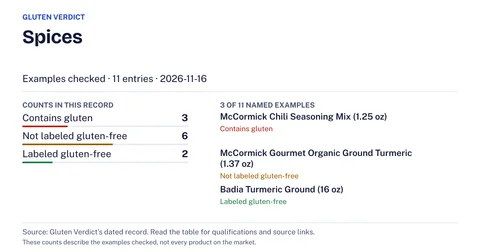 SpicesDepends on the product3 of 11 products we checked contain gluten: McCormick Chili Seasoning Mix (1.25 oz), Lawry’s Chili Spices & Seasonings Mix (1.48 oz), and McCormick Cheesy Taco Seasoning Mix (1.12 oz)checked Nov 16, 2026
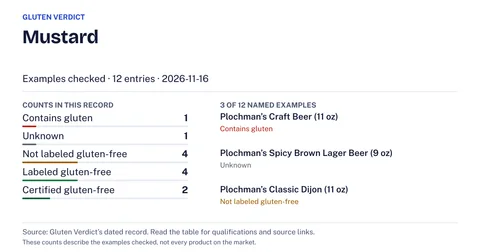 MustardDepends on the product1 of 12 products we checked contains gluten: Plochman’s Craft Beer (11 oz)checked Nov 16, 2026
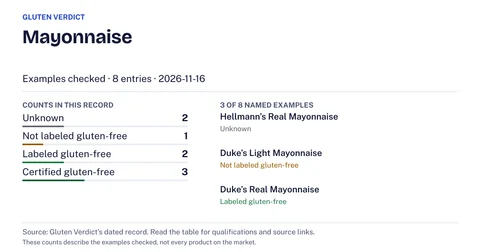 MayonnaiseNaturally gluten-freechecked Nov 16, 2026
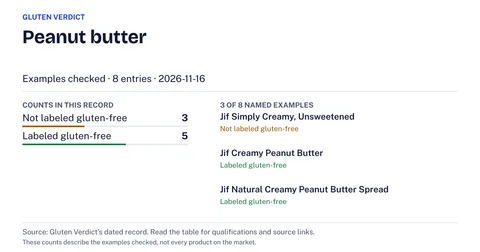 Peanut butterDepends on the productchecked Nov 16, 2026
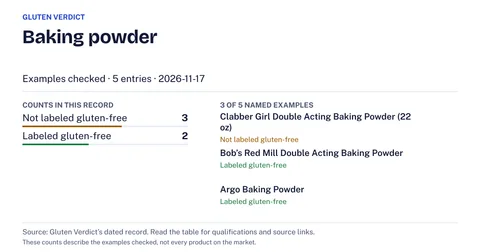 Baking powderDepends on the productchecked Nov 17, 2026
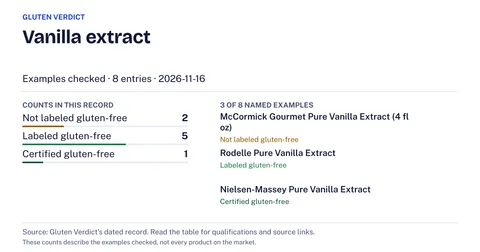 Vanilla extractDepends on the productchecked Nov 16, 2026
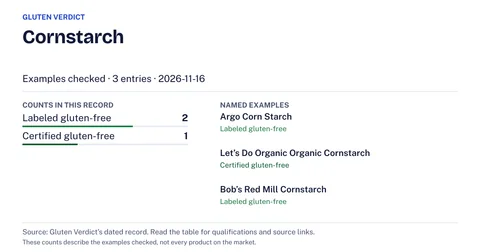 CornstarchNaturally gluten-freeBuy it labeled gluten-freechecked Nov 16, 2026
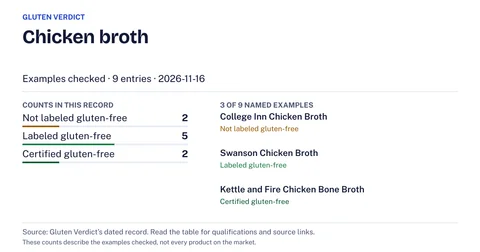 Chicken brothDepends on the productchecked Nov 16, 2026
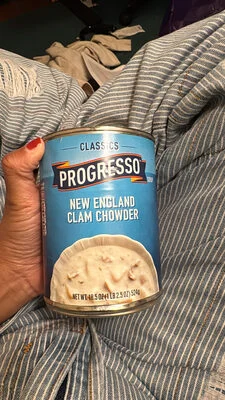 SoupDepends on the product3 of 8 products we checked contain gluten: Campbell’s Condensed Tomato Soup (10.75 oz), Campbell’s Condensed Cream of Mushroom Soup (10.5 oz), and Progresso Traditional Chicken Noodlechecked Nov 16, 2026
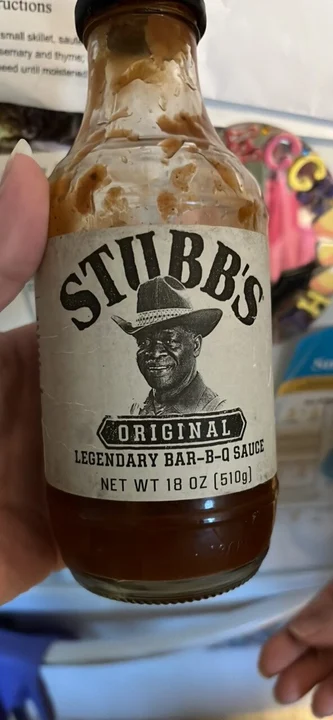 BBQ sauceDepends on the product1 of 6 products we checked contains gluten: Kikkoman Teriyaki BBQ Sauce – Originalchecked Nov 16, 2026
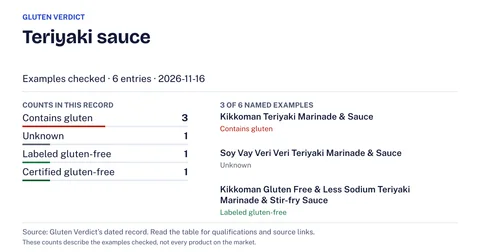 Teriyaki sauceDepends on the product3 of 6 products we checked contain gluten: Kikkoman Teriyaki Marinade & Sauce, Kikkoman Teriyaki Marinade & Stir-fry Sauce – Roasted Garlic, and Kikkoman Teriyaki BBQ Sauce – Originalchecked Nov 16, 2026
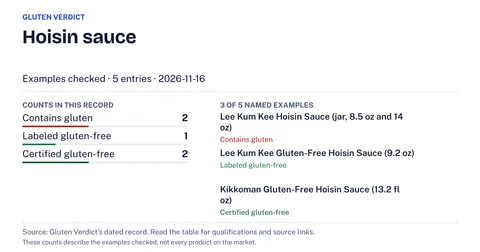 Hoisin sauceDepends on the product2 of 5 products we checked contain gluten: Lee Kum Kee Hoisin Sauce (jar, 8.5 oz and 14 oz) and Kikkoman Hoisin Sauce (9.3 oz)checked Nov 16, 2026
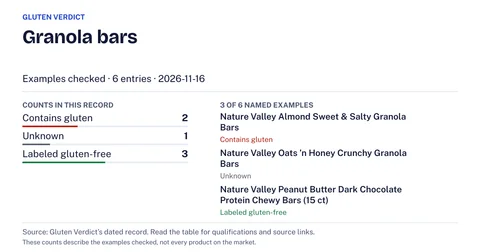 Granola barsDepends on the product2 of 6 products we checked contain gluten: Nature Valley Almond Sweet & Salty Granola Bars and Nature Valley Cinnamon Brown Sugar Soft-baked Oatmeal Squareschecked Nov 16, 2026
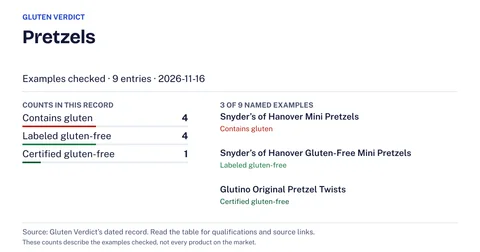 PretzelsDepends on the product4 of 9 products we checked contain glutenchecked Nov 16, 2026
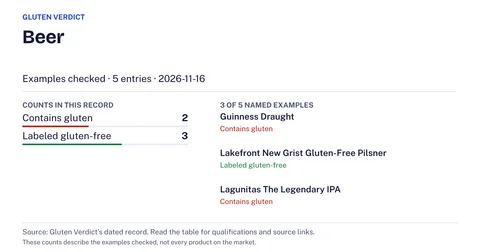 BeerDepends on the product2 of 5 products we checked contain gluten: Guinness Draught and Lagunitas The Legendary IPAchecked Nov 16, 2026
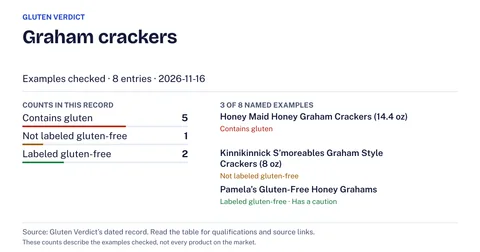 Graham crackersContains glutenchecked Nov 16, 2026
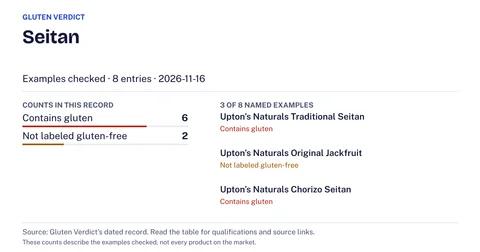 SeitanContains glutenchecked Nov 16, 2026
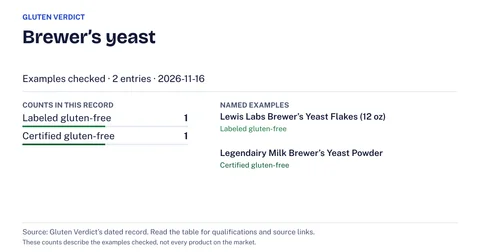 Brewer’s yeastDepends on the productchecked Nov 16, 2026
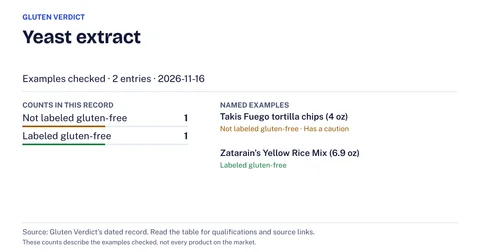 Yeast extractDepends on the productchecked Nov 16, 2026
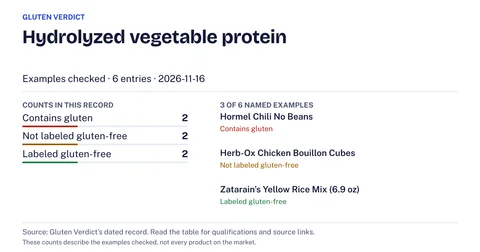 Hydrolyzed vegetable proteinDepends on the product2 of 6 products we checked contain gluten: Hormel Chili No Beans and Pioneer Brown Gravy Mix (1.61 oz)checked Nov 16, 2026
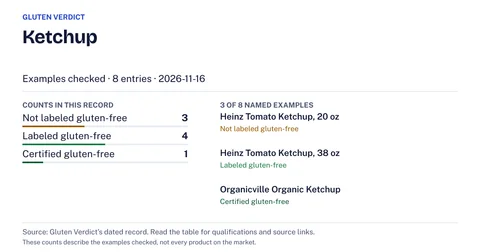 KetchupDepends on the productchecked Nov 16, 2026
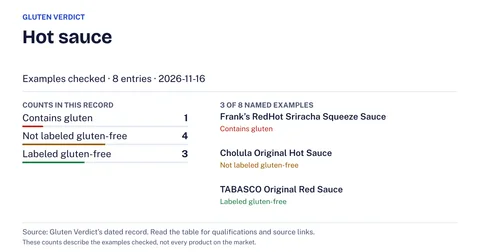 Hot sauceDepends on the product1 of 8 products we checked contains gluten: Frank’s RedHot Sriracha Squeeze Saucechecked Nov 16, 2026
Questions people ask
Do I have to throw out everything in the pantry?
No. NIDDK lists meat, fish, fruits, vegetables, rice and potatoes without additives or some seasonings as naturally gluten-free1. Pile 1 foods leave the gluten-free shelf, pile 2 foods get a label read, and the hard-to-clean items GIG describes get their own decision2.
Can I keep my toaster?
GIG says gluten crumbs can end up on gluten-free bread and mentions toaster bags or a separate toaster7. Its household guide calls a toaster bag a temporary solution36.
Does cooking at a high temperature clean a pan or grill?
GIG says gluten cannot be burned off by high temperature; it is removed by thorough cleaning15.
Can gluten-free dishes go in the same dishwasher load?
GIG says a shared load is fine in a functional dishwasher that effectively removes food particles and cleans thoroughly45.
What about the medicine and vitamin cabinet?
GIG’s list of cross-contact points says gluten-free labeling regulations do not apply to over-the-counter or prescription medications, and suggests asking a pharmacist or the manufacturer to confirm59.
More in Newly diagnosed: the first weeks
 Feeling worse after going gluten-free: what the sources say to check firstWhat NIDDK, Coeliac UK and clinical reviews say about symptoms that do not improve or get worse on a gluten-free diet, and which causes you can check.
 Starting a gluten-free diet: testing first, then labels, oats and the kitchenWhat NIH and the celiac charities say about starting a gluten-free diet: testing first, which foods to start with, a US label check, oats and the kitchen.
 Your first 30 days after a celiac diagnosis: a week-by-week planA week-by-week plan for the first month after a celiac diagnosis: label rules, kitchen changes, a dietitian, follow-up tests and questions for your doctor.
 How long until you feel better on a gluten-free diet?What NIH, celiac charities and studies report on when symptoms, antibody levels and the gut lining recover after a celiac diagnosis, and why they differ.
 Grieving foods after a celiac diagnosis: what people describe and where to get helpSadness or anger about food after a celiac diagnosis: what charities and research report, small steps the sources name, and when to call a provider or 988.
 Your first restaurant meal after a celiac diagnosisHow to pick a place, call ahead, ask the kitchen the right questions and decide what to do when answers are vague, for a first meal out.
Related guides
 Setting up a gluten-free kitchen: what to replace, wash or shareWalk each kitchen zone and decide, item by item, what to replace, what to wash and what a mixed household can keep sharing, with charity sources.
 Gluten cross-contact at home: where it happens and what to do about itHow gluten reaches gluten-free food at home, whether to separate, wash or ask for each route, and which rules have lab data behind them.
 How to read a US food label for glutenWhere gluten shows up on a US food label: the gluten-free claim, the Contains line, the ingredient list and may-contain lines, and what each means.
 A gluten-free grocery list by aisle for US supermarketsAn aisle-by-aisle gluten-free grocery list for US stores: what needs no label, what needs a check, and what stays off the list.
Sources
- [1, 4, 5, 12, 13, 16, 17, 18, 25, 28, 52] National Institute of Diabetes and Digestive and Kidney Diseases (NIDDK), Eating, Diet, & Nutrition for Celiac Disease, checked Nov 17, 2026.
- [2, 7, 8, 9, 10, 38, 40, 44] Gluten Intolerance Group, The Tools to Replace in Your Gluten-Free Kitchen, checked Nov 17, 2026.
- [3, 21, 22, 53] US Food and Drug Administration, Gluten and Food Labeling, checked Nov 17, 2026.
- [6, 31, 33, 37, 42, 54, 55, 57, 59] Gluten Intolerance Group, 25 Ways Cross-Contact Could Happen and How to Avoid It, checked Nov 17, 2026.
- [11, 30, 32, 35, 36, 41, 43, 49, 50, 51, 56, 58] Gluten Intolerance Group, Your Kitchen, Their Kitchen, Our Kitchen: Navigating Gluten-Free Cohabitation, checked Nov 17, 2026.
- [14, 19, 20, 24, 26, 27] US Food and Drug Administration, Questions and Answers on the Gluten-Free Food Labeling Final Rule, checked Nov 17, 2026.
- [15, 45, 46, 47, 48] Gluten Intolerance Group, Appliances: Risks of Cross-Contact, checked Nov 17, 2026.
- [23] US Food and Drug Administration, Food Allergen Labeling and Consumer Protection Act of 2004 (FALCPA), checked Nov 17, 2026.
- [29, 34, 39] Gluten Intolerance Group, Spring Cleaning Your Gluten-Free Kitchen, checked Nov 17, 2026.