Weight gain or loss after a celiac diagnosis: what the research found
Short answer
Weight can move in either direction1, 21. In one US study that followed 679 patients, mean BMI rose from 24.0 to 24.6 after starting a gluten-free diet1, 10, 42, and in a meta-analysis of 45 studies only 9% of patients moved from underweight or normal into overweight or obese2, 12. Some packaged gluten-free foods may be higher in fat and sugar than the versions that contain gluten3; what a change means for one person is a question for their clinician and dietitian, and the ACG guideline calls a dietitian visit after diagnosis mandatory4.
Part of Nutrition and combining diets, 24 guides
Key points
- In one US study, mean BMI rose from 24.0 to 24.6 on a gluten-free diet, and 21.8% of patients with a normal or high starting BMI increased their BMI by more than two points1.
- A 2022 meta-analysis found mean BMI rose during a gluten-free diet, but most patients stayed in the same BMI category5.
- Before diagnosis most patients in the meta-analysis had a normal BMI: 67% normal, 13% underweight, 14% overweight and 6% obese6.
- Some packaged gluten-free foods may be higher in fat and sugar than the foods with gluten, says NIDDK3; one Spanish comparison found it true of some products but not all7.
- NIDDK says researchers have found no evidence that a gluten-free diet promotes weight loss in the general population8.
What the research found about weight after diagnosis
This section draws on two studies of BMI after starting a gluten-free diet: a retrospective study from one US centre9, 42 and a meta-analysis of 45 studies12. Their designs differ.
| Study | Who and how | What it found |
|---|---|---|
| Kabbani and colleagues, 2012 (one centre in Boston, USA)9, 42 | 1018 patients with biopsy-confirmed disease, studied retrospectively9. 679 had at least two BMI readings and adherence data; mean follow-up was 39.5 months10. | Mean BMI went from 24.0 to 24.6; 15.8% moved from a normal or low BMI class into overweight, and 22% of those overweight at diagnosis gained weight1, 11. |
| Barone and colleagues, 2022 (systematic review and meta-analysis) | 45 studies with 7959 patients with celiac disease and 20 524 healthy controls12, searched through February 202113. | Mean BMI rose by 1.14 kg/m2 (95% CI 0.68–1.60). Only 9% of patients moved from underweight or normal into overweight or obese, while 20% moved into a lower BMI category2. |
In Kabbani's cohort, BMI increased especially in those who adhered closely to the diet14. In the meta-analysis, 9% of the entire study population changed to a higher BMI category, a share that was 12% in adults and 6% in children15. Its authors conclude that a gluten-free diet does not increase the risk of becoming overweight or obese, especially in children16. Kabbani's team concludes that weight maintenance counselling should be an integral part of coeliac dietary education17.
How far to trust either result
Kabbani's study was retrospective and from one centre9; the meta-analysis pooled retrospective, cross-sectional and prospective studies13. The meta-analysis authors say the quality of several of the studies they pooled was suboptimal, with moderate or high risk of bias and heterogeneity18, and that dietary intake, physical activity and disease remission were not evaluated19. Those gaps are why this page does not say what caused any one person's change.
Why weight can fall before diagnosis
The American College of Gastroenterology (ACG) guideline says that in celiac disease the failure of absorption of adequate calories leads to weight loss20. Gluten Intolerance Group (GIG) says people with undiagnosed or untreated celiac disease may experience unintended weight loss over time because of malabsorption caused by damage to the intestine21. In children, GIG adds, the consequence can be slowed growth22.
Weight loss is not the only way the disease shows up. In the meta-analysis, most patients (67%) were in the normal BMI range at diagnosis; 14% were overweight, 13% underweight and 6% obese6. The authors write that most patients had a normal BMI at presentation, although the mean BMI was lower than that of controls23. ACG makes a related point about detection: testing symptomatic individuals with a classical presentation (diarrhea and weight loss) is insufficient to detect most persons with celiac disease24.
This page reports what studies and charities say. It cannot tell you why your own weight changed; that is a question for your clinician.
Why weight can rise once the gluten-free diet starts
Two explanations appear in the sources. The first is recovery. GIG describes two parts of recovery after a gluten-free diet begins: the healing of intestinal cells, which allows normal nutrient absorption, and a healthy gluten-free diet that, when applicable, supports recovery of lost weight25. The meta-analysis authors call recovery of absorptive capacity the simplest explanation for a weight increase26.
The second is the food itself. GIG says one factor that likely contributes is the widespread availability of processed gluten-free foods that contain high amounts of fat, sugar and calories27, and that a gluten-free diet relying too much on them can lead to weight gain and related health problems28.
What the sources say about gluten-free substitutes
| Source | What it says | Scope |
|---|---|---|
| NIDDK (US National Institutes of Health) | Some packaged gluten-free foods may be higher in fat and sugar than the same foods that contain gluten3. | A general statement about some products |
| Gluten Intolerance Group | Processed gluten-free foods can contain high amounts of fat, sugar and calories27. | A charity bulletin; the page says a Registered Dietitian Nutritionist approved it29 |
| Babio and colleagues, 2020 (Spain) | Compared 19 types of cereal products. Protein was significantly lower and price higher in the gluten-free versions; some, but not all, had more fat and sugar and less dietary fiber30, 7. | Products on the Spanish market; the database held 2,247 gluten-free products from 126 brands31 |
NIDDK and the Spanish comparison describe a direction (some products, not every product), and none of the sources above gives a single figure for how much weight the substitutes add. The Babio authors conclude that many gluten-free products have poor nutritional profiles and should be eaten only occasionally in a balanced gluten-free diet32; that is their conclusion about the Spanish products they compared.
GIG's weight-management bulletin suggests making it a habit to fill about half the plate with vegetables33 and limiting extra sweets and added fats34.
To check a product you eat often, put the Nutrition Facts panel of the gluten-free version next to the regular one. Our verdicts for bread, pasta, cereal, oatmeal, bagels, cookies, granola bars and Nutri-Grain bars answer one question, whether gluten is in the food and what the maker says about it. They do not rate calories, sugar or fiber.
If weight was lost: what GIG says about regaining it
GIG's bulletin on healthy weight gain says that regaining unintentionally lost weight needs to take into account more than just increasing calories43. It adds that it is easy to add calories through common processed foods that often get their caloric density from fats and sugars but do not provide significant amounts of the vitamins, minerals and other nutrients essential to health and rebuilding35.
It describes a healthy gluten-free diet for that purpose as including plenty of vegetables, sufficient protein, gluten-free whole grains and healthy starches, healthy fats, nuts and seeds, and fruits36. For children, ACG says normal growth and development are achievable on a gluten-free diet and should be goals for monitoring37.
GIG's bulletin also says it is important to work closely with your own or your child's healthcare team and dietitian throughout healing, so that follow-up, testing and dietary advice can be individually tailored38.
Does a gluten-free diet cause weight loss in people without celiac disease?
NIDDK notes that in recent years more people without celiac disease have begun avoiding gluten, believing a gluten-free diet is healthier or could help them lose weight39. It states that researchers have found no evidence that a gluten-free diet promotes better health or weight loss for the general population8.
GIG says the statement above about processed gluten-free foods applies regardless of the reason for being gluten-free28.
When to bring weight to a clinician or dietitian
What the sources say, in their words and not as advice to any one reader:
- ACG's guideline says a visit with a dietitian after diagnosis is mandatory, with further visits as needed to reinforce gluten-free diet education and adherence4.
- The Kabbani authors say weight maintenance counselling should be an integral part of coeliac dietary education17.
- NIDDK says a doctor and a registered dietitian can help plan a healthy, balanced diet that provides the nutrients needed40.
- Coeliac UK describes a balanced diet as eating a wide variety of foods in the right amounts to achieve and maintain a healthy body weight41.
Questions you could bring to that visit (ours, not a source's):
- How does my weight now compare with where it was at diagnosis, and is that what you expected at this stage?
- Which gluten-free foods I eat most are worth comparing with their regular versions on the label?
Verdicts in this guide
 BreadContains glutenchecked Nov 16, 2026
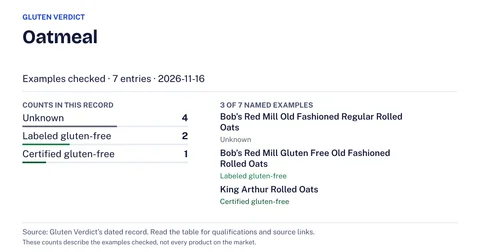 OatmealDepends on the productchecked Nov 16, 2026
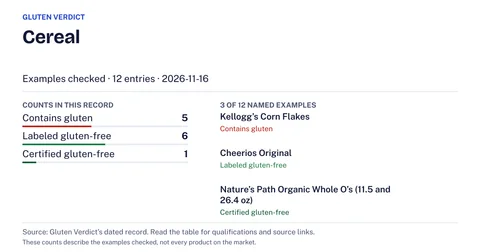 CerealDepends on the product5 of 12 products we checked contain glutenchecked Nov 16, 2026
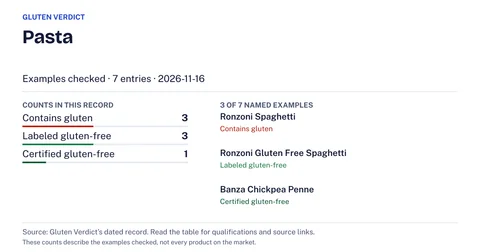 PastaContains glutenchecked Nov 16, 2026
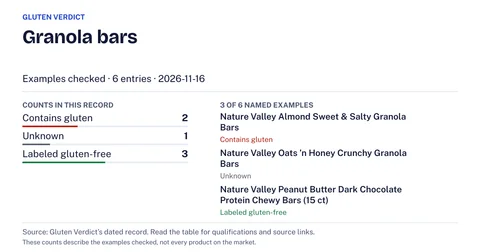 Granola barsDepends on the product2 of 6 products we checked contain gluten: Nature Valley Almond Sweet & Salty Granola Bars and Nature Valley Cinnamon Brown Sugar Soft-baked Oatmeal Squareschecked Nov 16, 2026
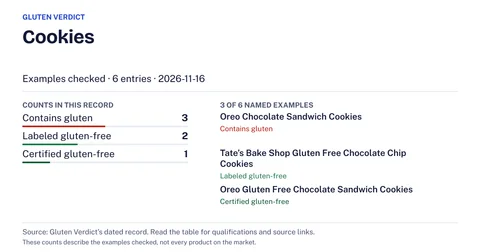 CookiesContains glutenchecked Nov 16, 2026
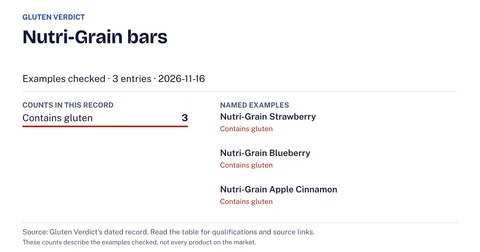 Nutri-Grain barsContains glutenKellogg’s · checked Nov 16, 2026
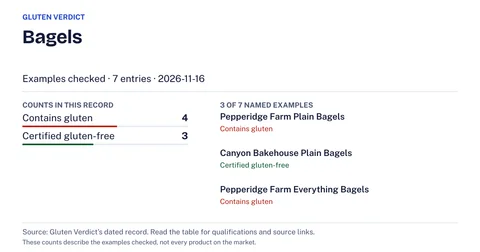 BagelsContains glutenchecked Nov 16, 2026
Questions people ask
Does a gluten-free diet cause weight gain in celiac disease?
A meta-analysis of 45 studies found mean BMI rose during a gluten-free diet, but only 9% of patients moved from underweight or normal into overweight or obese2, 12. In one US study, mean BMI went from 24.0 to 24.61.
Can you have celiac disease and be overweight?
Yes. In the meta-analysis, 14% of patients were overweight and 6% obese at diagnosis, while 67% were in the normal BMI range6.
Do gluten-free foods have more sugar and fat?
Some do. NIDDK says some packaged gluten-free foods may be higher in fat and sugar than the same foods that contain gluten3; a Spanish comparison found some, but not all, had more fat and sugar7.
Will going gluten-free help someone without celiac disease lose weight?
NIDDK says researchers have found no evidence that a gluten-free diet promotes better health or weight loss for the general population8.
More in Nutrition and combining diets
 Does a gluten-free diet help you lose weight?What reviews, NIDDK and celiac charities report about a gluten-free diet and weight outside celiac disease, and what the substitute foods contain.
 Does a gluten-free diet change blood sugar? What each study measuredRead the BMJ heart-disease cohort, the type 2 diabetes cohort, a pasta glucose trial and celiac and type 1 diabetes sources by what each measured.
 Is a gluten-free diet healthy if you do not have celiac disease?What a gluten-free label promises, what studies of gluten-free products and eaters report, and why testing comes before cutting gluten.
 Gluten-free with type 2 diabetes or high cholesterol: where the plans overlapWhere a gluten-free plan and a diabetes or cholesterol plan agree, where packaged gluten-free foods cut across them, and what to ask a dietitian.
 Fiber on a gluten-free diet: where it drops and what fills the gapCheck the fiber on gluten-free breads and pastas against the US Daily Value, and see which gluten-free whole foods charities list to add more.
 Iron, B12 and B6 on a gluten-free diet: where they come from and how to check a labelWhich foods supply iron, B12 and B6, what US enrichment standards name, and how to check whether a gluten-free flour, bread or cereal is fortified.
Related guides
 Oats and celiac disease: what a gluten-free oat label does and does not tell youWhat FDA’s rule covers for oats, how makers get oats to the gluten-free limit, what avenin studies found, and what to ask your doctor.
 Nutrient deficiencies in celiac disease: what the guidance names for checkingWhich nutrients a celiac guideline and a charity's clinician page name for checking, where reported deficiency figures differ, and questions to bring.
 Grieving foods after a celiac diagnosis: what people describe and where to get helpSadness or anger about food after a celiac diagnosis: what charities and research report, small steps the sources name, and when to call a provider or 988.
 Your first 30 days after a celiac diagnosis: a week-by-week planA week-by-week plan for the first month after a celiac diagnosis: label rules, kitchen changes, a dietitian, follow-up tests and questions for your doctor.
Sources
- [1, 9, 10, 11, 14, 17, 42] PubMed (NCBI), Kabbani et al. 2012, Body mass index and the risk of obesity in coeliac disease treated with the gluten-free diet (abstract), checked Nov 17, 2026.
- [2, 5, 6, 12, 13, 15, 16, 18, 19, 23, 26] Nutrition Reviews, via PubMed Central, Barone et al. 2022, Risk of obesity during a gluten-free diet in pediatric and adult patients with celiac disease, checked Nov 17, 2026.
- [3, 8, 39, 40] NIDDK, National Institutes of Health, Eating, Diet, & Nutrition for Celiac Disease, checked Nov 17, 2026.
- [4, 20, 24, 37] American College of Gastroenterology, ACG Guidelines Update: Diagnosis and Management of Celiac Disease (2023), checked Nov 17, 2026.
- [7, 30, 31, 32] PubMed (NCBI), Babio et al. 2020, A comparison of the nutritional profile and price of gluten-free products and their gluten-containing counterparts available in the Spanish market (abstract), checked Nov 17, 2026.
- [21, 27, 28, 29, 33, 34] Gluten Intolerance Group, Weight Management and the Gluten-Free Diet, checked Nov 17, 2026.
- [22, 25, 35, 36, 38, 43] Gluten Intolerance Group, Healthy Weight Gain in Celiac Disease, checked Nov 17, 2026.
- [41] Coeliac UK, Keeping a balanced gluten free diet, checked Nov 17, 2026.