Asking an employer for celiac-related accommodations: what the ADA, EEOC and JAN say
Short answer
You can ask in plain words, aloud or in writing, as long as you connect the change to a medical condition1, 2, 35. Whether celiac disease meets the ADA’s definition of disability is decided for each person3, and the statute does not mention it4 while the EEOC’s regulation does not name it among its examples5.
Part of Explaining celiac and everyday social life, 15 guides

Key points
- A request can be spoken and needs no ADA wording, but it has to link the change to a medical condition1, 2.
- The EEOC’s regulation covers employers with 15 or more employees6; federal employees follow a different complaint process7.
- An employer may ask for reasonable documentation when the disability or need is not obvious, but in most situations not for complete medical records8, 9.
- The employer may choose among effective accommodations; the employee’s preference gets primary consideration10.
- An EEOC charge generally must be filed within 180 or 300 calendar days, and an internal grievance generally does not extend that11, 12.
Do you have to tell your employer?
JAN, the Job Accommodation Network, says there is generally no obligation to disclose disability-related information to an employer until the need for reasonable accommodation becomes apparent77. The EEOC says you may ask for a reasonable accommodation at any time during employment, including when you did not ask at hiring78.
Timing can matter. The EEOC says it may be in an employee’s interest to ask before performance suffers or conduct problems occur79, and JAN reports the EEOC’s position that an employer does not have to rescind discipline or a poor evaluation simply because an employee has since disclosed a disability or asked for accommodation80.
Who to tell: JAN says to inform someone who can act on a request, such as a manager, supervisor or human resources professional81. Many employers have their own procedure, and JAN suggests checking the employee handbook or intranet82.
What counts as an accommodation request
Under the ADA’s employment rules, not making reasonable accommodations for the known limitations of an otherwise qualified employee with a disability is a form of discrimination, unless the employer can show that the accommodation would impose an undue hardship13. The EEOC’s regulation counts, among reasonable accommodations, changes that let an employee with a disability enjoy equal benefits and privileges of employment, as are enjoyed by similarly situated employees without disabilities14.
To ask, an employee may use “plain English” and need not mention the ADA or the phrase “reasonable accommodation”1. What the ask has to do is connect the change to a medical condition. The EEOC’s own example of a request that falls short is an employee who wants a new chair because his is uncomfortable: the statement did not link the need for the chair to a medical condition2. JAN, which the Department of Labor funds15, puts the test the same way: when someone makes it known that a change is needed at work for a medical reason, that is a request16.
JAN adds that the responsibility to ask generally falls on the employee, and that employers are not expected to assume someone has a disability or to guess what accommodation is needed17.
A request is “the first step in an informal, interactive process”18. It does not by itself mean the employer must provide the change19.
Which employers the ADA reaches
In the EEOC’s regulation an employer is a person engaged in an industry affecting commerce with 15 or more employees for each working day in each of 20 or more calendar weeks in the current or preceding calendar year6. Federal employees and job applicants have similar protections but a different complaint process7. This page does not cover state or local laws.
This guide covers the federal ADA. It does not cover employers under the 15-employee line, or state and local laws; JAN notes that some state laws, such as California’s, restrict employers from requesting a diagnosis or asking for detailed medical information83. It does not cover the laws of other countries.
Federal employees: the EEOC’s leave guidance says it also applies to federal employees under section 501 of the Rehabilitation Act, which has the same non-discrimination requirements as the ADA84. The complaint steps for a federal agency differ, as the last section notes.
Does celiac disease meet the ADA’s definition of disability?
The statute lists eating among the major life activities20, and the operation of a major bodily function, including digestive and immune functions, as a major life activity too21. The NIDDK describes celiac disease as a chronic digestive and immune disorder that damages the small intestine and is triggered by eating foods containing gluten22.
Whether a particular person’s celiac disease meets the definition is decided on that person’s facts3. The EEOC’s regulation says “substantially limits” is to be construed broadly in favor of expansive coverage and “is not meant to be a demanding standard”23, and also that not every impairment will constitute a disability24.
For some impairments the regulation says the assessment “should be particularly simple and straightforward”25. Its examples name diabetes, cancer, epilepsy and others; celiac disease is not among them5.
Two more lines of the regulation bear on a condition that is managed by treatment. The NIDDK says doctors treat celiac disease by helping people follow a gluten-free diet26. The regulation says the assessment is made without regard to the effect of mitigating measures27, and that burdens associated with following a particular treatment regimen may be considered28. The statute does not mention celiac disease4 and the regulation does not name it5, so a disputed case turns on its facts; JAN offers free guidance on workplace accommodations29.
The EEOC’s accommodation guidance used in the sections below was issued before the 2008 amendments (ADAAA), which, the EEOC notes on the page, broadened the statutory definition of disability30. Use that guidance for how the process works, and read the definition from the statute and regulation above.
What JAN’s public pages list for dietary needs
JAN provides free, expert and confidential guidance on workplace accommodations29. It is funded by the Department of Labor’s Office of Disability Employment Policy15.
JAN’s “Dietary Needs” page says individuals may have limitations related to dietary needs, including people with allergies, people who take certain medications, and employees who must eat certain foods or at certain times31. Under “Solutions” it lists Flexible Schedule, Mini Refrigerators/ Electric Coolers and Policy Modification; the page does not mention celiac disease or gluten32. JAN’s A to Z list has entries for Food Allergy, Diabetes and Dietary Needs, but none named Celiac Disease33.
JAN’s sitemap also lists a Celiac Disease page for individuals. When we requested it, the page asked for a login instead of showing content, so we cannot say what it holds34.
Ask informally or put it in writing?
Either works under the ADA. The EEOC says requests need not be in writing and may be made in conversation or any other mode of communication35. JAN says an employee has no obligation to submit a request in writing or on a form, and that no federal government-issued or required ADA forms exist36.
- A spoken ask counts if it links the change to a medical condition1, 2.
- A written ask leaves a record. JAN notes that it can be useful to document a request in case of a later dispute about whether or when it was made37. A JAN writer says they often suggest employees consider a written request, so they can decide what to say without the stress of a face-to-face meeting38.
- An employer may write a letter confirming a spoken request, or ask the employee to fill out a form or put the request in writing, but may not ignore the initial request39.
- If a change is already open to employees without disabilities, JAN says asking for it is not necessarily an accommodation request40.
If you are the manager
JAN says an employer that is unsure whether an employee has asked for an accommodation may ask the employee to clarify what is being requested and why41. The EEOC says an employer may ask an employee with a known disability whether a reasonable accommodation is needed when it reasonably believes one may be42. Respond quickly: the EEOC says an employer should respond expeditiously43.
What a short request contains
The EEOC says an employee does not have to specify the precise accommodation but does need to describe the problem the workplace barrier poses, and that the employee’s suggestions may help the employer choose44. JAN’s three sample letters (Back Condition, Allergies, Mental Health) share a shape: each describes a medical issue and what it does at work, offers ideas, asks for a reply within a week, and copies appropriate individuals. None is about food, diet or celiac disease45.
A short letter built from those two descriptions, in this order (the outline is ours; the sources above support each element):
- Date, your name, and who it goes to.
- Say that you are asking for a workplace change for a medical reason, and name the barrier, for example a rule that keeps you from eating at your desk or a catered meeting with no option you can eat2, 44.
- Name the specific change you are asking for, and say you are open to other ideas44.
- Ask for a reply by a date you pick; JAN’s samples ask for one within a week45.
- Keep a copy; JAN notes that documenting a request can help if there is a later dispute about whether or when it was made37.
Our guide to the office side of the diet, catered lunches, the office fridge and business trips, covers what to ask for in practice.
Do you have to name your diagnosis?
JAN says the EEOC has no formal guidance on this85. Under the ADA, employers may be able to insist on knowing the name of the impairment, and some state laws restrict that83. JAN notes an employee may begin with a more general description of the condition86, but a limited description will not always be enough, and the employer may then request reasonable documentation87.
What an employer may ask for
When the disability or the need for the accommodation is not obvious, the EEOC says the employer may ask for reasonable documentation about the disability and functional limitations8. That means only the documentation needed to establish an ADA disability and that the disability necessitates an accommodation46. In most situations an employer cannot ask for a person’s complete medical records9, and JAN adds that an employer should not use a general release for all medical records47.
The EEOC also says an employer cannot ask for documentation when the disability and the need are both obvious, or when the employee has already provided enough information48. JAN describes sufficient documentation as covering the nature, severity and duration of the impairment, the activities it limits, how far it limits them, and why the requested accommodation is needed49. Per JAN, citing the EEOC, the provider does not have to be a medical doctor50.
Timing: JAN says the ADA sets no time limit for providing documentation, an employer’s policy may set one, and ten to fifteen business days may be reasonable51. If documentation is requested and the employee refuses to provide it when the disability or need is not obvious, the EEOC says the employee is not entitled to the accommodation52.
JAN says sufficient documentation describes the nature, severity and duration of the impairment, the activities it limits, the extent of the limitation, and why the requested accommodation is needed49. JAN’s separate guidance for medical professionals adds that:
- Employers tend to place more value on documentation on professional letterhead, and some will not accept it otherwise88.
- The letter covers the diagnosed impairment, or a more general statement if the patient is hesitant, though documentation may be considered insufficient if the employer insists on the diagnosis and it is withheld89.
- It says which major life activity the impairment substantially limits90.
- It describes the limitations causing work problems and any accommodation ideas the clinician and patient have91.
Common food-related requests and what the agencies say about each
| Request | What the agencies say |
|---|---|
| A place in a fridge | The EEOC says an employer is not required to provide personal-use amenities such as a hot pot or refrigerator if those items are not provided to employees without disabilities53. Its example of a policy an employer might have to modify, to let an employee bring in a small refrigerator or use the employer’s, is about storing medication54. JAN’s Dietary Needs page lists mini refrigerators and electric coolers under solutions32. |
| Eating at your desk despite a no-food rule | The EEOC’s example is an employee with insulin-dependent diabetes who must eat at once to avoid insulin shock; it says the employer must modify the policy absent undue hardship55. |
| Break timing or a modified schedule | The EEOC says a modified schedule may involve adjusting arrival or departure times or providing periodic breaks56. |
| Food at meetings, parties and company outings | The EEOC counts employer-sponsored parties and other social functions, cafeterias and lounges among the benefits and privileges of employment57. If an employee needs an accommodation to have an equal opportunity to take part, the employer must provide it unless it shows undue hardship58. The Gluten Intolerance Group suggests asking early for a gluten-free option when a meeting will be catered59, and for a party, requesting one or offering to bring one60. |
| Shelf and cupboard space | This is the Gluten Intolerance Group’s suggestion, not an agency rule: store gluten-free items on the top shelf, well-packaged and labeled61, and ask whether one cupboard or specific upper shelves can be dedicated to gluten-free food or utensils62. |
| Meals on a business trip | The EEOC guidance has no mention of celiac disease, gluten or meals on a business trip63. |
Because neither the EEOC guidance63 nor JAN’s Dietary Needs page32 mentions celiac disease or gluten, the rows above are the closest published language, not rulings on celiac disease; the nearest examples, for eating at a workstation and for a refrigerator, concern diabetes and medication55, 54.
If the team orders from a chain, our Chipotle and Panera verdicts show what each chain’s own pages said about gluten and when we read them. Recipes and menus change, so check the current page before an order.
Time off for follow-up care
On the employment side, the EEOC lists leave among possible accommodations: a modified schedule may include accrued paid leave or additional unpaid leave56, and it may be a reasonable accommodation to grant leave so an employee can obtain treatment92. The regulation says a person with a record of a substantially limiting impairment may be entitled to accommodation related to the past disability, for example leave or a schedule change to attend follow-up or “monitoring” appointments after the impairment no longer substantially limits a major life activity93.
A request for leave is itself an accommodation request. The EEOC says an employer must treat a request for leave for a medical condition as one under the ADA, but may provide the leave under its own leave program or the FMLA if that covers it94.
FMLA, in the EEOC’s description: it requires employers with 50 or more employees to provide up to 12 weeks of leave per year to eligible employees95, who have worked for the employer at least 12 months and 1,250 hours in the prior 12 months, at a site with at least 50 employees within 75 miles96. The EEOC’s position is that FMLA compliance does not necessarily meet an employer’s ADA obligation, and exceeding the FMLA’s limit is not, by itself, undue hardship97. We could not open the Department of Labor’s own FMLA pages, so check them for current rules.
If the answer is no, slow or silence
An employer does not have to provide an accommodation that would cause an undue hardship. The EEOC defines that as significant difficulty or expense, measured against the resources and circumstances of the particular employer64, and says each accommodation must be assessed case by case65. Undue hardship cannot be based on a negative impact an accommodation might have on other employees’ morale66.
A different offer is not necessarily a refusal. The EEOC says the employer may choose among reasonable accommodations as long as the one chosen is effective67, and that the individual’s preference should be given primary consideration, with the employer having the ultimate discretion between effective options10.
The EEOC also addresses delay and silence. It says unnecessary delays can result in a violation of the ADA68, and that failure to initiate or take part in an informal dialogue after a request could result in liability69.
The EEOC charge clock
In general, a charge with the EEOC must be filed within 180 calendar days of the discrimination, extended to 300 calendar days if a state or local agency enforces a law prohibiting discrimination on the same basis11. Those limits generally are not extended while you try to resolve a dispute through an internal grievance procedure, a union grievance, arbitration or mediation12. A charge is required before a job discrimination lawsuit under the laws the EEOC enforces, except the Equal Pay Act70. The EEOC says a charge can be completed through its Public Portal after you submit an online inquiry and are interviewed71. Federal employees and job applicants have a different complaint process and generally must contact an agency EEO Counselor within 45 days76.
This page reports what the agencies publish. It is not legal advice, and it does not say whether your situation is covered. For that, ask JAN, the EEOC or an employment lawyer.
What to say to coworkers once something is in place
The EEOC says an employer may not disclose that an employee is receiving a reasonable accommodation, because that usually amounts to disclosing a disability72. If a coworker asks why you are getting “different” treatment, the employer may respond by emphasizing its policy of assisting any employee who has difficulties in the workplace73.
What you tell colleagues is your choice: as long as there is no coercion by the employer, an employee may voluntarily disclose the disability or the accommodation to coworkers74. The Gluten Intolerance Group suggests letting your manager and co-workers know your dietary restrictions and helping them understand what gluten-free means75. For words to use, see our guide on explaining celiac disease to friends and family.
Verdicts in this guide
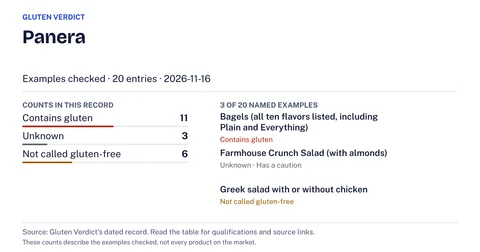
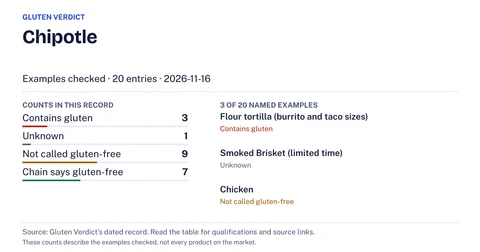
Questions people ask
Do I have to say “ADA” or “reasonable accommodation”?
No. The EEOC says plain English is enough1.
Is celiac disease a disability under the ADA?
The statute does not mention it4, and the EEOC’s regulation does not include it among its examples5. Whether an impairment substantially limits a major life activity is an individualized assessment3.
Can my employer ask for my complete medical records?
In most situations the EEOC says no: an employer may require only the documentation needed to establish an ADA disability and the need for the accommodation46, 9.
Can my employer offer a different fix than the one I asked for?
Yes, if the one it picks is effective. The employee’s preference gets primary consideration, but the employer has the ultimate discretion between effective accommodations10.
Does a small employer have to follow the ADA?
The EEOC’s regulation defines an employer as one with 15 or more employees for each working day in each of 20 or more calendar weeks in the current or preceding calendar year6. State and local laws are outside this page.
Can I keep my diagnosis private when I ask?
JAN says the EEOC has no formal guidance on this85. Employers may be able to insist on the name of the impairment, and some state laws limit that83.
Where can I get free guidance?
JAN describes itself as a source of free, expert and confidential guidance on workplace accommodations98. Its site is askjan.org.
More in Explaining celiac and everyday social life
 What to say to someone with celiac disease, and what to skipSentences to use, and ones to skip, when you cook for, eat out with or work beside someone with celiac disease, each tied to the fact behind it.
 Gluten-free at work: catered lunches, client dinners, the office kitchen and business tripsWhat to ask a caterer, say to a server, label in the office fridge and carry on a business trip, from GIG, NIDDK, FDA and a chain's own allergen page.
 How to tell a host or relative you have celiac diseaseWhat to send a host before the meal, the cross-contact rule in one sentence, questions to ask about a dish, bringing your own, and how to pass on a dish.
 Dating with celiac disease: when to tell, what to say, and what has been published about kissingWhen people with celiac disease tell a date, how to word the message, and what GIG and a 2026 study report about kissing, each quoted.
 How to explain celiac disease to friends and familyA three-sentence explanation of celiac disease, then sourced replies to the usual questions: allergy, fad, how strict, and what to cook.
 When a relative says a little gluten won’t hurt: what to say, and what to let goOne-line replies for the relative who scrapes off croutons or says one bite is fine, each with its source, plus what to push back on and what to let go.
Related guides
 When gluten-free eating wears you down: fewer decisions, same rulesEase gluten-free burnout with routines: check each product once, set a standing plan for eating out, and know which rules stay fixed.
 Celiac disease and joining the US military: what the DoD medical standards sayWhat the Department of Defense medical standards say about celiac disease, how waivers are decided, and what to ask a recruiter.
 Your first 30 days after a celiac diagnosis: a week-by-week planA week-by-week plan for the first month after a celiac diagnosis: label rules, kitchen changes, a dietitian, follow-up tests and questions for your doctor.
 Your first restaurant meal after a celiac diagnosisHow to pick a place, call ahead, ask the kitchen the right questions and decide what to do when answers are vague, for a first meal out.
Sources
- [1, 2, 8, 9, 10, 18, 19, 30, 35, 39, 42, 43, 44, 46, 48, 52, 53, 54, 55, 56, 57, 58, 63, 64, 65, 66, 67, 68, 69, 72, 73, 74, 78, 79, 92] US Equal Employment Opportunity Commission, Enforcement Guidance on Reasonable Accommodation and Undue Hardship under the ADA, checked Nov 17, 2026.
Read on 2026-11-17: the page has no mention of celiac disease or gluten and no mention of diet or meals for a dietary need; its only business-trip mention is an example about a deaf employee.
- [3, 5, 6, 14, 23, 24, 25, 27, 28, 93] US Equal Employment Opportunity Commission (29 CFR 1630.2, via eCFR), Regulations to Implement the Equal Employment Provisions of the ADA: 29 CFR 1630.2 Definitions, checked Nov 17, 2026.
Read on 2026-11-17: the examples in paragraph (j)(3)(iii) name deafness, blindness, intellectual disability, missing limbs or mobility impairments requiring a wheelchair, autism, cancer, cerebral palsy, diabetes, epilepsy, HIV infection, multiple sclerosis, muscular dystrophy, and major depressive disorder, bipolar disorder, post-traumatic stress disorder, obsessive compulsive disorder and schizophrenia; celiac disease is not named in the section.
- [4, 13, 20, 21] US Department of Justice (ADA.gov), Americans with Disabilities Act of 1990, as amended (statute text), checked Nov 17, 2026.
Read on 2026-11-17: the text of the statute on the page does not mention celiac disease or gluten.
- [7, 70, 71] US Equal Employment Opportunity Commission, Filing a Charge of Discrimination, checked Nov 17, 2026.
- [11, 12, 76] US Equal Employment Opportunity Commission, Time Limits For Filing A Charge, checked Nov 17, 2026.
- [15, 29] Job Accommodation Network (JAN), About JAN, checked Nov 17, 2026.
- [16, 17, 36, 37, 40, 41] Job Accommodation Network (JAN), Recognizing an Accommodation Request Under the ADA, checked Nov 17, 2026.
- [22] National Institute of Diabetes and Digestive and Kidney Diseases (NIDDK), Definition & Facts for Celiac Disease, checked Nov 17, 2026.
- [26] National Institute of Diabetes and Digestive and Kidney Diseases (NIDDK), Treatment for Celiac Disease, checked Nov 17, 2026.
- [31, 32] Job Accommodation Network (JAN), Dietary Needs, checked Nov 17, 2026.
Read on 2026-11-17: under “Solutions:” the page lists Flexible Schedule, Mini Refrigerators/ Electric Coolers and Policy Modification; the page does not mention celiac disease or gluten.
- [33] Job Accommodation Network (JAN), A to Z of Disabilities and Accommodations, checked Nov 17, 2026.
Read on 2026-11-17: JAN’s “A to Z of Disabilities and Accommodations” list has entries named Food Allergy, Diabetes and Dietary Needs; it has no entry named Celiac Disease.
- [34] Job Accommodation Network (JAN), Celiac Disease (individuals page listed in JAN’s sitemap), checked Nov 17, 2026.
Requested on 2026-11-17: this address, listed in JAN’s sitemap (https://askjan.org/sitemap.xml), returned a “Login Required” notice (“Login is required to access this page”) instead of content, so we could not read it.
- [38, 45] Job Accommodation Network (JAN), Sample Language for Accommodation Request Letters, checked Nov 17, 2026.
Read on 2026-11-17: the page carries three sample letters, headed Back Condition, Allergies and Mental Health. Each describes a medical issue and what it does at work, then offers accommodation ideas (in the Mental Health letter, in a sentence rather than a list), asks the employer to let the writer know “in the next week”, and ends with “CC: to appropriate individuals”. None concerns food, diet or celiac disease.
- [47, 49, 50, 51] Job Accommodation Network (JAN), Requests For Medical Documentation and the ADA, checked Nov 17, 2026.
- [59, 60, 61, 62, 75] Gluten Intolerance Group, The Gluten-Free Office and Workplace, checked Nov 17, 2026.
- [77, 80, 81, 83, 85, 86, 87] Job Accommodation Network (JAN), A to Z: Disability Disclosure and the Americans with Disabilities Act (ADA), checked Nov 17, 2026.
- [82] Job Accommodation Network (JAN), Dos and Don’ts of Disclosure, checked Nov 17, 2026.
- [84, 94, 95, 96, 97] US Equal Employment Opportunity Commission, Employer-Provided Leave and the Americans with Disabilities Act, checked Nov 17, 2026.
- [88, 89, 90, 91] Job Accommodation Network (JAN), Practical Guidance for Medical Professionals: Providing Sufficient Medical Documentation in Support of a Patient’s Accommodation Request, checked Nov 17, 2026.
- [98] Job Accommodation Network (JAN), JAN home page, checked Nov 17, 2026.