When a relative says a little gluten won’t hurt: what to say, and what to let go
Short answer
For someone with celiac disease, a little gluten is not nothing: NIDDK says eating gluten triggers an immune reaction that damages the small intestine1, and Coeliac UK says even very small amounts can be damaging2. The reply that holds up is short, calm and as repeatable as you need it to be, in four moves:
- Say it is medical, in one line. Gluten Intolerance Group (GIG) suggests: “I appreciate that, but even a small amount can make me sick, so I will skip this one.”3
- Name what touched the food. GIG’s example for a shared spoon: “I think that spoon touched the other dish, so I am going to pass on this one.”4
- Come with food of your own, and at a buffet ask to go first or set your portion aside5, 6.
- Do not argue the diagnosis: GIG says you do not have to engage with someone who questions your choices, and you can walk away when a conversation turns negative7, 8.
Part of Explaining celiac and everyday social life, 15 guides
Key points
- NIDDK describes celiac disease as an immune disorder triggered by eating gluten, treated with a gluten-free diet for life9, 10.
- Cross-contact is about gluten particles reaching food meant to be gluten-free; GIG’s 25-ways page has no sentence saying that lifting a topping off fixes it11, 12.
- In one study, samples of mayonnaise and peanut butter spread with a knife used on gluten-containing bread were above FDA’s 20 ppm limit13, 14.
- Feeling fine afterwards proves little: a 2021 paper says exposure in celiac disease causes changes in the small intestine that may or may not come with digestive distress15.
- You do not have to win the argument: GIG says not everyone will understand or accommodate your needs, and that is okay16.
“It’s only a little”
The reply: “It’s medical for me, and even a small amount can make me sick, so I’ll skip this one.” GIG suggests almost these words for someone who says a little bit won’t hurt, and adds that you can stay calm and kind and simply repeat what you need3.
The fact under it: NIDDK says that in people who have celiac disease, consuming gluten triggers an abnormal immune system reaction that damages the small intestine1. Coeliac UK, a UK charity, lists “A breadcrumb won’t hurt someone with coeliac disease” as a myth and says even very small amounts of gluten can be damaging2.
How much is less settled. A systematic review of dose-response studies says relapse might happen even with a very low dose of gluten and that the length of exposure also matters, and its authors add that the current literature has substantial limitations17. NIDDK separately says that if symptoms continue or come back after you start a gluten-free diet, you may still be eating or drinking a small amount of gluten18.
These pages report what NIH, charities and published studies say. What any of it means for your own care is a question for your doctor or dietitian.
“I’ll just scrape it off” or “I’ll pick out the croutons”
The reply: “Once it has touched the food, I can’t tell what stayed behind, so I’ll pass. Thank you for thinking of me.”
The fact under it: GIG defines cross-contact as gluten crumbs or particles getting into gluten-free ingredients or food in amounts that could cause an adverse reaction11. NIDDK defines it as foods that contain gluten coming into contact with gluten-free foods19. Both definitions are about contact, and neither says the food is fine once the visible part is taken off. On GIG’s 25-ways page we found no sentence saying that removing a gluten-containing item from a dish makes the dish gluten-free12.
GIG’s salad bar entry is a ready example to give a relative: vegetables and fruit sit beside croutons, crackers and some dressings, and even if they are kept apart the serving utensils might be used in both20.
When the problem is a spoon that moved between dishes, GIG says to politely skip the dish and gives these words: “I think that spoon touched the other dish, so I am going to pass on this one. Thank you for understanding!”4
“I made it with gluten-free flour”
The reply: “Thank you for going to the trouble. The flour is one part of it; the pan, the board, the spoon and the butter need to be free of crumbs too.”
The fact under it: GIG says cross-contact takes place when food is prepared on common surfaces or with utensils and cookware that were not thoroughly cleaned after gluten-containing foods21. It says the following equipment deserves extra cleaning attention before a gluten-free meal22, and its list names wooden utensils, cutting boards, nonstick pans, a cast iron skillet, wooden rolling pins, food storage containers, waffle irons, cake pans and muffin tins, and sink sponges23.
| What happened | What the sources say | Where to look here |
|---|---|---|
| Cooked with “gluten-free flour” while wheat flour was out | GIG says gluten-containing flours may be airborne and settle on surfaces, utensils and gluten-free products24. In one pilot study in commercial kitchens by Coeliac UK staff, petri dishes of rice pudding needed a distance of 2 m from wheat flour use to hold gluten at or under 20 ppm after 4.0 hours of flour use25, 51. | Flour |
| Spread the shared butter or jam | Coeliac UK’s tips include separate jam, butter, mustard and mayonnaise26. GIG says even a crumb from shared butter can trigger symptoms in someone with celiac disease27. | Butter |
| Toasted the bread in the household toaster | Coeliac UK suggests a clean grill, a separate toaster or toaster bags for gluten-free toast28. | Bread |
| Fried in the usual oil | Coeliac UK says to avoid frying food in oil that has previously been used for foods that contain gluten29. | French fries |
| Made a sauce or gravy | GIG’s list of questions to ask includes whether the sauces, gravies or seasonings contain flour, soy sauce or broth30. | Soy sauce |
For the full kitchen picture, see gluten cross-contact at home and setting up a gluten-free kitchen.
“You didn’t get sick last time”
The reply: “Feeling fine afterwards isn’t how I decide. I’m passing on this one.”
The fact under it: a 2021 paper in Clinical Nutrition states that gluten exposure in those with celiac disease leads to pathological changes in the small intestine that may or may not be associated with gastrointestinal distress15. Coeliac UK adds that symptoms differ between individuals in type and severity31.
One Finnish study gave 25 adults with celiac disease low (1 to 3 g) or moderate (3 to 5 g) doses of gluten daily for 12 weeks32. Its authors report that in 22% of those who developed significant small-intestinal damage, symptoms remained absent33. Those were daily doses over weeks, so the study says nothing about a single bite. What it shows is that damage and symptoms can come apart33.
“Isn’t that just a fad?”
The reply: “It’s medically prescribed to me.” GIG gives that wording for the fad question34. Then change the subject.
The fact under it: NIDDK calls celiac disease a chronic digestive and immune disorder triggered by eating foods containing gluten9. Coeliac UK says it is not a food allergy or an intolerance but an autoimmune disease35, and NIDDK says doctors treat it by helping people follow a gluten-free diet36.
You do not owe a longer answer: GIG says that if someone questions the validity of your choices, you do not have to engage in conversation with them7.
When the relative is the cook: questions in place of an argument
Before the meal, GIG suggests telling the host about your dietary needs when the invitation arrives and explaining what cross contact is and why it matters37. NIDDK likewise lists letting the host know you have celiac disease and finding out whether gluten-free foods will be available38. Our guide on telling hosts and relatives has wording for that call.
At the table, GIG’s list of questions replaces an argument with facts the cook can answer:
- “Would you mind reading me the ingredient label on that?”30
- “How was this dish prepared?”30
- “Was the gluten-free dish prepared first?”30
- “Were the pans, utensils, and surfaces washed between making the gluten-containing dish and the gluten-free one?” and, if so, “how were they washed?”30
- “Was anything fried in shared oil or cooked in the same pot as something with gluten?”30
- “Do the sauces, gravies, or seasonings contain flour, soy sauce, or broth?”30
If the answers leave you unsure, GIG says you can politely pass on the dish without explaining further, and suggests: “Thank you so much for checking, I am going to stick with what I brought, but it all looks wonderful.”39
If the relative gets defensive, GIG’s reading is that most of the time it comes from worry about getting it wrong, not from a lack of care, and that a warm tone and a thank-you can settle things quickly40.
Bring your own, go first, or walk away
- Bring something of your own: GIG says it never hurts to come prepared with a dish, a snack or a small meal5.
- At a buffet or potluck, GIG suggests asking to go first in line, or setting your portion aside before other dishes go around6.
- If the conversation turns into a put-down, GIG says to walk away, figuratively or literally8.
Our guide on Thanksgiving goes dish by dish through a holiday menu.
What to push back on, and what to let go
Not every sentence is worth a stand. These are the contact points the sources single out, and the social pressure the charity says you can drop.
| At the table | What the sources say |
|---|---|
| A serving spoon, knife or scoop that moved between a gluten-containing dish and yours | GIG calls double-dipping, or using the same serving utensil in both types of food, one of the most common ways gluten crumbs get into gluten-free food41. |
| A shared jar of mayonnaise, peanut butter or similar | In one study of sandwich spreads applied with a knife used on gluten-containing bread, mayonnaise and peanut butter samples were above the 20 ppm limit13, 14. |
| Oil used for breaded food | Coeliac UK says to avoid frying in oil previously used for foods that contain gluten29. |
| A kitchen where wheat flour is in use | GIG says there is a higher risk of cross-contact of gluten-free foods in the same space when baking with gluten-containing flour42. |
| In the conversation | What the sources say |
|---|---|
| Winning the argument | GIG says you do not have to engage with someone who questions your choices7. |
| Convincing every relative | GIG says not everyone will understand or accommodate your needs, and that is okay16; you may have to explain more than once43. |
| Apologizing | GIG says a boundary-setting statement is not an apology and should not include “I’m sorry”44. |
What studies of shared equipment say about how much contact matters
In the Parsons study of fryers, toasters and spread knives, the authors report small amounts of gluten cross-contact, though the majority of results (93.6%) showed no significant cross-contact45. A Swiss study of shared kitchenware found gluten was not detected in relevant, quantifiable amounts in the gluten-free bread and pasta it tested46, and put forward the hypothesis that shared ladles pose a higher risk than shared wooden spoons, colanders or knives47.
Those are results for particular foods and utensils, not a ruling on a dish a relative hands you. Our guide on what studies measured in shared kitchens goes through them.
Something for the relative to read later
Send a page written for them. Ours: what to say to someone with celiac disease and how to explain celiac disease to friends and family.
Short outside pages work too. NIDDK’s definition page calls celiac disease a chronic digestive and immune disorder that damages the small intestine, triggered by eating foods containing gluten9. Coeliac UK’s myths page includes the breadcrumb myth2. GIG’s page on supporting a gluten-free friend or relative lists five ways for them to help: learn the basics, host a gathering, be an ally at restaurants, don’t take it personally and celebrate wins48.
Verdicts in this guide
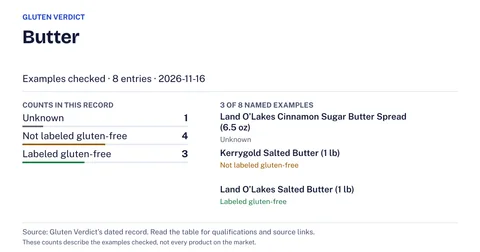 ButterNaturally gluten-freechecked Nov 16, 2026
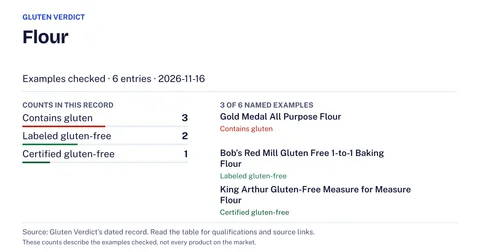 FlourContains glutenchecked Nov 16, 2026
 BreadContains glutenchecked Nov 16, 2026
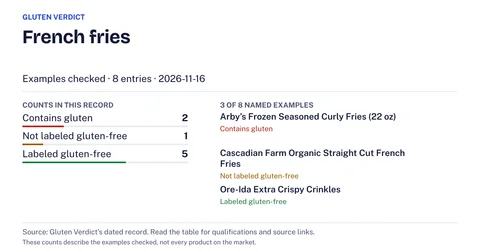 French friesDepends on the product2 of 8 products we checked contain gluten: Arby’s Frozen Seasoned Curly Fries (22 oz) and Checkers Frozen Crispy Seasoned Fries (28 oz)checked Nov 16, 2026
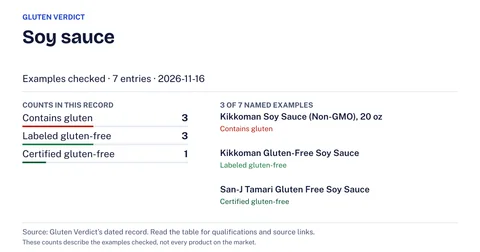 Soy sauceDepends on the product3 of 7 products we checked contain gluten: Kikkoman Soy Sauce (Non-GMO), 20 oz; San-J Organic Shoyu Soy Sauce; and Lee Kum Kee Premium Soy Sauce (No Preservatives Added)checked Nov 16, 2026
Questions people ask
Doesn’t FDA’s 20 ppm limit show a little gluten is fine?
FDA says 20 ppm is the lowest level that can be reliably detected with validated methods, and that most people with celiac disease can tolerate foods with very small amounts of gluten49. The limit is a federal definition for manufacturers that voluntarily label FDA-regulated foods gluten-free50; a dish cooked at a relative’s table is not a labeled product.
More in Explaining celiac and everyday social life
 How to tell a host or relative you have celiac diseaseWhat to send a host before the meal, the cross-contact rule in one sentence, questions to ask about a dish, bringing your own, and how to pass on a dish.
 How to explain celiac disease to friends and familyA three-sentence explanation of celiac disease, then sourced replies to the usual questions: allergy, fad, how strict, and what to cook.
 What to say to someone with celiac disease, and what to skipSentences to use, and ones to skip, when you cook for, eat out with or work beside someone with celiac disease, each tied to the fact behind it.
 When your partner has celiac disease: gluten-free home or split kitchenChoose between a gluten-free home and a split kitchen, and find what to say at restaurants and to family, with NIH and charity sources.
 When gluten-free eating wears you down: fewer decisions, same rulesEase gluten-free burnout with routines: check each product once, set a standing plan for eating out, and know which rules stay fixed.
 Gluten-free meals in a nursing home or assisted living: the rules and what to askWhich meal rules cover a nursing home or assisted living, what to ask on a tour, how to get a gluten-free diet into the care plan, and where to complain.
Related guides
 Gluten cross-contact at home: where it happens and what to do about itHow gluten reaches gluten-free food at home, whether to separate, wash or ask for each route, and which rules have lab data behind them.
 If you think you were glutened: what the celiac organizations say to doWhat the celiac charities, FDA and NIDDK say to do after accidental gluten exposure, when to contact a clinician, and how to trace the cause.
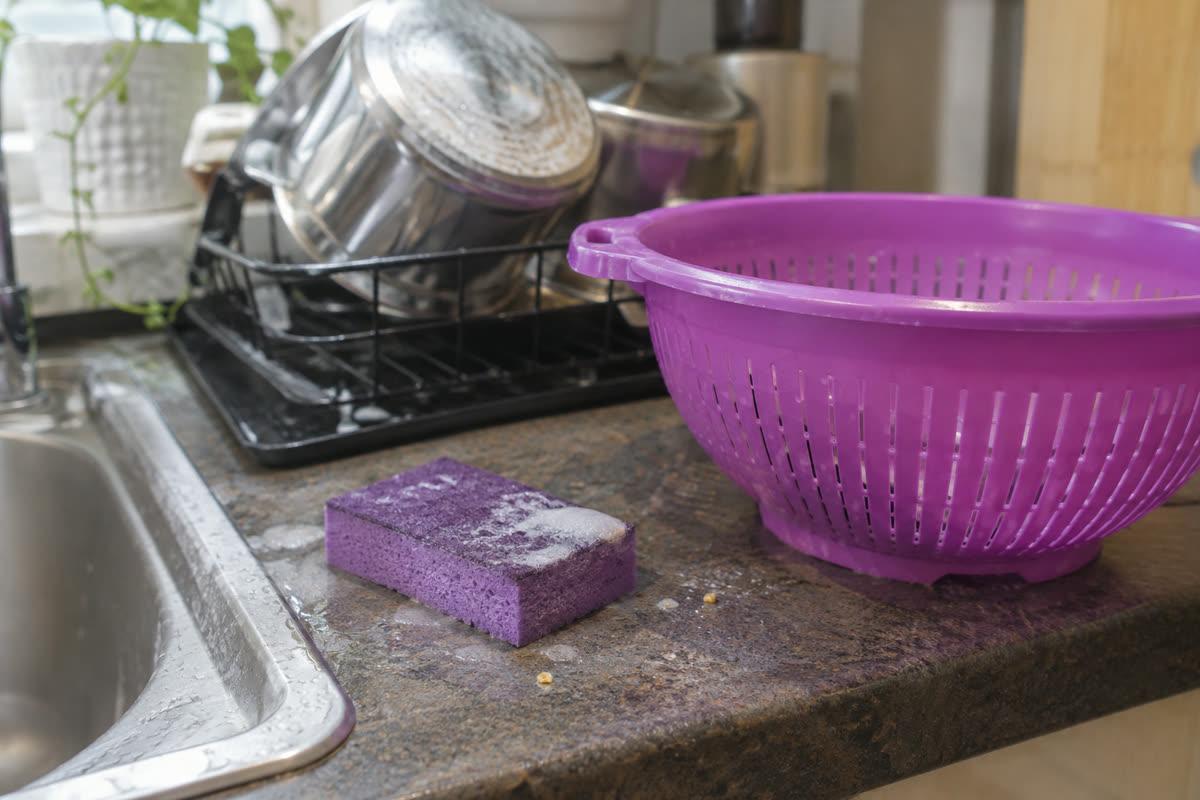 Setting up a gluten-free kitchen: what to replace, wash or shareWalk each kitchen zone and decide, item by item, what to replace, what to wash and what a mixed household can keep sharing, with charity sources.
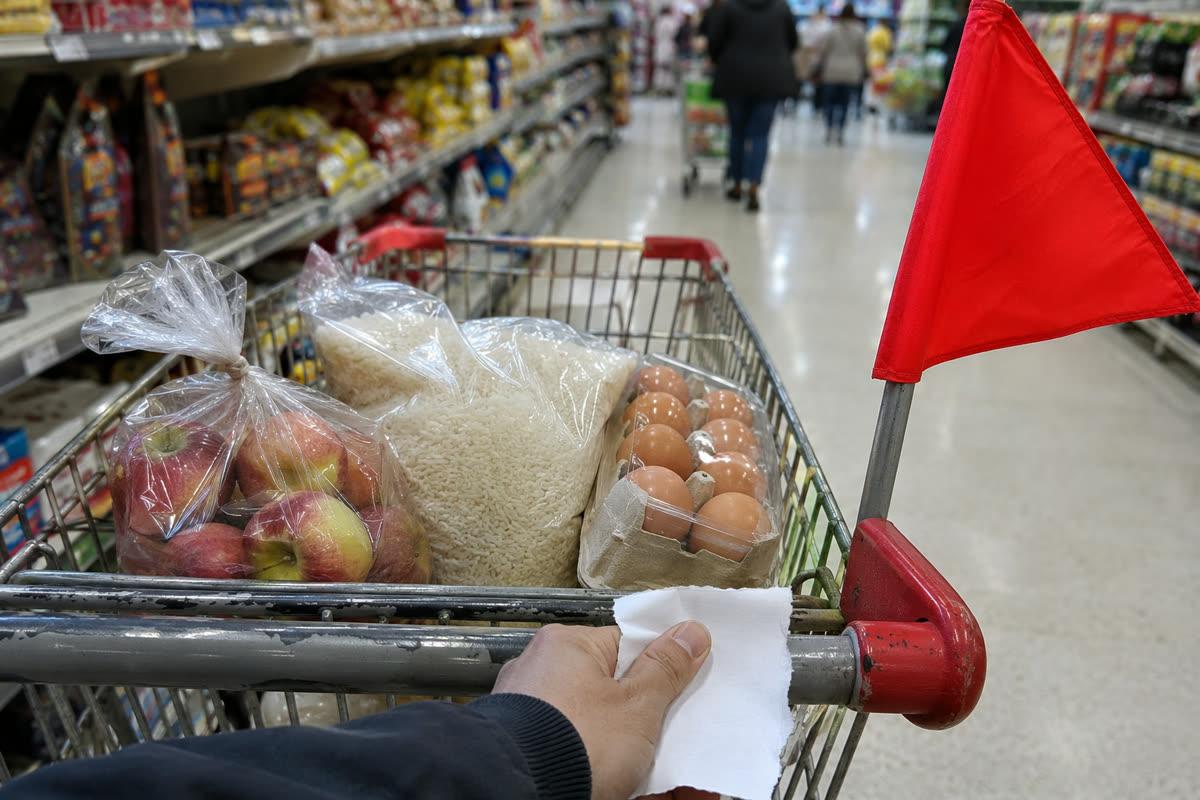 A gluten-free grocery list by aisle for US supermarketsAn aisle-by-aisle gluten-free grocery list for US stores: what needs no label, what needs a check, and what stays off the list.
Sources
- [1, 18, 36] US National Institute of Diabetes and Digestive and Kidney Diseases (NIDDK, NIH), Treatment for Celiac Disease, checked Nov 17, 2026.
- [2, 26, 28, 29, 31, 35] Coeliac UK, Common Coeliac Disease Myths Debunked, checked Nov 17, 2026.
- [3, 4, 5, 6, 30, 37, 39, 40] Gluten Intolerance Group, A Seat at the Table: Talking to Family About Your Gluten-Free Needs, checked Nov 17, 2026.
- [7, 8, 16, 44] Gluten Intolerance Group, Setting Healthy Boundaries When You’re Living Gluten-Free, checked Nov 17, 2026.
- [9] US National Institute of Diabetes and Digestive and Kidney Diseases (NIDDK, NIH), Definition & Facts for Celiac Disease, checked Nov 17, 2026.
- [10, 19, 38] US National Institute of Diabetes and Digestive and Kidney Diseases (NIDDK, NIH), Eating, Diet, & Nutrition for Celiac Disease, checked Nov 17, 2026.
- [11, 12, 20, 41] Gluten Intolerance Group, 25 Ways Cross-Contact Could Happen (And How to Avoid It), checked Nov 17, 2026.
Read on 2026-11-17: the page defines cross-contact as gluten crumbs or particles getting into gluten-free ingredients or food, and its salad bar entry names croutons among the gluten-containing items; no sentence says that removing a gluten-containing item from a dish makes the dish gluten-free.
- [13, 14, 15, 45] Clinical Nutrition (PubMed record), Gluten cross-contact from common food practices and preparations (Parsons and colleagues, 2021), checked Nov 17, 2026.
- [17] Nutrients (PubMed record), Systematic Review and Dose-Response Meta-Analysis on the Relationship between Different Gluten Doses and Risk of Coeliac Disease Relapse (Rostami-Nejad and colleagues, 2023), checked Nov 17, 2026.
- [21, 22, 23, 24] Gluten Intolerance Group, 7 Tips for Avoiding Gluten Cross-Contact at Home, checked Nov 17, 2026.
Read on 2026-11-17: the list that follows that sentence, under “Step 3. Clean carefully or keep separate.”, names wooden utensils, cutting boards, nonstick pans, a cast iron skillet, wooden rolling pins, food storage containers, waffle irons, cake pans and muffin tins, and sink sponges.
- [25, 51] Journal of Food Protection (PubMed record), Catering Gluten-Free When Simultaneously Using Wheat Flour (Miller, McGough and Urwin, Coeliac UK, 2016), checked Nov 17, 2026.
- [27, 48] Gluten Intolerance Group, I Heart My Gluten-Free Friends & Family, checked Nov 17, 2026.
Read on 2026-11-17: the page lists five ways to support a gluten-free friend or relative, headed “Learn the Basics About Gluten-Free Living”, “Host a Gluten-Free Gathering Everyone Can Enjoy”, “Be an Ally at Restaurants”, “Don’t Take It Personally” and “Celebrate Their Wins”.
- [32, 33] BMC Gastroenterology (PubMed record), Small-bowel mucosal changes and antibody responses after low- and moderate-dose gluten challenge in celiac disease (Lähdeaho and colleagues, 2011), checked Nov 17, 2026.
- [34, 43] Gluten Intolerance Group, Talking to Friends & Family About Living Gluten-Free, checked Nov 17, 2026.
- [42] Gluten Intolerance Group, Tips for Entertaining Your Gluten-Free Family and Friends This Holiday Season, checked Nov 17, 2026.
- [46, 47] Journal of Food Protection (PubMed record), Cross-Contamination with Gluten by Using Kitchen Utensils: Fact or Fiction? (Studerus and colleagues, 2018), checked Nov 17, 2026.
- [49, 50] US Food and Drug Administration, Gluten and Food Labeling, checked Nov 17, 2026.