Gluten-free pizza crust, pie crust and cookie problems: what the makers say
Short answer
Match the problem to the bake: the flour and mix makers name different levers for each, and none of the maker pages we read explains a gummy pizza15, 66. The levers they do name:
- Pizza: King Arthur says its gluten-free dough should be soft and sticky, and bakes the bare crust for 10 minutes before toppings for the crispiest result1, 2.
- Pie crust: King Arthur’s tips are cold butter, a chill of at least one hour, and a recipe developed for the flour you are using3, 4, 5.
- Cookies: King Arthur says gluten-free cookies are more prone to crumbly, dry and gritty results, and points to fat, xanthan gum and a rest of at least an hour6, 7, 8, 9.
Part of Gluten-free baking technique, 11 guides
Key points
- A sticky gluten-free pizza dough is intended by King Arthur: soft and sticky after mixing, and for a conventional pizza recipe it says to increase the water approximately 50%1.
- King Arthur and Bob’s Red Mill both describe their 1:1 flours for recipes without yeast, so a yeasted pizza dough is not a use either maker names for those flours10, 11.
- For pie crust, King Arthur names cold butter, a chill of at least one hour and a recipe made for the flour in hand; its pie crust mix may bake 5 to 10 minutes longer than a wheat crust3, 4, 5, 12.
- In one study replacing fat with a psyllium paste lowered cookie diameter and spread factor, and in another coarser maize flour raised them13, 14.
- The maker pages we read do not explain a gummy pizza, give prebake times for a gluten-free crust or says chilling stops cookie spread15, 16, 17.
Pizza: why the dough is sticky, and when that is intended
King Arthur’s page for its gluten-free pizza flour says the dough should be soft and sticky after mixing, and, for a conventional pizza recipe, to increase the water approximately 50%1. The mixing step of its Neapolitan-style recipe says the same: beat the ingredients briefly into a “soft, smooth, sticky dough”18. To keep it off your hands, the pizza flour page suggests rubbing about a teaspoon of olive oil into your palms before shaping, and says water also works19.
Bob’s Red Mill’s pizza crust mix is handled in its own way: add eggs, warm water and olive oil, then spread the dough on an oiled pizza pan20. The mix makes two 12-inch crusts21.
The two products are built differently. King Arthur’s Gluten-Free Pizza Flour is made with gluten-free wheat starch22, while Bob’s mix is built on brown rice, potato starch, millet, sorghum and tapioca flours with xanthan and guar gum23. That is a reason not to carry one product’s water amount over to the other.
Which flour the dough is built on
Two makers describe their 1:1 flours for recipes without yeast. King Arthur says to swap its Measure for Measure flour 1:1 only when the recipe is non-yeasted, and sends yeasted bakes like bread and pizza to a different section of its guide24. Bob’s Red Mill says its 1-to-1 flour replaces wheat flour cup for cup in non-yeast recipes11. A yeasted pizza dough made with either is therefore not a use either maker names for those flours. Our guide to 1-to-1, all-purpose and bread flour blends compares the blends.
King Arthur’s pizza flour page gives a water tip for using conventional pizza recipes1, and its baking guide says separately that it is best not to convert an existing yeast bread recipe and recommends recipes developed for gluten-free ingredients, naming its Gluten-Free Pizza Flour25.
On water and structure in general, a 2026 review of plant-derived hydrocolloids in gluten-free bakery describes them as additives that can stand in for gluten by improving dough rheology and water-holding capacity26. Our guide to xanthan, guar, psyllium and flax covers what each does.
Pizza: pale crust, soft middle and oven heat
King Arthur’s gluten-free Neapolitan-style recipe preheats the oven to 500°F with a baking stone or steel on the bottom rack27 and bakes the topped pizzas for 15 to 18 minutes28. Without a stone or steel it presses the dough onto a parchment-lined baking sheet and bakes on the middle rack29.
For a crisper crust, the recipe and the pizza flour page both say to bake the bare, untopped crust for 10 minutes, add sauce and toppings, and bake 8 to 10 minutes more30, 2. To bake on your own schedule, King Arthur says to cut the yeast to 1/8 teaspoon and refrigerate the dough for up to 24 hours after its first rise31.
Bob’s Red Mill’s pizza mix page gives no oven temperature or baking time32, so for that mix the numbers are on the package, not on the page we read.
A temperature belongs to its formula. In one study of a barnyard millet and soy flour pizza base, the best condition for that formula, judged on protein, fibre and hardness, was 147.56 ℃ for 8.67 minutes33, a different range from the 500°F in King Arthur’s recipe for its own flour. We cite it to show that heat is tied to a recipe, not as a setting to copy.
In another lab study, an all-rice-flour pizza dough with no pregelatinized flour showed coalesced bubbles and cracks in its baked structure under the microscope, and replacing 10% of the flour with a specially milled pregelatinized rice flour gave the best inner structure34. It is one result with a flour made for the study, so it shows that flour makeup changes structure, not a fix to copy.
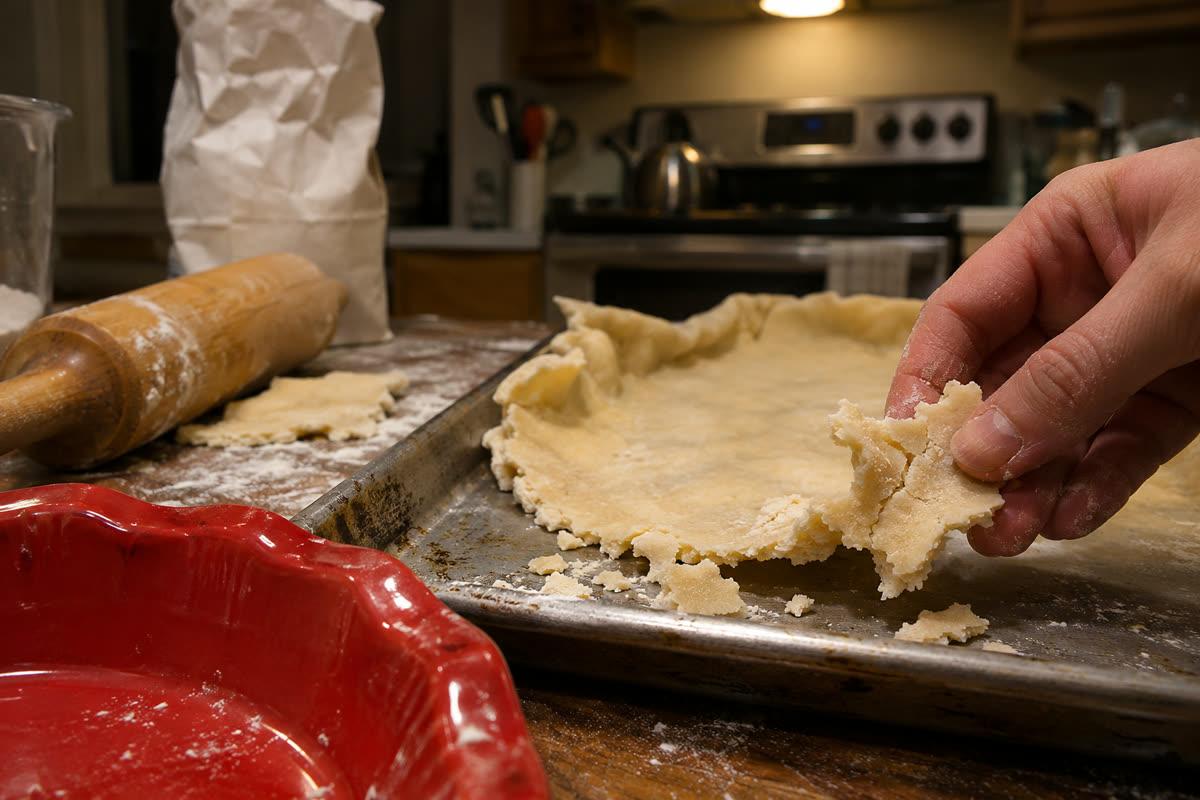
Pie crust: crumbly dough, cracks and trouble rolling
King Arthur describes the usual failure plainly: many gluten-free pie crust recipes you find online tend to not hold their shape, crumble going into the dish, or end up like a tart shell pressed into the pan35. Its nine tips, written around its own recipes, name these levers:
| Lever | What the page says |
|---|---|
| Start from a gluten-free recipe | Wheat crusts typically need different liquid and flour ratios, and swapping a gluten-free flour into a wheat recipe may give an unworkable crust36. |
| Pair the flour with its recipe | Each of its three recipes is developed for a specific flour, so do not swap one flour for another5. |
| Gums in the dough | Xanthan gum and Instant ClearJel in its recipe keep the crust pliable and easy to roll out37. |
| Handling | The author thinks working the butter in and adding the wet ingredients by hand gives a more flaky and delicate result than a food processor38. |
| Fat temperature | Cold butter makes the crust lighter and more flaky, and easier to work with3. |
| Chill | Chill the dough before rolling so the butter stays cold: at least one hour, or even overnight4. |
| Double crusts | A gluten-free dough is more delicate, so a double crust can be hard; the page suggests a lattice or a crumble topping if the dough will not cooperate39. |
| First attempt | Test a first gluten-free pie before the event40. |
Mix makers say less. King Arthur’s pie crust mix page says the mix rolls out easily41 and that the crust should bake until golden brown, which may take 5 to 10 minutes longer than a wheat crust12. That figure is for that mix.
Bob’s Red Mill’s Gluten Free Pie Crust Mix is built on rice flours, potato starch and tapioca flour with sugar, salt and xanthan gum42, and a package makes two 9-inch single-crust pies or one double-crust pie43. Its page says to follow the instructions on the back of the bag and prints no fat, chill time or oven setting44.
Pie crust: soggy bottoms, shrinking and slumping
King Arthur’s prebake page is written for a typical pastry pie crust. It gives no separate instructions or times for gluten-free dough16, so treat its times as a starting point to watch.
The page’s remedy for a soggy bottom is to prebake, also called blind baking, the crust45. It explains that a typical pastry crust needs quite a long time in the oven to become golden and crisp46.
To limit shrinkage it chills the shaped crust for 30 minutes to firm up the fat47; the page words that reason as “to relax the gluten”. If a weighted crust still slips down the pan, it bakes the crust upside down between two nested pans48.
For a partial prebake it bakes a weighted crust at 375°F for 20 minutes49, and for a full prebake it adds 20 to 25 minutes50. Those are the page’s times for a pastry crust. King Arthur’s own gluten-free pie crust mix may bake 5 to 10 minutes longer than a wheat crust12, so watch the color rather than the clock.
Cookies: what spread is tied to
King Arthur’s gluten-free baking guide and its soft chocolate chip cookie recipe do not use the word “spread”17, 51. Its conversion post uses it once, saying xanthan gum helps bind batters, lock in moisture, enhance texture and control spread8, and says that without gluten’s elastic network, gluten-free cookies are more prone to baking up crumbly, dry and gritty6. Whether a blend already carries xanthan matters: that post says King Arthur’s Gluten-Free All-Purpose Flour does not, so the baker has to add it when converting52.
| Lever | What the sources say |
|---|---|
| Fat | King Arthur says gluten-free cookies rely on fat as a key ingredient when hydration is low, and that fat reduces the perception of un-hydrated starch7. For its all-purpose flour it says to increase butter and/or shortening by up to 2 tablespoons53. Krusteaz’s cookie mix says real butter works best, and margarine should contain more than 65% oil54. In a study of sugar-snap cookies made with wheat or maize flour55, replacing fat with a psyllium paste lowered cookie diameter and spread factor13. |
| Flour fineness | In a study that sieved maize flour into three particle sizes, larger particles raised cookie diameter and spread factor and lowered hardness14, though some fine particles were needed for the dough to hold together56. Authentic Foods describes its superfine white rice flour as never gritty57. |
| Sugar | King Arthur revised its gluten-free soft chocolate chip cookie recipe, dropped granulated sugar, honey and cider vinegar and raised the brown sugar, and says the cookies had a more desirable flavor and texture58. That is one recipe’s finding, not a rule. |
| Rest or chill | King Arthur says to rest the dough for at least an hour, overnight being best, so gums and starches hydrate, and that cookie dough hydrates slowly because it has little liquid9. It also suggests refrigerating overnight to help with grittiness, and letting baked cookies rest59. |
| Bake time | King Arthur’s guide says cookies made with its Measure for Measure flour may need a few extra minutes60, while its soft cookie recipe says they may look quite light and “undone” and should not be over-baked61. Both are for King Arthur flours, so go by the recipe in hand. |
| Measuring | The soft cookie recipe says to weigh the flour, or spoon it into the cup and sweep off the excess62. Our guide to cups to grams from labels shows where a flour’s own weight is printed. |
The two studies used specific flours, maize in one and wheat or maize in the other, so they show which way a lever pushed in those cookies, not how much to change in yours.
What the mix makers print
| Mix | What the page prints |
|---|---|
| King Arthur Gluten-Free Bread and Pizza Mix | The page says the item has been discontinued63. Its test kitchen tips recommend an electric hand mixer or stand mixer for best texture and volume64. |
| Bob’s Red Mill Gluten Free Pizza Crust Mix | Add eggs, warm water and olive oil and spread the dough on an oiled pizza pan20. It makes two 12-inch crusts21. No oven setting on the page32. |
| Bob’s Red Mill Gluten Free Pie Crust Mix | Two 9-inch single-crust pies or one double-crust pie43. Follow the back of the bag; no fat, chill time or oven setting on the page44. |
| King Arthur Gluten-Free Pie Crust Mix | Rolls out easily41; may bake 5 to 10 minutes longer than a wheat crust12. |
| Krusteaz Gluten Free Chocolate Chip Cookie Mix | Real butter works best54. Scoop the dough 2 inches apart onto an ungreased baking sheet65. |
For what is in a store-bought version, see our verdicts for pizza, pie crust and cookies.
What the pages we read do not answer
- Why a gluten-free pizza turns out gummy. King Arthur’s pizza flour page and pizza recipe do not use the word “gummy”15, 66; they describe a sticky dough and par-baking1, 2.
- The oven temperature and time for Bob’s Red Mill’s pizza and pie mixes: neither web page prints them32, 44.
- Blind-baking times for a gluten-free crust. The only prebake times found are for a pastry crust, with nothing separate for gluten-free dough16, and King Arthur’s pie crust mix page gives only a full-bake note, that it may bake 5 to 10 minutes longer than a wheat crust12.
- Whether chilling stops cookie spread. King Arthur ties the overnight chill and the rest to grittiness and hydration59, 9, and its guide and cookie recipe do not use the word “spread”17, 51.
When a source is silent, change one thing per bake and write it down. The Gluten Intolerance Group suggests treating the first run of a recipe as an experiment67 and keeping a baking notebook68. King Arthur’s baking guide points bakers who are unsure which flour to use to its Baker’s Hotline69.
Cross-contact and the ingredients around the dough
This page is about texture. King Arthur points to its allergen program for cross-contact prevention on its own products70, and its cookie recipe notes that some baking ingredients can be a hidden source of gluten71, so check mix-ins such as chocolate chips too. For the kitchen itself, see our guide on cleaning a kitchen after wheat flour exposure.
Verdicts in this guide
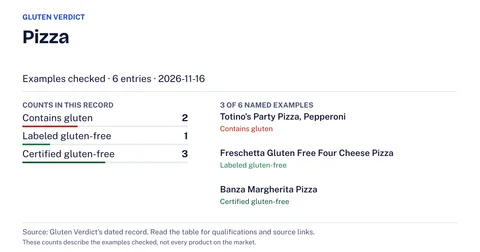 PizzaContains glutenchecked Nov 16, 2026
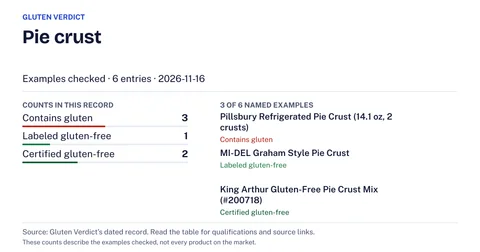 Pie crustContains glutenchecked Nov 16, 2026
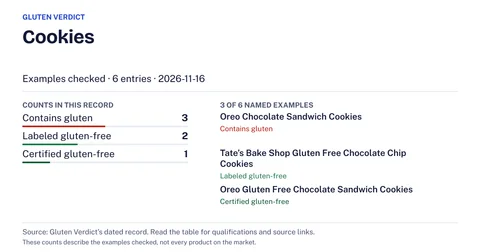 CookiesContains glutenchecked Nov 16, 2026
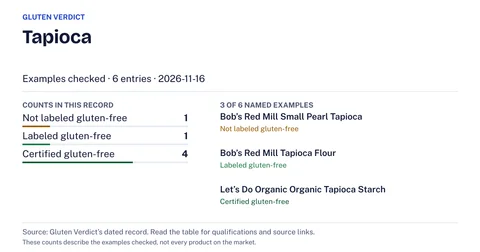 TapiocaNaturally gluten-freeBuy it labeled gluten-freechecked Nov 16, 2026
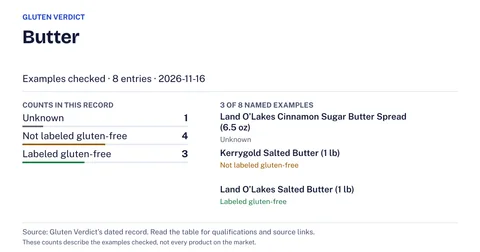 ButterNaturally gluten-freechecked Nov 16, 2026
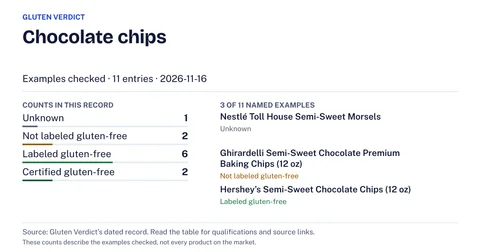 Chocolate chipsDepends on the productchecked Nov 16, 2026
Questions people ask
Is a sticky gluten-free pizza dough a sign something went wrong?
Not by King Arthur’s account: its pizza flour page says the dough should be soft and sticky after mixing1, and its recipe’s method ends in a “soft, smooth, sticky dough”18.
Can I make pizza dough with a 1:1 baking flour?
Both King Arthur and Bob’s Red Mill describe their 1:1 flours for recipes without yeast10, 11. For yeasted doughs, King Arthur recommends recipes developed for gluten-free ingredients25.
More in Gluten-free baking technique
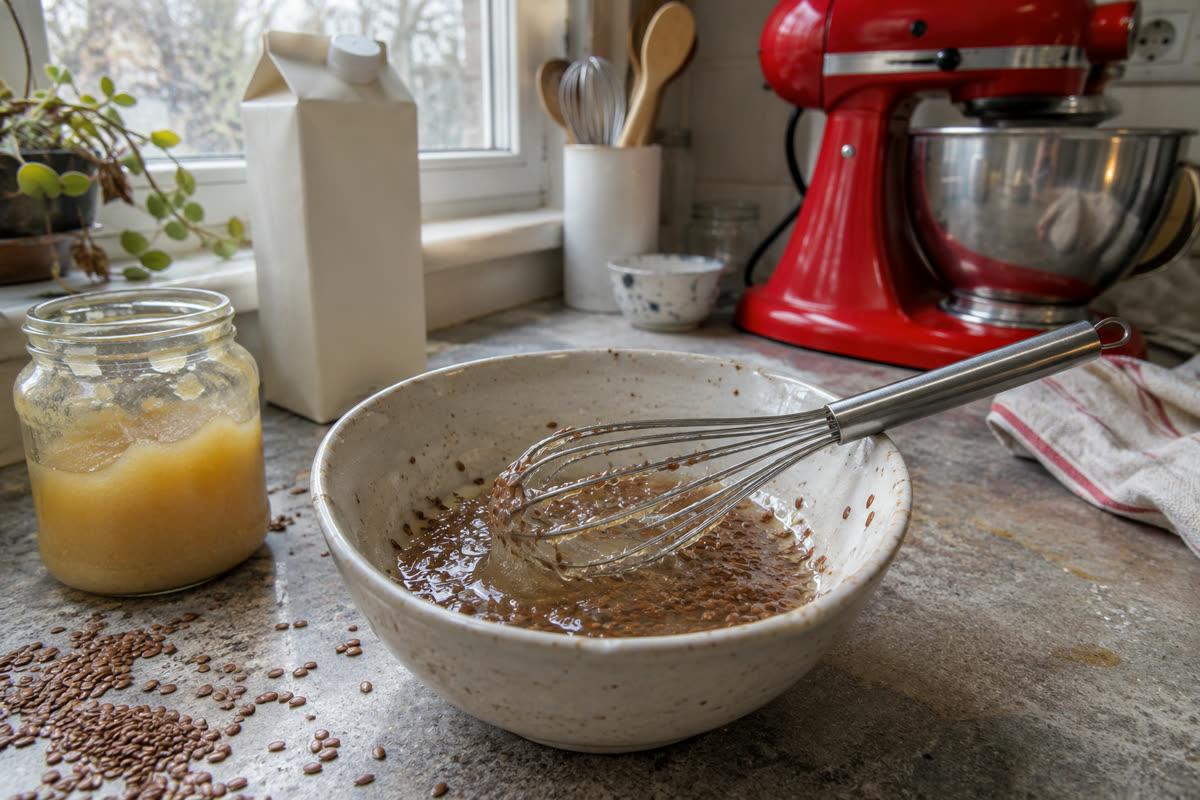 Egg and dairy substitutes in gluten-free baking: what each one doesWhich job an egg or dairy ingredient does in a bake, which substitutes makers and bakers describe for it, and how to check each one's gluten-free status.
 High-altitude gluten-free baking: what extension services and flour makers sayWhat Colorado State Extension, King Arthur and Bob's Red Mill publish for baking above 3,000 feet, and where no source covers gluten-free flours.
 Gluten-free flour cups to grams: the weights makers print on their labelsGrams per cup for gluten-free flours, copied from King Arthur’s chart and the Bob’s Red Mill, Krusteaz and Pamela’s panels, with where each figure sits.
 Baking pantry items that can carry glutenBaking powder, cornstarch, powdered sugar, chocolate chips, sprinkles and food coloring: what to read on each label and what the makers say.
 Gluten-free flours for baking: what rice, sorghum, tapioca, almond and coconut flour each doWhat makers say rice, sorghum, millet, tapioca, potato starch, almond and coconut flour do in a bake, and which bags say gluten-free on the label.
 Gluten-free baking gone wrong: dense, gummy, crumbly, gritty or sunkenMatch a dense, gummy, dry, gritty or sunken gluten-free bake to the causes flour makers name, see where their advice differs, and pick one change.
Related guides
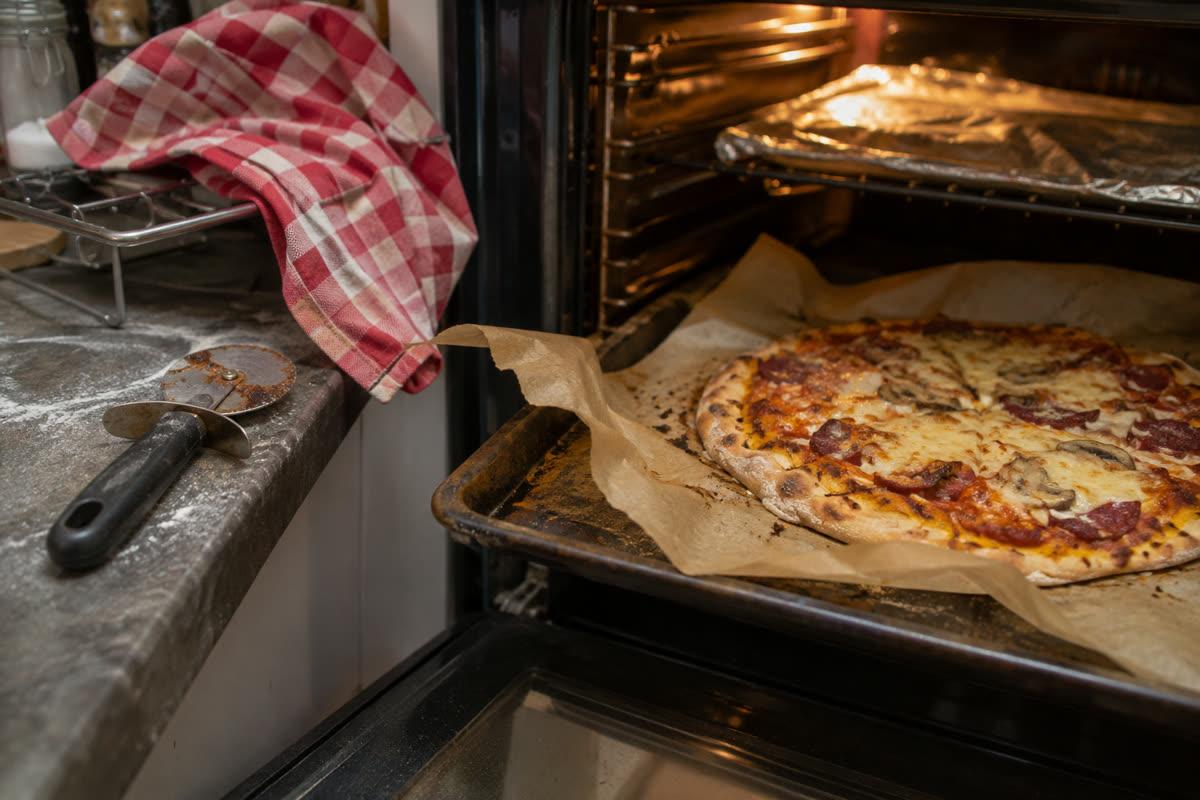 Gluten-free pizza at home: check each part, then keep it apart in the ovenCheck the crust, sauce, cheese and toppings against each maker’s own statement, then set up stone, parchment and oven so a gluten-free pizza stays apart.
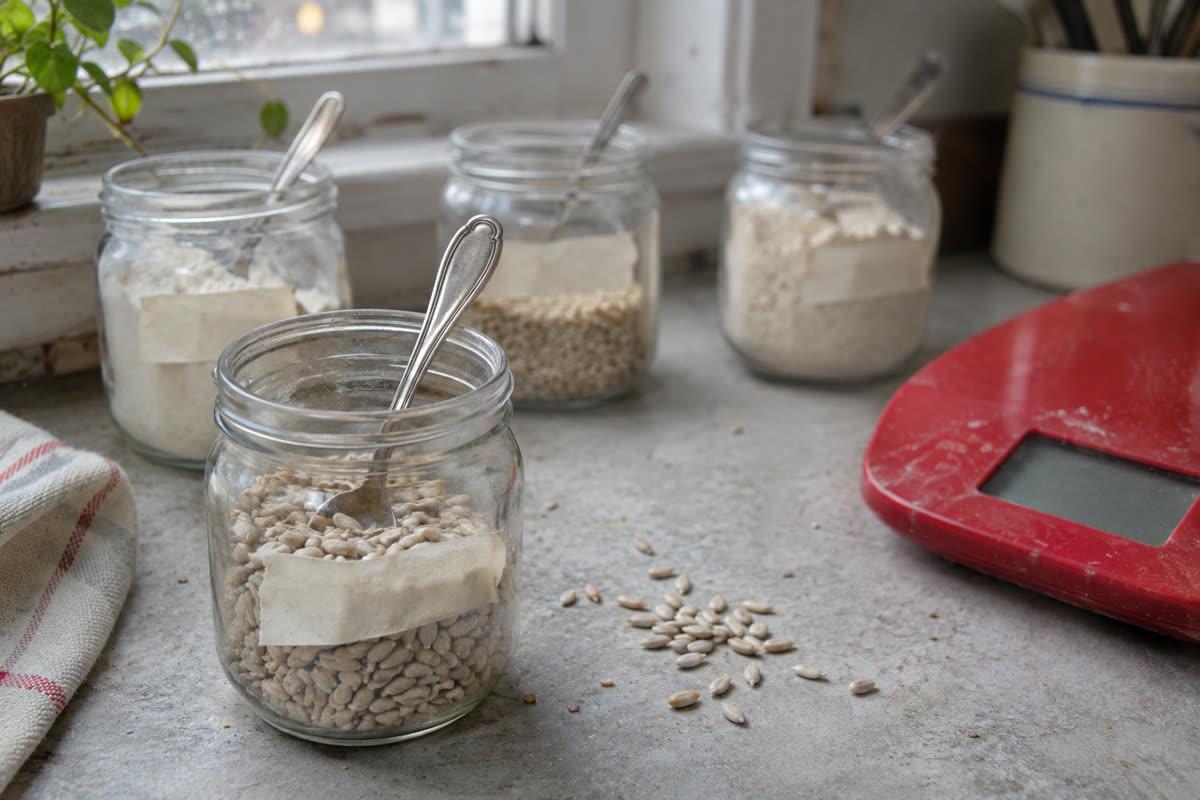 Gluten-free binders: what makers say about xanthan, guar, psyllium and flaxWhich gluten-free flours already list xanthan gum, what makers say about adding more, and how xanthan, guar, psyllium and flax are each described.
 Ordering gluten-free pizza at a pizza place: what to ask the kitchenWhat to ask a pizza place before you order a gluten-free crust: flour, oven, cutter, sauce and toppings, with what studies and charities say.
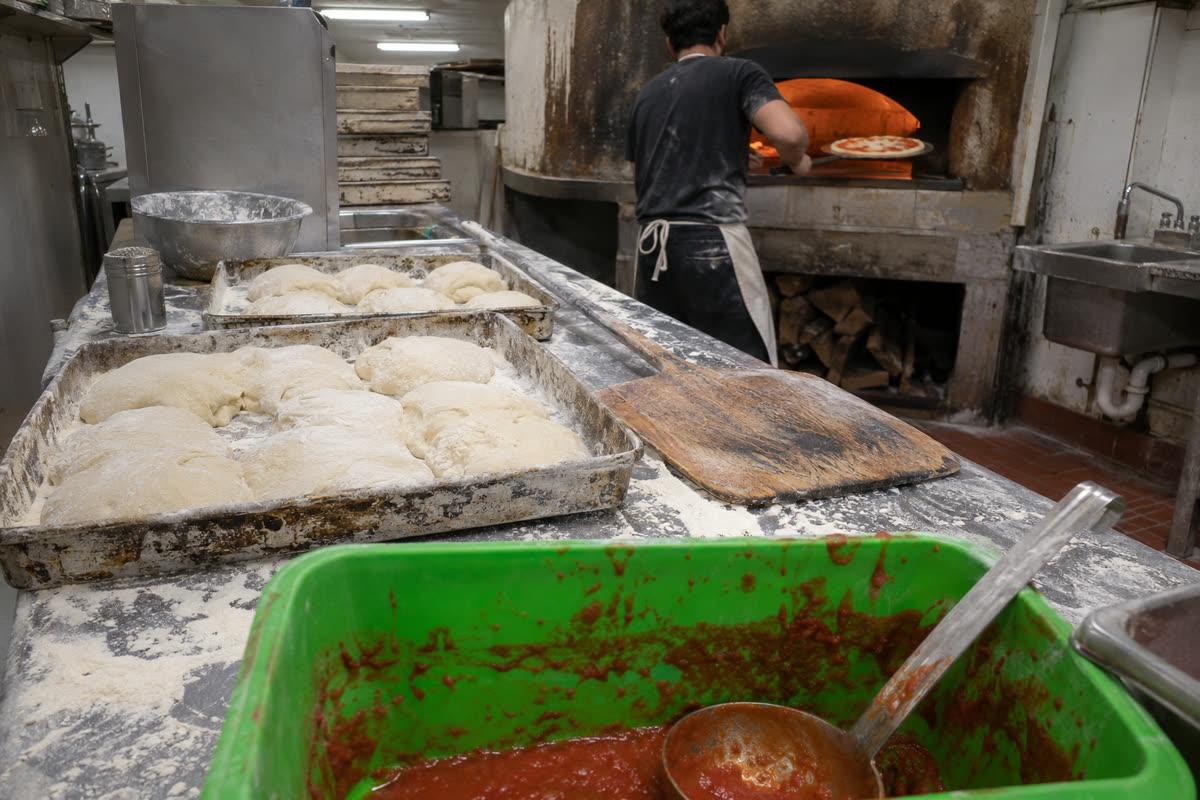 Pizza chain gluten-free crusts: what each chain says about its kitchenWhat Domino's, Papa Johns, Pizza Hut and Little Caesars say on their own pages about gluten-free crust, shared kitchens and celiac customers.
Sources
- [1, 2, 15, 19, 22, 31, 70] King Arthur Baking, Gluten-Free Pizza Flour, checked Nov 17, 2026.
Read on 2026-11-17: the product page, including its test kitchen tips, does not use the word “gummy” or the word “soggy”.
- [3, 4, 5, 35, 36, 37, 38, 39, 40] King Arthur Baking, Gluten-free pie crust: 9 tips for success, checked Nov 17, 2026.
- [6, 7, 8, 9, 52, 53] King Arthur Baking, Calculating gluten-free conversions, checked Nov 17, 2026.
- [10, 17, 24, 25, 59, 60, 69] King Arthur Baking, Gluten-Free Baking, checked Nov 17, 2026.
Read on 2026-11-17: the text of the guide does not use the word “spread”.
- [11] Bob’s Red Mill, Gluten Free 1-to-1 Baking Flour, checked Nov 17, 2026.
- [12, 41] King Arthur Baking, Gluten-Free Pie Crust Mix, checked Nov 17, 2026.
- [13, 55] Food Science and Technology International (PubMed abstract), Assessing the influence of psyllium as a fat substitute in wheat and gluten-free cookies, checked Nov 17, 2026.
- [14, 56] Foods (PMC), Influence of Flour Particle Size Distribution on the Quality of Maize Gluten-Free Cookies, checked Nov 17, 2026.
- [16, 45, 46, 47, 48, 49, 50] King Arthur Baking, How to prebake pie crust — and why you should, checked Nov 17, 2026.
Read on 2026-11-17: the page’s instructions and times are for a pastry crust; its only mention of gluten in the article text is “to relax the gluten”, and it gives no separate instructions or times for gluten-free dough.
- [18, 27, 28, 29, 30, 66] King Arthur Baking, Gluten-Free Neapolitan-Style Pizza Crust Recipe, checked Nov 17, 2026.
Read on 2026-11-17: the recipe page does not use the word “gummy” or the word “soggy”.
- [20, 21, 23, 32] Bob’s Red Mill, Gluten Free Pizza Crust Mix, checked Nov 17, 2026.
Read on 2026-11-17: the page describes the mix, lists its ingredients and says to add eggs, warm water and olive oil and spread the dough on an oiled pizza pan; it gives no oven temperature and no baking time.
- [26] Compr Rev Food Sci Food Saf (PubMed abstract), Impacts of Plant-Derived Hydrocolloids on Technological Characteristics of Gluten-Free Bakery Products: A Comprehensive Review, checked Nov 17, 2026.
- [33] Journal of Food Science and Technology (PMC), Effect of flour proportion and baking parameters on properties of gluten free pizza base prepared from barnyard millet and soy bean, checked Nov 17, 2026.
- [34] Food Science & Nutrition (PMC), Addition of Instant Shear Heat Milled Pregelatinized Rice Flours on a Gluten-Free Pizza, checked Nov 17, 2026.
- [42, 43, 44] Bob’s Red Mill, Gluten Free Pie Crust Mix, checked Nov 17, 2026.
Read on 2026-11-17: the page lists the ingredients (white rice flour, brown rice flour, potato starch, tapioca flour, sugar, salt, xanthan gum), shows Total Fat 0 g for a 3 Tbsp serving of the mix, and says to follow the instructions on the back of the bag; it names no fat to add, no chill time and no oven setting.
- [51, 58, 61, 62, 71] King Arthur Baking, Gluten-Free Soft Chocolate Chip Cookies Recipe, checked Nov 17, 2026.
Read on 2026-11-17: the recipe page does not use the word “spread”.
- [54, 65] Krusteaz, Gluten Free Chocolate Chip Cookie Mix, checked Nov 17, 2026.
- [57] Authentic Foods, Superfine White Rice Flour, checked Nov 17, 2026.
- [63, 64] King Arthur Baking, Gluten-Free Bread and Pizza Mix, checked Nov 17, 2026.
- [67, 68] Gluten Intolerance Group, Gluten-Free Cooking: Baking Hacks, checked Nov 17, 2026.