Ordering gluten-free pizza at a pizza place: what to ask the kitchen
Short answer
A gluten-free crust on the menu does not tell you how the kitchen handles flour, ovens, tools and toppings, and in one US data set, gluten-free labeled pizza was among the foods most likely to test positive1. Ask about five things before you order:
- Flour: where the gluten-free dough is handled, because Italian researchers write that aerosolized wheat flour can spread and contaminate gluten-free pizzas in kitchens that make both kinds2.
- Oven: its own oven, or, when shared, a high-sided pan and no wheat pizzas baking at the same time, which is the fallback Italian pizza certification describes3.
- Surface and tools: a clean surface and clean utensils4; a cutter is a utensil too, so ask about it.
- Sauce and toppings: whether the sauce is canned or made on site, and who handles the topping bins; sauces can carry added gluten5.
- Confirmation: ask the server to check with the kitchen, and check the pie against your order when it arrives6.
Part of Eating out and chain restaurant policies, 25 guides

Key points
- FDA’s gluten-free rule covers packaged foods; it passes complaints about unpackaged restaurant food to state and local partners, so for a made-to-order pie the kitchen’s process is what you can ask about7.
- In one set of results shared by users of a portable gluten detection device, pizza and pasta labeled gluten-free were most likely to test positive; the authors note that the device may detect gluten below 20 ppm1, 8.
- Aerosolized wheat flour is one route researchers name for gluten-free pizza; ask where the dough is handled and what flour is on the surface2, 9.
- A shared oven is a common concern but, the US device study’s authors write, a recent study suggests it is not an inevitable setting for contamination; Italian certification allows one under conditions9, 3.
- GIG advises asking for a clean surface and clean utensils, and confirming the order when it arrives4, 6.
Why the crust is only the first question
In the US, FDA says its gluten-free rule applies to packaged foods, and that it passes complaints about unpackaged food, such as food served in restaurants, to state and local government partners7. For restaurant menus, FDA recommends that a restaurant making a gluten-free claim be consistent with its definition10, and says state and local governments play an important role in overseeing restaurants11. A made-to-order pie may therefore carry no label that FDA’s rule governs7.
The Gluten Intolerance Group (GIG) says some restaurants offering “gluten-free” menu options may not have the procedures set up to reliably produce gluten-free items12. That is why the questions below are about the kitchen, not the menu line.
One US data set shows why the process matters. A 2019 study in the American Journal of Gastroenterology analyzed results that users of a portable gluten detection device chose to share across the United States over 18 months13. Of the foods labeled gluten-free, pizza and pasta were most likely to test positive: gluten was detected in 53.2% of pizza and 50.8% of pasta samples1.
Read that with its limits: the authors note the device may detect gluten below 20 parts per million, at a level of unknown clinical significance8, and the tests came from users who chose to share them13. It is a signal about pizza as a category, not a rate for any one restaurant.
Flour in the air and on the work surface
Aerosolized wheat flour is one contamination route researchers name for pizza2, 9. Italian researchers who tested gluten-free pizza from certified pizzerias wrote that the risk is high in kitchens that make both kinds, since aerosolized wheat flour can spread and contaminate gluten-free pizzas in any step of the production process2. The authors of the US device study also name aerosolized wheat flour as a way a gluten-free pizza may become contaminated9.
The Italian certification procedures, as those researchers describe them, say the ingredients for gluten-free dough must be kept separate14 and that gluten-free flour should be spread over surfaces where all pizzas are prepared15.
A 2024 review describing an Italian study of shared pizza kitchens reports that its authors could not draw firm conclusions on whether the wheat flour used to roll out wheat pizzas contaminates gluten-free ones, because of how the study was done, but strongly suggest using gluten-free flour to roll out both types of pizza16.
So ask two things: where the gluten-free dough is stretched, and what flour is on that surface when it is.
Ovens and baking surfaces: is a shared oven the problem?
A shared oven is a common worry. The authors of the US device study call sharing ovens with gluten-containing pizza a common concern, but write that a recent study suggests it is not an inevitable setting for contamination9.
The 2024 review describes a two-stage Italian study (Vincentini and colleagues). In a bakery school kitchen, pizzas with and without gluten were baked at the same time in one oven, one after the other in one oven, or in separate ovens; gluten-free pizzas from five pizza houses that serve both kinds were also collected17. Among 154 pizzas analyzed, one contaminated sample came from the school-kitchen run that baked at the same time; every other pizza was below 20 ppm18. The review reads the findings as promising: making both kinds in one environment with the same equipment will not necessarily trigger cross-contamination, as long as employees are properly trained19.
Italian certification, as a Turin study describes it, recommends an oven used only for gluten-free pizzas, but allows the same oven when the two types are not baked at the same time and the gluten-free pizza is made in a high-sided baking pan3.
None of this is a US rule. It describes Italian certification, one school kitchen and five pizza houses. In a US pizza place, the answer you get from the kitchen is the information you have.
GIG’s guidance on convection ovens, written about kitchen appliances rather than restaurants, warns that when gluten-containing and gluten-free foods are cooked together, a fan can blow wheat dust or food particles onto the gluten-free food20. A pizzeria’s oven is not a home oven, so take it as a reason to ask how the gluten-free pie is baked, not as a finding about any shop’s oven.
Ask about the surface under the pie too. GIG advises finding out whether gluten-containing foods have been cooked on the same surface beforehand, and suggests foil over the cooking surface4.
Cutters and cutting boards
None of the sources read for this page tests pizza cutters, cutting boards or pizza boxes for gluten, so there is no number to quote for them. What the sources say is general. GIG advises asking for food to be prepared on a clean surface with clean utensils4. Italian certification controls cover work spaces, tools and surfaces21.
The 2024 review found that, in general, shared kitchen utensils and equipment, a knife among them, did not lead to significant contamination of samples in controlled experiments22. Its authors add that dedicated utensils or designated areas may be dispensable as long as appropriate cleaning practices are consistently applied23. The review’s condition is consistent cleaning, so a useful question is how the cutter is cleaned, not only whether it is separate.
Sauces, toppings and shared bins
GIG lists sauces among the places gluten can hide: dressings, sauces and marinades may contain added gluten as a thickener or binding agent5. A restaurant using canned sauce may let you check the ingredients list on the can, and a chef making sauce on site should be able to confirm its ingredients24. The authors of the US device study raise the sauce on gluten-free pizza as one possible explanation for the gluten they detected25.
GIG says seasonings are often used in preparing meats, and their ingredients should be verified26. Our verdicts for sausage, pepperoni, meatballs and mozzarella cheese show what the pages of makers and gluten organizations say; a pizzeria’s own supplier is a separate question, so ask which products it uses. The sides on a pizza menu have verdicts too, such as mozzarella sticks.
Open topping bins look like the salad-bar problem. GIG says that at a salad bar, even when foods are kept apart, the serving utensils might inadvertently be used in both27. Ask who handles the toppings for your pie and whether the scoop or hand has touched other pies.
When staff are unsure, GIG advises asking to see the package of any questionable ingredient, and says most eating establishments can accommodate this28.
What a pizzeria with a process looks like
In Italy, restaurants can be certified for gluten-free food, including pizza restaurants that make both gluten-free and wheat-based pizza29. Accreditation requires best-practice standards for all steps from raw materials to ready-to-eat food30. In one survey of certified restaurants in the Turin area, all 28 gluten-free pizzas and 28 cooked dough bases sampled were below the test’s limit of detection, except one cooked dough sample that tested positive but below 20 ppm31.
That is one city’s certified pizzerias, not a promise about any shop. In the US, GIG says the best approach to feeling more confident about a restaurant is to choose one that has gone through its Gluten-Free Food Services (GFFS) validation program, which works with restaurants to educate, train and audit their staff32. GIG also says fast food establishments are less likely to be able to make appropriate adjustments33, which is worth weighing at a fast-food-style counter.
What to ask, and why
NIDDK’s advice for eating out is to ask about food ingredients, how food is prepared and whether a gluten-free menu is available, and to ask to talk with the chef for more details34.
| Ask | Why it matters |
|---|---|
| Where is the gluten-free dough made, and what flour is on that surface? | Aerosolized wheat flour is one route researchers name2, 9. |
| Does it bake in its own oven, or in a high-sided pan, apart from wheat pizzas? | The fallback in Italian certification3. |
| Will a clean surface, clean utensils and a clean cutter be used? | GIG’s advice on surfaces and utensils4. |
| Is the sauce canned or made here, and can someone read me the ingredients? | Sauces can carry added gluten5, 24. |
| Who handles the toppings, and from which bins? | GIG warns that salad-bar serving utensils might be used in both kinds of food; topping bins raise the same question27. |
| Could you check with the kitchen and confirm my order when it comes out? | GIG advises confirming the order6. |
A short phone call
- Call outside the rush. GIG advises calling the day before or earlier the same day and speaking to the chef35, and timing a visit before or after the busiest mealtime36.
- Say what you need in plain words. GIG’s suggested opening: “Hi, I need your help with my menu selection. I am on a medically restricted diet and am unable to eat wheat, rye, barley, and foods made with these grains. I have some questions for you or the chef.”37
- Ask how the kitchen handles gluten-free orders. One of GIG’s questions: “How does your kitchen normally handle gluten-free or allergen orders to prevent cross-contact?”38
- Work through the table above. GIG also suggests asking: “Can the kitchen prepare this meal using clean utensils and a freshly sanitized surface?”39
- Write down the answers and who gave them. A vague answer is an answer.
If the answers are vague
GIG lists signs for considering eating elsewhere or sticking to pre-packaged, pre-verified items40, among them kitchen staff refusing or acting hesitant to check ingredient labels on packaged sauces or mixes41.
Questions reduce uncertainty; they do not remove it. If the call does not settle it, a sealed product you can read is a different route: see gluten-free pizza night at home, what goes wrong with gluten-free pizza crust and our pizza verdict. For the wider picture, read eating out with celiac disease, where gluten hides in restaurant kitchens and what a gluten-free menu label means.
Where to read what a chain says
A chain’s own allergen or nutrition page is where to read its wording on gluten-free crusts and shared kitchens, because that wording is the chain’s to give and it can change. This page does not summarize any chain’s statement; open the page for the chain you are ordering from and read its wording before you order. Chain-by-chain statements are collected in pizza chain allergen policies.
Verdicts in this guide
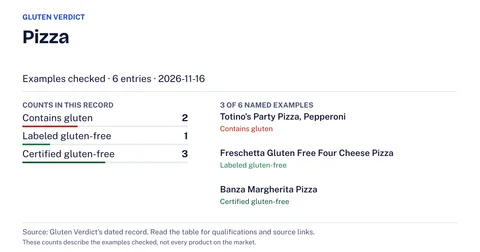 PizzaContains glutenchecked Nov 16, 2026
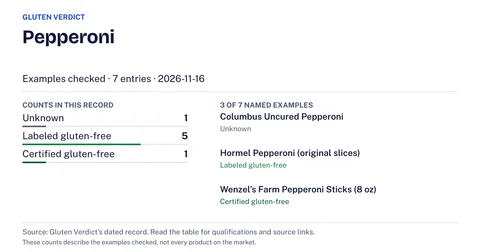 PepperoniDepends on the productchecked Nov 16, 2026
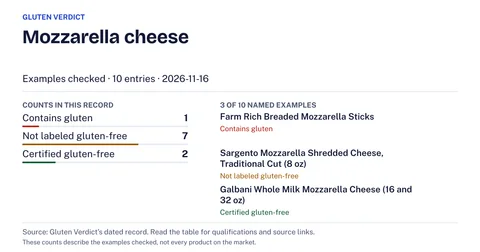 Mozzarella cheeseNaturally gluten-free1 of 10 products we checked contains gluten: Farm Rich Breaded Mozzarella Stickschecked Nov 16, 2026
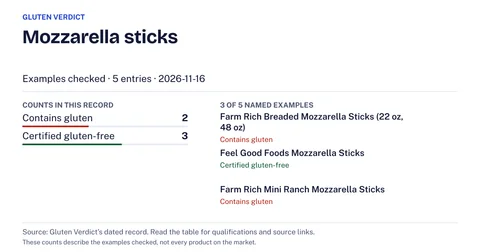 Mozzarella sticksDepends on the product2 of 5 products we checked contain gluten: Farm Rich Breaded Mozzarella Sticks (22 oz, 48 oz) and Farm Rich Mini Ranch Mozzarella Stickschecked Nov 16, 2026
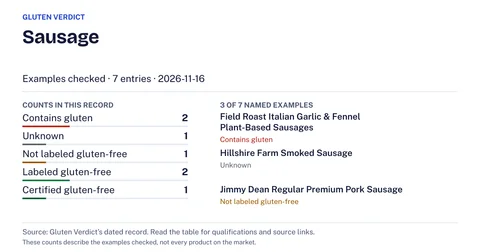 SausageDepends on the product2 of 7 products we checked contain gluten: Field Roast Italian Garlic & Fennel Plant-Based Sausages and Tofurky Plant-Based Italian Sausagechecked Nov 16, 2026
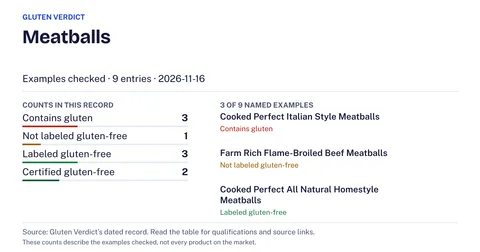 MeatballsDepends on the product3 of 9 products we checked contain gluten: Cooked Perfect Italian Style Meatballs, Cooked Perfect Restaurant Style Meatballs, and Farm Rich Homestyle Meatballschecked Nov 16, 2026
Questions people ask
Does a pizza place’s gluten-free label follow FDA’s definition?
FDA says its rule applies to packaged foods7. For restaurant menus it recommends that a gluten-free claim be consistent with its definition10; it is a recommendation, and state and local governments oversee restaurants11.
Is a shared pizza oven always a problem?
The authors of the US device study call it a common concern, and write that a recent study suggests it is not an inevitable setting for contamination9. The Italian work cited here concerns certified restaurants31, a school kitchen and five pizza houses17, and the review ties its finding to properly trained employees19, so it does not describe every pizza place.
Should I call the pizza place ahead of time?
GIG advises calling the day before or earlier the same day and speaking to the chef35, or calling when the restaurant may be less busy42.
Can I ask to see the packages of the sauce or toppings?
GIG advises asking to see the package of any questionable ingredient, and says most eating establishments can accommodate this28.
More in Eating out and chain restaurant policies
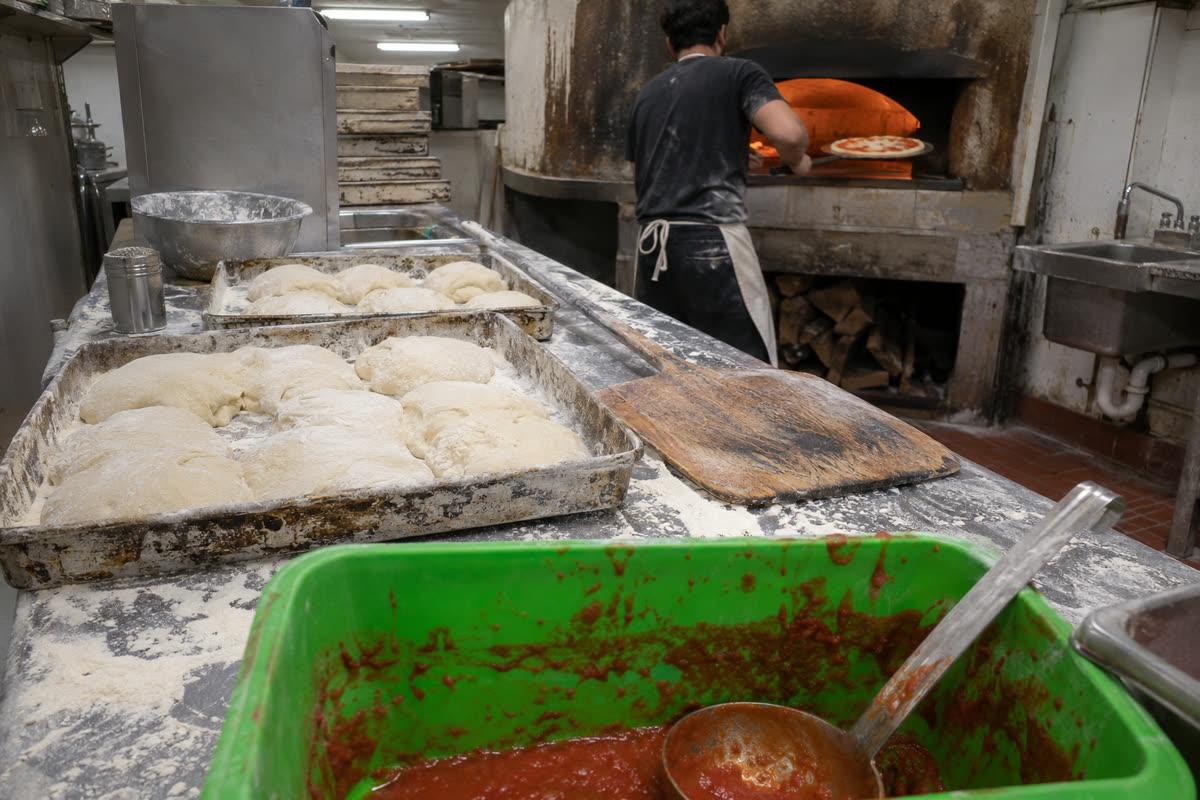 Pizza chain gluten-free crusts: what each chain says about its kitchenWhat Domino's, Papa Johns, Pizza Hut and Little Caesars say on their own pages about gluten-free crust, shared kitchens and celiac customers.
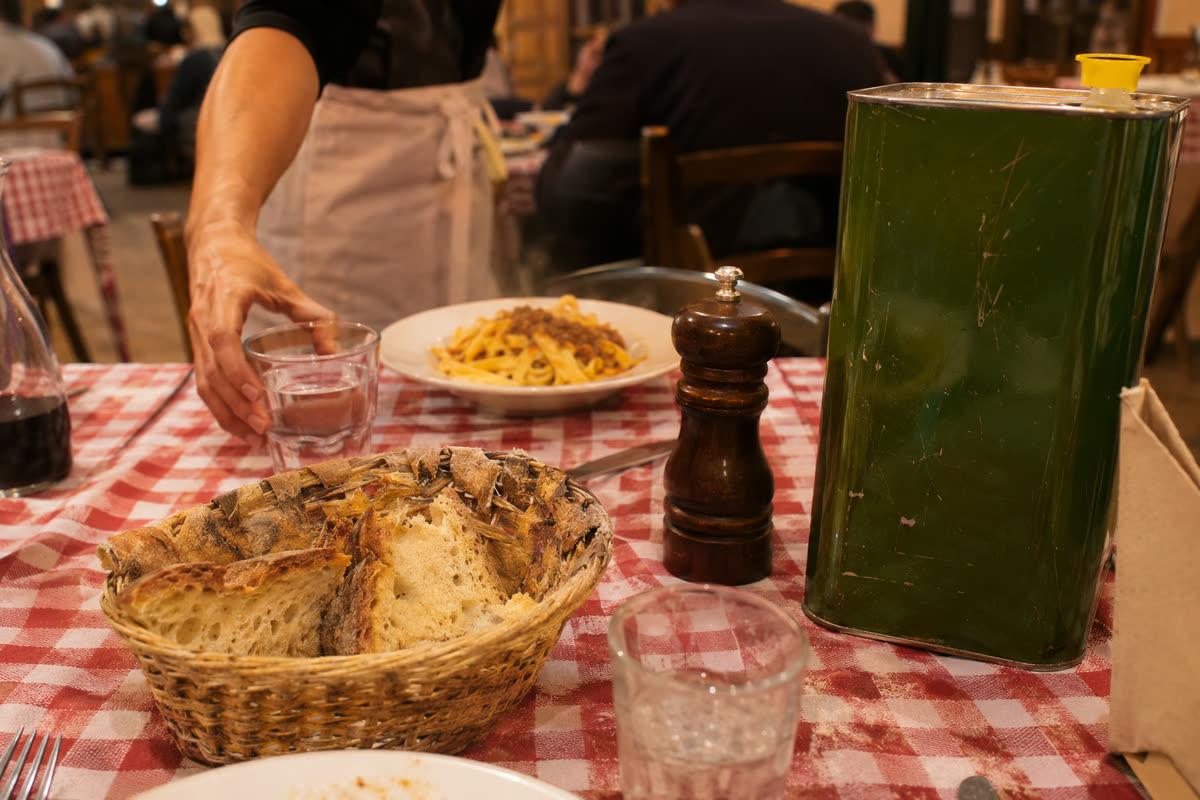 Ordering gluten-free at an Italian restaurantBefore you order at an Italian restaurant: where the gluten-free pasta is boiled, what thickens the sauces, and what is breaded or fried.
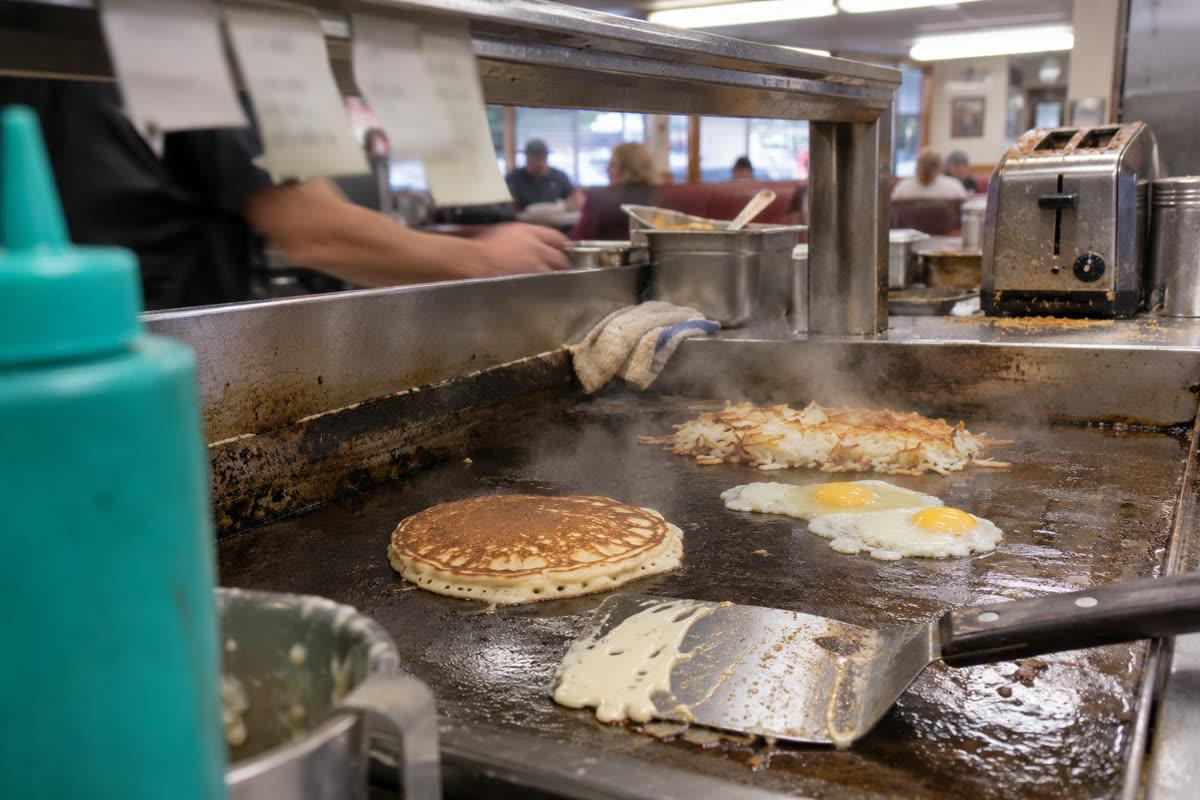 Gluten-free breakfast at restaurant chains: griddles, toasters and batterWhat IHOP, Panera and Tim Hortons say about shared griddles, toasters and fryers, and three questions to ask before you order breakfast out.
 What fast-food chains say about shared fryers, and what a shared-fryer study measuredEach chain's own sentence on fryer oil, with its document and date, plus what a 2026 study measured in fries and chips from shared fryers.
 Eating out with celiac disease: what to check, ask and watch forPlan a restaurant meal with celiac disease: what to check before you go, the questions to ask in order, how to read the answers, and what studies measured.
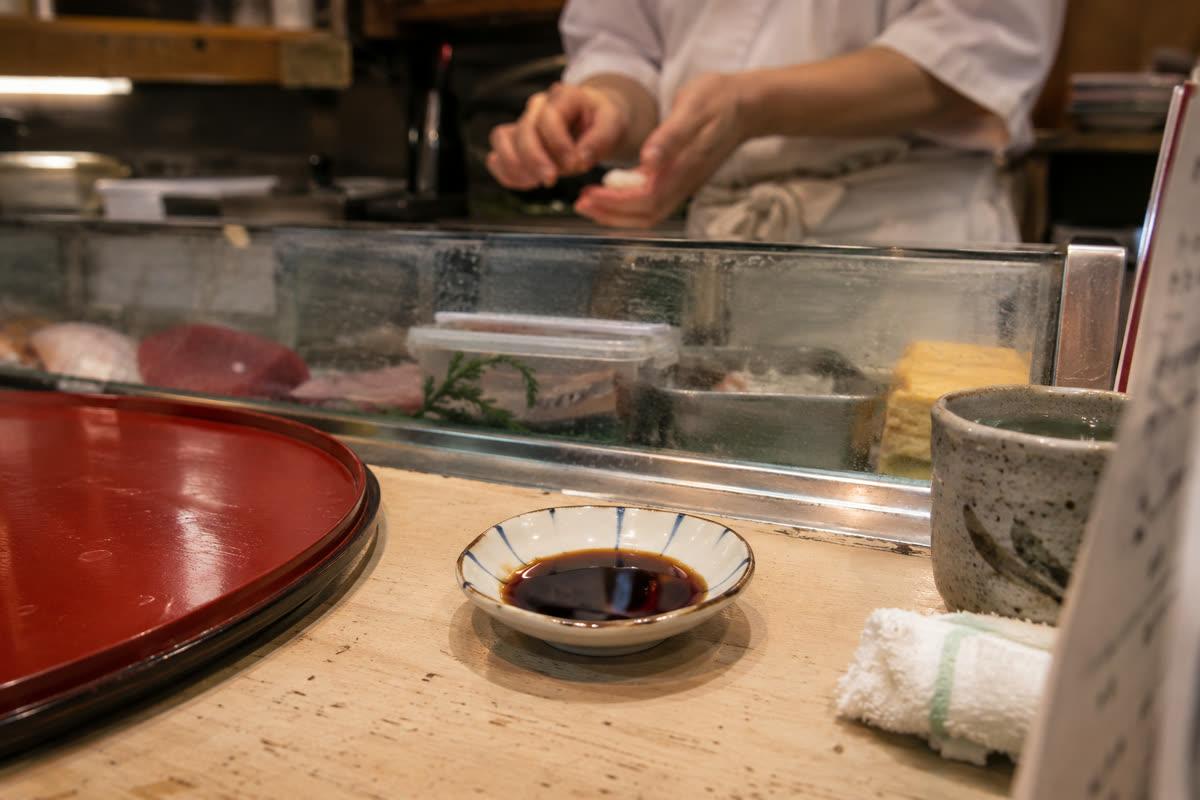 Ordering sushi and Japanese food when you avoid glutenWhich sushi, ramen and hibachi items carry wheat, what to ask about soy sauce, imitation crab, tempura and shared fryers, and a first-visit order.
Related guides
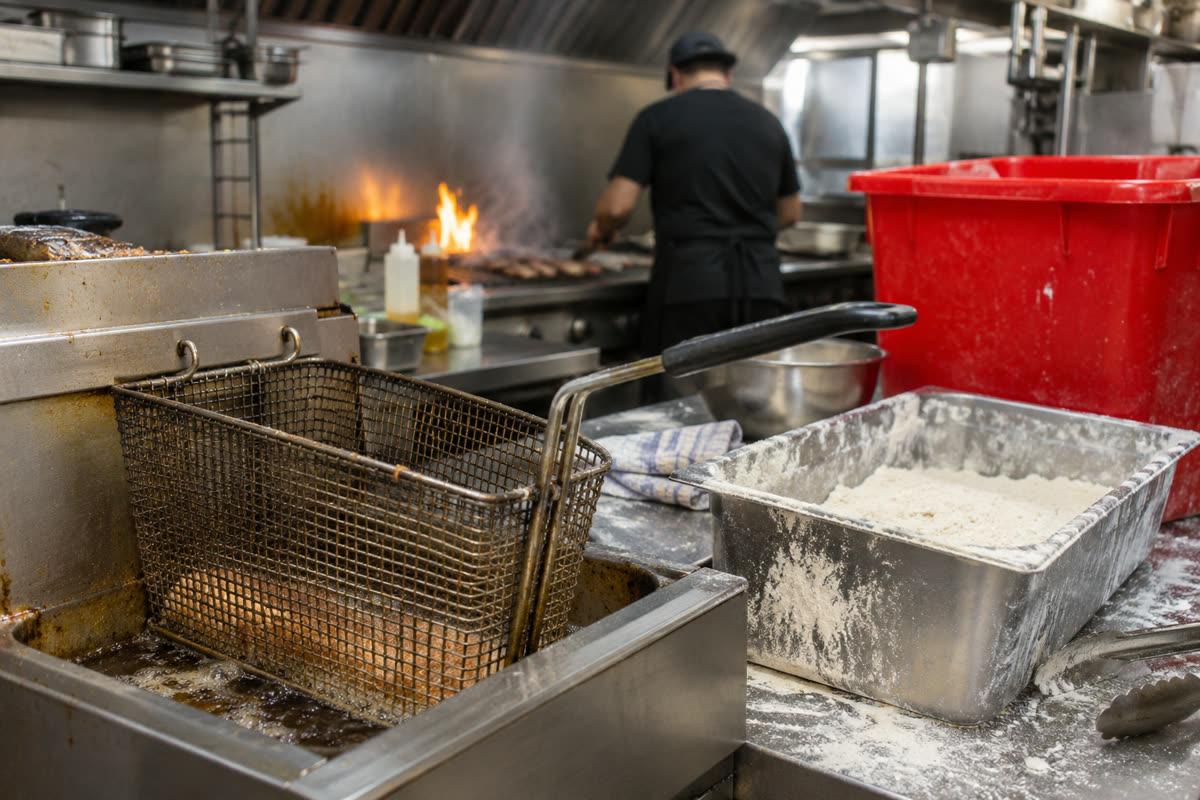 Where gluten hides in a restaurant kitchen, and the question to ask about each sourceFryers, sauces, roux, marinades, grills, pasta water and eggs: how gluten reaches restaurant food and the question GIG lists for each source.
 What “gluten-free” on a restaurant menu meansFDA’s gluten-free rule is written for packaged food. See what a menu label can mean, and how to tell a recipe from a procedure or an audited program.
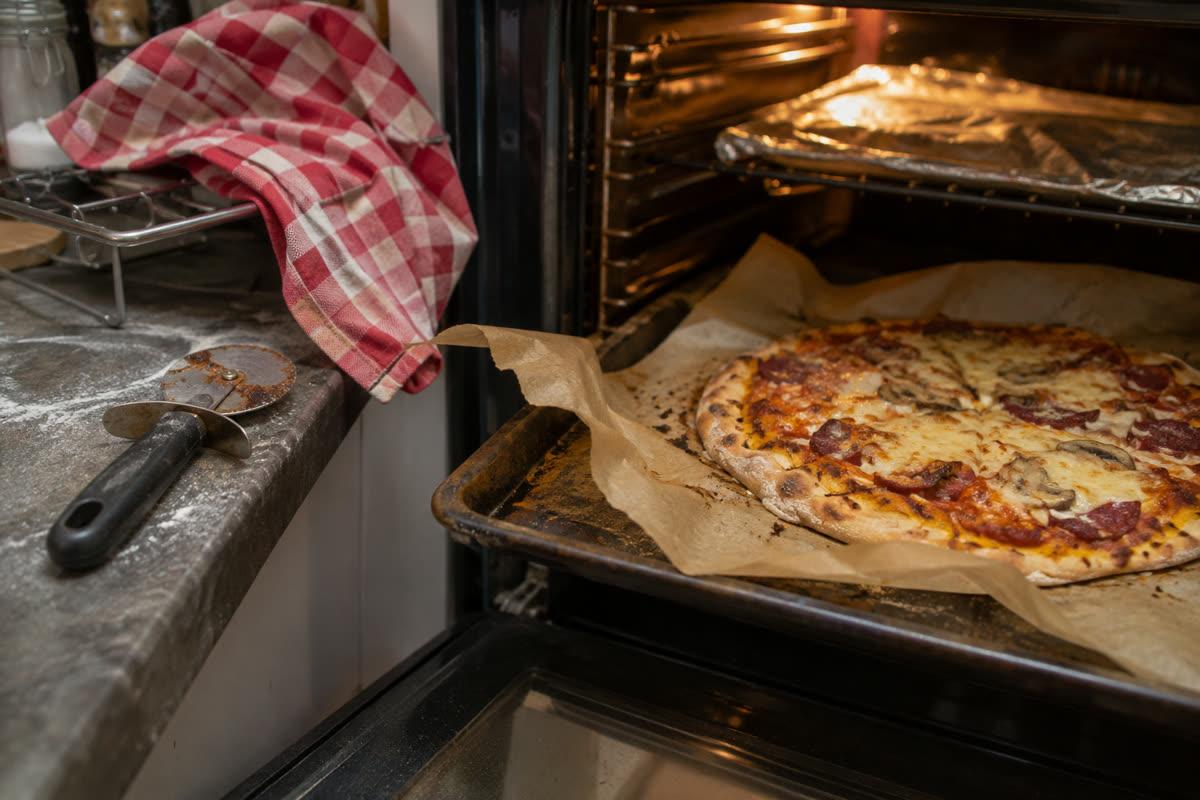 Gluten-free pizza at home: check each part, then keep it apart in the ovenCheck the crust, sauce, cheese and toppings against each maker’s own statement, then set up stone, parchment and oven so a gluten-free pizza stays apart.
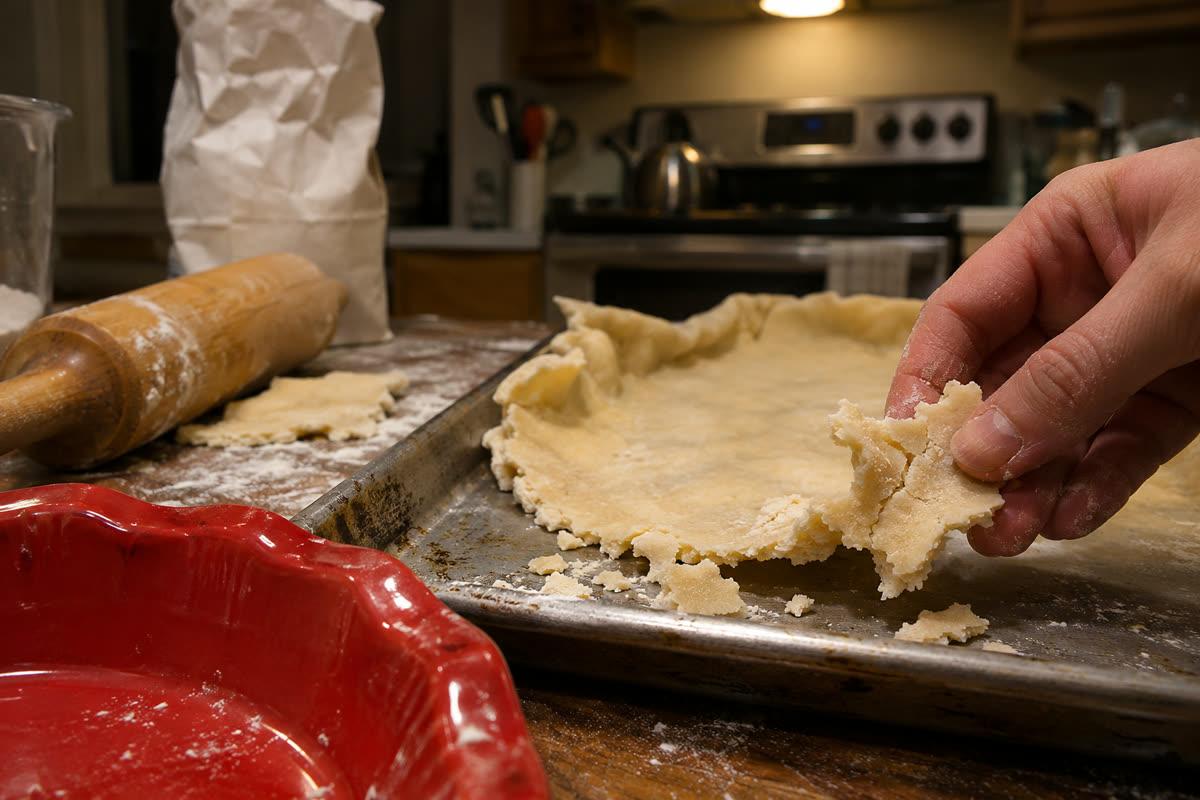 Gluten-free pizza crust, pie crust and cookie problems: what the makers sayMatch a gummy pizza, cracking pie dough or flat cookies to hydration, heat, fat or chill, with what flour and mix makers say and where they stay silent.
Sources
- [1, 8, 9, 13, 25] American Journal of Gastroenterology (PubMed Central), Detection of Gluten in Gluten-Free Labeled Restaurant Food: Analysis of Crowd-Sourced Data (Lerner et al., 2019), checked Nov 17, 2026.
- [2, 3, 14, 15, 21, 29, 30, 31] Foods (PubMed Central), Analysis of Gluten Content in Gluten-Free Pizza from Certified Take-Away Pizza Restaurants (Bianchi et al., 2018), checked Nov 17, 2026.
- [4, 5, 6, 24, 26, 32, 33, 35, 36, 37] Gluten Intolerance Group, Eating Out: 7 Tips for Staying Gluten-Free (educational bulletin, December 2021), checked Nov 17, 2026.
- [7, 10] US Food and Drug Administration, Questions and Answers on the Gluten-Free Food Labeling Final Rule, checked Nov 17, 2026.
- [11] US Food and Drug Administration, Gluten and Food Labeling, checked Nov 17, 2026.
- [12, 42] Gluten Intolerance Group, Restaurant menu says gluten-free but I felt glutened: how could this have happened? (GIG FAQ), checked Nov 17, 2026.
- [16, 17, 18, 19, 22, 23] Nutrients (PubMed Central), Risk of Gluten Cross-Contamination Due to Food Handling Practices: A Mini-Review (2024), checked Nov 17, 2026.
- [20] Gluten Intolerance Group, Appliances: Risks of Cross-Contact, checked Nov 17, 2026.
- [27, 28] Gluten Intolerance Group, 25 Ways Cross-Contact Could Happen (And How to Avoid It), checked Nov 17, 2026.
- [34] National Institute of Diabetes and Digestive and Kidney Diseases (NIDDK), Eating, Diet, & Nutrition for Celiac Disease, checked Nov 17, 2026.
- [38, 39, 40, 41] Gluten Intolerance Group, Questions to Ask When Eating Out (September 8, 2026), checked Nov 17, 2026.