Gluten-free flours for baking: what rice, sorghum, tapioca, almond and coconut flour each do
Short answer
Match each flour to the job its maker describes, then check the bag for its own gluten-free label:
- Rice, sorghum and millet are grain flours that Bob’s Red Mill describes using in blends and mixes, and it suggests shares such as 15% to 20% sorghum in a flour mix or, for bakers new to millet flour, replacing up to 25% of a recipe’s flour with it1, 2, 3.
- Bob’s Red Mill describes tapioca and potato starch as thickeners, potato starch and sweet rice flour as adding moisture, and cornstarch as helping give finely textured cakes and cookies and crumbly, tender shortbread4, 5, 6, 7.
- Almond and coconut flour come with their own rules: Bob’s Red Mill calls its coconut flour grain free and says its absorbency means recipes often require extra eggs and liquid51, 8, and GIG says almond flour may need an additional binder, such as an egg9.
- The plant a flour comes from does not settle whether the bag is gluten-free: FDA says crop rotation and shared harvesting, transport and storage equipment often bring gluten-containing grains into contact with grains, legumes and seeds that are naturally free of gluten10. Read the bag.
Part of Gluten-free baking technique, 11 guides

Key points
- GIG says one single gluten-free flour is not ideal for most recipes and that a blend of several gives the best results11.
- GIG says binding agents “substitute for the gluten in wheat flour, which provides similar structure”12. Bob’s Red Mill suggests xanthan gum with sorghum and tapioca flour13, 14 and xanthan or guar gum with sweet white rice flour15.
- “Glutinous” describes sticky rice, not gluten: Bob’s Red Mill says its glutinous sweet white rice flour is milled from “sticky rice”26 and is naturally gluten free16.
- A gluten-free claim on food is voluntary under FDA’s rule, and producers of foods that are gluten-free by nature may leave it off17, 18, so check each bag.
- In one pilot study, seven of 22 samples of inherently gluten-free grains, seeds and flours not labeled gluten-free had mean gluten levels at or above 20 ppm19.
What do different flours do in a gluten-free bake?
Wheat flour carries gluten. The Gluten Intolerance Group (GIG) says of binding agents such as xanthan gum that they “substitute for the gluten in wheat flour, which provides similar structure”12.
GIG also says individual flours differ in flavor, texture and structure20, and that for most recipes a blend of several flours works better than any one11. This guide therefore does not rank flours. It reads what makers’ own pages and GIG say each flour is for, and sorts the answers into four jobs: grain flours that fill out a blend, starches that thicken and add moisture, binders that hold a bake together, and flours with rules of their own.
Treat any share in this guide (15% to 20% sorghum, up to 25% millet) as that maker’s suggestion for its own flour, not a rule for every recipe.
Rice flours: white, brown, sweet and superfine
Bob’s Red Mill describes its white rice flour as stone ground for a fine, light texture, ideal for noodles, delicate cookies, cakes and fluffy pancakes, and says it also works as a thickener21. GIG says white rice flour has a milder flavor and smoother texture than brown22.
Bob’s Red Mill’s brown rice flour has a mild, nutty flavor and is ground on a very fine setting to prevent a gritty texture23, 24. Bob’s Red Mill says bakers following a gluten free diet often use it to create a gluten free flour blend, with additions such as potato starch, sorghum flour, sweet rice flour, tapioca starch and xanthan gum1, and that it will not substitute cup for cup with wheat flour25.
Sweet white rice flour is a different flour. Bob’s Red Mill says it is milled from glutinous “sticky rice”26, is used more like a starch in baking, adding moisture, and is not sweet like sugar7. It also says people use it to help bind baked goods27, and suggests adding xanthan or guar gum15. “Glutinous” describes the stickiness, not gluten: the same page calls the flour naturally gluten free16.
Authentic Foods describes its superfine white rice flour as perfect in gluten-free baking when combined with other gluten-free flours28.
GIG’s advice is to use each rice flour as a specific recipe calls for, because they do not substitute equally for one another29. Our verdict page for rice flour covers the label question.
Sorghum, millet and buckwheat
Bob’s Red Mill describes sorghum flour as light in color and texture with a mild, sweet flavor, a popular alternative to wheat flour30. It says to include a binder such as xanthan gum13, and suggests adding 15% to 20% sorghum flour to a flour mix2. See our sorghum verdict.
For millet flour the same maker says it lends a delicate cake-like crumb, works alone or in a blend, and suggests that bakers new to millet flour replace up to 25% of the flour in their recipes3. See millet.
Buckwheat is the strong one. Bob’s Red Mill describes buckwheat flour as having a unique, assertive flavor, especially in quick and yeast breads31. GIG’s page says buckwheat is denser than wheat flour, gives a darker, dense loaf, and suggests mixing it 1:4 with another flour for a lighter texture32. See buckwheat.
Starches: tapioca, potato and corn
Bob’s Red Mill calls its tapioca flour starchy and slightly sweet, a staple in gluten-free baking and a thickening agent for soups, sauces and pie fillings4, and suggests using it with other flours and xanthan gum14. See tapioca.
Its potato starch page says the starch tolerates higher temperatures than cornstarch as a thickener and is a natural way to add moistness to baked goods5. For cornstarch it says the starch is widely used in cake and cookie recipes for finely textured results, and in shortbread for a crumbly, tender texture6. See cornstarch.
A GIG page reports that Omolabake describes light blends with more starch as good for cakes, because starch adds softness33.
Almond and coconut flour: recipes designed for them
GIG says flours from nuts, beans, fruits and vegetables tend to have distinctive flavors and textures and should generally be used in combination with other flours or in recipes developed for them34.
Bob’s Red Mill says its almond flour adds a rich, buttery flavor and moist texture35, and calls it a gluten-free, grain-free flour36. GIG says almond flour may need an additional binder, such as an egg, to hold a bake together9. GIG also notes that cakes made with nut flour are typically gluten-free, but not always37.
Coconut flour behaves differently again. Bob’s Red Mill calls its organic coconut flour a gluten free, grain free flour51 and says its absorbency means recipes often require extra eggs and liquid, so use recipes designed for coconut flour8. See almond flour and coconut flour.
Oat flour and the gluten-free label
GIG says oat flour is a bit denser than wheat flour and is great for pie crusts, some breads and heartier doughs38.
FDA says oats labeled gluten-free must contain less than 20 ppm of gluten, and that they do not have to be certified to carry the claim39. GIG says oat flour, like any processed and packaged product, can be tested for gluten40. Our pages on gluten-free versus regular oats and the oatmeal verdict go further.
Flour by flour: what the maker’s page says, and our verdict
Each row summarizes the maker’s page as we read it on 2026-11-17. A product page is not the package in your hand: read the bag.
| Flour | What its maker’s page says it is for | Gluten-free wording on that page | Our verdict |
|---|---|---|---|
| White rice flour (Bob’s Red Mill) | Fine, light texture for noodles, delicate cookies, cakes and pancakes; also a thickener21 | “Tested and confirmed gluten free”, batch tested by ELISA41 | Rice flour |
| Brown rice flour (Bob’s Red Mill) | Mild, nutty flavor; breading, thickening, pancakes, muffins and bread23 | Calls it a “versatile gluten free flour”23 | Rice flour |
| Sweet white rice flour (Bob’s Red Mill) | Used more like a starch; adds moisture7 | “Naturally gluten free”16 | Rice flour |
| Superfine white rice flour (Authentic Foods) | Combined with other gluten-free flours28 | Page lists “Gluten-Free, Corn Free, Soy Free, Dairy Free, Non-GMO, Kosher”42 | Rice flour |
| Sorghum flour (Bob’s Red Mill) | Light color and texture, mild, sweet flavor; needs a binder30, 13 | “Great for gluten free baking”30 | Sorghum |
| Millet flour (Bob’s Red Mill) | Delicate cake-like crumb, alone or in blends3 | “Whole grain, gluten free and Non-GMO Project Verified”43 | Millet |
| Buckwheat flour (Bob’s Red Mill, organic) | Assertive flavor for quick and yeast breads31 | None in the product description or nutrition text44 | Buckwheat |
| Tapioca flour (Bob’s Red Mill) | Staple in gluten-free baking; thickener4 | “One of our most versatile gluten free flours”4 | Tapioca |
| Potato starch (Bob’s Red Mill) | Thickens at higher temperatures than cornstarch; adds moistness5 | Named “Gluten Free Potato Starch”5 | No verdict page for potato starch yet |
| Cornstarch (Bob’s Red Mill) | Finely textured cakes and cookies; tender shortbread6 | “Naturally gluten free”, packaged in a gluten-free facility and batch tested45 | Cornstarch |
| Almond flour (Bob’s Red Mill) | Buttery flavor, moist texture35 | “Tested and confirmed gluten free”46 | Almond flour |
| Coconut flour (Bob’s Red Mill, organic) | Absorbent; recipes often require extra eggs and liquid8 | “Tested and confirmed gluten free”, batch tested by ELISA47 | Coconut flour |
How do you know a single flour is gluten-free?
Our verdict pages for these flours each name handling, a brand’s label or added ingredients, not the plant itself, as what separates one bag from another. For grains, legumes and seeds, FDA explains why handling matters: crop rotation and shared harvesting, transport and storage equipment often bring gluten-containing grains into contact with grains, legumes and seeds that are naturally free of gluten10.
FDA’s gluten-free claim is voluntary17, and producers of foods that are gluten-free by nature may choose not to label them18. A missing claim on the bag therefore does not by itself say whether the flour was handled to the rule. Under FDA’s rule, when a claim is made, any unavoidable gluten in the food must be less than 20 ppm48.
One pilot study bought 22 inherently gluten-free grains, seeds and flours not labeled gluten-free in June 200949. Its authors report that seven of the 22 had mean gluten levels at or above 20 ppm19. That is one small study of samples from 2009, so it says nothing about any bag on the shelf today.
Buy the flour whose own package says gluten-free, and read the ingredient list for blends and mixes. Our guides to reading a US food label, 1-to-1 and all-purpose blends and the flour guide cover the rest.
Verdicts in this guide
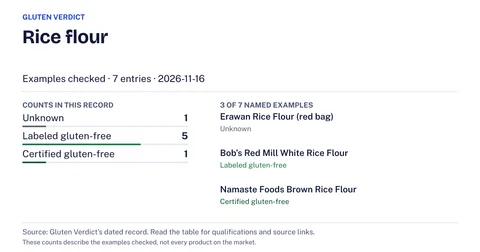 Rice flourNaturally gluten-freeBuy it labeled gluten-freechecked Nov 16, 2026
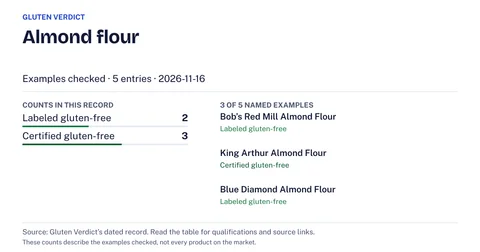 Almond flourNaturally gluten-freeBuy it labeled gluten-freechecked Nov 16, 2026
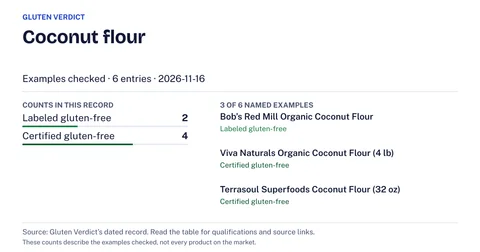 Coconut flourNaturally gluten-freeBuy it labeled gluten-freechecked Nov 16, 2026
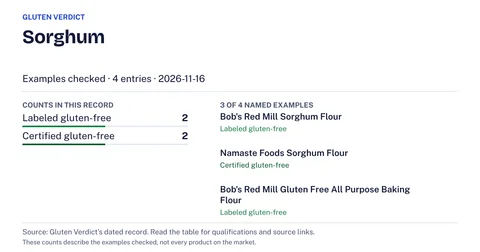 SorghumNaturally gluten-freeBuy it labeled gluten-freechecked Nov 16, 2026
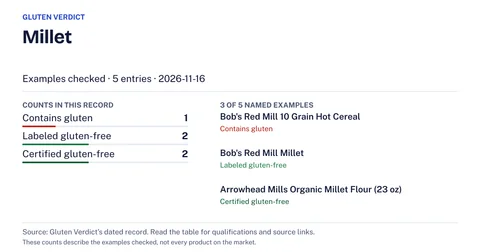 MilletNaturally gluten-free1 of 5 products we checked contains gluten: Bob's Red Mill 10 Grain Hot CerealBuy it labeled gluten-freechecked Nov 16, 2026
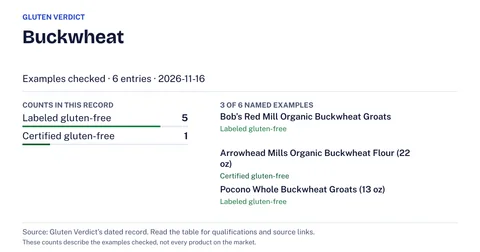 BuckwheatNaturally gluten-freeBuy it labeled gluten-freechecked Nov 16, 2026
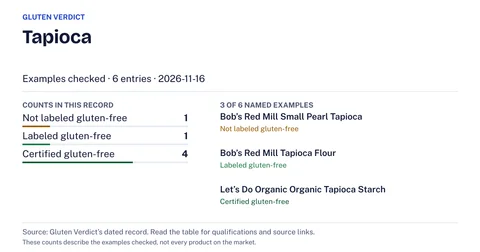 TapiocaNaturally gluten-freeBuy it labeled gluten-freechecked Nov 16, 2026
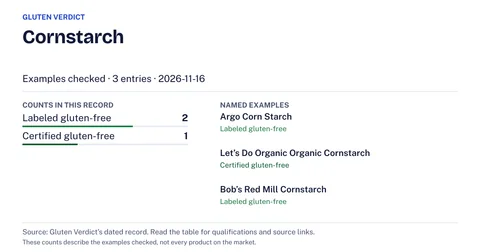 CornstarchNaturally gluten-freeBuy it labeled gluten-freechecked Nov 16, 2026
 OatmealDepends on the productchecked Nov 16, 2026
Questions people ask
Can I swap one gluten-free flour for another?
Not equally. GIG says white, brown and sweet rice flour do not substitute equally for one another29, and Bob’s Red Mill says brown rice flour will not replace wheat flour cup for cup25.
More in Gluten-free baking technique
 Gluten-free flour cups to grams: the weights makers print on their labelsGrams per cup for gluten-free flours, copied from King Arthur’s chart and the Bob’s Red Mill, Krusteaz and Pamela’s panels, with where each figure sits.
 Egg and dairy substitutes in gluten-free baking: what each one doesWhich job an egg or dairy ingredient does in a bake, which substitutes makers and bakers describe for it, and how to check each one's gluten-free status.
 Baking pantry items that can carry glutenBaking powder, cornstarch, powdered sugar, chocolate chips, sprinkles and food coloring: what to read on each label and what the makers say.
 High-altitude gluten-free baking: what extension services and flour makers sayWhat Colorado State Extension, King Arthur and Bob's Red Mill publish for baking above 3,000 feet, and where no source covers gluten-free flours.
 Gluten-free pizza crust, pie crust and cookie problems: what the makers sayMatch a gummy pizza, cracking pie dough or flat cookies to hydration, heat, fat or chill, with what flour and mix makers say and where they stay silent.
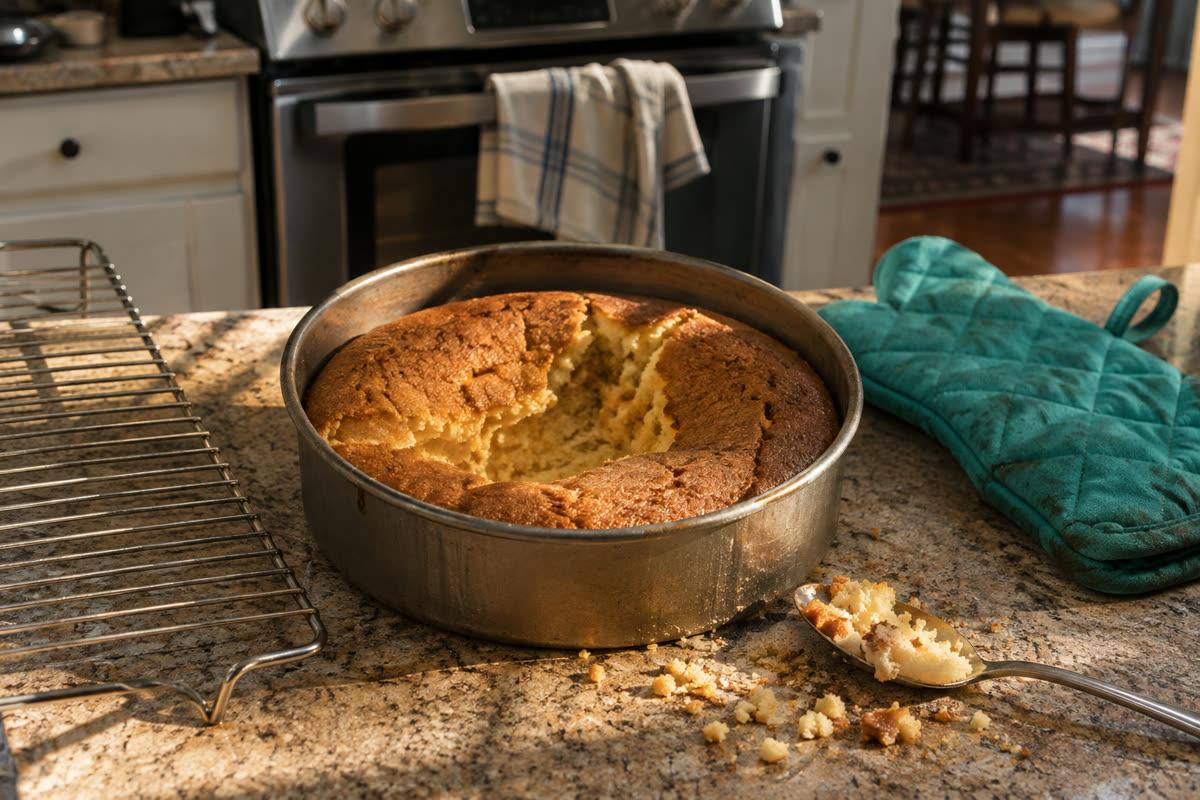 Gluten-free baking gone wrong: dense, gummy, crumbly, gritty or sunkenMatch a dense, gummy, dry, gritty or sunken gluten-free bake to the causes flour makers name, see where their advice differs, and pick one change.
Related guides
 Gluten-free binders: what makers say about xanthan, guar, psyllium and flaxWhich gluten-free flours already list xanthan gum, what makers say about adding more, and how xanthan, guar, psyllium and flax are each described.
 1-to-1, all-purpose and bread flour blends: what each maker’s page says the bag is forWhat King Arthur and Bob’s Red Mill say their 1-to-1, all-purpose, bread and pizza gluten-free flours are for, and which bakes each sends elsewhere.
 Gluten-free oats by country: where the claim is allowed and where it is barredWhether oats can carry a gluten-free claim in the US, Canada, EU, UK, Australia and New Zealand, in each regulator’s own words.
 Gluten-free flours and starches: what each one is and how to read the bagWhich flours and starches are gluten-free by nature, what a claim and a certification mark on the bag each mean, and how to read a blend’s list.
Sources
- [1, 23, 24, 25] Bob's Red Mill, Brown Rice Flour, checked Nov 17, 2026.
- [2, 13, 30] Bob's Red Mill, Sorghum Flour, checked Nov 17, 2026.
- [3, 43] Bob's Red Mill, Millet Flour, checked Nov 17, 2026.
- [4, 14] Bob's Red Mill, Tapioca Flour, checked Nov 17, 2026.
- [5] Bob's Red Mill, Potato Starch, checked Nov 17, 2026.
- [6, 45] Bob's Red Mill, Cornstarch, checked Nov 17, 2026.
- [7, 15, 16, 26, 27] Bob's Red Mill, Sweet White Rice Flour, checked Nov 17, 2026.
- [8, 47, 51] Bob's Red Mill, Organic Coconut Flour, checked Nov 17, 2026.
- [9, 32, 33, 38] Gluten Intolerance Group, Gluten-Free Flours, Tips, and Delicious Recipes, checked Nov 17, 2026.
- [10, 17, 18, 39, 48] US Food and Drug Administration, Questions and Answers on the Gluten-Free Food Labeling Final Rule, checked Nov 17, 2026.
- [11, 12, 20, 34] Gluten Intolerance Group, Gluten-Free Flours & Thickening Agents, checked Nov 17, 2026.
- [19, 49] PubMed (Thompson T, Lee AR, Grace T), Gluten contamination of grains, seeds, and flours in the United States: a pilot study, checked Nov 17, 2026.
- [21, 41] Bob's Red Mill, White Rice Flour, checked Nov 17, 2026.
- [22, 29] Gluten Intolerance Group, 35+ Alternative Gluten-Free Grains and Flour Substitutes, checked Nov 17, 2026.
- [28, 42] Authentic Foods, Superfine White Rice Flour, checked Nov 17, 2026.
- [31, 44] Bob's Red Mill, Organic Buckwheat Flour, checked Nov 17, 2026.
Read the product page for Organic Buckwheat Flour on 2026-11-17: the description and nutrition text for this product contain no gluten-free statement.
- [35, 36, 46] Bob's Red Mill, Almond Flour, checked Nov 17, 2026.
- [37, 50] Gluten Intolerance Group, Replacing Gluten When Cooking and Baking, checked Nov 17, 2026.
- [40] Gluten Intolerance Group, Are Oats and Oat Flour Gluten-Free?, checked Nov 17, 2026.