A price-per-ounce worksheet for comparing gluten-free staples at any store, club or online
Short answer
Compare staples on one unit price, worked out from the net weight printed on each package, and add a column for whether the label or a certifier states the item is gluten-free1, 2. A cheaper row with no such statement is not a like-for-like saving: it has not been shown to meet the same rule2.
- Read the net weight on the package, which the maker must state on the principal display panel1, and divide the shelf price by the ounces (or by grams, at about 28.35 grams to the ounce3).
- Check what the gluten-free column can truthfully say: a “gluten-free” claim on the label4, a certification mark that the certifier’s own list confirms (the GFCO’s list, for example)5, or nothing.
- Spread a club fee over what you actually buy there, then flag every row where the cheaper item has nothing in the gluten-free column.
Part of Cost, taxes and food assistance, 14 guides
Key points
- The shelf tag is the store’s own figure. Under the model unit-pricing rule a store may use price per ounce, pound, 100 grams or kilogram for weight6, and may round a unit price under a dollar to the whole cent7.
- A multipack is labeled with its total net weight as well as the unit size, for example “3-16 oz cans—(net wt. 48 oz)”8. Use the total.
- Per-serving comparisons only work when the grams per serving match: a label states its serving size in a household measure, followed by the equivalent in grams (single-serving containers excepted)9.
- A “gluten-free” label claim means the food has to meet FDA’s rule, including less than 20 parts per million of gluten2. The claim is voluntary4, so a food with no claim is not necessarily a food with gluten10.
- One study of Austrian supermarkets reported large gaps between gluten-free and similar gluten-containing foods, from +205% (cereals) to +267% (bread and bakery products)11. Your own sheet gives today’s numbers for your stores.
Why the shelf tag is not enough
A shelf tag may show a unit price, but the rules behind it are a model: the Uniform Unit Pricing Regulation in NIST Handbook 130 is offered to jurisdictions that choose to adopt it12. The tag is the store’s calculation, and it can differ from yours in three ways.
- The unit may differ. For goods sold by weight the model allows price per kilogram or 100 grams, or price per pound or ounce6. Two stores that follow the model may pick different units.
- The tag may round. A unit price of a dollar or more goes to the nearest cent13; a price under a dollar may be listed to the tenth of a cent or to the whole cent7.
- Some items get no tag. The model exempts packages under 1 ounce or priced at 50 cents or less14, an item sold in only one brand and one size in that store15, and variety or combination packages16.
The model also asks a store to unit-price items of the same commodity consistently where they are sold in more than one unit of measure17. That helps you inside one store. To compare across a store, a club and an online seller, you need one unit for every row, and the most reliable way to get it is to compute it yourself from the package.
The worksheet: seven columns
Copy this layout into a notebook, a spreadsheet or the notes app on your phone. One row is one package in one store on one day.
| Column | What to write | Where it comes from |
|---|---|---|
| 1. Store and date | The store, club or website and the day you read the price | Prices change, so the date is what keeps a row honest |
| 2. Item and size | Brand, product and package type, for example “gluten-free penne, box” | The package front |
| 3. Net weight | The weight in ounces, as printed or converted from pounds, or the total for a multipack | The net quantity statement, required on the principal display panel of a packaged food1 |
| 4. Price | What you pay at the register for one package, before any club fee share | Shelf tag, receipt or product page |
| 5. Price per ounce | Column 4 divided by column 3 | Your own arithmetic |
| 6. Gluten-free statement | “Label claim”, “certified” or “none” | Anywhere on the package, plus the certifier’s list where a mark is used5 |
| 7. Notes | Anything that changes the comparison: multipack, bin, store brand, a coupon | You |
Converting ounces, grams, slices and servings
Ounces. On packages under 4 pounds, the net weight must be shown in ounces18. On a package of a pound or more but under 4 pounds, the ounce figure comes first and the pounds follow in parentheses19, so you can use the ounce figure and ignore the pounds. From 4 pounds up, the weight is declared in pounds with any remainder in ounces38, so convert the pounds to ounces yourself before you divide.
Grams. A metric statement of the net quantity may also appear on the package20. To turn ounces into grams, multiply by about 28.353. A box of 12 ounces is about 12 × 28.35 = 340.2 grams. If you compare per 100 grams, divide the price by the grams and multiply by 100; the 2008 cost study cited below worked in dollars per 100 grams21.
Slices, pieces and cookies. When a count alone does not tell the buyer how much food is in the package, the label must add a weight, measure or size for the units22. If you have only a slice count, find the weight too, then compare per ounce rather than per slice unless the slices weigh the same.
Servings. A serving size is an amount of food customarily eaten at one time by people 4 years of age or older, written in a household measure23, and followed by the equivalent in grams, except on single-serving containers9. The number of servings per container follows from that serving size24. Two products can therefore list different serving sizes. Compare per serving only after you have checked that the grams per serving match; otherwise convert the row back to price per ounce.
A worked example with practice numbers
These numbers are made up to show the arithmetic. They are not real products, stores or prices.
| Item | Net weight | Price | Price per ounce | Gluten-free statement | What the row tells you |
|---|---|---|---|---|---|
| Pasta A, label claim on box | 12 oz | $4.80 | $0.40 | Label claim | Your gluten-free baseline |
| Pasta B, regular | 16 oz | $2.40 | $0.15 | None | Cheaper, but a different product: it is not a saving on pasta A |
Read the last column first. Pasta B is cheaper per ounce only because it is a different food. The comparison that matters is between rows that both have an entry in the gluten-free column. Our verdict for pasta separates traditional pasta from pasta made with other flours, and the same goes for bread, crackers and cereal.
Pack-size traps
- Multipacks. The label gives both the unit size and the total, as in “3-16 oz cans—(net wt. 48 oz)”8. Divide by the total. Dividing by the unit size makes the pack look three times as expensive.
- Variety packs. The model unit-pricing rule exempts variety and combination packages16, so there may be no tag to lean on. Compute from the net weight.
- Weight inside the wrapper. The net quantity is the food, not the wrapping25, so the printed weight is the number to use even when the box looks bigger.
- Packs you will not finish. A larger pack with the lowest price per ounce is a poor deal if part of it is thrown away. In a tip about spoiled food, the Gluten Intolerance Group notes that food waste can put a dent in your wallet26. The same group says buying nuts and seeds in bulk is almost always more cost-effective than individual snack packs27; that is about packs you will use up, and your sheet tells you where the line is.
- A stale weight. If the net weight on the box in your hand differs from the one in your notes, the row is out of date. Rewrite it from the package.
Club membership as a formula
A club price per ounce leaves out the membership fee. To put the fee on the same footing as the shelf price, spread it over what you actually buy there:
- Fee share = annual membership fee ÷ what you spend at the club in a year, on everything you buy there, not only gluten-free food.
- Adjusted price per ounce = price per ounce × (1 + fee share).
- Compare the adjusted figure with the other stores’ rows.
With practice numbers: a fee of $60 and $1,200 of yearly purchases gives a fee share of $60 ÷ $1,200 = 5%. A club item at $14.40 for 48 oz is $0.30 per ounce, and $0.30 × 1.05 = $0.315 per ounce after the fee share. If you buy far less at the club, the fee share rises and the club row can lose to the grocery store. Look up the current fee and refund terms on the club’s own site; they change, and we do not quote them here.
Our verdicts for items sold at one warehouse club are collected in the Costco guide, which separates items that make a gluten-free claim from items that only list ingredients.
The gluten-free column: claim, certification or nothing
The column exists because a lower price per ounce only counts when both rows are the same kind of food. Three entries cover what you will see.
| Entry | What it rests on | What it does not tell you |
|---|---|---|
| Label claim | The package says “gluten-free”, “no gluten”, “free of gluten” or “without gluten”, and the food has to meet FDA’s rule of less than 20 parts per million2. FDA calls the claim voluntary4. | A line such as “made with no gluten-containing ingredients” is not the claim, and FDA says that without the claim you should not assume the food meets the rule28. |
| Certified | A certification mark on the pack. The Gluten-Free Certification Organization says a product counts as certified if it is on its list and carries one of its marks5. | GFCO says a product on its list whose packaging has no mark is not certified29. FDA does not endorse any particular certification program30. |
| None | No claim and no mark. A food that is gluten-free by nature may carry no claim10. | None does not mean the food contains gluten. It means the package gives you nothing to compare. Read the ingredient list and use our verdict, for example for rice. |
A row with “None” can still be a real saving when the food is a plain staple, such as rice, as long as you treat it as a separate line and read the label. The Gluten Intolerance Group advises checking labels and choosing certified products when needed for naturally gluten-free grains and oats, because cross-contact can be a risk during processing31. The same group warns that products in international markets are less likely to be labeled or certified gluten-free32.
Bins and scoops are not a bulk pack
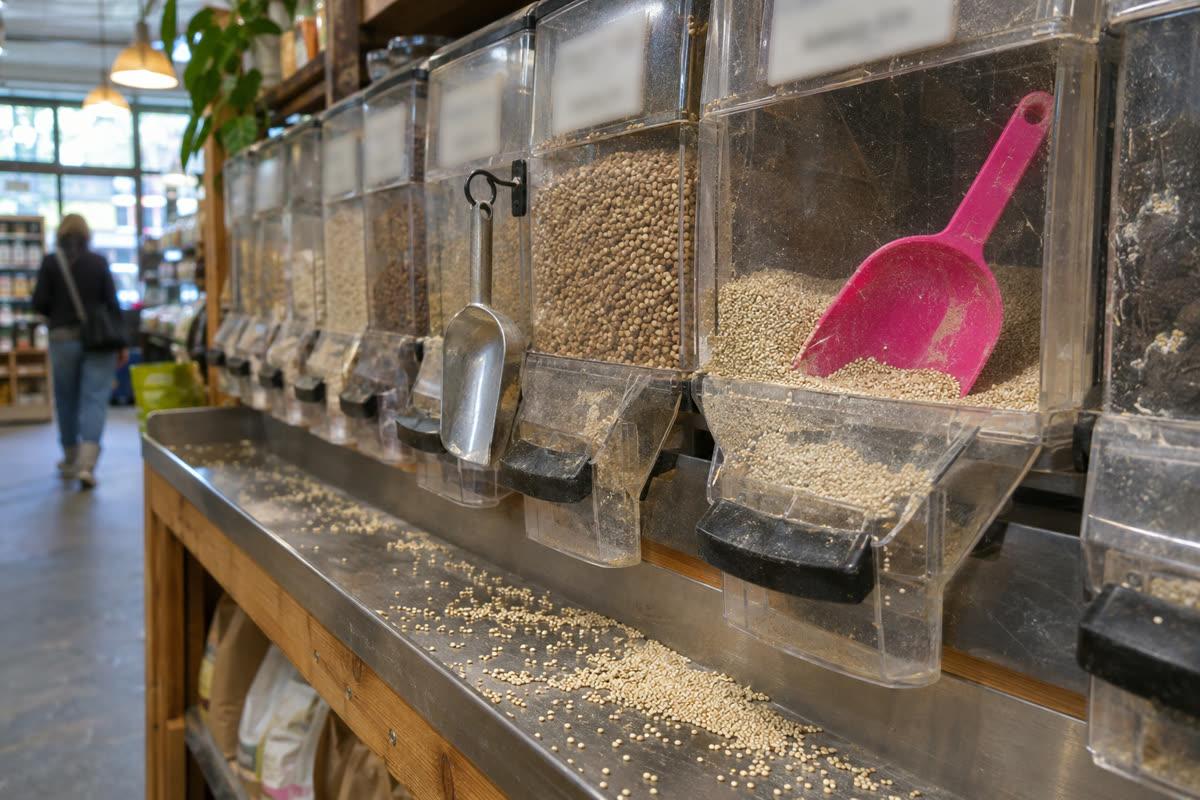
With a bin there is no printed package, so column 3 comes from the scale and column 6 has nothing to read. The Gluten Intolerance Group points two ways on bins. One of its articles lists options such as gluten-free oats, buckwheat, millet, teff, sorghum and almond or chickpea flours and says they are often available at a lower price in the bulk section33; another says to stay clear of the bulk section because gluten-containing ingredients could linger on scoops or surrounding bins, leading to unavoidable cross-contact34.
On the worksheet, write bin rows in their own block with the gluten-free entry “None”, and never set one against a packaged row that carries a claim as if they were the same product. Our grocery shopping guide covers the bulk section in more detail.
Staples worth tracking, and how to keep the sheet current
Start with the staples you buy every week; the list below says what to watch for in each.
- Bread and crackers: compare per ounce of the loaf or box, and count slices only after you have the weight.
- Pasta and rice: the easiest rows to compare, because the net weight is simple.
- Flour: compare per ounce of the bag; a baking mix and a single flour are different rows.
- Cereal and oatmeal: note whether the oats carry a claim or a mark.
To keep the sheet current, re-read the price and the net weight whenever you re-shop, write the new date, and keep the old row if you want to see how a price moved. Delete a row only when you stop buying that item.
Two older studies show why the gluten-free column is worth the extra step. A study published in the Canadian Journal of Dietetic Practice and Research compared products labelled “gluten-free” with comparable foods in the same group35 and found that all 56 gluten-free products were more expensive than the regular ones36. The Austrian study obtained prices for 63 gluten-free foods and 126 gluten-containing counterparts from 12 supermarkets37. They were published in 2008 and 2015, and the second used Austrian supermarkets, so treat them as evidence that a gap has been found, not as today’s US prices. For why the gap exists, see our guide on why gluten-free packaged food costs more; for ways to spend less, gluten-free on a budget. If you are keeping receipts for a tax question, the IRS guide explains what the IRS says.
Verdicts in this guide
 BreadContains glutenchecked Nov 16, 2026
 PastaContains glutenchecked Nov 16, 2026
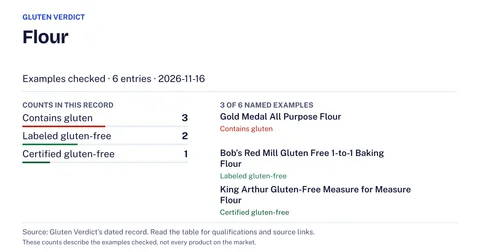 FlourContains glutenchecked Nov 16, 2026
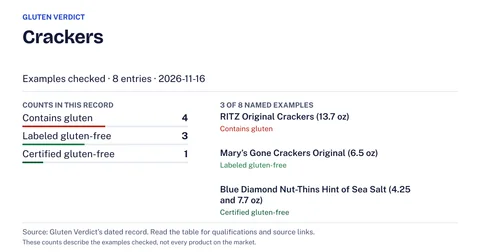 CrackersDepends on the product4 of 8 products we checked contain glutenchecked Nov 16, 2026
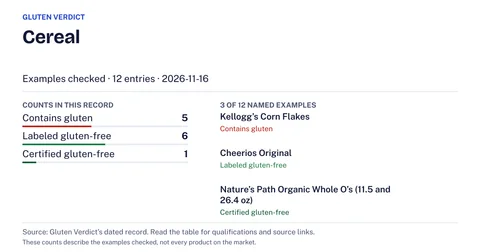 CerealDepends on the product5 of 12 products we checked contain glutenchecked Nov 16, 2026
 OatmealDepends on the productchecked Nov 16, 2026
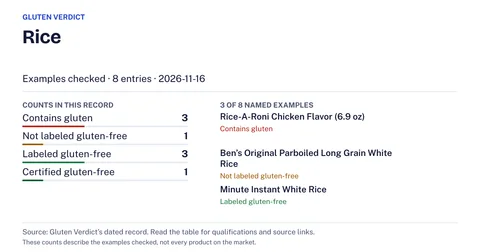 RiceNaturally gluten-free3 of 8 products we checked contain gluten: Rice-A-Roni Chicken Flavor (6.9 oz), Near East Original Rice Pilaf, and Ben’s Original Ready Rice Rice PilafBuy it labeled gluten-freechecked Nov 16, 2026
Questions people ask
Does a food without a gluten-free claim contain gluten?
Not necessarily. FDA says makers of foods that are gluten-free by nature may choose not to label them “gluten-free”10. Without a claim you have to read the ingredients, which is why the worksheet puts such a row on its own line.
Should the club fee go on every row?
Yes, as a share of what you spend at the club in a year, not as a flat amount on each item. Use the fee share formula above, then compare the adjusted price per ounce with your other stores.
More in Cost, taxes and food assistance
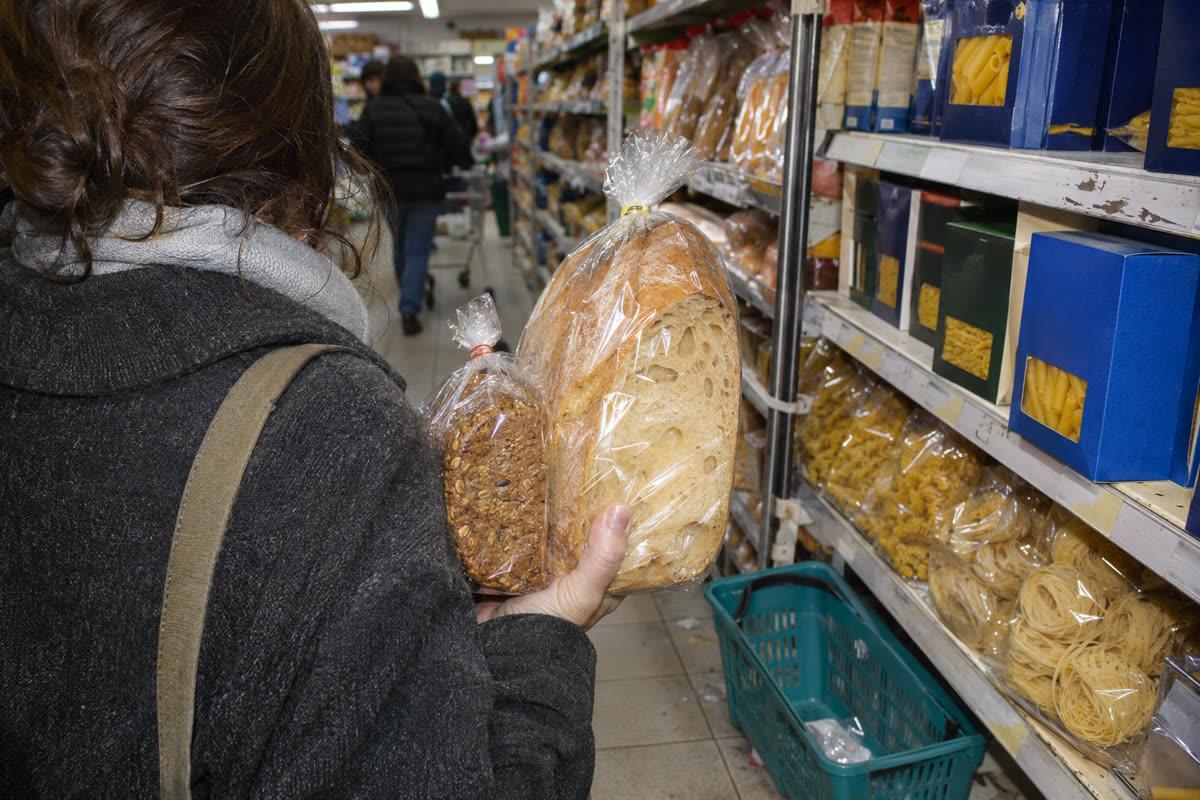 Why gluten-free packaged food costs more, and what the price surveys showWhat price surveys found, what researchers say drives the gap, what FDA’s rule and one certifier require, and what a shopper can avoid.
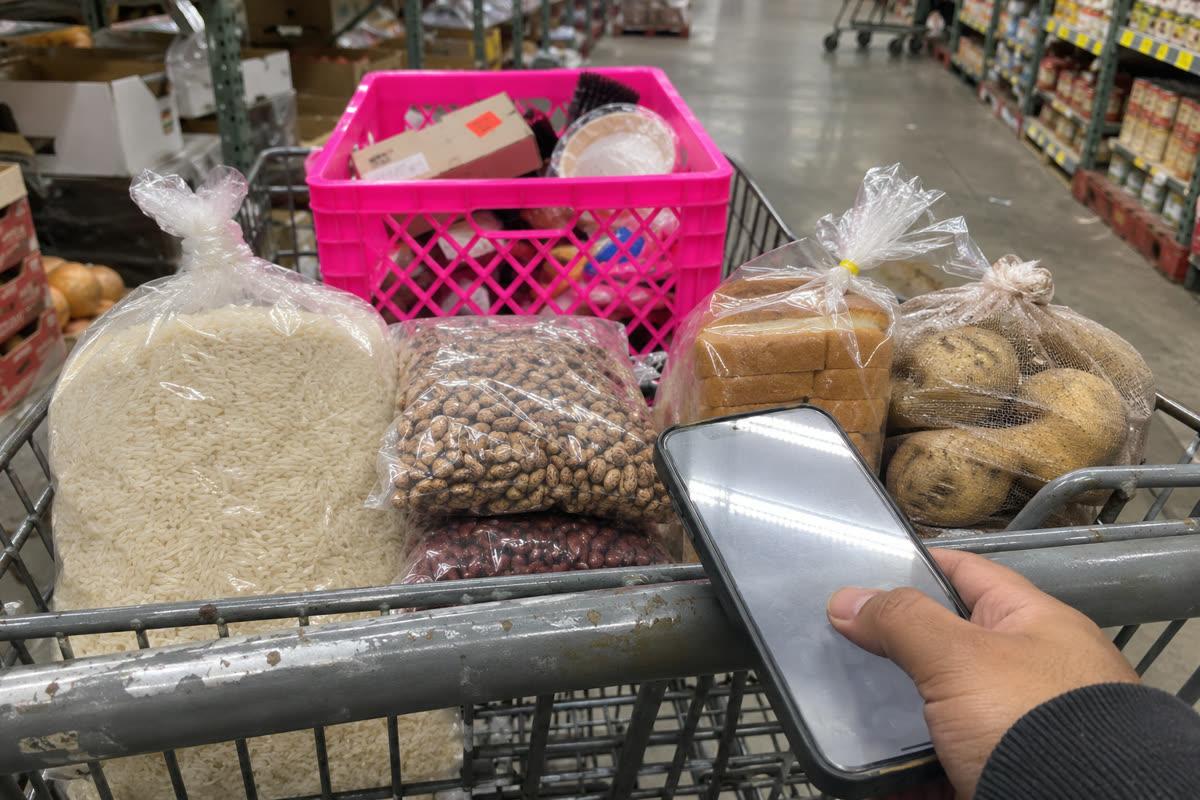 Gluten-free on a budget: what costs extra and what does notSort a gluten-free shopping list into plain foods, foods that need a statement and packaged substitutes, then compare costs and check each claim.
 Gluten-free food on prescription in the UK: how to check your areaWhat gluten-free staples the NHS prescribes in England, Scotland, Wales and Northern Ireland, how amounts are set, what you pay, and where to check.
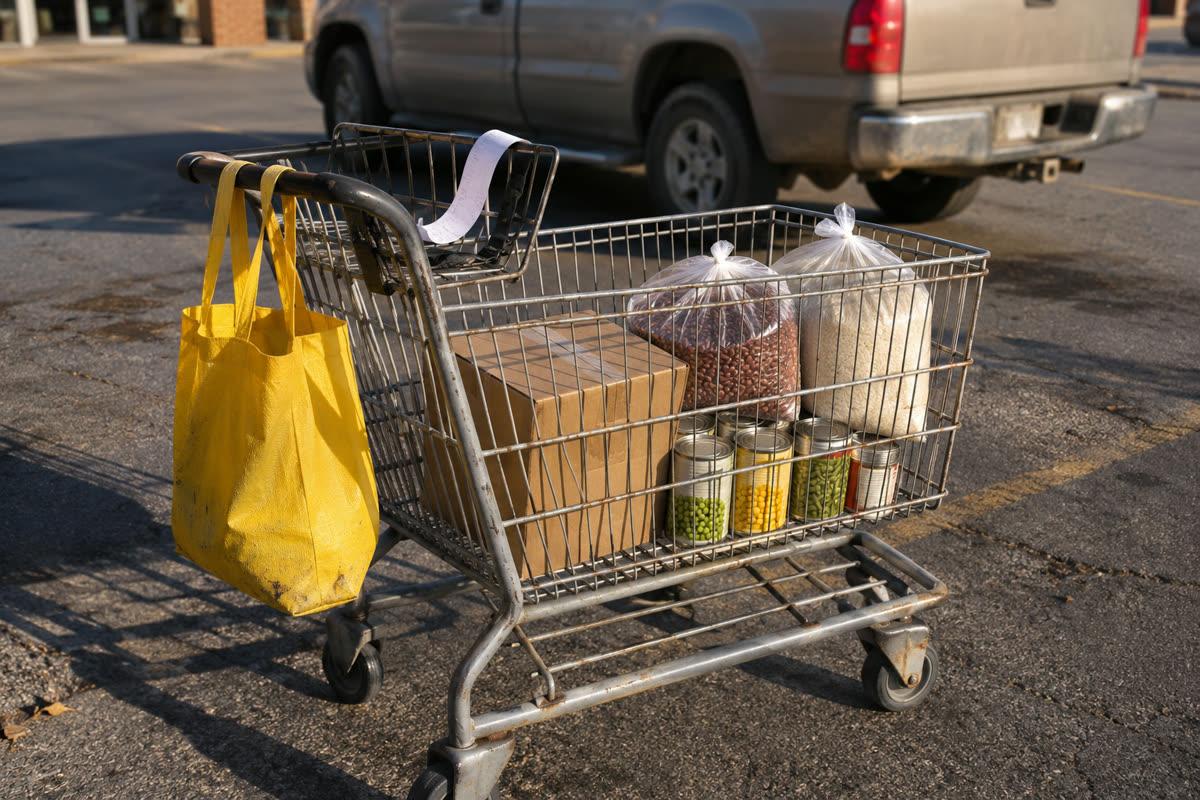 SNAP and gluten-free food: what the benefit covers and how to shop itWhich gluten-free foods SNAP covers, what it excludes, and how to build a list from naturally gluten-free staples plus a few labeled items.
 Is gluten-free food tax deductible? What the IRS says and what to keepWhat IRS Publication 502 says about special food as a medical expense, how the excess-cost sum works, and what records to bring to a tax professional.
 Paying for gluten-free food and dietitian visits with an HSA or FSAWhat IRS rules say about paying for special food, dietitian visits and test kits from an HSA or FSA, what a physician's letter covers and what to keep.
Related guides
 Gluten-free flour and baking mix cost per cup, with each maker’s statementWhat a cup of gluten-free flour or baking mix costs from each maker’s own price and label, shown beside what the maker says about gluten.
 Costco and gluten: which items make a claim and which only list ingredientsSort a Costco cart into claim, ingredient list only, or nothing to read, using Costco’s own item pages and what FDA’s gluten-free rule requires.
 Deli, bakery and bulk-bin counters on a gluten-free dietFor each store counter (deli, bakery, bulk bins, bars): skip it, ask first, or buy the packaged item, and what a store’s own statement tells you.
 Gluten-free at Price Chopper and Market 32: the blue shelf tag, the ppm figure and the bakery and deliHow to use Price Chopper and Market 32’s gluten-free tag and pages, hold a pack to FDA’s 20 ppm rule, and what the bakery and deli pages leave unsaid.
Sources
- [1, 8, 18, 19, 20, 22, 25, 38] eCFR (US Government Publishing Office and National Archives), 21 CFR 101.7, Declaration of net quantity of contents, checked Nov 17, 2026.
- [2, 4, 30] US Food and Drug Administration, Gluten and Food Labeling, checked Nov 17, 2026.
- [3] National Institute of Standards and Technology (NIST), Approximate Conversions from U.S. Customary Measures to Metric, checked Nov 17, 2026.
Read on 2026-11-17: the “Mass (weight)” table on this page lists ounce (oz) multiplied by 28.35 to find gram (g), and pound (lb) multiplied by 0.45 to find kilogram (kg).
- [5, 29] Gluten-Free Certification Organization (GFCO), GFCO Product Finder, checked Nov 17, 2026.
- [6, 7, 12, 13, 14, 15, 16, 17] National Institute of Standards and Technology (NIST), NIST Handbook 130 (2026), Uniform Unit Pricing Regulation, checked Nov 17, 2026.
- [9, 23, 24] eCFR (US Government Publishing Office and National Archives), 21 CFR 101.9, Nutrition labeling of food, checked Nov 17, 2026.
- [10, 28] US Food and Drug Administration, Questions and Answers on the Gluten-Free Food Labeling Final Rule, checked Nov 17, 2026.
- [11, 37] PeerJ, via PubMed Central, Missbach et al., Gluten-free food database: the nutritional quality and cost of packaged gluten-free foods (2015), checked Nov 17, 2026.
- [21, 35, 36] Canadian Journal of Dietetic Practice and Research, via PubMed, Stevens and Rashid, Gluten-free and regular foods: a cost comparison (2008), checked Nov 17, 2026.
- [26] Gluten Intolerance Group, 5 Ways to Reduce the Stress of Shopping Gluten-Free, checked Nov 17, 2026.
- [27, 31] Gluten Intolerance Group, Smart Shopping, Big Savings: Gluten-Free Staples and Affordable Snacks, checked Nov 17, 2026.
- [32] Gluten Intolerance Group, 5 Ways to Cut Costs on a Gluten-Free Diet, checked Nov 17, 2026.
- [33] Gluten Intolerance Group, Gluten-Free, But at What Cost?, checked Nov 17, 2026.
- [34] Gluten Intolerance Group, 25 Ways Cross-Contact Could Happen and How to Avoid It, checked Nov 17, 2026.