Gluten-free food on prescription in the UK: how to check your area
Short answer
Whether gluten-free food is prescribed depends on where you live. In England, Coeliac UK says prescriptions are limited to bread and flour mixes, and some local areas may restrict them further4; in Scotland, Wales and Northern Ireland, anyone with a coeliac diagnosis can access staples such as bread, flour and pasta under national guidelines5. Coeliac UK’s GP checker shows a practice’s policy6.
Part of Cost, taxes and food assistance, 14 guides

Key points
- In England, local Integrated Care Boards can introduce their own restrictions, and prescribing guidelines differ within England50, 2.
- Coeliac UK’s National Prescribing Guidelines give illustrative monthly “units” by age and sex; the GP makes the clinical decision8, 13.
- England charges £9.90 per prescription item, with exemptions and prepayment certificates; in Scotland the gluten-free food service is free of charge, and Wales (with a Welsh GP) and Northern Ireland offer free prescriptions29, 25, 37, 38.
- Coeliac UK says it is at the GP’s discretion to prescribe where there is a clinical need, and suggests contacting the ICB and MP if support was withdrawn39, 42.
Why is gluten-free food prescribed, and why does it differ by area?
Coeliac UK says gluten-free prescriptions support people with coeliac disease to maintain a strict gluten-free diet, and recognise that the diet is the only treatment16. Its stated reasons include that the diet can be hard to stick to, that gluten-free foods cost more than their gluten-containing equivalents, and that they can be difficult to find in local shops17.
Who decides is local. Coeliac UK says Integrated Care Boards (ICBs) are responsible for commissioning NHS services locally in England, and that Local Health Boards in Scotland and Wales and Health and Social Care Trusts in Northern Ireland are responsible for local prescribing policies3. Its summary is that prescribing guidelines differ across the UK and within England, so what you can access depends on where you live2.
In England, Coeliac UK also reports that prescribing support has been withdrawn in a number of areas in recent years18, and on its cost-of-living page says nearly half of the population is living in areas cut adrift from support47. Those are the charity’s statements, not an NHS figure.
How do I look up my GP practice’s policy?
Coeliac UK’s GP gluten-free prescription checker takes a GP practice name or address and shows the practice’s gluten-free prescription policy6. Start there, because the national summary below cannot tell you what your own ICB or health board has decided.
Coeliac UK’s starting point is a diagnosis: if your doctor has diagnosed coeliac disease or dermatitis herpetiformis, you might be able to access gluten-free staples on prescription1. If the checker shows nothing for your practice, ask the practice or your ICB or health board directly.
What can be prescribed in each UK nation?
| Nation | What is available and how it is delivered |
|---|---|
| England | Limited to bread and flour mixes only, and some local areas may restrict further, for example by age or other factors like pregnancy; in some places it has been withdrawn altogether and is available only on a case by case basis4. |
| Scotland | Anyone with a diagnosis of coeliac disease can access staples such as bread, flour and pasta under national guidelines5. NHS inform describes the Gluten-free Food Service, a voluntary service available through all community pharmacies24. |
| Wales | Same national-guideline access as Scotland and Northern Ireland5. Coeliac UK says a top up card scheme is available in the Hywel Dda area7. |
| Northern Ireland | Same national-guideline access as Scotland and Wales5. |
How England ended up with bread and mixes only
The government decided, after a consultation, to restrict gluten-free prescribing to bread and mixes only19. NHS England’s FAQ says the revised regulation came into force in December 201820; before that, the Drug Tariff categories included bread, pasta, flour, grains, biscuits, mixes, cereals and pizza bases22.
That FAQ was written for clinical commissioning groups (CCGs). It says they could restrict further by selecting bread only, mixes only, or end prescribing of all gluten-free foods if they felt it appropriate for their population21. Coeliac UK’s current pages name ICBs as responsible for commissioning NHS services locally in England3.
Scotland’s pharmacy service
NHS inform says you can use the Scottish service if you have a confirmed diagnosis of coeliac disease or dermatitis herpetiformis, live in Scotland and are registered with a GP practice26. Once registered, you must always go to the same pharmacy to order48.
Wales
Coeliac UK says a top up card scheme is available in Hywel Dda University Health Board, and that it was due to be rolled out across the rest of Wales from Autumn 20257. We could not confirm from that page whether this has happened, so check your health board.
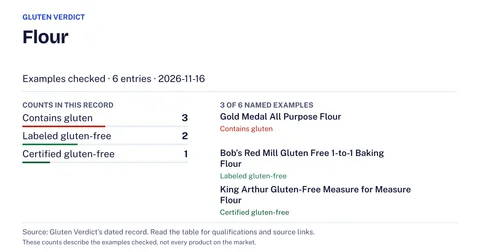
For our verdicts on the staples themselves, see bread, pasta and flour.
How much is prescribed?
Coeliac UK says your GP is ultimately responsible for the clinical decision on the amounts prescribed and should take your nutritional needs into account8. The amounts below come from the National Prescribing Guidelines, which Coeliac UK says were produced by a working group of NHS healthcare professionals, first launched in 2004, and are endorsed by the Primary Care Society for Gastroenterology and the British Dietetic Association9.
The guidelines give amounts per patient, per month, based on average energy requirements for age and sex and factors such as pregnancy or breastfeeding10. Coeliac UK calls them illustrative: prescribers should take account of individual nutritional requirements12. They assume you also eat naturally gluten-free staples such as rice and potatoes, and that the prescription does not meet your whole nutritional need alone11.
| Age and sex | Units per month |
|---|---|
| Child (1-3 years) | 1013 |
| Child (4-6 years) | 1113 |
| Child (7-10 years) | 1313 |
| Child (11-14 years) | 1513 |
| Child (15-18 years) | 1813 |
| Male (19-59 years) | 1813 |
| Male (60-74 years) | 1613 |
| Male (75+ years) | 1413 |
| Female (19-74 years) | 1413 |
| Female (75+ years) | 1213 |
| Breastfeeding and 3rd trimester pregnancy | Add 4 units for breastfeeding, add 1 unit for 3rd trimester pregnancy13 |
NHS inform’s Scottish tables carry the same age bands and unit numbers, and say units cannot be carried over to a later date if you do not use them28, 27.
What a unit is
| Food item | Units |
|---|---|
| 500g bread mix/flour mix | 214 |
| 200g savoury biscuits/crackers | 114 |
| 250g pasta | 114 |
| 500g oats | 1.514 |
| 300g breakfast cereals | 1.514 |
| 2 × 110–180g pizza bases | 114 |
| 100–170g xanthan gum | 114 |
| 400g bread/rolls/baguettes | 114 |
Coeliac UK’s reminder above this table: only bread and flour is available in England14.
England’s own table
Because only bread and flour mixes are prescribable in England, Coeliac UK publishes additional guidance for English prescribers based on national data on bread consumption: 8 units for a child under 10 and for a female aged 19 and older, and 12 units for a child aged 11 to 18 and for a male aged 19 and older15.
What do you pay?
| Nation | Charge |
|---|---|
| England | £9.90 per item29. Charges are for each item, not each prescription30. |
| Scotland | NHS inform says all gluten-free foods are provided free of charge as part of your prescription25. |
| Wales | If you are registered with a GP in Wales, you are entitled to free prescriptions from a pharmacist in Wales37. |
| Northern Ireland | All prescriptions dispensed in Northern Ireland are free of charge for everyone38. |
In England: exemptions and prepayment
Among other groups, NHSBSA says you are entitled to free NHS prescriptions if you are under 16, aged 16, 17 or 18 in full time education, or aged 60 or over35. A certificate for full help with health costs (HC2) from the NHS Low Income Scheme also gives free prescriptions36.
For the medical-condition route, NHSBSA says you must have a medical exemption certificate to get free NHS prescriptions33. The NHSBSA list of qualifying conditions does not name coeliac disease34.
If you pay, a prescription prepayment certificate (PPC) covers all NHS prescriptions for a set price, and NHSBSA says you save money if you need more than 3 items in 3 months or 11 items in 12 months31. Its prices are listed there32. NHS England’s FAQ on the 2018 change adds that a prepayment certificate covers all prescription medicines, not just gluten-free food23.
We did not find an NHS page that says how many prescription items a gluten-free bread or mix order counts as. Ask your pharmacy before buying a certificate.
What if access is refused or has been withdrawn?
Coeliac UK suggests taking a copy of its Prescribable Products List and its guidelines to your GP to discuss which staples are available and to understand the decision40. It adds that a local dietitian is best placed to advise on individual nutritional requirements41.
If your ICB has restricted access, Coeliac UK says it is at your GP’s discretion to prescribe gluten-free products where they feel there is a clinical need39. It also says some areas have exceptionality policies that can allow support in individual cases with a clinical need45.
If prescriptions have been withdrawn in your area, Coeliac UK urges contacting your ICB and local MP42, and offers a template letter for the ICB49.
The complaints route Coeliac UK lists
- Complain to the service provider first, which means your GP practice; Coeliac UK says to speak to the practice manager and complain in writing43.
- If you are still unhappy, the next steps it names are the ICB in England, the local Health Board in Scotland and Wales, or the Health and Social Care Board in Northern Ireland43.
- If you continue to be dissatisfied, it names the ombudsman for your nation, offices it describes as independent of the NHS and Government44.
If nothing is prescribed, and a note for US readers
Coeliac UK’s cost-of-living page recommends approaching your GP if you are struggling, and says its own information on managing a gluten-free diet on a budget may help. It also names Turn2us, a charity that helps people gain access to financial support in times of hardship45, 46.
This is a UK system, not a US benefit. Our own guides on why gluten-free food costs more, eating gluten-free on a budget and labeling laws by country cover the rest.
Verdicts in this guide


Questions people ask
Can I get gluten-free pasta on prescription in England?
Coeliac UK says prescriptions in England are limited to bread and flour mixes only4. Pasta is among the staples listed for Scotland, Wales and Northern Ireland5.
Is coeliac disease on the list for free prescriptions in England?
The NHSBSA page listing the conditions that qualify for a medical exemption certificate does not name it34. Age and low-income entitlements are separate35, 36.
Who decides how much I get?
Coeliac UK says your GP is ultimately responsible for the clinical decision on amounts8. The monthly units are illustrative guidelines12.
Can I carry unused units over in Scotland?
NHS inform says you cannot carry unused units over to a later date27.
More in Cost, taxes and food assistance
 A price-per-ounce worksheet for comparing gluten-free staples at any store, club or onlineA worksheet for comparing gluten-free staples by price per ounce across stores, clubs and online, with a column for the gluten-free statement.
 Paying for gluten-free food and dietitian visits with an HSA or FSAWhat IRS rules say about paying for special food, dietitian visits and test kits from an HSA or FSA, what a physician's letter covers and what to keep.
 Why gluten-free packaged food costs more, and what the price surveys showWhat price surveys found, what researchers say drives the gap, what FDA’s rule and one certifier require, and what a shopper can avoid.
 Is gluten-free food tax deductible? What the IRS says and what to keepWhat IRS Publication 502 says about special food as a medical expense, how the excess-cost sum works, and what records to bring to a tax professional.
 Gluten-free on a budget: what costs extra and what does notSort a gluten-free shopping list into plain foods, foods that need a statement and packaged substitutes, then compare costs and check each claim.
 SNAP and gluten-free food: what the benefit covers and how to shop itWhich gluten-free foods SNAP covers, what it excludes, and how to build a list from naturally gluten-free staples plus a few labeled items.
Related guides
 Financial help for a gluten-free diet in the US: each program and where to startThe US programs that touch the cost of a gluten-free diet, who runs each one, and which page to open to read its own rule.
 Gluten-free labeling rules by country: ceilings, claim wording and where no rule was foundLook up the gluten-free limit and claim wording for the US, Canada, EU, UK, Australia, New Zealand and more, each figure tied to the page we read.
 Can someone with celiac disease eat gluten again?What NIDDK, the ACG guideline and studies say about eating gluten again with celiac disease, why feeling well is not healing, and who runs a challenge.
 Gluten-free substitutes: the swap for each wheat ingredient and the label check it needsA lookup table of gluten-free swaps for wheat flour, pasta, bread, soy sauce, beer and more, with the one label check each swap needs.
Sources
- [1, 2, 3, 4, 5, 50] Coeliac UK, Gluten-free prescriptions, checked Nov 17, 2026.
- [6] Coeliac UK, GP gluten-free prescription checker, checked Nov 17, 2026.
- [7, 8, 9, 10, 11, 12, 13, 14, 15] Coeliac UK, How much should be prescribed, checked Nov 17, 2026.
Read on 2026-11-17: the table headed “Recommended amounts per month” lists child (1-3 years) 10, child (4-6 years) 11, child (7-10 years) 13, child (11-14 years) 15, child (15-18 years) 18, male (19-59 years) 18, male (60-74 years) 16, male (75+ years) 14, female (19-74 years) 14, female (75+ years) 12, and for breastfeeding and 3rd trimester pregnancy “Add 4 units for breastfeeding, add 1 unit for 3rd trimester pregnancy”.
Read on 2026-11-17: the table headed “Number of units for different foods” lists 500g bread mix/flour mix 2; 200g savoury biscuits/crackers 1; 250g pasta 1; 500g oats 1.5; 300g breakfast cereals 1.5; 2 × 110–180g pizza bases 1; 100–170g xanthan gum 1; 400g bread/rolls/baguettes 1. The text above it says “Remember only bread and flour is available in England.”
Read on 2026-11-17: the table under “Additional guidance for England (bread and flour mixes only)” lists child under 10 years 8; child 11 – 18 years 12; female 19 years and older 8; male 19 years and older 12; and for breastfeeding and 3rd trimester pregnancy a pointer to the National Prescribing Guidelines. The text says the additional guidance is “based on national data on bread consumption in the UK”.
- [16, 17, 18] Coeliac UK, Why are gluten-free staples offered on prescription, checked Nov 17, 2026.
- [19] Department of Health and Social Care (GOV.UK), Availability of gluten-free foods on NHS prescription, checked Nov 17, 2026.
- [20, 21, 22, 23] NHS England, Prescribing gluten-free foods in primary care: guidance for CCGs, FAQs, checked Nov 17, 2026.
- [24, 25, 26, 27, 28, 48] NHS inform (Scotland), Gluten-free Food Service, checked Nov 17, 2026.
Read on 2026-11-17: the list under “Who can use this service” names a confirmed diagnosis of coeliac disease or dermatitis herpetiformis, living in Scotland, and being registered with a GP practice.
Read on 2026-11-17: the tables headed “Male allowance” and “Female allowance” list units per month by age band (1 to 3: 10; 4 to 6: 11; 7 to 10: 13; 11 to 14: 15; 15 to 18: 18 for both; males 19 to 59: 18, 60 to 74: 16, 75 and over: 14; females 19 to 74: 14, 75 and over: 12), and “Female allowance during pregnancy” lists 3rd trimester as normal allowance + 1 and breastfeeding as normal allowance + 4.
- [29, 30] NHS, NHS prescription charges, checked Nov 17, 2026.
- [31, 32] NHS Business Services Authority, NHS Prescription Prepayment Certificate (PPC), checked Nov 17, 2026.
Read on 2026-11-17: under “The prescription charge in England is £9.90. A PPC costs:” the list names £32.05 for 3 months and £114.50 for 12 months.
- [33, 34] NHS Business Services Authority, Medical exemption certificates, checked Nov 17, 2026.
Read on 2026-11-17: the list under “Other medical conditions” names a permanent fistula, hypoadrenalism, diabetes insipidus and other forms of hypopituitarism, diabetes mellitus (except where treatment is by diet alone), hypoparathyroidism, myasthenia gravis, myxoedema, epilepsy needing continuous anticonvulsive therapy, and a continuing physical disability; cancer-related treatments are listed separately. Coeliac disease is not named on the page.
- [35, 36] NHS Business Services Authority, Free NHS prescriptions, checked Nov 17, 2026.
Read on 2026-11-17: the list under “Age” and “You’re entitled to free NHS prescriptions if you’re:” names under 16; aged 16, 17 or 18 and in full time education; and aged 60 or over.
- [37] Welsh Government, Free prescriptions, checked Nov 17, 2026.
- [38] nidirect (Northern Ireland government), Help with health costs, checked Nov 17, 2026.
- [39, 40, 41, 42, 43, 44, 49] Coeliac UK, Having difficulty accessing gluten-free prescriptions, checked Nov 17, 2026.
Read on 2026-11-17: under “Understanding the NHS complaints procedure” the page lists, in order: complain to the service provider first (your GP practice, speaking to the practice manager and complaining in writing); then, if still unhappy, the ICB in England, the Local Health Board in Scotland and Wales, or the Health & Social Care Board in Northern Ireland, with independent advice from Healthwatch, the Patient Advice & Support Service, the Community Health Council or the Patient and Client Council.
- [45, 46, 47] Coeliac UK, Cost of living support, checked Nov 17, 2026.