Gluten-free on a budget: what costs extra and what does not
Short answer
The Gluten Intolerance Group (GIG) calls specialty processed foods such as breads, crackers and cereals the most expensive part of a gluten-free diet, and says whole foods that are naturally gluten-free are less expensive1, 2. A cheaper packaged item is a saving only if it carries a gluten-free claim, and a claim must meet FDA’s rule3; GIG adds that oats, lentils and milled products are best avoided unless labeled or certified gluten-free4. Sort a shopping list in three steps:
- Put plain foods first: meat, fish, fruit, vegetables, rice and potatoes are listed by NIDDK as naturally gluten-free, without additives or some seasonings5.
- For oats, lentils and milled flours, GIG advises avoiding them unless labeled or certified gluten-free4.
- For packaged substitutes, compare price per ounce, then read the claim: a gluten-free claim on a cheaper product has to meet the same FDA rule3.
Part of Cost, taxes and food assistance, 14 guides
Key points
- Studies in the US, Canada, the UK and Austria each found gluten-free foods costing more than their gluten-containing counterparts; the size of the gap differed by study and store6, 7, 8, 9.
- GIG names specialty breads, crackers and cereals as the costliest part of the diet, and whole foods that are naturally gluten-free as the cheaper base1, 2.
- GIG says oats, lentils and milled products from grains, beans, seeds or legumes are best avoided unless labeled or certified gluten-free4.
- A store brand’s claim is held to the same FDA definition as a name brand’s3; FDA does not endorse any one certification program10.
- A cheap store can mean fewer choices: in one UK survey, budget supermarkets had almost no gluten-free versions of the 20 foods priced11.
Where the extra cost comes from
NIDDK says packaged gluten-free foods tend to cost more than the same foods that have gluten12. The Gluten Intolerance Group (GIG) says the most expensive part of a gluten-free diet is buying specialty processed foods like breads, crackers and cereals1. FDA lists breads, cereals and pastas among the foods that typically contain gluten13. The surveys below show how much more their gluten-free versions cost.
Researchers have priced this directly. Each row below is one study’s result for its own stores, country and year, in the authors’ own figures. None of them is a price you will see today.
| Study | What was compared | What the authors report |
|---|---|---|
| Lee and colleagues, 2007 (United States) | A market basket of named regular and gluten-free products, across store types and regions14 | Every gluten-free product cost more; bread and pasta were twice as expensive; shopping venue affected cost more than region15 |
| Stevens and Rashid, 2008 (Canada) | Products labelled gluten-free and comparable gluten-containing items at two large-chain grocery stores16 | All 56 gluten-free products cost more; mean unit price $1.71 against $0.61 for regular products, in dollars per 100 grams7, 17 |
| Singh and Whelan, 2011 (United Kingdom) | 20 foods, wheat-based and everyday, at 30 stores in five store categories18 | Gluten-free versions of the 10 wheat-based foods cost 76-518% more; some gluten-free versions of everyday foods cost 2-124% more8 |
| Missbach and colleagues, 2015 (Austria) | 63 gluten-free packaged foods and 126 gluten-containing counterparts from 12 supermarkets19 | Gluten-free foods cost more on average, from +205% (cereals) to +267% (bread and bakery products)9 |
| Lee and colleagues, 2019 (United States) | A market basket of regular and gluten-free products, by price per ounce, across four venues and five regions20 | Gluten-free products were more expensive overall (183%); those from mass-market producers were 139% more expensive than the wheat-based version; the authors say the overall figure fell from 240% in an earlier study, adjusted for inflation6, 21 |
Two details matter for a budget. In the 2007 US study, where the product was sold affected cost more than the region did15. And in the UK survey, the reported premiums for the gluten-free versions of everyday foods that cost more (2-124%) were lower than those for gluten-free versions of wheat-based foods (76-518%)8.
We list no prices on this page. A price differs by store and by week, and a number we could not read from a store page on the day would be an estimate. Use the unit-price method in the last sections with your own receipts.
Foods that need no special product
NIDDK lists meat, fish, fruits, vegetables, rice and potatoes, without additives or some seasonings, as naturally gluten-free5. FDA adds that eggs, fruits and vegetables are naturally gluten-free but may carry no claim, because a claim is not required22. A missing “gluten-free” on a bunch of carrots is therefore not a warning by itself.
GIG’s budget article names beans and legumes as the “undisputed champions” of budget-friendly protein23, and lists eggs, peanut butter, Greek yogurt and chicken as naturally gluten-free, widely available and easy on the wallet, especially when bought in bulk24.
| On your list | What the sources say | At the shelf |
|---|---|---|
| Fresh fruit and vegetables, eggs, meat and fish with no added sauce or seasoning | Naturally gluten-free5, 22 | No gluten-free version needed. Read the label if a sauce, marinade or seasoning was added. See eggs. |
| Rice, potatoes, quinoa | NIDDK lists rice and potatoes as naturally gluten-free5. GIG says that for grains such as rice and quinoa, cross-contact can be a risk during processing, so check labels and choose certified products when needed26 | Read the bag. A seasoned rice mix is a different product: read its ingredient list. See rice. |
| Dried beans and chickpeas | GIG calls beans naturally gluten-free27 | See chickpeas. If no labeled bag is on the shelf, GIG describes washing and sorting dry beans28. |
| Lentils | GIG says lentils carry a higher cross-contact risk than other legumes or beans and should be labeled gluten-free or certified, organic or not29 | Buy with a statement. See lentils. |
| Milk, cheese, yogurt | GIG says most dairy products are naturally gluten-free30, and advises a label check on flavored or processed dairy, which can contain added thickeners or flavorings that introduce gluten31 | Plain is the low-effort choice; read flavored products. |
| Oats and oatmeal | FDA: oats labeled gluten-free must contain less than 20 ppm gluten32. GIG: be cautious of oat products not labeled or certified gluten-free33 | Buy with a statement. See the next section. |
| Flours and other milled products from grains, beans or seeds | GIG lists these among the riskier products when judged by ingredients alone4 | Buy with a statement. See flour and the gluten-free flour guide. |
| Bread, pasta, crackers, cereal | FDA lists breads, cereals and pastas among foods that typically contain gluten13; GIG names breads, crackers and cereals as the costliest part of the diet1 | Compare unit price, then read the claim. See bread, pasta, crackers, cereal. |
Plain foods that still need a statement
GIG says some products that look gluten-free from the ingredient list carry a higher risk of cross-contact and are best avoided unless certified or labeled gluten-free. It names oats, lentils, and milled products made from grains, beans, seeds or legumes, such as sorghum flour, garbanzo bean flour and ground flax4.
FDA describes how this happens: crop rotation and shared harvesting and transport equipment and storage silos often bring gluten-containing grains into contact with other grains, legumes and seeds34. For naturally gluten-free foods at higher risk of cross-contact, such as products made from grains, legumes and seeds, FDA says a “gluten-free” claim on the label gives the expectation that any gluten present is below 20 ppm35. NIDDK adds that cross-contact can occur at any time, from growing to serving36.
Oats
Oats do not have to be certified to carry the claim, but oats labeled gluten-free must contain less than 20 ppm gluten32. GIG says the best way to know oats are gluten-free is a third-party certification mark37. NIDDK says that if you do eat oats, make sure they are gluten-free38, and that whether to include oats, and how much, is a question for a doctor or registered dietitian39.
Cheap venues and bulk bins
Two cheaper places to shop come with caveats in the sources. GIG says international markets carry a wide variety of gluten-free foods, sometimes at cheaper prices than conventional stores, and names beans, lentils, chickpeas, rice and millet among the products you might find40. It adds that products there are less likely to be labeled or certified gluten-free, with a greater risk of cross-contact41. In the UK survey, budget supermarkets and corner shops had almost no gluten-free versions of the foods priced11.
GIG also lists gluten-free oats, buckwheat, millet, teff, sorghum and almond or chickpea flours as options often available at a lower price in the bulk section42. A loose bin has no package to carry a claim, so ask the store what it can show you before you count the saving.
The label rule is the same on a cheaper product
Any food that bears a “gluten-free” claim must comply with FDA’s rule at 21 CFR 101.913. The claim is voluntary43, and the rule fixes what it means: less than 20 parts per million of gluten44. A store brand or a lower-priced brand that says gluten-free is held to the same definition as a premium one3. A product that says nothing has made no claim, and the ingredient list is what you read. Our guide to reading a US food label covers where to look.
A certification mark is a separate thing. FDA does not endorse, accredit or recommend any particular certification program10. The Gluten-Free Certification Organization (GFCO) requires 10 ppm or less45 and says it checks, in annual in-person audits at every facility making certified products, that cross-contact steps are followed46. Its Product Finder says products are considered certified if they appear on its list and carry one of its certification marks47.
Neither a claim nor a mark is a price tier you have to climb. The rule this page uses is narrower: where a food needs a statement, the cheapest version that has one beats a cheaper version that has none.
When a premium product is worth the price
A decision rule, built from the sources above rather than a product list:
- Plain whole foods (produce, eggs, fresh meat and fish): no special product and no premium5, 22.
- Higher-risk plain foods (oats, lentils, milled products): require a claim or certification, then pick the cheaper of the labeled versions4.
- Packaged substitutes (bread, pasta, crackers, cereal): require a claim. Certification adds the third-party audits and the 10 ppm limit GFCO describes46, 45. Whether that is worth the price for your household is your decision; NIDDK says a doctor or registered dietitian can guide what to eat and drink48.
- If the cheaper item has neither a claim nor a mark, it is not a cheaper version of the same thing. Move to the next one on the shelf or to a plain food.
GIG also says specialty breads, crackers and other products can be comforting and familiar and there is no reason to avoid them completely, and suggests buying them in multiples when on sale or with coupons49.
Cheaper ways to buy what you do need
- Compare price per ounce, not the sticker. The 2019 US survey used price per ounce20 and the Canadian one price per 100 grams17; any common unit works if both products use it.
- Dry beans over canned. GIG, citing the Northarvest Bean Growers Association, says dry beans cost about half the price per serving of store-brand canned beans and about one-third the price of canned national brands50.
- Frozen fruits and vegetables: GIG says they are just as nutritious, last significantly longer and often cost a fraction of the fresh alternative25.
- Cook at home and in batches. GIG says cooking your own food saves a lot of money and reduces the chance of accidental cross-contact51.
- Skip specialty snack bars where a plain food will do. GIG’s budget article says snacking gluten-free does not have to mean expensive specialty bars or individually wrapped certified products52.
- For store brands, compare the store brand’s gluten-free item against the name brand’s per ounce, and read each one’s claim.
Money and help beyond the shelf
The US tax rules for special food are in our guide to deducting the extra cost of gluten-free food. It explains what IRS Publication 502 says and does not say, and it gives no tax advice.
GIG Cares has a Cutting Costs program that says it is committed to making trusted gluten-free food more accessible and affordable for individuals and families in need53. The page we read on 2026-11-17 said applications were anticipated to open in June 2026 and quarterly shipments were estimated to begin in October 202654. Both months had passed by then, so check the page for the program’s current status.
GIG’s staples article also lists three resources under food insecurity: the Cutting Costs program, the Feeding America foodbank locator and the Food Equality Initiative55.
A monthly check-in
- Mark every gluten-free labeled item on last month’s receipts.
- For each, ask whether a naturally gluten-free food (rice, potatoes, beans, eggs, frozen vegetables) could do the same job.
- For oats, lentils and flours, confirm each package still carries its claim or certification. Recipes and labels change, so read the package in your hand.
- For the packaged substitutes that remain, work out price per ounce for the store brand and the name brand, and read each claim.
- Write down what you would buy again, and where it was cheapest.
Verdicts in this guide
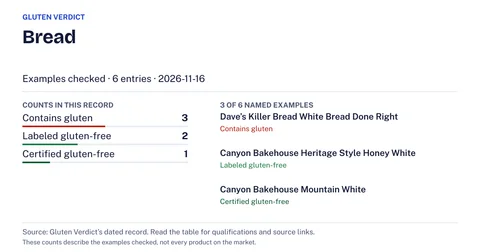 BreadContains glutenchecked Nov 16, 2026
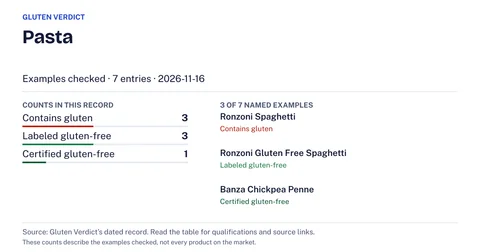 PastaContains glutenchecked Nov 16, 2026
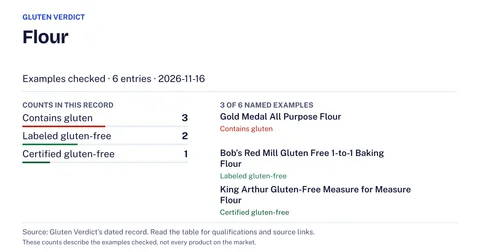 FlourContains glutenchecked Nov 16, 2026
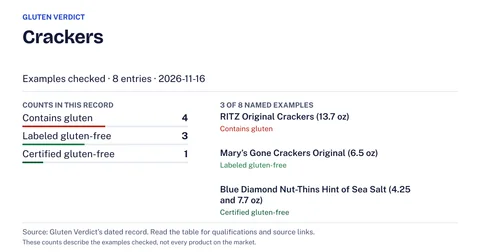 CrackersDepends on the product4 of 8 products we checked contain glutenchecked Nov 16, 2026
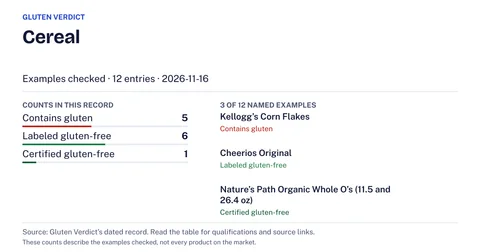 CerealDepends on the product5 of 12 products we checked contain glutenchecked Nov 16, 2026
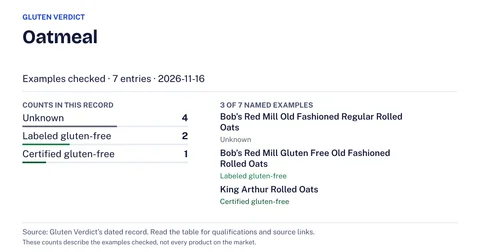 OatmealDepends on the productchecked Nov 16, 2026
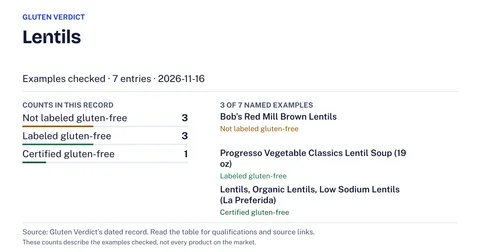 LentilsDepends on the productchecked Nov 16, 2026
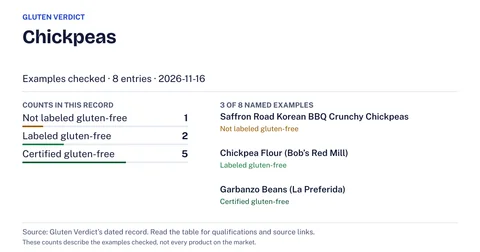 ChickpeasNaturally gluten-freechecked Nov 16, 2026
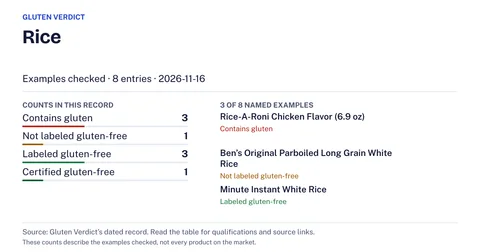 RiceNaturally gluten-free3 of 8 products we checked contain gluten: Rice-A-Roni Chicken Flavor (6.9 oz), Near East Original Rice Pilaf, and Ben’s Original Ready Rice Rice PilafBuy it labeled gluten-freechecked Nov 16, 2026
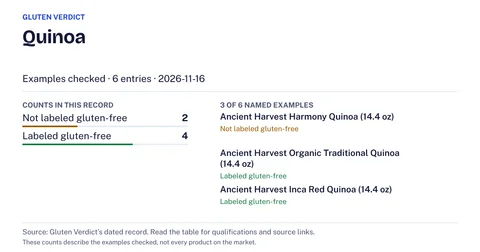 QuinoaNaturally gluten-freeBuy it labeled gluten-freechecked Nov 16, 2026
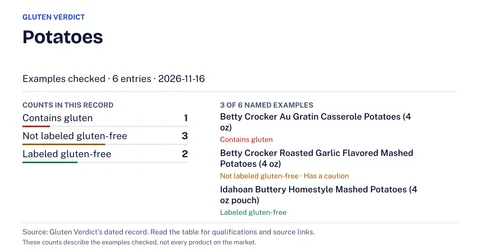 PotatoesNaturally gluten-free1 of 6 products we checked contains gluten: Betty Crocker Au Gratin Casserole Potatoes (4 oz)checked Nov 16, 2026
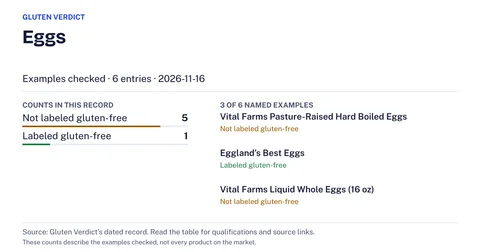 EggsNaturally gluten-freechecked Nov 16, 2026
Questions people ask
Do I have to buy gluten-free labeled rice, potatoes or fresh fruit?
NIDDK lists rice, potatoes, fruits and vegetables, without additives or some seasonings, as naturally gluten-free5, and FDA says a food that is gluten-free by nature may carry no claim because a claim is not required22. For grains, GIG says to check labels and choose certified products when needed, because cross-contact can occur in processing26.
Is a store-brand gluten-free product held to the same rule as a name brand?
Any food that bears a “gluten-free” claim must comply with FDA’s regulation3. A certification mark is a separate, third-party step, and FDA does not endorse any one program10.
Is it cheaper to buy dry or canned beans?
GIG, citing the Northarvest Bean Growers Association, says dry beans cost about half the price per serving of store-brand canned beans and about one-third the price of canned national brands50.
Can I save money on oats from a bulk bin?
GIG lists gluten-free oats among items often cheaper in the bulk section42, and also says to be cautious of oat products that are not labeled or certified gluten-free33. A loose bin has no package claim, so ask the store what documentation it has.
Has gluten-free food gotten cheaper?
One US research group reports that the cost of gluten-free products fell from 240% to 183% more than their counterparts between an earlier study and 2019, adjusted for inflation21. That is one study’s measurement, not a current price.
More in Cost, taxes and food assistance
 Why gluten-free packaged food costs more, and what the price surveys showWhat price surveys found, what researchers say drives the gap, what FDA’s rule and one certifier require, and what a shopper can avoid.
 SNAP and gluten-free food: what the benefit covers and how to shop itWhich gluten-free foods SNAP covers, what it excludes, and how to build a list from naturally gluten-free staples plus a few labeled items.
 Is gluten-free food tax deductible? What the IRS says and what to keepWhat IRS Publication 502 says about special food as a medical expense, how the excess-cost sum works, and what records to bring to a tax professional.
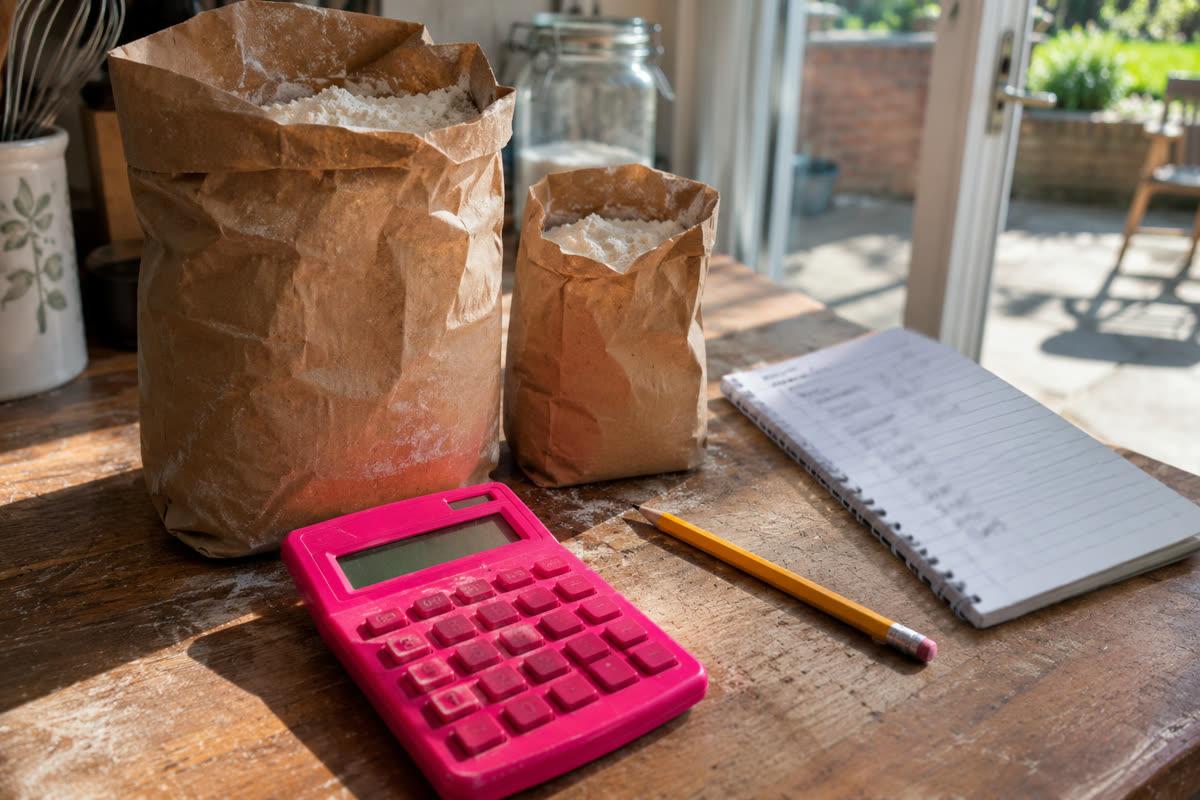 A price-per-ounce worksheet for comparing gluten-free staples at any store, club or onlineA worksheet for comparing gluten-free staples by price per ounce across stores, clubs and online, with a column for the gluten-free statement.
 WIC and gluten-free food: what the package includes and how to ask for a substitutionHow WIC food packages treat wheat, how states mark gluten-free items, and what to ask the clinic about a substitute for bread, cereal or grains.
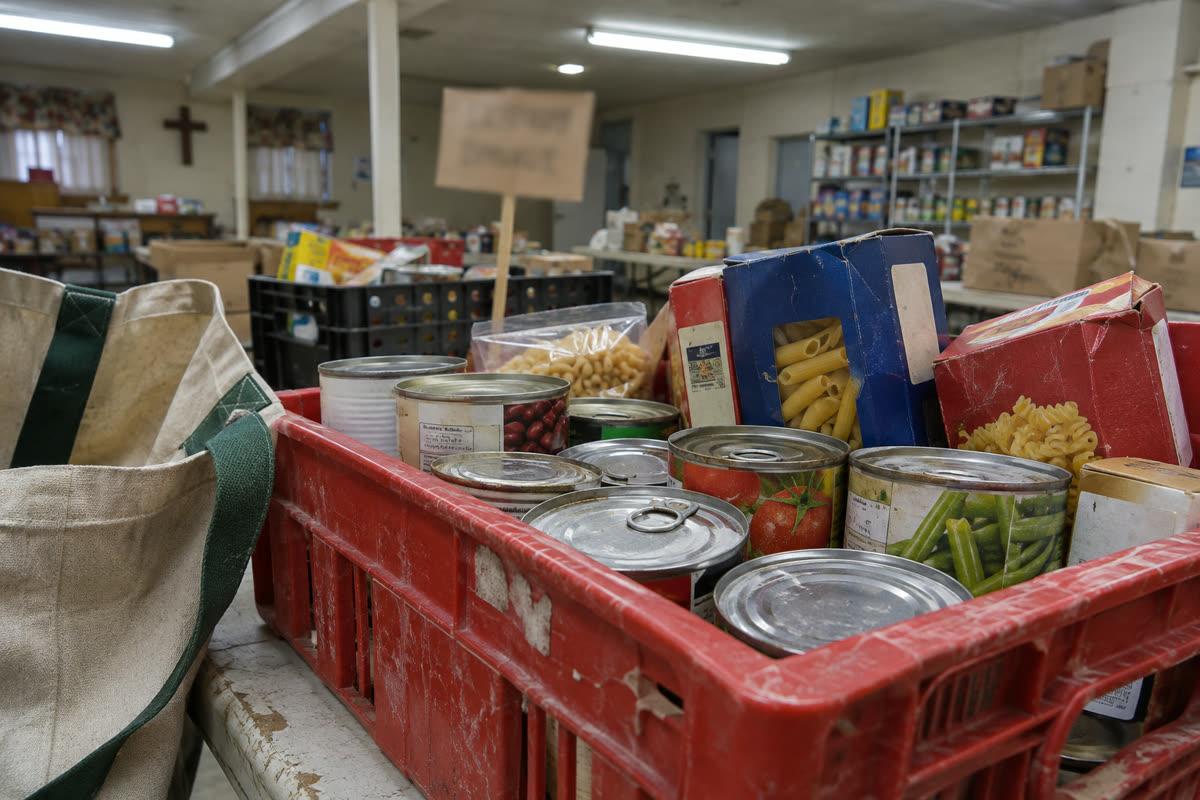 Food banks and pantries: how to ask for gluten-free items and check donated foodHow to find a pantry, ask for gluten-free items in a way a volunteer can act on, and check a donated item before you eat it or serve it.
Related guides
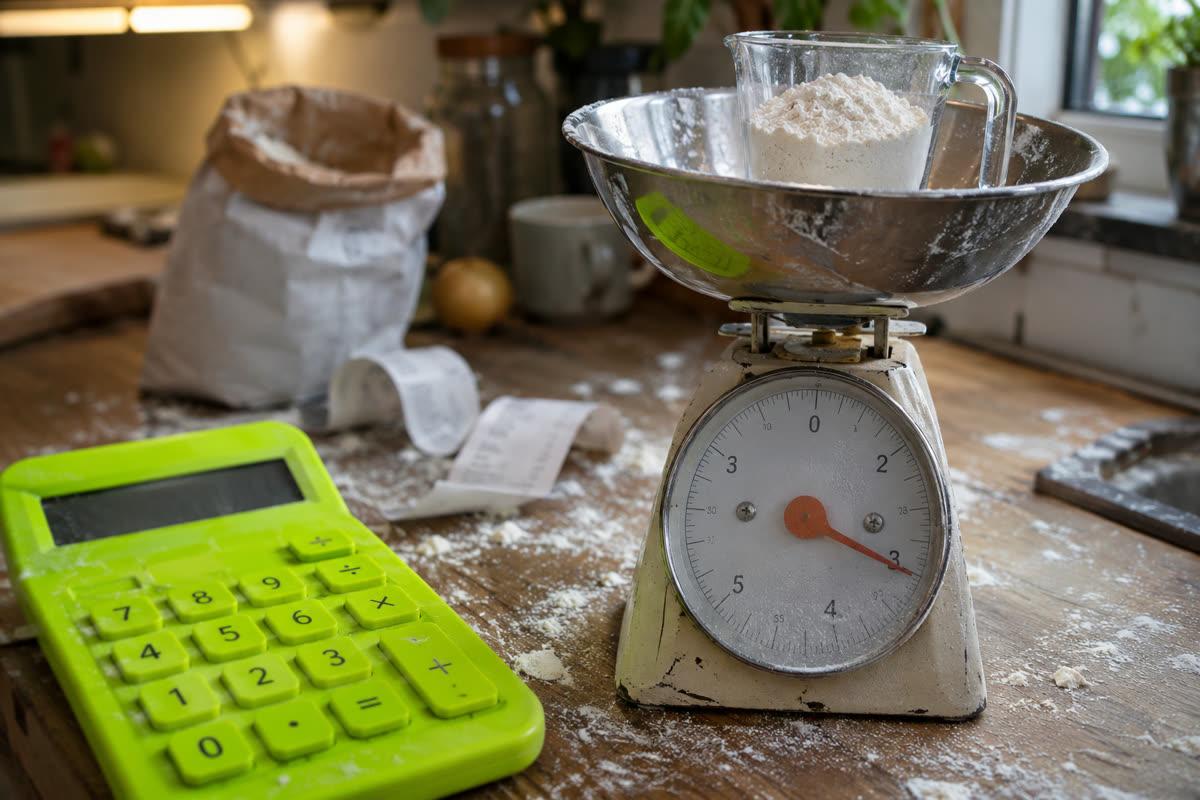 Gluten-free flour and baking mix cost per cup, with each maker’s statementWhat a cup of gluten-free flour or baking mix costs from each maker’s own price and label, shown beside what the maker says about gluten.
 Paying for gluten-free food and dietitian visits with an HSA or FSAWhat IRS rules say about paying for special food, dietitian visits and test kits from an HSA or FSA, what a physician's letter covers and what to keep.
 Store-brand gluten-free: what the tag, claim or seal rests onSort a store-brand item into certified, maker-stated or ingredient-only, see what each lets you conclude, and know what to ask the store.
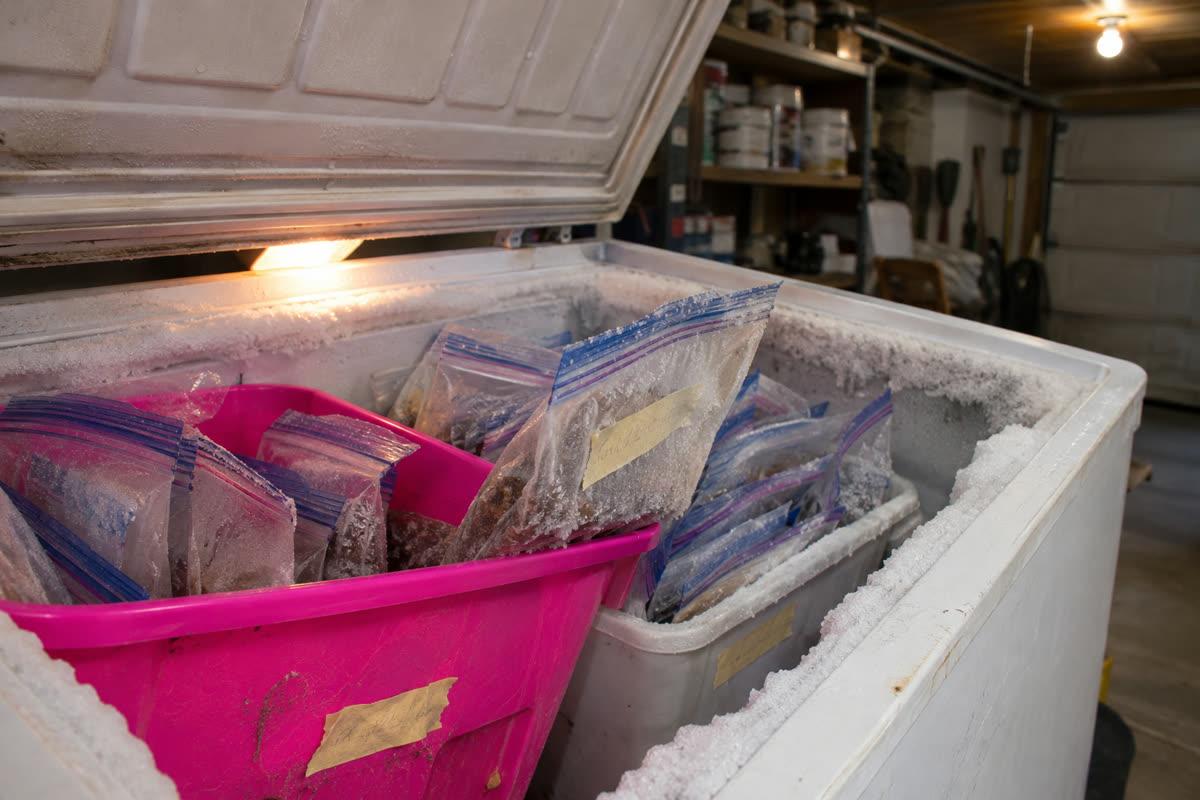 Freezing gluten-free food: what holds up, how to thaw it and how to keep it apartHow to freeze, label and thaw gluten-free food, which foods lose texture, and how to keep gluten-free packages apart in a shared freezer.
Sources
- [1, 2, 40, 41, 49, 51] Gluten Intolerance Group, 5 Ways to Cut Costs on a Gluten-Free Diet, checked Nov 17, 2026.
- [3, 32, 34, 35] US Food and Drug Administration, Questions and Answers on the Gluten-Free Food Labeling Final Rule, checked Nov 17, 2026.
- [4] Gluten Intolerance Group, FAQ: products not labeled gluten-free, judged by ingredients, checked Nov 17, 2026.
- [5, 12, 36, 38, 39, 48] National Institute of Diabetes and Digestive and Kidney Diseases, Eating, Diet, and Nutrition for Celiac Disease, checked Nov 17, 2026.
- [6, 20, 21] PubMed, Lee et al., Persistent economic burden of the gluten free diet (Nutrients, 2019), checked Nov 17, 2026.
- [7, 16, 17] PubMed, Stevens and Rashid, Gluten-free and regular foods: a cost comparison (Can J Diet Pract Res, 2008), checked Nov 17, 2026.
- [8, 11, 18] PubMed, Singh and Whelan, Limited availability and higher cost of gluten-free foods (J Hum Nutr Diet, 2011), checked Nov 17, 2026.
- [9, 19] PubMed, Missbach et al., Gluten-free food database: nutritional quality and cost of packaged gluten-free foods (PeerJ, 2015), checked Nov 17, 2026.
- [10, 13, 22, 43, 44] US Food and Drug Administration, Gluten and Food Labeling, checked Nov 17, 2026.
- [14, 15] PubMed, Lee et al., Economic burden of a gluten-free diet (J Hum Nutr Diet, 2007), checked Nov 17, 2026.
- [23, 24, 25, 26, 30, 31, 52, 55] Gluten Intolerance Group, Smart Shopping, Big Savings: Gluten-Free Staples and Affordable Snacks, checked Nov 17, 2026.
Read on 2026-11-17: the list headed “Available Resources for Food Insecurity” names GIG Cares’ Cutting Costs Program, Feeding America foodbank locator, and Food Equality Initiative.
- [27, 50] Gluten Intolerance Group, 5 Reasons Beans Are a Perfect Gluten-Free Staple, checked Nov 17, 2026.
- [28] Gluten Intolerance Group, Not labeled gluten-free: beans and grains, checked Nov 17, 2026.
- [29] Gluten Intolerance Group, FAQ: organic lentils and gluten-free labeling, checked Nov 17, 2026.
- [33, 37, 45] Gluten Intolerance Group, Are Oats and Oat Flour Gluten-Free?, checked Nov 17, 2026.
- [42] Gluten Intolerance Group, Gluten-Free, But at What Cost?, checked Nov 17, 2026.
- [46] Gluten Intolerance Group, How Does GFCO Certify Gluten-Free Food?, checked Nov 17, 2026.
- [47] Gluten-Free Certification Organization, GFCO Product Finder, checked Nov 17, 2026.
- [53, 54] Gluten Intolerance Group, Cutting Costs Boxes, checked Nov 17, 2026.