When a restaurant gets your gluten-free order wrong or says no: what to do at the table and afterward
Short answer
Deal with it at the table before anyone eats, and report it afterward through the right channel:
- Look at the plate for croutons, bread, fried onions and a dressing that may contain wheat or flour, all items the Celiac Disease Foundation lists as questions to ask, before the first bite5.
- Ask for a full remake instead of picking the gluten off: GIG says to send a salad with croutons back7, and Coeliac Australia’s guide for kitchens says to replace the entire meal17.
- GIG’s guidance for parents and caregivers says to consider eating elsewhere, or to stick strictly to pre-packaged or pre-verified items, if staff say a little bit of gluten will not hurt, refuse or hesitate to check the labels on packaged sauces or mixes, or confirm that gluten-free food shares cooking oil or grill space with heavily breaded items14, 15.
- Afterward, take a restaurant problem to your city, county or state health department24, 26; FDA says it will share complaints it receives about food served in restaurants with state and local partners27.
Part of Eating out and chain restaurant policies, 25 guides
Key points
- A dish that arrives with gluten on it is a remake, not a repair: GIG says to send a salad with croutons back, Coeliac Australia’s kitchen guide says to replace the entire meal, and FARE’s cross-contact poster says to start over and remake it7, 17, 19.
- The Canadian Celiac Association advises against eating gluten-free food that is on the same plate as gluten-containing food20.
- The Justice Department says the ADA does not require every restaurant to serve gluten-free food, but a restaurant may have to answer ingredient questions and omit or substitute ingredients it normally changes for others22, 23.
- Write down the place, the date and what happened while you remember it: FDA’s own list of what a report should contain asks for the same kind of detail30.
What to check on the plate before the first bite
The Gluten Intolerance Group (GIG) advises you to double-check with your server that what you have been served is the meal you ordered, and to confirm that your instructions were followed8. Do that with the plate in front of you, before anyone cuts or tastes.
Look for the additions the Celiac Disease Foundation lists among its dining questions:
- Croutons, wontons or crispy noodles on a salad5.
- Bread arriving with the dish5.
- A garnish of fried onions, or a cookie with the ice cream5.
- A salad dressing that may contain wheat or flour5.
- Fries or other fried food: GIG notes that the oil used to deep-fry foods may be used for both breaded and non-breaded items13.
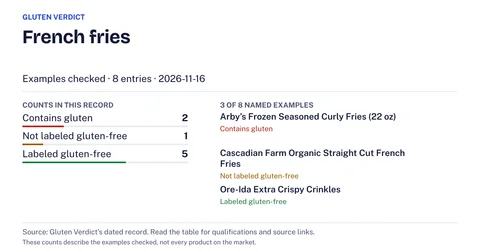
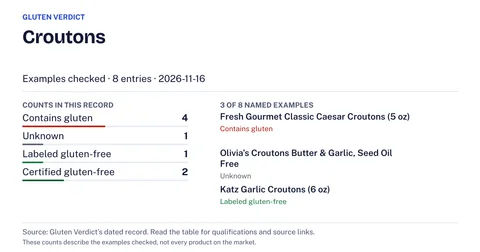
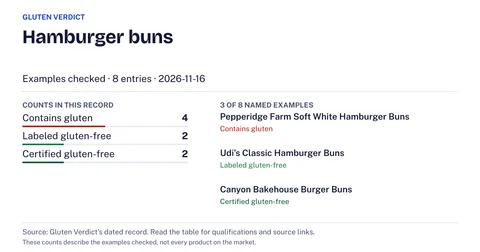
Our verdicts show what we read for each of three foods that can turn up on a wrong plate, including the bun on a burger: croutons, hamburger buns and french fries.
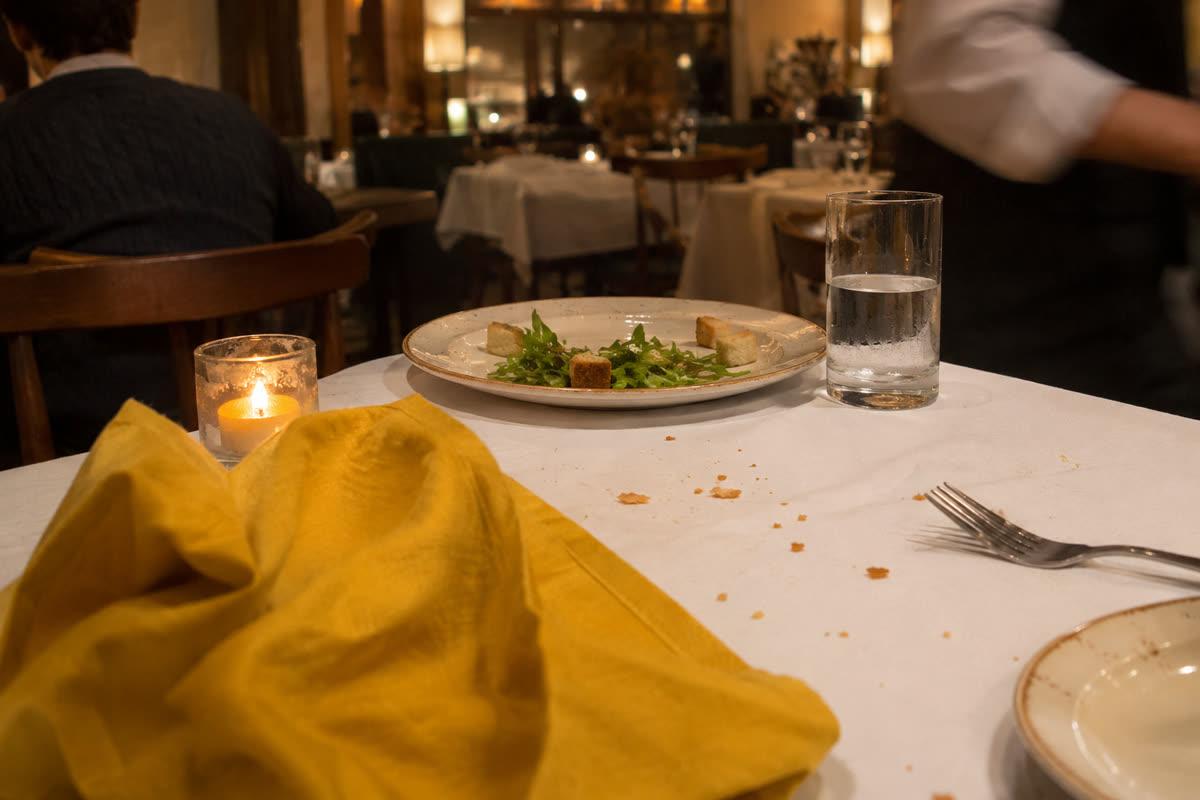
Check the plate itself, too. The Canadian Celiac Association advises against eating gluten-free food that is on the same plate as gluten-containing food, with a cheese and cracker tray as its example20. A salad with croutons on top is that situation.
If you cannot tell what something is, do not guess. Ask the server what it is, and ask them to check with the kitchen.
How to ask for a remake
Why picking it off is not enough
Three organizations say much the same thing. GIG advises you to politely send the salad back if there are croutons on top7. Coeliac Australia’s guide for food-service operators says that when gluten-containing ingredients have accidentally been used in a gluten-free meal, such as croutons, the entire meal should be replaced rather than the item removed17. FARE’s cross-contact poster, written for food allergies, says that if a mistake is made, you must start over and remake the meal19.
These are the organizations’ advice, not a legal rule. They explain why asking for a remake is a reasonable request rather than a fussy one.
What to say and ask for
- Say what you see, calmly. The Celiac Disease Foundation suggests you be courteous and explain why you cannot eat the dish, and says the staff will likely be very understanding and fix it1. For example: “This has croutons on it. I can’t eat gluten, so I need a new one made.”
- Ask for a new plate and clean cookware. The foundation’s cross-contact questions include whether the kitchen uses clean or separate cookware and utensils for gluten-free food4; GIG suggests asking whether breaded or gluten-containing foods were cooked on the same surface beforehand, and suggests foil over the cooking surface9.
- If the server does not understand, the Celiac Disease Foundation says to ask to speak to the manager or the chef3. NIDDK separately suggests asking to talk with the chef if you would like more details about the menu21.
- When the new plate arrives, check it again against your order and your instructions8.
The Celiac Disease Foundation also says not to be afraid to send things back or to ask questions about cross-contact2.
When the kitchen says no, or the answer is vague
GIG says that not all food establishment staff have enough awareness or training about gluten-free ingredients or how to strictly avoid cross-contact during preparation16. A vague answer is worth treating as information.
GIG’s article for parents and caregivers lists these red flags, with the advice to consider eating elsewhere or to stick strictly to pre-packaged or pre-verified items14:
- staff saying that a little bit of gluten will not hurt15;
- kitchen staff refusing or hesitating to check the ingredient labels on packaged sauces or mixes15;
- confirmation that gluten-free foods share cooking oil or grill space with heavily breaded items15.
If you hear one of these, GIG’s advice points to leaving or ordering something pre-packaged. If you leave, do it before you order, or before the replacement is cooked.
What the law does and does not require
In a 2013 question-and-answer document, the US Department of Justice says the Americans with Disabilities Act does not require every place of public accommodation that serves food to provide gluten-free or allergen-free food22. It adds that a restaurant may have to take reasonable steps where doing so does not fundamentally alter its operations, for example answering diners’ questions about the ingredients of menu items where they are known, or omitting or substituting ingredients on request if the restaurant normally does that for other customers23. That is general guidance, not advice on your case.
If there is nothing you can eat
The Celiac Disease Foundation’s advice is to be prepared to not order your first choice and to always bring a back-up snack6. A restaurant that cannot help is a reason to eat your own food or to go elsewhere; it is not a reason to take a chance on a plate you cannot check.
If you have already eaten some
This guide covers the moment at the table and the reporting afterward. It does not cover symptoms or what to do about them, which are medical questions. We collect what the celiac organizations say in if you think you were glutened and in tracing a reaction after a restaurant meal.
FoodSafety.gov, a US government site, says that if you think you have food poisoning or an allergic reaction to food, you should call your doctor, and that in an emergency you should call 91125.
Telling the manager and the chain
Say it first at the table, to the manager if you can. Give the facts: the dish, what you told the server, and what arrived. Then ask what the restaurant will change, such as how gluten-free orders are flagged to the kitchen.
Coeliac Australia’s guide advises kitchens to manage customer feedback with a register detailing the complaint, the resolution and any changes to in-house allergen procedures18. That is an Australian guide’s advice to kitchens, so a US restaurant may or may not keep such a register; you can ask.
For a chain, also use the contact route on the chain’s own website, so the report reaches the company and not only the store. What chains say about fryers and prep is in what fast-food chains say about shared fryers.
Reporting to the health department and to FDA
FoodSafety.gov’s table of where to report a problem with food gives one instruction for restaurant food: call the health department in your city, county or state24. FDA’s problem-reporting questions and answers say the same: reports and complaints about restaurant food and sanitation go to local or state health departments26.
FDA’s gluten-free rule applies to packaged foods27. For a gluten-free claim on a restaurant menu, FDA recommends that restaurants make claims consistent with its gluten-free definition29; it also says that it will monitor reported information about unpackaged food and share complaints about food served in restaurants with state and local government partners27, and that state and local governments play an important role in overseeing restaurants28.
If the item came out of a package, such as a bagged bun or a packaged dessert, FDA says consumers can call 1-888-SAFEFOOD to submit complaints by phone about foods and dietary supplements31.
Rules differ from place to place. FDA’s Food Code is a model offered for adoption by local, state and federal governments32, and FDA’s report to the end of 2025 counts fourteen states as having aligned at least one state agency with the latest version33. In the model code, one way a restaurant’s person in charge can show knowledge to an inspector is by responding correctly to the inspector’s questions35, and the areas of knowledge include describing foods identified as major food allergens34. What an inspector may ask, and what a department can do about a gluten-free claim, depends on your jurisdiction.
| Who | What to tell them | What the sources say |
|---|---|---|
| The manager, at the table | What arrived, what you asked for, and what you need now | Ask to speak to the manager or chef if the server does not understand3. |
| The chain’s head office | The same facts, with the store, date and time | No source sets a rule; this is our advice. |
| City, county or state health department | A restaurant that served the wrong food, or made a gluten-free claim it did not keep | The place for restaurant food complaints24, 26; FDA works with state and local partners on gluten-free labeling in restaurants28. |
| FDA | Packaged foods; for restaurants, FDA passes complaints on | Gluten-free rule covers packaged foods; complaints about restaurant food are shared with state and local partners27. |
| Your doctor or 911 | A suspected food poisoning or allergic reaction | FoodSafety.gov says to call your doctor, and 911 in an emergency25. |
What to write down
When you report to FDA, it asks for as much detail as you can give: who is reporting, where the product was bought, when, and a clear description of what happened and what the product was, including photos30. That list is written for packaged products, but the habit transfers to a restaurant complaint:
- The restaurant’s name and address, the date and the time.
- What you ordered, what you told the server, and the server’s name if you have it.
- What arrived. Take a photo of the plate before it leaves the table.
- Who you spoke to and what they said or did.
- Your receipt.
Write it down the same day, while the details are fresh.
Paying, tipping and reviews
Settle the bill with the manager before you leave, not with the server mid-service. This guide does not cover whether you must pay for a dish you could not eat; ask the manager rather than assume.
GIG advises that if your server was attentive to your need to eat gluten-free and made best efforts to accommodate you, you should leave a generous tip10. Consider whether the mistake was the server’s or the kitchen’s before you decide the tip.
If you post a review, describe what happened in order, name the dish, and say what the restaurant did next.
What to change next time
- Call ahead. GIG suggests calling the day before or earlier the same day and speaking to the chef11.
- Go off-peak. GIG advises timing your meal before or after the busiest mealtime, so you have more time and easier access to people who can help12.
- Say it twice: at the table and again when the plate arrives8.
- Ask for your order to be flagged on the ticket, and ask the server to carry the plate out themselves.
More on what to ask and where gluten hides in a kitchen: eating out with celiac disease and where gluten hides in a restaurant kitchen.
Verdicts in this guide
Questions people ask
Can I just take the croutons off and eat the salad?
GIG advises sending a salad with croutons back7, Coeliac Australia’s guide for kitchens says to replace the entire meal rather than removing the item17, and FARE’s cross-contact poster says to start over and remake the meal19.
Does a restaurant have to serve gluten-free food?
The Justice Department says the ADA does not require every place of public accommodation that serves food to provide gluten-free or allergen-free food22. It says a restaurant may have to take reasonable steps, such as answering ingredient questions23.
Who do I report a restaurant to?
FoodSafety.gov says to call the health department in your city, county or state for restaurant food24, and FDA says restaurant food and sanitation complaints go to local or state health departments26.
Does FDA’s gluten-free rule apply to a restaurant menu?
FDA says the regulation applies to packaged foods, and that for restaurant menus it recommends claims be consistent with its gluten-free definition29.
More in Eating out and chain restaurant policies
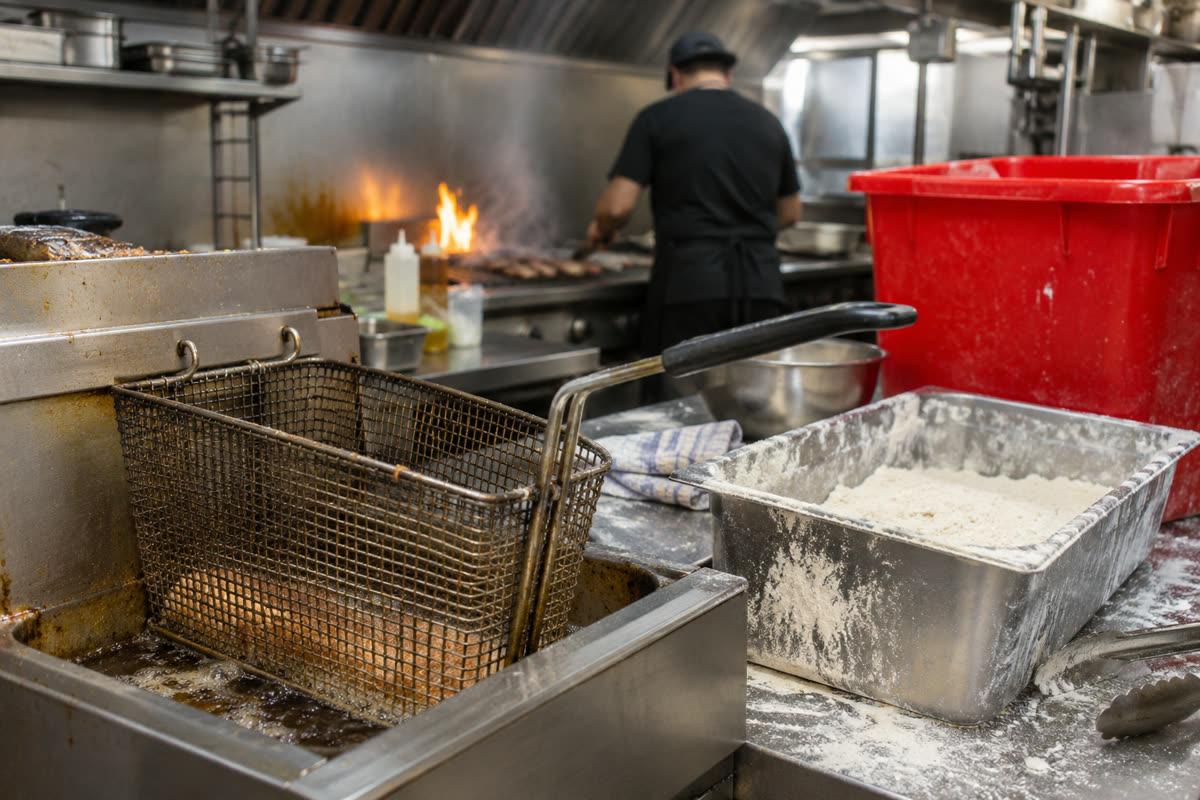 Where gluten hides in a restaurant kitchen, and the question to ask about each sourceFryers, sauces, roux, marinades, grills, pasta water and eggs: how gluten reaches restaurant food and the question GIG lists for each source.
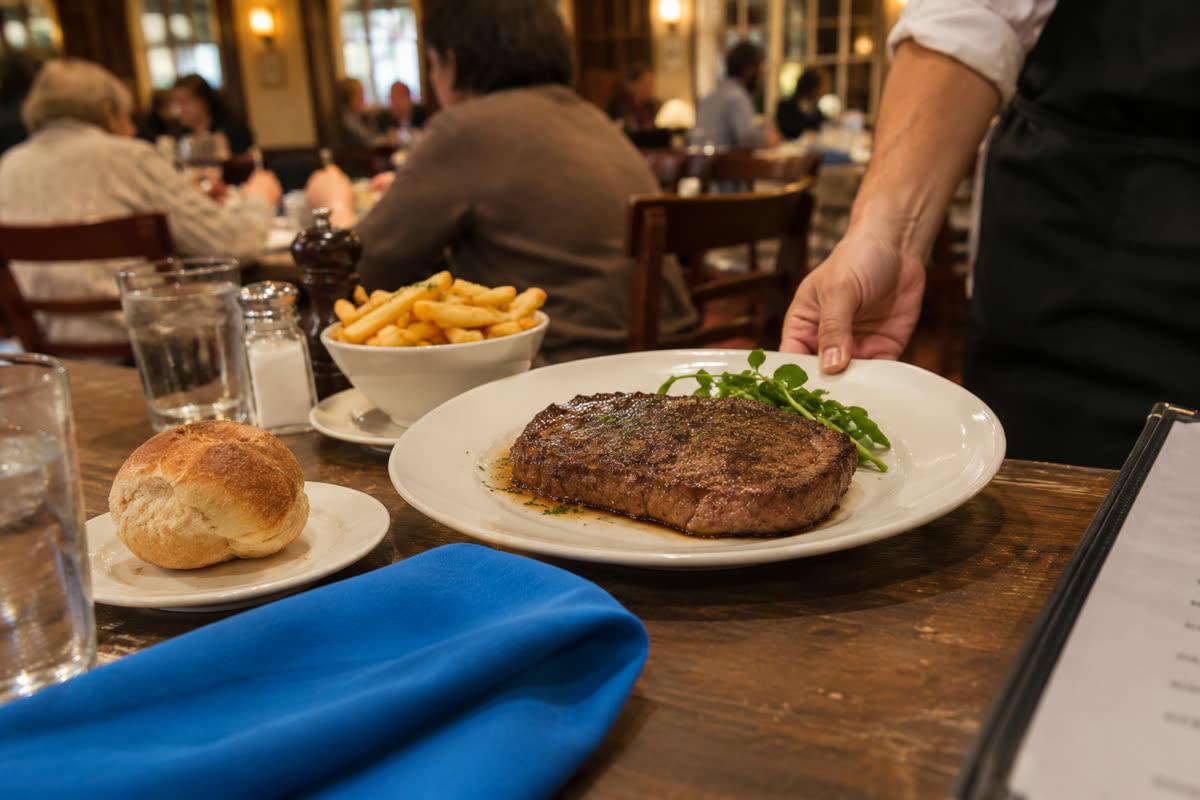 Ordering steak and burgers with celiac disease: marinades, sides, fryers and bunsWhat to ask about marinades, seasoning, butters, grills, fryers, sides and buns when you order steak or a burger with celiac disease.
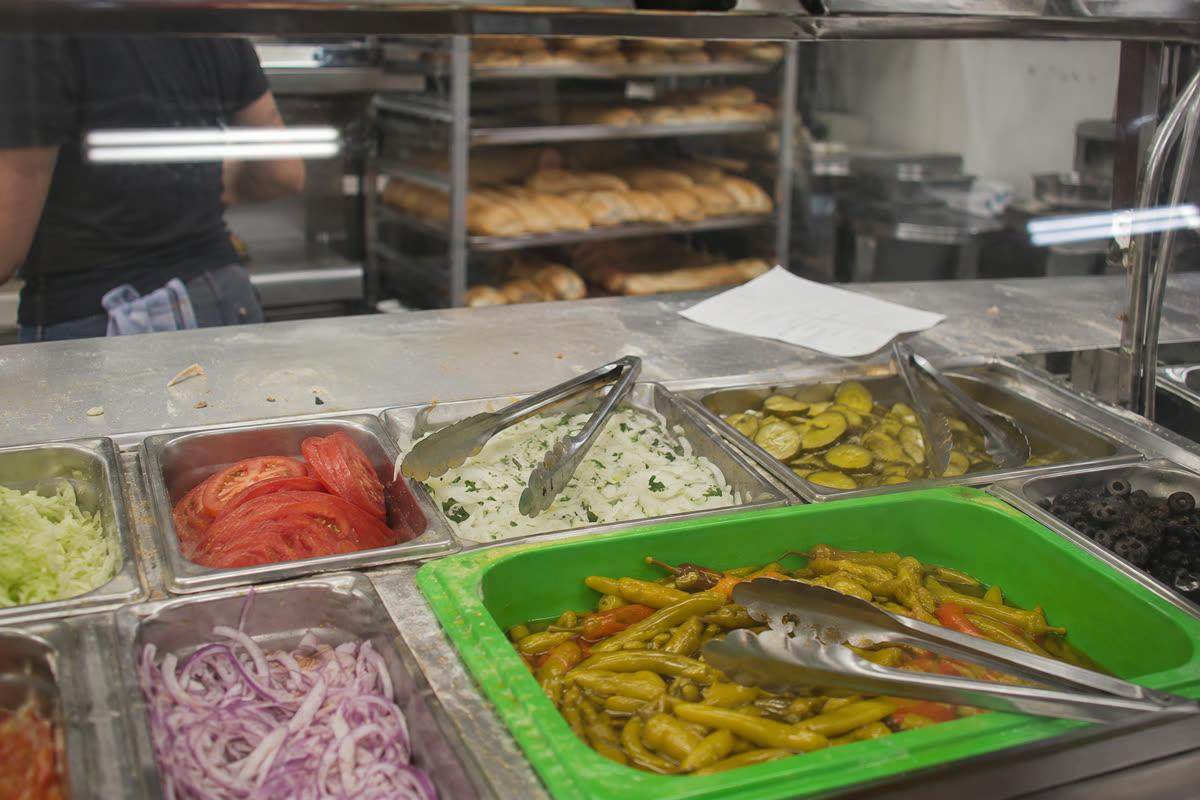 Sandwich and sub chains and gluten: what Subway, Panera, Jersey Mike’s and others say in writingWhat Subway, Jersey Mike’s, Jimmy John’s, Firehouse, Potbelly and Panera say in their own documents about gluten-free bread, shared equipment and dates.
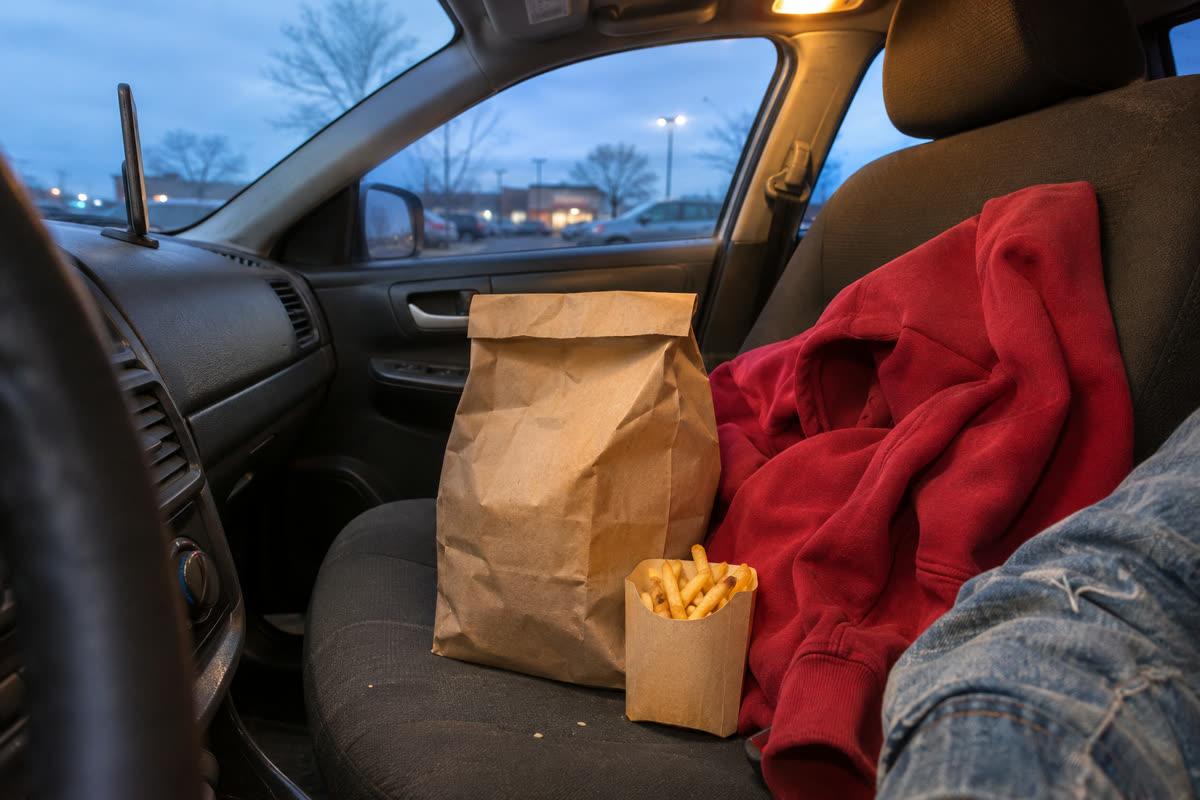 Burger and chicken chains and gluten: what Popeyes, Arby’s, Wendy’s and Five Guys say in writingWhat Popeyes, Arby’s, Wendy’s and Five Guys say in their own allergen documents about fryers, buns, breading and cross-contact, with dates.
 Eating out with celiac disease: what to check, ask and watch forPlan a restaurant meal with celiac disease: what to check before you go, the questions to ask in order, how to read the answers, and what studies measured.
 Ordering gluten-free at an Italian restaurantBefore you order at an Italian restaurant: where the gluten-free pasta is boiled, what thickens the sauces, and what is breaded or fried.
Related guides
 If you think you were glutened: what the celiac organizations say to doWhat the celiac charities, FDA and NIDDK say to do after accidental gluten exposure, when to contact a clinician, and how to trace the cause.
 How to trace a reaction after a restaurant meal marked gluten-freeHow to work out how gluten reached a restaurant dish, what to ask the kitchen, what to write down, and which agency takes a complaint.
 Your first restaurant meal after a celiac diagnosisHow to pick a place, call ahead, ask the kitchen the right questions and decide what to do when answers are vague, for a first meal out.
 Gluten-free bread, buns and wraps: what the package tells youHow to tell a gluten-free bread, bun or wrap from a wheat look-alike: certification mark, maker’s claim or ingredient list, in a fixed order.
Sources
- [1, 2, 3, 4, 5, 6] Celiac Disease Foundation, Dining and Social Eating, checked Nov 17, 2026.
Read on 2026-11-17: the list headed “Dining Questions:” includes croutons, wontons or crispy noodles on the salad; salad dressing that contains wheat or flour; bread coming with the dish; a garnish of fried onions; and ice cream that comes with a cookie.
- [7, 8, 9, 10, 11, 12, 13] Gluten Intolerance Group, Eating Out: 7 Tips For Staying Gluten-Free, checked Nov 17, 2026.
- [14, 15] Gluten Intolerance Group, Questions to Ask When Eating Out (September 8, 2026), checked Nov 17, 2026.
Read on 2026-11-17: the list under that sentence, headed “Quick Red Flags and When to Walk Away”, names staff members saying that a little bit of gluten will not hurt; kitchen staff refusing or acting hesitant to check ingredient labels on packaged sauces or mixes; and confirmation that gluten-free foods share cooking oil or grill spaces with heavily breaded items.
- [16] Gluten Intolerance Group, FAQ: restaurant food marked gluten-free, then felt glutened, checked Nov 17, 2026.
- [17, 18] Coeliac Australia, Gluten Free in Food Service: practical guide for kitchens (with Nestlé Professional), checked Nov 17, 2026.
- [19] Food Allergy Research & Education (FARE), Prevent Cross-Contact (FARE poster), checked Nov 17, 2026.
- [20] Canadian Celiac Association, Cross-Contact, checked Nov 17, 2026.
- [21] NIDDK (NIH), Eating, Diet, & Nutrition for Celiac Disease, checked Nov 17, 2026.
- [22, 23] US Department of Justice, Civil Rights Division, Questions and Answers about the Lesley University Agreement and Potential Implications for Individuals with Food Allergies (January 2013), checked Nov 17, 2026.
- [24, 25] FoodSafety.gov (US Department of Health and Human Services), How to Report a Problem with Food (reviewed November 15, 2024), checked Nov 17, 2026.
- [26] US Food and Drug Administration, Questions and Answers: Problem Reporting, checked Nov 17, 2026.
- [27, 29, 30] US Food and Drug Administration, Questions and Answers on the Gluten-Free Food Labeling Final Rule, checked Nov 17, 2026.
Read on 2026-11-17: the list under “Reports submitted to FDA should include as much information as possible, such as:” names who is reporting and who was affected (names, addresses, phone numbers); the name and address of the place where the product was purchased; a clear description of the reaction (date, symptoms, how long after eating, medications, further medical care); and a complete description of the product (date of purchase, codes or marks on the label, photos of the product, label, ingredient statement and lot code).
- [28] US Food and Drug Administration, Gluten and Food Labeling, checked Nov 17, 2026.
- [31] US Food and Drug Administration, FDA Introduces Streamlined Complaint Process in New Human Foods Program (October 1, 2024), checked Nov 17, 2026.
- [32] US Food and Drug Administration, Food Code 2022, checked Nov 17, 2026.
- [33] US Food and Drug Administration, Adoption of the FDA Food Code by State and Territorial Agencies (report to December 31, 2025), checked Nov 17, 2026.
- [34, 35] US Food and Drug Administration, FDA Food Code 2022 (PDF), section 2-102.11 Demonstration, checked Nov 17, 2026.