Gluten-free thickeners: cornstarch, tapioca, arrowroot, potato starch and rice flour
Short answer
Cornstarch, tapioca, arrowroot, potato starch and white or sweet rice flour are thickeners whose makers (Argo and Bob’s Red Mill) describe them as gluten free1, 11, 18, 20, 12, 23. Three things to do before you cook:
- Swap wheat flour for a starch slurry or a rice-flour roux: the Gluten Intolerance Group (GIG) names cornstarch and arrowroot for gravy and sauce, and white or sweet rice flour for a roux25, 26.
- Use less starch than flour: Argo says cornstarch has twice the thickening power of flour, so use half as much: 2 tablespoons for 1/4 cup3.
- Read the pack for a gluten-free statement, and in any mix for flour, modified food starch or wheat35, 32.
Part of Grains, flours and substitutes, 13 guides
Key points
- A starch is stirred into cold liquid first (a slurry); a roux is fat and flour, and for a roux GIG names white or sweet rice flour4, 26.
- The gluten-free claim is voluntary, makers of foods that are naturally gluten free may leave it off, and a food that carries it has to meet FDA’s regulation, which sets 20 parts per million for unavoidable gluten36, 37, 35.
- The National Celiac Association advises making sure cornstarch is labeled gluten free31.
- Roux in soup, flour in dressings and mustard, and modified food starch are where a wheat thickener can hide27, 28, 29.
Which thickeners are gluten free, and what each maker says
The replacements for wheat flour are starches and rice flours, and each maker below speaks for its own product: the first column is what the maker says the product is for, the second is what its page says about gluten.
| Thickener | What the maker says it is for | What the maker says about gluten |
|---|---|---|
| Cornstarch (Argo, Bob’s Red Mill) | Argo: gravies, sauces and glazes, soups, stews and casseroles; it also thickens pies2. Bob’s Red Mill: puddings, pie fillings, sauces, soups and stews14. | Argo: “Yes, Argo® Corn Starch is gluten free”1. Bob’s Red Mill: naturally gluten free, and its own is produced and packaged in a gluten-free facility and batch tested15. |
| Tapioca flour (Bob’s Red Mill) | A thickening agent in soups, sauces and pie fillings16. It comes from cassava17. | Bob’s Red Mill calls it “one of our most versatile gluten free flours”11. |
| Arrowroot starch (Bob’s Red Mill) | Can be used as a direct substitute for cornstarch for people with corn allergies, and to thicken any sauce, soup, stew or pudding18. | “It is gluten free”18. |
| Potato starch (Bob’s Red Mill) | Thickener for sauces, soups and stews; tolerates higher temperatures than cornstarch19. | Calls it “Gluten Free Potato Starch”20. |
| White rice flour (Bob’s Red Mill) | Works well as a thickener for soups, sauces and gravies21. | Sold as “Gluten Free White Rice Flour”12. |
| Sweet white rice flour (Bob’s Red Mill) | A thickener for soups, sauces and gravies. It is milled from glutinous rice, “sticky rice”22. | Naturally gluten free23. |
The same maker sells a gluten-free 1-to-1 baking flour that it also recommends for thickening sauces and gravies24. For how those blends differ, see our 1-to-1 flour blends guide and the gluten-free flour guide.
Our own verdicts on the plain ingredients: cornstarch, tapioca and rice flour.
Slurry or roux: two ways to thicken
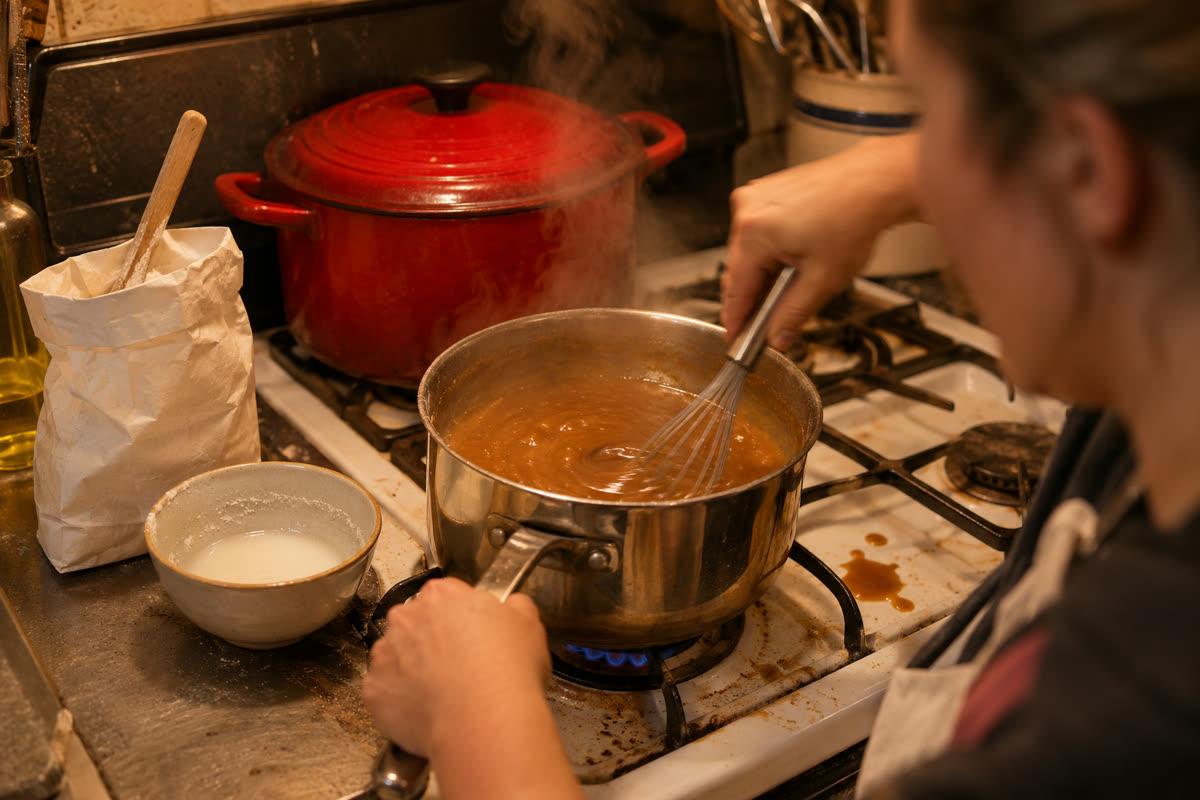
In this guide a slurry is a starch stirred into cold liquid and then added to the pot, and a roux is a mixture of fat and flour. The sources we read describe both.
Starch slurry
Argo’s directions for cornstarch: stir it gradually into cold liquid until completely smooth, pour that mixture into the recipe, and keep stirring gently while it cooks4. Argo says cornstarch blends more easily with cold liquid than flour does because it does not absorb liquid until it is cooked6.
Argo also says to cook over medium-low to medium heat, because high heat can cause lumping7, and to bring the mixture to a full boil for 1 minute, after which the starch granules have swelled to full capacity and the mixture thickens5.
Roux with a gluten-free flour
The Gluten Intolerance Group (GIG) says some sauces start from a roux, a butter and flour mixture traditionally made with wheat flour, and that white rice or sweet rice flour is a perfectly good substitute26. GIG also says you may have thickened a stir-fry sauce or gravy with cornstarch, and that arrowroot starch works in these sorts of dishes, too25.
What changes in the pot
Argo says dishes thickened with cornstarch look brighter and more translucent than those thickened with flour6.
Our own advice: do not dip a spoon or cup that has held wheat flour into your starch or rice flour, and do not stir a gluten-free roux with a spoon used on a wheat one. More in cross-contamination.
How much to use
Argo’s FAQ gives a conversion from flour: cornstarch has twice the thickening power of flour, so use half as much, and its example is 2 tablespoons of cornstarch where a recipe calls for 1/4 cup of flour3.
Argo adds that cornstarch has the same thickening power as arrowroot, potato starch and tapioca, so those are swapped in the same amount3. That is Argo’s statement. The Bob’s Red Mill pages we read give no ratio, and none of the pages we read gives one for rice flour, so follow the directions on the bag you buy.
When a cornstarch-thickened dish thins out
Argo lists the causes it sees with cornstarch:
- Acid such as lemon juice, lime juice or vinegar reduces the thickening or prevents it; Argo says to add a little more starch or stir the acid in after cooking8.
- Argo says freezing causes cornstarch-thickened foods to thin out, and to freeze a fruit pie thickened with cornstarch before baking13.
Argo also lists too little liquid, where the starch granules cannot fully swell and the mixture thins as it cools; its advice is a little more liquid, not more starch9. Simmering or boiling a cornstarch-thickened mixture for a long time may make it thin10.
What to read on a starch or flour pack
On a US food FDA regulates, FDA defines “gluten-free” as the food either being inherently gluten free or containing no gluten-containing grain and no ingredient derived from one that has not been processed to remove gluten (an ingredient that has been processed to remove gluten, such as wheat starch, is excluded only if its use brings the food to 20 parts per million or more), with any unavoidable gluten under 20 parts per million35. FDA calls the claim voluntary and says a food bearing it must comply with the regulation36. FDA also says makers of foods that are naturally free of gluten may choose not to label them gluten free37. A bag without the claim is therefore not a warning by itself, and a bag with it falls under that regulation.
Why bother with a naturally gluten-free starch? FDA says crop rotation and shared harvesting, transport and storage equipment often bring gluten-containing grains into contact with other grains, legumes and seeds that are naturally free of gluten38. The National Celiac Association advises making sure corn-based flours such as corn flour, cornmeal, masa and cornstarch are labeled gluten free because they could have had cross-contact with gluten-containing grains during processing31.
- Look for a gluten-free statement from the maker on the pack or the maker’s page.
- Read the ingredient list: a plain starch or flour lists one ingredient; a blend or mix lists more.
- For a mix that says “thickener”, “modified food starch” or “flour”, go to the next section.
Where a wheat thickener hides
GIG’s list of foods where gluten may be hidden includes soup thickened with roux, which is fat and flour27, salad dressings that may contain flour28, and some specialty mustards, where wheat flour could be added as a thickener or bulking agent30.
Modified food starch and wheat starch
The National Celiac Association says modified food starch in the United States is most of the time made from corn, but not always, so read labels32. GIG says the same, and adds that wheat-based modified starch must be named on the label29. Our verdict pages: modified food starch and wheat starch.
The National Celiac Association also says that some wheat starch has been rendered gluten free, and that in that case it has to be disclosed on the label34.
How wheat is declared
For foods under FDA’s allergen law, wheat appears either in parentheses after the ingredient, for example “flour (wheat)”39, or in a Contains line, for example “Contains wheat, milk, and soy”40.
FDA enforces its allergen labeling law in most packaged foods, but not in meat, poultry and egg products, which USDA regulates41. The National Celiac Association says that for foods that fall under the USDA it may not be disclosed whether the modified food starch is from wheat, and that the maker needs to be asked33.
Our verdicts on thickened foods
Whether a thickened food is gluten free depends on the product. See our verdicts on gravy, au jus, stuffing, chicken broth, soup, green bean casserole, pot pie, chili and plain flour. For label reading in general, see how to read a US food label for gluten and hidden sources of gluten.
Verdicts in this guide
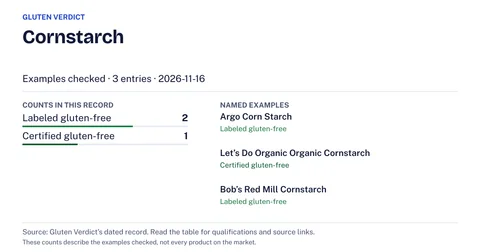 CornstarchNaturally gluten-freeBuy it labeled gluten-freechecked Nov 16, 2026
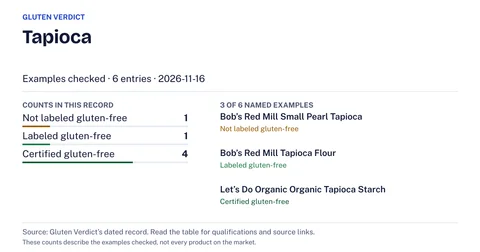 TapiocaNaturally gluten-freeBuy it labeled gluten-freechecked Nov 16, 2026
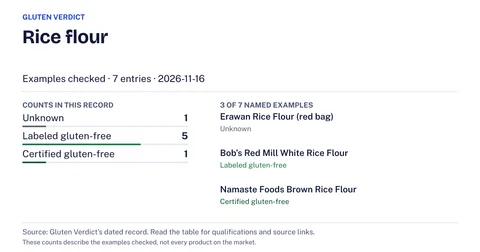 Rice flourNaturally gluten-freeBuy it labeled gluten-freechecked Nov 16, 2026
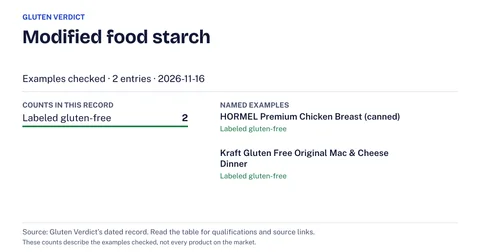 Modified food starchDepends on the productchecked Nov 16, 2026
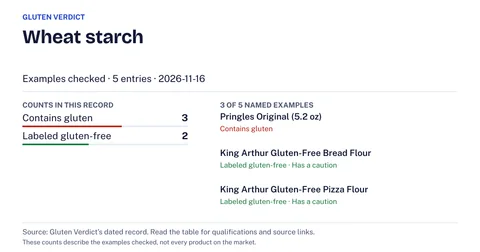 Wheat starchDepends on the product3 of 5 products we checked contain gluten: Pringles Original (5.2 oz), Jiffy Corn Muffin Mix, and Chex Mix Bold Garlic and Herbchecked Nov 16, 2026
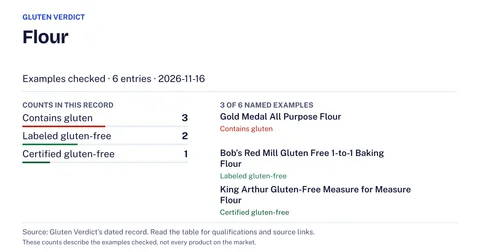 FlourContains glutenchecked Nov 16, 2026
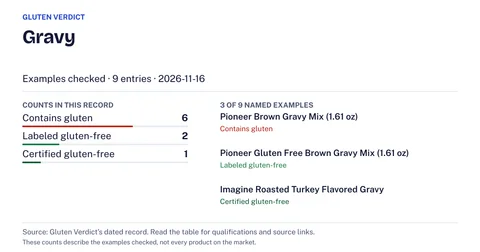 GravyDepends on the product6 of 9 products we checked contain glutenchecked Nov 16, 2026
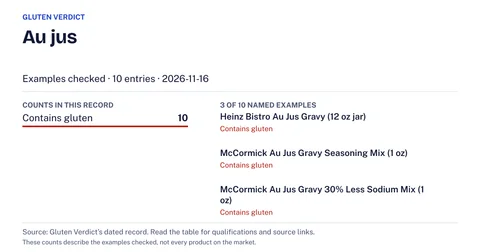 Au jusContains glutenchecked Nov 16, 2026
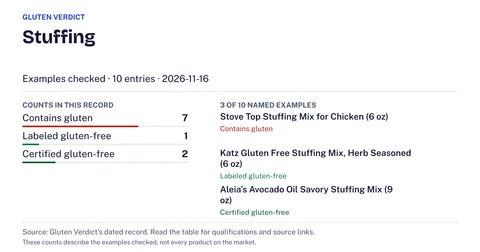 StuffingContains glutenchecked Nov 16, 2026
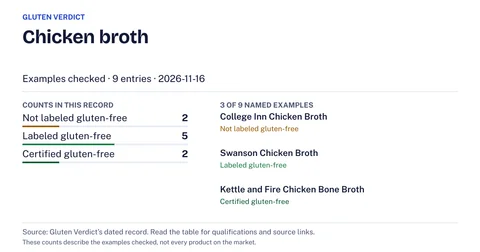 Chicken brothDepends on the productchecked Nov 16, 2026
 SoupDepends on the product3 of 8 products we checked contain gluten: Campbell’s Condensed Tomato Soup (10.75 oz), Campbell’s Condensed Cream of Mushroom Soup (10.5 oz), and Progresso Traditional Chicken Noodlechecked Nov 16, 2026
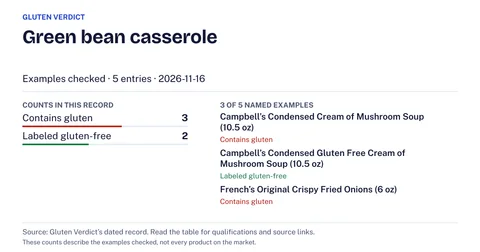 Green bean casseroleDepends on the product3 of 5 products we checked contain gluten: Campbell’s Condensed Cream of Mushroom Soup (10.5 oz), French’s Original Crispy Fried Onions (6 oz), and Kikkoman Soy Sauce (Non-GMO)checked Nov 16, 2026
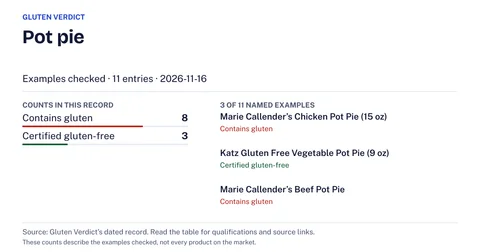 Pot pieContains glutenchecked Nov 16, 2026
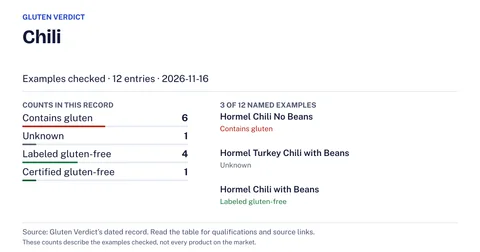 ChiliDepends on the product6 of 12 products we checked contain glutenchecked Nov 16, 2026
Questions people ask
Is cornstarch gluten free?
Argo says its corn starch is gluten free1. Bob’s Red Mill says cornstarch is naturally gluten free and that its own is produced and packaged in a gluten-free facility15. The National Celiac Association advises making sure cornstarch is labeled gluten free31.
What can I use instead of flour to thicken gravy?
GIG says cornstarch and arrowroot work for gravy, and white or sweet rice flour works in a roux25, 26.
How much cornstarch replaces flour?
Argo says to use half as much: 2 tablespoons of cornstarch where a recipe calls for 1/4 cup of flour3.
Is tapioca or arrowroot a good thickener for soup?
Bob’s Red Mill describes tapioca flour as a thickening agent in soups, sauces and pie fillings16, and arrowroot starch as able to thicken any sauce, soup, stew or pudding18.
Is gravy mix gluten free?
It depends on the product and on how it is thickened; read the ingredient list for wheat and check for a gluten-free claim35. Our gravy verdict shows what the maker pages we read said.
More in Grains, flours and substitutes
 Gluten-free substitutes: the swap for each wheat ingredient and the label check it needsA lookup table of gluten-free swaps for wheat flour, pasta, bread, soy sauce, beer and more, with the one label check each swap needs.
 Gluten-free flours and starches: what each one is and how to read the bagWhich flours and starches are gluten-free by nature, what a claim and a certification mark on the bag each mean, and how to read a blend’s list.
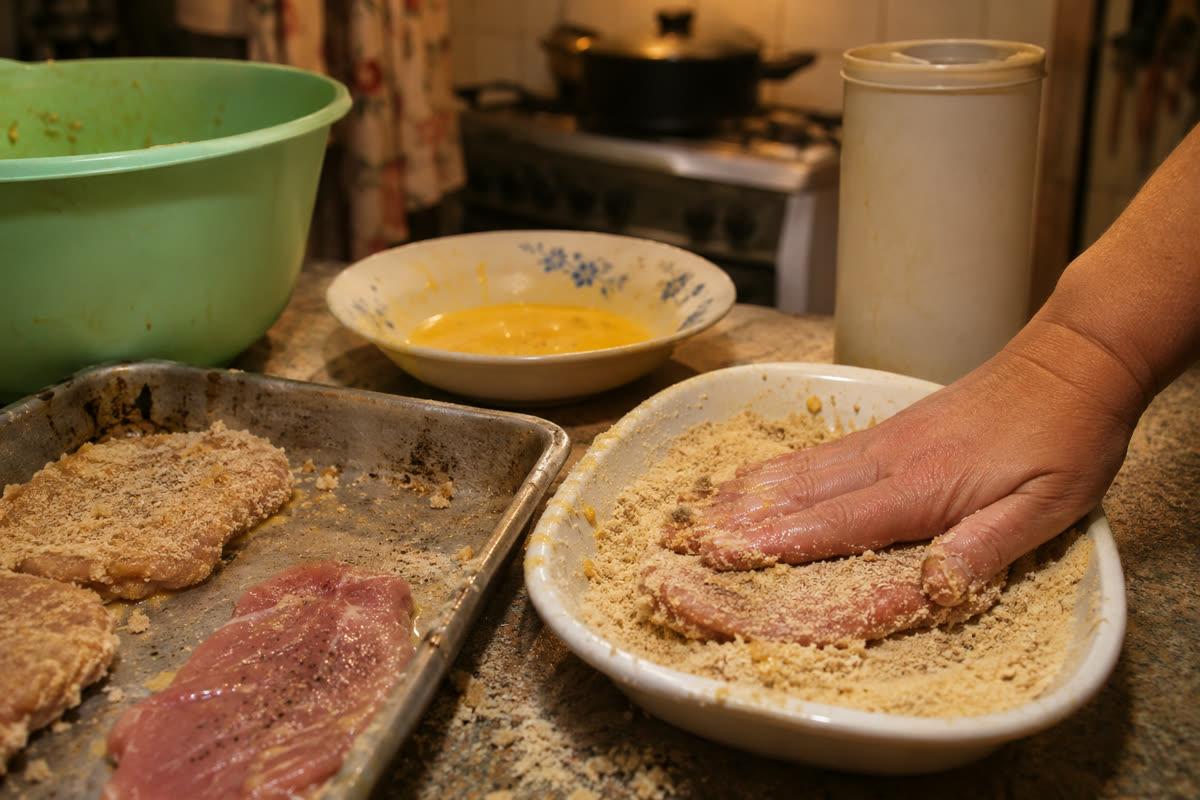 Gluten-free breadcrumbs, panko and coatings: what to read on the packHow to read a crumb, panko or batter mix for wheat, which gluten-free crumbs makers state, and what their pages say about baking and frying.
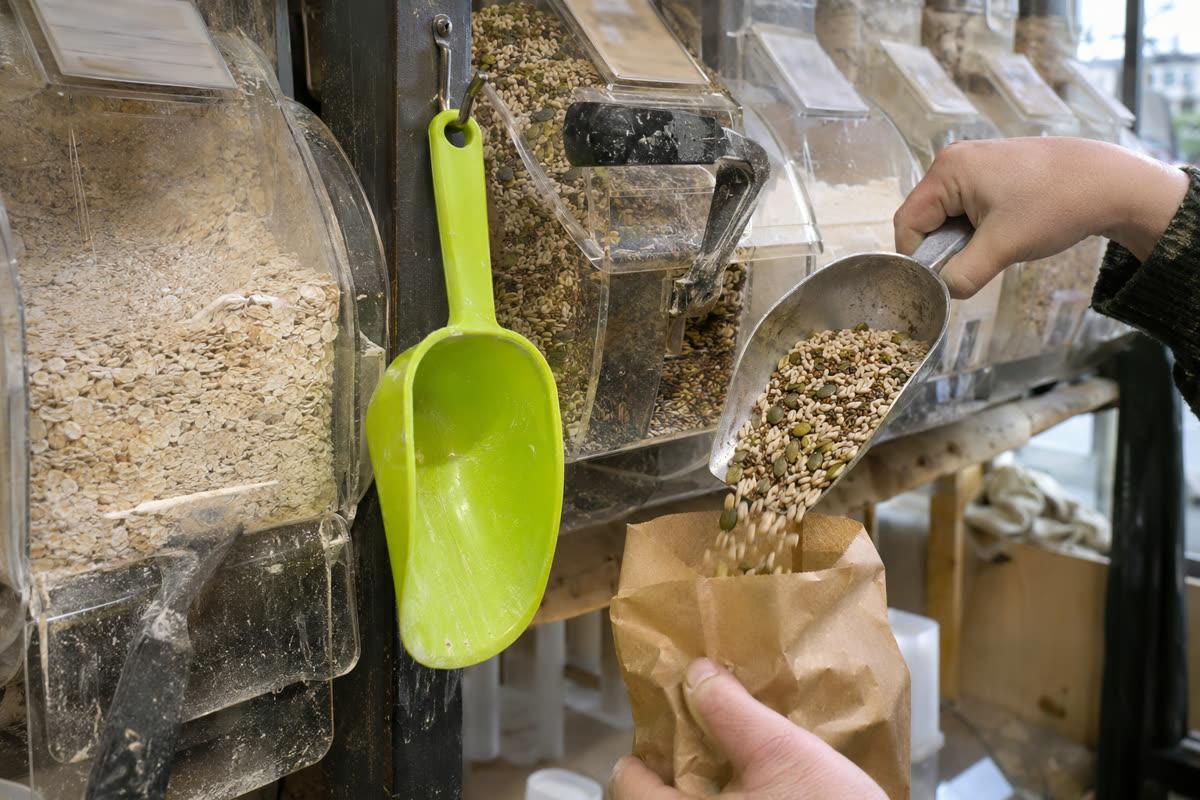 Millet, sorghum, quinoa, buckwheat, teff, amaranth and wild rice: what the bag has to sayWhich grains and seeds are gluten-free plants, what makers and certifiers say about seven of them, and the cross-contact checks for bags, bins and blends.
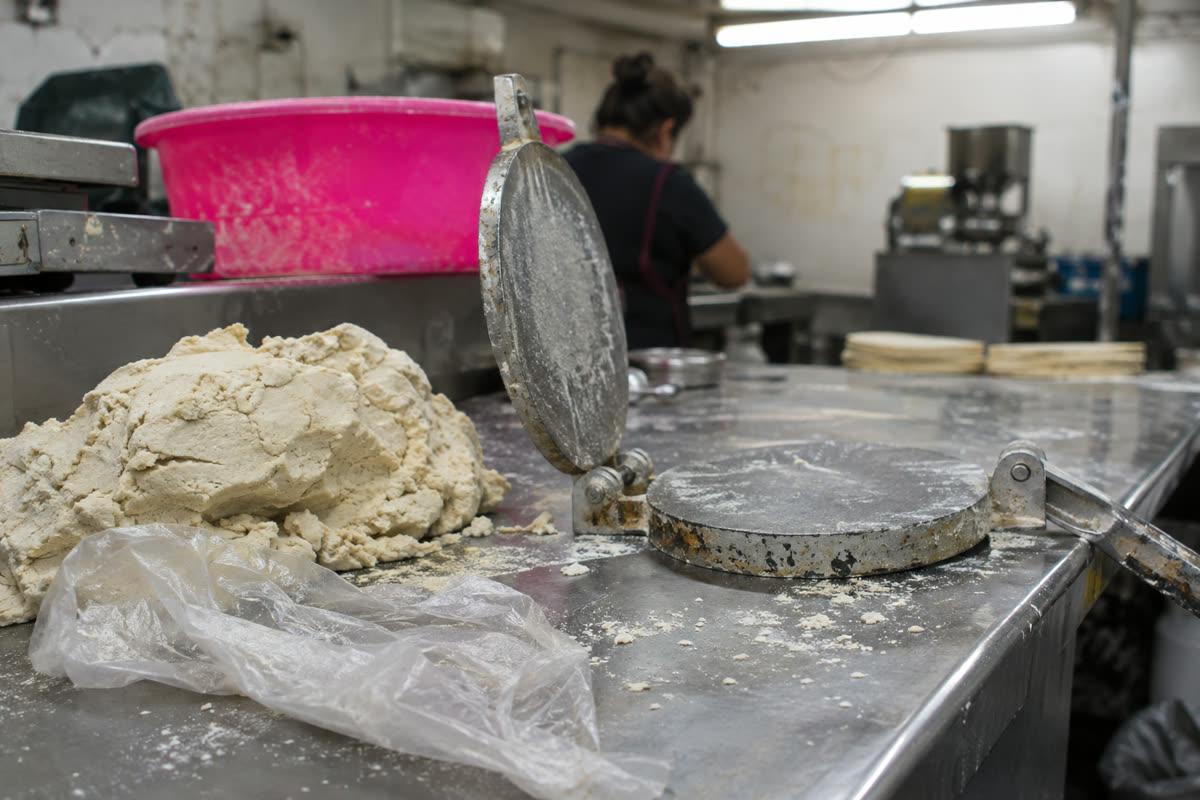 Cornmeal, grits, polenta and masa: where gluten can get inCorn is gluten-free, but mixes, blends and shared mills are not always. How to read cornmeal, grits, polenta, masa and cornbread labels for wheat.
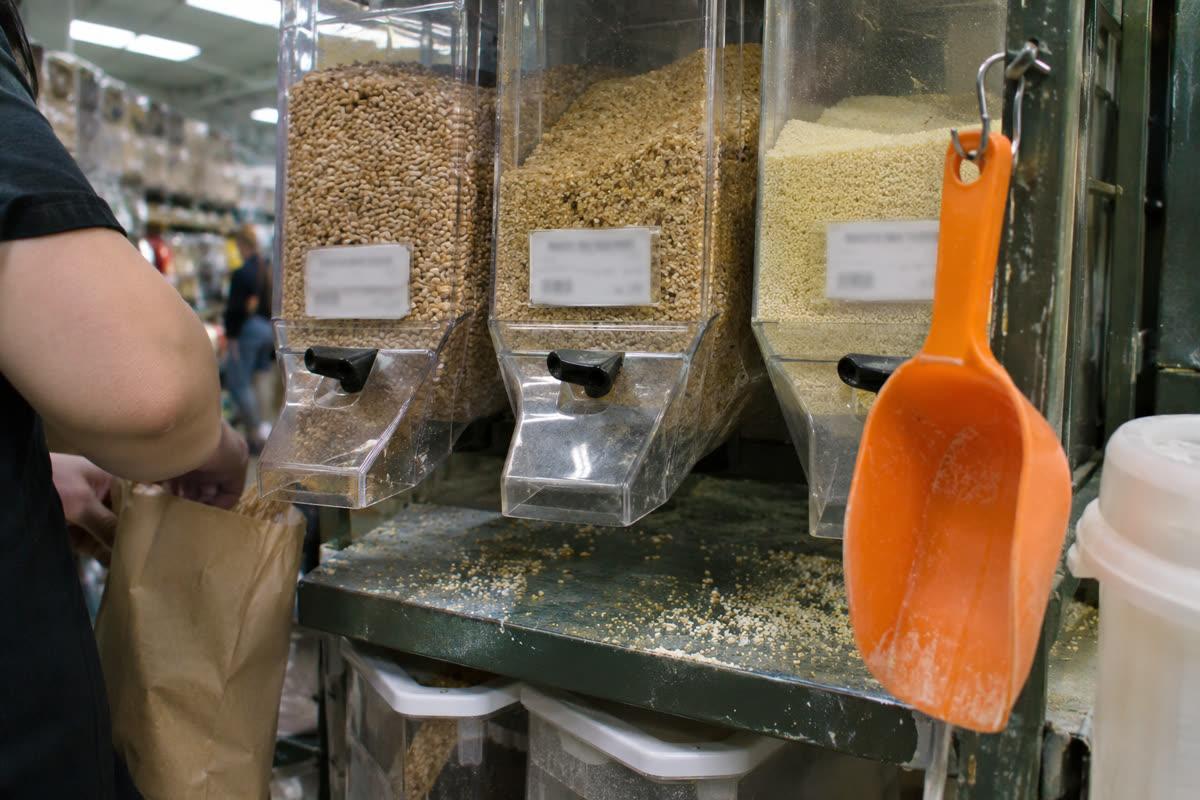 Spelt, farro, Kamut, bulgur, couscous and freekeh: wheat under other namesWhich shop and menu names are wheat: spelt, farro, Kamut, einkorn, bulgur, couscous, freekeh and more, and what FDA’s rules say about them.
Related guides
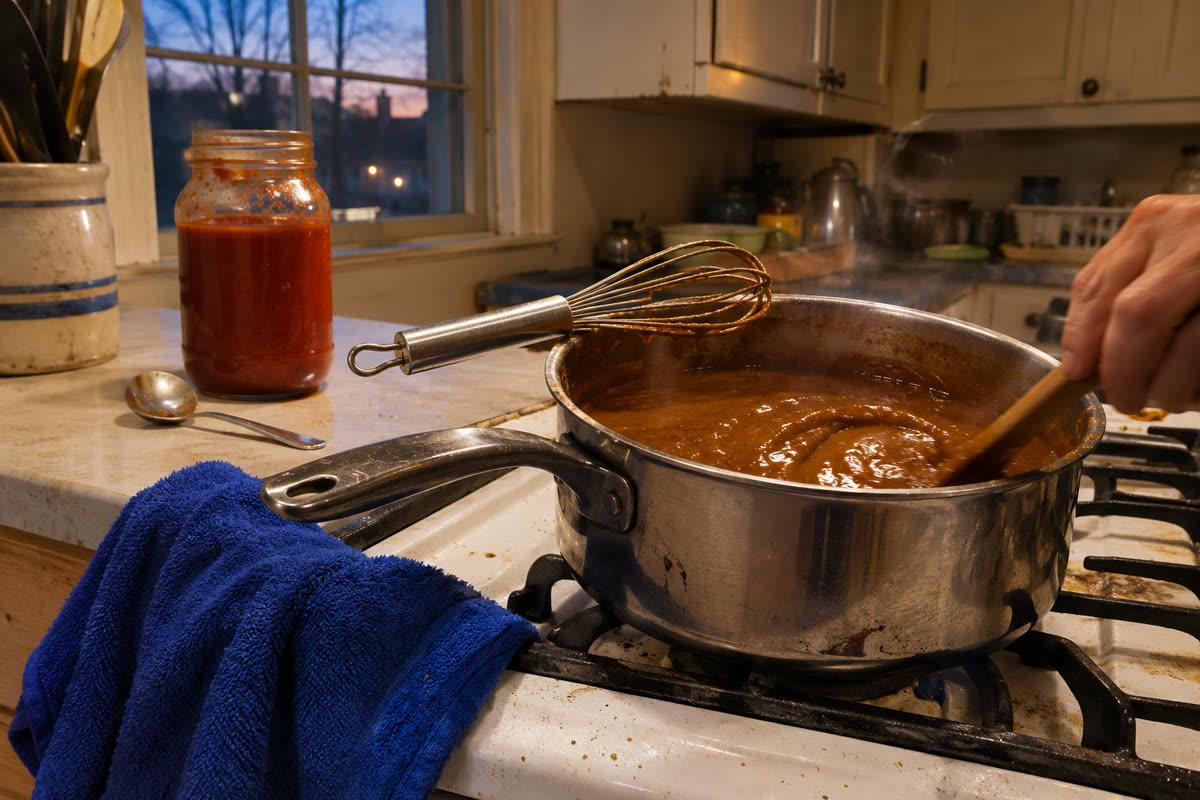 Gravy, jarred pasta sauce and cheese sauce: where flour and starch thicken the potHow to read a gravy packet, gravy jar, cheese sauce or pasta sauce for wheat flour, wheat gluten and starch, with maker pages read on 2026-11-17.
 Canned soup and gluten: roux, barley, noodles and which cans carry a claimRead a can of soup for the three ways gluten gets in (wheat thickener, barley or malt, noodles) and see which makers state a gluten-free claim.
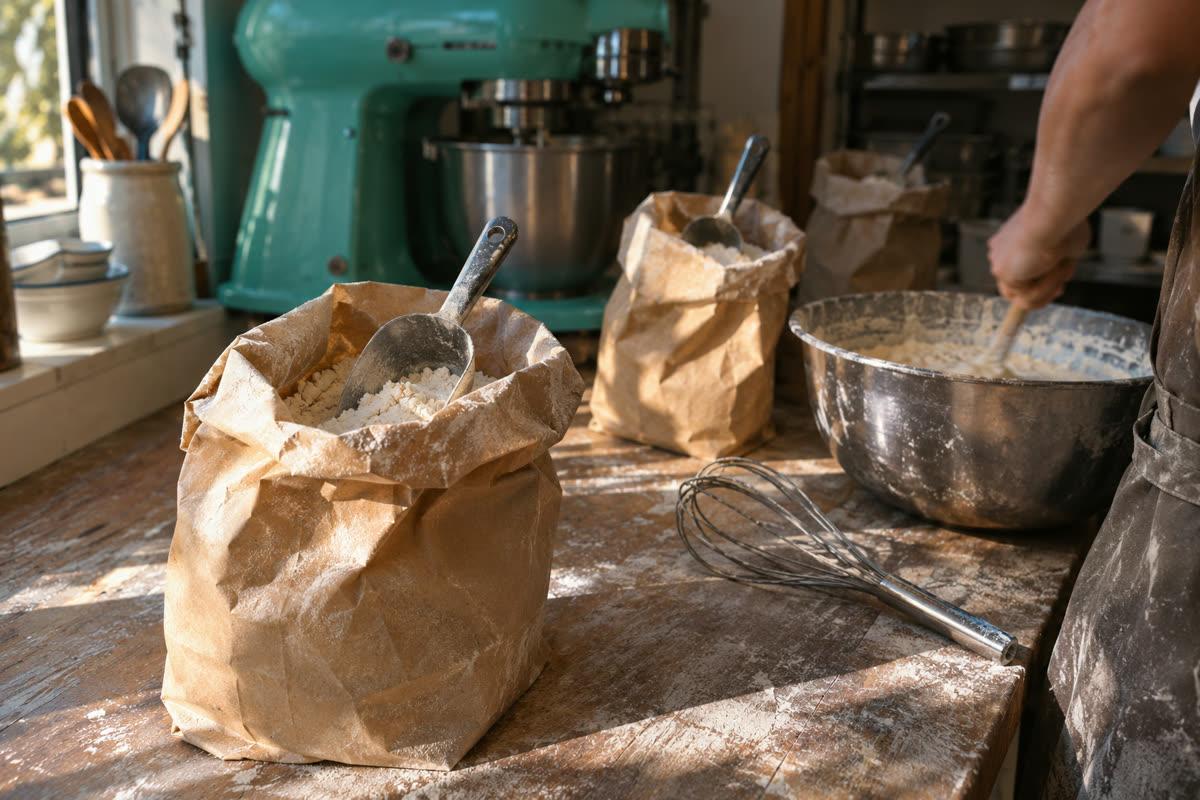 1-to-1, all-purpose and bread flour blends: what each maker’s page says the bag is forWhat King Arthur and Bob’s Red Mill say their 1-to-1, all-purpose, bread and pizza gluten-free flours are for, and which bakes each sends elsewhere.
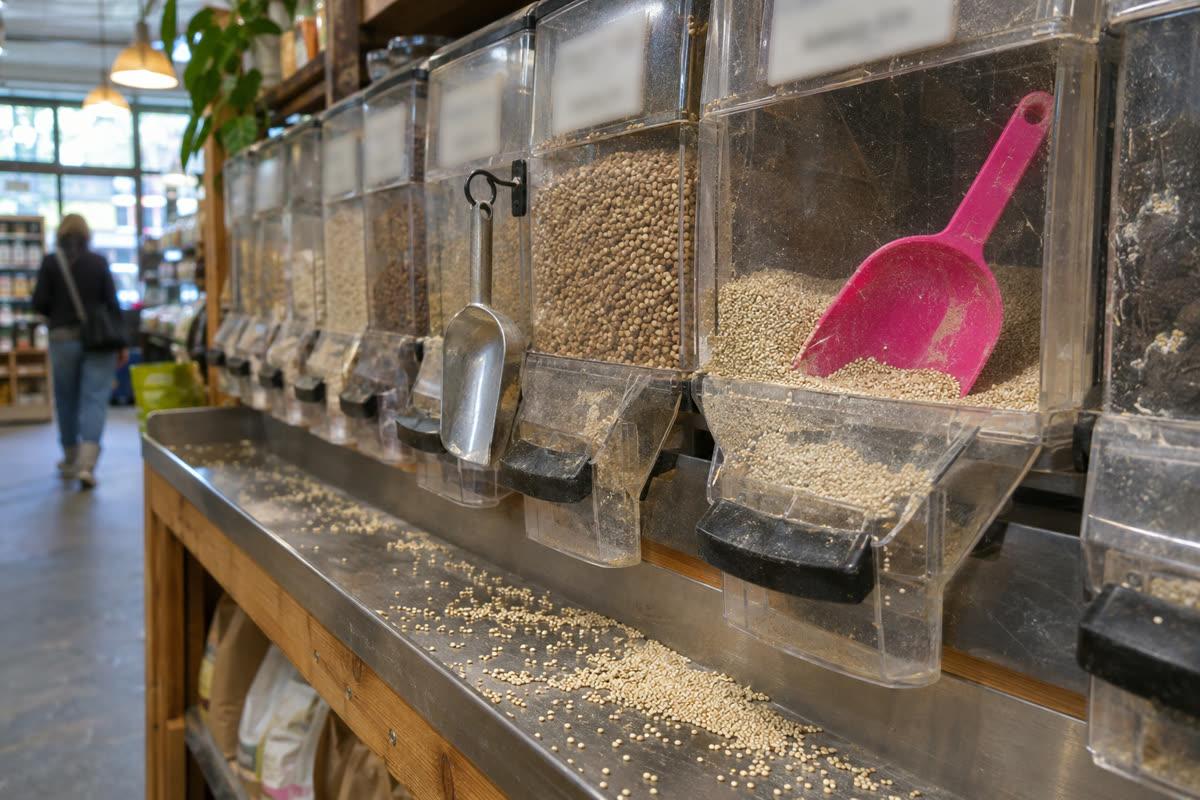 Deli, bakery and bulk-bin counters on a gluten-free dietFor each store counter (deli, bakery, bulk bins, bars): skip it, ask first, or buy the packaged item, and what a store’s own statement tells you.
Sources
- [1, 2, 3, 4, 5, 6, 7, 8, 9, 10, 13] ACH Food Companies (Argo), Argo FAQs, checked Nov 17, 2026.
- [11, 16, 17] Bob's Red Mill, Tapioca Flour, checked Nov 17, 2026.
- [12, 21] Bob's Red Mill, White Rice Flour, checked Nov 17, 2026.
- [14, 15] Bob's Red Mill, Cornstarch, checked Nov 17, 2026.
- [18] Bob's Red Mill, Arrowroot Starch, checked Nov 17, 2026.
- [19, 20] Bob's Red Mill, Potato Starch, checked Nov 17, 2026.
- [22, 23] Bob's Red Mill, Sweet White Rice Flour, checked Nov 17, 2026.
- [24] Bob's Red Mill, Gluten Free 1-to-1 Baking Flour, checked Nov 17, 2026.
- [25, 26] Gluten Intolerance Group, Gluten-Free Flours & Thickening Agents, checked Nov 17, 2026.
- [27, 28, 29, 30] Gluten Intolerance Group, 38 Foods Where Gluten May Be “Hidden”, checked Nov 17, 2026.
- [31] National Celiac Association, Is there gluten in corn?, checked Nov 17, 2026.
- [32, 33, 34] National Celiac Association, Is modified food starch gluten free?, checked Nov 17, 2026.
- [35, 36, 37, 38] US Food and Drug Administration, Questions and Answers on the Gluten-Free Food Labeling Final Rule, checked Nov 17, 2026.
- [39, 40, 41] US Food and Drug Administration, Food Allergies, checked Nov 17, 2026.