Eating at a wedding with celiac disease: what to write, who to call and what to ask
Short answer
Work through four steps, starting at the RSVP. FDA’s gluten-free rule applies to packaged food, FDA “recommends” that a restaurant’s gluten-free menu claim match it, and its page does not mention caterers, so a caterer’s own answers are what you have to go on1, 2.
- Tell the couple when you RSVP, and ask for the caterer’s contact details3, 4.
- Call the caterer ahead with a short list of questions about thickeners, shared fryers and how your plate is made5, 6.
- Decide before the day whether you will eat the meal, part of it or your own food; NCA recommends eating beforehand when you do not know what to expect7.
- At the table, confirm with the server or manager that the plate is the gluten-free one8.
Part of Holidays, weddings and celebrations, 16 guides
Key points
- NIDDK advises telling the host you have celiac disease and finding out whether gluten-free food will be available3.
- NCA lists sauces and thickeners, broths and soups, spice mixes and flour dusting, and foods from a non-dedicated fryer among dishes that almost always contain gluten5.
- NCA warns that buffets can bring cross-contact between foods, and suggests going first in line9, 10.
- NCA says there is always going to be a risk of exposure to gluten when eating away from home, so decide on a backup plan before the day11, 7.
What to write on the RSVP
NIDDK’s advice for social gatherings is to let the host know you have celiac disease and find out whether gluten-free foods will be available3. NCA adds that you should contact the host with plenty of notice, so it is easier for them to adjust or add to the menu12.
An RSVP card has room for a line, not a conversation. A line that works: “I have celiac disease and eat strictly gluten-free. May I call you or the caterer a week before to ask a few questions?” Put it on the card, or in the message that goes with it.
If you want wording for the explanation itself, NCA’s Ask the Expert page suggests saying: “I have celiac disease and cannot have any traces of gluten. If I do, even accidentally, I get very sick and it can take days for me to heal.”13 The same page recommends keeping it simple, thanking them for their efforts and giving a clear explanation14.
Ask whether the couple is using a caterer, and ask for the caterer’s contact details. NCA advises exactly that when a host is using a caterer: ask for their information and call the caterer to discuss gluten-free options4. It also keeps the couple out of the middle of the conversation: you are asking them for a phone number, not to solve a menu.
The call, about a week before
No source we read gives a number of days for a wedding, so a week is our suggestion: long enough for a caterer to answer and adjust, close enough that the plan is settled. For restaurants, GIG says to call the day before or earlier the same day and speak to the chef15, and NCA suggests calling during off hours because staff may not have time to talk on a busy night16. The same reasoning applies to a caterer: ask for the person who plans the food, at a quiet time.
- Say who you are, whose wedding it is and the date.
- Say it in one sentence. GIG’s suggested wording for a restaurant is: “I am on a medically restricted diet and am unable to eat wheat, rye, barley, and foods made with these grains.”17
- Ask what they plan to serve and which ingredients and preparation methods they use18. Then ask the questions in the next section. NCA says it is helpful to have a list of questions you use regularly in situations like this, to uncover cooking protocols and food handling19. Write the answers down, with the name of the person who gave them.
- Ask who will be in the kitchen or at the serving station on the day, and whether your plate is on their list.
- Send a short message afterwards repeating what you were told: “Thank you for confirming that…” That gives both sides the same notes.
NCA says there is always going to be a risk of getting exposed to gluten when eating away from home11. A good call tells you how much risk the caterer’s process leaves. It does not remove it.
The questions that show whether the meal can work
These come from restaurant guidance by the Gluten Intolerance Group (GIG) and the National Celiac Association (NCA), not from wedding-specific advice, and we have turned them into questions for a caterer. Start with these four.
| Ask | Why it matters |
|---|---|
| What thickens the gravy, sauces and soup? | NCA lists sauces and thickeners, and broths and soups, among dishes that almost always contain gluten5. GIG notes that roux is fat, usually butter, mixed with flour20, and that some powdered or packaged broths can contain gluten, such as yeast extract derived from barley21. NCA says most recipes can be adjusted by using a gluten-free flour to thicken sauces22. See our verdicts on gravy and cornstarch. |
| Are the fried foods and potatoes cooked in a dedicated fryer, or does the oil also cook breaded items? | This is GIG’s question about french fries23. For catered food, GIG says to ask whether items are cooked in a shared fryer or other shared equipment, since they are the most common places for hidden gluten6. NCA lists foods fried in a non-dedicated fryer among dishes that almost always contain gluten5. See our verdict on mashed potatoes. |
| Is the rice, pasta or vegetable side cooked in water or oil that also cooked wheat pasta or breaded food? | GIG asks whether gluten-free pasta is boiled in fresh water or in the water used for regular pasta24. NCA lists vegetables cooked in pasta water among dishes that almost always contain gluten5, and its preparation guidelines say not to steam, bathe or warm vegetables over pasta water25. GIG adds that a rice pilaf could be made with orzo, a small wheat pasta, or contain wheat flour26. |
| How will my plate be made: clean utensils and surface, changed gloves, kept apart from the other plates? | GIG’s question is whether the kitchen can prepare the meal using clean utensils and a freshly sanitized surface27. NCA’s guidelines list washing hands and changing gloves, a separate preparation and cooking station, and separate or dedicated equipment, fryer, utensils and tools25. |
If there is time, also ask
- What is in the seasoning, marinade and dressing? GIG’s question is whether the seasoning blend on the dish is gluten-free28, and it notes that marinades and barbeque sauces may contain malt vinegar, soy sauce or flour29. A plain protein is only as plain as what is put on it: see our verdict on chicken.
- Will bread, croutons or a garnish go on or next to my plate? NCA lists salad croutons and dressings, and bread served on top of or beside food, among dishes that almost always contain gluten5.
- Who brings me the plate, and who confirms it is the gluten-free one? NCA says to always confirm with the server or manager, when the order arrives, that the meal is gluten-free8. At a wedding the server may not know, so ask the caterer to name the person.
GIG’s restaurant guide, written for parents and caregivers, lists red flags that include staff saying “A little bit of gluten won’t hurt, right?”, kitchen staff hesitant to check labels on packaged sauces or mixes, and confirmation that gluten-free food shares cooking oil or grill space with heavily breaded items30. Its advice if you hear or see any of them is to consider eating elsewhere or sticking strictly to pre-packaged or pre-verified items31. At a wedding, “elsewhere” means your own food, which the day-of section covers.
Buffet, plated, family-style and cocktail hour
Buffet
NCA’s caution on buffets is that there can be cross-contact between foods9. Its list: separate serving spatulas for each dish32; foods containing gluten not next to gluten-free foods33; and watch for double-dippers, which NCA suggests avoiding by being first in line and taking enough food to fill you up so you do not go back for a second round10. At a wedding, ask the caterer or planner whether your table can go early. Our guide to buffets and food courts covers the same points away from weddings.
Plated
A plated meal is made in the kitchen, so the questions about how your plate is made and who brings it do the work. When it arrives, NCA’s rule applies as it does in a restaurant: confirm with the server or manager that it is the gluten-free meal8.
Family-style
We found no source that addresses family-style service by name. The issues NCA raises about buffets, serving utensils moving between dishes and guests going back for seconds32, 10, are the ones to ask about for a platter that travels around the table. Our suggestion: ask whether your plate can come from the kitchen, as in a plated meal, while the others are served from platters.
Cocktail hour
Passed appetizers have no label to read, so the questions go to the caterer ahead of time: ask for the list of what will be passed and what is on each tray. GIG lists cheese among foods that are usually gluten-free but could contain gluten, because some cheeses have added flavors or other ingredients that could contain gluten34. See our verdict on cheese.
For the general routine, see eating out with celiac disease; for a dinner at someone’s home, see a holiday dinner as a guest.
Cake, the dessert table and the toast
FDA says foods that typically contain gluten include breads, cakes, cereals, pastas and many other grain-based foods35. See our verdict on cake.
If the couple orders a separate gluten-free cake or dessert for you, the question is about cross-contact. NIDDK says cross-contact can occur when food is grown, processed, stored, prepared or served36, so ask where the cake was made, how it is kept and who serves it. We found no source that names a cake knife. Our suggestion, in the same spirit as GIG’s point about clean scoops at an ice cream shop37, is a clean knife and a clean server for your slice, cut before anyone cuts the wheat cake.
On a dessert table, NCA’s buffet points apply: separate serving utensils for each item32, and gluten-containing foods kept away from gluten-free ones33.
The toast and the bar
NCA says wine is fermented from grapes and does not contain gluten, but be careful with wine coolers, which often contain barley malt38. See our verdicts on wine and champagne. GIG says many alcoholic beverages, such as beer and some types of liquor, contain gluten39, and lists hard lemonades and wine coolers, saying malt-based fermented alcoholic beverages are problematic40. It also notes that certain Bloody Mary mixers contain wheat or barley derivatives41. At an open bar, ask the bartender what is in a mixed drink before you order it. More in our gluten-free alcohol guide.
The day: eat first, carry a backup, and know when to skip
NCA recommends eating beforehand when you do not know exactly what the situation will be, or having a backup protein or snack bar with you7. It also says that even after all the preparation, there are still times you may have to skip the food offered42.
A way to decide, from what the call told you:
- Answers were specific and the caterer named a person to confirm your plate: eat the plate, after confirming it at the table8.
- Answers were vague: rely on your own food. If the kitchen would not check the labels on its sauces and mixes, that is one of the red flags GIG describes30.
- You could not reach anyone: eat beforehand and keep the backup with you7.
NCA’s advice to bring food you know you can eat is given for smaller gatherings43. A wedding is not one, so tell the couple or the caterer before the day rather than arriving with it.
Saying no does not need a speech. GIG says it is always acceptable to say no thank you44, and NCA recommends keeping it simple and thanking people for their efforts14. For example: “Thank you for thinking of me. I’m going to pass on this one.”
What the FDA rule covers, and what it does not
FDA’s rule says that foods carrying the label “gluten-free”, “no gluten”, “free of gluten” or “without gluten” must contain less than 20 parts per million of gluten45. That is a limit, not zero. The regulation applies to packaged foods1. For restaurants, FDA recommends that those making a gluten-free claim on their menus be consistent with its definition1. That is a recommendation, and FDA’s page on the rule says state and local governments play an important role in overseeing restaurants46. FDA’s question-and-answer page does not mention caterers2, so ask the caterer what their gluten-free label means.
Two published studies bear on this, and we treat a gluten-free label on a menu, or a yes from a server, as a reason to ask more, not to stop asking. In a study of 105 adults with newly diagnosed celiac disease on a gluten-free diet, 66% reported a suspected reaction to gluten47. For those 69 people, the authors’ table of contributing factors lists not suspecting gluten until a reaction occurred (63%) and problems ordering in a restaurant (29%)52. The authors conclude that eating at restaurants and other people’s homes remains a risk for unintentional gluten exposure48. In another study, crowd-sourced results from a portable gluten detection device detected gluten in 32% of gluten-free labeled restaurant foods tested49; the authors note the device may detect gluten below 20 parts per million, leading to gluten exposure of unknown clinical significance50. Neither study looked at weddings.
A card to hand a server
NCA points to a restaurant card that explains the gluten-free diet51. You can also write your own. The lines below follow GIG’s suggested wording and NCA’s preparation points17, 25; copy them onto a card or a note on your phone.
- I have celiac disease. I cannot eat wheat, rye or barley, or anything made with them.
- Please use clean utensils and a clean surface for my plate.
- Please check what thickens the gravy and sauce, and what is in the seasoning.
- Please do not cook my food in oil or water that has cooked breaded food or wheat pasta.
- Please tell me who made my plate. I will confirm it with you before I eat.
Verdicts in this guide
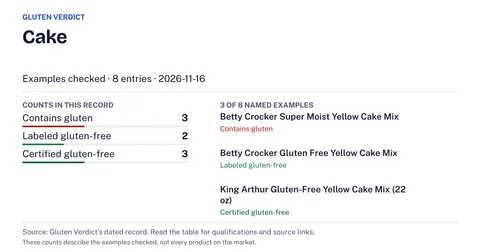 CakeContains glutenchecked Nov 16, 2026
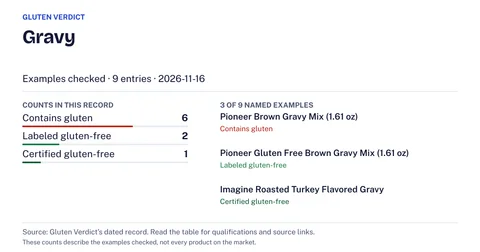 GravyDepends on the product6 of 9 products we checked contain glutenchecked Nov 16, 2026
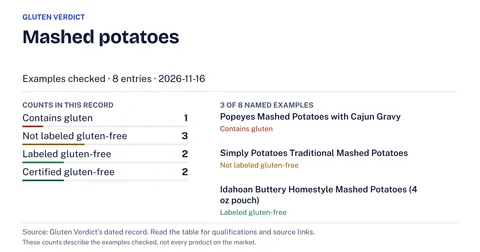 Mashed potatoesDepends on the product1 of 8 products we checked contains gluten: Popeyes Mashed Potatoes with Cajun Gravychecked Nov 16, 2026
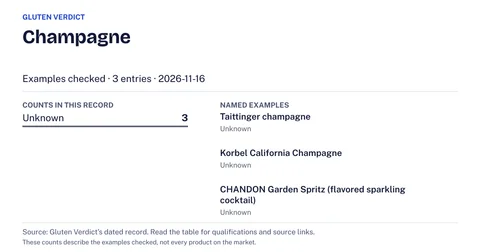 ChampagneNaturally gluten-freechecked Nov 16, 2026
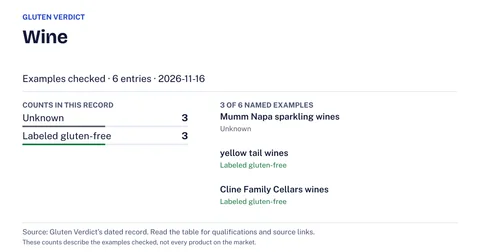 WineNaturally gluten-freechecked Nov 16, 2026
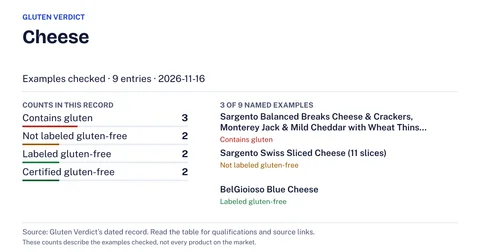 CheeseNaturally gluten-free3 of 9 products we checked contain gluten: Sargento Balanced Breaks Cheese & Crackers, Monterey Jack & Mild Cheddar with Wheat Thins Mini (6-pack); Farm Rich Mozzarella Sticks; and Farm Rich Cheddar Cheese Curdschecked Nov 16, 2026
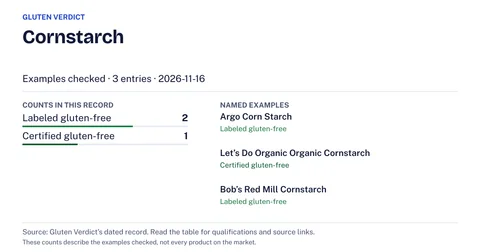 CornstarchNaturally gluten-freeBuy it labeled gluten-freechecked Nov 16, 2026
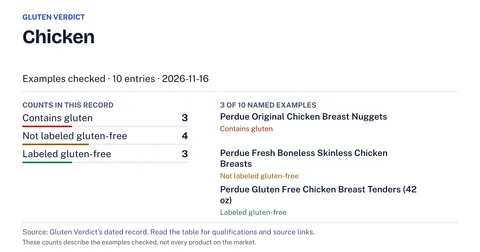 ChickenNaturally gluten-free3 of 10 products we checked contain gluten: Perdue Original Chicken Breast Nuggets, Bell & Evans Breaded Chicken Tenders, and Foster Farms Chicken Nuggets (33.6 oz)checked Nov 16, 2026
Questions people ask
Should I eat before a wedding if I have celiac disease?
NCA recommends eating beforehand when you do not know exactly what the situation will be, or having a backup protein or snack bar with you7.
Does the FDA’s gluten-free rule cover a wedding caterer?
FDA says the regulation applies to packaged foods, and for restaurants it recommends that a gluten-free menu claim match its definition1. Its page does not mention caterers2. Ask the caterer directly.
Can I bring my own food to a wedding?
NCA suggests offering to bring food you know you can eat, in its advice for smaller gatherings43. For a wedding, ask the couple or the caterer first.
More in Holidays, weddings and celebrations
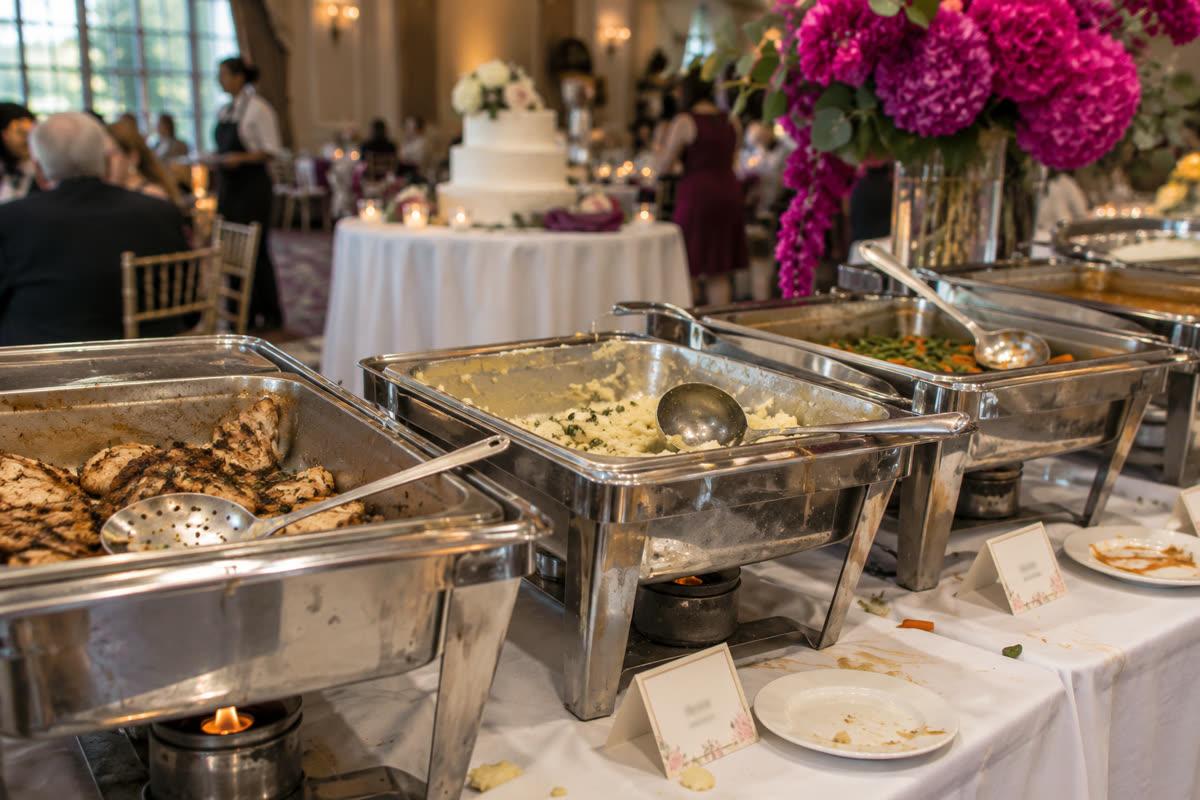 Gluten-free wedding catering: what to ask the caterer and the cake bakerQuestions for a wedding caterer and cake baker, what a real answer sounds like, a tasting checklist and what to put in the contract for a celiac guest.
 Gluten-free at a holiday dinner, potluck or cookout as a guestHow a guest with celiac disease can message the host, bring a dish, serve first at a buffet and decide when to eat only their own food.
 Gluten-free Thanksgiving: a dish-by-dish check of the menuTurkey, stuffing, gravy, cranberry sauce, casserole and pie: which dishes need a label or maker check, and how to order the work in a shared kitchen.
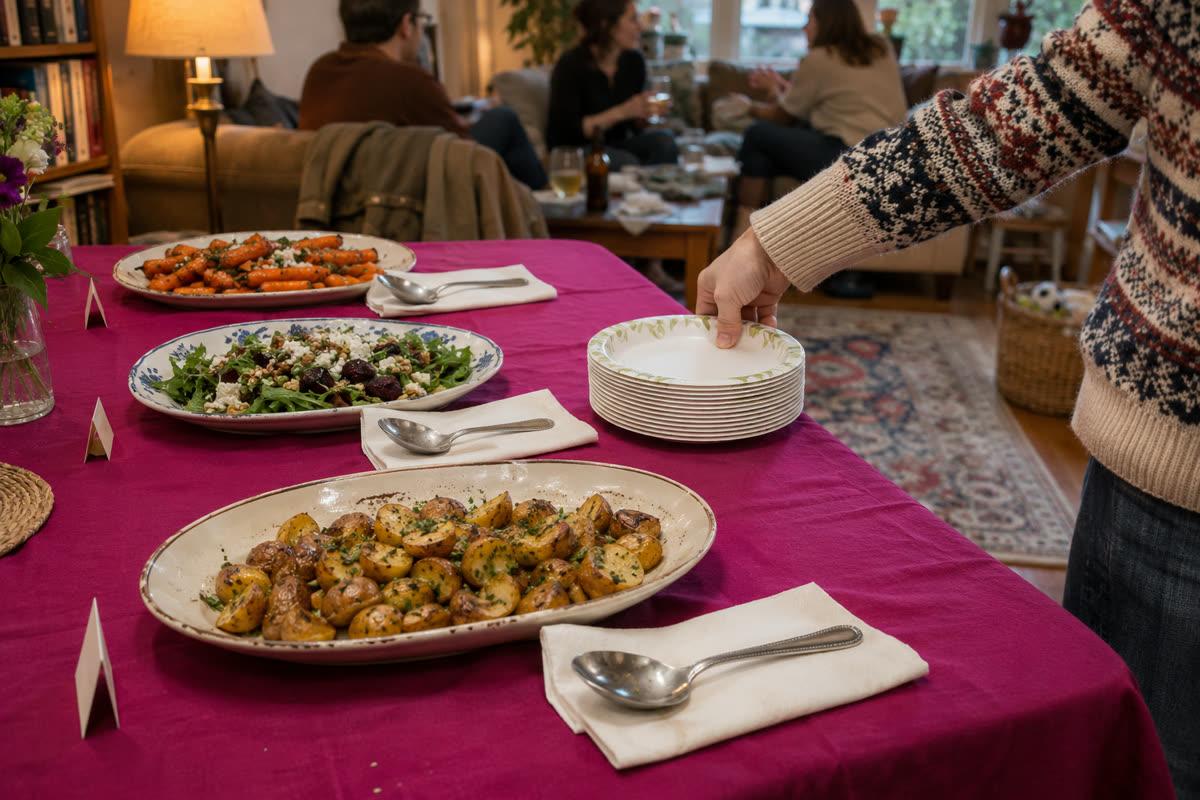 Hosting a gluten-free party: a menu and cross-contact planPlan a mixed party table for a guest with celiac disease: what to ask, which store-bought items to check, and how to keep dishes apart.
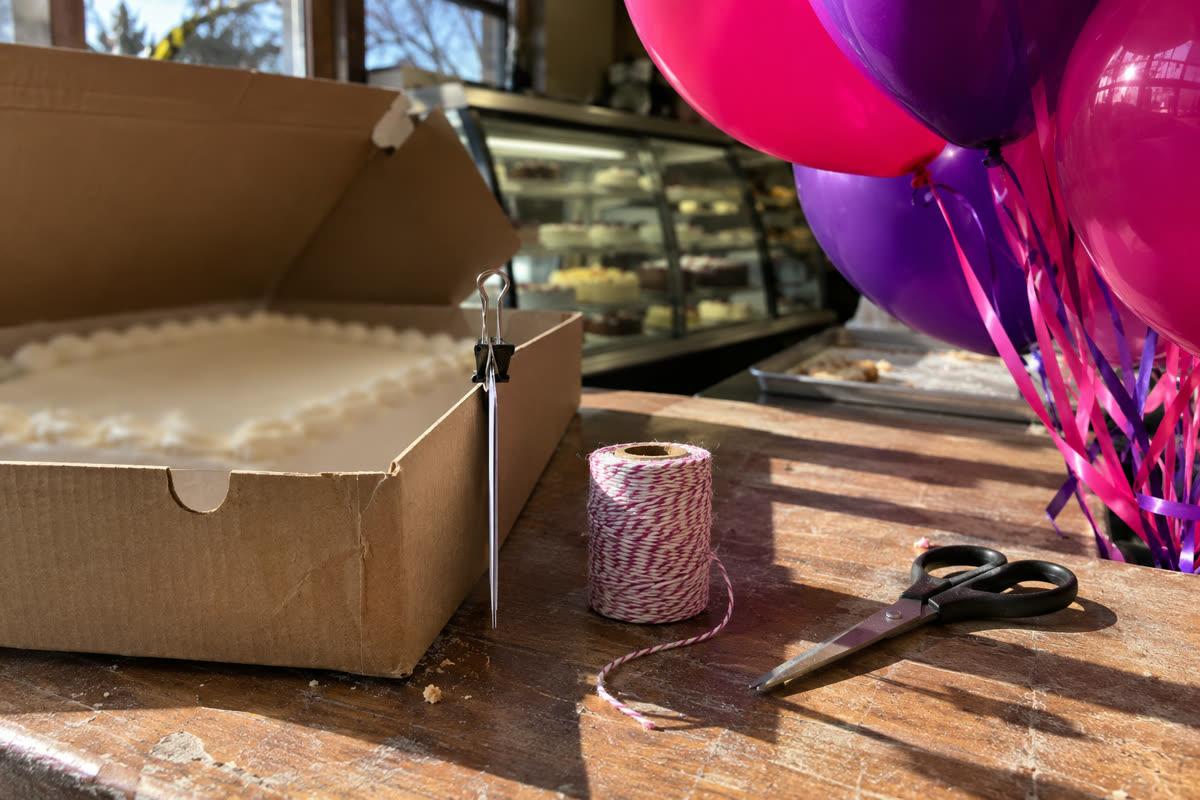 Ordering a gluten-free birthday cake: what to ask the bakeryBakery, labeled packaged cake or your own? The questions to ask a bakery that also bakes wheat, and how to cut and serve the cake at the party.
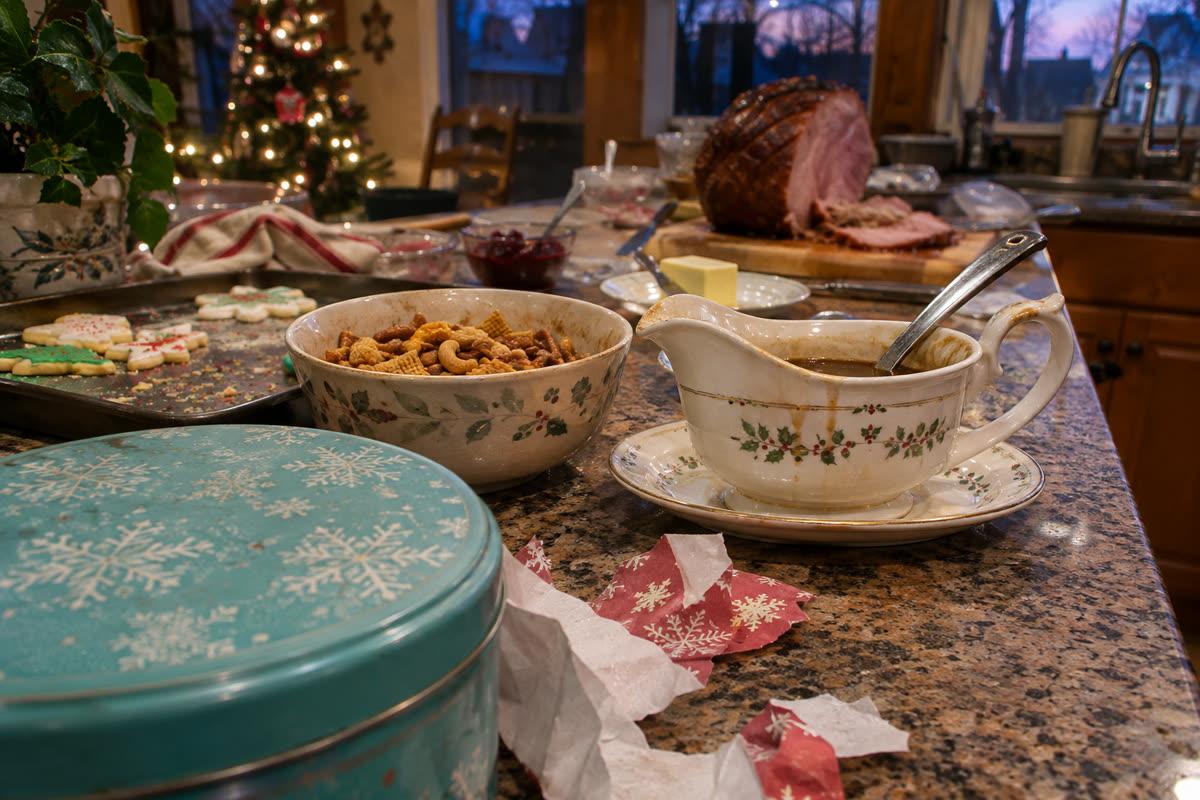 Gluten-free Christmas table: ham glaze, gravy, eggnog, snack mix and cookie trayCheck the ham glaze packet, gravy, eggnog, Chex Mix and cookie tray against the makers' own pages, and learn which agency covers a ham label.
Related guides
 Eating out with celiac disease: what to check, ask and watch forPlan a restaurant meal with celiac disease: what to check before you go, the questions to ask in order, how to read the answers, and what studies measured.
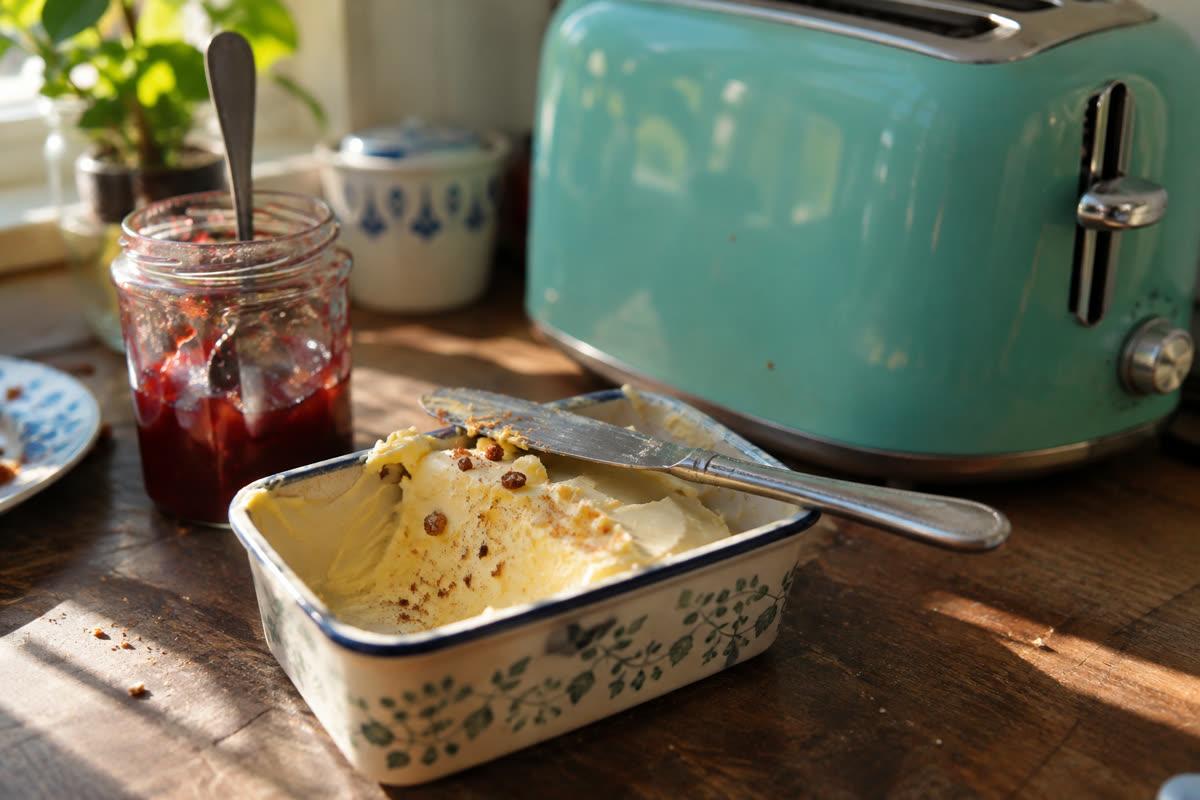 Gluten cross-contact at home: where it happens and what to do about itHow gluten reaches gluten-free food at home, whether to separate, wash or ask for each route, and which rules have lab data behind them.
 Buffets, food courts and food trucks with celiac disease: what to ask at eachHow to decide whether a buffet, food court counter or food truck is workable with celiac disease, what to ask at each stop, and what to order.
 How to cook dinner for a guest with celiac diseaseA host's plan for one dinner: what to ask the guest, a menu with few risk points, which labels to read, the cooking order, clean tools and serving.
Sources
- [1, 2] US Food and Drug Administration, Questions and Answers on the Gluten-Free Food Labeling Final Rule, checked Nov 17, 2026.
Read on 2026-11-17: the page has no mention of caterers or catering; its restaurant answers are under “Does the gluten-free food labeling requirements apply to “gluten-free” claims made for foods served in restaurants, including cafeterias and buffets?” and “Can a person report unpackaged foods labeled “gluten-free”?”
- [3, 36] NIDDK (National Institutes of Health), Eating, Diet, & Nutrition for Celiac Disease, checked Nov 17, 2026.
- [4, 9, 10, 12, 18, 22, 32, 33] National Celiac Association, Eating at other houses during the holidays (Ask the Expert), checked Nov 17, 2026.
- [5, 8, 11, 16, 25, 51] National Celiac Association, Eating out (Ask the Expert), checked Nov 17, 2026.
Read on 2026-11-17: the list under “Ask about all foods and ingredients used. The dishes below almost always contain gluten:” names sauces and thickeners; broths and soups; soy sauce; spice mixes and flour dusting; salad croutons and dressings; breaded or battered foods; fried foods (fried in non-dedicated fryolator); bread served on top or side of food; and vegetables cooked in pasta water.
Read on 2026-11-17: the list headed “General food preparation guidelines:” names wash hands and change gloves; separate preparation and cooking station; separate/dedicated equipment, fryer, utensils, and tools; clean grill before cooking; place items on aluminum foil when toasting; and do not steam, bathe or warm vegetables over pasta water.
- [6, 44] Gluten Intolerance Group, Taking The Stress Out Of The Holiday Buffets – Parties, checked Nov 17, 2026.
- [7, 13, 14, 19, 42, 43] National Celiac Association, Feeling awkward not eating at social events, checked Nov 17, 2026.
- [15, 17, 20, 21, 26, 29, 34, 37, 39, 40, 41] Gluten Intolerance Group, Staying Gluten-Free While Dining out: The Importance Of Vigilance During the Holidays & Always, checked Nov 17, 2026.
- [23, 24, 27, 28, 30, 31] Gluten Intolerance Group, Questions to Ask When Eating Out, checked Nov 17, 2026.
Read on 2026-11-17: the list under “Quick Red Flags and When to Walk Away” names staff members saying “A little bit of gluten won’t hurt, right?”; kitchen staff refusing or acting hesitant to check ingredient labels on packaged sauces or mixes; and confirmation that gluten-free foods share cooking oil or grill spaces with heavily breaded items. The page is written for a parent or caregiver of a gluten-free child or dependent.
- [35, 45, 46] US Food and Drug Administration, Gluten and Food Labeling, checked Nov 17, 2026.
- [38] National Celiac Association, Is wine OK on the gluten-free diet?, checked Nov 17, 2026.
- [47, 48] PubMed (NCBI), Silvester et al. 2016: Symptomatic suspected gluten exposure is common among patients with coeliac disease on a gluten-free diet, checked Nov 17, 2026.
- [49, 50] PubMed (NCBI), Lerner et al. 2019: Detection of Gluten in Gluten-Free Labeled Restaurant Food: Analysis of Crowd-Sourced Data, checked Nov 17, 2026.
- [52] PubMed Central (NCBI), Silvester et al. 2016, full text: Table 4, factors contributing to suspected gluten ingestion, checked Nov 17, 2026.