Hosting a gluten-free party: a menu and cross-contact plan
Short answer
GIG’s advice for mixed fare is to lay the gluten dishes out far from the gluten-free ones, on separate tables or even in different rooms31. NIDDK says cross-contact can occur at any time, from when foods are grown to when they are served6, so these steps cover the part the host controls. In order:
- Ask your guest what they need and whether a kitchen that also handles gluten is acceptable1, 3.
- Build the gluten-free dishes from foods that are naturally gluten-free or carry a gluten-free claim, and read the ingredient list on each9, 23, 12.
- Give each dish its own utensil, keep gluten-free dishes apart and labeled, and let gluten-free guests serve first28, 29, 30.
- Clean, or do not share, the tools GIG flags, such as colanders, toasters and grills37, 42, 44.
- Tell the guest what you did, and be understanding if they choose to bring their own food3.
Part of Holidays, weddings and celebrations, 16 guides
Key points
- GIG calls an all-gluten-free menu the simplest route, and names pasta, bread and baked goods as the most common foods where you need gluten-free versions7, 8.
- A gluten-free claim means less than 20 parts per million on foods FDA regulates, and the claim is voluntary23, 24.
- Separate utensils, separate ends or tables, labels, and serving gluten-free guests first are among GIG’s hosting tips28, 29, 30.
- GIG says heat does not remove gluten from a grill; thorough cleaning does44.
- NIDDK says cross-contact can occur at any time, including when foods are grown and processed, so tell the guest what you did6.
Ask first: the invitation line and two questions for the guest
Start before the menu. The Gluten Intolerance Group (GIG) says it is courteous to ask invitees whether they have dietary restrictions1, and suggests asking guests about favorite products and recipes while you plan2. It also suggests making clear in the invitation that you eat gluten-free or are preparing a gluten-free meal, and notes that not everyone understands what gluten-free means4.
Two questions to put to a guest with celiac disease. First, are they comfortable eating from a kitchen that also handles gluten? GIG notes a higher risk of cross-contact in a kitchen where gluten-containing flour is being baked, and says to be understanding if a guest brings their own food3. Second, what do they already trust? NIDDK’s advice to a guest is to tell the host about the diagnosis and find out whether gluten-free foods will be available5, so a guest may ask you before you ask them.
A line to paste into the RSVP (ours, change the wording to fit): “I’m serving several gluten-free dishes and keeping them apart from the rest. Tell me what you eat and what you’d like to know, and I’ll send the ingredient list for anything you ask about.” For a guest who needs more help with that conversation, see how to tell a host or relative you have celiac disease.
Choose dishes you can check
The simplest table is an all-gluten-free one: GIG says the simplest way to keep gluten out of the gluten-free food is to decide from the outset to prepare only gluten-free food7. It adds that pasta, bread and baked goods are the most common foods where you need gluten-free versions8. If part of the table has gluten, the sections below set up the separation.
For the rest, NIDDK lists meat, fish, fruits, vegetables, rice and potatoes among foods that are naturally gluten-free when they come without additives or some seasonings9. GIG gives tortilla chips with salsa, or a homemade dip with cut raw vegetables, as easy naturally gluten-free appetizers10. A store-bought version still has its own list: NIDDK says gluten may be found in processed foods through ingredients such as flavorings, starches and thickeners11.
| Party item | What to check | Our verdict |
|---|---|---|
| Tortilla chips and salsa | GIG calls them easy, naturally gluten-free appetizers10. NIDDK names condiments among foods that may contain gluten11, so read the jar and the bag12. | Tortilla chips, salsa |
| Hummus and guacamole | NIDDK’s naturally gluten-free foods are those without additives or some seasonings9, so read the tub or the dip-mix packet12. | Hummus, guacamole |
| Cheese, queso and cheese dips | GIG says add-ins to a cheese may contain gluten, and that shredded cheese could have a gluten-containing starch added to prevent sticking13. | Cheese, queso |
| Ranch and other dressings | NIDDK names salad dressing among foods that may contain gluten11; check the label12. | Ranch dressing |
| Popcorn and chips | GIG says corn and plain popcorn are naturally gluten-free, and that flavored popcorn could contain gluten, so read the labels14. NIDDK’s list covers potatoes only without additives or some seasonings9. | Popcorn, chips |
| Deviled eggs | FDA lists eggs among naturally gluten-free foods15. For a dip or filling made from a jar, GIG’s example of cross-contact is a knife used to spread mayonnaise on wheat bread and then dipped back into the jar16. | Deviled eggs |
| Meatballs and other prepared meat | NIDDK says meat is naturally gluten-free without additives or some seasonings9, and names hot dogs and sausages among foods that may contain gluten11. | Meatballs |
| Soy sauce in a dip, glaze or marinade | FDA says soy sauce is ordinarily made by fermenting soybeans and wheat, and that one made with wheat may not bear a “gluten-free” claim in general17. | Soy sauce |
| Cheesecake, chocolate and other sweets | NIDDK names candy among foods that may contain gluten11. GIG notes certified gluten-free sweet options, ready to eat and ready to bake18. | Cheesecake, chocolate |
| Wine and hard seltzer | The National Celiac Association says wine is fermented from grapes and does not contain gluten, but wine coolers often contain barley malt19. GIG’s list of drinks to offer includes gluten-free labeled hard seltzers20. | Wine, hard seltzer |
Our verdict pages show what we read on the products we checked, with the date. Read them as a starting point: the package in your hand has the final word.
What a gluten-free label does and does not tell you
On a food FDA regulates, “gluten-free”, “no gluten”, “free of gluten” and “without gluten” must meet a limit of less than 20 parts per million of gluten23. The claim is voluntary, and a food that is naturally gluten-free may carry no claim at all24.
GIG adds a caution of its own: a “gluten-free” label should mean the FDA standard was met, but there is no guarantee that foods are being properly tested, and it points to GFCO-certified food, which it says meets a threshold of 10 parts per million or less25. FDA says it does not endorse any particular third-party certification program26. More on reading a package is in how to read a US food label for gluten and what a may-contain line means.
When a list is unclear, NIDDK’s advice to people with celiac disease is not to eat a food they are unsure about and, if possible, to contact the company that makes it or read its website27. A host can do the same before the party rather than at the table. What to ask a manufacturer lists the questions.
Set the table: utensils, order of service and labels
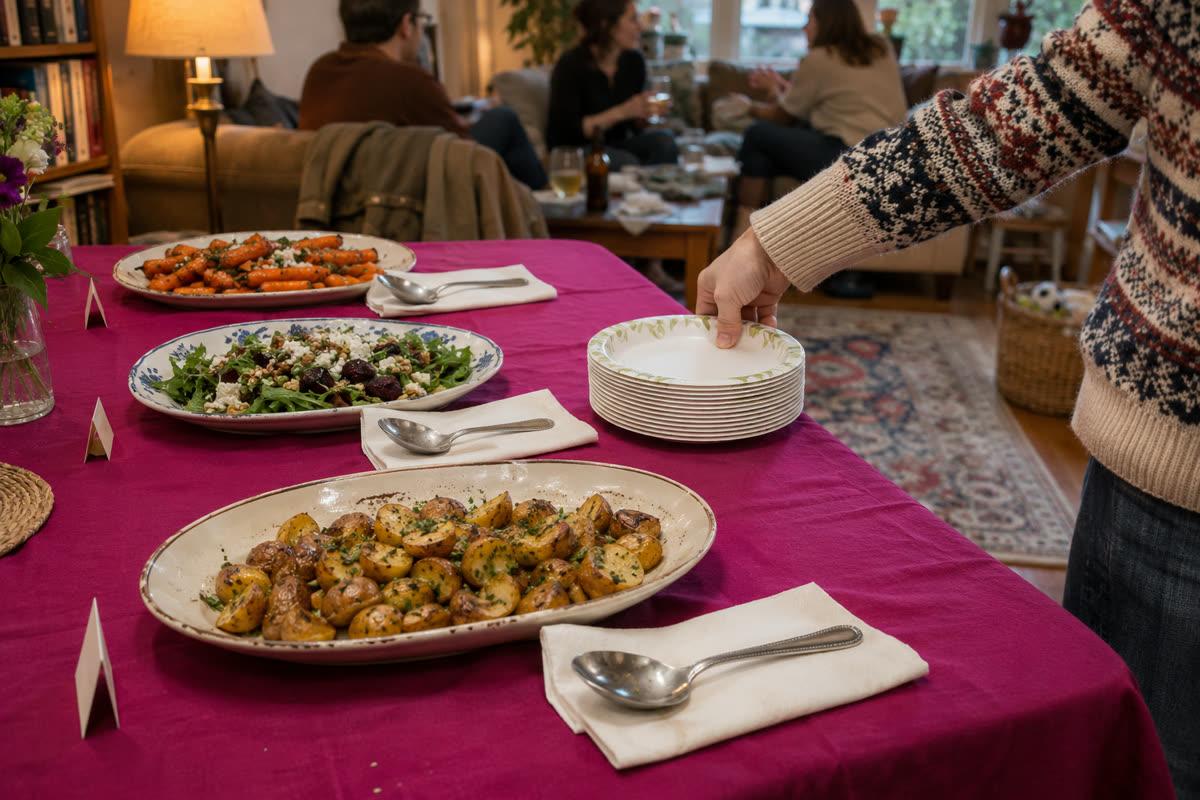
NIDDK says cross-contact can occur at any time, including when foods are grown, processed, stored, prepared or served6. The host controls the last two. GIG’s hosting advice, in the order a guest meets it:
- Give every dish its own utensil. GIG says not to share utensils between gluten-containing and gluten-free foods, because even tiny amounts of gluten can cause problems for people who need to avoid it, and that a different utensil for each dish is a simple fix28.
- Keep the gluten-free food apart. On a buffet, GIG says to keep all the gluten-free items on one end of the table and label the dishes or that end “gluten-free”29. For mixed fare it suggests entirely separate tables, or even different rooms31.
- If you use two tables or counters, equip each with its own serving utensils, plates, eating utensils and napkins32.
- Let gluten-free guests serve first, so utensils from gluten-containing dishes have not yet been moved around and shared30.
- Label what is in each dish. GIG suggests a card beside each self-serve dish with its ingredients, printed menus with gluten-free designations, and asking guests to label any food they bring33.
Buffets and potlucks are where this slips: GIG says both present additional challenges for gluten-free guests34. Its options when the host would rather not handle gluten dishes: invite others to bring dishes for the guests who eat gluten, buy prepared food, or have dishes delivered from a local restaurant35.
Shared tools in the kitchen
GIG says thorough cleaning with soap and water is sufficient for most cooking equipment and utensils38. Some items are harder, and its guidance on the ones a party menu tends to use is below. For a fuller kitchen plan, see setting up a gluten-free kitchen and cross-contamination in the kitchen.
| Tool | What GIG says |
|---|---|
| Colander, sifter, waffle iron | Harder to clean thoroughly, so not to be shared between gluten-free and gluten-containing use if possible; if shared, clean thoroughly between every use37. |
| Toaster | Gluten crumbs can end up on gluten-free bread42. |
| Oven | Bake or broil gluten-free and gluten-containing items separately when you can; if not, put the gluten-free items on the higher rack40. |
| Convection oven | Wheat dust or food particles could be blown onto gluten-free foods when both cook together41. |
| Microwave | Wipe it down after each use if it is shared with gluten-containing foods43. |
| Grill | Heat does not remove gluten: it can be removed by a thorough cleaning with soap, water and a good metal grill scrubber44. A quick fix is to put gluten-free items on tin foil45. |
| Air fryer | Not to be used for both gluten-free and gluten-containing cooking46. |
| Fridge or cupboard | Put gluten-free packages above the gluten-containing ones and keep them securely packaged39. |
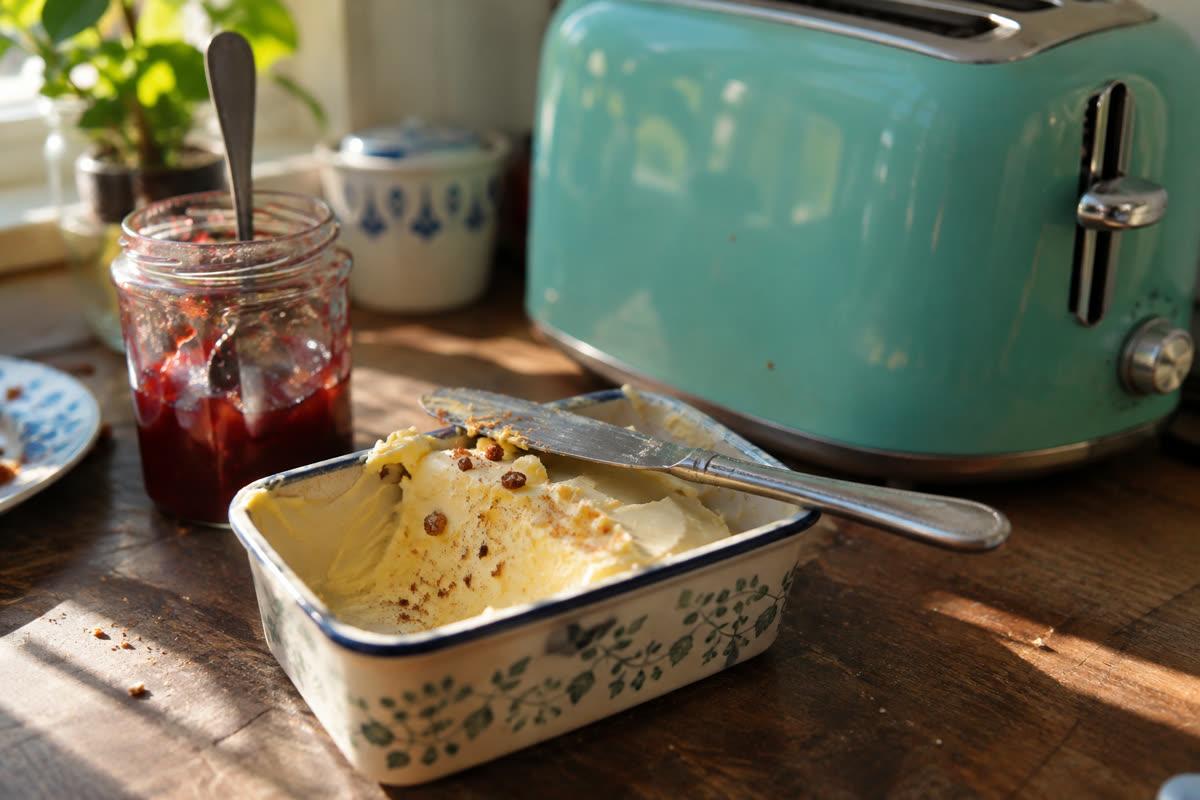
Spreads are a quiet route at a party table, since one knife can go from bread back to the jar16; sharing butter, jam and spreads covers the fixes.
Drinks and sweets
For drinks, GIG’s hosting list is distilled hard liquors, wines, gluten-free (not gluten-removed) beer, and gluten-free labeled hard seltzers or hard ciders20. It says elsewhere that distilled spirits and wine are usually gluten-free21. NIDDK says beer, lagers, ale, flavored liquors and malt beverages may contain gluten22, so a flavored bottle is worth a label check. See gluten-removed beer explained for the difference GIG draws.
For sweets, GIG says there are certified gluten-free sweet options, both ready to eat and ready to bake with, from pie crusts to sugar cookies18. A bought dessert still needs its label read. The verdict pages for cheesecake and chocolate list what we read on the products we checked.
Gifts, dishes guests bring and ingredient questions
A guest may arrive with bread or a dessert that has gluten. GIG’s first option: thank them graciously, make no issue of it, and, if you are serving gluten-containing foods, put it on the designated gluten table36.
When a guest asks what is in a dish, the ingredient card from the section above answers it33. Keep the packages until the party ends, so you can hand over the list instead of guessing. If you do not know, say so: the guest decides, and GIG’s advice is to be understanding if they bring their own food3.
Day-of checklist
- Days before: ask the guest what they eat and whether the kitchen is acceptable1, 3. Read the label on every packaged item and contact the maker where it is unclear27.
- Morning: wash utensils and surfaces with soap and water38. Set aside the colander, sifter and toaster you will not use for gluten-free dishes37, 42. Put gluten-free packages above gluten-containing ones39.
- Before guests arrive: set the gluten-free end or table with its own utensils, plates and napkins32, and put the ingredient cards out33.
- At service: gluten-free guests serve first30.
- Through the party: keep every package until the end, and say plainly what you did and did not do if asked.
Verdicts in this guide
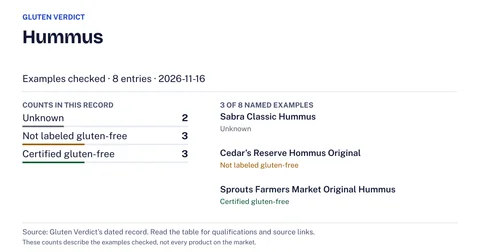 HummusDepends on the productchecked Nov 16, 2026
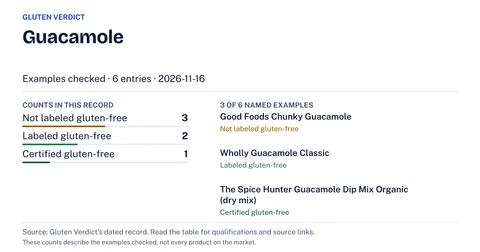 GuacamoleDepends on the productchecked Nov 16, 2026
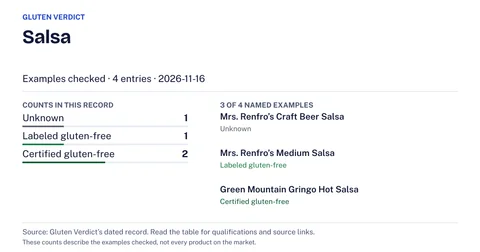 SalsaDepends on the productchecked Nov 16, 2026
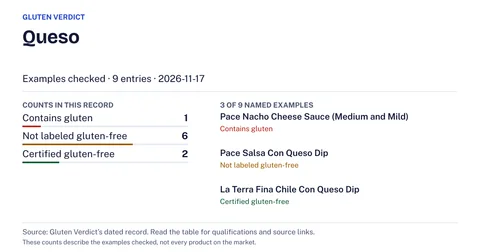 QuesoDepends on the product1 of 9 products we checked contains gluten: Pace Nacho Cheese Sauce (Medium and Mild)checked Nov 17, 2026
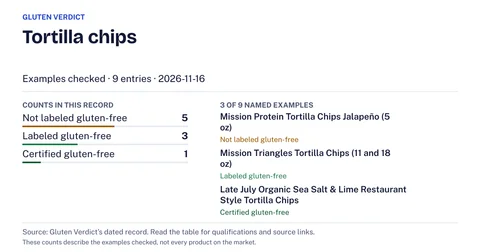 Tortilla chipsDepends on the productchecked Nov 16, 2026
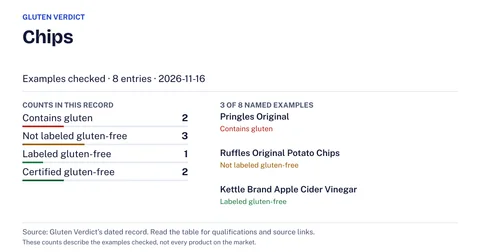 ChipsDepends on the product2 of 8 products we checked contain gluten: Pringles Original and Pringles Salt & Vinegarchecked Nov 16, 2026
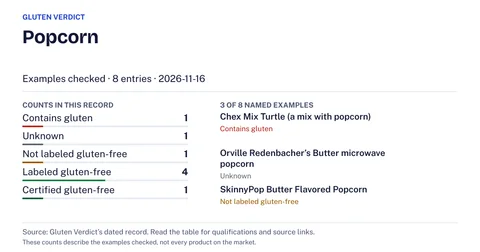 PopcornNaturally gluten-free1 of 8 products we checked contains gluten: Chex Mix Turtle (a mix with popcorn)checked Nov 16, 2026
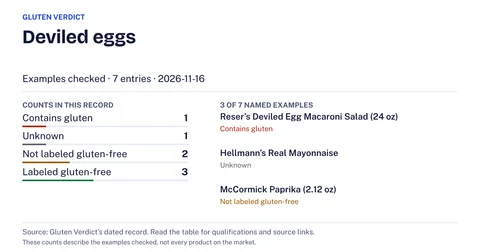 Deviled eggsDepends on the product1 of 7 products we checked contains gluten: Reser’s Deviled Egg Macaroni Salad (24 oz)checked Nov 16, 2026
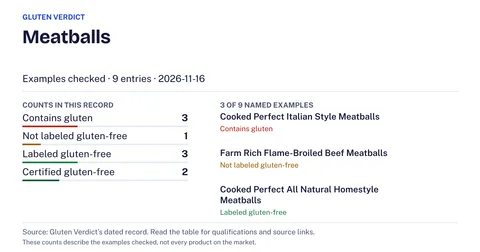 MeatballsDepends on the product3 of 9 products we checked contain gluten: Cooked Perfect Italian Style Meatballs, Cooked Perfect Restaurant Style Meatballs, and Farm Rich Homestyle Meatballschecked Nov 16, 2026
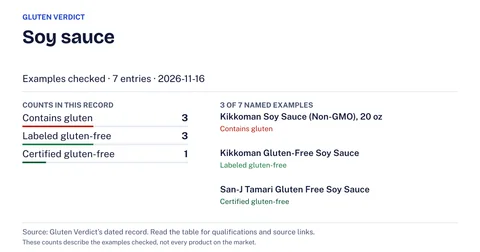 Soy sauceDepends on the product3 of 7 products we checked contain gluten: Kikkoman Soy Sauce (Non-GMO), 20 oz; San-J Organic Shoyu Soy Sauce; and Lee Kum Kee Premium Soy Sauce (No Preservatives Added)checked Nov 16, 2026
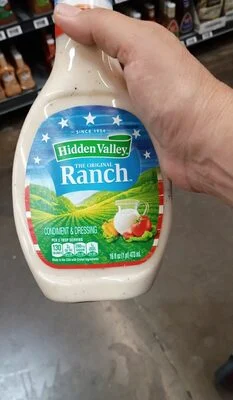 Ranch dressingDepends on the productchecked Nov 16, 2026
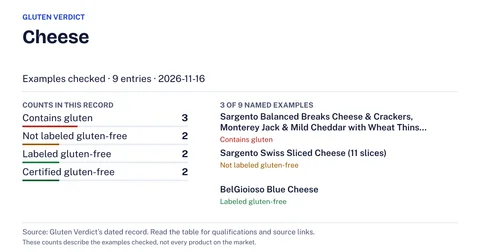 CheeseNaturally gluten-free3 of 9 products we checked contain gluten: Sargento Balanced Breaks Cheese & Crackers, Monterey Jack & Mild Cheddar with Wheat Thins Mini (6-pack); Farm Rich Mozzarella Sticks; and Farm Rich Cheddar Cheese Curdschecked Nov 16, 2026
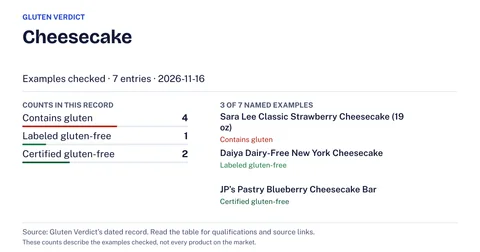 CheesecakeDepends on the product4 of 7 products we checked contain glutenchecked Nov 16, 2026
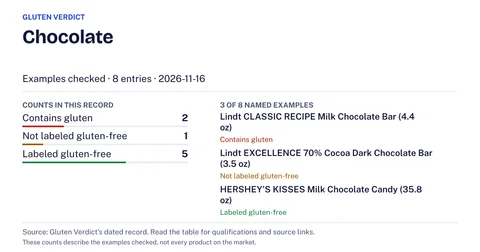 ChocolateDepends on the product2 of 8 products we checked contain gluten: Lindt CLASSIC RECIPE Milk Chocolate Bar (4.4 oz) and HERSHEY’S Cookies ‘N’ Creme Candy Bar (1.55 oz)checked Nov 16, 2026
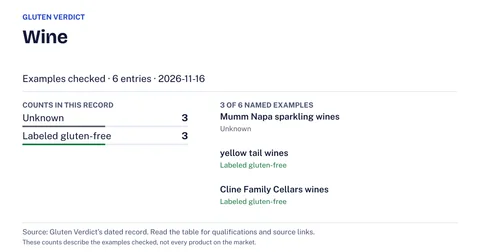 WineNaturally gluten-freechecked Nov 16, 2026
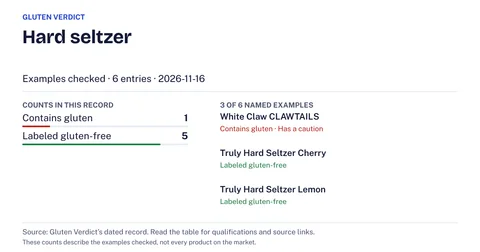 Hard seltzerDepends on the product1 of 6 products we checked contains gluten: White Claw CLAWTAILSchecked Nov 16, 2026
Questions people ask
Can I serve gluten-free dishes and regular dishes at the same party?
For mixed fare, GIG suggests separate tables or even different rooms, each equipped with its own serving utensils, plates, eating utensils and napkins31, 32. A guest with celiac disease may still prefer to bring their own food, and GIG says to be understanding if so3.
More in Holidays, weddings and celebrations
 Gluten-free at a holiday dinner, potluck or cookout as a guestHow a guest with celiac disease can message the host, bring a dish, serve first at a buffet and decide when to eat only their own food.
 Gluten-free wedding catering: what to ask the caterer and the cake bakerQuestions for a wedding caterer and cake baker, what a real answer sounds like, a tasting checklist and what to put in the contract for a celiac guest.
 Super Bowl and tailgate food: label checks for dips, wings, chips and bunsCheck dips, chips, wings, sauces and buns for gluten before game day, ask the right questions about wings, and keep one dish apart on a shared table.
 Eating at a wedding with celiac disease: what to write, who to call and what to askA wedding guest with celiac disease: the RSVP line, the caterer call, the questions to ask and when to rely on your own food.
 Gluten-free Fourth of July cookout: what to check on the table and at the grillCheck franks, buns, sauces, sides and drinks for gluten, and set up the grill and a mixed table for a Fourth of July, Memorial Day or Labor Day cookout.
 Ordering a gluten-free birthday cake: what to ask the bakeryBakery, labeled packaged cake or your own? The questions to ask a bakery that also bakes wheat, and how to cut and serve the cake at the party.
Related guides
 Setting up a gluten-free kitchen: what to replace, wash or shareWalk each kitchen zone and decide, item by item, what to replace, what to wash and what a mixed household can keep sharing, with charity sources.
 Gluten cross-contact at home: where it happens and what to do about itHow gluten reaches gluten-free food at home, whether to separate, wash or ask for each route, and which rules have lab data behind them.
 A gluten-free kid at a birthday party: the host text, the cake knife and the snack tableA parent’s plan for a celiac child at a party or sleepover: the host text, own food, cake and snack-table cross-contact, and hand washing.
 Gluten-free in Greece: what the label and the taverna promise, and what to askWhat “gluten-free” means in Greece, where wheat hides in Greek dishes such as gyro, orzo and pies, and what to ask at a taverna.
Sources
- [1, 4, 7, 8, 10, 31, 32, 33, 34, 35, 36] Gluten Intolerance Group, Gluten-Free Safe Entertaining, checked Nov 17, 2026.
- [2, 3, 18, 20, 28, 29, 30] Gluten Intolerance Group, Tips for Entertaining Your Gluten-Free Family and Friends This Holiday Season, checked Nov 17, 2026.
- [5, 6, 9, 11, 12, 22, 27] National Institute of Diabetes and Digestive and Kidney Diseases (NIDDK), Eating, Diet, & Nutrition for Celiac Disease, checked Nov 17, 2026.
- [13, 14] Gluten Intolerance Group, 31 Ways to Kick Off 2021: New Year, New Gluten-Free Food, checked Nov 17, 2026.
- [15, 23, 24, 26] US Food and Drug Administration, Gluten and Food Labeling, checked Nov 17, 2026.
- [16, 21, 25, 37, 38, 39] Gluten Intolerance Group, 25 Ways Cross-Contact Could Happen (And How to Avoid It), checked Nov 17, 2026.
- [17] US Food and Drug Administration, Questions and Answers on the Gluten-Free Food Labeling Final Rule, checked Nov 17, 2026.
- [19] National Celiac Association, Is wine OK on the gluten-free diet?, checked Nov 17, 2026.
- [40, 41, 42, 43, 44, 45, 46] Gluten Intolerance Group, Appliances: Risks of Cross-Contact, checked Nov 17, 2026.