Storing gluten-free food in a shared fridge, pantry and freezer
Short answer
Beyond Celiac advises keeping gluten-free items on the top shelf of the pantry, refrigerator and freezer, on a dedicated shelf, so crumbs do not fall into them1. The reason given is falling crumbs, and that page cites no study for it2. A shared kitchen can follow it in five steps:
- Give gluten-free food the top shelf of the pantry, fridge and freezer3.
- Keep it in separate bins or closed containers4, 5.
- Pick one labeling system, such as colored tape, stickers or the words “Gluten-Free” on the shelf, and make sure everyone in the household understands it6, 7, 27.
- Use separate jars or squeeze bottles for spreads and condiments8.
- Wrap gluten-containing food in the fridge, and wipe fridge and freezer shelves, drawers and handles9, 10.
Part of Cross-contact and the home kitchen, 19 guides

Key points
- Beyond Celiac, Gluten Intolerance Group (GIG) and Coeliac UK all place gluten-free food above gluten-containing food or on the top shelf, for the same reason: crumbs fall1, 11, 12.
- The National Celiac Association also names a separate cabinet or shelf, and Stanford Medicine Children’s Health says to designate separate cabinet and refrigerator shelves and make sure a child can reach them13, 14.
- Stanford Medicine Children’s Health names spreads and sauces as common sources of cross-contact from double dipping, and the sources differ on how strict to be, from separate jars to a “clean spoon” rule28, 8, 15.
- Beyond Celiac says to make sure everyone in the household understands the labeling system7.
- Beyond Celiac lists fridge and freezer handles in its wipe-down advice10, and says the refrigerator door handle, though not the most common source of gluten, can contain sticky gluten residue16.
Why the top shelf, and what the sources do and do not show
Several sources give the same reasoning. GIG’s list of ways cross-contact happens says flour or baking mixes could make dust and crackers and cookies could generate crumbs, so gluten-free packages go above gluten-containing ones in a shared fridge or cupboard, securely packaged17. GIG’s home tips add a top shelf as the preferred spot for a gluten-free area in the refrigerator or pantry11.
Coeliac UK’s guide for people leaving home gives the same shelf advice for cupboards and fridges12. Celiac Canada’s guide for health care food service, a different setting from a home, says the same when there is no separate area: well-labelled containers on the highest shelves18.
This is guidance, not a measured rule. The Beyond Celiac answer gives the falling-crumbs reason and cites no study2. Stanford Medicine Children’s Health says there is no perfect way to organize a kitchen and the right setup is what works for the family19, and the National Celiac Association says a completely gluten-free kitchen is not required20.
Other shelf wording in the sources
Stanford says to designate separate cabinet and refrigerator shelves for gluten-free food and to make sure a child can reach them14. The National Celiac Association’s wording is a separate cabinet or shelf, or above gluten-containing products13.
Pantry: closed containers and a shelf of their own
Beyond Celiac’s mixed-kitchen setup has three parts: one area or shelf for gluten-containing products21, separate bins, baskets or containers for gluten-free foods4, and closed containers to keep flour dust or crumbs from spreading5. GIG makes the same point with sealed containers and gluten-free food stored above food that contains gluten22.
- A small kit of gluten-free storage, prep and eating supplies can live in one closable container on the top shelf, away from gluten-containing food or crumbs, as GIG’s bulletin for students describes23.
- Baking staples: the National Celiac Association says to keep separate sugar, baking powder and baking soda for gluten-free baking, to prevent cross-contact from flour24.
- Bread: Coeliac UK says to have a separate bread bin for gluten free bread25.
Open packages
Coeliac Australia says to store gluten free and gluten containing food separately and labelled clearly, especially after it has been removed from its original packaging26. Our reading of that: a jar or tub of flour, cereal or crackers needs its own label, because the package no longer says what it is.
Fridge: upper shelf, wrapped gluten-containing food, wiped handles
GIG’s bulletin for students says that if the fridge is big enough, gluten-free items go in the upper section so gluten-containing spills or crumbs do not fall onto them, and the shelf is labelled “Gluten-Free”27. The same bulletin asks housemates to wrap gluten-containing food in the fridge very thoroughly9.
| Zone | What the sources say |
|---|---|
| Upper shelf or section | Top shelves reserved for gluten-free items only3; shelf labelled “Gluten-Free”27 |
| Gluten-containing food in the fridge | Gluten-containing food wrapped very thoroughly9 |
| Spreads and condiments | Separate containers28, or squeeze bottles8 |
| Drinks | Avoid drinking directly from beverage cartons29 |
| Shelves, drawers and handles | Wiped down thoroughly10; Beyond Celiac: the door handle, though not the most common source, can contain sticky gluten residue16 |
Beyond Celiac names butter, peanut butter, jelly, mayonnaise and cream cheese among the spreads that pick up gluten when a utensil that touched gluten goes back in, and the gluten then spreads onto gluten-free bread or bagels30. Whether a product itself contains gluten is a separate question that our verdict pages answer; this guide is about where it sits and what touches it. For the jars in detail, see shared butter, jam and spreads.
For whether a given product contains gluten, see our pages on deli meat, yogurt, ice cream, bread and tortillas.
Freezer: top shelf, labelled portions, and what the sources leave out
Beyond Celiac’s advice names the freezer along with the pantry and fridge: top shelf, in a dedicated area1. Its mixed-kitchen guide reserves the top shelves of pantry, fridge and freezer for gluten-free items only3.
For packing, GIG’s freezing tips say to separate food into portions, wrap each item well, and label and date it31. Celiac Canada’s health care guide says gluten-free meals, bread products and desserts may be frozen individually in well-labelled, dated, air-tight packaging32, and that gluten-free flours can go in a refrigerator or freezer for long-term storage in well-sealed, labelled containers33. Coeliac UK suggests keeping gluten free bread in the freezer and taking out what you need34.
What the pages we read do not say
The Beyond Celiac page names the freezer’s top shelf but does not mention drawers, a chest freezer or frozen breaded foods2. None of the pages cited here gives storage advice for those layouts. Where a freezer has no “above”, a closed, labelled bin for gluten-free food is the nearest match to what the charities say about bins4. That is our adaptation of their advice, not an instruction from them.
Labels: color, words and who sets them
The charities name several label methods. Here they are side by side.
| Method | What the source says |
|---|---|
| One color for everything gluten-free | GIG: assign a specific color to everything strictly gluten-free, including storage containers, and make sure everyone knows what it means35 |
| Colored tape, stickers or markers | Beyond Celiac: choose a labeling system such as these to mark gluten-free (or non-gluten-free) items6 |
| Words and a name on the lid | GIG’s student bulletin: a color different from the roommate’s, and/or your name and “Gluten-Free” on top36 |
| A label on the shelf | GIG’s student bulletin: label your shelf “Gluten-Free”27 |
| A checklist on the fridge | Coeliac UK suggests attaching its gluten free checklist to the fridge or a cupboard so housemates can check a food quickly37 |
Stanford and the National Celiac Association also name color-coded labels38, 39. The sources stress that the whole household has to know the system: Beyond Celiac says to make sure everyone understands the system7, and GIG suggests sitting down together for a genuine conversation about how to make the shared space work for everyone40. If someone slips, Beyond Celiac says they must feel comfortable telling you quickly41.
Pick one method before you buy tape or stickers, and write down what it means. GIG says designated zones and color-coded tools are a great foundation but not a guarantee on their own, and that sanitizing surfaces and utensils before every meal preparation is a habit worth building42. A shelf label also tells people where a food lives, not what is in it; read the package with how to read a US food label for gluten.
Shared jars: where the sources differ
The sources do not give one answer for butter, jam, mayonnaise and other spreads. Here is what each says.
- Separate jars: the National Celiac Association says to use separate dedicated condiments such as butter, jam, jelly and peanut butter8, and Stanford says to keep separate containers of gluten-free foods and condiments28. Beyond Celiac’s FAQ explains why: a utensil that touched gluten exposes the product it goes into30.
- Squeeze bottles: Beyond Celiac says condiments in squirt bottles may be useful as long as nobody wipes the tip on gluten-containing food43; GIG’s bulletin for students says squeezable versions remove the risk of double-dipping utensils44.
- One tub, split: GIG suggests buying a family-size container, dividing it into two before first use, and labelling one gluten-free45.
- A lighter rule: Coeliac UK says to have separate condiments, or at least use clean cutlery for shared butters, jams and spreads46. Coeliac Australia describes a “single dip” or “clean spoon” policy for one set of spreads and says dedicated butters and spreads may be preferred15.
Which rule fits depends on the household and on whoever advises you; Stanford’s page says to ask the celiac disease care team when in doubt50. For the long version, see shared butter, jam and spreads; for agreements between housemates, gluten-free with roommates, partners and family.
Leftovers and food that moves around
GIG’s bulletin for students suggests a couple of Tupperware-type containers for leftovers, in a notable color different from the roommate’s and/or with your name and “Gluten-Free” on top36. Coeliac UK’s advice for shared kitchens is to pack your food away, because food left on the counter is more likely to be grabbed than food in a cupboard47, and to label gluten free food in boxes, which also discourages would-be food thieves48.
Celiac Canada’s health care guide, written for institutions, says gluten-free foods and snacks, including those brought in by families, must be covered and labelled49. Take that as one more statement of the same habit: whatever carries gluten-free food between rooms or kitchens carries the label with it.
A one-page storage plan to copy
Write this out, adjust it to your kitchen, and tape it inside a cupboard door. Each line comes from the guidance above.
- Top shelf of the pantry, fridge and freezer: gluten-free food only3.
- Gluten-containing food: its own shelf or area in the pantry21, and wrapped very thoroughly in the fridge9.
- Gluten-free food in separate bins or closed containers, so crumbs and flour dust stay out4, 5.
- One label method that the whole household has agreed on, on containers and shelves6, 7.
- Spreads and condiments: separate jars or squeeze bottles8.
- Frozen portions: wrapped, labelled and dated31.
- Fridge and freezer shelves, drawers and handles wiped down thoroughly10.
For a weekly routine that includes these wipe-downs, see the weekly kitchen routine; for the wider question of what to replace, wash or share, setting up a gluten-free kitchen.
Verdicts in this guide
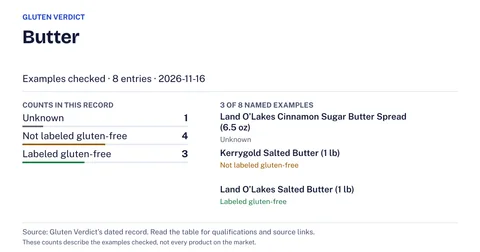 ButterNaturally gluten-freechecked Nov 16, 2026
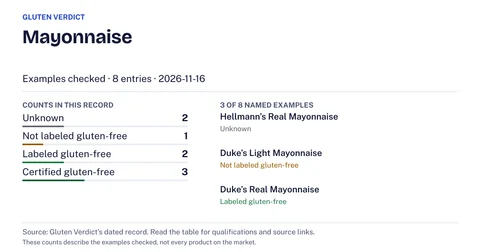 MayonnaiseNaturally gluten-freechecked Nov 16, 2026
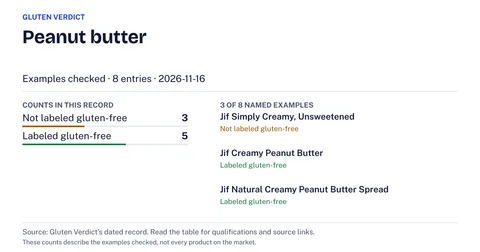 Peanut butterDepends on the productchecked Nov 16, 2026
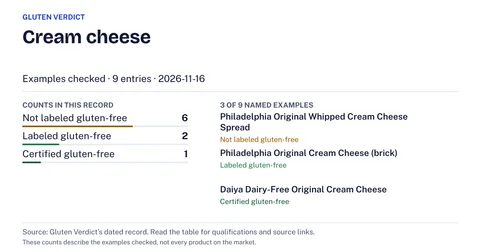 Cream cheeseNaturally gluten-freechecked Nov 16, 2026
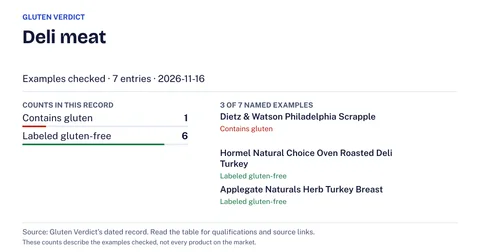 Deli meatDepends on the product1 of 7 products we checked contains gluten: Dietz & Watson Philadelphia Scrapplechecked Nov 16, 2026
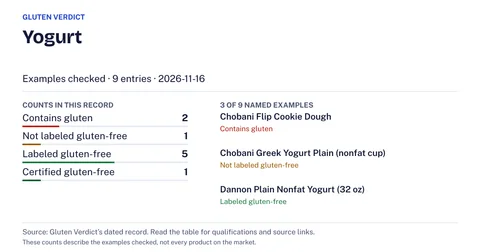 YogurtDepends on the product2 of 9 products we checked contain gluten: Chobani Flip Cookie Dough and Chobani Flip Cookies & Creamchecked Nov 16, 2026
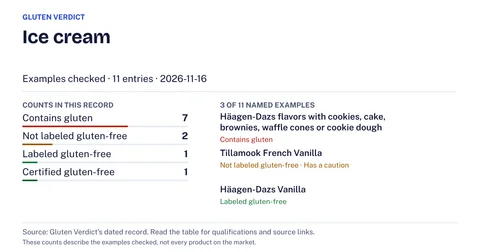 Ice creamDepends on the product7 of 11 products we checked contain glutenchecked Nov 16, 2026
 BreadContains glutenchecked Nov 16, 2026
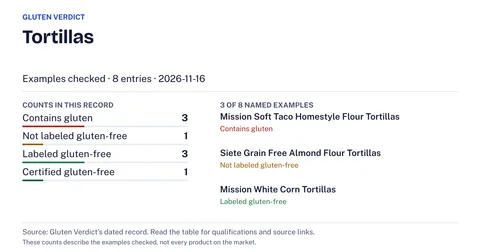 TortillasDepends on the product3 of 8 products we checked contain gluten: Mission Soft Taco Homestyle Flour Tortillas, Guerrero Riquisimas Soft Taco Flour Tortillas (24 ct), and Guerrero Corn and Wheat Tortillaschecked Nov 16, 2026
Questions people ask
Does gluten-free food have to go on the top shelf?
Beyond Celiac recommends the top shelf of the pantry, refrigerator and freezer1. The National Celiac Association also names a separate cabinet or shelf13, and Stanford says there is no perfect way to set this up19.
Does a mixed household need a fully gluten-free kitchen?
The National Celiac Association says no: a completely gluten-free kitchen is not required20.
More in Cross-contact and the home kitchen
 Setting up a gluten-free kitchen: what to replace, wash or shareWalk each kitchen zone and decide, item by item, what to replace, what to wash and what a mixed household can keep sharing, with charity sources.
 Gluten-free with roommates, partners and family: a shared-kitchen agreementHow to split a shared kitchen when one person is gluten-free: what to keep separate, what to wash and share, and how to put the rules to housemates.
 Sharing butter, jam and spreads with gluten eatersHow crumbs reach shared butter, jam and peanut butter, and what a second jar, squeeze bottle, knife rule or shelf each does and does not do.
 A weekly gluten-free kitchen routine: wipe, label, restock, re-checkA one-page weekly pass for a gluten-free kitchen: what to wipe, label, restock and do with leftovers, and where the charities and small studies differ.
 Gluten cross-contact at home: where it happens and what to do about itHow gluten reaches gluten-free food at home, whether to separate, wash or ask for each route, and which rules have lab data behind them.
 What studies measured in shared kitchens: pasta water, toasters, knives and spreadsWhat four experimental studies measured when gluten-free food met shared pots, toasters, knives and spreads: samples, results, and what went untested.
Related guides
 Going gluten-free as a family: choose the household rule, then fix the kitchenAll gluten-free, shared with rules or split: what NIDDK, the charities and one small study say, plus rules for siblings and visiting relatives.
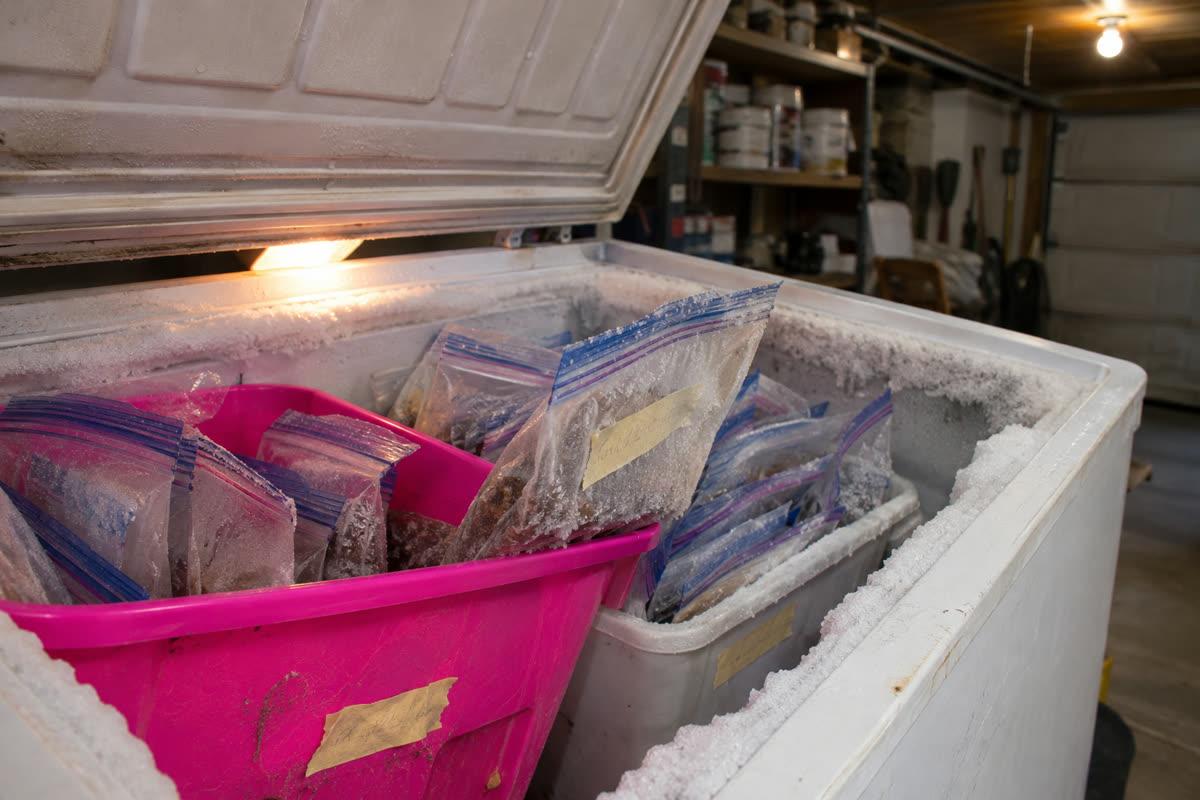 Freezing gluten-free food: what holds up, how to thaw it and how to keep it apartHow to freeze, label and thaw gluten-free food, which foods lose texture, and how to keep gluten-free packages apart in a shared freezer.
 A care sheet for the babysitter or grandparent of a child with celiac diseaseA one-page care sheet for a babysitter or grandparent: the checked foods, the kitchen cross-contact points, what to do after an exposure, and whom to call.
 Costco and gluten: which items make a claim and which only list ingredientsSort a Costco cart into claim, ingredient list only, or nothing to read, using Costco’s own item pages and what FDA’s gluten-free rule requires.
Sources
- [1, 2, 16, 30, 43] Beyond Celiac, Cross-Contact: frequently asked questions, checked Nov 17, 2026.
Read on 2026-11-17: the answer headed “Should I store my gluten-free items on the bottom or top shelf of my pantry and refrigerator?” gives the reason as crumbs falling into gluten-free foods and cites no study. It names the top shelf of the pantry, refrigerator and freezer; it does not mention freezer drawers, a chest freezer or frozen breaded foods.
- [3, 4, 5, 6, 7, 10, 21, 41] Beyond Celiac, Setting up a gluten-free kitchen after diagnosis (blog), checked Nov 17, 2026.
- [8, 13, 20, 24, 39] National Celiac Association, Do you have to have a dedicated gluten-free kitchen when you have celiac disease?, checked Nov 17, 2026.
- [9, 23, 27, 36, 44] Gluten Intolerance Group, College: Navigating Shared Housing and Kitchens, checked Nov 17, 2026.
- [11, 45] Gluten Intolerance Group, 7 Tips for Avoiding Gluten Cross-Contact at Home, checked Nov 17, 2026.
- [12, 25, 34, 37, 47, 48] Coeliac UK, Moving on: your gluten free guide to leaving home, checked Nov 17, 2026.
- [14, 19, 28, 29, 38, 50] Stanford Medicine Children’s Health, Celiac Disease: Your Kitchen, checked Nov 17, 2026.
- [15, 26] Coeliac Australia, Managing Cross Contact at home, checked Nov 17, 2026.
- [17] Gluten Intolerance Group, 25 Ways Cross-Contact Could Happen (And How to Avoid It), checked Nov 17, 2026.
- [18, 32, 33, 49] Celiac Canada, Gluten-Free Food Service in Health Care: A Practical Guide, checked Nov 17, 2026.
- [22] Gluten Intolerance Group, Gluten-Free Pantry Essentials, checked Nov 17, 2026.
- [31] Gluten Intolerance Group, Freeze Your Food! Plus other Tips & Tricks to Make Your Food Last, checked Nov 17, 2026.
- [35, 40, 42] Gluten Intolerance Group, Your Kitchen, Their Kitchen, Our Kitchen: Navigating Gluten-Free Cohabitation, checked Nov 17, 2026.
- [46] Coeliac UK, Avoid gluten free cross contamination at home, checked Nov 17, 2026.