Cross-contact with non-celiac gluten sensitivity: what the research supports and what is unknown
Short answer
There is no specific diagnostic test for non-celiac gluten sensitivity (NCGS)21, and none of the sources we read gives a gluten threshold for it, so they do not settle whether celiac-level cross-contact precautions apply. Coeliac New Zealand says someone with NCGS may well tolerate trace amounts of gluten31, while FDA says its 20 parts per million (ppm) gluten-free labeling rule benefits people with celiac disease2.
Part of Cross-contact and the home kitchen, 19 guides

Key points
- Researchers say there is no NCGS biomarker, so the Salerno experts say close, standardized monitoring while gluten is removed and then reintroduced is the most specific diagnostic approach11, 12.
- FDA describes its gluten-free labeling rule as benefiting people with celiac disease2, and says methods validated to reliably detect gluten below 20 ppm were not available when the rule was written1.
- One trace-gluten trial, Catassi and colleagues (2007), enrolled 49 adults with biopsy-proven celiac disease, not people with NCGS9.
- In one crossover trial of 37 people with self-reported NCGS and irritable bowel syndrome, gluten-specific effects were observed in only 8% of participants18, 19.
- Coeliac New Zealand says someone with NCGS may well tolerate trace amounts of gluten; Gluten Intolerance Group lists, among what is still unknown, whether a person needs to stay on a gluten-free diet for life31, 24.
What NCGS is, and why it has no test
The Salerno experts describe NCGS as a syndrome characterized by intestinal and extra-intestinal symptoms related to eating gluten-containing food, in people who are affected by neither celiac disease nor wheat allergy33. Gluten Intolerance Group's FAQ uses the same boundary: reactions to gluten not connected to a celiac disease diagnosis or a wheat allergy34. Its 2021 article describes NCGS as a condition in which ingesting gluten leads to intestinal or other reactions23.
There is no specific diagnostic test for it21, 28. Coeliac UK adds that it is not clear how the immune system might be involved, and that there does not appear to be damage to the gut lining27.
Whether gluten is the trigger is itself debated. Coeliac UK says there is debate over whether gluten or other components are to blame29, and Gluten Intolerance Group advises checking for other conditions, including celiac disease and possible intolerances to other substances in gluten-containing foods22.
Who the FDA gluten-free rule was written for
A food that carries a “gluten-free” claim must meet FDA’s regulation, which requires that any unavoidable presence of gluten be less than 20 ppm5, 4; FDA’s Q&A says the regulation does not apply to foods whose labeling is regulated by USDA or TTB35. FDA’s Q&A says cross-contact, in the context of the rule, generally refers to the unavoidable presence of gluten in a food due to contact with a gluten-containing food (wheat, rye, barley or their crossbred hybrids); the term is not defined in the regulation itself3.
FDA’s Q&A says regulating the claim benefits people with celiac disease2. On the 20 ppm figure, FDA says methods scientifically validated to reliably detect gluten below that level were not available at the time the regulation was written, and that some celiac researchers and some epidemiological evidence suggest most people with celiac disease can tolerate variable trace amounts, including levels under 20 ppm, without adverse health effects1.
The 2006 FDA working-group report on thresholds summarizes the scientific knowledge on food allergy and celiac disease7, and says decisions on thresholds would need additional factors the report does not cover8.
The rule applies to FDA-regulated foods that carry a gluten-free claim5, 35, and the FDA Q&A page we read does not mention NCGS or set an NCGS limit6.
What a trace-gluten trial in celiac disease tested
One trace-gluten trial was run in treated celiac disease9. Catassi and colleagues enrolled 49 adults with biopsy-proven celiac disease who had followed a gluten-free diet for at least two years, and gave them a daily capsule containing 0, 10 or 50 mg of gluten for 90 days9. They concluded that ingestion of contaminating gluten should be kept lower than 50 mg a day in the treatment of celiac disease10.
Those milligram figures come from a celiac trial9. For what cross-contact looks like in a kitchen, see cross-contamination and what the kitchen studies show.
What the NCGS criteria and trials tested
Because no biomarker exists, the experts who met in Salerno concluded that close, standardized monitoring while gluten is removed and then reintroduced is the most specific diagnostic approach12. Their protocol first looks for symptom improvement on a gluten-free diet: diagnosis is excluded if there is none after six weeks13.
The second step is a blinded challenge of 8 g of gluten a day, one week on gluten, one week of washout and a crossover week15. The baseline diet before it is to be strictly gluten-free for at least four weeks, with no cross contamination and no gluten traces14. That strictness is a condition of the test; the paper presents it as the baseline for the challenge14. It also notes that challenges may need repeating to offset a strong nocebo effect often seen in these patients16.
The one trial of this kind in our sources is Biesiekierski and colleagues (2013). It was a double-blind crossover of 37 people with self-reported NCGS and irritable bowel syndrome who first spent two weeks on a reduced-FODMAP diet, then had a week each of high gluten (16 g a day), low gluten (2 g a day) or a control18. Symptoms improved on the reduced-FODMAP diet and then worsened to a similar degree on gluten or whey protein; gluten-specific effects were seen in 8% of participants19. The authors report no evidence of specific or dose-dependent effects of gluten in patients with NCGS placed on diets low in FODMAPs20.
| Source | Who | What was given | What it reports |
|---|---|---|---|
| Catassi 20079 | 49 adults with biopsy-proven celiac disease9 | 0, 10 or 50 mg gluten a day for 90 days9 | Contaminating gluten should stay under 50 mg a day in celiac treatment10 |
| Salerno criteria 201515 | People responding to a gluten-free diet36 | 8 g gluten a day, blinded, in a crossover challenge15 | A diagnostic protocol; the paper’s conclusions say it is still not clear how to diagnose and manage NCGS17 |
| Biesiekierski 201318 | 37 people with self-reported NCGS and IBS18 | 16 g or 2 g gluten a day, or control, for 1 week18 | Gluten-specific effects in 8% of participants19 |
We found no NCGS gluten threshold in these three sources.
What the charities say about trace gluten in NCGS
Coeliac New Zealand puts the contrast this way: a person with coeliac disease must avoid even small traces, whereas someone with NCGS may well be able to tolerate them31. It adds that there is no evidence that small amounts cause harm to a patient with NCGS who does not experience symptoms with low-level exposure32.
Gluten Intolerance Group lists open questions instead. Among what it says is still unknown about gluten sensitivity are how to diagnose it clearly and whether a person needs to stay on a gluten-free diet for life24.
Both are positions of the organizations that wrote them, not findings of a trial, and the pages we read do not give a ppm figure for NCGS31, 24.
What the sources point to for a clinician visit
None of this tells an individual how strict to be. The sources do describe where the question gets worked out:
- Gluten Intolerance Group says NCGS is diagnosed by ruling out other possible causes of symptoms, including celiac disease and wheat allergy25.
- Coeliac UK does not recommend trying a gluten-free diet as a first option, because it could prevent a coeliac disease test from giving an accurate result30.
- Gluten Intolerance Group says working closely with a doctor and a registered dietitian helps with an accurate diagnosis and a diet plan26.
Questions people ask
Does FDA’s 20 ppm gluten-free rule apply to NCGS?
The rule applies to FDA-regulated foods that carry a gluten-free claim5, 35. FDA describes the benefit as going to people with celiac disease, and the FDA Q&A page we read does not mention NCGS2, 6.
Is there a gluten threshold for non-celiac gluten sensitivity?
None of the sources we read gives one. The Salerno paper notes the lack of an NCGS biomarker and says it is still not clear how to diagnose and manage the condition11, 17.
Do people with NCGS need a separate toaster?
No source we read answers that. Coeliac New Zealand says someone with NCGS may well tolerate trace amounts31; Gluten Intolerance Group lists, among what is still unknown, whether a person needs to stay on a gluten-free diet for life24. A clinician or dietitian is where the sources point26.
Does NCGS damage the gut like celiac disease?
Coeliac UK says there does not appear to be damage to the gut lining in NCGS, and that it is not clear how the immune system is involved27.
More in Cross-contact and the home kitchen
 Gluten cross-contact at home: where it happens and what to do about itHow gluten reaches gluten-free food at home, whether to separate, wash or ask for each route, and which rules have lab data behind them.
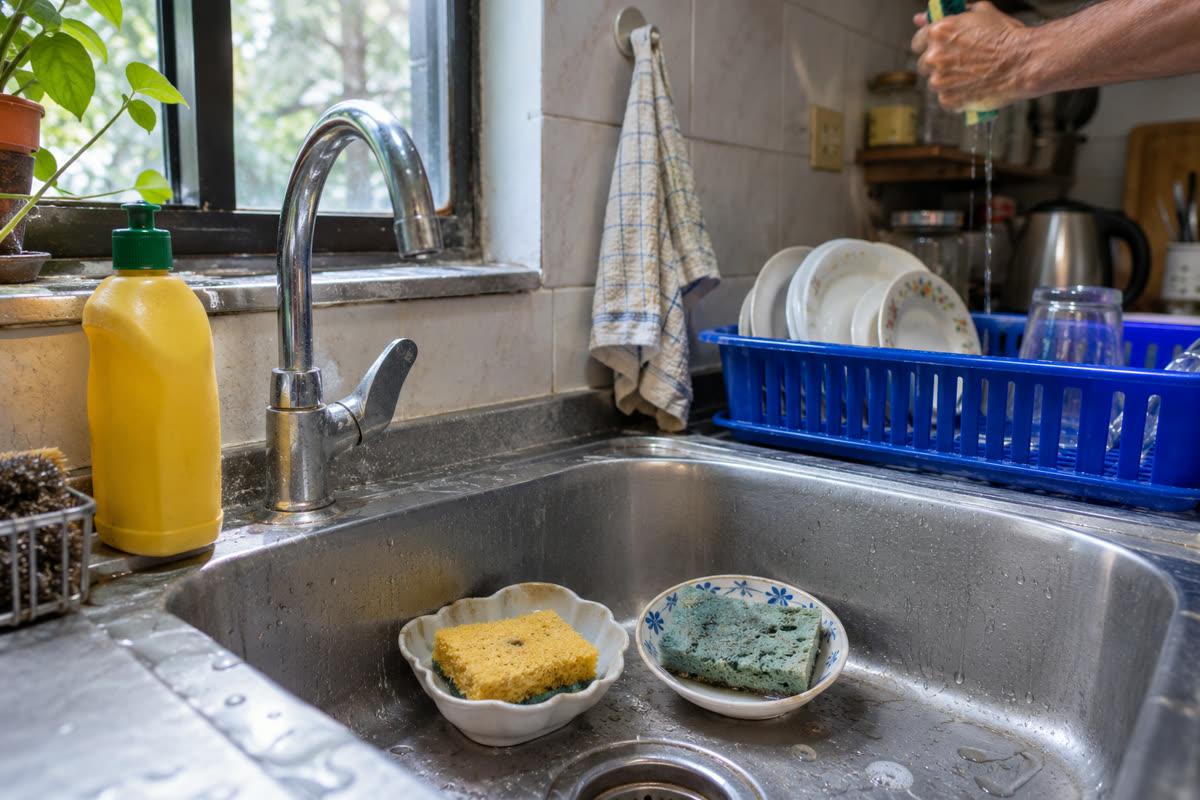 Dishes, sponges, dishwashers and towels in a mixed householdWhat GIG, Beyond Celiac, Coeliac UK and published tests say about sponges, dish towels, hand washing and the dishwasher in a mixed home.
 Baking gluten-free in a home where someone else bakes with wheat flourA baking-day plan for a shared kitchen: order, counters, flour storage, tools and oven, and which timing rules have no published source.
 What studies measured in shared kitchens: pasta water, toasters, knives and spreadsWhat four experimental studies measured when gluten-free food met shared pots, toasters, knives and spreads: samples, results, and what went untested.
 Gluten-free grilling and cookouts: what to wrap, clean, bring and askHow to keep gluten off the grill at a cookout: foil, clean grates, sauces, buns, sides, a note to send the host and a bring-your-own list.
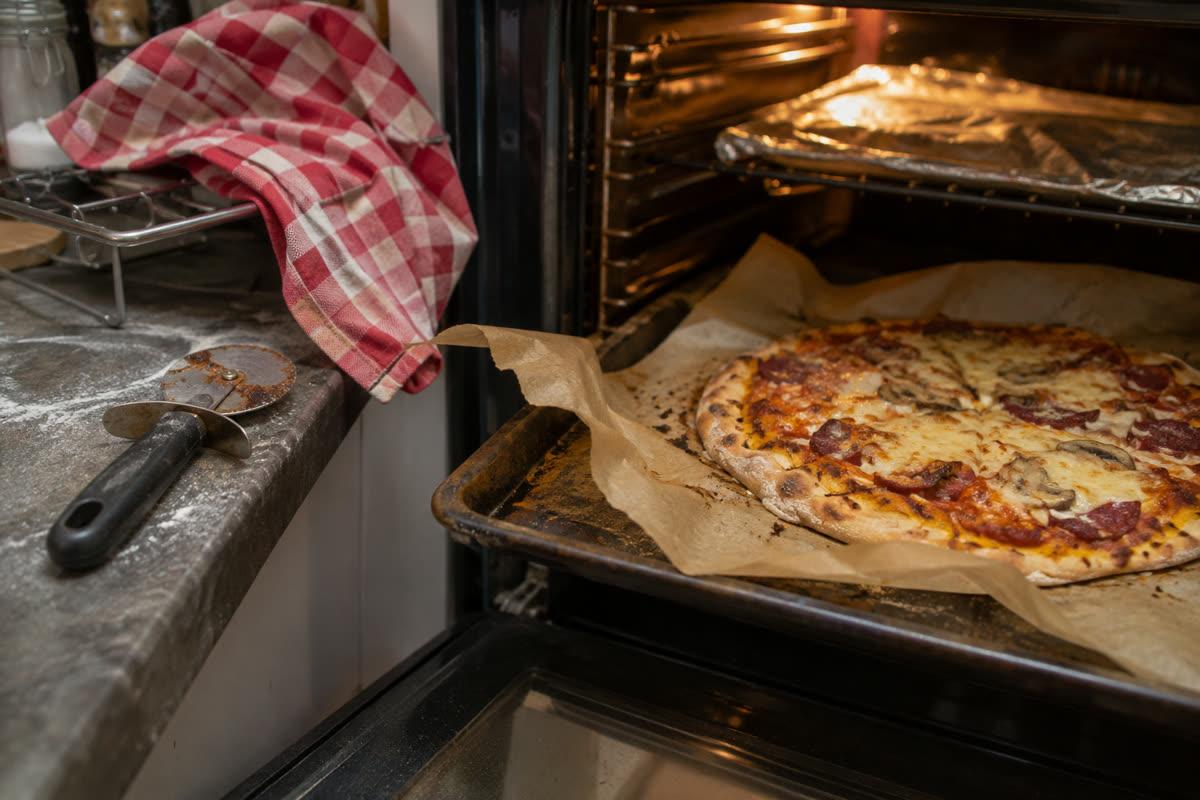 Gluten-free pizza at home: check each part, then keep it apart in the ovenCheck the crust, sauce, cheese and toppings against each maker’s own statement, then set up stone, parchment and oven so a gluten-free pizza stays apart.
Related guides
 Celiac disease vs gluten intolerance: three conditions, three diagnosesHow celiac disease, non-celiac gluten sensitivity and wheat allergy differ in mechanism, diagnosis and diet, with a source behind every point.
 Gluten-free and low FODMAP: what to check when symptoms continueHow gluten and FODMAPs differ, what guidelines list for persistent symptoms on a gluten-free diet, and FODMAP ingredients to look for on labels.
 How non-celiac gluten sensitivity is diagnosed: the Salerno criteriaWhat counts as a diagnosis of non-celiac gluten sensitivity: the exclusions, the Salerno criteria steps and what a blinded gluten challenge involves.
 Can non-celiac gluten sensitivity go away? What the trials show and do not showWhat the sources say about whether non-celiac gluten sensitivity fades, what challenge and FODMAP trials found, and what to ask a clinician.
Sources
- [1, 2, 3, 4, 5, 6, 35] US Food and Drug Administration, Questions and Answers on the Gluten-Free Food Labeling Final Rule, checked Nov 17, 2026.
Read on 2026-11-17: the full text of the page has no question or answer about non-celiac gluten sensitivity, and the terms “non-celiac” and “NCGS” do not appear on it.
- [7, 8] US Food and Drug Administration, Approaches to Establish Thresholds for Major Food Allergens and for Gluten in Food, checked Nov 17, 2026.
- [9, 10] PubMed / NCBI, Catassi and colleagues (2007): daily trace-gluten trial in treated celiac disease, Am J Clin Nutr (abstract), checked Nov 17, 2026.
- [11, 12, 13, 14, 15, 16, 17, 33, 36] Nutrients (via PubMed Central), Catassi and colleagues (2015): Diagnosis of Non-Celiac Gluten Sensitivity, the Salerno Experts’ Criteria, Nutrients, checked Nov 17, 2026.
- [18, 19, 20] PubMed / NCBI, Biesiekierski and colleagues (2013): gluten and self-reported NCGS after reduction of FODMAPs, Gastroenterology (abstract), checked Nov 17, 2026.
- [21, 22, 34] Gluten Intolerance Group, What is non-celiac gluten sensitivity or NCGS? Is it same thing as gluten intolerance?, checked Nov 17, 2026.
- [23, 24] Gluten Intolerance Group, What you need to know about gluten sensitivity, checked Nov 17, 2026.
Read on 2026-11-17: the list headed “What we still don’t know” names how to clearly diagnose NCGS; whether or not you need to remain on a gluten-free diet for life; and whether or not fructans, or other components of wheat, barley and rye along with or other than gluten, cause reactions, at least in some individuals.
- [25, 26] Gluten Intolerance Group, Celiac Disease, Non-Celiac Gluten Sensitivity or Wheat Allergy: What Is the Difference?, checked Nov 17, 2026.
- [27, 28, 29, 30] Coeliac UK, Gluten sensitivity (Related conditions), checked Nov 17, 2026.
- [31, 32] Coeliac New Zealand, Non-coeliac gluten sensitivity, checked Nov 17, 2026.