Claiming the extra cost of gluten-free food in Canada: what the CRA allows and what to keep
Short answer
The CRA lets a person with celiac disease claim only the incremental cost of gluten-free food: the price of the gluten-free product minus the price of a similar product with gluten1, 2. A medical practitioner’s letter and receipts are needed, and you keep them rather than send them6, 7, 10. Budget 2026 proposes an optional flat $1,000 instead, from the 2026 tax year; as of 2026-11-17 it is a proposal15, 17.
Part of Cost, taxes and food assistance, 14 guides

Key points
- Only the extra cost counts: the gluten-free price minus the price of a similar product with gluten, not the whole grocery bill2.
- The CRA asks for three documents to be kept: a medical practitioner’s letter, receipts for each gluten-free product claimed, and a summary of what was bought over the 12-month period6, 7, 8.
- Budget 2026 proposes an optional flat $1,000 for the 2026 and later tax years, so that receipts and the incremental calculation would not be needed; it is a proposal15, 17, 18.
- Celiac Canada says gluten sensitivity or wheat allergy do not qualify under the proposed provision24.
- This page reports what the CRA and Finance Canada say; it is not tax advice, and the CRA’s own guide says it does not replace the law34.
What the CRA allows for gluten-free products
The CRA’s medical expenses guide says persons with celiac disease can claim the incremental costs of buying gluten-free food products as a medical expense1. The claim is made on line 33099 or 33199 of the return, depending on who the expense was for27, 28, 35.
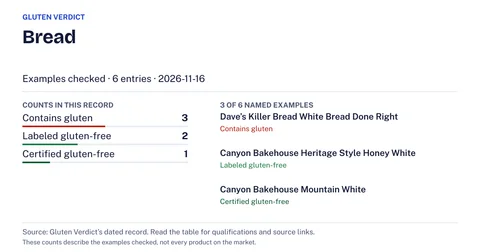
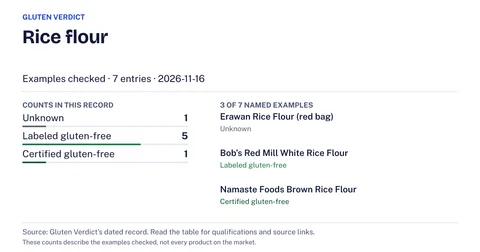
Which products? The CRA says they are generally limited to those produced and marketed specifically for gluten-free diets, such as gluten-free bread3. Other products can also be eligible when the person with celiac disease uses them to make gluten-free products for their own use, and the CRA names rice flour and gluten-free spices as examples4.
When a household shares a product, only the costs for the part eaten by the person with celiac disease may be claimed5.
The CRA’s guide is for information only and does not replace the law34. Where a detail matters for your return, ask the CRA or a tax professional.
How the incremental cost works
The CRA defines it plainly: the cost of the gluten-free product minus the cost of a similar product with gluten2. You are claiming the difference, product by product, not what you spent2, 9.
The guide shows the calculation with bread. Here are its figures, repeated as the CRA gives them9:
| Step | CRA’s figure |
|---|---|
| Number of products bought in the 12-month period | 529 |
| Average cost of the product with gluten | $3.999 |
| Average cost of the gluten-free product | $7.999 |
| Incremental cost per product | $7.99 – $3.99 = $4.009 |
| Amount to claim for bread | $4.00 x 52 = $208.009 |
Repeat the same steps for each kind of product you buy: loaves, pasta, crackers, flour, cereal. Group like items so each gluten-free product has a gluten-containing counterpart to compare with.
Tips from Celiac Canada
These are the charity’s suggestions, not CRA rules. Celiac Canada says not to estimate the price of the gluten item, because you need documentation for the comparable prices if you are audited25. It also suggests keeping evidence when gluten products go on sale: clip it from a flyer, take a picture or print it from a grocery website26.
The medical practitioner’s letter
The CRA’s guide lists a letter from a medical practitioner that certifies that the person has celiac disease and needs a gluten-free diet6. The Income Tax Folio adds that the cost must be incurred on behalf of a patient with celiac disease who has been certified in writing by a medical practitioner as requiring a gluten-free diet because of that disease11.
The CRA says medical practitioners include doctors, pharmacists and nurses12, and it publishes a list of the health professionals it recognizes for the medical expense tax credit, with a table by province and territory13. Check it for yours before asking.
What to keep, and for how long
Do not send supporting documents with the return; keep them in case the CRA asks to see them later10. For gluten-free food the CRA names three things to keep6, 7, 8:
- the practitioner’s letter6;
- receipts for each gluten-free food product claimed7;
- a summary of each food product bought during the 12-month period you are claiming8.
The CRA’s general rule on records is to keep required records and supporting documents for six years from the end of the last tax year they relate to14.
Budget 2026: a proposed flat $1,000
Finance Canada’s Budget 2026 tax measures document describes the current rule: the incremental cost may be claimed for an individual certified by an authorized medical practitioner, eligible expenses are limited to the amount by which a gluten-free product costs more than a comparable gluten-containing one, and receipts and other supporting documentation must be retained16.
It then proposes to allow an METC claim for an individual with celiac disease based on an optional flat amount of $1,000 for incremental gluten-free food expenses incurred over a year15. The measure would apply to the 2026 and subsequent taxation years17. The document says the individual could choose either the flat amount or itemizing the expenses actually incurred20.
What the tax measures document says the flat amount would change
- No need to calculate the actual expenses or keep receipts for them, while the existing eligibility conditions continue to apply18.
- Only one individual could claim the flat amount for a given eligible person, and itemized expenses could not also be claimed19.
- If several people want to claim the same category for the same eligible person, the flat amount would not be available and each would have to itemize and keep receipts21.
What is not yet known
The document describes a proposal, so check that it has become law before relying on it for a return. Celiac Canada’s news release says individuals would still need to submit a medical validation letter certified in writing by a medical practitioner22, and that the charity was still confirming with the CRA and Finance officials whether a diagnosis verification is needed each year23.
Whose expenses, which period, and the credit’s threshold
The CRA’s 2025 guide lets you claim on line 33099 the eligible expenses you or your spouse or common-law partner paid for yourself, your spouse or common-law partner, and children under 18 at the end of the tax year27. Line 33199 covers part of the eligible expenses for certain dependants, such as older children and some other relatives28.
For the 2025 return, expenses can be claimed for any 12-month period ending in 2025 that was not claimed by you or anyone else in 202431, and only the part not reimbursed32.
It is a non-refundable credit30, and the claim is reduced by a threshold. For 2025 on line 33099, the total eligible expenses are reduced by the lesser of $2,834 and 3% of your net income (line 23600)29. These are the 2025 figures; later years may differ.
The CRA says the maximum provincial or territorial amount you can claim for medical expenses may differ depending on where you live, and Quebec residents are sent to Revenu Québec33.
Questions to take to the CRA or an accountant
- Which gluten-free products in our basket count, and which comparable gluten products should we price?
- Who should make the claim in our household, and on which line?
- If the flat $1,000 becomes law, when and how is the practitioner’s letter submitted, and does the credit’s threshold apply to it in the same way?
- Is itemizing worth it for us in a year when it could exceed the flat amount?
We cannot answer these for your return. For other gluten-free budgeting, see gluten-free on a budget; for the US equivalent, see the IRS guide.
Verdicts in this guide
Questions people ask
Can I claim my whole gluten-free grocery bill?
No. The CRA says the claim is the cost of the gluten-free product minus the cost of a similar product with gluten2.
Do I send my receipts and doctor’s letter with my return?
No. The CRA says not to send supporting documents and to keep them in case it asks to see them later10.
More in Cost, taxes and food assistance
 Is gluten-free food tax deductible? What the IRS says and what to keepWhat IRS Publication 502 says about special food as a medical expense, how the excess-cost sum works, and what records to bring to a tax professional.
 Gluten-free on a budget: what costs extra and what does notSort a gluten-free shopping list into plain foods, foods that need a statement and packaged substitutes, then compare costs and check each claim.
 Gluten-free flour and baking mix cost per cup, with each maker’s statementWhat a cup of gluten-free flour or baking mix costs from each maker’s own price and label, shown beside what the maker says about gluten.
 Paying for gluten-free food and dietitian visits with an HSA or FSAWhat IRS rules say about paying for special food, dietitian visits and test kits from an HSA or FSA, what a physician's letter covers and what to keep.
 SNAP and gluten-free food: what the benefit covers and how to shop itWhich gluten-free foods SNAP covers, what it excludes, and how to build a list from naturally gluten-free staples plus a few labeled items.
 A price-per-ounce worksheet for comparing gluten-free staples at any store, club or onlineA worksheet for comparing gluten-free staples by price per ounce across stores, clubs and online, with a column for the gluten-free statement.
Related guides
 Gluten-free labeling in Canada: the claim, the gluten-source declaration and oatsHow Health Canada's gluten-free claim works, how gluten sources and oats must be declared on a Canadian pack, and how it differs from the FDA rule.
 Nutrient deficiencies in celiac disease: what the guidance names for checkingWhich nutrients a celiac guideline and a charity's clinician page name for checking, where reported deficiency figures differ, and questions to bring.
 Iron, B12 and B6 on a gluten-free diet: where they come from and how to check a labelWhich foods supply iron, B12 and B6, what US enrichment standards name, and how to check whether a gluten-free flour, bread or cereal is fortified.
 Wheat-free, gluten-free and “no gluten ingredients”: what each label statement covers“Wheat-free”, “gluten-free” and “made with no gluten-containing ingredients” are three different statements. What each covers, and what to check.
Sources
- [1, 2, 3, 4, 5, 6, 7, 8, 9, 10, 12, 27, 28, 29, 30, 31, 32, 33, 34, 35] Canada Revenue Agency, Medical Expenses 2025 (guide RC4065), checked Nov 17, 2026.
Read on 2026-11-17: the product summary example under “Documents you need to keep” lists food product: bread; number of products bought for the 12-month period: 52; average cost of product with gluten: $3.99; average cost of gluten-free product: $7.99; incremental cost: $7.99 – $3.99 = $4.00; amount to claim: $4.00 x 52 = $208.00.
Read on 2026-11-17: under “How to claim medical expenses”, line 33099 covers eligible medical expenses you or your spouse or common-law partner paid for yourself, your spouse or common-law partner, and your or your spouse’s or common-law partner’s children who were under 18 years of age at the end of the tax year.
Read on 2026-11-17: under “How to claim medical expenses”, line 33199 covers part of the eligible medical expenses paid for the following persons who depended on you for support: your or your spouse’s or common-law partner’s children who were 18 years of age or older at the end of the tax year, or grandchildren; and parents, grandparents, brothers, sisters, uncles, aunts, nephews or nieces who were residents of Canada at any time in the year.
Read on 2026-11-17: under “Amounts you can claim”, line 33099 is the total of the eligible expenses minus the lesser of $2,834 and 3% of your net income (line 23600 of your tax return); line 33199 uses the lesser of $2,834 and 3% of your dependant's net income (line 23600 of their tax return).
- [11] Canada Revenue Agency, Income Tax Folio S1-F1-C1, Medical Expense Tax Credit, checked Nov 17, 2026.
- [13] Canada Revenue Agency, Authorized medical practitioners for the purposes of the medical expense tax credit, checked Nov 17, 2026.
Read on 2026-11-17: the page opens with the sentence “The following list identifies the health care professionals recognized by the Canada Revenue Agency as medical practitioners for the purposes of the medical expense tax credit.” followed by a table of professions with a column for each province and territory.
- [14] Canada Revenue Agency, Keeping records: where to keep your records and for how long, checked Nov 17, 2026.
- [15, 16, 17, 18, 19, 20, 21] Department of Finance Canada, Budget 2026, Tax measures: Supplementary information, checked Nov 17, 2026.
- [22, 23, 24] Celiac Canada, Celiac Canada applauds support for Canadians with celiac disease in Budget 2026, checked Nov 17, 2026.
- [25, 26] Celiac Canada, Incremental Medical Tax, checked Nov 17, 2026.