Nutrient deficiencies in celiac disease: what the guidance names for checking
Short answer
Coeliac UK’s page for health professionals names iron, folate, vitamin B12, vitamin D and calcium for monitoring at diagnosis and during follow up1, and the US guideline from ACG lists a different set of tests that may be used2. Reported figures vary by nutrient and source (iron estimates differ26, 27, and one review says folate prevalence varies widely among studies3); which tests to have and what to do about a result is for a doctor or dietitian5.
Part of Nutrition and combining diets, 24 guides

Key points
- Coeliac UK names five nutrients to monitor at diagnosis and follow up: iron, folate, vitamin B12, vitamin D and calcium1.
- ACG says other tests “may include” vitamins A, D, E and B12, copper, zinc, folic acid, ferritin and iron, and that follow-up blood tests should be individualized2, 6.
- Reported figures differ: one review gives 8–41% for low vitamin B12 in newly diagnosed people7, and says folate figures vary widely among studies3.
- Gluten Intolerance Group says a gluten-free diet can add its own gaps, because very few gluten-free grain products are enriched or fortified8, 39.
- NIDDK includes supplements in its examples of products that contain gluten9, and FDA says its gluten-free rule applies to FDA-regulated packaged foods, including dietary supplements10.
How a gap can open: absorption first, then the diet
ACG describes the mechanism: injury to the small intestine reduces absorptive surface and digestive enzymes, and the result is impaired absorption of micronutrients such as fat-soluble vitamins, iron, and potentially B12 and folic acid11. NIDDK says the same thing more broadly: in untreated celiac disease, damage to the small intestine can lead to malabsorption and malnutrition12.
The diet is a second route, covered below. One example from Gluten Intolerance Group (GIG): some people with celiac disease also have lactose intolerance in the early stages of treatment, and cutting out dairy could reduce calcium, magnesium and vitamin D13.
Which nutrients do the sources name for checking?
NIDDK says that when celiac disease is diagnosed, a doctor may test for low levels of certain vitamins and minerals5. Two sources name specific ones: Coeliac UK’s page for health professionals, and the monitoring figure in the ACG guideline. They do not list the same things.
| Nutrient or test | Coeliac UK page for health professionals | ACG 2023 guideline |
|---|---|---|
| Iron | Monitored at diagnosis and during follow up1 | Iron and ferritin are among the tests that may be included2 |
| Folate | Monitored at diagnosis and during follow up1 | Folic acid is listed2 |
| Vitamin B12 | Monitored at diagnosis and during follow up1 | Listed among the vitamins2 |
| Vitamin D | Monitored at diagnosis and during follow up1 | Listed among the vitamins2 |
| Calcium | Monitored at diagnosis and during follow up1 | Not named in that list2 |
| Vitamins A and E | Not named in the follow-up list1 | Listed among the vitamins2 |
| Zinc | Monitored in cases of severe malabsorption14 | Listed2 |
| Copper | Not named1, 14 | Listed2 |
| Vitamin B6 and magnesium | Monitored in cases of severe malabsorption14 | Not named in that list2 |
Neither is a complete inventory: ACG introduces its list with “may include”2.
What follow-up looks like
ACG says follow-up after diagnosis may need several visits in the first year (for example at 3, 6 and 12 months) and regular visits after that, for example twice a year or yearly15. It calls a visit with a dietitian after diagnosis “mandatory”16.
On blood tests, ACG’s wording is that follow-up tests should be individualized to verify correction of the tests that were abnormal at baseline6. In that framing, what is rechecked depends on what the first round showed.
The page from the UK charity Coeliac UK says the British Society of Gastroenterology recommends regular follow up in the first two years after diagnosis17, and says adults should have a DXA scan one year after adopting a gluten free diet18. NIDDK says doctors may order a bone mineral density test to check for osteoporosis19.
ACG also says that in the United States, follow-up seems to be suboptimal in practice20. GIG’s FAQ says a dietitian knowledgeable about the gluten-free diet may be advisable, especially if lab results indicate gluten exposure and/or if there are particular nutritional deficiencies or concerns21.
Nutrient by nutrient: what is documented and how firm it is
Where sources list the most frequent gaps, the lists overlap but are not identical. A 2023 review in Nutrients names iron, vitamin D, calcium, vitamin B12, folate and zinc at diagnosis22. A 2021 review of adults on a gluten-free diet names iron, calcium, magnesium and vitamins D and E, and some of group B23. GIG’s bulletin names iron, calcium, folate, vitamin B12 and the fat-soluble vitamins24.
On nutrient intake, the 2021 review notes that depending on the reference intakes of each country, controversial results can be found when defining the deficiencies of each nutrient4. That is one reason to expect different lists in different sources.
Iron
Coeliac UK says iron deficiency is common in people with undiagnosed coeliac disease because the body is not able to absorb iron from food very well25. It gives an estimate that a quarter of adults with coeliac disease are anaemic due to iron deficiency upon diagnosis26. The 2023 review says iron deficiency anemia is reported in over half of patients at diagnosis, including subclinical celiac disease27. The two figures differ; each is a figure from its own source, not a rate for any one person.
Vitamin B12
The 2023 review gives 8–41% for a lack of vitamin B12 in newly diagnosed people7. It also says the cause of B12 deficiency in celiac disease is unknown, with decreased gastric acid, SIBO, autoimmune gastritis and subtle dysfunction of the distal small intestine proposed28.
Folate
The same review cites a study that found a 20% folate deficiency in people with untreated celiac disease, and says the prevalence varies widely among studies3. It adds that newer research found no specific impairment in newly diagnosed individuals, or at least no difference from patients following a gluten-free diet29.
Vitamin D and calcium
Coeliac UK explains the link between the two: the body needs vitamin D to absorb enough calcium30. The 2021 review says vitamin D deficiency may be of special importance because a higher prevalence of osteoporosis has been seen in people with celiac disease31. Bone density tests are covered under follow-up above.
Zinc and copper
The 2023 review says zinc and copper deficiencies have been described at diagnosis32, and that for zinc, clinical relevance remains inconclusive33. Coeliac UK’s page names zinc only for cases of severe malabsorption14.
Vitamins A, D, E and K
GIG’s bulletin lists these fat-soluble vitamins with a footnote: an increased risk of these deficiencies only occurs when there is fat malabsorption34.
Do deficiencies clear once the diet is in place?
Sources lean the same way but not with the same weight. GIG says that once the diet is adapted, the intestine generally heals and absorption should improve35. The 2021 review says that during the first year of treatment, deficiencies will overcome as the intestinal mucosa recovers36. For iron, Coeliac UK says the gut will begin to heal after some time on the diet, which should raise haemoglobin levels37.
The 2023 review is less uniform: it says the latest studies suggest that up to 46% of cases are still iron-deficient one year after diagnosis38.
Why a gluten-free diet can leave its own gaps
GIG says gluten-containing grain products are commonly enriched or fortified with vitamins and minerals, but very few gluten-free grain products are8. It adds that someone who relied on fortified products and switches to non-enriched ones can become nutrient deficient39.
The 2021 review makes the same point about flour: wheat flour and its derivatives are usually fortified with some micronutrients, such as iron or folic acid, but alternative flours like those used in gluten-free products are not40. The 2023 review gives folate as an example: gluten-free flakes and pasta use corn and rice flours that have poor folate content compared to wheat flour41.
Our verdicts for bread, pasta and rice flour cover the gluten question for each; they do not rate nutrition. A gluten-free claim is a statement about gluten: FDA’s definition turns on gluten-containing ingredients and the 20 ppm limit42, and that definition does not mention enrichment.
NIDDK adds two cautions: avoiding gluten without advice from a doctor or dietitian may leave a diet short of nutrients such as fiber, iron and calcium, and some packaged gluten-free foods may be higher in fat and sugar than the same foods that contain gluten43. The 2021 review notes that naturally gluten-free foods rich in micronutrients are proposed before recommending fortified foods or supplements44. The same passage adds that combining the two options could be interesting, aiming for a faster recovery from some vitamin and mineral deficiencies47.
Supplements and the gluten-free label
NIDDK says a doctor may recommend or prescribe supplements if they are needed5, and advises talking with a doctor before using dietary supplements such as vitamins45.
A supplement is not exempt from the gluten question. NIDDK includes vitamin and nutrient supplements in its examples of products that contain gluten9. FDA says its gluten-free regulation applies to FDA-regulated packaged foods, including dietary supplements10, so a gluten-free claim on an FDA-regulated supplement falls under the same definition, including the 20 ppm limit42.
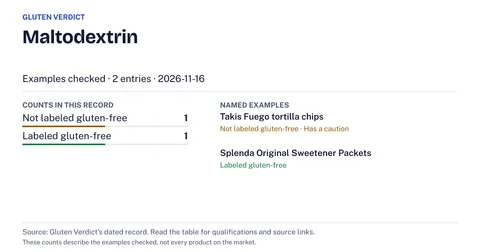
NIDDK’s list of hidden sources of gluten names additives made with wheat, such as modified food starch, malt flavoring, preservatives and stabilizer46. Our verdicts for modified food starch, wheat starch, natural flavors, dextrin and maltodextrin show what we found for each name when it appears on a label. They do not say that any particular supplement contains it.
Our verdicts cover ingredient names, not individual supplements. For a specific product, the maker’s own label and pages are the source.
Questions the sources point to
These are questions, not recommendations. Each comes from something a source above says.
- Which nutrient levels were measured at diagnosis, and were any abnormal? ACG says follow-up blood tests should verify correction of the ones that were6.
- What is the follow-up schedule? ACG gives 3, 6 and 12 months in the first year as an example, then twice a year or yearly15.
- Is a dietitian visit planned? ACG calls one after diagnosis “mandatory”16.
- Is a bone density scan planned? The UK charity Coeliac UK’s page says adults should have a DXA scan one year after adopting a gluten free diet18.
- If a supplement is suggested, does its label carry a gluten-free claim? FDA says its rule applies to FDA-regulated packaged foods, including dietary supplements10.
Verdicts in this guide
 MaltodextrinNaturally gluten-freechecked Nov 16, 2026
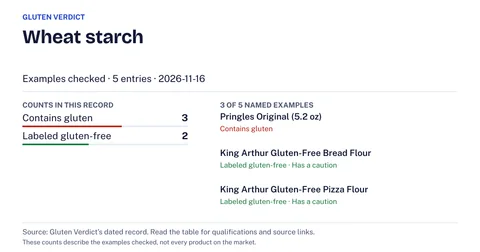 Wheat starchDepends on the product3 of 5 products we checked contain gluten: Pringles Original (5.2 oz), Jiffy Corn Muffin Mix, and Chex Mix Bold Garlic and Herbchecked Nov 16, 2026
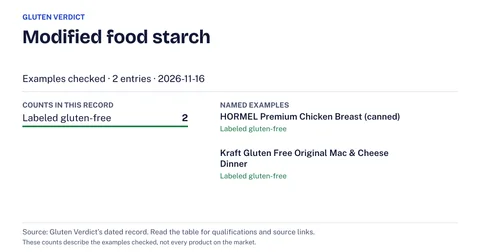 Modified food starchDepends on the productchecked Nov 16, 2026
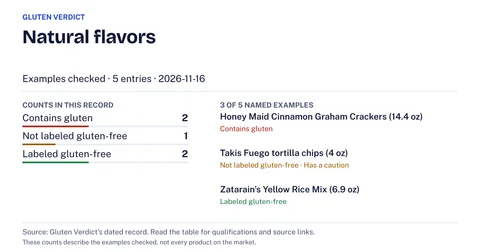 Natural flavorsDepends on the product2 of 5 products we checked contain gluten: Honey Maid Cinnamon Graham Crackers (14.4 oz) and Chex Mix Sour Cream & Onionchecked Nov 16, 2026
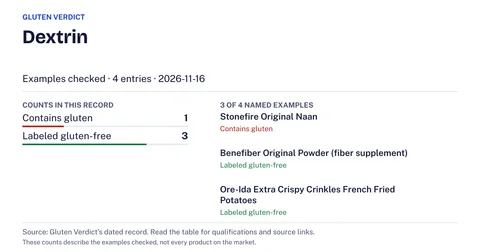 DextrinDepends on the product1 of 4 products we checked contains gluten: Stonefire Original Naanchecked Nov 16, 2026
 BreadContains glutenchecked Nov 16, 2026
 PastaContains glutenchecked Nov 16, 2026
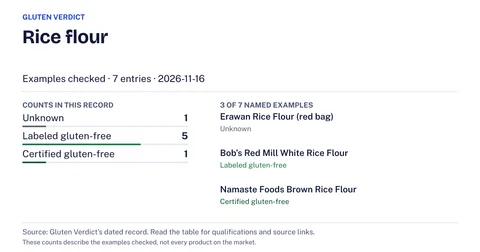 Rice flourNaturally gluten-freeBuy it labeled gluten-freechecked Nov 16, 2026
Questions people ask
Do I need a supplement after a celiac diagnosis?
That is for a clinician to decide. NIDDK says that at diagnosis a doctor may test for low levels of certain vitamins and minerals and may recommend or prescribe supplements if you need them5. The 2021 review notes that naturally gluten-free foods rich in micronutrients are proposed before fortified foods or supplements44, and adds that combining the two options could be interesting for faster recovery from some deficiencies47.
Why do the lists of nutrients differ between sources?
Sources list different things. Coeliac UK’s follow-up page names five nutrients to monitor1, ACG lists tests that may be included2, and GIG’s bulletin lists the most commonly affected nutrients24.
If a supplement label says gluten-free, does FDA’s rule apply?
FDA says its gluten-free regulation applies to FDA-regulated packaged foods, including dietary supplements10.
More in Nutrition and combining diets
 Is a gluten-free diet healthy if you do not have celiac disease?What a gluten-free label promises, what studies of gluten-free products and eaters report, and why testing comes before cutting gluten.
 Iron, B12 and B6 on a gluten-free diet: where they come from and how to check a labelWhich foods supply iron, B12 and B6, what US enrichment standards name, and how to check whether a gluten-free flour, bread or cereal is fortified.
 Does a gluten-free diet change blood sugar? What each study measuredRead the BMJ heart-disease cohort, the type 2 diabetes cohort, a pasta glucose trial and celiac and type 1 diabetes sources by what each measured.
 Does a gluten-free diet help you lose weight?What reviews, NIDDK and celiac charities report about a gluten-free diet and weight outside celiac disease, and what the substitute foods contain.
 Weight gain or loss after a celiac diagnosis: what the research foundWhat two studies found about weight before and after a celiac diagnosis, what sources say about gluten-free foods, and what to bring to a dietitian.
 Fiber on a gluten-free diet: where it drops and what fills the gapCheck the fiber on gluten-free breads and pastas against the US Daily Value, and see which gluten-free whole foods charities list to add more.
Related guides
 Vitamin D with celiac disease: reading a result and checking a supplement for glutenWhat a vitamin D blood result measures, the published reference levels and upper intake level, and how to check a supplement label for gluten.
 Folic acid in gluten-free foods: how to check the labelUS rules require folic acid in enriched flour, not in every product. Where to look on a label, and what CDC and FDA say.
 Gluten in medications: what the label, DailyMed and a pharmacist can showFDA’s gluten-free food rule does not cover drugs. Use the ingredient list, DailyMed, the maker and a pharmacist, and know what each can show.
 Iron deficiency anemia and celiac disease: why it appears and what clinicians checkWhy celiac disease causes iron deficiency anemia, what NICE and ACG say about testing, what decides oral or IV iron, and checking a supplement for gluten.
Sources
- [1, 14, 17, 18] Coeliac UK, Follow up after diagnosis (for healthcare professionals), checked Nov 17, 2026.
- [2, 6, 11, 15, 16, 20] American College of Gastroenterology (American Journal of Gastroenterology), American College of Gastroenterology Guidelines Update: Diagnosis and Management of Celiac Disease, checked Nov 17, 2026.
- [3, 7, 22, 27, 28, 29, 32, 33, 38, 41] Nutrients (Simón and colleagues, 2023), The Gluten-Free Diet for Celiac Disease: Critical Insights to Better Understand Clinical Outcomes, checked Nov 17, 2026.
- [4, 23, 31, 36, 40, 44, 47] Nutrients (Cardo and colleagues, 2021), Nutritional Imbalances in Adult Celiac Patients Following a Gluten-Free Diet, checked Nov 17, 2026.
- [5, 12, 19, 45, 46] National Institute of Diabetes and Digestive and Kidney Diseases (NIDDK), Treatment for Celiac Disease, checked Nov 17, 2026.
Read on 2026-11-17: the list that follows “Hidden sources of gluten include additives made with wheat, such as” names modified food starch, malt flavoring, preservatives and stabilizer.
- [8, 13, 24, 34, 35, 39] Gluten Intolerance Group, I’m Gluten-Free. Am I Getting my Nutrients? (educational bulletin), checked Nov 17, 2026.
Read on 2026-11-17: the list under “The most commonly affected nutrients that may not absorb as well if you have CD are:” names iron, calcium, folate, vitamin B12 and the fat-soluble vitamins A, D, E and K (A, D, E and K are marked with an asterisk).
- [9] National Institute of Diabetes and Digestive and Kidney Diseases (NIDDK), Definition & Facts for Celiac Disease, checked Nov 17, 2026.
- [10, 42] US Food and Drug Administration, Questions and Answers on the Gluten-Free Food Labeling Final Rule, checked Nov 17, 2026.
- [21] Gluten Intolerance Group, Do I need to continue follow-up appointments after a celiac diagnosis? (FAQ), checked Nov 17, 2026.
- [25, 26, 37] Coeliac UK, Iron on a Gluten Free Diet: Expert Guide, checked Nov 17, 2026.
- [30] Coeliac UK, Calcium and Vitamin D: Gluten Free Diet Guide, checked Nov 17, 2026.
- [43] National Institute of Diabetes and Digestive and Kidney Diseases (NIDDK), Eating, Diet, & Nutrition for Celiac Disease, checked Nov 17, 2026.